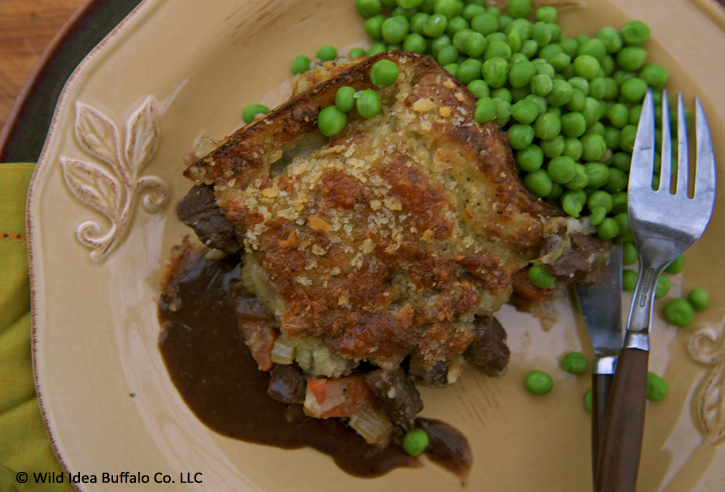
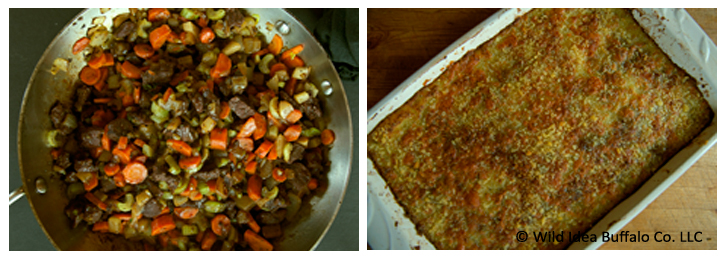
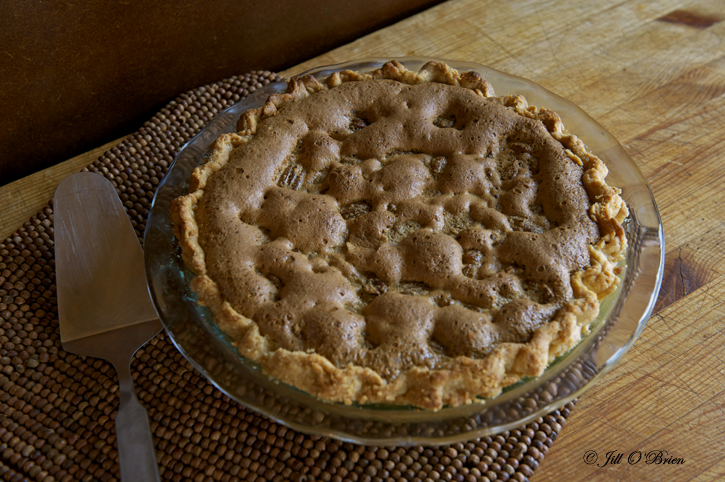
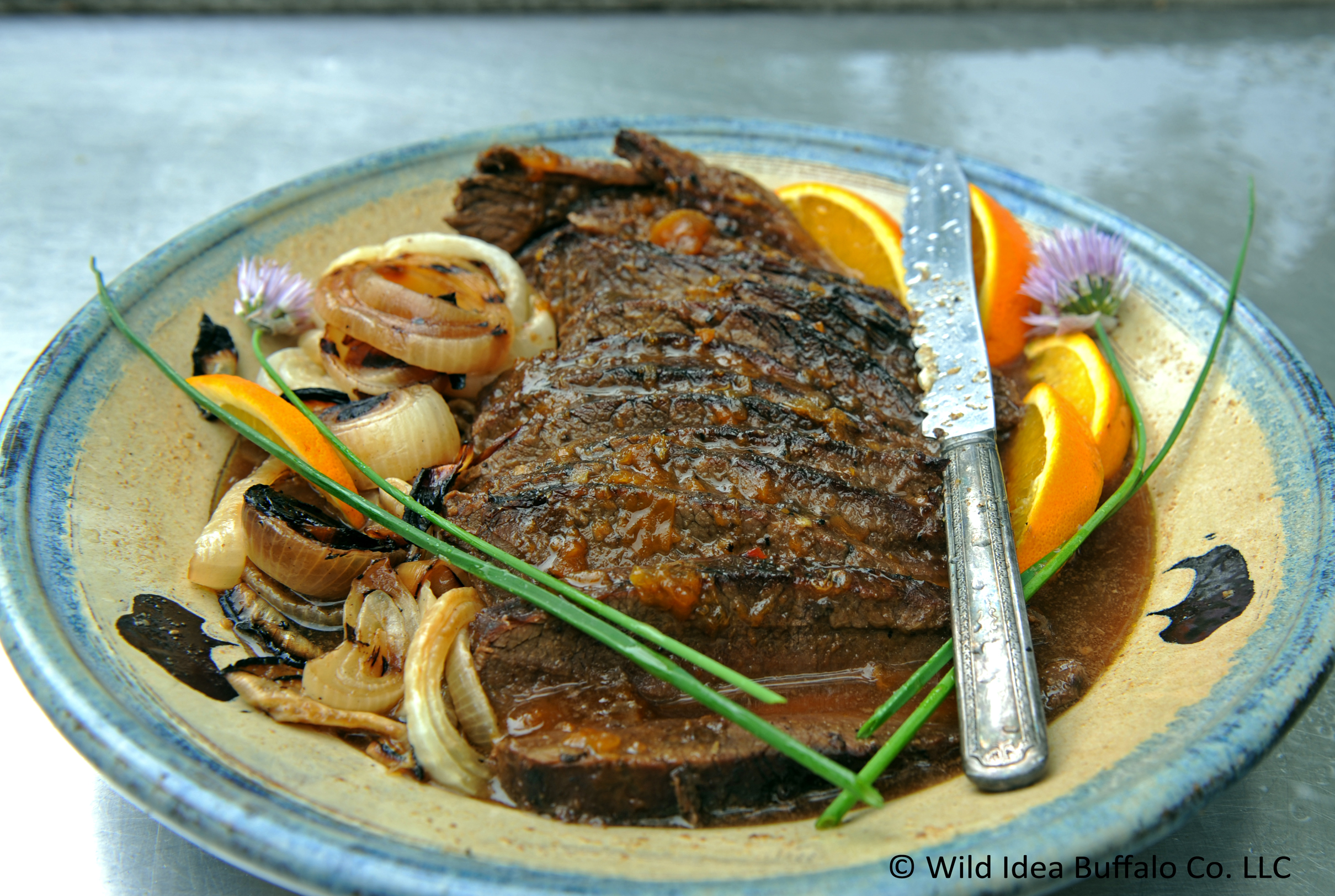
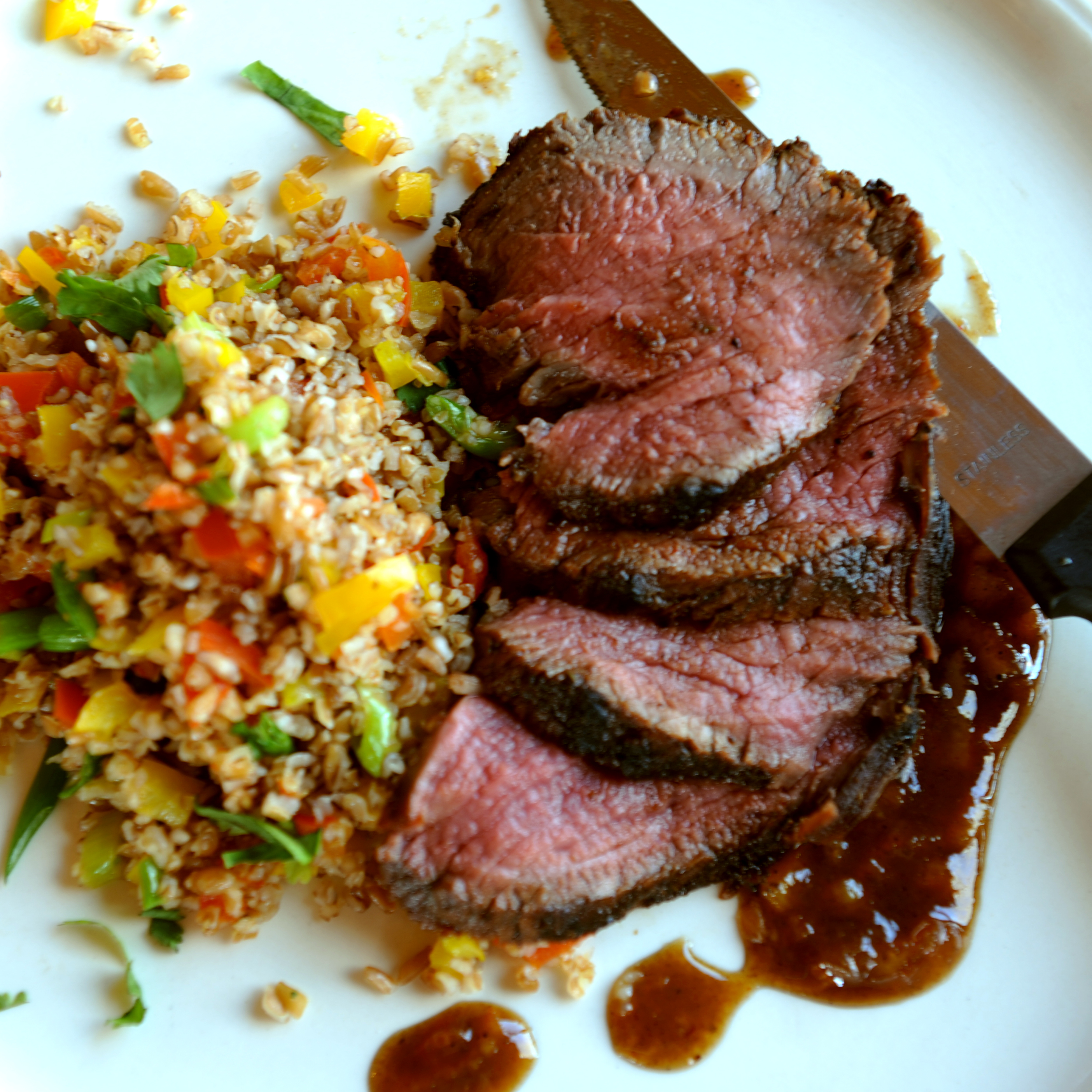
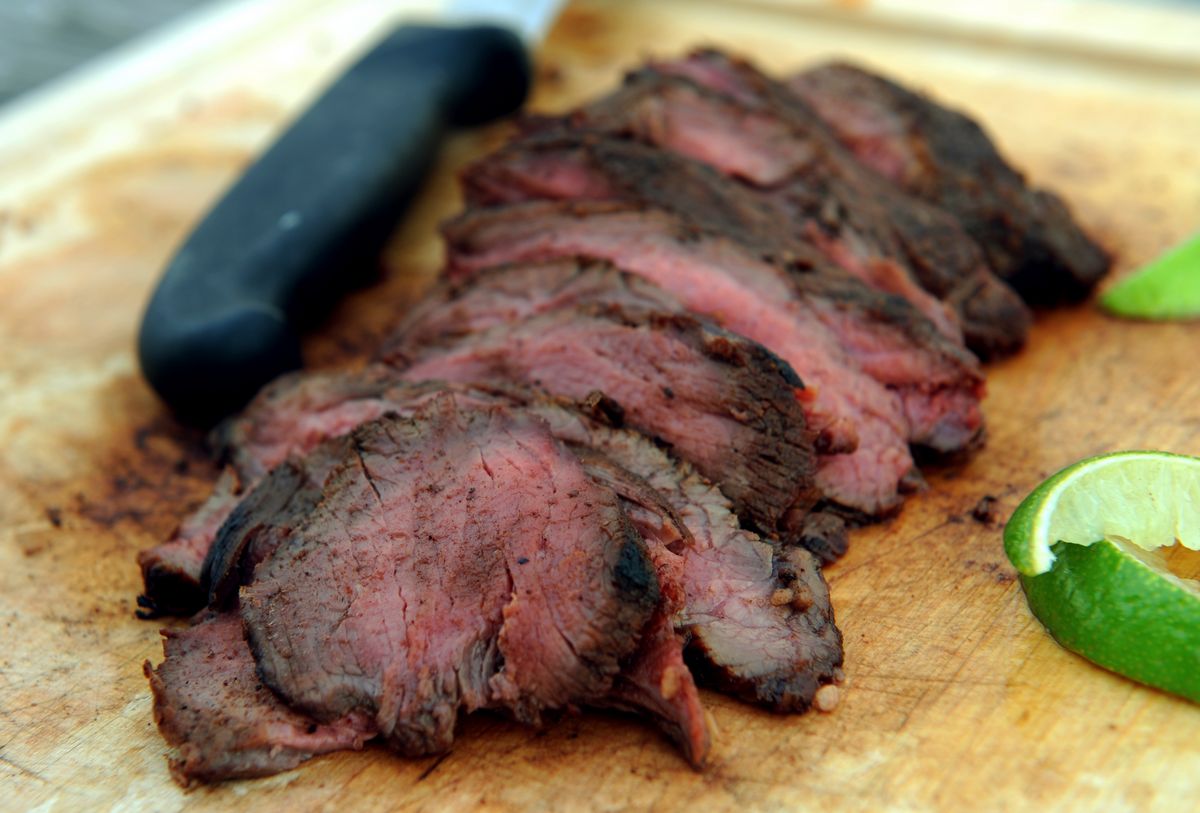
Wet Aged Sirloin Tip Roast

jill Buffalo Recipes, Recipes, Roasts 2 Comments

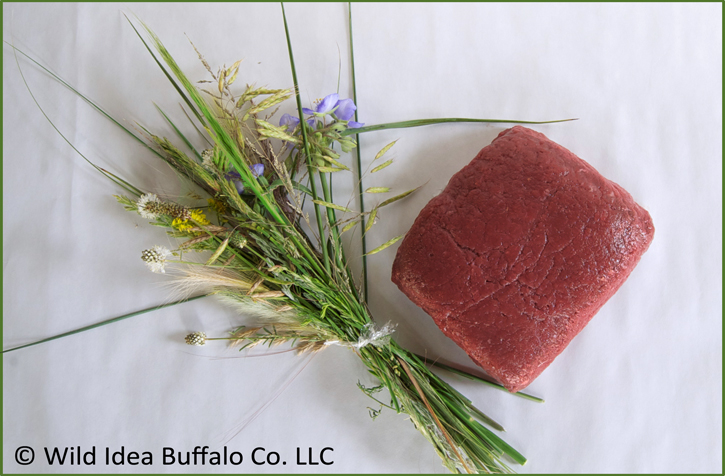
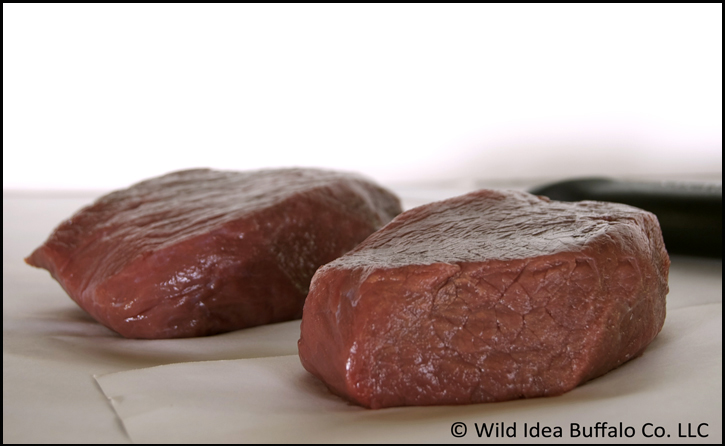
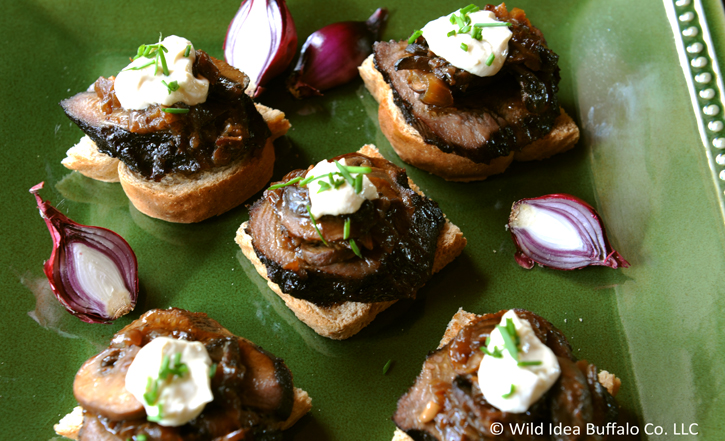
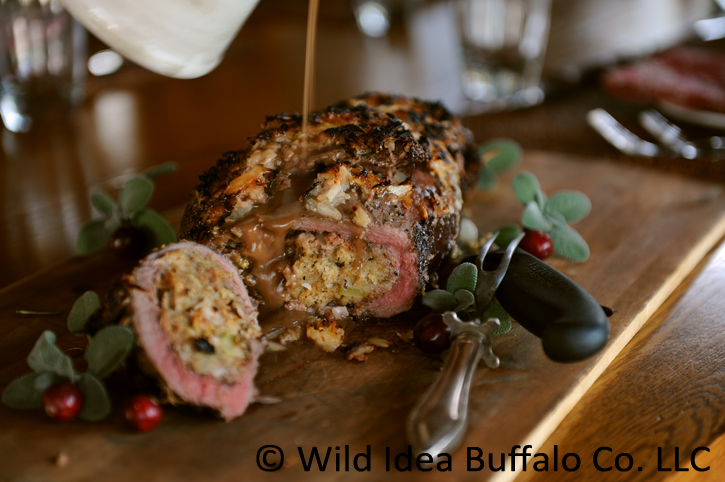
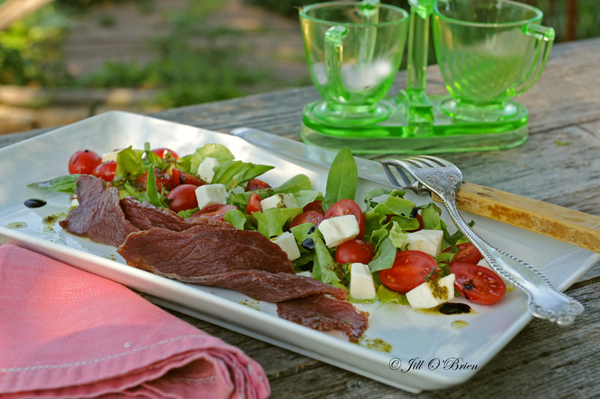
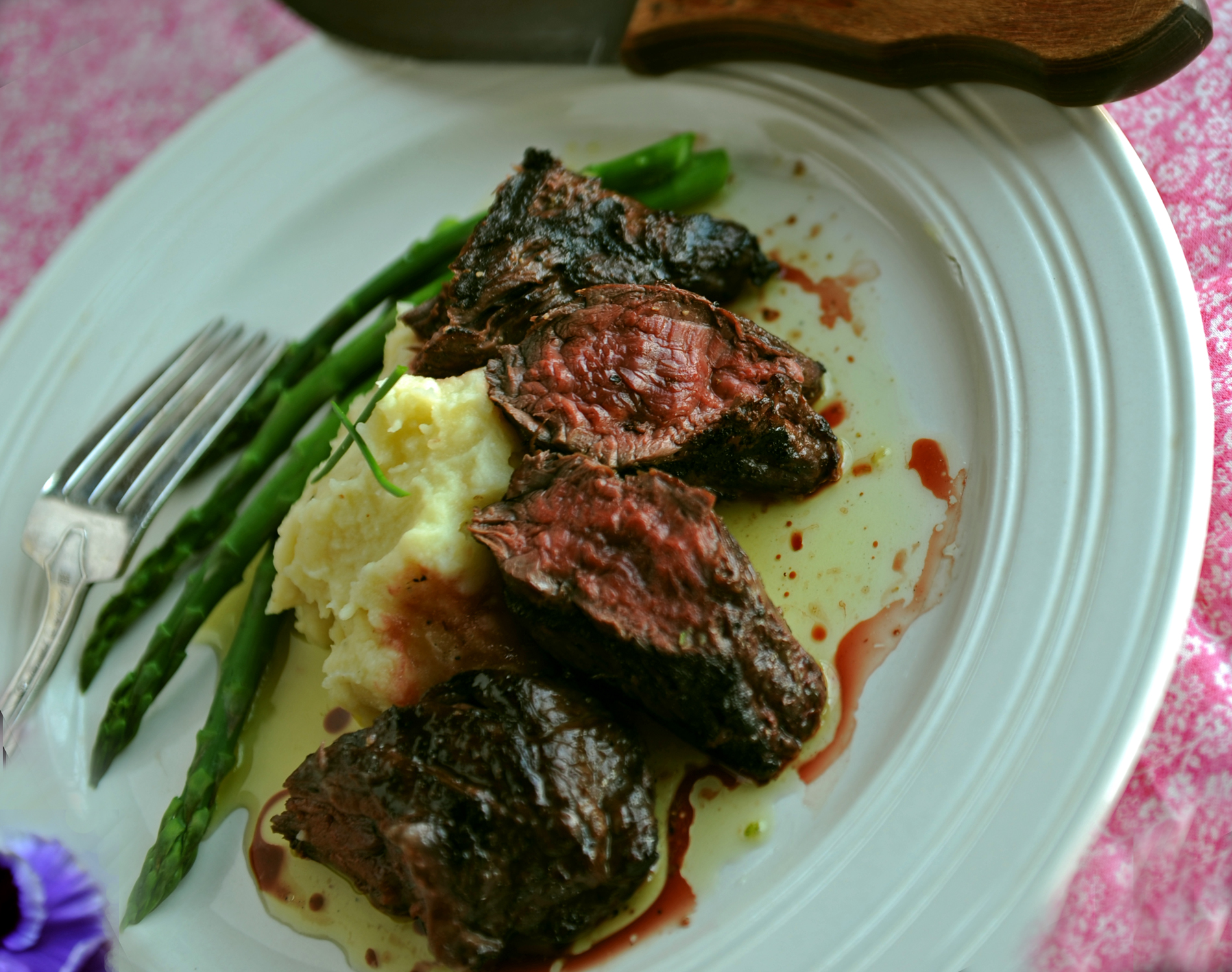
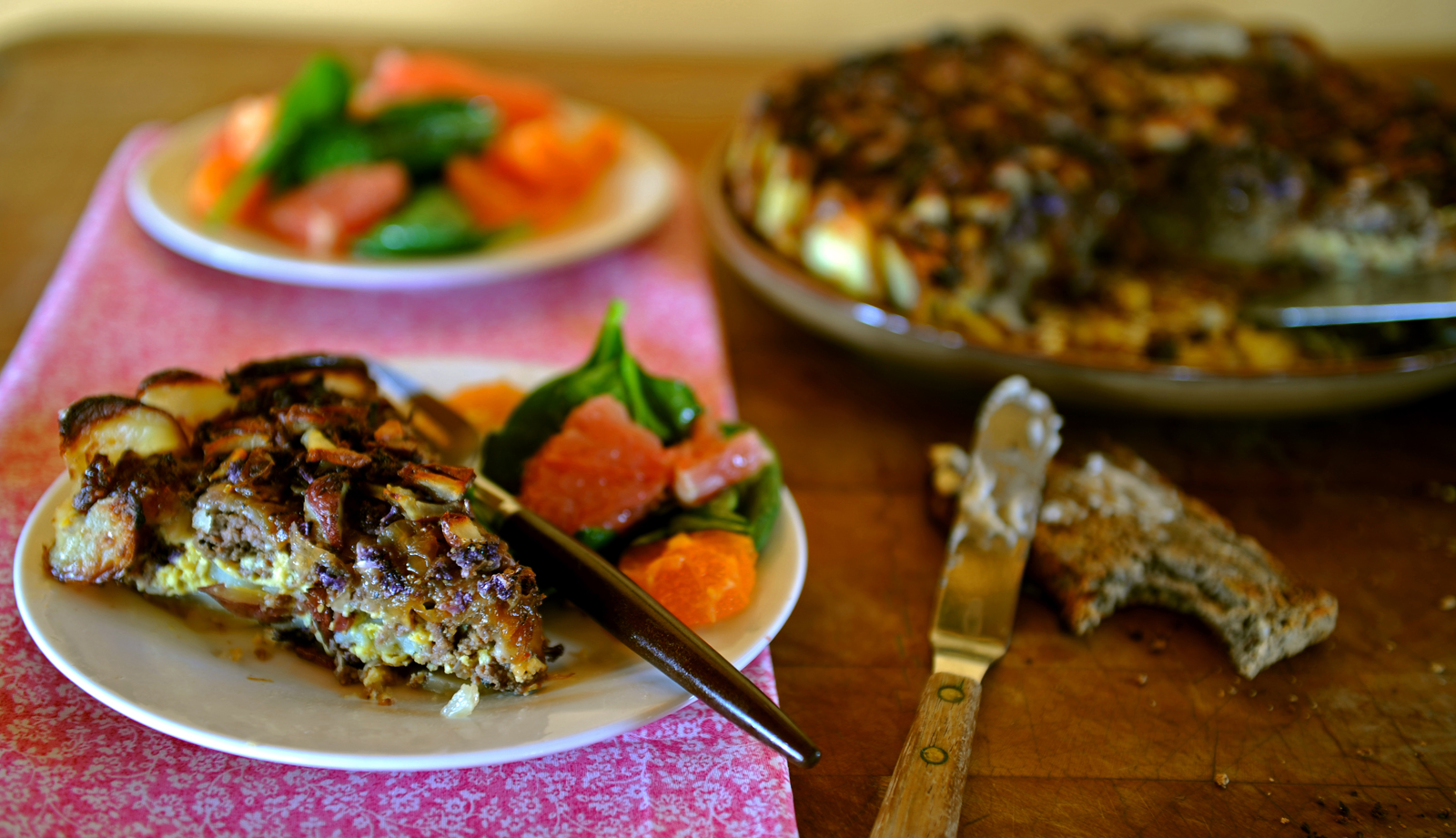
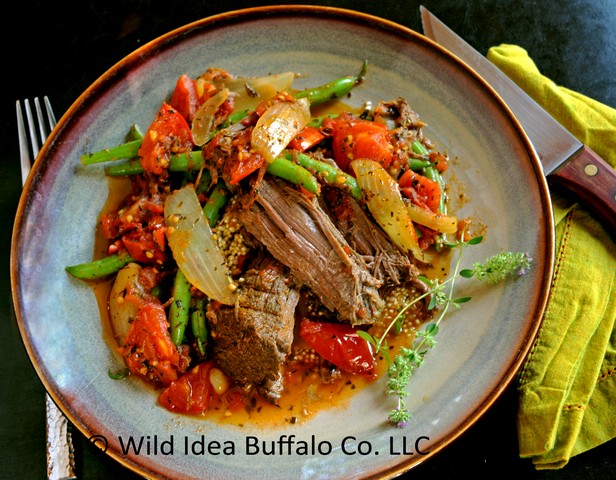
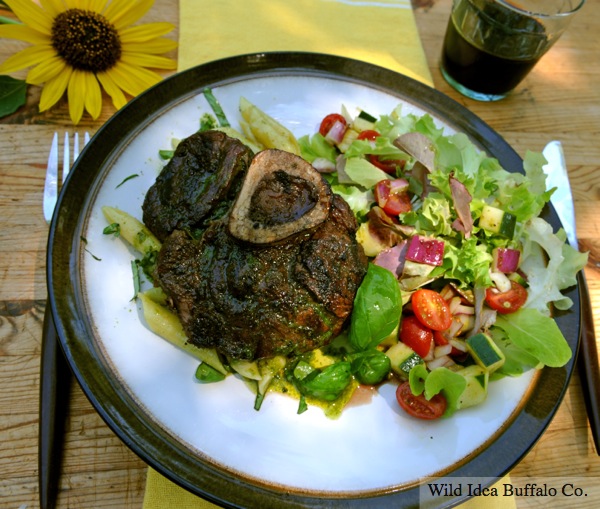
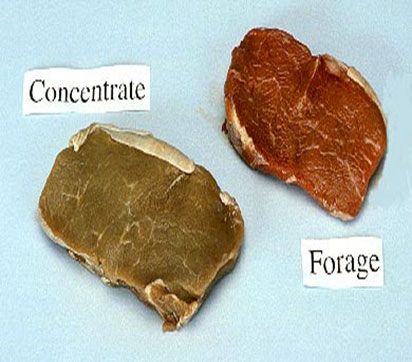
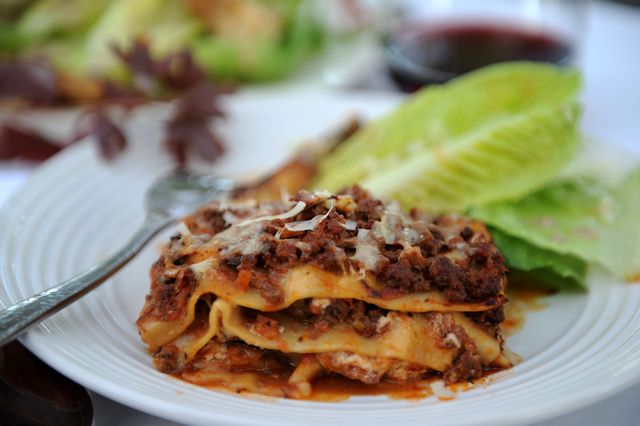
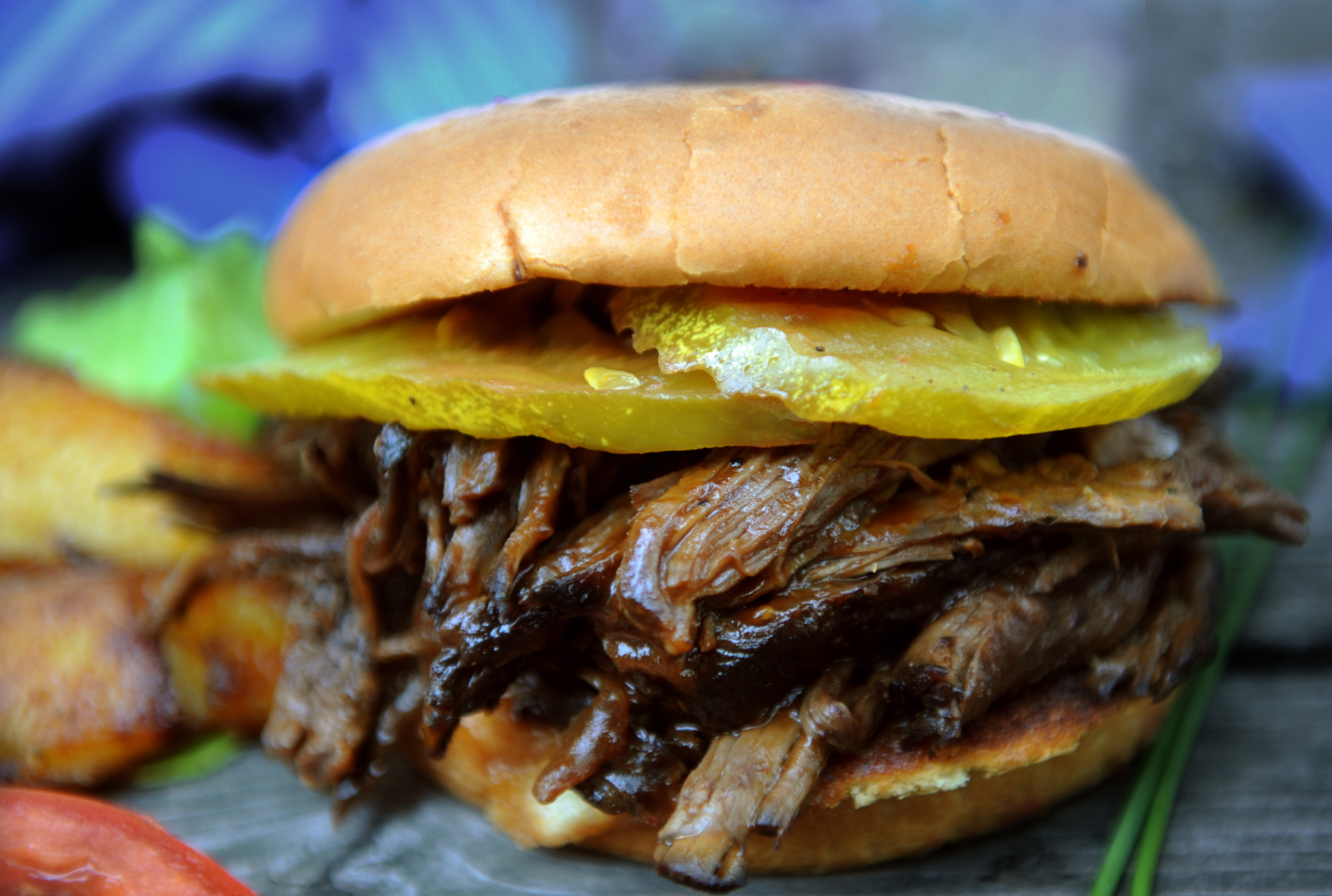
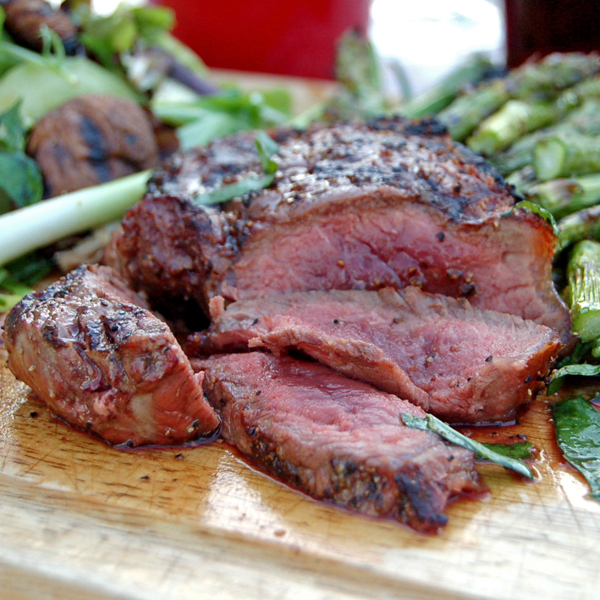
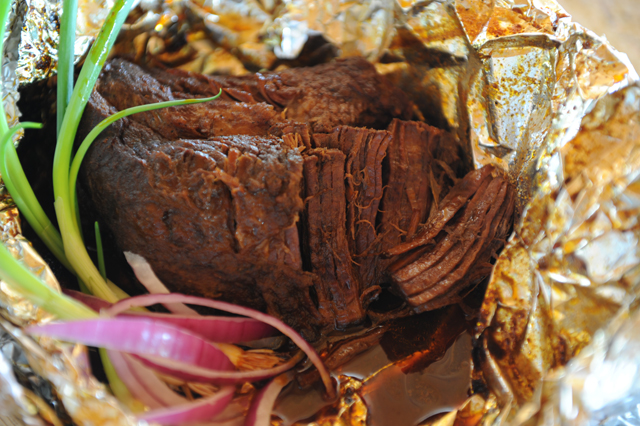
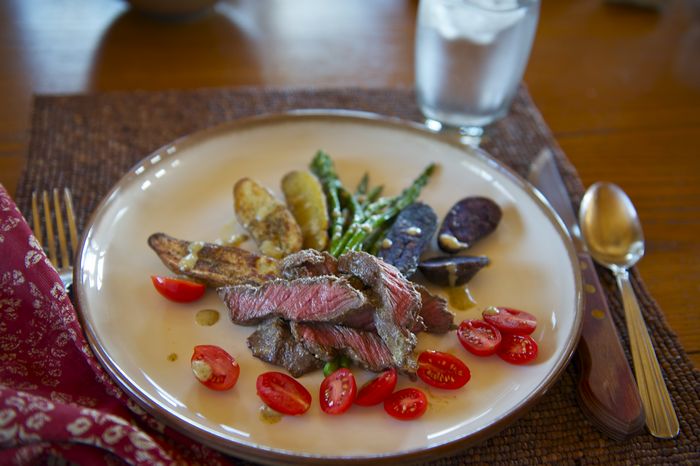
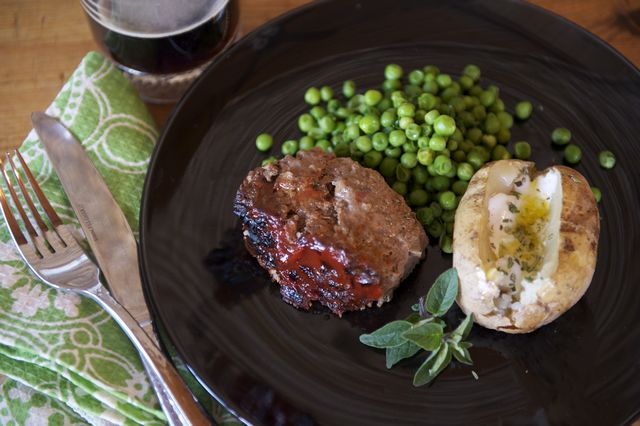
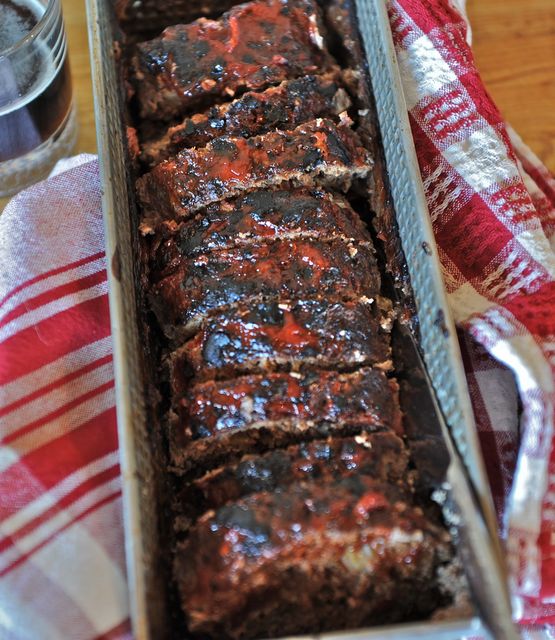
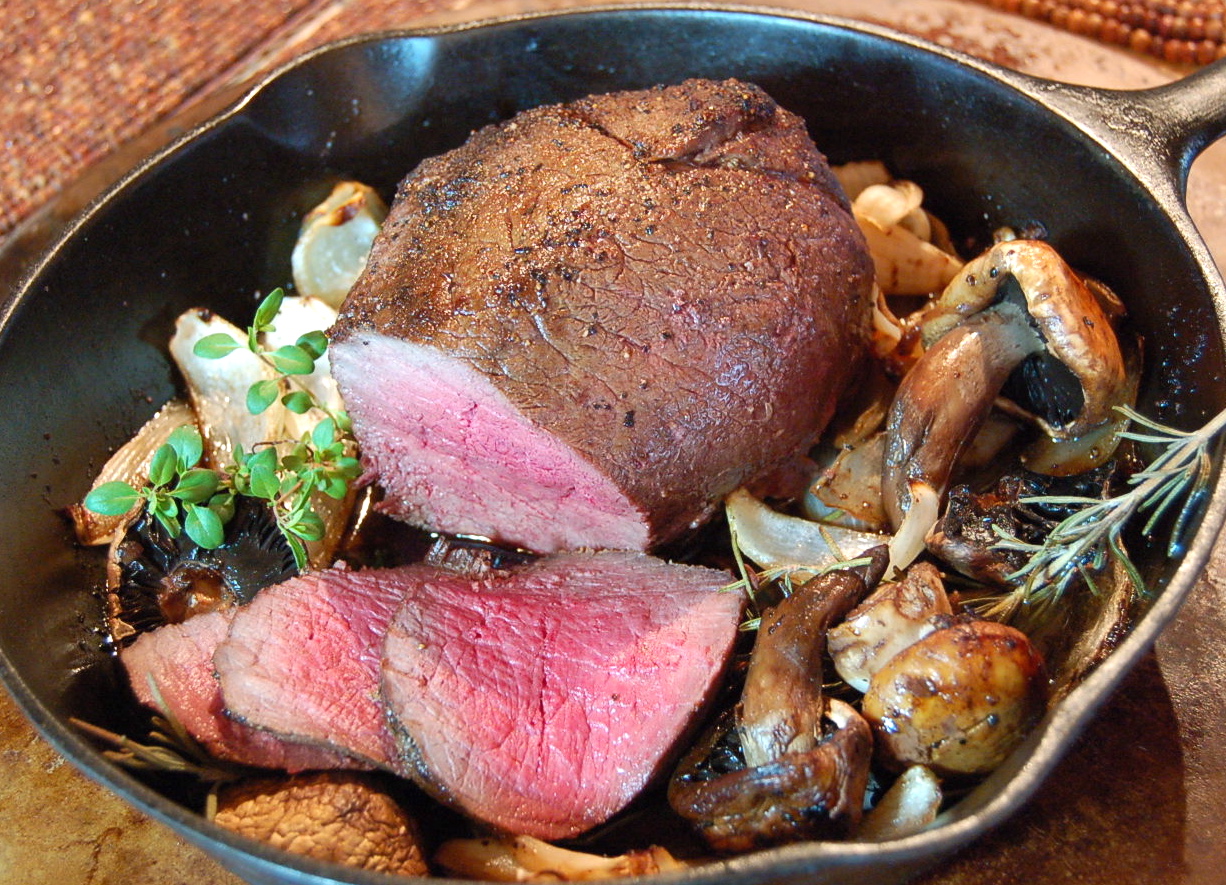
The process of wet aging grass-fed meat turns moderate cuts into prime tender cuts.  The trick to the success is planning in advance, giving enough time for the wet aging to work it’s magic.

Sirloin Tip Roast rswm

Ingredients:
1 – 3 pound Sirloin Tip Roast
2 – tablespoons olive oil
1 – tablespoon sea salt
1 – tablespoon black pepper
2 – teaspoons onion powder
2 – teaspoons garlic powder
1 – teaspoon thyme leaves
1 – cup buffalo stock or organic beef stock
½ – cup red wine
2 – tablespoons butter

Preparation:

1)   Place frozen roast in it’s packaging on a plate and place in the back of your refrigerator. Allow roast to wet age for two weeks, turning roast over every 3 days.

2)   Remove wet aged roast from the package in a clean sink and rinse under cold water. Pat dry with paper towels, and place on a platter.

3)   Mix olive oil and seasonings together and rub into the roast. Cover and let roast rest at room temperature for two hours before cooking.

Cooking Options:

Method One – Hot & High, then Low & Slow

1)   Preheat oven to 500°.

2)   Place roast in a heavy roasting pan and place in the oven for 12 minutes.

3)   After 12 minutes, shut the oven off and leave the roast in the oven for two and a half hours. DO NOT OPEN THE DOOR.

4)   Remove roast from oven and place on a cutting board or platter. Slice the roast thin on the bias, keeping slices tightly together. Transfer the sliced roast onto a baking sheet. Pre-heat oven to 500°.

5)   Place roasting pan on stovetop over medium high heat. Stir in stock and wine scraping up the bits for the bottom of the pan. Bring to a boil, then reduce heat to medium and allow au jus to reduce to about 1 cup.  Whisk in butter and season to taste.

6)   While au jus is reducing, place sliced roast into the pre-heated hot oven, for 7 minutes to re-warm the outside of the roast.  Remove roast from the oven and return to a platter or cutting board. Serve and pass with au jus.

Method Two: Low & Slow

1)   Pre-heat oven to 210°.

2)   Place roast in a heavy roasting pan and place in pre-heated oven. Roast at 210° for 30 minutes. Reduce heat to 190° and continue to roast for 5 hours.

3)   Remove roast from oven and place on a cutting board or platter, cover with foil and allow the roast to rest for about 10 minutes.

4)   While the roast is resting place roasting pan on stovetop over medium high heat. Stir in stock and wine scraping up the bits for the bottom of the pan. Bring to a boil, then reduce heat to medium and allow au jus to reduce to about 1 cup.  Whisk in butter and season to taste.

5)   While au jus is reducing, slice roast thin on the bias. Serve and pass with au jus.

Celebrating Native American Day

jill Blogging Leave a Comment

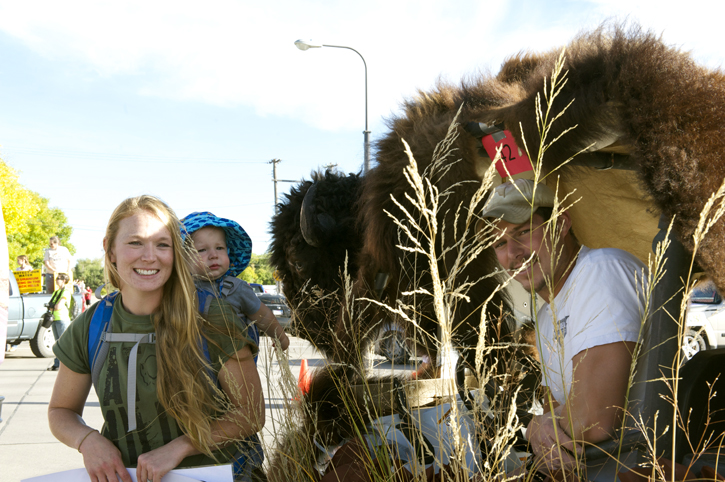
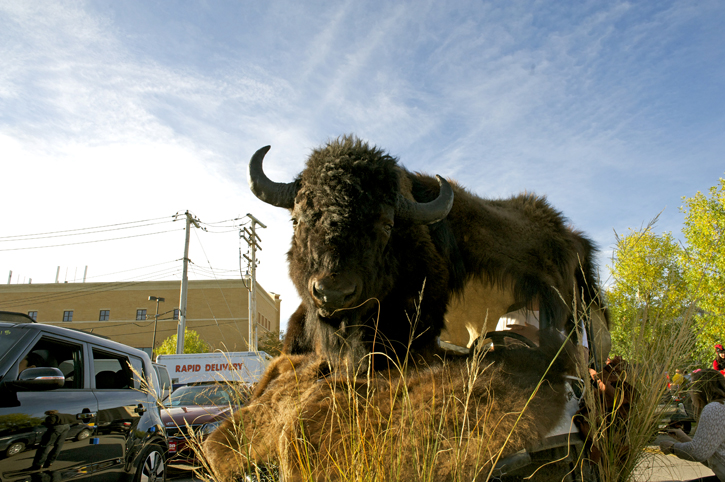
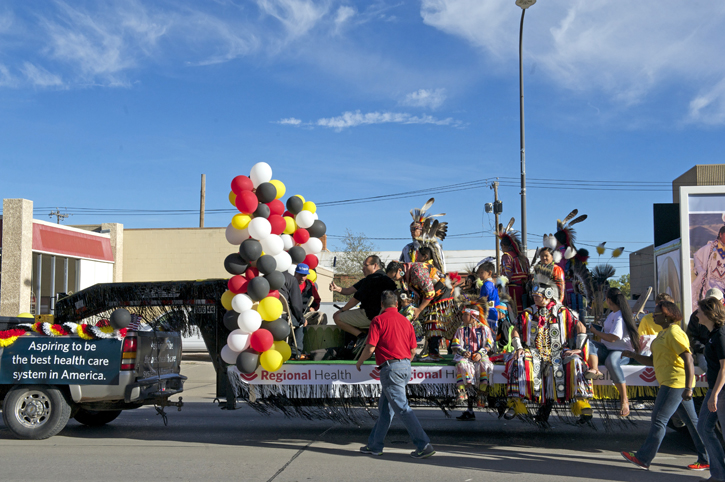
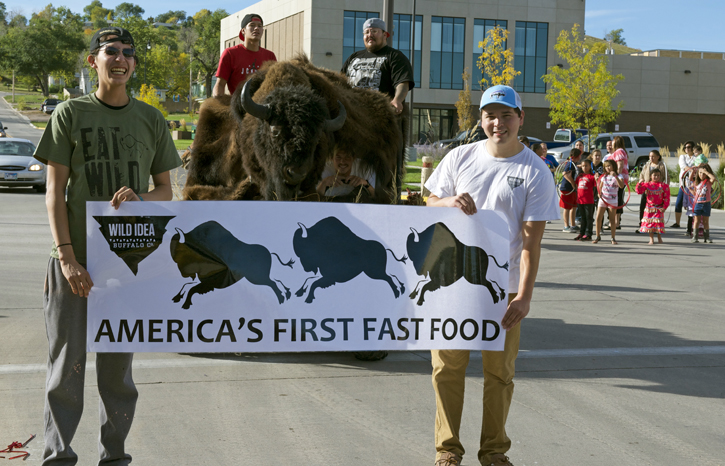
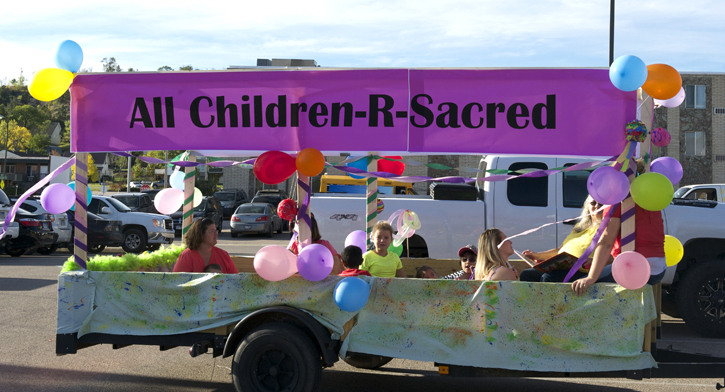
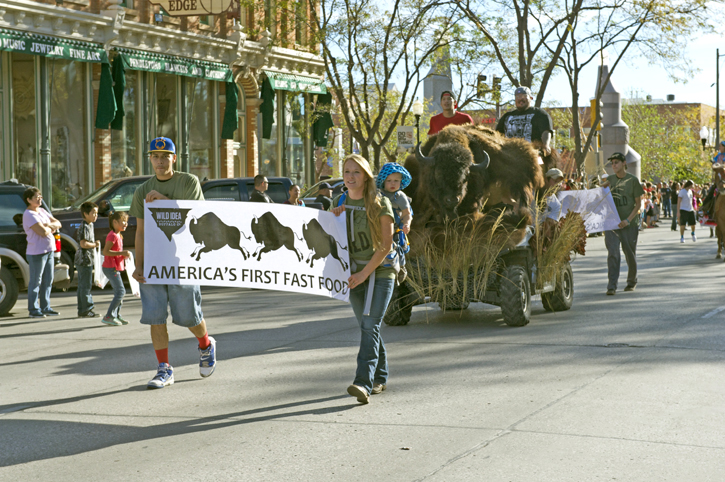
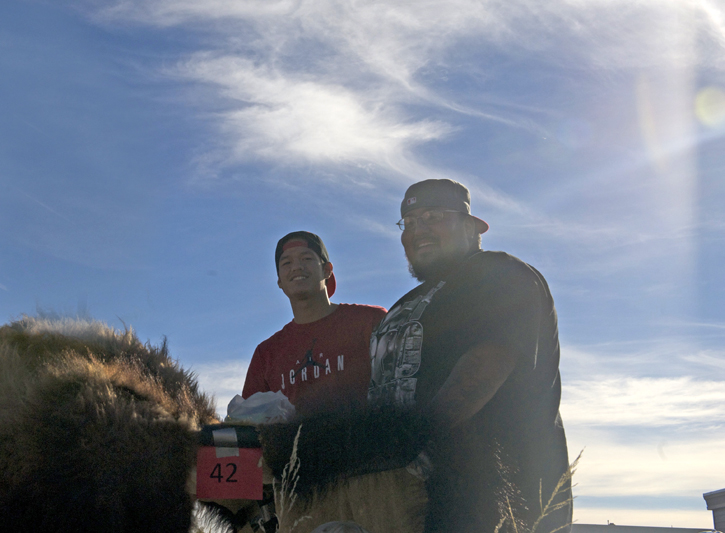
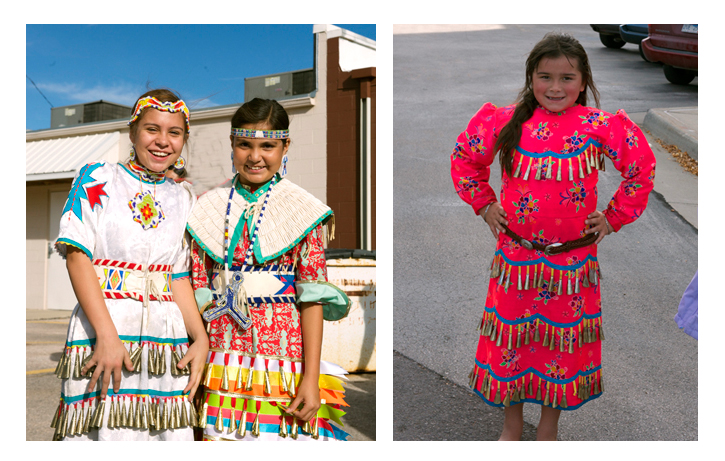
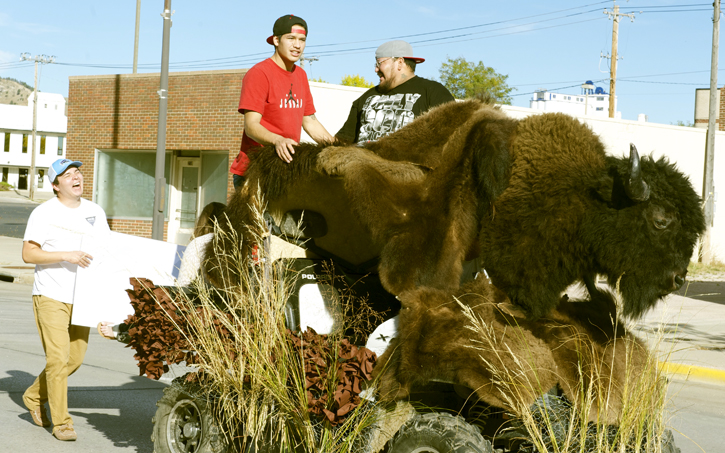
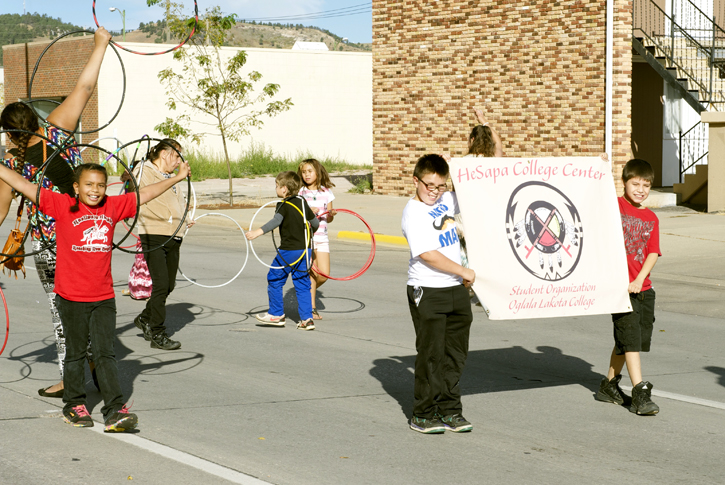
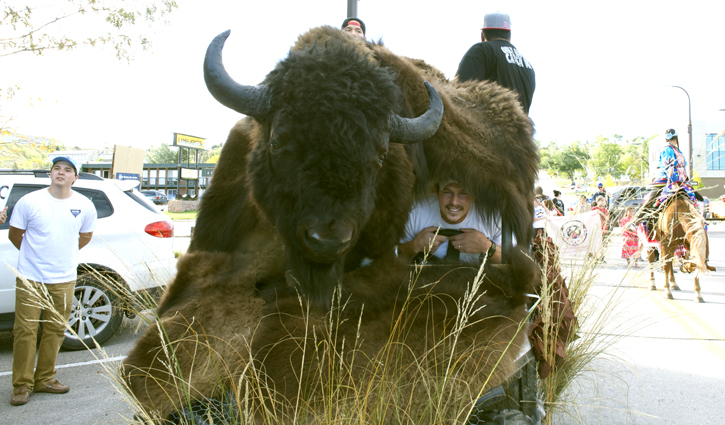
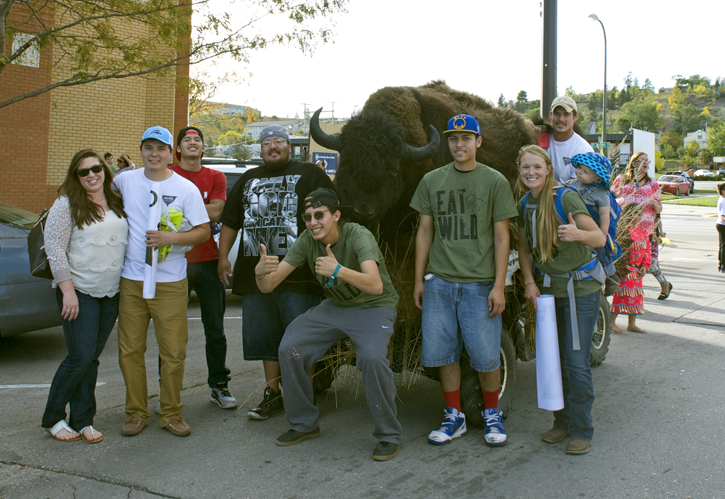
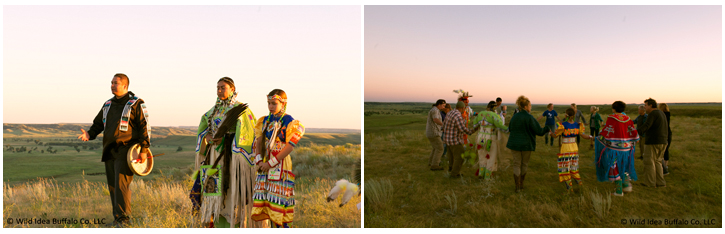
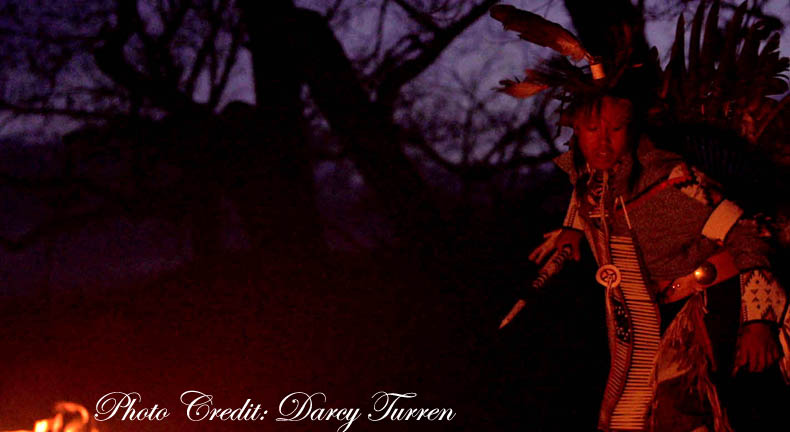
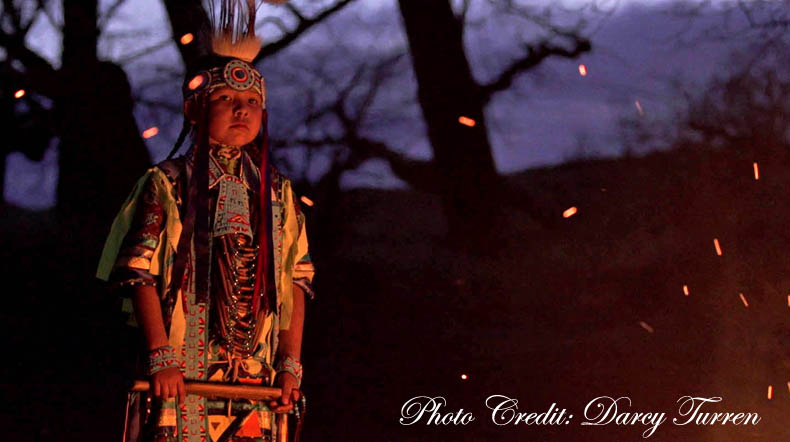
This weekend the Black Hills area was filled with Native American cultural events, in celebration of today’s Native American Day. This included a parade, celebrating “All Children Our Sacred”.  We had to participate! We are very proud to have the opportunity to work along side many of our Native American friends and neighbors. Below are some photos of our crew and other participants.  A special thanks to our crew members who were able to participate: Zach, Chris, Jilian, Colton, Isiahh, Aaron, Courtney, Lincoln & Kaitlin! Happy Native American Day!

NAtive Grirls Skirt rs


COlton, Jilian & Lincoln pre-parade rs

Buffalo in parade rs

Regional Healthrs

Courtney & ZachAll Children ARe Sacredrs

Parade Route rs

Chris & Issiah rs

Native Girls duo rs

Zach & Chris laughing rs

Children w Hoops rs

Colton rs

Crew rs


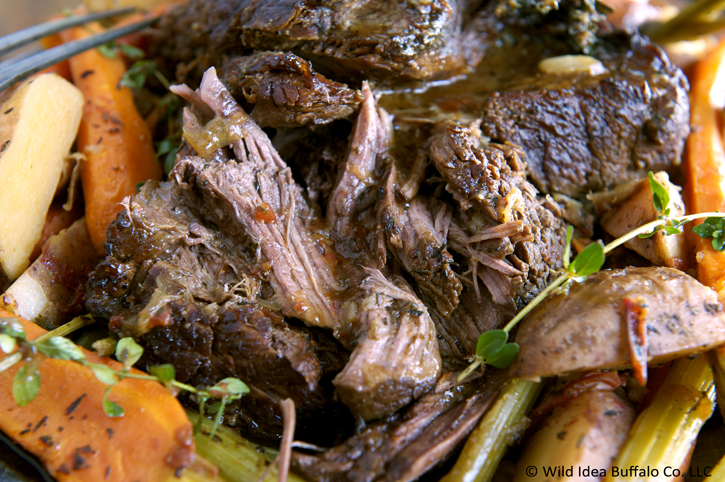
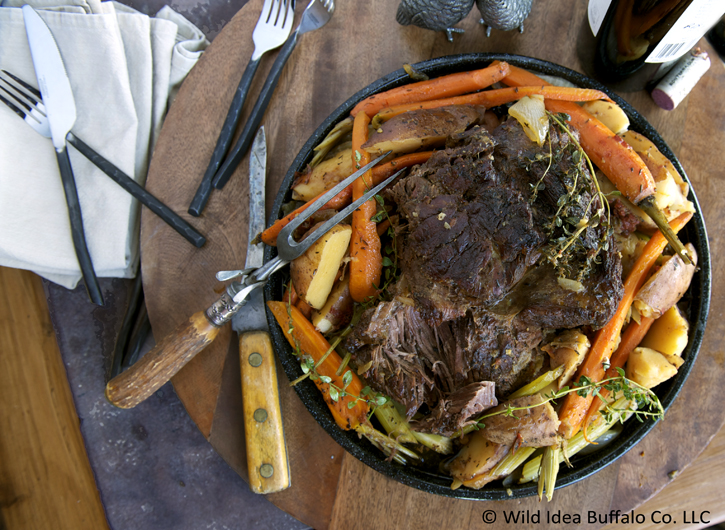
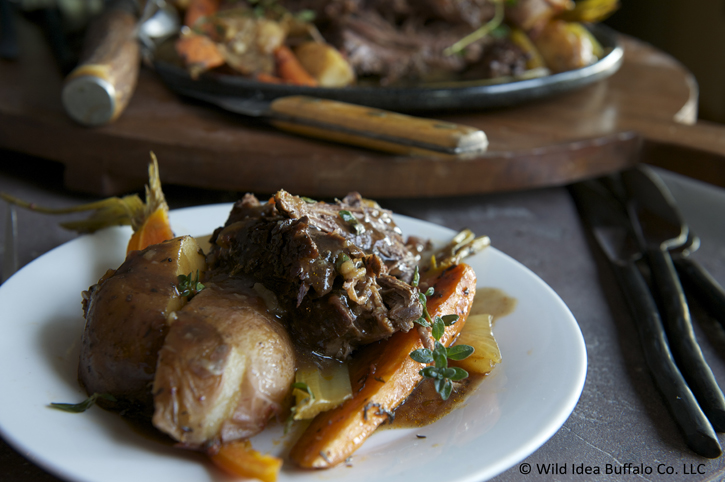
Buffalo Pot Roast

jill Buffalo Recipes, Recipes, Roasts 4 Comments


Nothing represents “comfort food” more than a traditional pot roast.  Wild Idea’s 100% grass-fed, rich and slightly sweet bison roast, braised until tender and juicy, nestled in a bed of potatoes and carrots, and covered with pan gravy, says it all! Always a favorite, but this savory, one pot meal is a wonderful way to welcome the fall!

Chuck Roast Cooked Close-Up* rswm

Ingredients: Serves 6 to 8
1 – 3 pound Wild Idea Buffalo Chuck Roast
2 – tablespoons olive oil
2 – teaspoons sea salt
2 – teaspoons black pepper
2 – teaspoons garlic powder
2 – teaspoons thyme, or two to three sprigs fresh thyme *I use half fresh & half dried.
1 – teaspoon rosemary, or one to two small fresh sprigs *I use half fresh & half dried.
1 – teaspoon oregano, or one sprig oregano *I use half fresh & half dried.
2 – onions, 1 diced and 1 quartered
1 to 2 tomatoes, coarse chopped
5 – cups buffalo, vegetable or organic beef stock
2 – bay leaves
6 – potatoes, quartered
3 – celery stalks, quartered
4 to 6 – carrots, peeled and quartered
½ – cup red wine
1 – tablespoon corn starch, or more if needed

Chuck Roast w Cutlery*rswm

Preparation:

1)   Preheat oven to 225°. Rinse bison roast, pat dry and remove string. *Removing string is optional; I usually remove for this preparation, so I don’t loose the seasoning in removing after cooking.

2)   Mix all the dried seasonings together. Rub the roast with 1 tablespoon of the olive oil, and rub the dried seasoning into the roast.

3)   In a heavy pot over high heat, heat the remaining tablespoon of the olive oil. Place the seasoned roast into the hot oil and brown for 5 minutes. Turn roast 3 times, searing for 5 minutes each. *Positioning roast up against the pan sidewalls will help in browning the whole roast.

4)   Move the roast to the side and add the chopped onions, lifting the roast so onions cover the bottom and stir occassionally. Allow the onions to cook for about 5 minutes.

5)   Add the chopped tomatoes around the roast, the bay leaf, and pour in the stock. Let the stock come to a full boil, then cover and turn off the heat.

6)   Transfer covered roast into the preheated oven on the middle rack. Braise the buffalo pot roast for 6 hours.

7)   During the last half hour of cooking, add the potatoes, pushing them down into the juices. Cover and increase heat to 375°.

8)   Cook the potatoes for 15 minutes, then, add the celery, onion, and carrots. Cover and cook for an additional 15 minutes. Check the vegetables to insure they are cooked through, but still slightly firm. Continue to cook for a few more minutes if needed.

9)   Remove the pot roast from the oven, and transfer the roast and the vegetables to a cutting board or platter. Cover with foil.

10)  Place the pot with the juices on the stovetop over medium high heat. Bring to a boil. Mix the cornstarch into the wine, and whisk into the bubbling pan juices. If the gravy is not to your desired thickness add more wine/cornstarch mix, until desired consistency is achieved. Season to taste.

11)  Carve the roast and pass with gravy and crusty bread.

Chuck Roast Plated*rswm


A Recipe Celebration of the Garden Tomato

jill Blogging 1 Comment

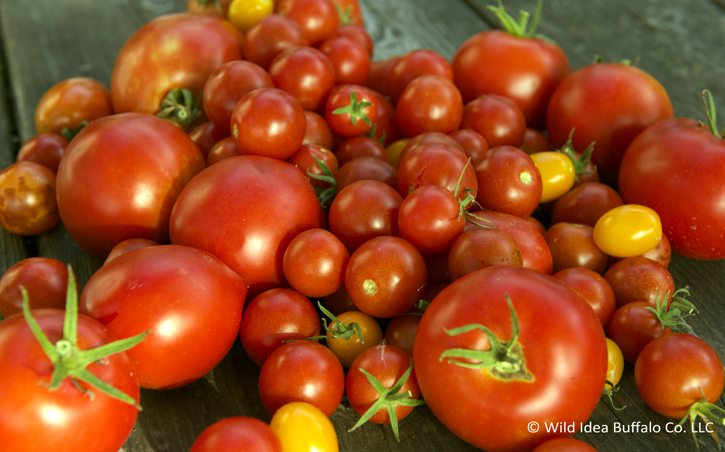
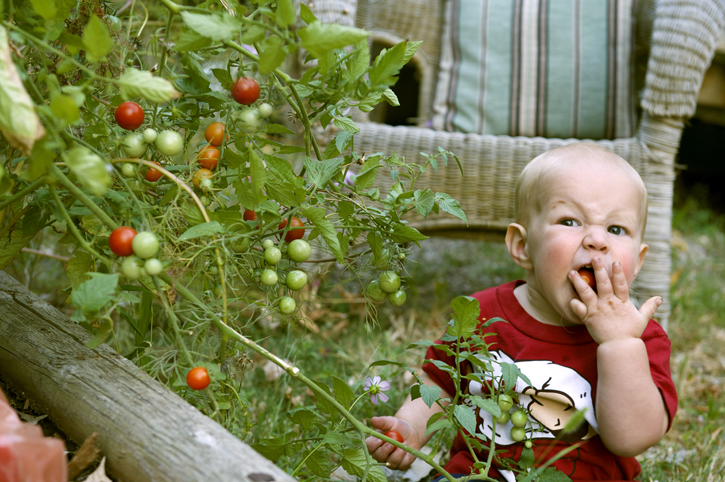
Tomatoes are the STAR produce item in our garden, and oh how we love them! They are a true celebration of our gardening efforts, and plucking them off the vine and into your mouth is like eating a burst of sweet sunshine.

Tomatoes 2 rswm

Grandson Lincoln has developed a taste for them too, and has quickly picked up our off the vine habits, popping his little mouth full until the juice is running down his chin. He is learning another lesson on “where food comes from”.

Lincoln 2

With a pretty good crop this year – that continues to produce, we have enjoyed them in a variety of ways. Here are some ideas that you might want to try too.

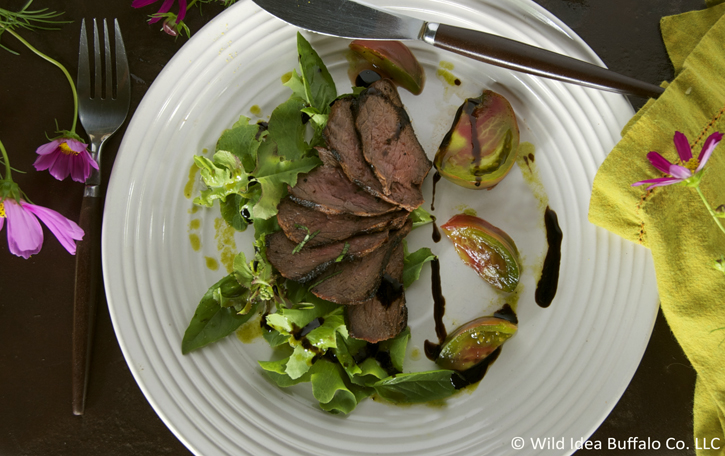
1) Wild Idea sirloin Steaks, grilled and sliced with heirloom tomatoes, drizzled with basil olive oil, balsamic syrup, a sprinkle of finishing salt and cracked pepper.

Sirloin Steak on Greens w Heirloom Tomatoes rswm

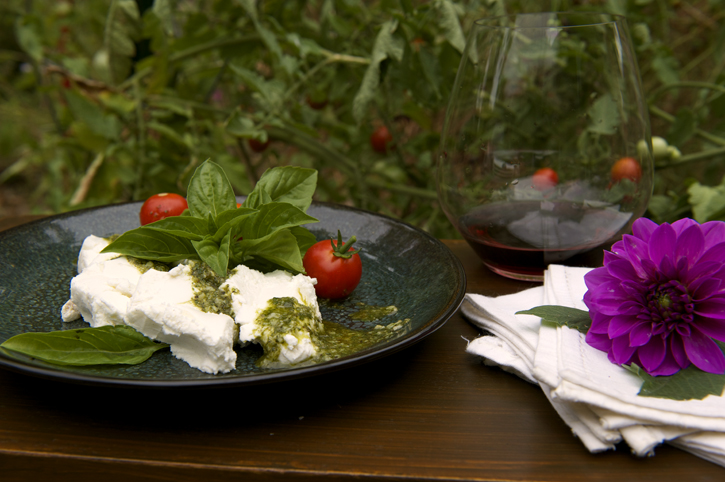
2) Invite guests out to the garden for a little off the vine forging. Bring a long a plate of fresh sliced mozzarella, drizzled with pesto and garnished with fresh basil leaves, for an in the garden, finger food Caprese Salad. *Napkins needed, as it’s a bit messy, but super fun!

Garden Caprese rs

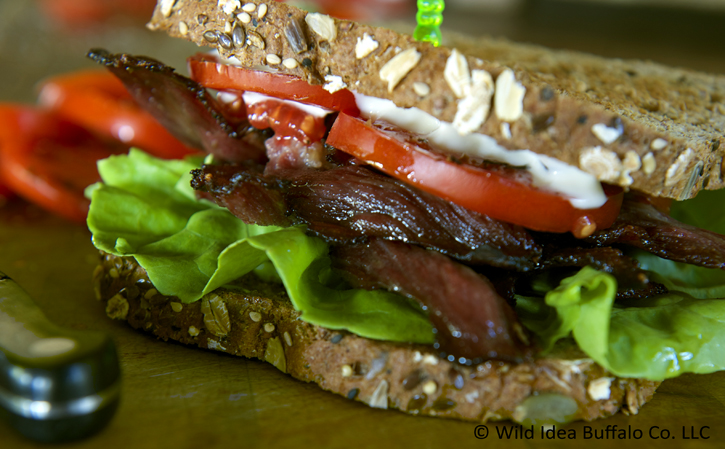
3) The must make/have, BUFFALO BACON, Lettuce & Tomato Sandwich! Order your Buffalo Bacon before the tomato season is behind us!

BLT  rswm

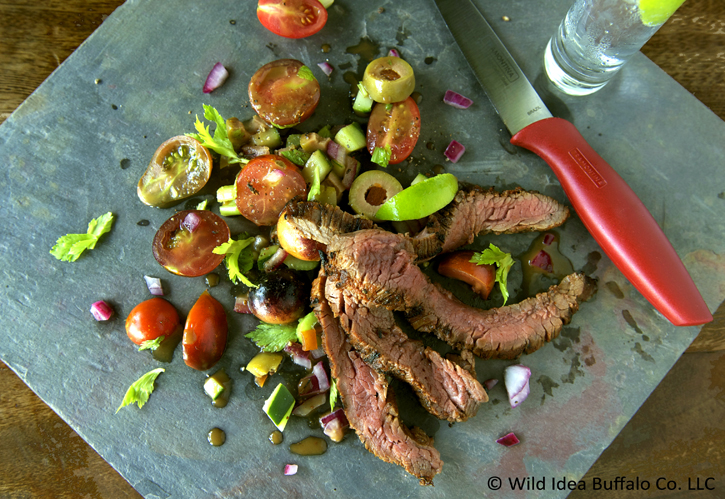
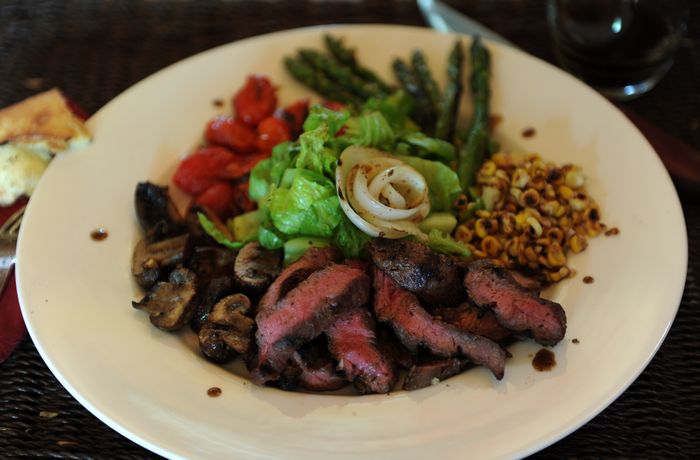
4) Or, try my new recipe for Bloody Mary Steak Salad! Recipe can be found here: http://wildideabuffalo.com/2015/bloody-mary-steak-salad/

Bloody Mary Steak Salad 2cropped rswm

Happy harvesting!


Bloody Mary Steak Salad

jill Buffalo Recipes, Recipes, Steaks Leave a Comment

My mother recently sent me an idea for a Bloody Mary Steak Salad, which looked and sounded delicious. There are many renditions of this concoction, and below is my take on this fun recipe. Adjust seasonings to your liking to create your own or incorporate pickled asparagus and green beans for additional taste and color!

Bloody Mary Steak Salad 2cropped rswm

Ingredients for Steak: *Serves 4
2 – 14 ounce Wild Idea Buffalo Flank Steaks
1 – 6 ounce can spicy V-8 juice *If you don’t like as much spice, use plain V-8.
1 – tablespoon salt
1 – tablespoon brown sugar
2 – teaspoons paprika

Ingredients for Salad:
1 – small red onion, diced
1 – cucumber, partially peeled (I use a alternating striping method) & chopped
3 – stalks celery hearts, chopped
2 – pints cherry, grape or pear tomatoes, halved or, 3 tomatoes, coarse chopped
8 – large pimento stuffed olives, sliced, reserve 2 tablespoons of the olive juice
4 – tablespoons rice vinegar
1 – tablespoon horseradish
2 – teaspoons Worcestershire
1 – slosh hot sauce, or to your liking
½ – teaspoon celery seeds, lightly crushed
¼ – cup olive oil

fresh lime wedges
sea salt & fresh cracked pepper

Preparation:

1)   For steak preparation, rinse steaks and pat dry with paper towels. Place steaks on cutting board and remove any exterior fat or sinew (there will be very little of this). Using a fine tined fork, pierce steaks on both sides at an angle. Place steaks and V-8 juice in a large plastic bag or covered glass dish. Marinate steaks at room temperature for two hours, refrigerate and marinate for an additional 22 hours. Remove steaks from juice, shaking off excess, and blot with a paper towel.  Mix, salt, brown sugar, and paprika together and rub into bison flank steaks. Cover and let rest at room temperature for two to four hours before grilling.

2)   While steaks are resting before cooking, prepare salad ingredients. Place diced red onion and chopped cucumber in a bowl and toss with two tablespoons of the vinegar and a pinch of salt & pepper. Let rest to slightly pickle for a minimum of two hours.

3)   Add remaining vegetables to the onion/cucumber mix and toss.

4)   Wisk together the remaining vinegar, with olive juice, horseradish, Worcestershire, hot sauce, celery seed, and olive oil.  Pour half of the dressing into the vegetables and toss.  Reserve remaining dressing for serving.

5)   Pre-heat grill to 500°, insuring that grill grates are clean. Oil grill grates with before grilling with high heat oil or grill spray. Place flank steaks over hottest heat and grill for one minute each side, closing grill lid during cooking. Remove steaks from grill, place on a cutting board, and cover allowing to rest for 5 minutes before cutting. This will give you a medium rare outcome.

6)   On 4 plates or platter, arrange tomato salad. Slice steaks on the bias and place on the tomatoes. Drizzle with additional dressing and finish with a squeeze of fresh lime, another pinch of sea salt, and a couple grinds of cracked black pepper.

Serve with icy cold vodka with a squeeze of lime and a splash of chilled tonic.

Top Sirloins with Champagne Grape Conserve & Blue Cheese

jill Buffalo Recipes, Recipes, Steaks 2 Comments

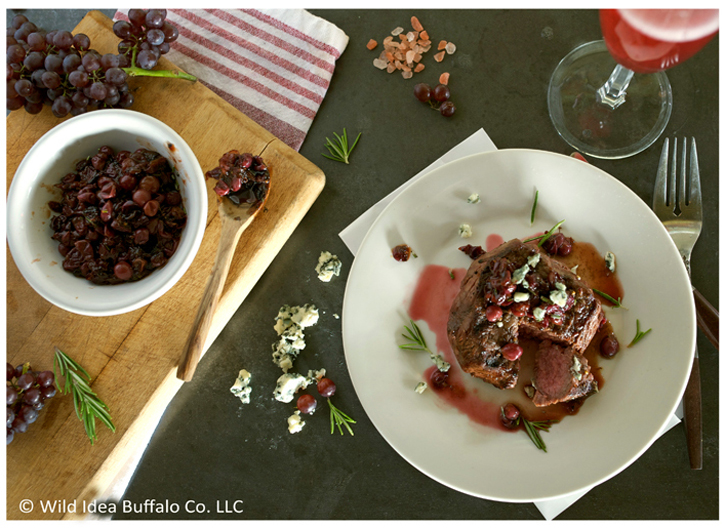
Champagne grapes are juicy, flavorful and seedless. They are also adorable, which always helps in making a pretty presentation. The sweetness of the grapes with the savory addition of onion and rosemary is a terrific topping for Wild Idea’s rich, grassy Top Sirloin Steaks.  *This time of year champagne grapes are available in most groceries, but if unavailable, cherries would make a great substitute.

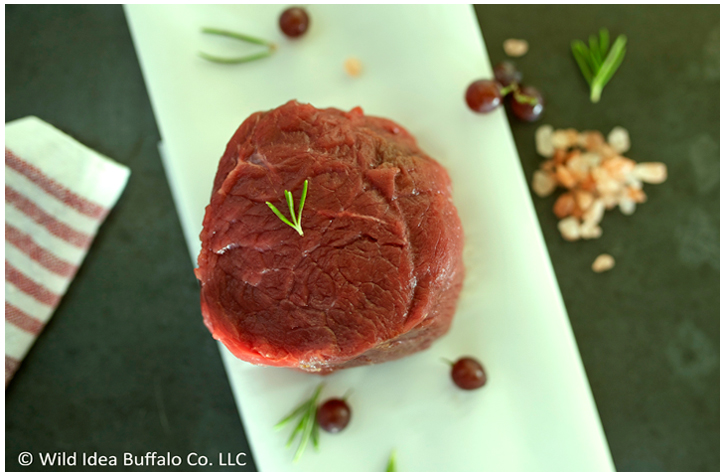
Top Sirloin 5oz. Raw rswm

Ingredients for Steaks:
4 – 5 ounce Wild Idea Top Sirloins (or any prime Wild Idea Steak)
2 – tablespoons olive oil
2 –teaspoons kosher or sea salt
2 – teaspoons black pepper

Ingredients for Sauce: *Sauce will make enough for 4 steaks. 
1 – tablespoon butter
¼ – cup onion, minced
1 – cup champagne grapes
¼ – teaspoon each salt & pepper
2 – teaspoons sugar
½ – teaspoon, fresh rosemary, finely chopped
2 – ounces blue cheese, crumbled

Top Sirloin 5oz. w Champagne Grape Sauce rswm

Preparation:

1)   Rinse steaks and pat dry. Mix olive oil, salt, and pepper together and rub into steaks. Cover with saran wrap and let rest for two hours before grilling.

2)   For sauce, melt butter in a small saucepan, over medium high heat. Add onions, salt and pepper and sauté for 5 minutes, stirring occassionally.

3)   Add ¾ of the grapes and heat through. Then lightly smash with potato masher to release juices.

4)   Stir in sugar, and reduce heat to low and simmer until juices have reduced to half.

5)   Add remaining grapes and stir in to incorporate. Heat through.

6)    Remove sauce from heat and stir in rosemary. *Can be made ahead and reheated.

7)    Preheat grill to 500°. Grill steaks for 2 minutes on each side, closing grill lid during grilling. Remove from heat, cover and allow to rest for 5 minutes.

8)    Plate steaks and top with equal portions of grape conserve and sprinkle with blue cheese. Garnish with fresh grapes and fresh rosemary.

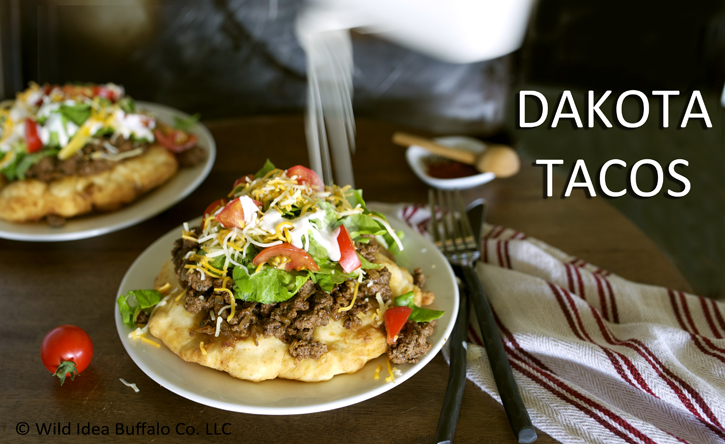
DAKOTA TACOS “Indian Tacos”

jill Buffalo Recipes, Ground, Recipes 4 Comments

It’s county fair and pow-wow time across the country. A favorite food item served at our local festivals is the “Indian Taco” – a wonderful concoction of Fry Bread topped with seasoned bison meat, lettuce, and cheese.  Although Fry Bread has a disconcerting history, it has become a connector of past and present generations. It’s also delicious!

Pow Wow 2 photo
My secret ingredient in the preparation of the fry bread, is club soda, which makes the dough and bread lighter. I also use coconut oil, which has a good nutritional profile, and is great for deep frying. Be sure to fry at a high enough heat, 375° to limit oil absorption and to give the edges a nice crispiness. The slightly spicy, seasoned meat balances nicely with the creamy, Zesty Sour Cream Dressing. No reason to wait for a fair or a pow-wow to enjoy this crazy good dish!

Ground, Dakota Taco w Name rswm

Taco Ingredients:
1 – pound Wild Idea Ground Buffalo Meat
1 – small onion, chopped
1 – tablespoon olive oil
2 – teaspoons chili powder
2 – teaspoons cumin
1½ – teaspoons salt
1 – teaspoon black pepper
1 – teaspoon garlic powder
1 – teaspoon oregano
1 – teaspoon smoked paprika
½ – teaspoon coriander
2 – cups lettuce leaves, or chopped lettuce
1 – cup grated cheddar cheese
Zesty Sour Cream Dressing, recipe below

Preparation:

1)   Measure all spice ingredients, and set aside.

2)   In a sauté pan over medium high heat, heat the olive oil.

3)   Add the chopped onion and crumble in the ground buffalo.

4)   Sprinkle seasonings over the meat, and stir to incorporate, breaking up the meat into smaller pieces as you stir.

5)   Cook until meat is browned, about 7 minutes. Cover, set aside, and re-heat when the fry bread is ready.

6)   To assemble, place warm fry bread on plates, and top with the hot seasoned meat, lettuce, and cheese. Drizzle with the Zesty Sour Cream Dressing and enjoy!

Fry Bread *Recipe makes 4 fry bread servings, with 275 calories per each.
Ingredients:
2 – cups unbleached organic flour, plus a half cup more for handling and rolling out
2 – teaspoon baking soda
¼ – teaspoon salt
½ – cup 2% milk
½ cup club soda
3 – cups coconut oil

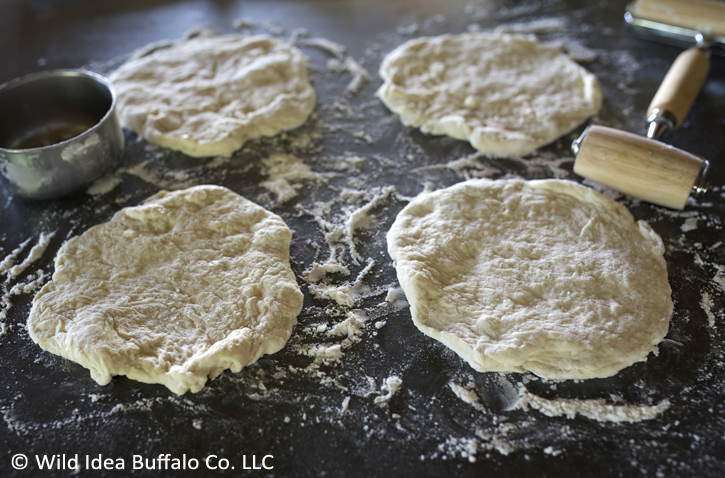
Fry Bread Dough rswm

Preparation:

1)   Mix flour, baking soda, and salt together in a bowl and sift to incorporate.

2)   Add milk and soda and stir in until incorporated. The dough will be slightly sticky.

3)   Flour hands and pat dough into a ball, place the dough on a floured surface and divide into 4 equal servings. Using floured hands press portions into a disk shape and roll out into about a six-inch diameter with a floured rolling pin.

4)   In a 8 inch diameter saucepan, over medium high heat, heat coconut oil. Oil is at the right temperature when at 375°, or you can test by inserting a wooden spoon into the oil, the oil is ready if it bubbles up around the spoon.

5)   Drop fry bread disk into oil carefully, one at a time, cooking about one minute each side or until golden. Place cooked fry breads on a paper bag or paper towels until ready to serve.

*Fry Bread is best served soon after cooking, or while still warm.

Zesty Sour Cream Dressing

Ingredients:
¾ – cup sour cream
2 – tablespoons fresh squeezed lime juice
2 – tablespoons canned, roasted, peeled green chilies with juice, puréed
¼ – teaspoon cayenne pepper, optional or to taste
salt to taste
Preparation: Mix all ingredients together and whisk to incorporate. Store in refrigerator until needed.

Introducing Buffalo Jerky from Patagonia Provisions

jill Blogging 20 Comments

Dear Wild Idea Buffalo Customers,

About five years ago we received a call from Patagonia stating that they were interested in starting an environmentally sustainable food line for their future sister company, Patagonia Provisions. They were specifically interested in us making Buffalo Jerky for them.

Because of our mutual, greater missions of sustainable foods and the environment as a whole, it looked like we might be a good fit.  We were thrilled to gain their attention, but before we could get started there would be many visits from their team inspecting the way we treated the land, the animals, and our employee’s.

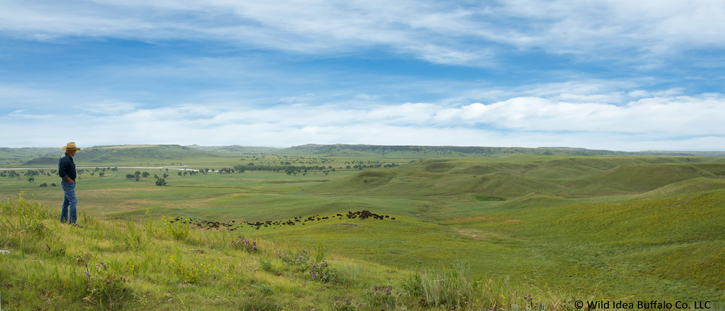
Dan Panoramic 2 rswm*
We welcomed their visits, and gave tours of our ranching operations, explaining our grassland conservation efforts and prairie restoration practices.  We discussed our goals of having an intact, healthy prairie eco-system that was rich in bio-diversity.

Dan & Scientist rswm

We talked about how much carbon the grasses sequester and store safely in the ground. That grazing the grasslands regenerates the soil and produces healthy grassland pastures.

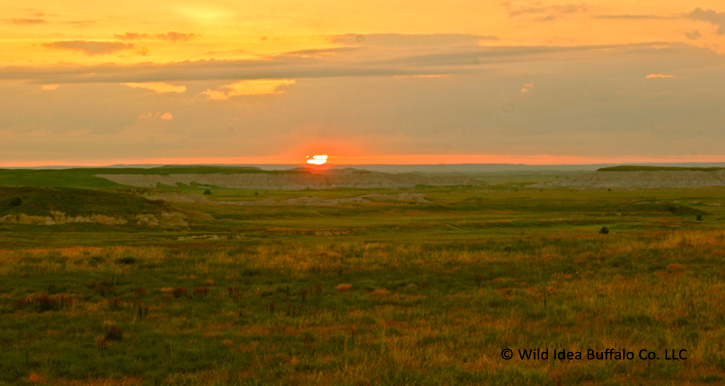
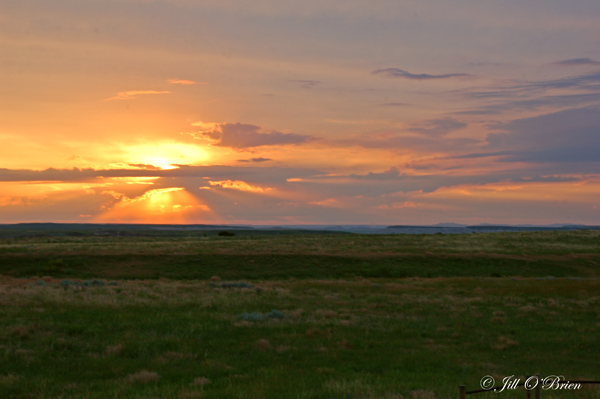
Sunset Pano rswm

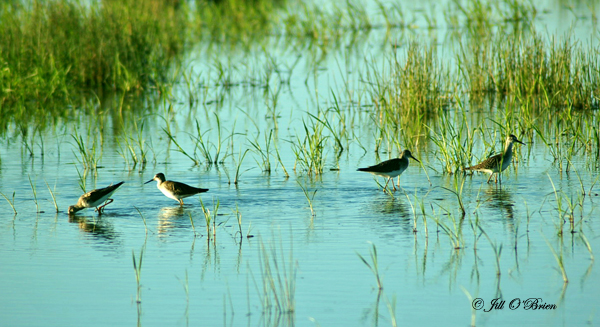
Since we had a captive audience that was interested, we prattled on about species diversity, the microbes, the plants, and the variety of ground nesting birds that use the prairie to raise their young.

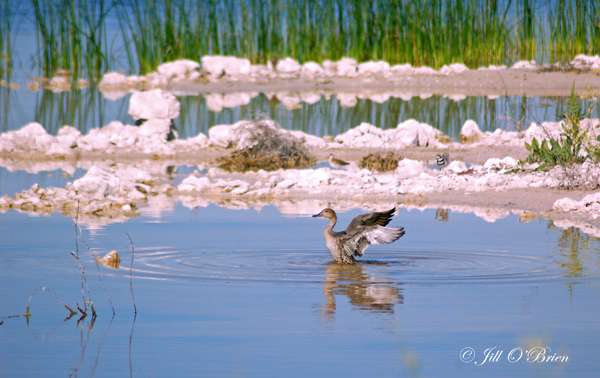
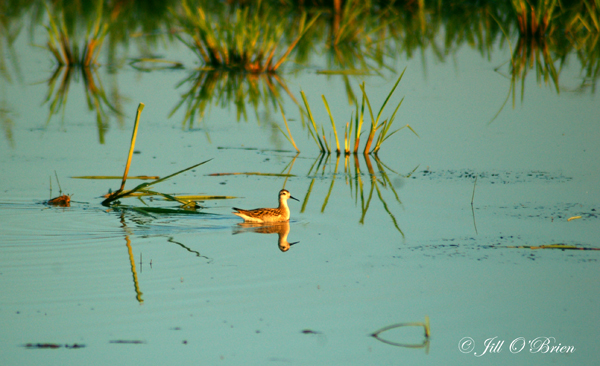
Ducks on Pond rswm

Burrowing Owls 2 rswm
They watched the buffalo roam and graze across the prairie, much like their ancestor’s did years ago. We explained our sourcing set up with other ranchers that raise their bison to our criteria, including neighboring Native American bison producers. They viewed our humane, stress free, field harvests, paying close attention to our care and respect for the animals.

Smoky Morning rswm*

Harvester w Carcass & Guys rswm

During other visits, they toured our processing plant and interviewed our employees. They reviewed our safety regulations and inspection documentation.  And, they tasted our Wild Idea Buffalo products, raised on water, grass, and sunshine.

Chris White Eagle rswm

CRR Panoramic rswm
We passed all of the requirements to move forward and started perfecting our Buffalo Jerky recipe. Patagonia Provisions provided scientific food experts, to consult with us along the way, insuring that the product would be as safe as it is healthy and delicious.  The end result is a great tasting jerky!

Top Round Sliced rswm

The sustainable food movement continues to grow because of people like you. People who care about the foods they eat, how it is raised, and the impact it has on our environment. But as the sustainable awareness grows, so will industrial agricultures powerful, hearty appetite. It will take all of us to keep them at bay and it will take all of us to introduce people to a new (old) way of thinking about food, and one that doesn’t come with an IOU.

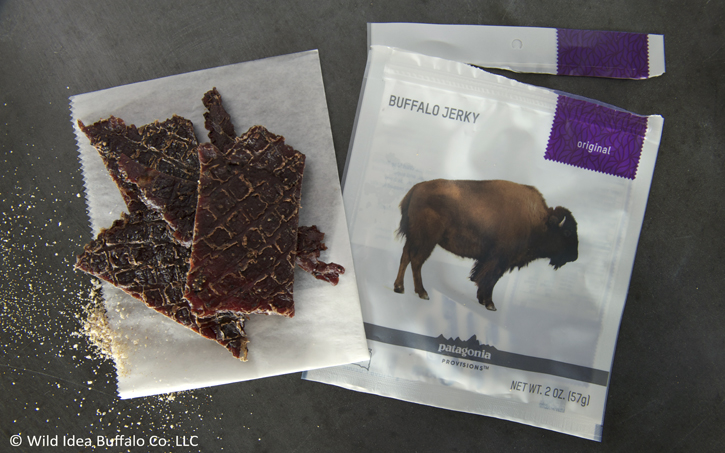
Patagonia Jerky rswm

That’s why we are exhilarated and inspired to be associated with the good folks at Patagonia Provisions. If you get the chance, check out their site at patagoniaprovisions.com. Better yet, order some of their meaty, lightly seasoned, Buffalo Jerky!

We want to thank you all for being grassland ambassadors, and for your past and continued support. Together, we can make a difference, one bite at a time.

Very best from the prairie.

Dan & Jill O’Brien

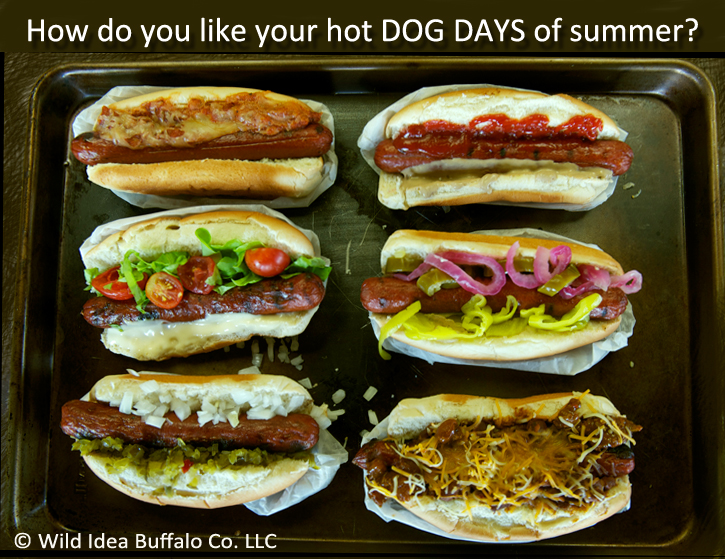
HOT DOG DAYS OF SUMMER

jill Buffalo Recipes, Recipes, Smoked Meats Leave a Comment

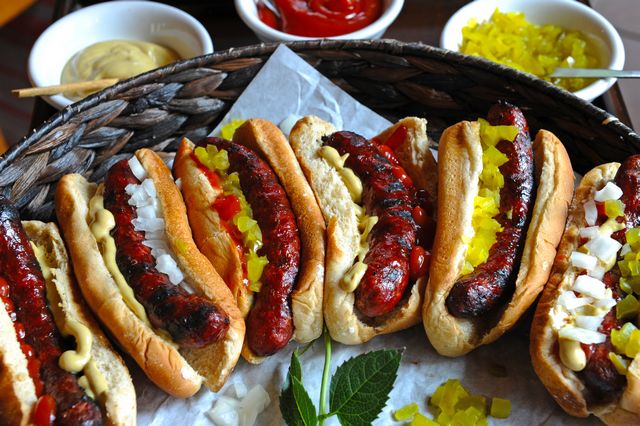
No matter how you like to top your dog, the key ingredient is still the hot dog itself. Wild Idea’s skinless Buffalo Hot Dogs are made from our 100% premium grass-fed buffalo meat and organic seasonings. We also recently introduced a dairy free option, for those with special dietary requirements. So fire up the grill and spread out your favorite toppings. Below are a few of our favorites.

Hot Dog Days rswm

Pizza Dog Topping: Pizza Sauce & melted Mozzarella. You might also want to add some Wild Idea’s Buffalo Pepperoni!

HLT: Hot Dog, Lettuce & Tomato with Mayo. Wild Idea Buffalo Bacon might be an additional tasty topping too!

Relish & Onion Dog: Pickled Relish & Chopped Onions.

Keep it Simple: Ketchup & Mustard.

Pickled Dog: Peperoncini, Pickled Jalapeños and Red Onions.

Chili Cheese Dog: Hot Dog smothered in Chili & Cheese!

Other favorite toppings: Coleslaw, Sauerkraut, & B.B.Q Sauce.

Wild Idea Buffalo Hot Dogs are featured in the months MONTHLY SPECIAL, which ships for free during the month of August!

Steak Tartare – Korean Style (Yukhoe)

jill Buffalo Recipes, Ground, Recipes Leave a Comment

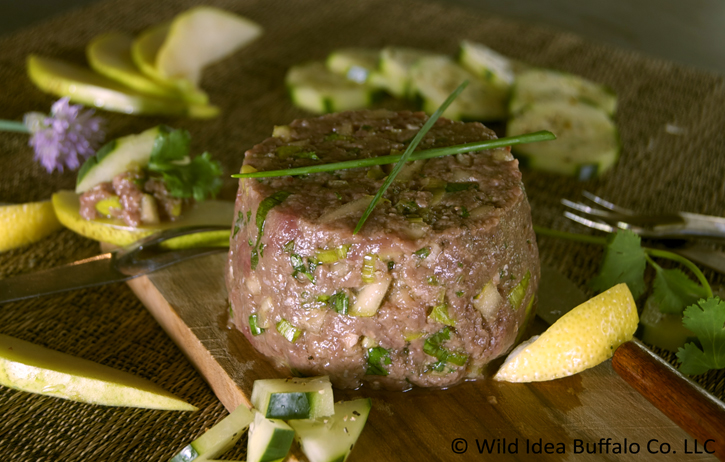
Wild Idea’s Ground Round, starts with 100% pure prairie grass-fed bison. The quality makes it the perfect main ingredient for any Tartare. In this recipe I’ve added some Asian seasoning for the Korean version of this dish, which is called Yukhoe. The Asian seasonings compliment the grass-fed bison nicely, but you could certainly change the seasonings for a Tartare creation of your own! Super good!

Ground Round*rswm
Ingredients: (makes 2 to 3 entree servings or serve as an hors d’oeuvre)
8 – ounces Wild Idea’s 100% lean Ground Round
2 – green onions, finely chopped
1½ – teaspoons soy sauce
2 – teaspoons sesame oil
1 – garlic clove, minced
8 – cracked pepper turns
1 – Asian pear or pear
1 – tablespoon fresh squeezed lemon juice
cucumber & sesame crackers

Steak Tartare Korean rswm

Preparation:

1)   Rinse the Ground Round under cold water and wrap with a paper towel to dry. Set aside.

2)   Mix onions, soy, sesame oil, garlic, and pepper together in a bowl.

3)   Quarter the pear and finely dice one quarter of it.  Brush the remaining pear quarters with a little lemon and reserve for accompaniment, slicing just before serving.

4)   Add diced pear and lemon juice to the spice mixture and stir to incorporate.

5)   Crumble in the Wild Idea Ground Round and mix together with your hands.

6)   Transfer to a mold or molds, pressing in to remove empty air pockets.

7)   Invert onto plates or platter and serve with sliced cucumber and pear.

Steak Tartare

jill Buffalo Recipes, Recipes, Steaks Leave a Comment

*Adaptation from Anthony Bourdain’s Les Halles 

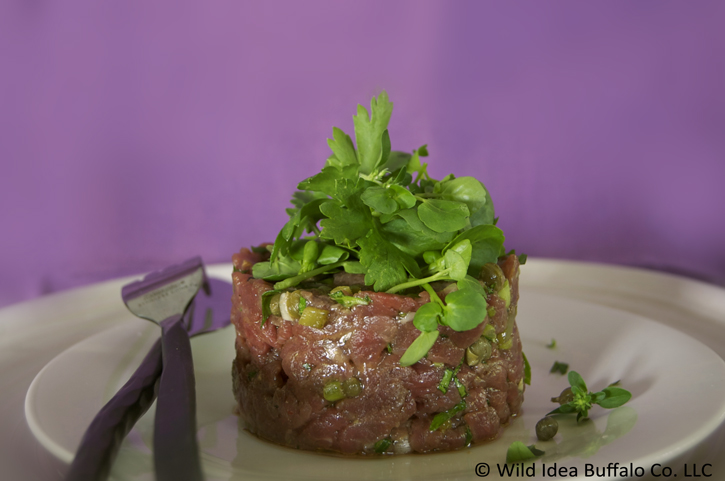
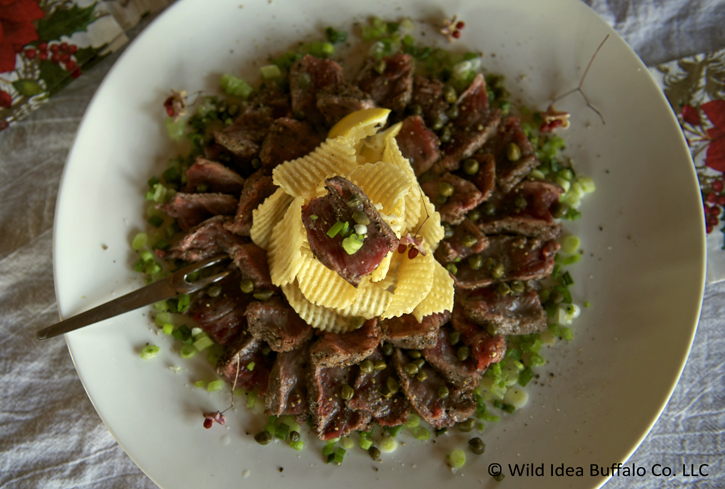
During our recent trip to France for Dan’s Wild Idea book tour we dined at many fantastic restaurants.  One dish that we noticed served often and in copious amounts, was Steak Tartare. Upon returning to South Dakota I decided to replicate this recipe with 100% grass-fed buffalo sirloins for a delicious, light, and elegant dish.

Sirloins rswm
Ingredients: (serves 2 to 3 entree’s or serve as an hors d’oeuvre)
2 – 6oz. Wild Idea Buffalo Sirloin Steaks, slice very thin and coarse chopped (or any of Wild Idea’s prime steaks)
1 – tablespoon Dijon
2 – anchovy filets, minced
1 –teaspoon ketchup
½ – teaspoon Worcestershire sauce
4 – good shacks of hot sauce
1½ – tablespoons olive oil
2 – green onions, finely chopped
1 – tablespoon capers, rinsed
1 – tablespoon tart gherkins, finely chopped
4 – sprigs Italian parsley, finely chopped
8 – grinds black pepper
salt to taste
1 – tablespoon, freshly squeezed lemon juice

Steak Tartare rswm
Preparation:

1)   Prep and measure all ingredients but steak and lemon juice, and mix together.

2)    Add chopped bison steak and mix with your hands to incorporate evenly.  Can be made a few hours ahead of time. * We had leftovers the next day and it was still fabulous!

3)   Squeeze in lemon juice just before serving and stir into Tartare. Press into molds of desired portion and press tightly into the mold.

4)   Invert onto plate, removing the mold.

Serve with salad greens, potato chips, toast points, or crackers.

WATER AFFECTS

jill Blogging 5 Comments

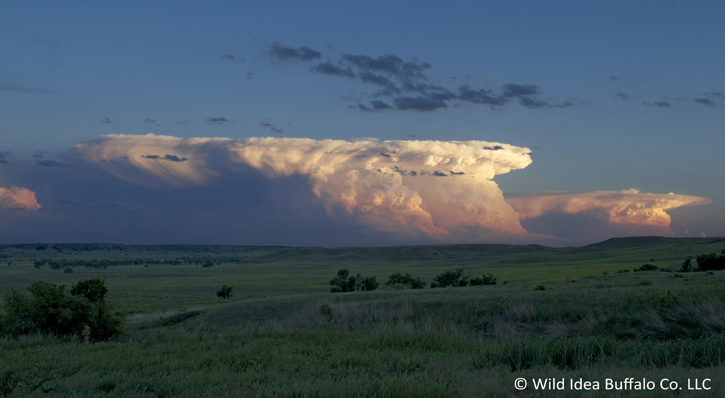
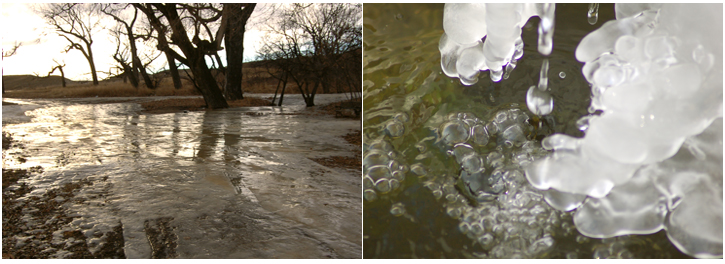
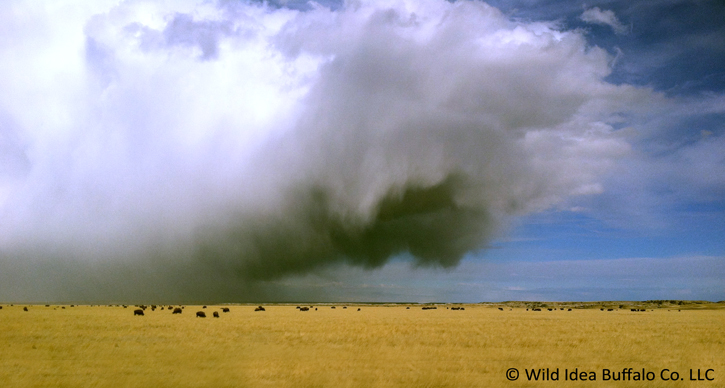
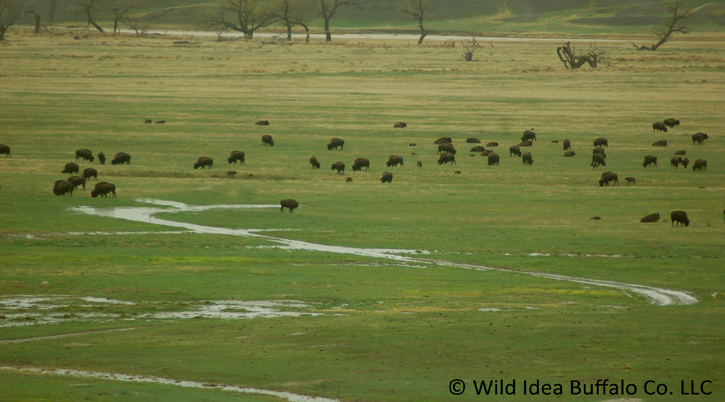
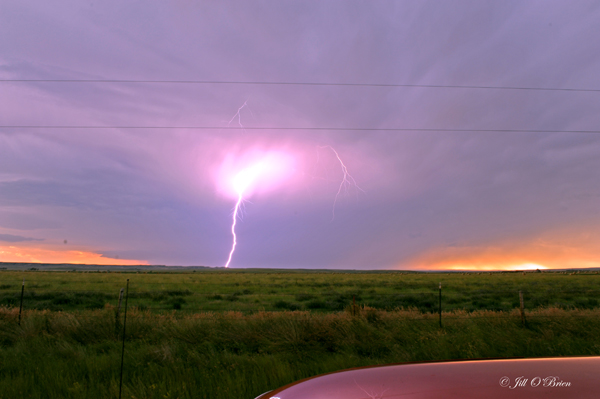
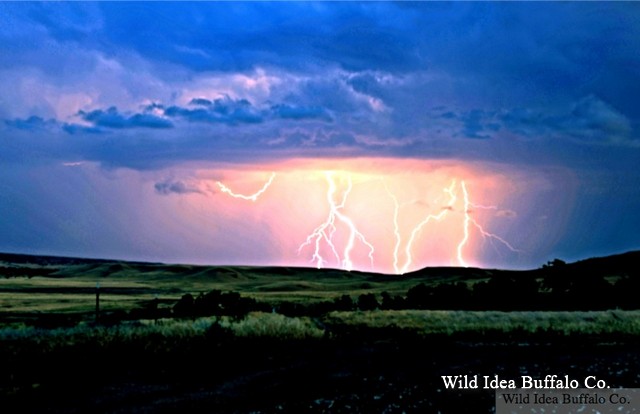
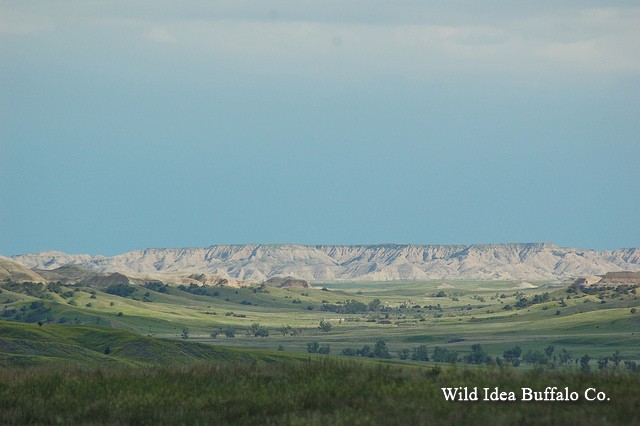
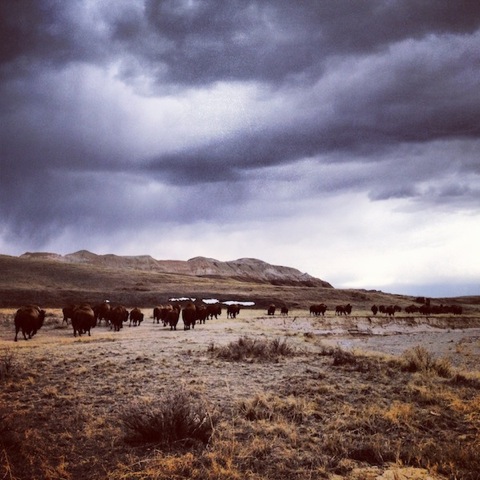
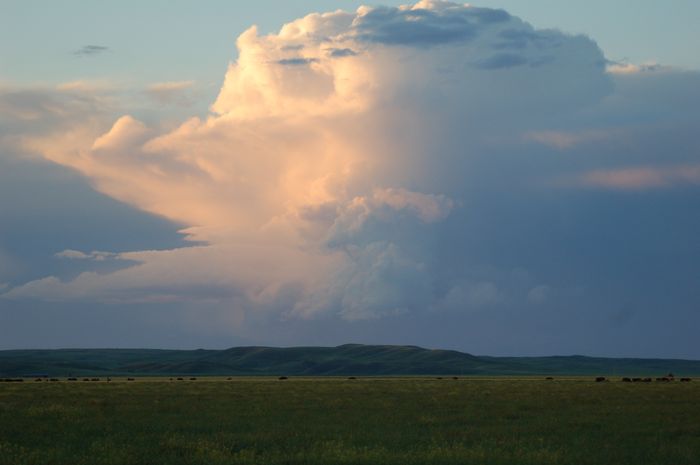
This years rainfall finally came in early May, alleviating our drought worries that had started to settle in. The rain continued to come and come. This is a good problem to have when you are a grass farmer/buffalo rancher, as the grasses will be in good supply for all the native species that rely on them for grazing for months to come.

Thunderhead over CRR3 rswm

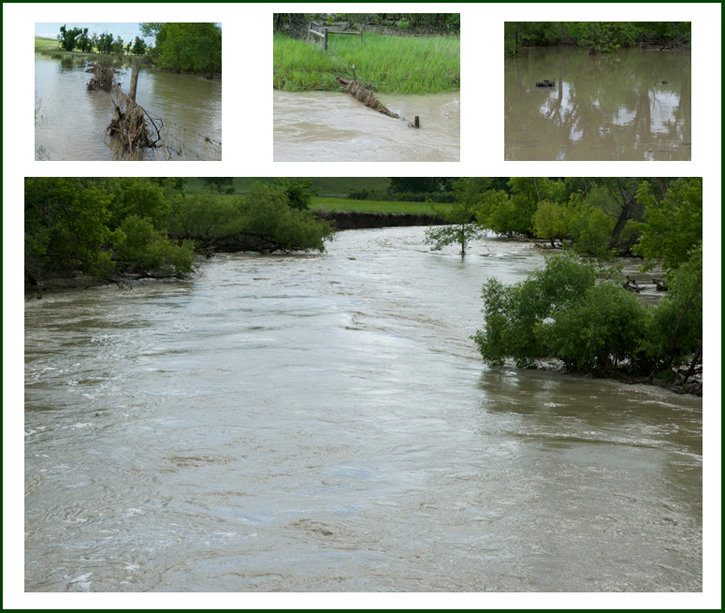
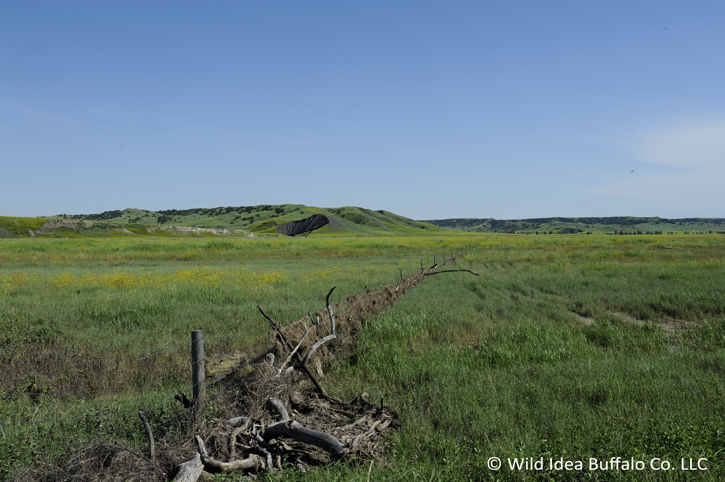
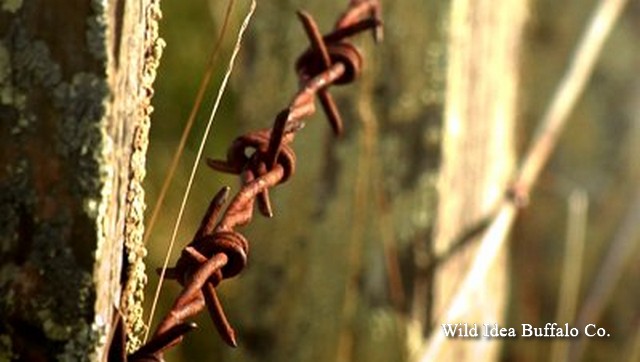
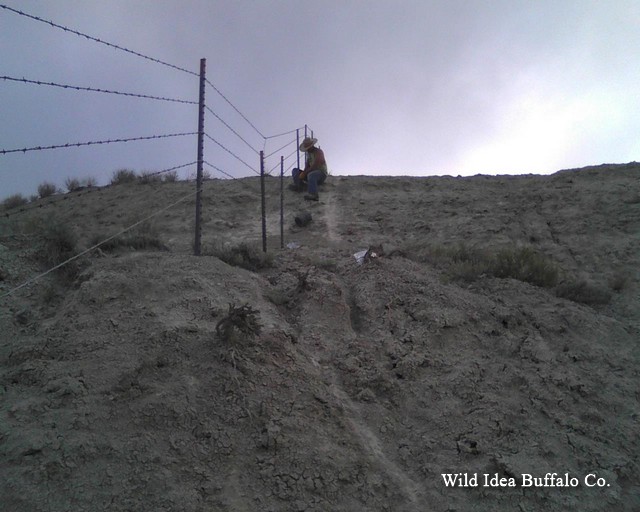
The abundant rainfall does not come without its effects; like flooded roads, washed-out dams, and fences blown out or covered in debris from the river swells.

Water Collage

CRR Panoramic rswm

When the excess surface water dries up the repairs begin. For us, the main repair is fencing, a lot of fencing, which means extra, needed help. Our good friend Gervase Hittle came to the rescue.

Debris in Fence rswm

The guys work in the hot, humid days when time allows. A catered lunch is often required to keep up their strength, and they welcome recipe testing’s. The Beer Bottle Bacon Wrapped Stuffed Buffalo Burgers were a big hit! And, the cold beer at the days end was welcomed too.

D&G 2 photo rswm

The thunderstorms continue to move in and out, creating beautiful skies and landscape. The wild flowers sprinkle the pastures with colorful dots of purple, yellow, and white, reflecting the colors of the sky.

Herd w Purple Sky rswm

Summer Soltice AM 2015 rswm

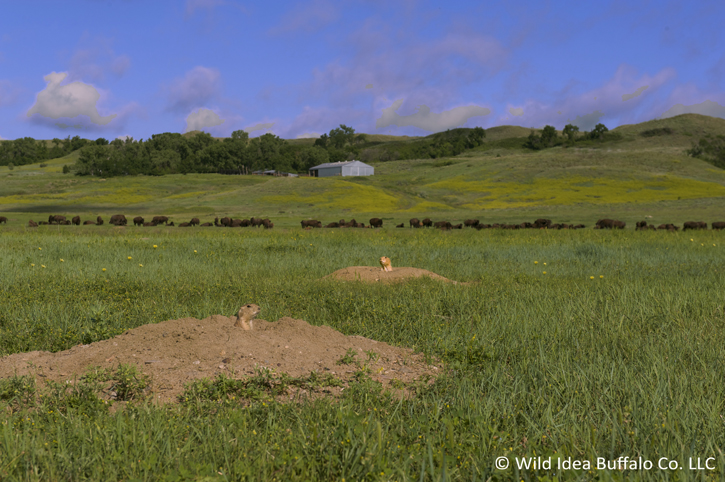
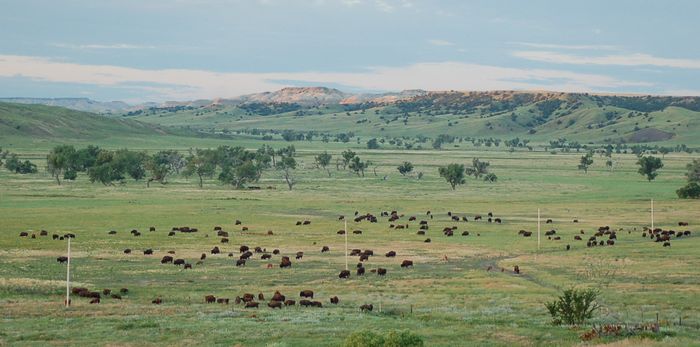
And, the prairie dogs stay busy mowing their green prairie lawn to keep a close eye out for predators, which the buffalo assist with as they pass through. A pretty glorious site!

Buffalo on Prairie Dog Town rswm

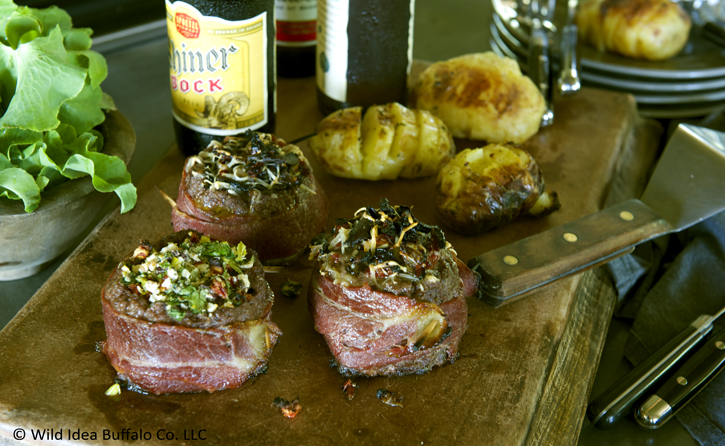
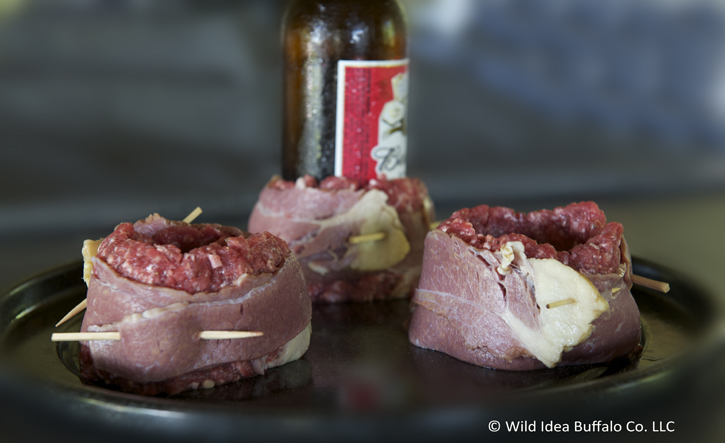
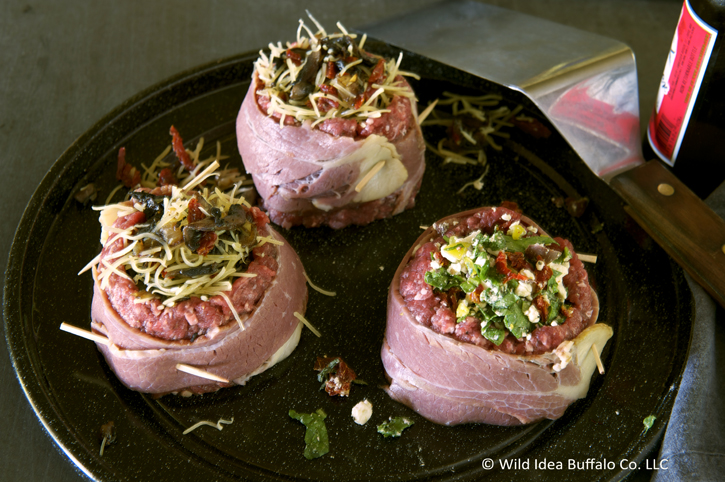
Beer Bottle Bacon Wrapped Stuffed Buffalo Burger

jill Buffalo Recipes, Ground, Recipes, Smoked Meats 2 Comments

I was recently forwarded a YouTube clip of the B.B.Q. Pit Boys making Bacon Wrapped Beer Can Stuffed Burgers.  For their recipe they used a half-pound of 80% lean ground beef, pork bacon, and then stuffed it with pulled pork, roast beef, and cheese!  I wanted to give this a try but thought, “I bet using Wild Idea Buffalo Bacon, and our 95% lean ground buffalo, that I could make a healthier, delicious version”.  Below are two options that I think you will really enjoy, and it’s Paleo friendly!

Beer Bottle Burgers Cooked rswm

Ingredients for Meat: (makes 3 burgers)
1 – pound Wild Idea Buffalo Burger
6 – strips Wild Idea Buffalo Bacon
½ – teaspoon each salt & pepper
1 – tablespoon olive oil
1 – bottle beer

Preparation for Meat:
1)   Spread meat out onto a plate. Sprinkle the salt, pepper, and olive oil over the meat. Mix the seasoned meat together with your hands and portion into three even sized balls.
2)   Transfer the balls of buffalo meat to a platter. Press a beer bottle into the center of the portioned meat and bring the meat that squishes out to the sides, up the sides of the bottle uniformly.
3)   Wrap the meat with two pieces of Wild Idea Buffalo Bacon, overlapping the two pieces. Secure bacon with a couple of toothpicks.
4)   Remove beer bottle, and stuff with one of the fillings below, pressing in lightly.
5)   Pre-heat grill to medium high heat, around 450°. Insure grill grates are clean and oiled. Using a spatula transfer the burgers to the grill, turn the burners that they are directly under the burgers off, and drop the remaining lit burners that are to the sides or side of them to a medium low setting. This will drop your grill temperature to around 325°. Close lid and grill for about 12 minutes rotating burgers halfway through cooking. Move burgers over direct heat, and turn burner to high. Close lid and grill for about two minutes. Remove from grill and serve immediately.

*I served the stuffed buffalo burgers with foil wrapped grilled potatoes, which kept all the hot cooking outside. Accompany with a green salad.

Beer Bottle Burgers w Botttle rswm

Caramelized Vegetable and Mozzarella Stuffing

Ingredients:
8 – ounces crimini mushrooms, steams removed and sliced
1 – medium sweet onion, chopped
2 – tablespoons butter
1 – tablespoon olive oil
½ – teaspoon each salt & pepper
2 – cloves garlic chopped
1/3 – cup julienned sundried tomatoes, chopped
4 – ounces mozzarella cheese, shredded

Preparation: (stuffs 3 burgers) *I prepared outside on grill burner.

1)   In a sauté pan over medium high heat, heat butter and olive oil. Add onions, mushrooms, salt, and pepper and sauté stirring occassionally, for about 25 minutes, or until nicely browned.
2)   Add the garlic cloves and sundried tomatoes, stirring in to incorporate. Continue cooking for another 5 minutes.
3)   Remove pan from heat and allow to come to come to room temperature.
4)   Once cooled off, stir in shredded mozzarella cheese.

This is sooo yummy, you will be sneaking bites out of the pan! 🙂

Beer Bottle Burgers 3 Stuffed rswm

Mediterranean Stuffing: (stuffes 3 burgers)

Ingredients:
1 – cup chopped spinach
¼ – cup pepperoncini, chopped
¼ – cup kalamata olives, chopped
¼ – cup julienned sundried tomatoes, chopped
¼ – teaspoon each salt & pepper
5 – ounces feta cheese, crumbled

Preparation: Mix all ingredients in bowl to incorporate.

This is super delicious too!

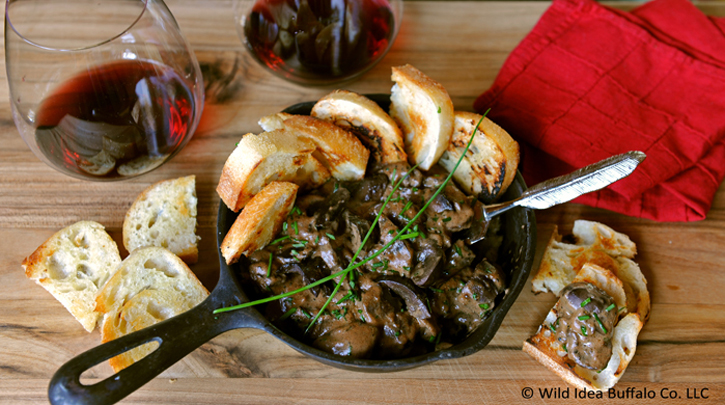
Drunken Kidneys

jill Buffalo Recipes, Delicacies, Recipes Leave a Comment

Meat guru, Hugh FearnleyWhittingstall, inspired this recipe. In his rendition, he states that, “If you don’t like kidney, or you’re not quite sure, this recipe will convert you.”  I fell in the “not quite sure category”, but I also believe it’s important to consume the whole animal, so thought I would give it a try. I was quickly converted. It is a delicious dish, and would make a terrific hors d’oeuvre for your next party.

Kidney, rswm

Ingredients:
1 – Wild Idea Buffalo Kidney
1 – cup milk
2 – tablespoons olive oil
1 – teaspoon salt
1 – teaspoon black pepper
1 – cup mushrooms, chopped
2 – tablespoons cider vinegar
¼ – cup red current or plum jelly
1 – cup dry sherry
1 – cup white wine
2 – teaspoons Worcestershire sauce
¼ – teaspoon cayenne, *I added more
1 – tablespoon, Dijon mustard
1 – tablespoon cream or sour cream
fresh parsely & chives, chopped

Preparation:
1)   Rinse kidney, pat dry, and cut into pieces. Place kidney in a bowl and cover with the milk. Soak for 2 to 24 hours. Drain the milk from the kidney and pat dry.

2)   In a sauté pan over medium high heat, heat oil. Add the kidney and season with the salt and pepper. Sauté until browned, tossing or stirring occassionally.

3)   Stir in the mushrooms and sauté for a couple more minutes.

4)   Add the cider vinegar and then the jelly. Stir to incorporate.

5)   Add the sherry, wine, Worcestershire, cayenne, and Dijon. Stir to incorporate. Cover, reduce heat to low, and simmer for about 30minutes.

6)   Remove lid and stir in cream. Season to taste, garnish with fresh herbs, and serve with toast points.

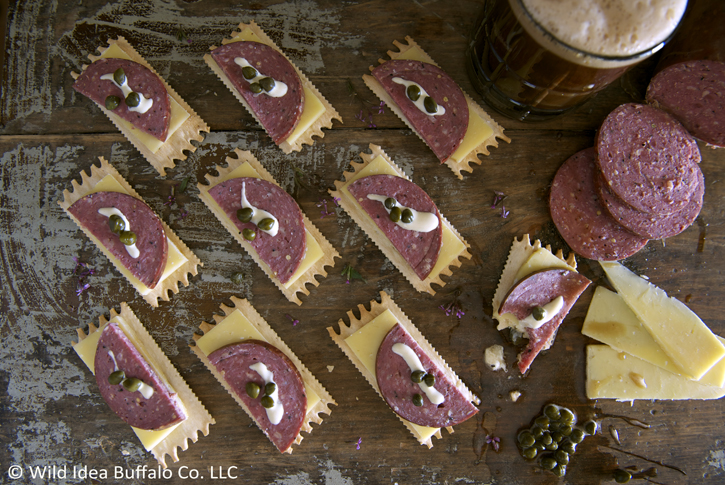
Summer Sausage Canapés

jill Buffalo Recipes, Ready To Eat, Recipes Leave a Comment

Sometimes big flavor comes in small bites! This quick hors d’oeuvre can be whipped up in minutes, with just a few ingredients from your fridge.

Summer Sausage Canapes w Beer rswm

Ingredients:
1 – 12 ounce Wild Idea Buffalo Summer Sausage
24 – rectangular *Italian Style crackers,*They are super thin, extra crispy, and not too salty!
12 – ounces Irish cheddar cheese
¼ – cup mayonnaise
1 – tablespoon horseradish
¼ – lemon, juiced
1 – tablespoon caper juice
salt & pepper
capers

Preparation:

1)   Slice the Wild Idea Summer Sausage into 12 circles, and then slice the circles into halves.

2)   Slice the cheese into 24 rectangular slices.

3)   In a small mixing bowl, mix the mayonnaise, horseradish, lemon and caper juice together.  Season with salt and pepper to taste.

4)   Stack the cheese and meat onto the crackers. Garnish with the sauce and capers, and arrange on a platter or board. Serve with cold beer!


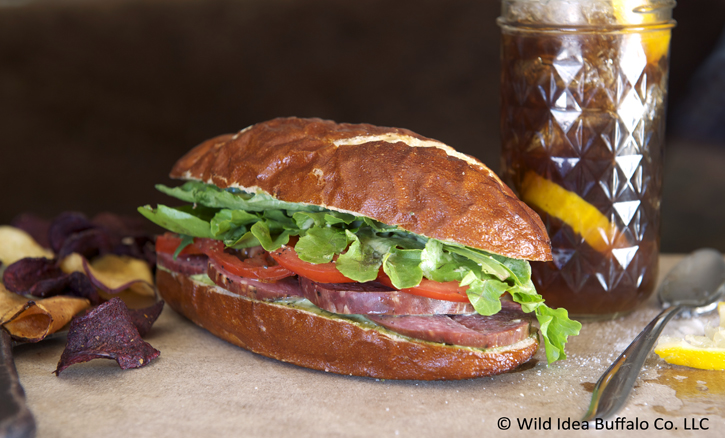
Sensational Summer Sausage Sandwiches

jill Buffalo Recipes, Ready To Eat, Recipes Leave a Comment

Cold cuts with garden fresh vegetables stuffed into a hoagie roll will satisfy the hungriest of appetites on a hot summer day.  Wild Idea’s 100% Grass-fed, nitrite free Buffalo Salami makes it not only more delicious but healthier, too! Now, how about a picnic?

Summer Sausage Sandwich wmrs

Ingredients: per sandwich
4 – ounces Wild Idea Buffalo Salami
1 – small tomato, sliced
1 – teaspoon olive oil
¼ – teaspoon each, salt & pepper
1 – handful fresh garden greens
4 – fresh basil leaves
2 – tablespoons mayonnaise
2 – tablespoons basil pesto, recipe below
1 – hoagie roll

Preparation:

1)   Slice the Wild Idea Buffalo Salami into ¼ to ½ inch circles. Remove outer paper rind.

2)   Season the sliced tomatoes with the olive oil, salt, and pepper.

3)   In a small mixing bowl, mix the mayonnaise and the pesto together.

4)   Slice hoagie roll, leaving it hinged. Generously spread the pesto mayonnaise on the top and the inside top and bottom of the hoagie roll.

5)   Layer on the Wild Idea Buffalo Salami, seasoned sliced tomatoes, garden greens, and basil leaves. Your masterpiece is complete!

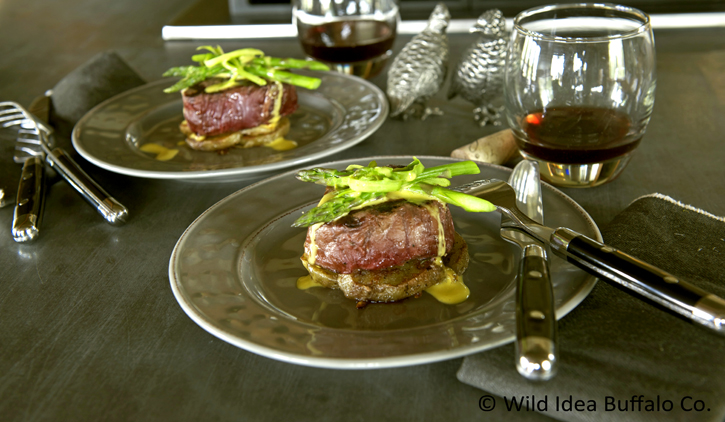
Grilled Steak Tournedos with Sauce Béarnaise

jill Buffalo Recipes, Recipes, Steaks 1 Comment

This classic, timeless favorite is simple to prepare, delicious and elegant. A great entree to serve for a dinner party or for a romantic dinner for two!

Petite Tenderloins Grilled with Asparagusrswm2 Croped

Entree Ingredients: per serving
1 – 5 or 8 ounce Wild Idea Buffalo Tenderloin or Top Sirloin Steak
2 – tablespoon olive oil
2 – teaspoons salt
1 – teaspoon black pepper
1 – organic potato, baked or boiled
3 – spears asparagus, or as many as you like
1 – lemon, quartered
Béarnaise Sauce, recipe follows

Preparation:

1)   Steak: Rinse steak under cold water and pat dry with paper towels. Pour 1 tablespoon of olive oil on a plate and add ¼ teaspoon salt & pepper each. Mix together and roll the steak into the seasoned olive oil. Cover and let rest for 2 hours before grilling. Preheat grill to high heat, 500°. Place prepared steaks on clean oiled grill grate over high heat. Grill steaks for 3 minutes on each side, with grill lid closed during cooking, for medium rare results. Remove from heat, season with a little more salt, cover and rest for 5 minutes.

2)   Potato: Bake or boil your potato and allow it to come to room temperature. Slice the potato into ½ inch circles. Over lap the potato slices into a tight pinwheel. Heat 1 tablespoon of olive oil in a sauté pan over medium high heat. Using a spatula, add the potato pinwheel to the pan and season with a little salt & pepper. Cook the potato pinwheel for about 5 minutes or until golden brown. Again, using a spatula, turn the potato pinwheel and cook for an additional 5 minutes or until lightly browned.

3)   Asparagus: Wash asparagus, and trim the thicker ends off. Using a potato peeler, peel one of the stalks into asparagus ribbons. Over high heat, bring one cup of water, plus a squeeze of fresh lemon juice and a teaspoon of salt to a boil.  Add the asparagus spears and cook for 3 minutes, adding the asparagus ribbons during the last minute. Remove from water and place on a plate lined with a paper towel.

4)   To plate, place crispy potato pinwheel in the center of the plate, top with grilled steak, asparagus spears and ribbons, and drizzle with desired amount of sauce Béarnaise.

Béarnaise Sauce

Ingredients;
3 – egg yolks
1½  – tablespoons lemon juice
1 – tablespoon tarragon leaves
1 – teaspoon black pepper
¼ – teaspoon cayenne pepper, more if desired
1 – stick salted organic butter, melted and still hot
1½ – tablespoon white wine vinegar

Preparation:

1)   Place egg yolks, lemon juice, tarragon, pepper, and cayenne in a blender and blend until slightly thick.

2)   Add the melted, hot butter through the top, smaller opening of the blender while the blender is still running. Blend to incorporate. Sauce should be fairly thick.

3)   When ready to serve, flash blend, adding the vinegar at the end. Season to taste.

*Left over Béarnaise Sauce makes a great sandwich spread or crudité dip. 

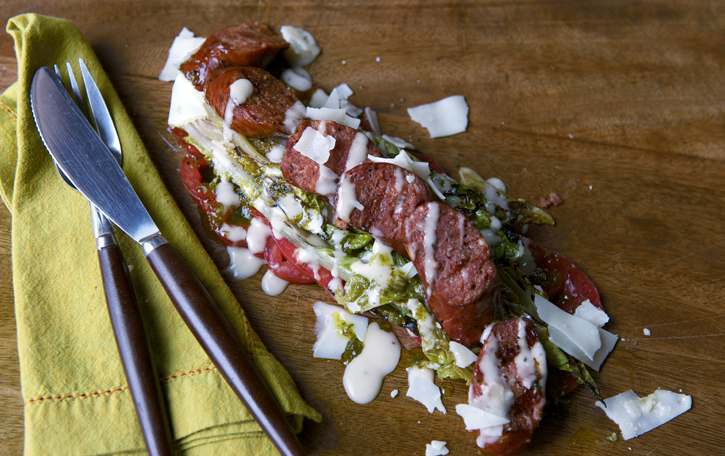
Grilled Caesar Salad with Smoked Buffalo Italian Sausage

jill Buffalo Recipes, Recipes, Sausages 1 Comment

Recently, our in-house artisan sausage maker has come up with our latest, Wild Idea Buffalo product, Smoked Italian Sausage with Mozzarella.  I was in love at first bite! With the grilling season in full swing, I thought it would make a great topping for a grilled Caesar salad. I modified my traditional Caesar dressing by adding ground fennel, which is fantastic, and added a layer of tomatoes. This will be a favorite ranch, summer, go to recipe! I hope you like it too.

Smoked Italian Sausage with Mozzerella on Grilled Romaine rs

Ingredients: 2 servings
2 – Wild Idea Buffalo Smoked Italian Sausages with Mozzarella
1 – Romaine lettuce heart, halves
3 – tablespoon basil olive oil or olive oil
1 – tomato, sliced
¼ – teaspoon each, salt & pepper
½ – cup fennel infused Caesar dressing, recipe below
Shaved Parmesan
Optional – Toasted croutons

Preparation:
1)   Pre-heat grill to medium heat, about 350°.
2)   Place Romaine halves on a baking sheet or platter and drizzle each with a tablespoon of oil. Season with a little salt and pepper.
3)   Place the tomato slices on plates, drizzle with the remaining oil, and sprinkle with a little salt and pepper.
4)   Place the sausages on the grill, and grill for two minutes with the grill lid closed.
5)    Add the Romaine halves and turn the sausages, close the grill lid and grill for another 2 minutes. Turn the Romaine hearts, rotate sausages, and grill for 2 more minutes.
6)   Remove sausages and Romaine hearts from the grill, placing the grilled Romaine on top of the tomatoes.
7)   Slice the sausages and place on top of the grilled Romaine.
8)   Spoon desired amounts of Caesar dressing over the salad and top with shaved Parmesan.  Serve with toasted croutons.


Fennel Infused Caesar Dressing
Ingredients:
2 – cloves garlic
2 – teaspoons ground fennel, add a bit more to taste, if you like
1 – tsp. black pepper
2 – 2oz. tin Anchovy Filets in oil
1 – Tb. lemon juice + ¼ cup lemon juice
¼ – cup shredded Parmesan cheese
1 – farm fresh or organic egg, coddled
¼ cup olive oil

Instructions:
1.)  In blender, mix garlic, pepper, 1 tin anchovies, 1 T. lemon juice, Parmesan cheese and egg.
2.)  With blender running drizzle in olive oil, and mix until well incorporated. Mixture will be thick.
3.)  Add additional lemon juice and one more tin of anchovies and flash process. This will help to thin the dressing and will leave larger pieces of anchovies dressing.
4.)  Season with additional pepper & garlic, as desired.

Coffee & Chili Rubbed Grilled Export Rib Roast with Redeye Bean Gravy

jill Buffalo Recipes, Recipes, Roasts 1 Comment

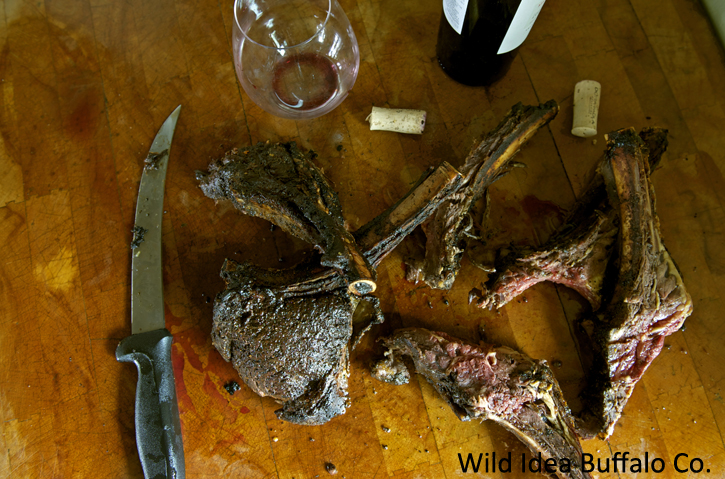
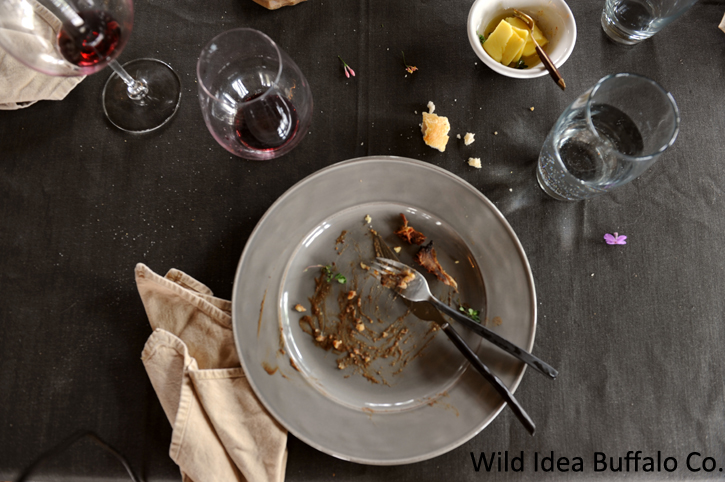
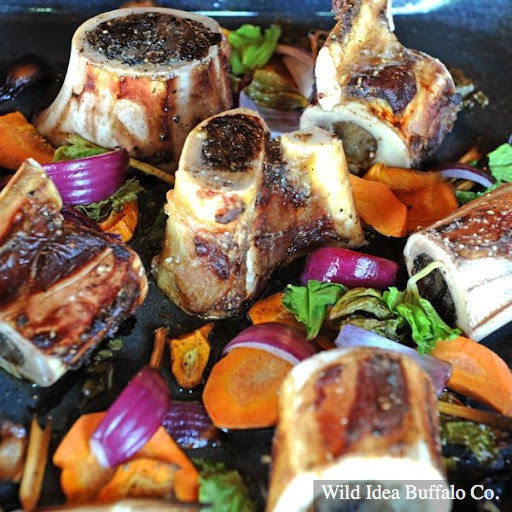
This most impressive, delicious roast should not be reserved just for holidays! So, fire up the grill and get ready to have the best Prime Rib of your life (that was the consensus at the dinner table)! Adjust cooking time based on the size of the rib roast. *I was feeding a hungry crowd, so I had no time to photograph before serving, but here are a couple of shots of the after meal.

After Dinner Export Bones rswm

Ingredients:
1 – Wild Idea Export Rib Roast, rinsed and patted dry
2 – tablespoons olive oil
2 – onions, peeled and sliced into thick slices
4 – tablespoons finely ground coffee
3 – tablespoons chili powder
1 – tablespoon black pepper
1 – tablespoon smoked paprika
1 – teaspoon ginger
sea salt or finishing salt, such as Omnivore Salt

Preparation:
1)   Place prepped Wild Idea Buffalo Export Roast on a baking sheet and rub with olive oil.
2)   Combine all rub ingredients, and rub into export roast. Let export roast rest at room temperature for two hours before cooking.
3)   Prepare char grill, creating a hot pile of coals or wood. I used mesquite wood charcoal. Place rack at the highest elevation of the grill.
4)   Preheat oven to 500° and place the oven rack in the center of the oven.
5)   Place sliced onions on a lightly oiled, shallow rimmed baking pan. Place prepared roast on top of the onions, and place in pre-heated, hot oven for 25 minutes. The roast will become very dark from the rub.
6)   Slide hot coals to one side of the grill, and place the seared rib roast over the indirect heat side of the grill. Top the roast with some of the sliced onion from the roasting pan. Insert a meat thermometer into the thickest center of the roast.  Open grill vents half way and cover the grill with the lid while the roast is cooking.
7)    Grill the seared roast over the indirect heat for about 10 minutes per pound, for a medium rare result. The internal temperature should read 135°. The shape of the roast will effect the cooking time, so be sure to rely on your meat thermometer too, to insure you are cooking to the temperature of your liking. Rotate the roast half way through cooking time and occasionally add more wood chips or charcoal as needed to maintain a grill temperature of 350°. *I prepared a 14 pound roast and my indirect grill time was two hours to reach the 135°.
8)   Remove the roast from the grill, place on a cutting board, and cover tightly with foil. Allow tot rest for 15 minutes before carving.
9)   Slice with a sharp knife, cutting around the rib bones at the crown base. Season the slices of rib roast with sea salt and pass with Redeye Bean Gravy. Recipe below. So good!

After The Export Roast rswm

Redeye Black Bean Gravy
I had heard of Redeye Gravy before, but had never tried it or knew what it consisted of. I researched a few recipes, and decide on one I would give a try. Following it to a tee, I found it to be bland and un-servable. I started again using the base ingredients suggested by most Redeye Gravy recipes and enhanced it with other seasoning for flavor, and beans for a little more richness, which also gave it a nice consistency. It was a big hit. I hope you like it too.

Ingredients:
2 – tablespoons butter
½ – onion, diced
1 – cup brewed strong coffee
1 – cup organic, beef broth
2 – teaspoons cumin
2 – teaspoons black pepper
1 – can black or kidney beans, rinsed and drained
salt to taste

Preparation:
1)   In a saucepan over medium heat, melt butter and add the diced onion. Cook onions until tender, stirring occasionally.
2)   Add coffee, broth, and seasoning and bring to a boil. Reduce heat to simmer and reduce a bit to enhance flavor.
3)   Add beans and heat through.
4)   Transfer all the ingredients to a blender, leaving the small opening partially open to allow steam to escape. Puree until smooth.
5)   Transfer gravy back to the pan to heat, and season to taste.

B.B.Q. Summer Sausage & Shrimp Skewers

jill Buffalo Recipes, Ready To Eat, Recipes Leave a Comment

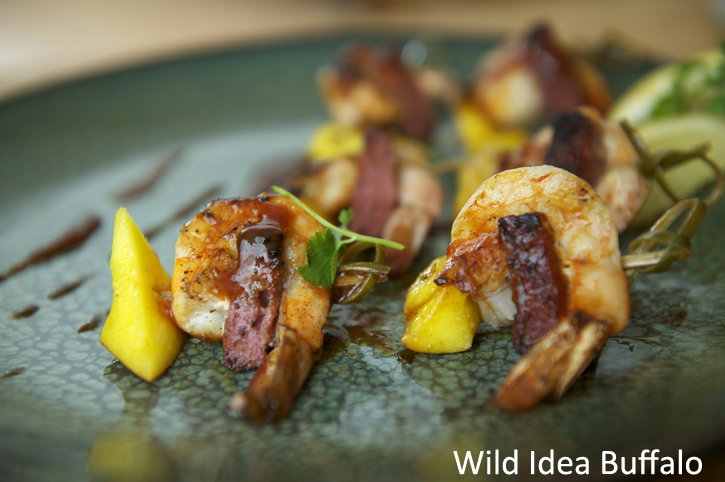
Simple summertime grilling recipes that don’t skimp on the “wow” factor are pretty hard to beat. The ingredient combination of this recipe is sensational, but quality ingredients are the key. The number of skewers will depend upon the size of shrimp you purchase. 16 to 24 sized shrimp per pound work well, but larger would be fine too. Seek out wild caught shrimp, no other will do, and of course Wild Idea’s Bison Summer Sausage!

Summer Sausage & Shrimp BBQ Skewers rswm

Ingredients:
8 – ounces Wild Idea Buffalo Summer Sausage
1 – pound wild caught shrimp (16 to 24 size), peeled & deveined
1 – lemon, cut into wedges
1 – teaspoon lemon pepper
1 to 2 mango’s, peeled and cut into thick pieces
2 – tablespoons olive oil
½ – cup of your favorite B.B.Q. sauce
Wooden skewers, soaked in water
Cilantro for garnish

Preparation:
1)   Cut Wild Idea Buffalo Summer Sausage into circle slices and then into pie pieces, in keeping with the size of your shrimp. You may have extra summer sausage. Cover and set aside.
2)   Peel, devein, and rinse shrimp. Blot dry with a paper towel. Place in a bowl and squeeze half of the lemon wedges over the shrimp, and season with the lemon pepper. Toss to incorporate and allow to rest for 20 minutes.
3)   Skewer the tail part of the shrimp on first, then the summer sausage, securing the meatier part of the shrimp around the summer sausage.  Add a piece of mango to the end of the skewer. *The mango pieces can also be added after the grilling.
4)   Place on pan and drizzle with olive oil.
5)   Grill over medium high heat, for 30 seconds each side, closing grill while grilling. Repeat two more times brushing with B.B.Q sauce while turning.
6)   Arrange skewers on a platter and squeeze with additional lemon slices. Garnish with cilantro and drizzle with additional warmed B.B.Q. sauce if desired.

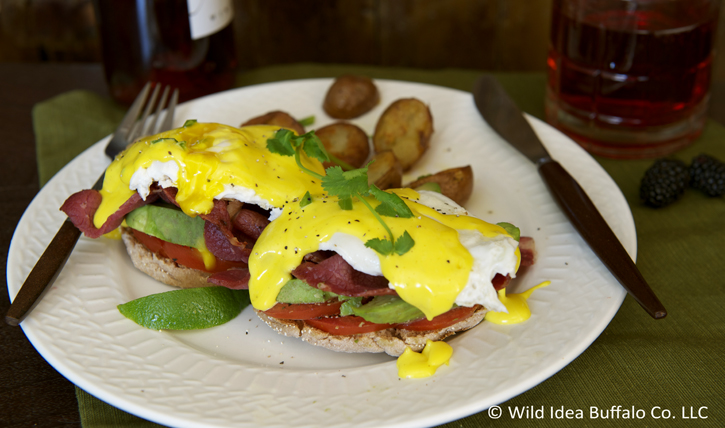
California Benedict "Meats" Buffalo Bacon & Jalapeño Hollandaise

jill Buffalo Recipes, Recipes, Smoked Meats Leave a Comment

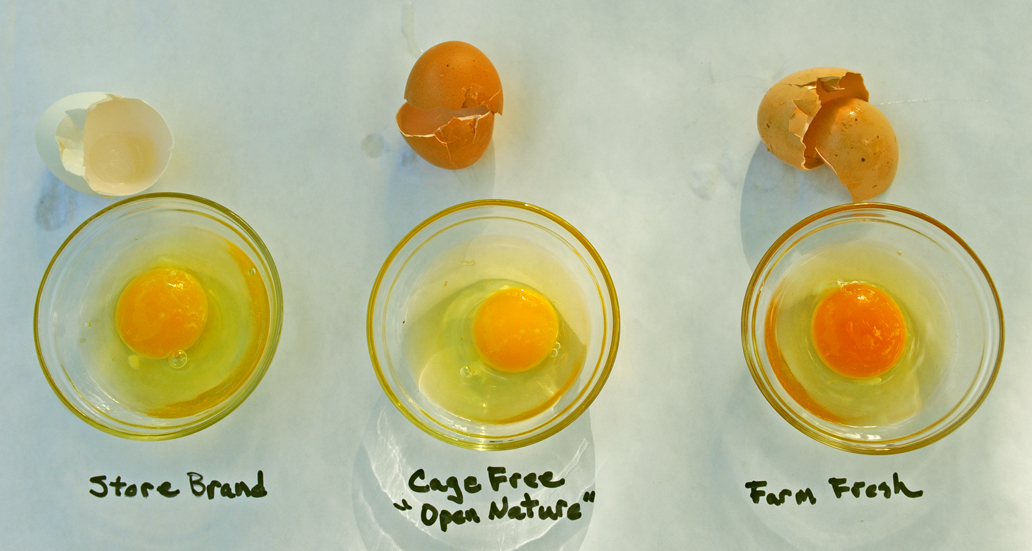
No need to hold the bacon on the vegetarian version of the classic favorite. Wild Idea’s Buffalo Bacon is 100% grass-fed/finished, 100% nitrite free, and 100% delicious! I’ve added a little extra zing with homemade Jalapeño Hollandaise, which brings all the flavors together nicely. Now, what time is brunch served? *Note: My hollandaise sauce is always bright yellow, as the eggs are free range and farm fresh, making the yolks bright yellow to orange.

Bacon California Benedict rswm


Ingredients: (per serving)
4 – strips Wild Idea Buffalo Bacon
1 – English Muffins, split
butter
2  – farm fresh or organic eggs
4 – teaspoon olive oil
2 – cups boiling water
salt & pepper
4 – slices fresh avocado, sprinkled with salt & pepper
4 – slices tomato, sprinkled with salt & pepper
*optional , baby spinach leaves
Jalapeño Hollandaise Sauce  – recipe below
Garnish options, fresh Jalapeño – diced, fresh cilantro sprigs, lemon or lime wedges

Preparation:
1)   In a medium size pan, over medium high heat, heat 3 teaspoons of the olive oil. Add buffalo bacon to the pan and cook for about 2 to 3 minutes each side. If you prefer crispier bacon, cook for a bit longer. When cooked remove the bacon from pan and place on paper towels.
2)   Simultaneously, toast the English muffins in toaster until slightly golden. Spread hot muffins with desired amount of butter.
3)   To poach eggs, pre-crack eggs into individual ramekins.
4)   Heat a non-stick pan over medium heat, and add remaining teaspoon of oil spreading it around. Add eggs one at a time quickly, this helps them set individually. This is method is somewhere in-between poached and basted. 
5)   Immediately add the boiling water and cover. Reduce heat to low, and check after one minute. Cover and cook for another minute. Eggs are done when the top of the egg white is sealed and is white in color.  Cooking to this point will still give you a running yolk. Continue to cook if needed or until desired doneness is established.  Remove poached eggs from pan with a slotted spoon.
6)   Place buttered muffins on plates, top with tomato and avocado slices, cooked buffalo bacon and poached eggs. Season the eggs with a little salt and pepper, and drizzle hollandaise over the eggs as desired.

Jalapeño Hollandaise Sauce
I’ve added a spicy, little kick to this luxurious favorite sauce.  It is terrific on Eggs Benedict, or over steaks, or as a dip.

Ingredients:
3 – egg yolks
½ – teaspoon coarse mustard
½ – teaspoon garlic, chopped
2 – tablespoons lemon juice
½ – teaspoon black pepper
1 – stick salted organic butter, melted and still hot
1 – Jalapeño, roasted, peeled, seeded, and coarse chopped

Preparation:
1)   Place all the ingredients except roasted Jalapeño and butter in a blender and puree until slightly thick.
2)   Add melted hot butter through top while blender is still running. Blend to incorporate.
3)   When ready to serve, flash blend again, and add the roasted Jalapeño.


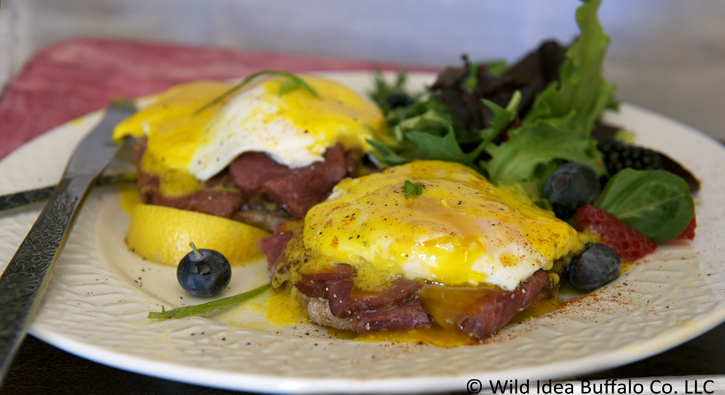
Eggs Benedict with Bison Bresaola

jill Buffalo Recipes, Ready To Eat, Recipes 1 Comment

Say goodbye to the questionable Canadian Bacon and hello to Wild Idea’s Bison Bresaola! Our Bresaola is brine cured, aged and then slowly smoked for a moister version of this Italian favorite. The subtle tang of the cured meat pairs very well with farm fresh eggs and the buttery, lemony Hollandaise sauce! You’re going to love this rendition!


Bresaola Benedict rswm


Ingredients:
1 – 8 ounce pkg. Wild Idea Bison Bresaola
2 to 4 – English Muffins, split
butter
4 to 8  – farm fresh or organic eggs
2 – teaspoons olive oil
1 – quart boiling water
salt & pepper
Hollandaise Sauce  – recipe below

Preparation:
1)   Allow Wild Idea Bison Bresaola to rest at room temperature for an hour or two. This will make separating the slices easier. Separate into 4 to 8 piles of meat.
2)   In a medium size non stick pan or on griddle, over low heat, heat the piles of Bresaola. About one minute each side. Remove from heat.
3)   Toast English muffins in toaster or on griddle until slightly golden. Spread hot muffins with desired amount of butter.
4)   To poach multiple eggs, pre-crack eggs into individual ramekins.
5)   Heat a large non-stick pan over medium heat, and add oil spreading it around. Add eggs one at a time quickly, this helps them set individually. *This method is in-between poached and basted eggs, but it works great!
6)   Immediately add the boiling water and cover. Reduce heat to low, and check after one minute. Cover and cook for another minute. Eggs are done when the top of the egg white is sealed and white in color. Continue if needed or until desired doneness is established.  Remove poached eggs from pan with a slotted spoon.
7)   Place buttered muffins on plates, top with warmed Bresaola, and poached eggs. Season the eggs with a little salt and pepper, and drizzle hollandaise over the eggs as desired. Sprinkle with a pinch of cayenne or paprika.

Hollandaise Sauce
*I like my hollandaise a little on the lemony side. If you prefer less, substitute a little water for thinning if needed. If needing to reheat, place sauce in a container and place in a pan of boiling water. Stir to avoid over cooking.

Ingredients:
3 – egg yolks
3 – tablespoons lemon juice
1 – teaspoon black pepper
¼ – teaspoon cayenne pepper, more if desired
1 – stick salted organic butter, melted and still hot

Preparation:
1)   Place egg yolks, one tablespoons lemon juice, pepper, and cayenne in a blender and blend until slightly thick.
2)   Add melted hot butter through top while blender is still running. Blend to incorporate. Stop until ready to serve.
3)   When ready to serve, flash blend again, adding the last tablespoon of lemon juice. Season to taste.

Bison Fajitas

jill Buffalo Recipes, Recipes, Steaks Leave a Comment

Bison Fajitas (serves 4 to 6)
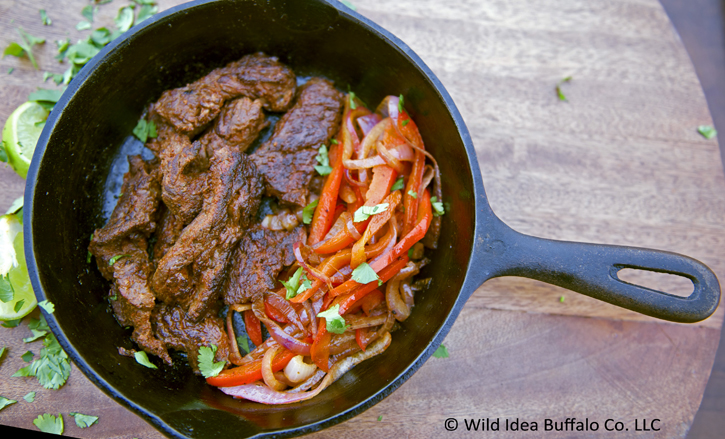
No need to go out for this Mexican favorite, just follow one of the easy to use preparations below, with Wild Idea’s Pre-Marinated Bison Fajita Strips and you will have a healthy, delicious dinner in a jiffy! You’ll love the convenience and all will love the taste! Ole!

Fajitas* rswm

Seared Buffalo Fajitas
Ingredients:
1 – pound “Ready to Cook” Wild Idea Buffalo Fajita Strips
2 – tablespoons olive oil
2 – bell peppers, seeded and sliced thin
1 – large onion, peeled and sliced thin
½  – teaspoon salt
½  – teaspoon black pepper

Accompaniment Ingredients: (as desired)
1 to 2 – tortillas per person, based on size, warmed
Avocado, sliced, or guacamole
Pico de Gallo or Salsa
Sour Cream
Shredded Cheese

Preparation:
1)   In heavy, large skillet, over medium high heat, heat 1 tablespoon of the oil. Add the bison fajita strips evenly to pan. Allow them to sear for a minute before tossing or turning. Sauté for about 4 minutes.
2)   Remove from pan and cover with foil.
3)   Add remaining oil to the pan and add peppers, onions, and season with salt and pepper. Sauté, tossing occasionally until tender, but still vibrant in color.
4)   Slid vegetables to one side of the pan and return the bison fajita strips. Reheat for one minute, tossing occasionally.
5)   Serve hot out of the skillet with accompaniments.

Stewed Buffalo Fajitas
Ingredients:
1 – pound “Ready to Cook” Wild Idea Buffalo Fajita Strips
1 – tablespoons olive oil
1 – 14 ounce can Mexican style, stewed tomatoes
2 – bell peppers, seeded and sliced thin
1 – large onion, peeled and sliced thin
½  – teaspoon salt
½  – teaspoon black pepper

Preparation:
1)   In a crockpot on high heat, heat the oil. Add the bison fajita strips to the crockpot and allow too brown slightly.
2)   Add stewed tomatoes to the crockpot and cover, bringing to full heat. Reduce heat to medium low and allow bison fajita strips to stew for about 45 minutes.
3)   Add peppers, onions to the crockpot and stir into the stewed bison fajitas. Season with salt and pepper. Cover and stew until vegetables are tender, but still vibrant in color.
4)   Serve hot out of the crockpot with accompaniments.

Vietnamese Bison Steak Salad

jill Buffalo Recipes, Recipes, Steaks 1 Comment

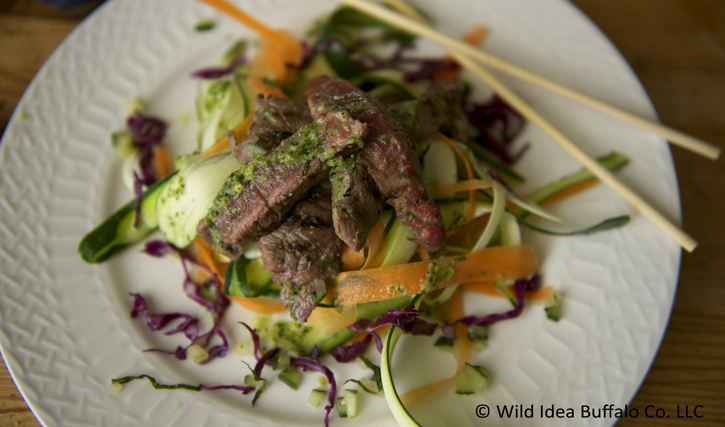
A fabulous combination of ingredients! Feel free to use any vegetables of your choice. Not only is it tasty and beautiful, but it’s healthy too! *Optional: Rice Noodles may also be added to this salad. Prepare as directed and place the noodles in the center of the plate. (serves 4)


Vietnamese Salad rswm

Dressing Ingredients:
1 – cup fresh cilantro, lightly packed
2 – cloves of garlic, about 1 tablespoon
1 – jalapeno pepper, coarse chopped
¼ – cup pure cane sugar
¾ – cup fresh lemon juice, warmed
½ – cup Asian fish sauce
¼ cup sesame oil

Preparation:
1)   In a blender, purée the cilantro, garlic, sugar, and lemon juice.
2)   While the motor is still running, add the remaining ingredients.  Set aside or refrigerate the dressing until needed.

Salad Ingredients:
1 – 1 pound Wild Idea Buffalo Steak Strips
1 – tablespoon olive oil
½ – small red cabbage, finely julienned
½  – red onion, finely julienned
2 – carrots, finely julienned or use peeler for ribbon effect
1 – yellow bell pepper, finely julienned or zucchini ribbons
½ – cucumber, diced
½ – cup fresh mint, julienned
½ – cup fresh basil, julienned

Preparation:
1)   Rinse the Wild Idea bison steak strips and pat them dry. Place them in a glass dish and drizzle with
1/2 cup of the dressing. Marinade for 2 to 4 hours.
2)   Place red cabbage in a bowl and sprinkle with a little salt. Squeeze cabbage to tenderize. Add the red onion and toss together.
3)   Mix cucumber, mint, and basil together. Add ¼ cup of dressing to the cucumber mixture and set aside to marinade.
4)   Arrange julienned or ribbon vegetables on 4 plates.
5)   Remove the bison steaks from the marinade, shacking off the excess.
6)   Over high heat, heat the olive oil and sauté the bison strips for about 4 minutes, tossing to turn occasionally
7)   Place the seared steaks on top of the julienned vegetables, drizzle with desired amount of dressing, and sprinkle with the cucumber mixture.

Breakfast Sausage & Egg Buttermilk Biscuit Sandwiches

jill Buffalo Recipes, Recipes, Sausages Leave a Comment

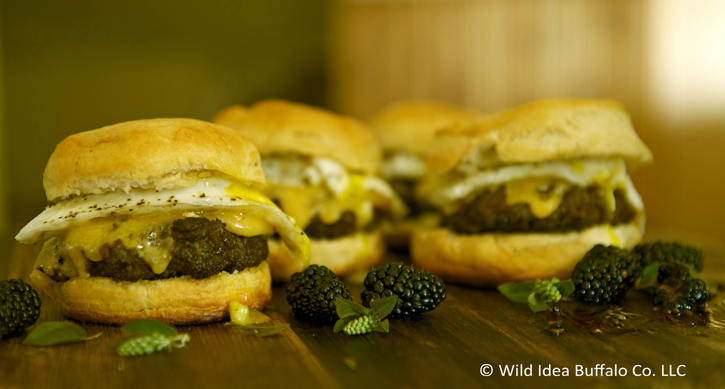
My mothers buttermilk biscuits, made with fresh, homemade buttermilk, were a family favorite. What makes them even better is Wild Idea’s Buffalo Breakfast Sausage, a farm fresh egg, and cheddar cheese! You will have not only a tasty sandwich, but the energy to start your day. These are great for kids of all ages, and for when you are on the go!

Breakfast Sausage Biscuits 2 rswm


Ingredients:
1 – pound Wild Idea Breakfast Sausage
1 – tablespoon oil
4 – ounces cheese, slice
4 – farm fresh or organic eggs
4 – buttermilk biscuits
salt & pepper
butter

Preparation:
1)   Portion out Wild Idea Buffalo Breakfast Sausage into four patties.
2)   Brush sauté pan with a little oil, over medium heat, and place patties into heated pan. Cook for about 4 minutes on each side.  During the last two minutes of cooking, add the cheese slices and cover the pan to melt cheese.
3)   While sausage is cooking, heat remaining oil in sauté pan, over medium heat and add your eggs. Season with salt and pepper, cover, and cook until the yolk is medium, about 4 minutes. This will make for a soft, but not runny or hard yolk.
4)   To assemble, butter the warm biscuits with butter, top with cheesy sausage patty and egg.


Buttermilk Biscuits (makes about 12 biscuits, but is determined by size of biscuit cutter)
Terrific warm with butter & jam!

Ingredients:
2 – cups unbleached flour
1 – tablespoon sugar
4 – teaspoons baking powder
½ – teaspoon salt
½ – cup butter, chilled, sliced
1 – dollop real mayonnaise
½ – cup buttermilk

Preparation:
1)   In mixing bowl, whisk together dry ingredients.
2)   Cut in the butter, until mixture is course crumbles.
3)   Add the mayonnaise and the buttermilk and mix until just incorporated.
4)   Place dough on lightly floured surface and knead, about 20 times.
5)   Roll out to 1” thick and cut with biscuit cutter, pressing down, but not twisting.
6)   Bake at 450°, for 8 to 10 minutes, or until golden brown.

Salami, Onion, & Jalapeno Sandwich

jill Buffalo Recipes, Ready To Eat, Recipes 1 Comment

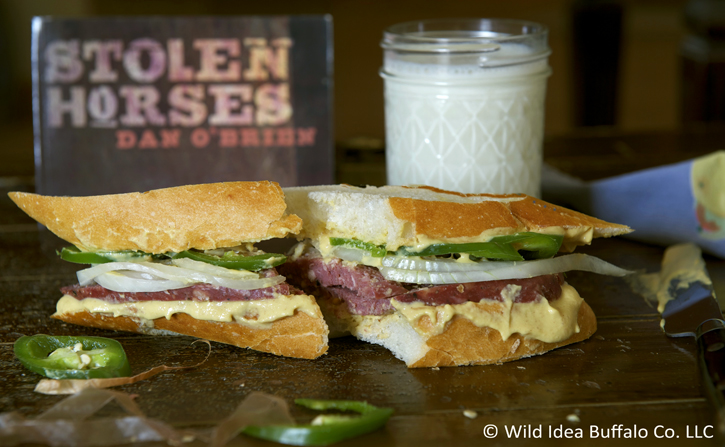
This sandwich received national attention on NPR, during Dan O’Brien’s book review for Stolen Horses. In the book the sandwich is constructed with great attention to detail and is a laugh out loud scene. The sandwich is as delicious as the novel! Serve with milk, to balance the jalapeño heat, or use pickled jalapeños to avoid the heat.

Salami Jalapeno Sandwhich rswm

Ingredients: (per sandwich)
2 – slices sourdough bread, cut on the bias
4 to 6 – slices Wild Idea Buffalo Salami, cut on the bias
1 or 2 slices – Vidalia onion, cut on the bias
1 – fresh jalapeño, sliced very thin
Dijon Mustard

Preparation:
1)   Prepare all ingredients as suggested above.
2)   Generously spread the Dijon mustard on both slices of sourdough.
3)   Nestle the salami slices into the mustard, as many as you like, on top of one of the mustard covered bread slices.
4)   Top with one or two slices of the Vidalia onion, and desired amount of thinly sliced jalapeno.
5)   Cover with the other mustard covered bread slice and cut in half.

Excellent, sublime, divine, and bueno!

The Tragedy of Phiney Flat

dan Dan's Writings 35 Comments

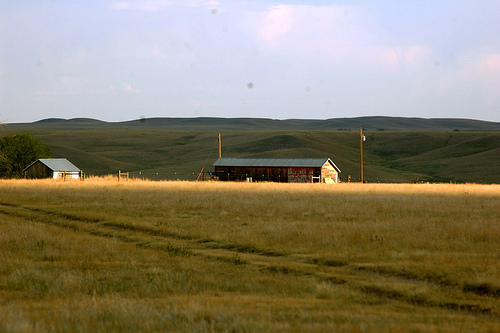
The north end of our ranch is part of a many thousand acre, level piece of ground known as Phiney Flat. By the county soil maps I know that the Flat is a fertile place for this part of the world and, in the places where the native, perennial grass still grows, it does extremely well. But people have been trying to farm other parts of the Flat since homesteading began in the early part of the twentieth century. For the most part, the efforts of these farmers were not successful. When we moved to this area, the neighbors with farming tendencies joked sheepishly that they only got a crop every three or four years, but that the federal government paid out for these “disasters” and so farming was profitable. Some of them would not meet your eyes when they talked like this but some actually winked.

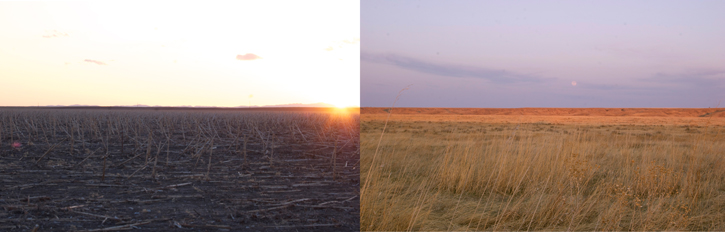
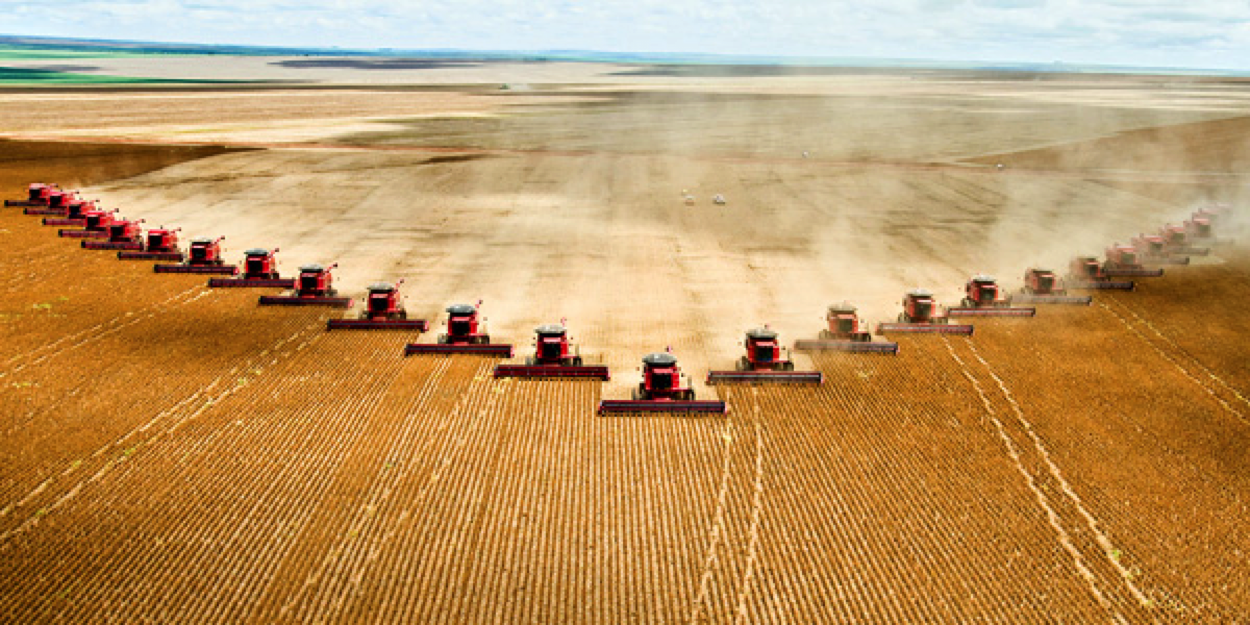
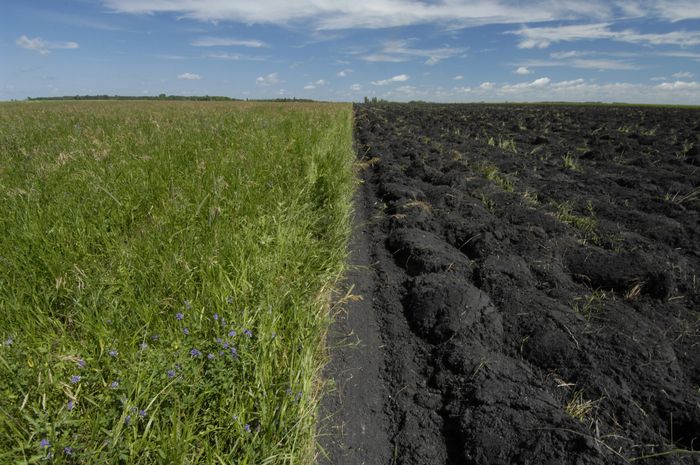
We are not crop farmers, we are farmers of grass. We know that plowing up native grasses destroys an ancient ecosystem of plants, animals, birds, and insects that have evolved here for thousands of years. Along with the plants, animals, birds, and insects goes the unique system that pulls CO2 from the air and, with the help of some microbes in healthy soil, splits the carbon (C) away from the oxygen (O2) and deposits it in the ground where it can’t create havoc in the atmosphere and cause climate change. As a happy side effect, the native grasses expire those two atoms of oxygen and make them available for us to breath. The reason that the native, perennial grasses do such a good job of this nifty trick is that sometimes 90% of a perennial plant’s mass is below the surface of the soil. It keeps growing every year and carbon builds with the root system. Of course, when someone plows up such a plant and root system and replaces it with an annual plant, which only lives for one year and has no time to build an extensive root system, the ability to sequestering carbon is reduced by a huge percentage. The fertility of the soil is hauled away in grain trucks each fall and the carbon is released into the atmosphere.

Many people would disagree, but one of the lucky things about the American Great Plains is that, for the first hundred years of settlement, there was seldom enough rain to grow grain. The Great Plains was always considered one of the world’s greatest grasslands, but a poor place to farm. From the time of the buffalo right up through the era of the cowboy it has nourished countless herbivores. The buffalo, elk, antelope, cattle, and sheep grazed on the renewable grass and the fertility and the carbon stayed in the ground where it belongs. But now, in the first quarter of the twenty-first century all that is beginning to change.

To get the whole picture you have to understand a few things about farming: Farming is about nurturing a single kind of plant and destroying all other plants that can compete with that chosen plant. In places where moisture is in short supply a farmer’s job is to make sure that the crop that he chooses to grow gets as much of the rainfall as possible. On most of the Great Plains, crops like corn, beans, wheat, and sunflowers do not get enough water to grow unless all the competition is killed. We call the other plants that try to grow in a farmer’s field weeds, and for generations the only way to get rid of them was to mechanically remove them. In a garden we call that process hoeing but in large fields it requires plows, disks, and other cultivators pulled by powerful tractors. Because every living thing has a penchant for staying alive, weeds are difficult to kill. Mechanical removal never worked very well because the weeds just keep coming and, as they come, they suck up the water that is needed for the anointed crops to grow. That is why on many twentieth century agricultural maps there was a precipitation line on about the 100th meridian that marked the frontier of profitable farming. That line saved the Great Plains’ grasses that harbored most of the living things, pumped oxygen into the air, and sequestered billions of tons of carbon each year.

Carbon Sequestration rswm

A second way to control the weeds in farm fields is to poison them with chemicals. If before a farmer plants his crop he sprays the field with a powerful herbicide – usually a product called Round Up – he kills many of the weeds that threaten to steal water from his crops. But weeds that have not yet begun to grow when the crop was planted jump out of the ground and, because Round Up will kill the crop too, use the valuable crop as protection. The weeds figured out to way to get enough water to live and hurt the farmer’s yield enough to make farming on the Great Plains a marginal enterprise. The precipitation line moved a little bit to the west, where the climate was drier, but still managed to keep farming from destroying huge portions of America’s grasslands.

Then came genetically modified organisms – GMO’s. Scientist figured out a way to change the genetic makeup of certain crops so that Round Up, and other chemicals normally poisonous to all plants, had no effect on these genetically modified crops. This process dramatically increased yields by destroying the competition. It was lauded as a miracle that would help the world produce much more food by not only this increase in yields of existing cropland, but expand farming into areas that had never been able to economically produce crops before. All of a sudden the precipitation line that had protected the grass resources of our continent, and Phiney Flat, was pushed westward. In one generation it became profitable to grow farm crops by plowing up healthy grasslands.


Farming & Grasslands on Phiney Flats

GMO crops have been criticized for many reasons. Some call them Frankenstein plants complete with the allusions of monster plants creeping out of laboratories to prey on unsuspecting life forms. Others are concerned about GMO’s ability to cross pollenate with “normal” plants. Certainly they destroy biodiversity by creating sternal monocultures where nothing grows but the chosen GMO plant. They have been called the harbinger of a new silent spring and many worry about their effect on animals and humans consuming the grain that they produce. There are also legal questions about the ownership of seeds produced by GMO’s – do they belong to the farmer or to the chemical companies that created them? It is hard to measure the validity of these concerns but there is one concern that is undisputable – GMO farming threatens the biodiversity of our Great Plains and all the benefits that derive from them.

GMO technology makes profitable farming possible on our portion of Phiney Flat and so supplies an incentive for us to convert that grassland to cropland. This will never happen as long as I am alive but it is tempting. I can resist the incentive but there is also a penalty for not making that deadly conversion. It is a little known fact that, in many states, property taxes are calculated on a “best use value” not an “actual use value”. What this means is that our ranch is taxed on what the income could be if plowed up Phiney Flat and began farming it. Never mind the loss of biodiversity diversity, fertility, or the loss of carbon to the atmosphere. The tax differences are significant and the margins in ranching are slim. There is no question that GMO agriculture is driving loss of grasslands and those losses are not redeemable. This perfect storm of incentives and penalties is perhaps the greatest indictment against the use of genetically modified organisms.  All of us who support GMO use by growing them or allowing them to be fed to animals are culpable for the inevitable grassland conversions that will necessarily follow.

It's a Baby Buffalo!

jill Blogging 23 Comments

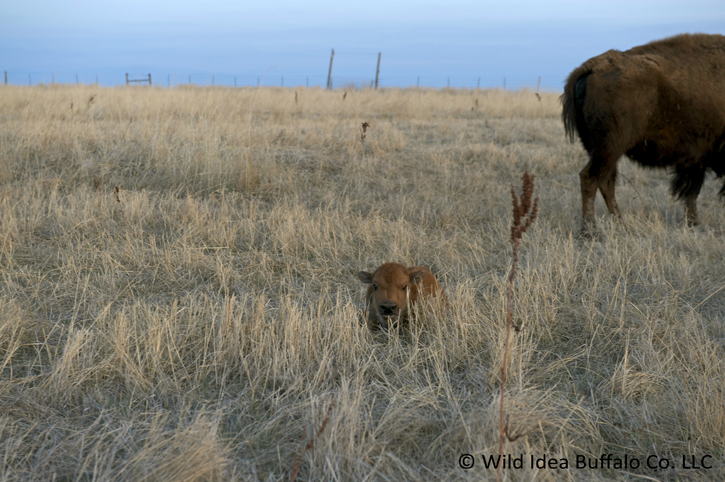
Finding the first baby buffalo of the year, in a thousand acre pasture with last years remaining four foot grasses, is a little like finding a needle in a haystack.

1st Baby in tall Grass wmrs


1st Baby Buffalo in Tall Grass wmrs Logo

The new baby was greeted by many of the other buffalo with licks and soft grunts. The mother tolerated a few at a time before pushing them off and welcoming the next bunch.  This was a new experience for us and it was fantastic to witness.

Greeters of 1st Calf wmrs

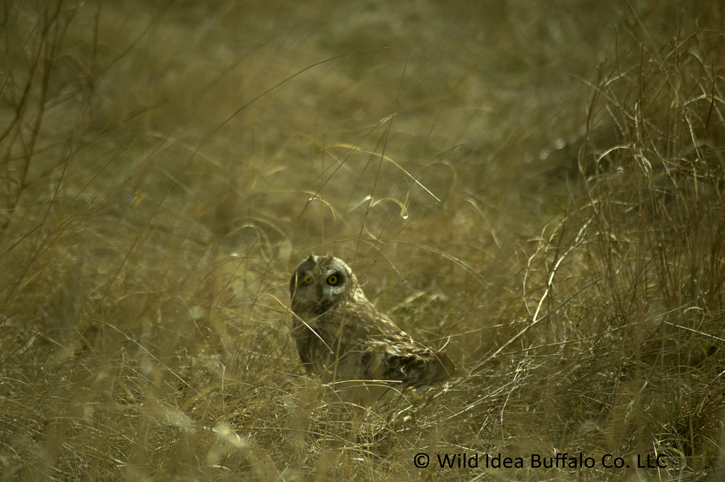
A close by, Short Eared Owl, kept a watchful eye over the exciting welcoming party. *Short Eared Owls nest in the Great Plains grasses.

Short Horned Owl wmrs

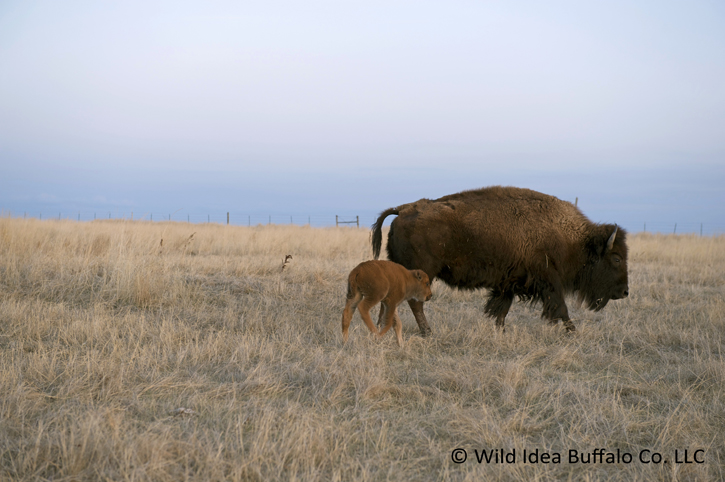
The mother kept nudging it along as she grazed, until it had to stop for a little nap. She allowed me close enough to get a photo, before she moved it along into the dusky night.

1st Calf Napping wmrs


1st Baby w Mom at Dusk wmrs

Help us welcome Wild Idea’s first baby buffalo of 2015!

Bison Sausage stuffed Pomme de Terre

jill Buffalo Recipes, Recipes, Sausages 2 Comments

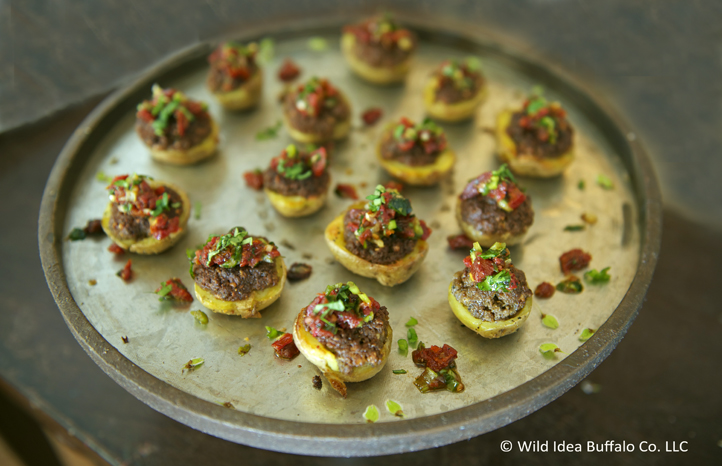
It makes great sense to put 100% grass-fed bison meat inside the apple of the earth. Golden roast potatoes, with our Wild Idea Buffalo Breakfast Sausage and blue cheese make for a wonderful combination. Insure you purchase organic potatoes to avoid the harsh chemicals that are used in growing regular potatoes. These savory and scrumptious, sausage stuffed potatoes are terrific for brunch or as hors d oeuvres.  Makes 24 to 35, depending on the size of your potatoes.

Sausage Stuffed Pomme de Terre rswm

Ingredients:
1 – pound Wild Idea Buffalo Breakfast Sausage
6 – ounces blue cheese, crumbled
1 – teaspoon salt
1 – teaspoon black pepper
1 – pound organic baby golden or red potatoes
2 – tablespoons olive oil
½ – teaspoon garlic salt
½ – teaspoon black pepper

Preparation:
1)   In a sauté pan, over medium high heat, crumble in the sausage. Stir occasionally to evenly brown sausage. When sausage is browned remove from the heat and allow too come to room temperature.
2)   Boil potatoes until tender, but still slightly firm. Drain and cool to room temperature.
3)   Place cooked buffalo sausage into a food processor and pulse process for 15 seconds. Add crumbled blue cheese, salt and pepper, and process again to incorporate.
4)   Cut potatoes in half while still slightly warm, and spoon the inside of the potato out. Reserve for other use.
5)   Rub the outside and lip of the potato shells with the olive oil and season with garlic salt and pepper.  Place hollow side down on a baking sheet and toast in a 400° oven for 10 minutes, or until golden brown.
6)   Remove from oven, turn hollow side up, and allow to come to room temperature. Fill the hollow toasted potato shells with the buffalo sausage cheese mixture. *At this point you could cover and refrigerate, and bake at a later time.
7)   Place stuffed potatoes in a 400° pre-heated oven and bake for 7 minutes, or until sausage is heated through.
8)   Remove from oven and transfer to a serving platter. Top with sundried tomato relish.

Sun-dried Tomato Relish

Ingredients:
4 – ounces sundried tomatoes in oil, drained and diced
3 – green onions, diced
¼ – cup cilantro, chopped
1 – fresh lemon, juiced
1 – tablespoon real maple syrup
pinch cayenne
salt and pepper to taste

Toss all ingredients in a bowl and season with salt and pepper to taste.

Bresaola, Manchego & Pear Salad

jill Buffalo Recipes, Ready To Eat, Recipes, Smoked Meats 2 Comments

Bresaola, Manchego, & Pear Salad
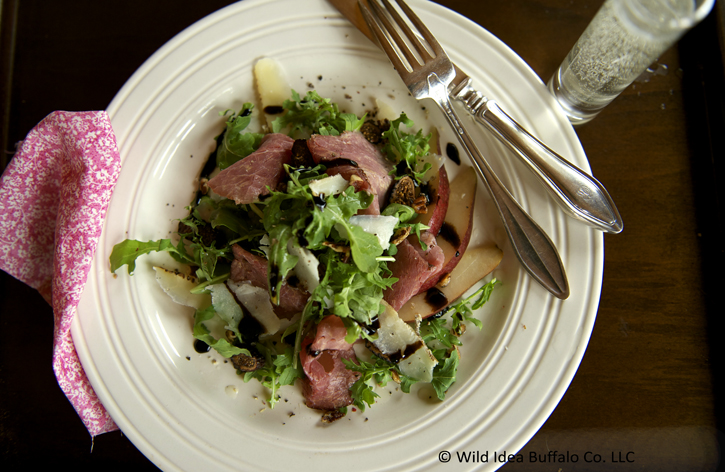
Our in-house artisan charcuterie expert, Valerie Flanagan has nailed our newest product item, “Bison Bresaola”! Although it is delicious by itself, I paired it with Manchego cheese, pear, and balsamic syrup, for a dynamo combination.  You are going to love this product and the salad! Enjoy.

Bresaola Salad 725wm

Ingredients: (per serving)
2 – ounces Wild Idea Bison Bresaola
2 – ounces Manchego cheese, shaved
1 – quartered pear, sliced
2 – handfuls of baby arugula
¼ – cup roasted pecans
2 – teaspoons olive oil
squeeze of fresh lemon
Balsamic syrup
cracked black pepper

Preparation:

1)   Place arugula in bowl and drizzle with olive oil and fresh lemon juice. Toss together to coat evenly.

2)   Place greens on plate and arrange Bison Bresaola, Manchego, and pear on top of salad.

3)   Sprinkle with roasted pecans, drizzle with desired amount of balsamic syrup, and finish with a twist of black pepper.

Bresaola S gone

Bison Ox-Bone Stew

jill Buffalo Recipes, Delicacies, Recipes, Stews & Soups Leave a Comment

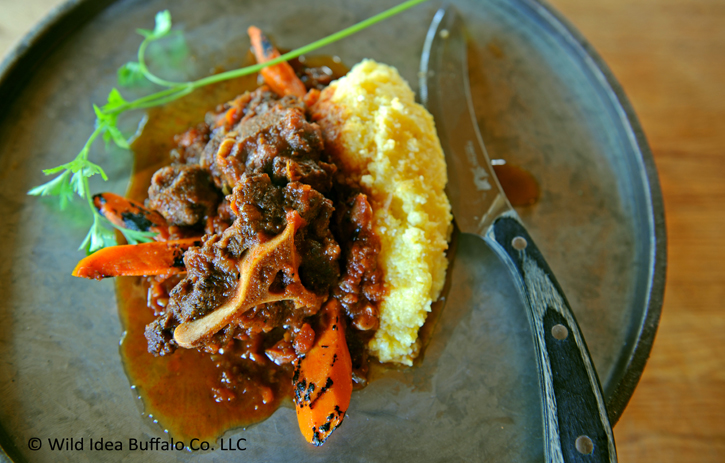
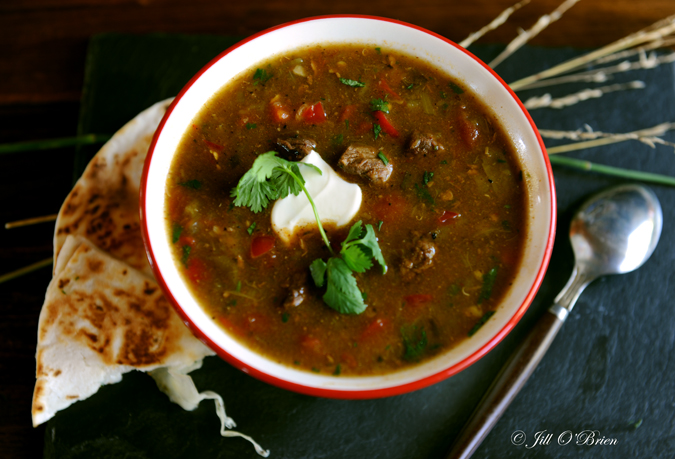
Bison ox-tails simmered in tomato and red wine sauce for hours until the meat falls of the bone, makes for a delicious, flavorful, one pot meal. Serve with crusty bread and a glass or two of vino! Serves 4.

Oxtail Stew rswm

Ingredients:
2 – pounds Wild Idea Buffalo Ox-Tails, rinsed and patted dry
1 – tablespoon butter
1 – tablespoon olive oil
1 – onion, minced
6 – ribs celery, 5 halved, one minced
2 – garlic cloves, chopped
2 – bay leaves
5 – whole cloves
1 – teaspoon black pepper
1 – teaspoon salt
½ – teaspoon smoked paprika
1½ – cups red wine
2 – tablespoons tomato paste
1 – 28 ounce San Marzano or other stewed tomatoes, chopped
½ – teaspoon cinnamon

Preparation:

  1. Preheat oven to 375°.
  2. In heavy pot over medium high heat, heat butter and oil. Add buffalo ox-tails to pan and brown on both sides, about 3 minutes each side.
  3. Add all minced vegetables, celery haves and spices to the pot. Sauté until tender, about 8 minutes.
  4. Add wine, tomato paste, chopped tomatoes and cinnamon and stir to incorporate. Bring to a boil, cover, and place in preheated oven.
  5. Stew buffalo ox-tails for about 3 hours or until meat is tender, and starts to fall away from the bone. Check occassionally, adding a little more wine as needed.
  6. During the last part of the cooking, place sliced carrots on baking sheet and brush with a little olive oil. Place in oven and roast until el dente. You may want to finish under the broiler for a few minutes to slightly brown.
  7. To serve, spoon stewed shanks and roasted carrots over polenta, and garnish with fresh herbs.

Bone Broth

jill Buffalo Recipes, Delicacies, Recipes, Stews & Soups 3 Comments

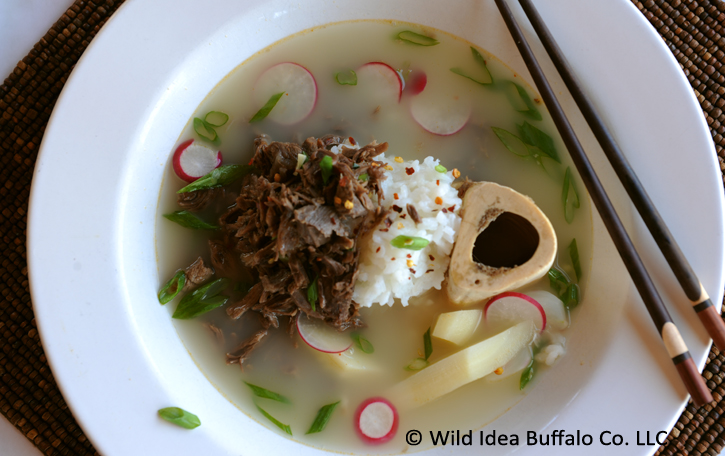
Buffalo Bone Broth

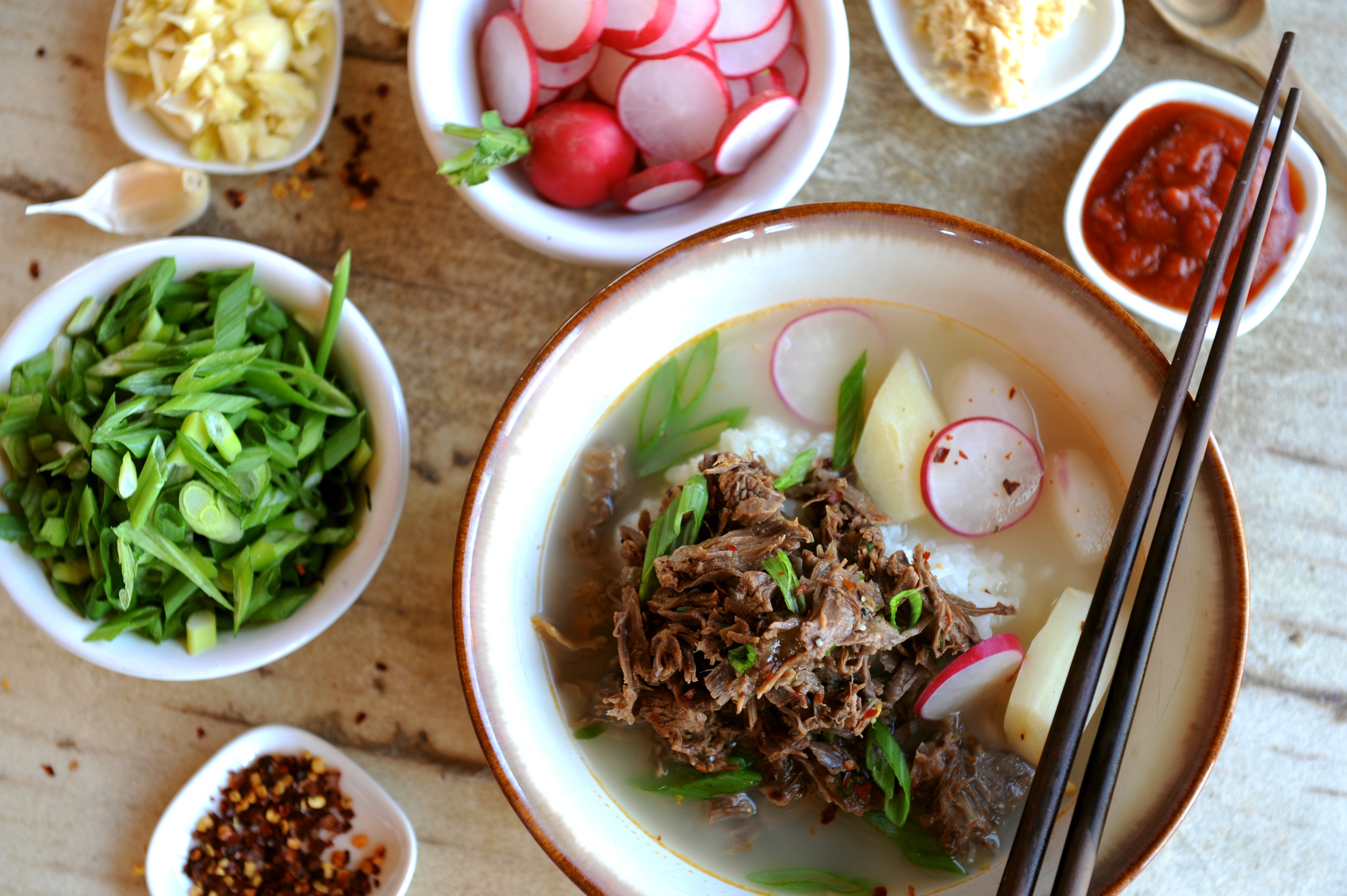
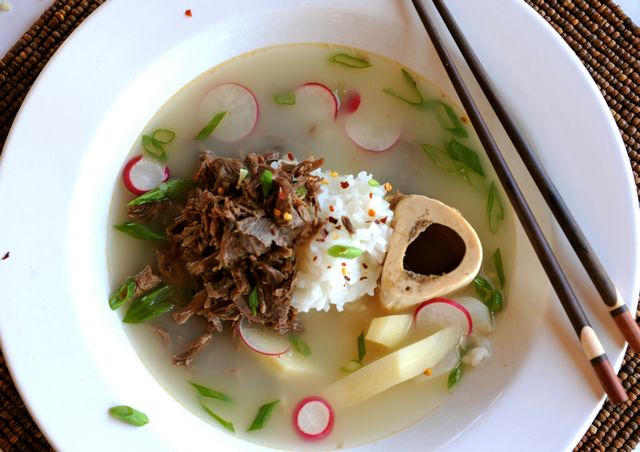
Customers often inspire me to come up with recipes. A couple of weeks ago I was visiting with a women on the phone who was ill, and her doctor had recommended buffalo broth. He suggested boiling the bones for hours because what was inside those bones was what she needed.  The health benefits of consuming this magic elixir continue to be proven, including lowering blood sugar levels for those who live with diabetes. Wild Idea Buffalo has a strong following of customers who use the bone broth as preventive medicine. This recipe is a bit of a lengthy process, and will take you two days to make. But, it’s worth it, and it’s the only way to get the maximum benefits of all of the vitamins, minerals, antioxidants, and amino acids inside the bones. You won’t be sorry for the time invested, as the end result is not only healthy, but also super delicious!  For preparing, you will want a larger pot as you simmer at a higher heat. This will help keep liquids in the pot. You will also want a heavy lid to keep the steam from escaping. Enjoy the broth alone, or serve over rice with the shredded shank meat.

*Bone Broth webwm

Ingredients:

  • 1 – 3.5 lb. pkg. Wild idea Buffalo Shank Steaks
  • 1 – 2 lb. pkg. Wild Idea Buffalo Soup Bones
  • Water
  • 2 large Daikon radishes, peeled and quartered
  • 1 onion, quartered
  • 2 cloves garlic, halved + 2 cloves garlic, chopped
  • Salt (to taste)
    Garnish Options:
  • 1 bunch radishes, sliced
  • fresh grated ginger or pickled ginger

Instructions:

  1. Wash bones and shank meat under cold water.
  2. Soak bones and shank meat in cold water for 2 hours.
  3. Rinse bones again under cold water.
  4. Bring 4 quarts of water to a boil, add washed bones and shank meat, bring to full boil. Boil for 20 minutes.
  5. Strain bones and meat and rinse under cold water. Rinse pot thoroughly to remove any fat particles.
  6. Return bones to pot and add 4 more quarts water. Bring to a boil, and boil for 30 minutes.  Add the radish, cover, reduce heat to medium, and simmer for 3 hours.
  7. Strain liquids into a container, cover and refrigerate. Pull meat from bones and reserve for a later use.
  8. Return the bones with onion to pot and add 3 quarts of water. Over high heat, bring to a full rolling boil. Reduce heat to medium, cover and simmer for 3 hours.
  9. Drain the bones, reserving the milky broth. Cover and place in refrigerator.
  10. Remove the first reserved liquids from refrigerator and skim fat off the top. Return Bones and first reserved liquids back to pot.  Add 2 cloves garlic and 3 quarts of water, and bring to a boil. Reduce heat to medium, cover and simmer for an additional 3½ hours.
  11. Strain bones, reserving broth. Cover broth and refrigerate overnight.  (Optional: You may want to save bones for serving.)
  12. Remove both containers of broth from the refrigerator and remove any fat from the top. Marry both gelatinous broths into one pot, and bring to full heat.
  13. Season with salt to taste, starting with a little and adding until milky broth has full flavor.Meat Option: While bones are simmering, mix 3 Tbl. Bragg Liquid Aminos (Natural Soy) or Soy Sauce, 3 Tbl. Sesame Oil, 2 Tbl. green onion, chopped + 1 bunch of green onions, sliced, ½ tsp. black pepper and 2 tsp. red pepper flake together. Toss mixture with reserved Shank meat.  Add shredded meat to bowl.

In The News: Minneapolis Star Tribune

henry Blogging 4 Comments

This last weekend on Saturday, the 28th of February, the Minneapolis Star Tribune’s Science and Health section published a great articleStar Tribune examining the role of buffalo in our modern food system. The article “Rancher Believes We Can Save Bison By Eating Them” written by Josephine Marcotty and Dave Hage explores Wild Idea’s approach to raising, harvesting, and selling buffalo in contrast to other major producers. Josphene and Dave in their research for the piece came out to visit Wild Idea and spent a significant amount of time learning about what makes Wild Idea different and how we believe buffalo fit into consumer food choices.

Take a read of the article by clicking HERE and

DREAMING LIKE A BUFFALO

dan Dan's Writings 15 Comments

I watched my paint horse, Camo, stretch his nose out and sniff the nose of a young bull buffalo. They sniffed deeply and then, in unison, turned to look across the Cheyenne River and into infinity. It was hard to tell what was in their minds but I want to think that their daydreams are like mine: an enormous blue sky and rolling grasslands to a distant horizon. There is a steady breeze bringing the scent of possibilities. There are no restraints, no boundaries, and no limits. History merges with the present and the past.

Camo's Eye rswm

I don’t think that my daydreams are unique. I think that, many Americans dream like horses and buffalo. It is as if we can stand in their skins, stare with their beguiling dark eyes, and let the rare prairie rains drip benignly from our sturdy coats. We imagine ourselves as country boys or strong, young women with long smooth muscles – solid bodies, and steady hands. We feel a kind of innocence, tempered with confidence and power. There is the thousand-yard stare of wisdom, patients, and endurance. When we dream like horses and buffalo we can imagine ourselves as the center of the world.

Yet the horse stands a little taller than the buffalo and there is something sad about the buffalo. They have long been misunderstood, exploited, commoditized, mystified, and abused. Even their identity has been hijacked by a succession of cultures. They are the animal with two names, buffalo and bison. The first name stems from the confusion of the Europeans who landed their puny boats on the eastern shore of America. Those crude men thought they were on a different continent and that the large, shaggy animals they found were a variant of the water buffalo they knew from Asia or the Cape buffalo they had heard of in Africa. It was centuries later that stuffy European taxonomists decided that the American bovine was a unique specie and named it Bison bison.  A better name might be Tatonka, the name given by the nomadic natives of the Great Plains that, at least for a time, knew the buffalo best. It is a word that embodies not only the animal but also the habitat and the spirit of the animal. There is nothing erroneous or taxonomical about the name Tatonka.

Close up eye Buffalorswm

The buffalo that we know have been the center of a huge, continent-wide drama for perhaps 5,000 years but, before them, there were several other varieties. The first buffalo were native to what is now Asia and Europe and crossed into North America on the famous Baring land bridge. It is hard for us to imagine how different the world was back then – the continents all ajar, molten rock surging up from below, and sea levels rising and falling as a result of ice caps varying in thickness from mere ice sheets to gigantic water repositories many miles thick. But there was a window of about 50,000 years that all sorts of creatures made the trek across the land bridge. Hundreds, perhaps thousands of species moved.  They traveled both ways – the ancestors of animals like camels and cheetahs heading for Asia and mammoths, ground sloths, and like on their way to America. Later, a few wretched humans trailed along behind the mammoths. I like to think of the tiny, eight inch tall great-grandmother of the modern horse moving carefully beside the giant ancestor of our buffalo, Bison antiquus. Did they size each other up in a long grassy valley between two mountain ranges somewhere in what is now Alaska? The ancient buffalo was a thousand times larger than the tiny Pleistocene horse. Did an adolescent buffalo, the giant ancestor of the one that sniffed Camo’s nose, make a playful charge at a herd of tiny horses, send them scurrying along their way to Asia? Did that horrifying experience stick in the memory of Camo’s Lilliputian ancestor and flair up 50,000 years later, when the horse returned to North America in the hold of a Spanish Galleon? I can imagine a genetic grudge enduring for those eons and igniting when the first Conquistador killed a buffalo with a lance. When Native Americans swung up on full sized, Spanish horses and heeled them at top speed toward a herd of grazing buffalo the grudge exploded. The slaughter built in magnitude for the next couple centuries and culminated with Europeans in the saddle and long lines of packhorses loaded down with hides heading for Dodge City and Santa Fe.

Fall Big Corral with Rays rswm

I watch the contemporary horse and the buffalo in the pasture below my house. They are still staring at something that I cannot see. For centuries we Americans have pitted them against each other, like ancient gladiators. But today they seem at peace. The ordeal we put them through has served to mix their essence with ours. We share a story: past, present, and future. But Camo and the young bull seem to have learned more from their experience than we have. They stand side by side and stare off into what seems, to most people, like nothing. But, I am afraid that they are seeing things that humans can no longer see, or perhaps, more frightening still, something that we have never seen.

BUFFALO IRISH CODDLE

jill Buffalo Recipes, Recipes, Sausages, Smoked Meats, Stews & Soups 1 Comment

Buffalo Irish Coddle  (serves 8)
This traditional Irish dish was often made from leftovers, using whatever vegetables were available. Feel free to change to you liking or availability. The light broth allows the flavors of each ingredient to come through, and although hearty, is also light. And, it’s so good! Enjoy.

Irish Coddle 2wmrs

Ingredients:
1 – 8 ounce package Wild Idea Buffalo Bacon
1 – 1 pound package Wild Idea Buffalo Brats
2 – tablespoons olive oil
3 – organic onions, sliced ¼” thick and quartered
2 – quarts organic chicken broth
1½ – pound organic baby golden potatoes, sliced
4 – cups organic carrots, peeled and sliced
1 – turnip, peeled and cubed
1 – cup parsley, chopped
2 – teaspoons black pepper
1 – teaspoon salt
2 – teaspoons dried thyme
*Optional – ¼ teaspoon cayenne

Preparation:
1)   In heavy stockpot over medium high heat, heat 1 tablespoon of the oil, and add half of the bacon. Cook, turning once until slightly crispy. Place cooked bacon on a paper bag or paper towel. Repeat with remaining bacon.
2)   Add the brats to the pan, and allow to brown, turning occasionally.
3)   Remove brats, and place on a paper bag or paper towel.
4)   Add remaining tablespoon of olive oil, heat and add onions. Cook for about ten minutes or until tender, stirring occasionally.
5)   While onions are cooking, chop cooked buffalo bacon and cut brats into ½” slices.
6)   Add most of the bacon bake to the pot, reserving a little to sprinkle on top, for garnish. Stir to incorporate.
7)   Add stock to the pot and bring to a full boil. Add vegetables, half of the parsley and seasonings, and bring to a full boil again.
8)   Reduce heat to low, add the sliced buffalo brats, and simmer uncovered for about 45 minutes or until vegetables are tender.
9)   Taste and adjust seasonings to your preference.
10) To serve, ladle desired portions into bowls, covering each with broth, and garnish with remaining parsley and remaining bacon bits.


GMO, OMG!

jill Jill's Journal 13 Comments

At a recent bison conference, the topic of GMO’s came up. The biggest concern was the potential, future requirement for GMO transparency on product labels. This includes meat labels from animals fed GMO grains. The reason this was such a big deal to this particular audience, is that 90% of the bison raised for food are raised in the cattle feedlot model, consuming an unnatural diet in confinement for the last 90+ days of their lives. Most of these feeds are GMO.

The conversation continued with people shouting out sarcastic remarks, such as, “What’s a GMO going to do to me anyway? Is it going to turn me into something bad if I eat it?” This was not the time or place to be controversial, for the most part we were amongst good, hard working folks, who were just thinking in the short term.

Microsoft Word - Document2

As I listened to the GMO conversation, I thought it funny that the acronym reversed was OMG! I also thought about the hazmat suits worn, or full cover recommended when using chemicals. If we are advised to not get any of the toxic poisons on us, why would we want to ingest them? I wondered if the man talking would like to try it, so we could see what would happen to him?

Seriously, the ramifications of pesticide, herbicide, and draught resistant genetically modified organisms are devastating. Studies continue to prove that the use of herbicides and pesticides on crops are directly related to specie diversity loss, compromised water quality, and risks to human health. Add draught resistance to this mix, and we accelerate the plow up of more prairie and dessert ecosystems. In short, GMO’s are bad for the environment and we CAN grow food without them.

fall buffalo *photo 2014 wmrs

At Wild Idea Buffalo Company we are always looking at the long-term effects, and do our best to operate sustainably, working with nature, instead of against it. We promise to continue to produce a healthy, delicious, non-GMO meat alternative, for you and your families. If you are interested in more information on GMO’s, there are several studies and stories available on line. Here’s a few links that I found interesting, http://naturalsociety.com/gmo-farmer-wont-eat-crops/ ,  http://www.nongmoproject.org/learn-more/, and  http://www.responsibletechnology.org/10-Reasons-to-Avoid-GMOs .

Avoiding GMO foods takes a little more effort, but most groceries now offer organic, or non-GMO certified products. Another way is to know your farmer.  This month’s recipe is GMO free, and is a terrific dish to make for the upcoming Saint Patrick’s Day celebrations.  In addition to the recipe, I offer you this slightly modified, non-GMO, Irish toast.

I wish you health, I wish you well, and happiness galore.
I wish you luck for you and friends, what could I wish you more?
May your joys be as vast as the prairie, and your troubles as light as this poem.
And may you find, sweet peace of mind, knowing that the buffalo roam.  Cheers! jill


Buffalo Irish Coddle  (serves 8)
This traditional Irish dish was often made from leftovers, using whatever vegetables were available. Feel free to change to you liking or availability. The light broth allows the flavors of each ingredient to come through, and although hearty, is also light. And, it’s so good! Enjoy.

Irish Coddle 2wmrs

Ingredients:
1 – 8 ounce package Wild Idea Buffalo Bacon
1 – 1 pound package Wild Idea Buffalo Brats
2 – tablespoons olive oil
3 – organic onions, sliced ¼” thick and quartered
2 – quarts organic chicken broth
1½ – pound organic baby golden potatoes, sliced
4 – cups organic carrots, peeled and sliced
1 – organic turnip, peeled and cubed
1 – cup organic parsley, chopped
2 – teaspoons organic black pepper
1 – teaspoon organic salt
2 – teaspoons organic dried thyme
*Optional – ¼ teaspoon organic cayenne

Preparation:
1)   In heavy stockpot over medium high heat, heat 1 tablespoon of the oil, and add half of the bacon. Cook, turning once until slightly crispy. Place cooked bacon on a paper bag or paper towel. Repeat with remaining bacon.
2)   Add the brats to the pan, and allow to brown, turning occasionally.
3)   Remove brats, and place on a paper bag or paper towel.
4)   Add remaining tablespoon of olive oil, heat and add onions. Cook for about ten minutes or until tender, stirring occasionally.
5)   While onions are cooking, chop cooked buffalo bacon and cut brats into ½” slices.
6)   Add most of the bacon bake to the pot, reserving a little to sprinkle on top, for garnish. Stir to incorporate.
7)   Add stock to the pot and bring to a full boil. Add vegetables, half of the parsley and seasonings, and bring to a full boil again.
8)   Reduce heat to low, add the sliced buffalo brats, and simmer uncovered for about 45 minutes or until vegetables are tender.
9)   Taste and adjust seasonings to your preference.
10) To serve, ladle desired portions into bowls, covering each with broth, and garnish with remaining parsley and remaining bacon bits.


Pasta alla Carrettiera with Italian Buffalo Meatballs

jill Buffalo Recipes, Recipes, Sausages Leave a Comment

Pasta alla Carrettiera with Italian Buffalo Meatballs (serves 4) 
This dish is named after the people who drove food and wine carts in Italy. It is a slightly spicy red sauce, with garlic and basil, and is typically served over a thicker style of pasta. My favorite rendition of this dish also had hints of parsley and mint, which made for lingering, memorable flavors. After a little research, and substituting a few of the more difficult to find ingredients with like alternatives, I thought I might be able to come close to duplicating it.  The only thing missing was Wild Idea’s artisan, Italian Buffalo Sausage, and I knew just where to go for that.  This simple dish is packed with flavor and very easy to prepare. The perfect solution, for a stress free, delicious dinner!

Pasta alla Carrettiera wrs
Ingredients:
1 – 1 pound package Wild Idea Italian Buffalo Sausage
3 – tablespoons olive oil
3 – cloves garlic, about 1 tablespoon
½ – teaspoon chili flake, or pepperoncino (dried Italian chili pepper)
½ – cup basil, finely chopped
2 – tablespoons parsley, finely chopped
1 – tablespoon mint, finely chopped
1 – 28 ounce can whole *San Marzano Tomatoes, flash processed, *they’re the best
1 – teaspoon salt
2 – teaspoons sugar
1 – lemon, juiced, about ¼ cup
1 – cup freshly grated, Parmigiano Reggiano, or Porcini cheese
1 – 12 ounce box of Casarecce pasta, Pici pasta, or thick Spaghetti, cooked el dente, reserve 1 cup pasta water

Preparation:
1)   Divide Wild Idea Italian Buffalo sausage into 24 pieces and roll into meatballs. Pour one of the tablespoons of olive oil on a baking sheet and roll the meatballs in the oil. Cover and set-aside until you are ready to broil.
2)   In a saucepan over medium heat, heat the remaining tablespoons of olive oil. Add the garlic, and toss or stir regularly, until tender, about 3 minutes.
3)   Add the basil, parsley, and half of the mint to the pan. Sauté and stir for 1 minute.
4)   Add the tomatoes, salt, sugar and lemon juice and stir to incorporate. Bring to a gentle boil, cook for 5 minutes and then add the remaining mint. *Sauce can be made ahead and reheated.
5)   During step 4, or right before serving, place the prepped bison meatballs on the second rack from the top of a preheated broiler, and broil the meat balls for about 5 minutes or until nicely browned.
6)   Simultaneously bring the reserved pasta water to a boil. Add the prepared pasta, and toss to reheat.
7)   Drain pasta, transfer to a bowl and add ½ cup of the grated cheese. Toss to incorporate.
8)   Place desired amounts of pasta on to plates and cover with ¾ cup or desired amount of sauce. Serve with the hot Italian Bison meatballs and garnish with remaining grated cheese and additional fresh herbs.  Delizioso!

DULCE de LECHE BANANA PIE

jill Recipes, Various Recipes 3 Comments

DULCE de LECHE BANANA PIE “LOVE HANDLE PIE ” Serves 16
Recently while in the panhandle of Texas, we stumbled upon this fabulous concoction at a restaurant in Lubbock. Encased in a thick graham cracker crust, was two inches of caramel, topped with bananas and brown sugared whipped cream. Oh my, who knew there was such decadence? I knew after one bite that I would have to try to duplicate it. Although I searched the web for something that looked like what I had consumed, the images and recipes came up short. Most recipes called for sweetened condensed milk, so I gave it a try, but also caramelized organic cream and sugar. There was no comparison, the fresh cream won hands down. I also doubled the cream & sugar amount, to achieve the gooey thickness, and instead of fresh bananas, I prepared them Banana Fosters style. More decadence! You are going to love this pie.

Dulce De Leche Banana Pie rs wm

Filling Ingredients: *Double if you would like thick caramel, but prepare in separate pans.

*2¾ – cup organic heavy cream
*1¾ – 2% organic milk
*1 ½ cups pure cane sugar

Crust Ingredients:
2½ – packages graham crackers
¼ – cup brown sugar
¾ – cup organic butter, melted

Banana Ingredients:
½ – cup organic butter
¼ – cup brown sugar
4 – bananas, sliced
½ – cup rum, dark preferred *I didn’t have dark rum, so used half Frangelico & half rum
¼ – teaspoon cinnamon

Cream Ingredients:
3 – cups organic heavy whipping cream
1 – teaspoon vanilla
¼ – cup brown sugar

Preparation:
1)   For filling, mix ingredients in a saucepan, and place over medium high heat, stirring occasionally, until mixture comes to a light boil.
2)   Reduce heat to low and place saucepan in a larger pan with water. *This will help it from scorching. Simmer cream, for 4 hours, stirring occasionally, and adding water, to water bath as needed.  Cream will slowly reduce and toward the end it will start to turn a light brown.
3)   After 4 hours, whisk in vanilla and butter. Increase heat to medium high, stirring constantly, until cream is thick and caramelized.
4)   While cream is reducing, make your graham cracker crust.  Place the graham crackers and brown sugar in food processor and process until finely crumbed.  Place cracker crumbs in 9½” deep pie pan and drizzle on the butter. Mix together in pan and press in bottom and up sides of the pan. Bake the crust at 375°, for 12 minutes. Remove crust form oven and refrigerate until needed.
5)   Once cream is thick and caramelized, remove the pan from the heat and allow caramel to cool to room temperature. Pour the caramel into the prepared crust and return to the refrigerator to set, at least 2 hours.
6)   For the banana layer, in a sauté pan over medium high heat, melt butter and the brown sugar together, whisking occasionally.  When mixture becomes bubbly, add the sliced bananas and lightly stir in to coat.  Add the rum and slightly tip pan carefully, or light, to ignite alcohol. Sprinkle the cinnamon into the flames and allow flames to dye out. Remove from heat.
7)   Scoop the bananas to one side of the pan, and pour the hot caramel into a bowl. Reserve for later use, to garnish pie.
8)   Spread the caramelized bananas on top of the caramel filled pie, and return to the refrigerator to set, about 30 minutes.
9)   While pie is setting, whip the cream. When the cream starts to thicken, add the vanilla and the brown sugar and continue to whip until the cream is stiff.
10) To serve, allow the pie to rest at room temperature for 1 hour. Then cut the pie into 8 slices, plate, and top with the freshly whipped cream. Garnish with the reserved caramel sauce and sprinkles of brown sugar. Serve one piece per two people.
OMG fabulous!


A VALENTINE LOVE STORY & LOVE HANDLE PIE

jill Blogging 4 Comments

In the spirit of love, this Valentines I wanted to share a Buffalo Love story with you, and a dessert that will bring the sweetness out in anyone!

 A BUFFALO LOVE STORY

A few months ago Dan and I moved all but seven of our buffalo on to their winter pasture in the Buffalo Gap National Grasslands. The seven left behind, consisted of a crippled up older cow with her calf, a calf-less cow, a young bull, and three older, big bulls, each with their own unique personality.

Big Bull winter 2014wmrs

The cow and calf started to keep to themselves a few months earlier to stay out of harms way, which we were hoping for, as we wanted to keep a close eye on them during the colder winter months that lay ahead.  And, a few of the bigger breeding bulls had slipped away from the main heard, as they often do. The calf-less cow and young bull were a bit odd, or were they?

Big Bull 2 winter 2015rswm

After a couple of weeks, the motherless cow had palled up with the three big bulls, and the younger bull stayed within a few hundred yards of the cow and calf. We monitored the cow and calf daily, ensuring that the mother was getting around to food and water. After a day or so of not seeing her, we set out in search for the trio, keeping our distance, so they would not feel pressured.

Mother & Calf Winter

We found the two of them tucked into a hillside, where water flows from a spring year round.  The younger bull was just below, keeping his usual distance. We guessed that the young bull was one of her offspring from a few years back, and was doing his required hospice duty.

Gaurd Bull

To insure that she wouldn’t have to roam for her food, Dan put out a two thousand pound round bale of grass hay that we had put up this past summer.  She died within the week in the comfort of her home, and as if on cue, the young bull took the motherless calf into his care, and slowly lead it to the others.

Calf in Bulls winter 2015rswm

The separated small herd was now one, and I watched with binoculars from the window as the calf leaped around and frolicked between the massive bison bulls watchful eyes. The cow assisted too, nudging it now and then when it would lollygag behind.

Winter Bull 4rswm

In the early mornings and also just as the sun was setting, they would often stop by the hay to take a few bites. I snuck a little closer on a couple of those occasions, to try to get a few photographs.

Buffalo Eating Hay

The two-ton hay bale looked like a marshmallow next to their large frames.

Buffalo Hay Head rs wm

Once I was noticed, the calf moved on with its loving family into the setting golden light.

Calf 2015


Buffalo in the Golden Light


DULCE DE LECHE BANANA PIE “LOVE HANDLE PIE ” Serves 16

Recently while in the panhandle of Texas, we stumbled upon this fabulous concoction at a restaurant in Lubbock. Encased in a thick graham cracker crust, was two inches of caramel, topped with bananas and brown sugared whipped cream. Oh my, who knew there was such decadence? I knew after one bite that I would have to try to duplicate it. Although I searched the web for something that looked like what I had consumed, the images and recipes came up short. Most recipes called for sweetened condensed milk, so I gave it a try, but also caramelized organic cream and sugar. There was no comparison, the fresh cream won hands down. I also doubled the cream & sugar amount, to achieve the gooey thickness, and instead of fresh bananas I prepared them Banana Fosters style. More decadence! You are going to love this pie.

Dulce De Leche Banana Pie rs wm

Filling Ingredients: *Double if you would like thick caramel, but prepare in separate pans.

*2¾ – cup organic heavy cream
*1¾ – 2% organic milk
*1 ½ cups pure cane sugar

Crust Ingredients:
2½ – packages graham crackers
¼ – cup brown sugar
¾ – cup organic butter, melted

Banana Ingredients:
½ – cup organic butter
¼ – cup brown sugar
4 – bananas, sliced
½ – cup rum, dark preferred *I didn’t have dark rum, so used half Frangelico & half rum
¼ – teaspoon cinnamon

Cream Ingredients:
3 – cups organic heavy whipping cream
1 – teaspoon vanilla
¼ – cup brown sugar

Preparation:
1)   For filling, mix ingredients in a saucepan, and place over medium high heat, stirring occasionally, until mixture comes to a light boil.
2)   Reduce heat to low and place saucepan in a larger pan with water. *This will help it from scorching. Simmer cream, for 4 hours, stirring occasionally, and adding water, to water bath as needed.  Cream will slowly reduce and toward the end it will start to turn a light brown.
3)   After 4 hours, whisk in vanilla and butter. Increase heat to medium high, stirring constantly, until cream is thick and caramelized.
4)   While cream is reducing, make your graham cracker crust.  Place the graham crackers and brown sugar in food processor and process until finely crumbed.  Place cracker crumbs in 9½” deep pie pan and drizzle on the butter. Mix together in pan and press in bottom and up sides of the pan. Bake the crust at 375°, for 12 minutes. Remove crust form oven and refrigerate until needed.
5)   Once cream is thick and caramelized, remove the pan from the heat and allow caramel to cool to room temperature. Pour the caramel into the prepared crust and return to the refrigerator to set, at least 2 hours.
6)   For the banana layer, in a sauté pan over medium high heat, melt butter and the brown sugar together, whisking occasionally.  When mixture becomes bubbly, add the sliced bananas and lightly stir in to coat.  Add the rum and slightly tip pan carefully, or light, to ignite alcohol. Sprinkle the cinnamon into the flames and allow flames to dye out. Remove from heat.
7)   Scoop the bananas to one side of the pan, and pour the hot caramel into a bowl. Reserve for later use, to garnish pie.
8)   Spread the caramelized bananas on top of the caramel filled pie, and return to the refrigerator to set, about 30 minutes.
9)   While pie is setting, whip the cream. When the cream starts to thicken, add the vanilla and the brown sugar and continue to whip until the cream is stiff.
10) To serve, allow the pie to rest at room temperature for 1 hour. Then cut the pie into 8 slices, plate, and top with the freshly whipped cream. Garnish with the reserved caramel sauce and sprinkles of brown sugar. Serve one piece per two people.
OMG fabulous!

Mesquite Grilled Buffalo Tenderloin Steaks

jill Buffalo Recipes, Recipes, Steaks Leave a Comment

Mesquite Grilled Tenderloin Steaks with Mushroom Compote

Life gets busy, and at the end of the day when grilling, I’m a go to, gas grill, kind of a girl. Using mesquite or other hard wood takes a little more time and although not difficult, it is a labor of love. The extra aromatic flavor and elegant smokiness this gives the meat is a special treat, but it’s that – a special treat. As the saying goes, Too much of a good thing, is too much of a good thing”.  Mesquite coals, would work for any steak or burger, adjusting time based on thickness or size of cut.

mesquite fire

Ingredients For Fire:

Weber Grill
10 pounds mesquite wood
Kindling; pine cones and/or wood shavings
Paper

Preparation:
Open the lower vents of the grill located in the bottom of the grill. Bunch the paper, and place on the lower rack of the grill, top with the kindling, and a few smaller pieces of the mesquite, in a sort of teepee fashion. Light the paper and allow the fire to get going. You may need to blow on the fire a bit to get the mesquite to take.  Add 3 to 4 larger pieces to the fire, stacked so air can move in between the wood. When the fire starts to burn down, push the burned wood around and add more wood. Continue repeating this process until you have a nice hot bed of white coals that are still licked with a bit of fire. I added wood four times to achieve this and it took about two hours.  Your grill is now ready.  Place the top rack of the grill as low and as close to the coals as possible.

Ingredients For Steaks:                                                            Mesquite Tenderloin
4 – 8oz. Tenderloin Steaks
2 – tablespoons olive oil
2 – teaspoons black pepper
1 – teaspoon sea salt
1 – teaspoon garlic powder
1 – teaspoon onion powder

Preparation:
1)   Remove the thawed steaks form package, rinse under cold water and pat dry with paper towels.
2)   In a small glass dish or backing pan, mix the olive oil and seasonings.
3)   Add steaks to the pan and roll around into the seasoned olive oil. Cover the steaks and allow them to rest at room temperature while you establish your fire. About 2 hours.
4)   When your mesquite fire is just right, place the steaks on top of the grill and close grill lid. Grill for 3 minutes then rotate the same side to create a nice grill marking. Cover again and grill for two minutes on the same side, before turning over. Turn steaks, cover and grill for 3 more minutes.
5)   Remove steaks from the grill and place them on a plate. Sprinkle a little finishing salt over the steaks and then cover them with a lid or foil and allow them to rest for 3 to 5 minutes.

Mushroom Compote

Ingredients:
½ – cup sweet yellow onion, finally diced
5 – ounces cremmini mushrooms, finely diced
1 – green onion, green part only, finely minced
1 – tablespoon olive oil
4 – salted tablespoon butter
4 – teaspoon salt
½ – teaspoon black pepper
1 – teaspoon sugar
1 – teaspoon balsamic vinegar

Preparation:
1)   In a sauté pan over medium high heat, heat olive oil and 1 tablespoon butter.
2)   Add the diced onions to the pan and season with salt, pepper, and sugar. Stir occasionally, until the onions are golden brown and caramelized, about 6 minutes.
3)   Add the diced mushrooms to the caramelized onions and stir in. Sauté until mushrooms are just tender, but have not yet released their moisture.
4)   Add the balsamic vinegar and stir in.
5)   Immediately following, stir in remaining butter. Remove the mushrooms from the heat and stir in minced green onion.
6)   Season to taste and serve immediately with mesquite grilled steaks.

*We enjoyed this delicious steak with lightly sautéed green beans, a cauliflower & potato mash, and short glasses of Heradura Blanco Tequila on ice with fresh squeezed lime. It was fabulous.  A nice earthy Zinfandel would be great too.

The Day I Fell In Love With Mesquite

jill Jill's Journal 4 Comments

Three weeks ago, we packed the car up and headed south on a road trip. It was a warm winter morning and the wildlife seemed to be everywhere. Our first sighting was a herd of antelope, followed by a couple of white tail bucks, and we weren’t even off the ranch yet.  The bucks jumped the fence in front of us, as I kicked myself for not bringing my camera gear. A recycled cell phone would have to do. The wildlife parade continued with turkeys, a porcupine, coyote’s, a Merlin eating a mouse on a post, and hawks. Dan called the specs in the sky out by name, Ferruginous, Rough-Legged, and so on, as if they were only feet away.  By the time we hit highway 79 and swung south, the sightings became more random, but the scenery remained beautiful. It wasn’t until we crossed over into the northeastern part of Colorado, via highway 385, that my interest was lost.  Years ago we had nicknamed this stretch of road, “feedlot row”.  The irrigated, naked corn and soybean fields that provide feed for the surrounding cattle yards greeted us, along with the unpleasant aroma that overwhelmed us anytime we departed our vehicle. As a result, stops were made only if needed. At one of those needed gas stops, I said aloud to myself,  “geez it stinks”.  To which another man at the pump said, “That’s the smell of money”. I nodded, clicked my cheek with a wink, and said, “right”.

With Dan at the wheel and the windows secured tightly, I fluffed my pillow, closed my eyes, and let the rhythm of the road take over. When not in semi-conscious sleep, our conversation flowed from one topic to the next; family, business, politics, more sleep, food, wars, love, more sleep, endangered species, lost prairie, books, more sleep. My mind unreeled and the cobwebs cleared with every passing mile, slowly unpacking the tensions that I had brought along with me.

South 385 continues through the pistol tip of Oklahoma and on into the panhandle of Texas. Somewhere around Leveland Texas we hang a right onto a county road, and head west to just inside the New Mexico boarder. Our first stop and the main headquarters for most of our trip, was our friends ranch. The Weaver ranch is managed for conservation and wildlife. It is an oasis amongst the fracking rigged, irrigated cotton fields, and CFO dairies.  (The landscape changes to this once inside Texas.) We arrived just as the sun was turning the dried grass to spun gold, and stepped out into the clean air, lightly perfumed with mesquite from their wood-burning stove.  “Wow”, Dan said. “Mm”, I replied.

Weaver Ranch Grass

A few days later we continued on to south Texas to another friends ranch, for some serious quail hunting. On this trip there were many stops, as Dan & I are suckers for any hole in the wall joint that proclaims “Best B.B.Q.”, or “Best Tamales”. At each stop the mesquite filled air intensified. I remained awake for most of the trip down, but on the return trip back to the Weaver ranch, I fell back into my “in and out of sleep pattern”, only this time, I dream of mesquite grilled Buffalo Tenderloins with an earthy mushroom compote.  By the time we got back to the Weaver sanctuary I had a recipe on my mind and was looking forward to trying it out on our friends.  Although I have had mesquite-grilled steaks before, I had never tried it for myself.

Weaver Pond

When dinner was over, our friend Jim, whose wife is an amazing cook, said, “I’m not sure if I’ve ever had food that good before, and if I have, I don’t remember it”.  The steaks were fabulous, and it was love at first bite. But, memorable food is hard to come by, and have never believed that it is just the food that makes for a memorable meal, but the experience and the company that have something to do with it too.

On that note – a big “Thank You”, to our friends; Jim & Pam, Robert & Sarah, and Jim & Kris. We had a great time. Also, thanks to my valentine Dan, you are a great road tripper companion.  Wishing you all a memorable, happy, healthy Valentines day. jill


Mesquite Grilled Tenderloin Steaks with Mushroom Compote

Life gets busy, and at the end of the day when grilling, I’m a go to, gas grill, kind of a girl. Using mesquite or other hard wood takes a little more time and although not difficult, it is a labor of love. The extra aromatic flavor and elegant smokiness this gives the meat is a special treat, but it’s that – a special treat. Mesquite coals, would work for any steak or burger, adjusting time, based on thickness or size of cut.

mesquite fire

Ingredients For Fire:
Weber Grill
10 pounds mesquite wood
Kindling; pine cones and/or wood shavings
Paper

Preparation:
Open the lower vents of the grill located in the bottom of the grill. Bunch the paper, and place on the lower rack of the grill, top with the kindling, and a few smaller pieces of the mesquite, in a sort of teepee fashion. Light the paper and allow the fire to get going. You may need to blow on the fire a bit to get the mesquite to take.  Add 3 to 4 larger pieces to the fire, stacked so air can move in between the wood. When the fire starts to burn down, push the burned wood around and add more wood. Continue repeating this process until you have a nice hot bed of white coals that are still licked with a bit of fire. I added wood four times to achieve this and it took about two hours.  Your grill is now ready.  Place the top rack of the grill as low and as close to the coals as possible.

Ingredients For Steaks:                                                       Mesquite Tenderloin
4 – 8oz. Tenderloin Steaks
2 – tablespoons olive oil
2 – teaspoons black pepper
1 – teaspoon sea salt
1 – teaspoon garlic powder
1 – teaspoon onion powder

Preparation:
1)   Remove the thawed steaks form package, rinse under cold water and pat dry with paper towels.
2)   In a small glass dish or backing pan, mix the olive oil and seasonings.
3)   Add steaks to the pan and roll around into the seasoned olive oil. Cover the steaks and allow them to rest at room temperature while you establish your fire. About 2 hours.
4)   When your mesquite fire is just right, place the steaks on top of the grill and close grill lid. Grill for 3 minutes then rotate the same side to create a nice grill marking. Cover again and grill for two minutes on the same side, before turning over. Turn steaks, cover and grill for 3 more minutes.
5)   Remove steaks from the grill and place them on a plate. Sprinkle a little finishing salt over the steaks and then cover them with a lid or foil and allow them to rest for 3 to 5 minutes.

Mushroom Compote

Ingredients:
½ – cup sweet yellow onion, finally diced
5 – ounces cremmini mushrooms, finely diced
1 – green onion, green part only, finely minced
1 – tablespoon olive oil
4 – salted tablespoon butter
4 – teaspoon salt
½ – teaspoon black pepper
1 – teaspoon sugar
1 – teaspoon balsamic vinegar

Preparation:
1)   In a sauté pan over medium high heat, heat olive oil and 1 tablespoon butter.
2)   Add the diced onions to the pan and season with salt, pepper, and sugar. Stir occasionally, until the onions are golden brown and caramelized, about 6 minutes.
3)   Add the diced mushrooms to the caramelized onions and stir in. Sauté until mushrooms are just tender, but have not yet released their moisture.
4)   Add the balsamic vinegar and stir in.
5)   Immediately following, stir in remaining butter. Remove the mushrooms from the heat and stir in minced green onion.
6)   Season to taste and serve immediately with mesquite grilled steaks.

*We enjoyed this delicious steak with lightly sautéed green beans, a cauliflower & potato mash, and short glasses of Heradura Blanco Tequila on ice with fresh squeezed lime. It was fabulous.  A nice earthy Zinfandel would be great too.

One More Afternoon Of Love

dan Dan's Writings 17 Comments

There is a tiny adobe cabin nestled in the sand dunes of far eastern New Mexico. No real road leads to it, just two faint tracks among the mesquite, love grass, blue stem, and cholla cactus. The dimensions are 16 feet by 20 feet with a small courtyard on the south side. A faded blue doorway, three windows, and a small stove pile protruding through the roof. For water, we tapped into a buried stock-tank line that ran behind the dying elm trees of the original homestead. There is a simple shower in the northwestern corner of the cabin, but there is no indoor toilet. By any standard it is Spartan living, but that is the way we planned it.

Cabin

The plan was drawn up in 1987 on an old, oak, kitchen table that I still use as a writing table. Erney, my oldest friend, and I built the outhouse in portable sections in the workshop on the old Broken Heart Ranch, where we lived together for twenty-five years. The vegas, bond beams, and the fourteen inch square column that holds up the roof came from a little sawmill in the Black Hills. It all fit into a battered horse trailer that made it to New Mexico with only two flat tires.

The building site was on Jim Weaver’s newly acquired ranch where I had been spending part of each winter since sometime in the late 1970’s. Jim’s New Mexico Ranch is not what most people picture when they think of New Mexico. There are no mountains in sight. No fancy Santa Fe architecture, arts colonies, ancient pueblos, or timeless Spanish culture. This is hardscrabble Roosevelt County, New Mexico, settled by Arkansas homesteaders in the late 19th and early 20th centuries, organized in 1903, and dried out before 1930. The population had risen to 12,000 by 1910 but was only 6,500 in 1920. When Jim found this place in the 1970’s the land had been long ruined by homesteaders, ignorant of the needs of the fragile landscape. They scratched out farm fields in the sandy soil and begun communities, but by mid-century those fields had blown into massive sand dunes that supported very little life.  Most of the people had moved away. The few that remained on the land were practicing a brand of farming that depended on government subsidies and a personal austerity seasoned with skullduggery. There was very little to recommend Roosevelt County, New Mexico to entrepreneurs. But for a few people interested in birdlife it has always been a Mecca.

I was in my early thirties, working seasonal jobs and toiling over my second book about bird migration and the Great Plains. The idea of the book was to travel south with the lark buntings, raptors, waterfowl and meadowlarks. I’d made the trip many times before and I knew that, when I got to Jim’s ranch most of the birds that had left South Dakota, would be there waiting for me. In addition to the migrants there would be the year-around residents: birds like bobwhite quail, road runners, thrashers, white necked ravens, and probably the world’s greatest concentration of lesser prairie chickens. In those days there were tens of thousands of prairie chickens on Jim’s ranch alone and, in my naiveté, I could not see that it would not always be that way.

Feed Yard

But, of course, environments are always in flux. The few circle irrigators that I passed on my early, eight hundred mile trip from South Dakota to New Mexico seemed like insignificant straws drilled down into the immense and inexhaustible reservoir known as the Ogallala aquifer. The cattle feedlots of Kansas, and the panhandles of Oklahoma and Texas seemed ugly and cruel but necessary to feed the nation. On most years there was at least some water in the playas that the southern plains are famous for. The playas harbored the same sand hill cranes that passed over my home in South Dakota. Of course there were dry years, but there had always been dry years. At first, what was happening over the Great Plains did not register. Few of us understood the ramifications of man-made climate change or the stress that land-use changes can bring.

For the two winters of preparation for building the cabin, I continued to sleep on the ground or on the floor of the abandoned farmhouses. Part of each day was dedicated to tearing down what remained of the homestead where I dreamed my little adobe writing shack would someday stand. I remember laying in a sleeping bag, wearing gloves, as I read “Lonesome Dove” when it first came out. The old buildings were full of packrat nests and gallons of mouse droppings. A little of the old house and barn was salvageable to use on the cabin but most was burned. The days were long and limited only by the shortened sunlight. But mixing physical labor with reading and writing has always been good for productivity. It never occurred to me that I was tearing down what remained of someone else’s dreams to make room for my own.

The next year, after the summers’ work, the drawing of the building plan, and the stacking of the wooden beams into the old horse trailer, Erney and I headed down to New Mexico. There we met Jim Wilmarth who had some experience working with adobe. I flew my falcon at the clouds of prairie chickens and worked with Erney and Jim until I had to go back to a job at some university that I can no longer remember the name of. Erney and Jim went on working and flying their falcons until a rough version of the cabin was completed. We called it the prairie chicken house and I used it in that state of partial completion for several years, until Jim finished and perfected the work. That was in the late 1980’s. It was still raining then. The grass grew in profusion and the prairie chickens were uncountable. Life was good, indeed.

But gradually the rains dwindled. On my path down the length of the Great Plains the irrigation increased. I saw my first cotton field. The landscape of the Plains began to change and the prairie chickens, all over their massive range, began to contract. For two more decades I made an annually pilgrimage from the Northern Great Plains to the Southern Great Plains and watched the line of circle irrigators move north. The feedlots doubled in size. Tripled. The natural playas dried up. I went years without seeing a single sandhill crane. Cotton became the most prevalent crop in the lower part of the trip.

And I began to change too. Some years I was too busy to spend more than a few days with Jim and later his wife Kris and their children. After eleven months with no one using the cabin, the yard would be over grown and mice would invade so that it took longer to get things cleaned up than I had to spend. I was no longer interested in fighting my way through midnight brush to get to the outhouse. The water lines would plug with tree roots. Wasps would come to life as soon as a fire was built in the kiva fireplace. The prairie chickens were all but gone and Jill and I were happier spending our time in Weaver’s comfortable guesthouse with hot water and an indoor toilet.

Feed-Lot Dairy

This year we managed to spend two weeks with Jim and Kris. The children, sand hill cranes, and prairie chickens were gone, but much remained the same. Jim and Kris, a host of northern raptors, meadow larks, and quail. But the Weaver ranch is a protected place, for three quarters of the trip down, there was nearly no grass, only huge irrigated mono-cultures of corn, wheat, and cotton. The feedlots smoldered on either side of the road – their fumes creating waves in the prairie light. We traveled hours without seeing a single bird. The towns were peopled with immigrants and seemed dirty and desperate.

Weaver RanchGrass

But at the edges of his oasis of grass there are now huge, irrigated dairies in all quadrants. Over the last few years they have been lured from California’s central valley where the health and animal welfare regulations are stricter. Their lights rob the night of stars. This year I was finally old enough to measure a difference: bobwhite quail were being replaced by scaled quail, ring-necked doves honked from the mesquite trees, prairie chickens and cranes were mythical beasts.

Outside Cabin

From a distance, the cabin looked unchanged. But the vegas that protruded from the stucco were beginning to rot at the junction with the adobe. One of the wooden corbels had deteriorated and threatened to give up support of one corner of the porch. I had to knee the custom-made yard gate to get it opened. It had all stood for nearly thirty years with a minimum of maintenance and it is well known that a house goes to hell if it’s not lived in. The little courtyard was over grown with Russian thistles and the corner of the once bright, blue front door had been chewed. The rats were beginning their reoccupation.

Inside Cabin

I’d come with a pickup full of cleaning supplies and a few basic carpentry tools but I wasn’t prepared for the mess that met me at the door. A pair of barn owls had taken up residence on the porch. There was a pile of whitewash on the doorsill and a billion dead wasps on the concrete floor. The mice and rats had had their way with everything on the kitchen shelves, the cushions on the couch, and all the bedding. A wave of hopelessness washed over me – what was the use in fighting deterioration. As Neil Young said, “Rust never sleeps.” But neither does the human spirit. This little chicken house was a benign and sustainable incursion on a land where human incursion is almost always devastating.

Four of us built the chicken house. Erney has long since been crippled by a stroke. Jim Wilmarth is dead. Jim Weaver and I are stiff and slow. But I had at least one more heroic effort left in me. Though I was fully aware that heroes are always characters in tragedies, I knelt on the floor of the chicken house and began sweeping up the rubble. I would throw away what the mice had fouled, patch the holes in the door, and fix a broken pane of glass. I would give the place one more afternoon of love, repair the parapets, and bolster the dream for another year.

New Mexico Green Chili

jill Buffalo Recipes, Ground, Recipes, Sausages, Stews & Soups 13 Comments

Dan and I are still on the road and are currently in New Mexico. I have been cooking for our hosts/friends along the way. All have been very willing to test out new recipes, specific to their location and offer their area critique. They’ve provided some great inside tips, for some pretty tasty outcomes.

In keeping with the chili theme of last weeks Texas Chili “Red” posting, and in preparation for the big game coming up this Sunday, I offer you the New Mexico Green Chili rival recipe.  Let the “chili” games begin!

New Mexico Green Chili
This recipe is super easy and quick to make. Before I added the cilantro, I wasn’t so sure if the seasonings were in balance, but after adding it, it was a game changer, and was just terrific! Serve chili by itself, and accompany with with cornbread, or tortillas. Or, pour the chili over squash, enchiladas, or chips and top with cheese, just to name a few!

New Mexico Green Chili

Ingredients:
1 – pound Wild Idea Ground Buffalo
1 – pound – Wild Idea bulk Chorizo
4 – tablespoons salted butter
3 – onions, diced, about 3 cups
3 – garlic cloves, minced, about 2 tablespoons
2 ½ – tablespoons cumin
2 – tablespoons salt
1½ – tablespoons Mexican oregano
1½ – tablespoons black pepper
½ – tablespoons chili powder
¼ – cup masa/corn flour
2 – pounds roasted Hatch green chilies, flash processed or diced
2 – cups organic chicken broth
1 – bottle Tecate or other beer
2 – tablespoons lime
1 – tablespoon sugar
1 – bunch cilantro, chopped
*Optional, 2 – cups cherry tomatoes, chopped
*Grated queso or pepper jack cheese

Preparation:
1)   In heavy pot, over medium high heat, melt the butter. Add the ground meats, breaking into pieces to the pan, along with the onions, garlic and spices, stirring occasionally as the meat and onions brown.
2)   Sprinkle corn flour over browned meat and stir.
3)   Stir in green chilies, beer, and broth, and bring to a full boil.
4)   Reduce the heat to a simmer, cover and simmer for a half hour, covered.
5)   Remove lid and simmer for an additional half hour uncovered, stirring occasionally.
6)   Stir in the lime and the sugar. Turn the  heat off and cover until you are ready to serve.
7)   Right before serving stir in cilantro and season to taste.
8)   Serve with diced tomatoes and cheese for toppings.

Texas Style Chili "Red"

jill Buffalo Recipes, Recipes, Roasts, Stews & Soups 1 Comment

Texas Chili “Red”
In addition to the instructions below, I would gather and prep all of the ingredients before starting the process, as I found I needed to stir frequently.  I was saved by my friend Kris, acting sous chef and really good stirrer, thanks Kris. I also used a combination of mild chilies and medium hot chilies, as one of the comments I received from fellow grocery shoppers is you can get it too hot. I adjusted the heat to my liking with cayenne pepper.  The preparation was easy and the outcome delicious.

Texas Chili

Ingredients:
1 – 3 lb. Wild Idea Buffalo Chuck Roast, rinsed, patted dry and cut into 1/4” pieces
4  – tablespoons olive oil
4 – tablespoons butter
1/3 – cup masa/corn flour
2 – tablespoons Mexican oregano
2 – tablespoons cumin
2 – tablespoons Mexican chili powder
1 – tablespoon salt
1 – teaspoon black pepper
3 – Texas sweet onions, about 7 cups
6 – garlic cloves, diced, about 3 tablespoons
2 – cups organic beef broth
2 – cups water
4 – dried Ancho chilies, stems removed, seeded and coarse chopped
6 – dried medium red chilies, stems removed, seeded and coarse chopped
1 – fresh Serrano chili, stem removed, seeded and finely chopped
1 – tablespoon brown sugar
¼ – cup fresh squeezed lime juice
*optional ½ – teaspoon cayenne pepper

Preparation:
1)   Prep ingredients. Spread meat out onto a large baking sheet and sprinkle with the corn flour.
2)   In a large cast iron or heavy pot, over medium high heat, heat pan and add 2 tablespoons each of the butter and olive oil.
3)   Add half of the floured meat to the pan and allow to brown, stirring occasionally, scraping the bottom up to keep browning even. Remove browned meat from pan with a spoon and place on a plate. Repeat this step with the remaining butter, olive oil and meat.
4)   Add the first browned meat back to the pot, along with the seasonings, stirring to incorporate.
5)   Add chopped onions and garlic, again stirring occasionally, scraping up the bottom. Allow the onions and garlic to cook for about 7 minutes.
6)   Add the broth and water to the pot, stirring again as above.
7)   Reduce heat to simmer and cover the pot.
8)   Place all of the diced chilies in a food processor (small ones work best) and chop. After peppers are a bit more chopped, add ½ cup of the pot liquids to the processor and blend again, creating more of a paste.
9)   Add the pepper paste to the pot, stir to incorporate and cover. Allow the chili to simmer for a couple of hours, stirring as above occasionally.
10) When the meat is tender, add the brown sugar and lime juice. Stir to incorporate, and allow to simmer a few more minutes.
11)  Taste, and adjust seasoning to your taste, adding the cayenne if more heat is needed.

For a complete meal, serve with grilled cheesy quesadillas with fresh relish and Texas style mustard and collard greens.

A BOWL OF RED

jill Blogging 1 Comment

A couple of weeks ago Dan and I headed south to Texas to meet up with some friends, do a little quail hunting (thank you Jim and Pam), and to escape the less than desirable winter temperatures. The hunting was great and dog Shiner, quickly became a quail hunting aficionado.  The snow caught up with us a week after our arrival, as we were headed back up to the NE part of New Mexico.

Texas

One of our stops as we headed south, was in San Antonio, were we inquired about the bowl of “Red” listed on the menu at the Pearl restaurant. The waiter proudly informed us that it was real authentic Texas Chili, and that it didn’t have any beans in it. They had also just recently modified/perfected their recipe. We thought we better try it out, and ordered a cup to share. It was delicious, which prompted me to research it as soon as I could.

As the waiter stated, the recipes I found for Texas chili were bean-less, and also loaded with onions, and chilies. I learned a few other interesting facts too, including that the chili pepper was not native to this continent. Chili peppers were first brought into New Mexico in 1598, by a Spaniard, named Don Juan de Onate. They soon became a staple throughout the southwest. It was later on around 1723, when Canary Island transplants had settled in San Antonio, that the meat dish first became known. It was like a dish from their homeland, that they made with local peppers, onions, garlic and spices. This became know as a bowl of “Red”. The dish soon became a favorite of the cowboys on the trail, with the camp cook using beef or buffalo, with wild onions, garlic and peppers. Who knew! And according to Lyndon Baines Johnson, chili concocted outside of Texas is usually a weak, apologetic imitation of the real thing.  This, I am not so sure about.

After stumbling upon a fabulous grocery store with a specialty Mexican section in San Angelo, I thought I would give it a whirl.  I stayed true to the San Antonio recipe using lots of onions, and I have to say the end result was pretty darn good!  I hope you enjoy it too.

Texas Chili “Red”

In addition to the instructions below, I would gather and prep all of the ingredients before starting the process, as I found I needed to stir frequently.  I was saved by my friend Kris, acting sous chef and really good stirrer, thanks Kris. I also used a combination of mild chilies and medium hot chilies, as one of the comments I received from fellow grocery shoppers is you can get it too hot. I adjusted the heat to my liking with cayenne pepper.  The preparation was easy and the outcome delicious. A great idea for game day!

Texas Chili

Ingredients:
1 – 3 lb. Wild Idea Buffalo Chuck Roast, rinsed, patted dry and cut into 1/4” pieces
4  – tablespoons olive oil
4– tablespoons butter
1/3 – cup masa/corn flour
2 – tablespoons Mexican oregano
2 – tablespoons cumin
2 – tablespoons Mexican chili powder
1 – tablespoon salt
1 – teaspoon black pepper
3 – Texas sweet onions, about 7 cups
6 – garlic cloves, diced, about 3 tablespoons
2 – cups organic beef broth
2 – cups water
4 – dried Ancho chilies, stems removed, seeded and coarse chopped
6 – dried medium red chilies, stems removed, seeded and coarse chopped
1 – fresh Serrano chili, stem removed, seeded and finely chopped
1 – tablespoon brown sugar
¼ – cup fresh squeezed lime juice
*optional ½ – teaspoon cayenne pepper

Preparation:
1)   Prep ingredients. Spread meat out onto a large baking sheet and sprinkle with the corn flour.
2)   In a large cast iron or heavy pot, over medium high heat, heat pan and add 2 tablespoons each of the butter and olive oil.
3)   Add half of the floured meat to the pan and allow to brown, stirring occasionally, scraping the bottom up to keep browning even. Remove browned meat from pan with a spoon and place on a plate. Repeat this step with the remaining butter, olive oil and meat.
4)   Add the first browned meat back to the pot, along with the seasonings, stirring to incorporate.
5)   Add chopped onions and garlic, again stirring occasionally, scraping up the bottom. Allow the onions and garlic to cook for about 7 minutes.
6)   Add the broth and water to the pot, stirring again as above.
7)   Reduce heat to simmer and cover the pot.
8)   Place all of the diced chilies in a food processor (small ones work best) and chop. After peppers are a bit more chopped, add ½ cup of the pot liquids to the processor and blend again, creating more of a paste.
9)   Add the pepper paste to the pot, stir to incorporate and cover. Allow the chili to simmer for a couple of hours, stirring as above occasionally.
10) When the meat is tender, add the brown sugar and lime juice. Stir to incorporate, and allow to simmer a few more minutes.
11)  Taste, and adjust seasoning to your taste, adding the cayenne if more heat is needed.

For a complete meal, serve with grilled cheesy quesadillas with fresh relish and Texas style mustard and collard greens. Hey – I’m in the south! Enjoy!

Wild Idea Buffalo Chorizo Queso Dip

wildideaoffice Buffalo Recipes, Recipes, Sausages 1 Comment

Serves 8-10

Queso Dip

1 Tbs. vegetable oil
10 oz. Wild Idea Buffalo Chorizo
1 cup diced onion
6 oz. sharp cheddar (grated)
6 oz. Mexican “Quesadilla” cheese (grated)
4 oz. Monterey Jack cheese (grated)
1 Tbs. cornstarch
¼ tsp. cayenne
¼ tsp. chipotle chile powder
1 ½ tsp. kosher salt
2 ½ cups half and half
2 Tbs. chopped fresh cilantro leaves

Preparation

Place cheeses in a bowl and toss with cornstarch until evenly coated. Set aside.

Heat oil in a large skillet over medium high heat. Add chorizo and cook, stirring and

breaking up with a spoon, until browned and cooked through.  Add onion and cook stirring occasionally until the onions have softened.  Stir in garlic and cook about 30 seconds, set aside. Stir in half and half and bring to a boil.  Reduce heat to low and add in cheese. Stir constantly until cheese is melted.  Add cayenne, chile powder and salt and cilantro.  Transfer to a bowl and serve immediately.

Buffalo Ranchers Pie

jilianj@hotmail.com Buffalo Recipes, Ground, Recipes 4 Comments

Buffalo Ranchers Pie (Shepherd’s Pie)
The other morning, I awoke to Jamie Oliver talking on the radio about Shepherd’s Pie and I have been craving it ever since.  He had me at “encased cheesy potato crust.”  It sounded so good that I had to try it.  Other than swapping out bison for the lamb, I followed his ingredients list but changed the preparation steps.  The bison Shepherd’s Pie was a huge hit with my family and everyone stepped up for a second helping.  This recipe should serve 8 but for my family it served three regular appetites and two hearty ones.

Ranchers Pie rswm

Ingredients:
1 – 2 pound package Wild Idea Buffalo Stew Meat, rinsed & pated dry
3 – pounds golden potatoes, washed, leave skins on
1 – large sweet yellow onion, chopped
1 – turnip, peeled & diced
6 – carrots, peeled, halved & sliced
4 to 6 – celery stalks (depending the size), sliced
1 – cup + 2 tablespoons salted butter
4 – ounces Irish cheddar, grated
2 – tablespoons olive oil
2 ½ + – teaspoons salt
2 ½ + – teaspoons black pepper
1 – teaspoon fresh rosemary leaves, chopped
1 – teaspoon thyme
3 ½  – cups red wine
3 ½ – cups buffalo broth or organic beef or lamb broth
2 – tablespoons corn starch
1 – fresh rosemary sprig, leaves only
2/3 – cup Panco crumbs

Rancher Pie DuoPreparation:
1)   Gather all of your ingredients and measure out.
2)   Boil potatoes until tender. Once tender drain the potatoes, then return the potatoes back to the pot on the stove over medium heat, to remove excess moisture from the potatoes. Turn the potatoes occasionally, to avoid browning. *I learned this trick from my Parisian friend Nina, and it will make your mash nice and fluffy.
3)   Transfer the potatoes to a mixing bowl and mash a bit with a fork. Add ½ cup melted butter, 2 teaspoons each, salt and pepper and mix, scraping down the sides occasionally. When well mixed, add half of the grated cheese. Set aside.
4)   In a stockpot over medium high heat, heat 1-tablespoon each butter and olive oil. Add buffalo stew meat, ½ teaspoon each, salt and pepper, 1-teaspoon rosemary and thyme. Brown the meat, stirring occasionally.
5)   When the meat is nicely browned, add 3½ cups red wine and 3½ cups broth. Bring the liquids to a full boil. Cover the pot, and reduce the heat to low. Simmer the stew meat for 30 minutes or until the meat is tender.
6)   Mix the remaining wine and broth, with 2 tablespoons of cornstarch.  Increase the heat to medium high and whisk in the cornstarch mixture.  The liquids will become thick and stew like. Remove from heat, cover and set aside.
7)    In a large sauté pan over medium high heat, heat 1-tablespoon butter and 1-tablespoon olive oil. Add the vegetables to the pan in the order that they are listed, in 5-minute intervals, sprinkling each new vegetable with a pinch of salt and pepper as you go. After celery is added, sauté for 5 more minutes. Remove from heat. *This will leave your vegetables with a little texture and color!
8)   With a slotted spoon, scoop the bison stew meat out of the gravy and add it to the pan of vegetables. Stir to incorporate. Set the remaining gravy aside.
9)   Generously butter a 10x13x3 casserole pan, with ¼ cup butter.  Sprinkle desired amount of rosemary leaves in the buttered pan. Distribute 1/3 cup of the panko crumbs next and pat into the butter.
10)  Scoop the mashed potatoes into the pan next in a dollop fashion and mush together, flattening with a spatula and pushing up to the side of the pan.
11)  Spoon  buffalo and vegetables into pan and spread around evenly.
12)  For the top potato crust I found it easier to roll out the potatoes between two pieces of saran wrap. Roll to about ½ inch think, then remove the top piece of saran and flip onto casserole.  Press the sides and the tops together with a fork.
13)  Cover the top potato layer with the remaining cheese and panko crumbs and press lightly into potatoes. Drizzle with ¼ cup melted butter.
14)  Bake in a 425° preheated oven on the bottom shelf, for 45 minutes.
15)   Return gravy to medium heat. If the gravy has become to thick, thin out with a little more wine or stock.Serve with steamed peas, and pass with the gravy. So good! We enjoyed this dish with a Barrister Malbec. Thanks Barbara & Jerry, it was delicious!

Resolutions 2015

jill Jill's Journal 7 Comments

Resolution for 2015: throw out the health/diet shake meal replacement that’s occupying prime, cupboard real estate. I fell for this product when I started my indoor T-25 exercise regime last winter. Fit bodies drank it down in an advertisement before the workout began. I thought it might be a good plan for when I was in a rush or on the go, like the ad suggested. It might be a good product and it may even work, but when I became hungry I wanted to sink my teeth into food, real food, and I wanted it to taste good. An apple or banana covered in peanut butter was a lot more tasty, satisfying and convenient.

I knew better than to order such an item, as 30 years ago during one of my chubby phases I tried “Slim Fast” and soon after renamed it “Slim Slow” as I found that the frothy, chocolate shakes were terrific with cheeseburgers.

I know what it takes to be healthy, “eat right and exercise”. But – like many people (100 million), I was looking for a short cut, or a “jump start”. And, if I’m to be honest, I was looking for anything that would reduce the torture of the T-25 workout. Initially it was brutal, so I kept the phone close at hand, with 911 on speed dial, in case resuscitation would be needed.

According to Businessweek, Americans spend over 20 billion dollars a year on diet/ weight-loss programs. 20 BILLION DOLLARS! Holy molly! My contribution to the 20 billion dollars was $130.00, plus $15.00 shipping, for a 30-day supply. My two servings used from the bag cost $72.50 each. If I’d used the whole bag (I feel terrible for wasting it), each serving would have cost me $4.83.  $145.00 would have bought a lot of apples and bananas.

I also could have purchased a lot of ready to grill, Wild Idea Buffalo Burgers for my $145.00. To be exact, with our current annual January special price, I would receive 50 quarter pound buffalo burgers for $2.65 a serving! Now that’s something to sink your teeth into, and unlike the cheeseburgers mentioned above our 95% lean ground buffalo products are good for you, and it taste great!

So tonight, I’m going to slow down and make a delicious, sustainable dinner for my family. It’s the first of the monthly family dinners, we’ve promised to make time for. On the menu, “Buffalo Ranchers Pie”, nutritious comfort food, to warm the heart and soul.  Happy, healthy New Year to you all! Jill


Buffalo Ranchers Pie (Shepherd’s Pie)
The other morning I woke to Jamie Oliver taking on the radio about Shepard’s Pie, and I’ve been craving it ever since. He had me at “encased cheesy potato crust”. It sound so good, that I had to try it. Other than swapping out bison for the lamb, for the most part I followed his ingredient list, but changed the preparation steps. It was a huge hit with my family, and all went for a second helping. This recipe should serve 8, but for my family it served 3 regular appetites and 2 hearty ones.

Ranchers Pie rswm

Ingredients:
1 – 2 pound package Wild Idea Buffalo Stew Meat, rinsed & pated dry
3 – pounds golden potatoes, washed, leave skins on
1 – large sweet yellow onion, chopped
1 – turnip, peeled & diced
6 – carrots, peeled, halved & sliced
4 to 6 – celery stalks (depending the size), sliced
1 – cup + 2 tablespoons salted butter
4 – ounces Irish cheddar, grated
2 – tablespoons olive oil
2 ½ + – teaspoons salt
2 ½ + – teaspoons black pepper
1 – teaspoon fresh rosemary leaves, chopped
1 – teaspoon thyme
3 ½  – cups red wine
3 ½ – cups buffalo broth or organic beef or lamb broth
2 – tablespoons corn starch
1 – fresh rosemary sprig, leaves only
2/3 – cup Panco crumbs

Rancher Pie Duo

Preparation:
1)   Gather all of your ingredients and measure out.
2)   Boil potatoes until tender. Once tender drain the potatoes, then return the potatoes back to the pot on the stove over medium heat, to remove excess moisture from the potatoes. Turn the potatoes occasionally, to avoid browning. *I learned this trick from my Parisian friend Nina, and it will make your mash nice and fluffy.
3)   Transfer the potatoes to a mixing bowl and mash a bit with a fork. Add ½ cup melted butter, 2 teaspoons each, salt and pepper and mix, scraping down the sides occasionally. When well mixed, add half of the grated cheese. Set aside.
4)   In a stockpot over medium high heat, heat 1-tablespoon each butter and olive oil. Add buffalo stew meat, ½ teaspoon each, salt and pepper, 1-teaspoon rosemary and thyme. Brown the meat, stirring occasionally.
5)   When the meat is nicely browned, add 3½ cups red wine and 3½ cups broth. Bring the liquids to a full boil. Cover the pot, and reduce the heat to low. Simmer the stew meat for 30 minutes or until the meat is tender.
6)   Mix the remaining wine and broth, with 2 tablespoons of cornstarch.  Increase the heat to medium high and whisk in the cornstarch mixture.  The liquids will become thick and stew like. Remove from heat, cover and set aside.
7)    In a large sauté pan over medium high heat, heat 1-tablespoon butter and 1-tablespoon olive oil. Add the vegetables to the pan in the order that they are listed, in 5-minute intervals, sprinkling each new vegetable with a pinch of salt and pepper as you go. After celery is added, sauté for 5 more minutes. Remove from heat. *This will leave your vegetables with a little texture and color!
8)   With a slotted spoon, scoop the bison stew meat out of the gravy and add it to the pan of vegetables. Stir to incorporate. Set the remaining gravy aside.
9)   Generously butter a 10x13x3 casserole pan, with ¼ cup butter.  Sprinkle desired amount of rosemary leaves in the buttered pan. Distribute 1/3 cup of the panko crumbs next and pat into the butter.
10)  Scoop the mashed potatoes into the pan next in a dollop fashion and mush together, flattening with a spatula and pushing up to the side of the pan.
11)  Spoon  buffalo and vegetables into pan and spread around evenly.
12)  For the top potato crust I found it easier to roll out the potatoes between two pieces of saran wrap. Roll to about ½ inch think, then remove the top piece of saran and flip onto casserole.  Press the sides and the tops together with a fork.
13)  Cover the top potato layer with the remaining cheese and panko crumbs and press lightly into potatoes. Drizzle with ¼ cup melted butter.
14)  Bake in a 425° preheated oven on the bottom shelf, for 45 minutes.
15)   Return gravy to medium heat. If the gravy has become to thick, thin out with a little more wine or stock.

Serve with steamed peas, and pass with the gravy. So good! We enjoyed this dish with a Barrister Malbec. Thanks Barbara & Jerry, it was delicious!


Tragedies

dan Dan's Writings 23 Comments

The fall and early winter of 2014 will always be remembered as the time when police violence against young black men boiled to the surface of the national consciousness. The tragic deaths of Michael Brown and Eric Garner became symbols of an epidemic of violence that has simmered in America for a very long time. Many of us in South Dakota watched the furor of marches and riots on television and, though we were concerned for our nation, did not feel personally touched by the deaths in far off Ferguson, MO and Staten Island, NY. For me, that all changed on the night of December 20th, 2014, when Allen Locke was shot by a policeman in the doorway of his Rapid City home.

Allen had worked for us at Wild Idea Buffalo Company for only short time. I did not know him well. He was a big, quiet guy that we had recently hired to help process buffalo meat. He was married with three children. He’d had some trouble with the law. He was working to get his life back in order. In a lot of ways he was like Michael Brown, Eric Garner, and a host of other kids trying to find their way in life. But he wasn’t a black kid. He was Lakota.

One of the ironies of what happened on December 20th was that,        Rally
in coordination with other groups around the country, about one
hundred Rapid City residents held an anti-police brutality rally in
support of Michael Brown and Eric Garner. Of course, in addition
to their support of Brown and Garner, their rally was aimed at the
relationship between local police and the Lakota people of western
South Dakota. It was at that rally that Allen Locke started drinking.

Rally 2Over the years I have had a lot of Lakota friends and I know that they often get unfair treatment from the police. But I really never grasped their relationship with law enforcement until one day when I was driving with Shane Brown, a Lakota guy from the Cheyenne River Sioux reservation that I’d known for years. We were driving toward the Rosebud Reservation and Shane had already pointed out a couple of times that I was driving too fast. I was only going a few miles per hour over the speed limit, but he was nervous and I chided him a little. “Relax,” I said. “We haven’t passed a car for fifteen miles.” Just then we topped a hill and there sat a highway patrolman with his radar gun aimed right at us.

“Damn,” I said. It struck me as funny that Shane had warned me just a minute before. But when I looked over at Shane I saw that he found no humor in our situation, he frozen in his seat – as still as a jackrabbit beneath a soaring eagle.

I was pleasant to the patrolman and when he took my license and registration back to his car I looked at Shane. I was hoping that he would at least tease me, but he didn’t even let his eyes meet mine.

When the patrolman returned he handed me a warning ticket and told me to slow it down. “Have a nice day,” he said.

We were miles down the road before Shane spoke. “Son-of-a-bitch,” he said, “he didn’t even shake us down.”

According to the police account, Allen Locke’s wife called the police because Allen had been drinking and she was afraid for herself and the three kids. They say that, when the young, white policeman approached the house, Allen came through the front door with a knife. That is all probably true. My question is: why did Allen come through that door with a knife and was there any way the policeman could have warned him?

I’m not naïve about these things. I know that when people have been drinking for a couple days that they do crazy things. I also know that when you really believe that you are about to be killed it is not like in the movies. The adrenalin explodes from every pore and there is no time to neatly step aside and apply a fantasy karate chop. There is not enough time to think.

There was just that one split second with those two young men confronting each other on the stoop of that house in Rapid City, South Dakota.

At Allen’s funeral in the tiny reservation town of Kyle, South Dakota I thought about when that one young man killed the other one and I knew that two hundred years of history had led to that moment. There were a hundred and fifty people in the gymnasium of the Little Wound School and I believe that I was one of only two white men. The other white man was a kind Catholic priest, there to officiate the Christian part of the service. The Lakota Holy man, George Apple, was there to do the Lakota part and he was already sitting with the drum group at the front of the gym beside the open casket and the tables filled with pictures of Allen and his family. Above the tables, star quilts hung from a rope secured to the basketball rim. The quilts had been brought as offering for the family from supporters and, from experience, I knew that they would be given away to the attendees at end of the ceremony.

The drumbeats filled the gym with the music that I have always felt is a perfect match for the sad and savage plains of South Dakota. The singers chanted and the Catholic priest tried to make the bible reading heard above the murmur of the crowd and the squeals of playing children. The people quieted as George Apple spoke to us in Lakota.

I had no idea what George was saying so I looked at the eight pallbearers who sat a few feet away. They were all big, young guys with tattoos on their arms, necks and a few showing through their buzzed haircuts. Some wore do rag bandanas and others wore those straight billed ball caps that I’d seen on the marchers in Missouri and New York. They looked a lot like Allen Locke: quietly, defiant and cocky. They could have been the followers of Crazy Horse – scary enough to frighten any young white man with a gun and a fervent desire to defend his community.                                                                Microsoft Word - Document7

When the Lakota part of the ceremony wounded down, the drum group started
up again.  They sang a song with words that I could not understand, but felt the
song just the same. The pallbearers rose and went to stand on either side of
Allen’s body and the people rose to file past and shake their hands. I fell in
line and one by one I shook the hands of those steely young friends of Allen
Locke. In the Lakota way, their handshakes were limp and, if their eyes met
mine at all, it was with apathetic contempt. Seven of them held their heads
high and focused their eyes through me, to the back at the gym. But the last
pallbearer’s eyes were full of tears, and for a fleeting millisecond, as I passed
his hand clung to mine.

2014 REFLECTIONS

jill Blogging 13 Comments

Reviewing and sorting through a years worth of photographs to select your favorites, can be a daunting, if not impossible task. So instead, I decided  to use my memory of events that stood out to me this past year and then search for the images that would help tell the story. In short, it’s been quite a year!  I hope you enjoy the pictorial review.

The weather as always sets the prairie stage. We started the year off covered in ice and snow, the base of which started with the freak October 3rd, 2013 blizzard. Warmer than normal winter temperatures kept the land covered in ice and water with repetitive, on and off, thawing and freezing. By May, the melting ice and spring thunderstorms had the prairie running with water, and  colored in a beautiful, vibrant green.

January 2014

Thunder on the Prairie 2014 rs

Spring May 2014

We were fortunate to escape a little winter to attend a Sustainable Symposium in CA, were we had the privilege of connecting with notable, environmental movers & shakers, such as; Wes Jackson, Yvon & Melinda Chouinard, Alice Waters and Angelo Garro. For a couple of hours we thought we were pretty big deals! We shared stories over meals and re-charged our batteries with new found support from new friends. Later in the  summer Dan & I presented at the SD Green Conference with Allan Savory and I made a trip to the Rowe Sanctuary to cater their annual fundraiser. More good times and memories for worthy, necessary events.

SF Collage2The spring brought babies, including our first grandson and 3rd generation buffalo rancher, Lincoln Hosler Jones.

Babies 2014Wild Idea customers, friends and college students stopped by for ranch tours, to see what we’ve been up to, as well as to get an up close look at where their buffalo meat comes from. Great conversations were had over buffalo meals, and some received a special treat of Native drumming & dancing, put on by one of our own artisan butchers, Cyril White Eagle.

Peopel collagePerhaps some of my most treasured times was being out on the prairie, either by myself or with friends, trying to catch the magic of the light, view wildlife or identify plants. Because of all of our precipitation, it made for a great grass year, with wild flowers showing off in abundance. The wild life all seemed content in the prairies bounty too. And the light, if you are patient enough, usually never disappoints. A thank you shout out to Michael Forsberg and Angela & Urle Anderson.

grass2014

Flora & Founa 2014


Sunrise over Conata Badlands

Sunset over the BH wm

The demand for healthy proteins continues to be on the rise and 100% grass-fed/finished, humanely harvested bison meat can’t be beat. Wild Idea Buffalo Company is second to no one in this. In addition to our fabulous whole muscle bison cuts and premium ground buffalo, our in-house artisan sausage maker Valerie Flanagan created Buffalo Bacon! It has been a huge hit with customers and is a favorite in our house. We also perfected our 100% Buffalo Hot Dog recipe – still nitrite free and now skinless! They are fabulous! If you haven’t tried them – you should. A perfect, quick fix for new years resolutions.

Food shots

Dan’s latest book was released, WILD IDEA. A personal memoir, layered with family and the growing of a business, to help save the American Great Plains. His first review came from Kitty Blue.

Dan rsThen there are the bison, the beautiful, curious and majestic bison,to which we owe so much gratitude.

Buffalo close herd rswm

Buffalo with Camera

Buffalo w sunrise wmrs

Our wonderful summer and mild fall kept the growing season going and going. It was finally stopped with a snowy, polar vortex that moved in in November. It lingered for a week and then departed as quickly as it came, leaving the nutmeg, ginger and clove colored grasses waving against the deep blue winter sky.

Buffalo river winter 2014

Winter Grass 2014 wmrsSnow has been falling over the last couple of days, dusting the prairie with diamond like flakes that glitter in the morning light. I think it doesn’t want to be left out of the upcoming festivities and decided to put on the glitz for the New Year’s Eve celebration! WISHING YOU ALL A HAPPY, HEALTHY  NEW YEAR! Jill

Snow on prairie rswm


Appetizer Recipes to the Holiday Party Rescue

jill Buffalo Recipes, Recipes 2 Comments

If you are throwing a holiday party or bringing an appetizer offering to a holiday party, you have come to the right place. Not only are the following recipes delicious, but you will create a little stir with some of the secret ingredients. In an effort to use the whole animal and support sustainability, these delicacies are showing up on menu’s of some of the finest of restaurants, but are very doable for the home cook too. Make just one or serve up all three and wait for the accolades to roll in. If you are looking for more traditional recipes, we have those too. Check out this trio of Bison Meat Ball appetizers for additional holiday entertaining ideas! http://wildideabuffalo.com/2013/december-hors-doeuvres/ Cheers! jill

Wine Braised Buffalo Tongue (Makes 24 appetizers)
This easy, gourmet recipe will have your guests asking for more. If they are of the squeamish type, just tell them it is bison, but leave out the tongue part until after they have tried it.  😉

Tongue rswm

Ingredients:
1 – Buffalo Tongue
1 – quart water
1 – quart white wine
1 – stick organic salted butter
1 – onion, diced
2 – cups  mushroom, sliced
1 – clove garlic, minced
1 – teaspoon salt
1 – tablespoon black pepper
2 – cups white wine
24 – crostini
Horseradish sauce

Preparation:
1)   In a 4-quart pot, over high heat, bring 1-quart water and 1 quart wine to a boil.
2)   Remove thawed tongue from packaging and drop into the pot. Bring liquid to a boil again, and boil for a couple of minutes. Reduce the heat to low, cover pot and allow the tongue to simmer for about 2.5 hours.
3)   Remove tongue from the pot and place on a plate, allowing the tongue to cool until you can handle it.
4)   Make a small slit between the skin and the meat of the tongue with a pairing knife, then using hands peel the skin away from the meat.
5)   In 3-inch deep sauté pan over medium high heat, heat 1 stick of butter.
6)   Add the peeled tongue, onion, mushrooms, garlic and seasonings to the pan. Turn the tongue occasionally, until brown on all sides.
7)   Once tongue is browned, add the white wine and bring to a full boil.
8)   Reduce heat to low and simmer uncovered, turning occasionally for 30 minutes.
9)   Remove tongue and transfer to a cutting board. Cover the tongue with foil and allow it to rest at room temperature for about 10 minutes. Continue cooking of onions and mushrooms until wine is reduced.
10)  Slice tongue thin & serve on toast points.
11)  Top with onions and garnish with a dollop of horseradish cream & parsley. Delish!


Bison Carpaccio *pronunciation: car-paht-cho
Wild Idea Buffalo premium, 100% grass-fed bison steaks turns this very simple to make, tasty appetizer into a fabulous showstopper! My preparation may make a few chefs gasp, as I sear the meat while still partially frozen, but it works perfectly, especially for preparing ahead when entertaining.

Buffalo Carppacio rs wm

Ingredients:
2 – 10oz. Wild Idea Buffalo New York Strip Steaks
¼ – cup olive oil
1 – teaspoon salt
1 – teaspoon black pepper
2 – green onions, sliced
2 – tablespoons capers
2 – lemon wedges
sea salt and fresh cracked pepper

Preparation:
1)   Remove partially thawed steaks (firm inside, softer outside) from their packaging, rinse under cold water, pat dry and trim all visible fat away from steaks.
2)   On a plate rub steaks with olive oil and season with salt and pepper. Allow steaks to rest for 15 minutes.
3)   Turn exhaust fan on high and heat a heavy skillet, over high heat, the hottest heat you have. Place oiled steaks in hot pan and sear for 30 second on each side.
4)   Remove steaks from the pan and place on a cutting board. Allow steaks to cool before slicing. Slice steaks into thin slices.
5)   To plate, circle sliced onions an inch or two inside the plates parameter and arrange sliced steaks over the onions. Cover with plastic wrap until you are ready to serve. Right before serving, squeeze with lemon wedges and sprinkle with sea salt, a crack of black pepper and capers.

Serve with thin crinkle cut potato chips or the thinnest potato chips available. They make for a great vehicle to ones mouth.


Prairie Oysters /Buffalo Bull Fries with Herbed Lemon Aioli
You may not believe me, but if I had to describe the flavor of this recipe with only one word, other than delicious, I would have to say elegant. That’s right, elegant.  Although I have had a Rocky Mountain Oyster or two in my life at neighbor’s brandings, I confess to not ever having made them until a few months ago. It took me a couple of tries to get it just right, but trust me on this they are delicious and were devoured in minutes. Inspired by a few tips from the great meat guru, Hugh Fearnley-Whittingstall, plus a few of my own tricks. A great addition and conversation edible to any party or game gathering!

Buffalo Bull Fries hand rswm

Ingredients:
2 – packages Wild Idea Buffalo Bull Fries
Water
¾ – cup extra virgin olive oil
¾ – cup rice vinegar
½ – teaspoon chili flake
½ – teaspoon black pepper
¾ – teaspoon salt
8 – sprigs fresh thyme, leaves only
8 – sprigs fresh parsley
1 – lemon, juiced
1 – green onion
2/3 – cup flour
½ – tablespoon onion powder
1 – tablespoon garlic powder
½ – teaspoon cayenne
3 – cups grape-seed or sunflower oil
fresh lemon

Preparation:
1)   In a medium sized pot, over high heat, bring 2 quarts water to a rolling boil. Remove Wild Idea Bull Fries from package and drop into boiling water, boil for two minutes.
2)   Drain the bull fries in a colander and rinse under cold water, until room temperature.
3)   While the bull fries are cooling, in a blender mix the olive oil, vinegar, chili flake, black pepper, ¼ teaspoon of the salt, fresh thyme leaves and parsley together in a blender.  Blend marinade until it is well incorporated. Divide marinade equally, placing half of the marinade in a bowl and leaving the remaining half in the blender.
4)   Peel the outside skin off of the bull fries. You may need to make a small slit with a knife to get started, but after the skin should peel away like a banana.
5)   Place peeled bull fries on a cutting board and remove any of the tougher tissue from the soft tissue. *This will be obvious, as the tougher tissue is also a little bit darker.
6)   Place the peeled and cleaned up bull fries into the marinade in the bowl. Bull fries should be immersed in the marinade. Cover with plastic wrap and allow to rest at room temperature for 1 to 2 hours.
7)   Add the juice of the fresh lemon and the green onion to the remaining marinade in the blender and blend until well incorporated. The marinade will be beautifully green in color and very fragrant. Transfer the second marinade into a bowl.
8)   Remove the bull fries from the first marinade and place them on cutting board.  Cut the bull fries into pop in your mouth, bite size pieces. Place cut bull fries into the second marinade, cover closely with plastic wrap and refrigerate for 6 to 24 hours.
9)   Remove marinating bull fries from the refrigerator and drain into a colander. Shake off the excess marinade and lightly blot with a paper towel.
10) In a shallow bowl, mix the flour with the onion & garlic powder, remaining ½ teaspoon of salt and cayenne.
11) In a deep medium sized pan, over medium high heat, heat the oil.
12) Place the bull fries into the flour and toss to coat evenly. *You may want to do this in two batches. Place one flour dredged bull fry piece into the hot oil to test the oil temperature. You will want a nice sizzle and the bull fry should pop to the surface. Add half of the batch slowly and carefully so you do not burn yourself.  Use a tong or spoon to move the bull fries’ a round a bit, this will help keep them from sticking together.
13) When golden brown remove the bull fires from the oil with a slotted spoon and place them on a paper sack or paper towel. Season with a sprinkle of salt immediately. Repeat with remaining bull fries.
14) Place warm bull fries in a serving bowl, and squeeze with a wedge or two of lemon.  Serve with Herbed Lemon Aioli and hot sauce.

Herbed Lemon Aioli

Ingredients:
2 – egg yolks
1 – large garlic clove
½ – teaspoon salt
½ – teaspoon Dijon mustard
1 – teaspoon fresh thyme leaves
3 – fresh parsley sprigs
½ – teaspoon lemon zest
1 – lemon, juiced
1/3 – cup olive oil
pinch cayenne

Preparation:  Place all ingredients in blender, except olive oil, and mix until incorporated. With blender running, slowly add oil in from the top spout, blending to incorporate. Place contents into serving bowl and refrigerate until needed.  Sprinkle with a pinch of cayenne.

Through The Eyes Of A Child

jill Jill's Journal 1 Comment

People often ask me how I like being a grandma? This often feels like a trick question because of course I like being a grandma. I fear my short answers are inadequate or disappointing.

LINCOLN

Not only do I like being a grandma, but I feel so fortunate to be under the spell of grandson Lincoln’s keen awareness. Through the eyes and wonderment of this perfect little creature I am learning so much. I am learning to be more in tune with the needs of others before they have to ask, to see the magic in the roll of ones hands or movement of fingers, how smiles appear on faces – when greeted with delight, and that those smiles are contagious, and spread a lot of joy.

KIDS AT CHRISTMAS

To keep the balance in lessons learned, this holiday season we will try to give grandson Lincoln a lesson in return. We will dig out the 3-foot tall tree that we purchased the last time we had small children for Christmas (which we loved), along with the box of treasured heirloom ornaments. We will decorate the tree simply and it will stand guard over the one present that will be under it for him. The other gifts we have to offer will not be wrapped, but offered in greeting with delight in our voice, offered with our hands, by the things we make and hold, enjoyed with our fingers, by the treats we pop into our mouths.  We will share in our bounty joyfully with those that have less, before they have to ask. We will gather over the weeks with family and friends. We will enjoy the simple pleasure of being with one another. We will laugh, we will cook, we will love, and we will keep learning through the eyes of a little boy named Lincoln.

This month’s recipe will be enjoyed as our holiday feast. It will be an all hands on deck dinner, enjoying the art of making something special with each other. Lincoln will observe with his usual curiosity and cheer us on with his perpetual, infectious smile. Wishing you all a wonderful, magical holiday season – however you celebrate. Cheers! jill

Ribeye Chops rswm


Panco Crusted Buffalo Ribeye Chops with Buerre Rouge (serves 4)
Special occasions deserve special recipes. Preparation can be done in advance, which helps when entertaining, or make together with close friends or family.

Ingredients for 2 Chops:
2 – 1 lb. Wild Idea Buffalo Bone-In Ribeye steaks          Cropped Panco Crusted Ribeye Chop wmrs
4 – tablespoons olive oil
1 – teaspoon salt
1½  – teaspoon black pepper
14 – tablespoons butter
¼ – cup shallots, minced
1 – teaspoon fresh rosemary, minced
2 – cups red wine, a dark heavy red is best
1 – teaspoon lemon juice
3.5 – ounces chèvre cheese, room temperature * I used a chèvre with herbs & garlic.
1 – tablespoon Dijon
1 – cup panco crumbs

Preparation:
1)   Remove steaks from packaging and remove bone guard. Rinse steaks under cold water and pat dry with paper towels.
2)   On a shallow pan, mix 1 tablespoon of olive oil with 1 teaspoon each salt and pepper.
3)   Roll steaks in seasoned oil and rub into meat.
4)   Turn exhaust fan on high and heat a large sauté pan over high heat (the hottest burner you have on high heat). Add seasoned ribeye steaks to the pan and sear for 1 and a half minutes on each side.
5)   Remove pan from heat, and remove steaks from the pan and transfer to a platter. Place steaks in the refrigerator and allow steaks to cool.
6)   Return slightly cooled off pan to medium heat and add 2 tablespoons of butter. Melt butter and add shallots, rosemary and ½ teaspoon of black pepper. Sauté for a few minutes until shallots are tender, stirring occasionally. Do not brown.
7)   Add 2 cups of red wine and bring to a boil. Remove from heat and transfer hot wine into a small saucepan. Return wine to stovetop over low heat, simmer until reduced to 1/2 cup.  Remove from heat and set aside. Finish sauce when ribeye chops are about to come out of the oven.
8)   While wine is reducing, blend goat cheese with the Dijon mustard.
9)   Remove steaks from refrigerator and cover generously and equally with the Dijon chevre mixture.  Roll coated chops into panko crumbs, pressing lightly into steaks. Set aside and allow to rest at room temperature for 30 minutes. *At this point you could return the prepared steaks to the refrigerator and finish at a later time, removing 1 hour before roasting.
10) Place large sauté pan or shallow rimmed cast iron skillet on the second shelf from the top of the oven and preheat the oven to 475°.
11) In a small bowl melt 2 tablespoons of butter and whisk in 2 tablespoons of olive oil. Brush the top & sides of panko covered ribeye chops with the butter/oil mixture. Pour the remaining butter/oil on the hot pan in the oven.
12) Place un-brushed side of ribeye chops on the oiled hot pan and roast for 5 to 7 minutes, or until bottom is golden brown. Turn ribeye chops over carefully and roast for another 5 minutes or until other side is golden brown.
13) While chops are roasting, return wine to medium high heat and continue to reduce to 1/3 cup. Reduce heat to medium low and whisk in remaining 10 tablespoons of butter, one at a time. Remove from heat.  Whisk in lemon juice.
14) Remove browned crusted ribeye chops from the oven and transfer to a platter or cutting board. Allow to rest for a few minutes before cutting.
15) To serve, slice ribeye chops and drizzle with Buerre Rouge.

Serve with root vegetable puree and wilted kale. Spectacularly delicious!

The Third Plate

dan Dan's Writings 2 Comments

If you haven’t yet read Dan Barber’s new book The Third Plate: Field Notes on the Future of Food, you should. This is not a book review but it needs to be said that Barber is a wonderful writer who can tell an important and complicated story as easily as chatting over dinner with old friends.

The setup of the book is that three different “plates” can symbolize the evolution of food in America.  The first is what many of us were raised on: meat and potatoes. The second plate is where we are now: more progressive ideas such as grass-fed, heirloom, and farm to table. The third “plate” is about serving up a delicious meal that “begins to reflect what the landscape can provide”.  That is where Barber captured my attention – the place where “The Third Plate” merged with the philosophy of Wild Idea Buffalo Company.

Ribeyes raw RSWM

Though Barber admits to knowing nothing about the Great Plains, he includes the deterioration of grasslands on a list of ills brought about by a sick agricultural system – along with eroding soil, falling water tables, collapsing fisheries, and shrinking forests. He rightly connects the environmental crisis with the menus in white tablecloth restaurants and a food system that is more about the system than about the food it produces.

The book is full of enlightening stories of the maiming effects to ecosystems from monocultures of corn and wheat and the assault on the ancient and sacred labyrinth of bio-diversity. Fighting these effects and the system that creates them are all imperatives that have shaped the evolution of Wild Idea Buffalo Company. Barber relates his efforts to fight these same effects at his Blue Hill Restaurant at Stone Barns Center for Food and Agriculture. At first glance Wild idea Buffalo Company – connected to many thousands of acres of remote buffalo country – has little in common with a supper-inventive, gourmet restaurant on an 80 acre farm dedicated to small scale, sustainable farming. But when you look closer, you find the missions of both to be very much the same.

Buffalo on the Bottom ws

One of the memorable stories in the book is about the love and care taken by the livestock manager at Stone Barns farm when he moves the sheep from one pasture to the next. It mimicked the grazing pattern of our buffalo, except the buffalo make their own decisions about when to move. The fertility of New York sheep pastures must be thousands of times greater than our humble Great Plains, so it follows that instead of dealing with pastures of tens of thousands of acres the livestock manager at Stone Barns farm likely deals in football field sized pastures. The most notable similarity between Stone Barns farm’s moving of sheep and our moving of buffalo is the way the animals react to the fresh pasture – they love it, they need it, it is in their genes. The most notable dissimilarity is the fact that the fresh pasture at Stone Barn Farm is “managed by man”. The vegetative composition of the pastures at Stone Barns is likely a selection of annually planted tame grasses. Wild Idea pastures are mostly made up of the perennial, deep-rooted grasses evolved to thrive in drought conditions. In fact, what was left out of entire book, “The Third Plate”, was the realization that, in a few parts of the North American continent, there are places that remain, to a large extent, the way they were when Europeans first began to alter the environment.

Buffalo Gap National Grasslands ws

One of the stories in the book, that was news to me, was the way the structure and function of wheat has been MANipulated, and the way processing the seeds with modern machines changes their nutritional value. The ecological disaster that followed these “improvements” is a phenomenon that most people on the Great Plains are sadly familiar with. Factory farming has conspired to create a perfect storm of devastation for the Great Plains. I had no idea how old style wheat – the staple of life – became modern wheat – the nutrition-less staple of what passes for bread in modern America. What I knew about wheat was that modern cultivation takes huge sections of bio-diverse grasslands and, in a single season, turns it into a monoculture most akin to a desert.

Oddly, the part of the book that most reminded me of my home was the part about the sea. It is easy for me to see the Northern Great Plains as a huge body of water with habit edges between every vegetation type, shoals along the ridges, huge expanses of intense fertility, habit types to match the needs of a thousand species, and the wind standing in for ocean currents. I can see the buffalo as akin to the Bluefin tuna – which Barber eloquently describes as buttery rich with precise habitat needs that leave it vulnerable to exploitation. I have said the same thing about our buffalo except for a few vital differences. The first difference is that, unlike the Bluefin tuna, buffalo are not on the brink of extinction. Buffalo are back on the Great Plains in meaningful numbers because millions of acres of their original habitat, though threatened, are still intact. The second difference is that, paradoxically and again, unlike Bluefin tuna, the more free roaming buffalo that Americans eats, the more free roaming buffalo there will be.

West Pasture RSWM2

As with the Bluefin tuna, and most of the foods in “The Third Plate”, the health of the environment predicts the health of the species supplying the food. Wheat, lambs, and Bluefin tuna each tell a different part of the story of our relationship with our food and the environment that supports us. Buffalo, raised as closely to the way they evolved to live are, at least for the next decade or so, unique among our modern food sources. The husbandry of such buffalo does not have to be a sad story where factory farming alters the buffalo’s nature as it altered the nature of wheat. Here is a chance for a win-win scenario, where both our environment and human health benefit. The secret is to view buffalo not as an individual specie to be manipulated by industrial agriculture but as a symbol and keystone species of an ecosystem that, despite innumerable, mindless assaults, has so far, endured.

For that reason I urge Dan Barber, and everyone else who cares about the future of food, to leave open a small corner of their Third Plate for free roaming, large landscape, American buffalo.

Panco Crusted Ribeye Chops with Buerre Rouge

jill Buffalo Recipes, Recipes, Steaks Leave a Comment

This month’s recipe will be enjoyed as our holiday feast. I’ve used our Wild Idea Bone-In Ribeye Steaks for this recipe, which makes for a wonderful presentation.

Ribeye Chops rswm


Panco Crusted Buffalo Ribeye Chops with Buerre Rouge (serves 4)
Special occasions deserve special recipes. Preparation can be done in advance, which helps when entertaining, or make together with close friends or family.

Ingredients for 2 Chops:
2 – 1 lb. Wild Idea Buffalo Bone-In Ribeye steaks          Cropped Panco Crusted Ribeye Chop wmrs
4 – tablespoons olive oil
1 – teaspoon salt
1½  – teaspoon black pepper
14 – tablespoons butter
¼ – cup shallots, minced
1 – teaspoon fresh rosemary, minced
2 – cups red wine, a dark heavy red is best
1 – teaspoon lemon juice
3.5 – ounces chèvre cheese, room temperature * I used a chèvre with herbs & garlic.
1 – tablespoon Dijon
1 – cup panco crumbs

Preparation:
1)   Remove steaks from packaging and remove bone guard. Rinse steaks under cold water and pat dry with paper towels.
2)   On a shallow pan, mix 1 tablespoon of olive oil with 1 teaspoon each salt and pepper.
3)   Roll steaks in seasoned oil and rub into meat.
4)   Turn exhaust fan on high and heat a large sauté pan over high heat (the hottest burner you have on high heat). Add seasoned ribeye steaks to the pan and sear for 1 and a half minutes on each side.
5)   Remove pan from heat, and remove steaks from the pan and transfer to a platter. Place steaks in the refrigerator and allow steaks to cool.
6)   Return slightly cooled off pan to medium heat and add 2 tablespoons of butter. Melt butter and add shallots, rosemary and ½ teaspoon of black pepper. Sauté for a few minutes until shallots are tender, stirring occasionally. Do not brown.
7)   Add 2 cups of red wine and bring to a boil. Remove from heat and transfer hot wine into a small saucepan. Return wine to stovetop over low heat, simmer until reduced to 1/2 cup.  Remove from heat and set aside. Finish sauce when ribeye chops are about to come out of the oven.
8)   While wine is reducing, blend goat cheese with the Dijon mustard.
9)   Remove steaks from refrigerator and cover generously and equally with the Dijon chevre mixture.  Roll coated chops into panko crumbs, pressing lightly into steaks. Set aside and allow to rest at room temperature for 30 minutes. *At this point you could return the prepared steaks to the refrigerator and finish at a later time, removing 1 hour before roasting.
10) Place large sauté pan or shallow rimmed cast iron skillet on the second shelf from the top of the oven and preheat the oven to 475°.
11) In a small bowl melt 2 tablespoons of butter and whisk in 2 tablespoons of olive oil. Brush the top & sides of panko covered ribeye chops with the butter/oil mixture. Pour the remaining butter/oil on the hot pan in the oven.
12) Place un-brushed side of ribeye chops on the oiled hot pan and roast for 5 to 7 minutes, or until bottom is golden brown. Turn ribeye chops over carefully and roast for another 5 minutes or until other side is golden brown.
13) While chops are roasting, return wine to medium high heat and continue to reduce to 1/3 cup. Reduce heat to medium low and whisk in remaining 10 tablespoons of butter, one at a time. Remove from heat.  Whisk in lemon juice.
14) Remove browned crusted ribeye chops from the oven and transfer to a platter or cutting board. Allow to rest for a few minutes before cutting.
15) To serve, slice ribeye chops and drizzle with Buerre Rouge.

Serve with root vegetable puree and wilted kale. Spectacularly delicious!

Prairie Oysters "Buffalo Bull Fries with Herbed Lemon Aioli

jill Buffalo Recipes, Delicacies, Recipes Leave a Comment

Prairie Oysters /Buffalo Bull Fries with Herbed Lemon Aioli
You may not believe me, but if I had to describe the flavor of this recipe with only one word, other than delicious, I would have to say elegant. That’s right, elegant.  Although I have had a Rocky Mountain Oyster or two in my life at neighbor’s brandings, I confess to not ever having made them until a few months ago. It took me a couple of tries to get it just right, but trust me on this they are delicious and were devoured in minutes. Inspired by a few tips from the great meat guru, Hugh Fearnley-Whittingstall, plus a few of my own tricks. A great addition and conversation edible to any party or game gathering!

Buffalo Bull Fries hand rswm

Ingredients:
2 – packages Wild Idea Buffalo Bull Fries
Water
¾ – cup extra virgin olive oil
¾ – cup rice vinegar
½ – teaspoon chili flake
½ – teaspoon black pepper
¾ – teaspoon salt
8 – sprigs fresh thyme, leaves only
8 – sprigs fresh parsley
1 – lemon, juiced
1 – green onion
2/3 – cup flour
½ – tablespoon onion powder
1 – tablespoon garlic powder
½ – teaspoon cayenne
3 – cups grape-seed or sunflower oil
fresh lemon

Preparation:
1)   In a medium sized pot, over high heat, bring 2 quarts water to a rolling boil. Remove Wild Idea Bull Fries from package and drop into boiling water, boil for two minutes.
2)   Drain the bull fries in a colander and rinse under cold water, until room temperature.
3)   While the bull fries are cooling, in a blender mix the olive oil, vinegar, chili flake, black pepper, ¼ teaspoon of the salt, fresh thyme leaves and parsley together in a blender.  Blend marinade until it is well incorporated. Divide marinade equally, placing half of the marinade in a bowl and leaving the remaining half in the blender.
4)   Peel the outside skin off of the bull fries. You may need to make a small slit with a knife to get started, but after the skin should peel away like a banana.
5)   Place peeled bull fries on a cutting board and remove any of the tougher tissue from the soft tissue. *This will be obvious, as the tougher tissue is also a little bit darker.
6)   Place the peeled and cleaned up bull fries into the marinade in the bowl. Bull fries should be immersed in the marinade. Cover with plastic wrap and allow to rest at room temperature for 1 to 2 hours.
7)   Add the juice of the fresh lemon and the green onion to the remaining marinade in the blender and blend until well incorporated. The marinade will be beautifully green in color and very fragrant. Transfer the second marinade into a bowl.
8)   Remove the bull fries from the first marinade and place them on cutting board.  Cut the bull fries into pop in your mouth, bite size pieces. Place cut bull fries into the second marinade, cover closely with plastic wrap and refrigerate for 6 to 24 hours.
9)   Remove marinating bull fries from the refrigerator and drain into a colander. Shake off the excess marinade and lightly blot with a paper towel.
10) In a shallow bowl, mix the flour with the onion & garlic powder, remaining ½ teaspoon of salt and cayenne.
11) In a deep medium sized pan, over medium high heat, heat the oil.
12) Place the bull fries into the flour and toss to coat evenly. *You may want to do this in two batches. Place one flour dredged bull fry piece into the hot oil to test the oil temperature. You will want a nice sizzle and the bull fry should pop to the surface. Add half of the batch slowly and carefully so you do not burn yourself.  Use a tong or spoon to move the bull fries’ a round a bit, this will help keep them from sticking together.
13) When golden brown remove the bull fires from the oil with a slotted spoon and place them on a paper sack or paper towel. Season with a sprinkle of salt immediately. Repeat with remaining bull fries.
14) Place warm bull fries in a serving bowl, and squeeze with a wedge or two of lemon.  Serve with Herbed Lemon Aioli and hot sauce.

Herbed Lemon Aioli

Ingredients:
2 – egg yolks
1 – large garlic clove
½ – teaspoon salt
½ – teaspoon Dijon mustard
1 – teaspoon fresh thyme leaves
3 – fresh parsley sprigs
½ – teaspoon lemon zest
1 – lemon, juiced
1/3 – cup olive oil
pinch cayenne

Preparation:  Place all ingredients in blender, except olive oil, and mix until incorporated. With blender running, slowly add oil in from the top spout, blending to incorporate. Place contents into serving bowl and refrigerate until needed.  Sprinkle with a pinch of cayenne.

Bison Carpaccio

jill Buffalo Recipes, Recipes, Steaks Leave a Comment

Bison Carpaccio *pronunciation: car-paht-cho
Wild Idea Buffalo premium, 100% grass-fed bison steaks turns this very simple to make, tasty appetizer into a fabulous showstopper! My preparation may make a few chefs gasp, as I sear the meat while still partially frozen, but it works perfectly, especially for preparing ahead when entertaining.

Buffalo Carppacio rs wm

Ingredients:
2 – 10oz. Wild Idea Buffalo New York Strip Steaks
¼ – cup olive oil
1 – teaspoon salt
1 – teaspoon black pepper
2 – green onions, sliced
2 – tablespoons capers
2 – lemon wedges
sea salt and fresh cracked pepper

Preparation:
1)   Remove partially thawed steaks (firm inside, softer outside) from their packaging, rinse under cold water, pat dry and trim all visible fat away from steaks.
2)   On a plate rub steaks with olive oil and season with salt and pepper. Allow steaks to rest for 15 minutes.
3)   Turn exhaust fan on high and heat a heavy skillet, over high heat, the hottest heat you have. Place oiled steaks in hot pan and sear for 30 second on each side.
4)   Remove steaks from the pan and place on a cutting board. Allow steaks to cool before slicing. Slice steaks into thin slices.
5)   To plate, circle sliced onions an inch or two inside the plates parameter and arrange sliced steaks over the onions. Cover with plastic wrap until you are ready to serve. Right before serving, squeeze with lemon wedges and sprinkle with sea salt, a crack of black pepper and capers.

Serve with thin crinkle cut potato chips or the thinnest potato chips available. They make for a great vehicle to ones mouth.


PUMPKIN OR PECAN?

jill Recipes, Various Recipes 3 Comments

If your household is like our household and you are spilt down the middle on this issue, there is only one solution; you have to make them both.  I always sign up for the pumpkin, as I lean toward the pumpkin side of the vote. I’m also a purest when it comes to my pumpkin pie. No pumpkin roll or pumpkin cheesecake will do.  I require a deep, rich, heavy, dense pumpkin pie, served with just a dollop of fresh whipped cream. (To truly enjoy it’s full superbness, I save my piece (pieces, one of each) for the early quiet of the next morning, and savor with a cup of joe.)

This arrangement has often worked at our holiday gatherings, as our own Gervase Hittle (former resident ranch caretaker, WIB sharp shooter & longtime friend) has always contributed his grandmother’s pecan pie.  In addition to his many ageless talents, Gervase makes one helluva pecan pie. Unfortunately Gervase and Susan will be unable to join us this year, so I had to call the master pecan pie maker himself and see if he would part with his family’s secret recipe.

Gervase rs

I reached Gervase on his cell phone. He was in the middle of a pasture on the Broken Heart ranch hunting grouse. I asked if I should call back later or if he could e-mail me, and he replied, “No, no – I have it. Do you have a pen?” Yes, I replied. He continued through the list of ingredients without hesitation, adding the nuances of generations past.  I just about started crying. The visual images of an old man (good looking and sexy as ever) with his best dog in the middle of the prairie reciting his grandmother’s recipe for pecan pie with such sweet tenderness, overwhelmed my heart with joy.

I followed his memorized recipe to a tee and baked it in my homemade piecrust. The results were terrific! I promise to try to save you a piece Gervase. 🙂

Below are both recipes, along with my homemade piecrust, and a couple of helpful hints that I have learned over the years when baking custard style pies.  I hope if you give them a try, you enjoy them as much as I do.  Wishing you the warmest of Thanksgiving wishes. Cheers! jill


Grandma Hittle’s Pecan Pie

Pecan Pie

Ingredients:
4 – eggs
¼ – pound butter, softened
2 – cups dark, pure cane brown sugar, packed
2 – teaspoons pure vanilla
1 – pound pecans, halves or whole *I used 8 oz. of each.

Preparation:
1)   In mixer, beat eggs. Add remaining ingredients in order and mix well to incorporate.
2)   Pour into prepared piecrust. *Look for my note in piecrust instructions.
3)   *Optional step: Place pie in a 1” water bath.
4)   Bake pie in a 350° oven, for 55 to 60 minutes. *I had to cook for about 15 minutes longer.
5)   Remove form oven and allow to cool and set for 2 hours before serving.


Jill’s Pie Crust (makes 2 – 10” deep-dish pie crusts)
Note: For custard style pies I have learned that pre-baking crust partially will give you a nice flakey crust on the bottom. You may also need to cover crust half way through baking pie, to keep from browning. A little extra effort, but so worth it!

Ingredients:
3 – cups flour, plus a bit more for rolling
½ – teaspoon salt
1 – Tablespoon sugar
¾ – pound salted butter, chilled and cut into pieces, plus a little more softened for buttering pan and foil
1 – egg, beaten
1 – teaspoon cider vinegar or lemon juice *I used half of each.
2 – Tablespoons cream
1 – ice cube

Preparation:
1)   Pre-heat oven to 450°.
2)   In mixer using pastry blender, mix flour, salt & sugar.
3)   In small dish, beat eggs. Add vinegar and cream and mix well. Add ice cube to mixture to keep cold, and allow ice to melt almost all the way.
4)   Add chilled butter to flour mixture until incorporated.
5)   Slowly drizzle in egg mixture.
6)   Remove dough from mixer with floured hands, shape into ball and cut in half.
7)   Press dough into disk shape with your hands and place dough onto floured parchment. Top dough with additional floured parchment and roll out.
8)   Transfer dough to buttered pie pan carefully. Press lightly into pan, crimp edges and pierce the dough randomly with a fine tined fork, about 8 times.
9)   Chill the piecrust for 30 minutes in the refrigerator.
10) Lightly butter foil and place buttered side down on top of piecrust, shaping foil in piecrust shape without disturbing edges.  Fill foiled crust at least half way up with beans, rice or pie weights.
11) Place in 450° pre-heated oven and bake for 25 minutes.
12) Remove foiled piecrust from oven and remove foil gently. Return piecrust to oven to allow the bottom to brown, about another 10 minutes.
13) Remove from oven and allow to cool slightly before filling.


Jill’s Pumpkin Pie
Note: Because I like a dense pumpkin pie, this recipe will require a longer cooking period. Also, in order to bake both pies at the same time I reversed the higher heat time to end of the baking period. Worked out just fine! Enjoy.

Pumpkin Pie 2

Ingredients:
3 – eggs
1¼ – cup dark, pure cane brown sugar, packed
½ – cup sour cream
½ – cup heavy cream
¼ – cup pure maple syrup
1 – teaspoon vanilla
1 – Tablespoon cinnamon
1 – teaspoon ginger
1 – teaspoon allspice
4 – cups pureed pumpkin or canned pumpkin *Yams or butternut squash can be used too. I have often out of necessity used a combo.

Preparation:
1)   In mixer beat eggs. Add remaining ingredients in order with mixer running, stopping to scrape the bottom occasionally. Mix until well incorporated.
2)   Pour pumpkin mixture into prepared piecrust and place pie in a 1” water bath (*helps pie top from cracking).
3)   Bake at 350° for 75 minutes. Increase heat to 450° and bake for an additional 15 to 20 minutes.
4)   Remove pie from oven and allow to cool for 2 hours before serving.

MOVING BUFFALO

jill Blogging 65 Comments

Last week we had a couple of journalists at the ranch. They had attended the “Custer State Park Buffalo Round-Up” about a month prior and were back out in “buffalo country” checking out how other bison ranchers operated.   They arrived early at 7:00am with the Wild Idea harvesting crew, to witness the whole process. After 4 hours out in single digit temperatures, they came in for a visit over a nose to tail tasting of buffalo cuts. We talked about our beliefs and policies, our passions and motivators, and our greater mission of environmental sustainability, as we made our way through the buffalo dishes.

They told us about their experience at the Custer Park Round-Up. Dan & I have never attended, but have heard that it’s really something, with over 10,000 people from all over the world in attendance. There is an art festival, and food vendors. Cowboys on horseback, in pick-up trucks and helicopter, are must to ride over the 71,000-acre park in search of the 1,300 head of buffalo. Whoopen’ and kia’en’ sounds fill the air as the cowboys bring the stampeding buffalo into the corral grounds. It’s really quit a spectacle!

Moving Buffalo

After they left, we buttoned up in full winter attire and headed out to move our herd of 300 bison from the 500-acre harvest pasture, into our biggest pasture of 1,000 acres. This pasture runs from the high flats, down through the old cottonwoods and along the river, then back up to the flat again in sort of a horseshoe shape kind of way. It is the pasture that leads into their 25,000-acre winter pasture, on the Buffalo Gap National Grasslands, where we would be moving them in a few days.  During these last few days, we like to ride through the herd regularly, reminding them of who we are and where home is, before we open the gate that leads across the river.

Down Hill Run

The polar vortex continued to linger. Snow fell in the stillness of the night and on the day we moved the buffalo onto their winter grazing grounds, the wind blew with blinding gusts of 35 miles an hour.  Through the swirling white and with the aid of binoculars, we could see the buffalo gathering on the bottom ground, a perfect opportunity to lead them through the gate. We were concerned with drifts and getting stuck, but thought we would give it a try.

Buffalo Blog post snow

We loaded the back of the pick-up truck with a bag of alfalfa cake (a hard compressed concentrated pellet of alfalfa and minerals), two cameras, and piece of cardboard for me to sit on. As we approached the herd I climbed in the back and Dan banged on the side of the truck in a native drum like fashion and called the buffalo; “Come buffers, come buffers.”

Moving Buffalo on snow rs

I tossed the alfalfa cake out from the truck in a parade candy kind of way, as we slowly moved forward and watched the buffalo come. Dan would occasionally stop the truck to allow the buffalo to gather and if I could still myself from shivering, I would snap photographs as fast as I could.

Buffalo RunnningThe buffalo trotted through the gate and got busy eating the grass that runs along the river. It must have been pretty good, as heads stayed down for sometime, before they seemed interested in continuing to the river.

Buffalo eating in snow rswm

We arrived at the river and moved away to give them some space as they approached cautiously.  There was no whooping or kiaing, only the muffled hum of the truck, and the click of a camera shutter, whirling together with the soft grunts of buffalo and the chattering teeth of two appreciative attendees. It was really quit a spectacle!

Buffalo at River rswm


Eighteen Years

dan Dan's Writings 23 Comments

We are having a wonderful autumn on the Northern Great Plains. The temperature has dipped below freezing only a couple nights and the days have been balmy with light southerly winds. For the last two days the gaggling sound of sand hill cranes has drifted down from thousands of feet above. They are laughing at those of us who do not fly south. Last year the cranes looked down on hundreds of our buffalo, black against three feet of snow.

Sandhill Cranes 2 rs

Eighteen years ago they looked down on only a couple dozen buffalo, a beat-up pickup truck, and a small group of friends who figured out how to field harvest the first crop of purely grass-fed/grass-finished Wild Idea buffalo. That beginning herd had helped bring a level of bio-diversity to our tiny ranch, and with this process we did not contribute to the expansion of corn farming across the Great Plains, and the five buffalo we harvested in our pastures that first year did not have to spend the last months of their lives standing in the squalor of a feedlot. We had the carcasses processed at a local meat plant and we sold the meat to mostly family and friends. Eighteen years ago there was no model for grass-fed, field-harvested buffalo. Until that autumn, all commercially sold, buffalo meat came out of feedlots where the animals were forced to eat grain and other by-products of industrial agriculture.  They were all hauled to slaughter plants to be killed and processed without dignity. Eighteen years ago, the Wild Idea was something brand new.

That first year our operation impacted the thousand acres of our little ranch and whatever prairie would have been plowed up to grow enough corn to fatten those five harvested buffalo in a feed lot. It was a wholly insignificant, postage size piece of the Great Plains but this year we impacted over three hundred and fifty thousand acres.

fall buffalo *photo 2014 wmrs

This year the animals were harvested from our pastures, the pastures of Lakota herds, and the herds of other like-minded buffalo producers. Every buffalo was certified grass-fed and field harvested. The beat-up pickup truck has been replaced by a semi-truck and a harvest trailer manned by four Wild Idea employees. The carcasses are cut, packaged and frozen in our own plant by artisan butchers. Our hot dogs, sausage, and jerky are prepared and smoked by our trained charcuterie specialist. The building in Rapid City, South Dakota sizzles with activity. The mobile harvester unloads carcasses at one freight dock and FedEx trucks load boxes at another dock. An informative website – with creative recipes and first class photography – hums away behind it all.

Harvester & Butchers

Jill and I would like to take credit for making healthy, honorable buffalo meat available to the American public but we can’t. A lot of the credit goes to the workers at Wild Idea who believe in letting buffalo remain buffalo. But most of the credit goes to the customers of Wild Idea Buffalo Co. who have demanded that their meat be raised and handled, from birth to death, with the same honesty and deep respect we have for the landscape and the other animals that live there.

We thank you for your support and promise to continue to work and fight to supply you with a delicious red meat that does no damage to our environment or the people who consume it.

Thanksgiving Reflections

jill Jill's Journal 2 Comments

The golden leaves of the surrounding cottonwoods have mostly settled to the ground. Lingering behind are a few dried brown ones that cling to the branches and rattle like lonely wind chimes.

Tree

The emptying out of fall has a stillness that gently settles into the human soul and quiets it, allowing time for reflection and contemplation.  Because time truly does fly, I welcome the slowing effect that this time of year brings and because it’s November, I start my list of the many things I am thankful for.

Always included on this list are our Wild Idea Buffalo Co. customers and supporters. Not only do you allow us the opportunity to continue our work, but you also enrich our lives and energize us with your passion.  An example of how awesome you all are can be found in the many of your comments, notes, e-mails and photos that we receive, which we are always knocked out by. Here are a few excerpts:

From Jane: I still have the smell of the Great Prairies in my nose, the (freezing) wind in my hair, the purring of the bison in my ears, and the color of their fur. My eyes are still full of… empty spaces (which doesn’t mean full of nothing!). Oh yes, my heart belongs to those memories. Most of all, my heart beats better since I’ve met you. Thanks to people like you, my life is easier because you make me dream, so it softens reality. Dan, the way you write and talk, with easy words to say deep thoughts, and Jill, the way you welcome and make people feel important. Oh yes, my heart belongs to people like you.”

From Alissa:  “As a former hotshot (wildland firefighter) I have a deep connection to the land I serve. I can truly connect with your life story. As a tough gal, I used to cite The Cheeseburger as my favorite food, until I found out what really happened to the donor, and until I noticed what was happening to some lands I was working on that were grazed.  I had to go vegetarian a few years ago on principle.  It’s been difficult. This fall while I was working a prescribed burn in NE, putting fire back where it belongs in a grasslands ecosystem, I was introduced to Wild Idea Buffalo Co. over beers after work. When I got back home to Denver, I looked you up, went to Natural Grocers and got some of your Wild Idea Ground Buffalo, made some spaghetti with MEAT SAUCE and read your first book.  BOTH, were so good. This may sound overly dramatic, but my heart bursts to eat with a cause.  A good, and beautiful, and noble cause.  To eat meat again with joy and purpose, as opposed to with guilt and trepidation, makes my heart happy.  THANK YOU.  I’m real glad I found you.”

 From Ed N. – A poem, “Helping Mama Die”
Dan had led his herd of buffalo
From one pasture to the next
To keep water, grass, and animals
In their proper context.

Most of the herd moved quick to new grass…
A small group stayed behind
Seemed that moving would be difficult
And they were not inclined.

Read full poem: CLICK HERE

WIB Visitors

Wow! Right. We feel so fortunate to have the opportunity to share our part of the world with you.  We also have had the pleasure of meeting some of you through summer tours or when traveling and so enjoy our visits with you. The swirling of coffee, wine, and conversation, reinforce our efforts and our commitment to the land, the animals, and to you.  So thank you, thank you, thank you!

In the spirit of thanksgiving, my recipe of the month will be a delicious addition to your holiday table. I hope you like it too. It has a little more butter than most of my recipes, but hey… it’s Thanksgiving! Warmest holiday wishes to you all. Cheers! Jill


Wild Idea Stuffed Bison Roast with Red Wine Gravy
I tested this recipe out on visiting guests, and it was a big success! Prepping the roast will take a little effort, but a sharp filet knife will make it very manageable. The end result will be a very tender, medium roast, with a delicious, savory sausage stuffing and red wine gravy!

Stuffed Buffalo Roast RSWM

Roast & Gravy Ingredients:
1 – 3 lb. Wild Idea Sirloin Tip or Top Round Roast
1 – tablespoon olive oil
½ – tablespoon black pepper
½ – tablespoon salt
1 – onion, coarse chopped and flash processed
½ recipe Savory Buffalo Sausage Stuffing (Use other half for your organic Turkey or chicken or just heat by itself.)
2 – sticks butter
¼ – cup flour
1 – quart buffalo, organic beef stock
2 – cups wine
1 – tablespoon fresh rosemary, minced
½ – tablespoon thyme
½ – tablespoon sage

Instructions:
1)   Rinse roast and pat dry. Remove any exterior fat. Using a filet knife butterfly roast, in a jelly roll fashion. You will make 3 major cuts lengthwise, starting about 1½ inches in from left, slicing down about 2 inches, flip roast slightly and slice again, repeat.  You will encounter a piece of sinew that runs through the roast, slice through and contend with after flat.
2)    Flatten out meat with hands. Using the tip of the filet knife remove visible sinew, but avoid cutting through, which will produce holes. Cut away any miss-shaped end pieces and reserve. There will still be a little sinew in roast, which can be cut away during serving time.
3)   Cover roast with plastic wrap and using a mallet or rolling pin, pound out to about 1 inch thick.
4)   Place stuffing down the center of the roast and wrap meat around until meat touches. Secure with heavy toothpicks.
5)   Pour olive oil, salt and pepper in roasting pan and mix together. Roll roast in seasoned oil, until evenly coated. Add miss-shaped meat pieces to the roasting pan.
6)   Place chopped onion in food processor and flash process, to create smaller pieces and release some of the onions juices.
7)   Pour onions with juices over roast, and press lightly in to meat.
8)   Place roast in pre-heated oven and roast for 5 hours.
9)   Remove roast from oven, and from roasting pan and wrap in foil. Set aside. Increase oven temperature to 500°.
10)  In a saucepan melt one stick of the butter over medium heat. Scrape onion bits and juices from the roasting pan, into the saucepan. Whisk in flour, and stir until well incorporated and lightly brown.
11)  Slowly whisk in stock and wine, stirring constantly.
12)  Add seasoning and bring to a full boil. Reduce heat and allow to simmer until reduce by a third.
13)  Remove roast from foil and return roast to pan. Melt remaining stick of butter and pour over the onions on top of the roast. Return roast to lower shelf in oven, and turn oven to broil. Roast until onions are golden brown.
14)  Remove roast from oven. Transfer roast to cutting board, for carving. Pass with Red Wine Gravy.

Savory Buffalo Sausage Stuffing

Ingredients:
2 – Tablespoons butter
2 – Tablespoons olive oil
1 – 1 lb. Buffalo Breakfast Sausage, Chorizo or Italian
1 – onion, diced
3 – stalks celery, sliced
2 – teaspoons dried sage
2 – teaspoons dried thyme
1 – teaspoon ground fennel
1 – teaspoon salt
1 – Tablespoon pepper
1 – 14oz. bag herbed seasoned stuffing
2½ – cups organic chicken stock

Instructions:
1.)  In heavy skillet over medium high heat, heat butter and olive oil.
2.)  Crumble in Sausage, add; onion, celery and all of the dried seasonings. Sauté for 8 minutes.
3.)  Add herbed stuffing and stir to incorporate.
4.)  Slowly add you stock. Mixture should be moist and hold together.
5.)  Transfer stuffing to a different pan to cool, and follow instructions above.

Wild Idea Stuffed Bison Roast with Red Wine Gravy

jill Buffalo Recipes, Recipes, Roasts 1 Comment

I tested this recipe out on visiting guests, and it was a big success! Preping the roast will take a little effort, but a sharp filet knife will make it very manageable. The end result will be a very tender, medium roast, with a delicious, savory sausage stuffing and red wine gravy!

Stuffed Buffalo Roast RSWM

Roast & Gravy Ingredients:
1 – 3 lb. Wild Idea Sirloin Tip or Top Round Roast
1 – tablespoon olive oil
½ – tablespoon black pepper
½ – tablespoon salt
1 – onion, coarse chopped and flash processed
½ recipe Savory Buffalo Sausage Stuffing (Use other half for your organic Turkey or chicken or just heat by itself.)
2 – sticks butter
¼ – cup flour
1 – quart buffalo, organic beef stock
2 – cups wine
1 – tablespoon fresh rosemary, minced
½ – tablespoon thyme
½ – tablespoon sage

Instructions: *Preheat oven to 185°
1)   Rinse roast and pat dry. Remove any exterior fat. Using a filet knife butterfly roast, in a jelly roll fashion. You will make 3 major cuts lengthwise, starting about 1½ inches in from left, slicing down about 2 inches, flip roast slightly and slice again, repeat.  You will encounter a piece of sinew that runs through the roast, slice through and contend with after flat.
2)    Flatten out meat with hands. Using the tip of the filet knife remove visible sinew, but avoid cutting through, which will produce holes. Cut away any miss-shaped end pieces and reserve. There will still be a little sinew in roast, which can be cut away during serving time.
3)   Cover roast with plastic wrap and using a mallet or rolling pin, pound out to about 1 inch thick.
4)   Place stuffing down the center of the roast and wrap meat around until meat touches. Secure with heavy toothpicks.
5)   Pour olive oil, salt and pepper in roasting pan and mix together. Roll roast in seasoned oil, until evenly coated. Add miss-shaped meat pieces to the roasting pan.
6)   Place chopped onion in food processor and flash process, to create smaller pieces and release some of the onions juices.
7)   Pour onions with juices over roast, and press lightly in to meat.
8)   Place roast in pre-heated oven and roast for 5 hours.
9)   Remove roast from oven, and from roasting pan and wrap in foil. Set aside. Increase oven temperature to 500°.
10) In a saucepan melt one stick of the butter over medium heat. Scrape onion bits and juices from the roasting pan, into the saucepan. Whisk in flour, and stir until well incorporated and lightly brown.
11)  Slowly whisk in stock and wine, stirring constantly.
12)  Add seasoning and bring to a full boil. Reduce heat and allow to simmer until reduce by a third.
13)  Remove roast from foil and return roast to pan. Melt remaining stick of butter and pour over the onions on top of the roast. Return roast to lower shelf in oven, and turn oven to broil. Roast until onions are golden brown.
14)  Remove roast from oven. Transfer roast to cutting board, for carving. Pass with Red Wine Gravy.

Savory Buffalo Sausage Stuffing
Ingredients:
2 – Tablespoons butter
2 – Tablespoons olive oil
1 – 1 lb. Buffalo Breakfast Sausage, Chorizo or Italian
1 – onion, diced
3 – stalks celery, sliced
2 – teaspoons dried sage
2 – teaspoons dried thyme
1 – teaspoon ground fennel
1 – teaspoon salt
1 – Tablespoon pepper
1 – 14oz. bag herbed seasoned stuffing
2½ – cups organic chicken stock

Instructions:
1.)  In heavy skillet over medium high heat, heat butter and olive oil.
2.)  Crumble in Sausage, add; onion, celery and all of the dried seasonings. Sauté for 8 minutes.
3.)  Add herbed stuffing and stir to incorporate.
4.)  Slowly add you stock. Mixture should be moist and hold together.
5.)  Transfer stuffing to a different pan to cool, and follow instructions above.

A Poem from a Wild Idea Buffalo Customer & Friend

guestwriter Blogging 3 Comments

Last month, I visited Dan O’Brien’s Wild Idea buffalo ranch. The following event occurred…….

“HELPING MAMA DIE” By, Ed N.

Dan had lead his herd of buffalo
From one pasture to the next
To keep water, grass, and animals
In their proper context.

Most of the herd moved quick to new grass…
A small group stayed behind
Seemed that moving would be difficult
And they were not inclined.

“That one in the back, all crippled up,
It’s time for her to die
She’ll eventually join the rest,
She’ll get there, by and by

But 20 years of dropping babies
And raising them each year
Has used up her worn out old body.
She’s down to just low gear.

I can’t bear to haul her off to sell
Just because she’s infirm.
She really owes me nothing, so I’ll
Let her die on her own terms.”

When most of the herd had moved away
She struggled to her feet
And slowly limped to try to catch up,
Her life nearly complete.

Now there were 3 younger buffalo
Hanging back by that cow
By choice, keeping her company
A touching scene, somehow.

Dan points out, “Those 3 are all her calves
Holding where they belong.”
Doing hospice work, keeping company,
Just helping Mom along.

The object of care is now reversed
Since they were little shavers.
Now giving back love and encouragement
They’re just returning favors.

The circle of life is rolling on
Going to its certain end.
The cow is lucky she’ll have her calves
These final days to spend.

The lesson is this: Remember when
The grim reaper swings his scythe
Life is good when we’re joined together……
Same is true when we die.

National Bison Day

wildideaoffice Blogging Leave a Comment

Happy National Bison Day!

This Saturday, November 1st 2014 is National Bison Day.  For the third straight year, the U.S. Senate has set aside this day to recognize and celebrate the historic and legendary American Bison, commonly known as the Buffalo.  So, we thought we would take some time to reflect on the majestic Bison and let you know why we feel it is important for us to treat and raise each of our Buffalo with care and respect.

American Bison, also known as the Buffalo, have played an enormous role in America’s history, much of which is overlooked.  Bison were huge in number roaming across much of the American landscape prior to the arrival of Euro-American settlers in the 1700s.  Native Americans revered the Buffalo as a symbol of their culture and used all the animal’s parts for a variety of purposes.  They believed that every part had a purpose and this included forming the bones, horns, and hide into everything from utensils and weaponry to clothing.  Over the next couple of centuries, the once dominant Bison herds rapidly declined to the point of near extinction due to excessive hunting.  Historians believe that more than 4 million Bison were slaughtered during this period.  Fortunately, before this important species was completely exterminated, the American government stepped in with measures to protect the few remaining animals.  What followed was what many consider to be America’s first conservation success as the American Bison was slowly brought back from the brink of extinction.

With the declaration of National Bison Day three years ago, Americans are finally paying homage to an animal, that is as much of an Buffalo on PrairieAmerican icon as any other.  Today more than 50 other organizations, businesses and tribes, supports National Bison Day as a way to celebrate the Bison.”  All of us at Wild Idea Buffalo Co., LLC are thrilled that the Bison/Buffalo is finally getting the attention it deserves.

Bringing Buffalo back to their native homeland on the Great Plains has been at the center of our preservation efforts.  Wild Idea Buffalo Co., LLC was created in 1997 in an effort to support the preservation of the Great Plains and to offer consumers an alternative to the industrialized food system.  The idea was simple: supply delicious, healthy, 100% grass-fed meat to consumers interested in sustainability.  The Wild Idea continues today because of Americans like you who care about the food you eat and the world we share.  We truly appreciate your continued support of our mission to provide America with this healthy red meat alternative.

Wild Idea Buffalo Co., LLC

Raised Better, Tastes Better

National Bison Day Photo

The Modern Day Hunter Gatherer

jill Blogging 1 Comment

Making healthy food choices for our families should be easy, but instead we are confronted by a morass of slick packaged products that lure us with their misuse of words and images. We are exposed to these food items daily and unless you have a PHD in food science, understanding the truth can be tricky and is most definitely time consuming. Yet, we do our best and hope that what is promoted on the outside, might be true on the inside.

#35 Dairy rs

#34 Hogsrs

But, if we take the time to peak behind the veneer of flashy packages or images, the reality of those products become visible. For the true sustainable/organic agricultural producers, most all of the words that separated us from the non-sustainable/organic producers have been hi-jacked. We are left with having to explain what and who we are with more words, an explanation for the explanation, for the explanation.

crop cows

Another surprise is that over 70% of our crop agriculture is raised to produce feed for confined cows. This greatly alters the nutritional value of the food, as well as disrupts the balance of the eco-system, and reduces or eliminates habitat for other flora and fauna.

#13 Animals, Insects Birdsrs

These costs, along with the subsidized crop costs, fuel costs, and human health costs, are big losses and they are hidden behind the veneer of cheap food. These REAL costs incurred by us all, are not sustainable, they will eventually catch up with us, and someone down the road will have to pay.

Food vs Healthcarers

One of the best preventive medicines is to consume a healthy diet, but the reality of making healthy food choices is no longer easy. We are going to have to take matters into our own hands and go back to our old Paleo ways of hunting and gathering, not literarily of course– but we may have to move away from the “one stop shop” and seek out sustainable farmers that are raising their animals or crops ethically and sustainably.

#36 Dan & Jill rs

This might cost us more but, nutritionally, delicious, sustainably raised foods should cost more, as they do not come with an IOU. It may also take a little time initially to find and know your farmer/rancher, but once established you will find that you not only have a food supplier, but a friend that cares about what you eat too and will insure that you are getting what you pay for.

#28 Steaks rs

We too struggle with finding “other” sustainable foods. There are many guides in local communities that can help direct you to sustainable producers and there are also some nationally. A go-to guide for us is eatwellguide.org. Most often though, we learn about sustainable suppliers through word of mouth, so….. if any of you feel like giving Wild Idea Buffalo Company a shout out as your favorite sustainable producer of premium buffalo products, we would really appreciate it!  Cheers to your health! Jill

reverse poster

Cilantro Skirt Steaks with Roasted Corn Relish

jill Buffalo Recipes, Recipes, Steaks 2 Comments

Freshly harvested tomatillos from the Wild Idea Buffalo Garden make our Wild Idea Bison Cilantro Marinated Skirt Steaks super delicious! We’ve done the work for you by pre-marinating this flavorful cut –  making it a great, go to dinner item when time is tight. Add a quick sauté  of Roasted Corn Relish and grilled potatoes and dinner is served!
Tomatillos rs
Cilantro Skirt Steaks with Roasted Corn Relish (serves 4)
This flavorful dish is a favorite of mine. The clean citrus marinade flavors compliment the grass-fed bison and the fresh garden vegetables make it a real celebration of the season. It’s quick and easy to prepare, and is as pleasing to the eye as the palate. Serve with grilled/baked potatoes for a complete simple supper. *To avoid fine dicing the vegetables for the relish, you can flash process coarse cut vegetables in a food processor.
Cilantro Skirt Skeak w Roasted Corn Relish rswm
Ingredients:
1 – 1 lb. Wild Idea Buffalo Pre-marinated Skirt Steak
4 – cups Roasted Corn Relish
Halved cherry tomatoes
Preparation:
1) Allow packaged steak to rest at room temperature for 2 hours. Remove pre-marinated Buffalo Skirt Steak from package and shake off the excess marinade.
2) Preheat gas grill to high heat, or prepare charcoal or wood fire to amber/white coals.
3) Place steak over the hottest area of the grill and grill steak for 1½ minutes on each side, closing grill lid while grilling.
4) Remove steak from grill and place on platter or cutting board and cover with foil. Allow covered steak to rest for a few minutes before slicing.
5) Slice steak on the bias and top with 1 cup of the Roasted Corn Relish.  Garnish with halved tomatoes. Pass remaining relish with meal.
Roasted Corn Relish Ingredients:
3 – cups fresh corn kernels, about 4 ears of corn
2 – tablespoons olive oil
1 – red onion, diced
1 – red bell pepper, diced
1 – jalapeno pepper, diced
3 – garlic cloves, minced
2 – teaspoons cumin
1 – teaspoon coriander
2 – limes, juiced, about ¼ cup
¼ cup cilantro, chopped
1 – teaspoon salt
Preparation:
1) In heavy or cast iron skillet, over high heat, roast corn in seasoned, dry pan, tossing occasionally until lightly blackened, about 4 minutes.
2) Transfer roasted corn into a bowl.
3) Return pan to burner. Add the olive oil and heat. Add the red onion, peppers, cumin and coriander and sauté for 3 minutes, tossing occasionally.
4) Transfer vegetables into the corn dish and add lime juice and chopped cilantro. Toss to incorporate.
5) Season with salt, adjusting to taste.
Serve at room temperature, hot or cold. *If you have left over Roasted Corn Relish, serve over other grilled meats or with tortilla chips.

BUY CILANTRO SKIRT STEAKS 

THE WAGGING TAILS OF FALL

jill Jill's Journal 1 Comment

In addition to working to make ends meet, some people work for the weekend, others work for the annual family vacation, but Dan O’Brien works for the fall.

The fall season is a favorite for all around the ranch, but no one is happier than a man with a pack of bird dogs           Dan & Dogs
and a falcon, during hunting season. The dogs have been in training for over a month, and tails wag rapidly in anticipation for the opening day of grouse season, which somehow they know.  The active dogs bound to the truck bed and enter their traveling kennels with minimal command, while the two older dogs stand by the passenger door, secretly calling shotgun to each other, as they wait to be lifted into the cab. With the falcon safe in her carrier or on the fist, the whole load heads down the road into the crisp morning or mild early evenings to see what they can find. Although Dan is a great sportsman, for him it’s not so much about the shooting, as it is about watching the dog’s work and the falcon soar and stoop.

Dan & TrixieI tag along occasionally for the same reasons and for exercise, and although the above is true, there is nothing like seeing a hunter with a happy bird dog that has a grouse in its mouth. Or, a point, a flush and a 100 mile an hour stoop, ending with a grouse in the falcons talons. Praise is sung, pets are given and tails continue to wag. The birds bagged from the hunting outings, are shared by all; falcon, dogs and humans.

Erney and Dan clean the birds and hand them off to me. We celebrate the first hunt with a simple dinner of grouse breast seared medium rare in butter and olive oil, deglazed with a little whisky and plum preserves. There is also the promise of Prairie Harvest Green Chili Stew if successful hunting continues.  Like the fall, the stew is a favorite, and is often served to guests. But by every coming fall, our wild fowl supply will have been out for months. All wait with anticipation for the first simmering pot.Dan Cleaning Grouse rswm

Out on the prairie this is our harvest, as bison and game birds are what we grow best. Although I have posted this recipe years ago, it has long been lost in web updates. So, here it is again, better than ever – I hope you enjoy it too. Any wild fowl will work for the stew, and if you don’t have a hunter in the family, organic chicken can be substituted. I promise it will wag a few human tails too! Happy fall everyone. Jill


Prairie Harvest Green Chili Stew (Makes 8 hearty entree portions, as seconds will be requested.)
The flavors of the prairie enhanced with roasted green chilies of the Southwest make for a great pot of stew. Roasted chilies are one of the best smells on the planet, so when available, I like to roast my own in the fall. If you have access to fresh and would like to roast your own, increase your green chili weight to about 4.5 pounds, and about 1.5 pounds for the red peppers. Roast chilies and peppers over a hot grill until blistered. Place in paper bag and allow to cool. Remove skin, scrape insides clean, and follow recipe below.

Green Chili Stew

Ingredients:
2 – pounds Wild Idea Buffalo stew meat
1 – pound pheasant, grouse or chicken breast, cut into cubes
2 – tablespoons butter
2 – tablespoons olive oil
1 – onion, diced
2 – tablespoons garlic, chopped
2 – tablespoons cumin
2 – tablespoons chili powder
2 – tablespoons coriander
1 – teaspoon cayenne
2 – teaspoons salt
1 – tablespoon black pepper
3 – pounds *Hatch frozen or canned, roasted & peeled green chilies, diced or flash processed
1 – 15.5 ounce jar roasted red bell peppers, diced or flash processed
2 – quarts organic chicken or vegetable stock
¼ – cup arrow root
 or corn starch
½ – cup water
2 – 10 ounce cans Rotel diced tomatoes, with lime juice and cilantro
1/3 – cup cilantro chopped
garnish options – sour cream and additional cilantro

Preparation:
1)   Rinse stew meat in colander and pat dry with a paper towel.
2)   In heavy stew pot, over medium high heat, heat butter and oil.
3)   Add buffalo, fowl, onions and seasonings, stirring occasionally until meat is browned & onions are tender.
4)   Add roasted green chilies and peppers to stew pot and stir to incorporate.
5)   Add stock and bring to a boil.
6)   Reduce heat to low, cover and simmer for half an hour or until meat is tender.
7)  Uncover and continue to simmer for an additional half hour.
8)   Mix arrowroot and water together. Increase heat and bring to a boil, slowly whisking in arrowroot mixture.
9)   Stir in diced tomatoes and cilantro.
10) Ladle stew in bowls and garnish as desired. Serve with grilled cheese Quesadillas.

*Hatch Green Chilies, are the best, so if available choose those. If using canned or frozen Hatch chilies, I use about 2.5 pounds of the mild chilies and a half pound of the hot. This gives the stew just the right amount of spiciness for our palate, adjust to your own. 

EXCERPT FROM DAN'S NEW BOOK

dan Dan's Writings 12 Comments

Dear Friends – I have neglected my duties as a blogger, as I have been traveling around to book stores and conferences doing readings from my new book. It is a memoir about the last ten years of our lives and the life of Wild Idea Buffalo Company. It is peopled with folks that many of you know from your connection to Wild Idea. Here are the first few pages from chapter one. Very Best – Dan

Dan rs

WILD IDEA

Buffalo & Family In a Difficult Land

CHAPTER ONE

Some nights, when I step out onto my ranch house porch, I am met by the immense, roiling waves of color from the northern lights. But in other seasons I find coiled rattlesnakes or perhaps a wind so cold that skin can freeze in minutes.

By any economic ciphering, choosing the Great Plains for my home has caused me to slip behind my contemporaries who chose New England, or California, or the hills of Georgia. Still, like loving a drunk, I had little choice. For over forty years the prairies have been my home and I’ve shared them willingly with all of the species that also called them home. It took many years for me to understand that this place is not only a chaotic jumble of species clawing at each other to assert themselves, but a complex web of life clawing to keep its balance. I love the wind that stokes me as I sit on my front porch, even when it is too cold to endure. It is the wheezing breath of a single, huge, living thing, and I am a part of it.

For the years between 1972 and 1990 I worked as a biologist, first for the State of South Dakota and then for the Peregrine Fund, based at Cornell University’s famous Ornithology Laboratory. I had no formal training in biology so my duties were really the work of a technician, always seasonal, always in the mountains and plains of the Intermountain West. The focus was on helping to reestablish the endangered peregrine falcon to the cliffs along the Rocky Mountain Front, but my mind always wandered to the entire ecosystem that the birds depended upon – the rolling, untold miles of grass that we call the Great Plains.

The falcons were raised from captive parents, first at Ithaca, New York, then Fort Collins, Colorado, and finally at Boise, ID. My colleagues in the labs hatched the chicks and I picked them up at about one month of age. My job was to get the chicks to one of several dozen release sites, then to do my best to see that they learned to fly and hunt for themselves. It was wonderful work, freewheeling and physically challenging. I traveled by pickup, horseback, helicopter, and on foot to a different site every day. Almost everyone who helped in the effort to reestablish peregrine falcons was young, but it was more than youthful exuberance that kept us going. We were driven by the conviction that we were doing something of real value. Early soldiers in the environmental struggle that is still searching for definition, we sensed that our lives were under siege by immense forces beyond our control.

DDT, used aggressively for decades by agri-business, is a powerful insecticide that increased crop yields around the world. But it was clear to most of us that the benefits were grossly outweighed by the harm. The toxic chemical quickly spread into the entire food chain and did damage to all sorts of species, from soil microbes to human beings. In 1972, DDT was banned in the United States. By then it had nearly wiped out many bird species at the top of the food chain where the poison accumulated. The peregrine falcon, a pinnacle species, was decimated by DDT because it fouled up the falcon’s reproductive system. The first people to notice and to respond were a small group of falconers who hunted with and kept peregrines in a quasi captive state. Those of us with that acute interest quickly became involved. But in the end it was a massive effort by thousands of people that brought them back from the brink of extinction.

The peregrine falcon was placed on the endangered species list in 1970 and they remained there until several hundred nesting pairs had returned to their old haunts. One day in the fall of 1994 I saw four peregrine falcons in one afternoon on the plains east of Colorado Springs, Colorado. I had never seen peregrines in that area before. I was on my way back to my little ranch on the northern edge of South Dakota’s Black Hills after a summer of releasing peregrines. Since April I’d been going strong, and since I was anxious to get home, I wasn’t even looking for peregrine falcons. But that day, they seemed to be everywhere. In my entire life I had sighted only a few wild peregrine falcons and that afternoon I stumbled across four. It was a sign, and by the time I got home I had made up my mind that my work with the peregrine was finished.

When I got back to my ranch house, I sat on my front porch and looked southeast toward where Bear Butte rose up from the prairie floor like a sentinel guarding the Black Hills. The butte looked lonely and the sight of it made me wonder what I would do with my life from that day forward. It would be five years before the wheels of the US Fish and Wildlife Service worked through the red tape and removed the peregrine falcon from the endangered species list, but it was already clear that the peregrines that lived on the eastern shoulder of the Rocky Mountains would be with us for at least a few more generations. The immediate crisis had passed.

The sun was going down and putting on a show for anyone who would take the time to watch. The colors in the autumn grasses pulsed with the breeze and the individual blades cast shadows on each other. As the grasses waved, the colors moved from gold to red, and I thought about all the life that depended on that mosaic. I thought about the mammals, from rodents to deer and antelope. I turned my best ear to the breeze and imagined that I could hear the movement of the billions of insects that supplied the base-line protein for the ground nesting birds for which the prairies are famous. The falcons were again preying on those birds and, at least for awhile, all those wheels would continue to turn.

There were plenty of other species that were endangered or threatened and it occurred to me that I could become involved with black-footed ferrets, eagles, swift fox, or any number of insects or grasses. But over the proceeding eighteen years I had learned that concentrating on a single species was only treating the symptom of a problem. The cause of a species distress was almost always a compromised ecosystem. I sat on my porch contemplating the rest of my life and I recalled much of what I had seen while I traveled back and forth across the High Plains. Blowing top soil, stinking feedlots, subsidized crops irrigated with precious water, and all the ancient, non-human inhabitants forced to eek out a living on the edges. The stars came up and, because it was autumn, Orion rose in the gape between Bear Butte and the Black Hills. It was one of those magic nights when time seems to slow to the speed of moving constellations.

My thoughts came to buffalo. They have long been an icon of this waning wilderness. During the last half of the nineteenth century, in one of the great human disgraces of all time, we slaughtered all but perhaps a thousand of the world’s buffalo – for sport, a few body parts, and the help decimate the Natives. We nearly lost a unique species that thrived only in the center of the American continent. I thought hard about that as I sat on the front porch with a million stars moving across the sky in front of me. It made me sick to think of the injustice and before Orion’s sword had swiveled to point at Harney Peak, I knew that my future would involve at least an attempt to put things right on the Great Plains and that buffalo would be part of that attempt.

PRAIRIE HARVEST GREEN CHILI STEW

jill Buffalo Recipes, Recipes, Stews & Soups 1 Comment

Prairie Harvest Green Chili Stew (Makes 8 hearty entree portions, as seconds will be requested.)
The flavors of the prairie enhanced with roasted green chilies of the Southwest make for a great pot of stew. Roasted chilies are one of the best smells on the planet, so when available, I like to roast my own in the fall. If you have access to fresh and would like to roast your own, increase your green chili weight to about 4.5 pounds, and about 1.5 pounds for the red peppers. Roast chilies and peppers over a hot grill until blistered. Place in paper bag and allow to cool. Remove skin, scrape insides clean, and follow recipe below.

Green Chili Stew

Ingredients:
2 – pounds Wild Idea Buffalo stew meat
1 – pound pheasant, grouse or chicken breast, cut into cubes
2 – tablespoons butter
2 – tablespoons olive oil
1 – onion, diced
2 – tablespoons garlic, chopped
2 – tablespoons cumin
2 – tablespoons chili powder
2 – tablespoons coriander
1 – teaspoon cayenne
2 – teaspoons salt
1 – tablespoon black pepper
3 – pounds *Hatch frozen or canned, roasted & peeled green chilies, diced or flash processed
1 – 15.5 ounce jar roasted red bell peppers, diced or flash processed
2 – quarts organic chicken or vegetable stock
¼ – cup arrow root
½ – cup water
2 – 10 ounce cans Rotel diced tomatoes, with lime juice and cilantro
1/3 – cup cilantro chopped
garnish options – sour cream and additional cilantro

Preparation:
1)   Rinse stew meat in colander and pat dry with a paper towel.
2)   In heavy stew pot, over medium high heat, heat butter and oil.
3)   Add buffalo, fowl, onions and seasonings, stirring occasionally until meat is browned & onions are tender.
4)   Add roasted green chilies and peppers to stew pot and stir to incorporate.
5)   Add stock and bring to a boil.
6)   Reduce heat to low, cover and simmer for half an hour or until meat is tender.
7)   Uncover and continue to simmer for an additional half hour.
8)   Mix arrowroot and water together. Increase heat and bring to a boil, slowly whisking in arrowroot mixture.
9)   Stir in diced tomatoes and cilantro.
10) Ladle stew in bowls and garnish as desired. Serve with grilled cheese Quesadillas.

 *Hatch Green Chilies, are the best, so if available choose those. If using canned or frozen Hatch chilies, I use about 2.5 pounds of the mild chilies and a half-pound of the hot. This gives the stew just the right amount of spiciness for our palates, but adjust for your own taste. 

Italian Buffalo Sausage Stuffed Pasta Shells

jill Buffalo Recipes, Ground, Recipes, Sausages Leave a Comment

Italian Buffalo Sausage Stuffed Pasta Shells with Paprika Cream (serves 6)

This dish can be made ahead and heated in the oven for entertaining ease. The ingredients may have you think that it is a heavy, filling, dish, but the mild cheese flavors married with the grass-fed, artisan Buffalo Italian Sausage, touched with a drizzle of the slightly spicy cream, is really quite elegant. You’ll be wanting one more bite, even after you think you have had enough. Enjoy!

Stuffed Pasta Shells rs

Ingredients:
1 – 1 lb. package Wild Idea Italian Buffalo Sausage
1 – tablespoon olive oil
½ – onion (about ½ cup), finely diced
2 – garlic cloves, minced
1 – teaspoon ground fennel
1 – teaspoon salt
1 – teaspoon black pepper
1 – 8 oz. package fresh mozzarella, torn into pieces
4 – oz. parmesan, grated
1 – 12 oz. box large pasta shells, prepared el dente

Paprika Cream Sauce, Ingredients:
1 – pint heavy cream
½ – cup sherry
½ – teaspoon cayenne
2 – teaspoons paprika
½ – teaspoon each salt & pepper

Preparation:
1) In heavy skillet over medium high heat, heat oil. Crumble sausage into pan, stirring to lightly break meat up, but leaving in identifiable pieces.
2) Add onion, garlic, fennel, salt and pepper, and sauté until meat is browned.
3) Transfer cooked meat to a bowl, and allow to come to room temperature.
4) Prepare pasta according to package instructions, drain and lightly rinse.
5) Place prepared shells open side down on a paper towel to remove hidden water.
6) Add cheeses to meat mixture and toss to incorporate.
7) Stuff meat into pasta shells, giving a light squeeze to shells after filling to seal, and place seam side down onto lightly oiled casserole pan.
8) Preheat oven to 425°. Cover casserole pan with lid or foil and place in hot oven for 30 minutes.
9) While pasta is in the oven prepare sauce. Over medium high heat, add all ingredients into saucepan and bring to a boil, whisking occasionally. Reduce heat to simmer and reducing ingredients by half or thicken to desired consistency.
10) Remove hot stuffed pasta shells from oven and place on plates or platter. Drizzle with thickened cream and garnish with scallions and chili flake.

Sunset ws


Kirkus Review

jill Blogging Leave a Comment

KIRKUS REVIEW

WILD IDEA

Buffalo and Family in a Difficult Land

Dan rs

South Dakota novelist and memoirist O’Brien (The Indian Agent, 2004, etc.) delivers a bracing portrait of the pleasures—and considerable pains—of ranch life on the lone prairie.

“The best definition of success on the Great Plains is the ability to move from one disappointment to the next without losing your enthusiasm,” writes the author, who, long ago, had the odd idea that he might just try his hand at raising buffalo—“a unique species that thrived only in the center of the North American continent”—in somewhat the same way as one might raise cattle or sheep. Underscore somewhat: O’Brien and his partner realized early on that becoming just any old livestock producers would yield just any old livestock, and “neither Jill nor I wanted anything to do with forcing buffalo through the cattle production model.” Instead, working with like-minded friends, O’Brien resolved to produce organic, free-range bison before those words were current. Passages of his memoir are not for the squeamish, especially those involving the evisceration, joint loosening and beheading of captive animals. Overall, however, this is a deeply humane book that looks at ranching as a sustainable enterprise, a way of life more than an economic engine. The author’s critique of the cycle of debt, techno-lust and more debt that the economic engine calls for will be both familiar and welcome to fans of Wendell Berry and Gretel Ehrlich. The best parts of the book, though, are O’Brien’s portraits of the people of the Plains, such as a friend and partner who, self-taught and immensely hungry for both knowledge and experience, still melts down at the prospect of driving in a big city in which he has no business.

There may be plenty of disappointments out on the Plains, but this book is not one of them.

Dan will be at the South Dakota Book Festival in Sioux Falls this friday and saturday, September 26th & 27th.  For a complete event schedule go to http://www.sdbookfestival.com

The Autumn Equinox

jill Blogging 1 Comment

Returning from a family vacation today, I found that the prairie colors had changed to rich amber color that wasn’t there when I left. Needing to recenter myself and regain my balance, I grabbed my camera and headed out to the buffalo. They seemed quite content on this first day of autumn. Below are a few photos from my outing at the Cheyenne River, Wild Idea Buffalo Ranch. Happy Autumn Equinox!


Buffalo in fall grass rs

Autum Eq Cow rs

fall grass rs

Mother & Calf rs

Fall Colors rs

UNNOTICED CHANGE

jill Jill's Journal 1 Comment

They say that the only thing we know for sure is change (and death and taxes). Often change can be abrupt, knowingly, or surprisingly, for better or for worse. And then, sometimes, change can be slow, so slow and subtle that we may not even notice, again – for better or for worse.

Being still enough to notice subtle change is rare for me, but the other day when I was out filming the buffalo, I noticed that the birds were mostly quiet. After thinking more on it I realized that, with the exception of the invasive ring-neck dove screeching, the ruckus of the blue jays, and the occasional piercing sound of a red tail hawk, the sky had been quieting for some time.  I wondered why and so I took my question to Dan.

Me: “Tonight I only heard one call of a meadowlark and come to think of it, I haven’t heard the meadowlarks and the red winged black birds for a while. Are they leaving earlier?”

Dan: “They’re still here, but once the mating season is over and their babies have fledged there’s no reason for them to be singing.”

Me: “Ah, right, makes total sense. I can’t believe I’m just noticing that now. I see some birds bunching up but mostly lark buntings.”

Dan: “Yeah, they are gathering up for their fall migration.”

This I know, but I didn’t realize how early the silence came until this year.  It made me wonder what other changes I had missed, while engrossed in my own bubble.

Then, the other day, I was listening to Krista Tippet‘s show “On Being” on NPR. Her guest was Dan Barber, renowned chef and sustainable food/environment advocate. She asked a question that went something like this: “Dan, do you ever sympathize with those who have jobs, families, activities to attend?” It is so much easier and more affordable to pick something up in a box or package – do you think that’s ok?”  There was laughter and then Dan Barber replied with something like this: “No, I really don’t. If someone were to tell you that X amount of years ago people would pay for cable TV and would spend an average of 4 hours in front of it, would you have believed them? Now add Internet and I-phones to this. People not only found the time, they found the money.” W-O- W, I thought, they found the time and the money.

Dan and I often get similar questions. Although we empathize with the busy working families, we offer our viewpoints on the environmental effects and economics of it all, in addition to the flip-flop in income spent on food VS income spent on healthcare from years past. We had not, however, thought of what Dan Barber had mentioned. A change, that crept up on us, for better or for worse, for richer or poorer.

This time of year, change is in the air and most of us are aware of it. The temperature starts to slide to “more comfortable” in most regions. Folks with gardens are reaping the slow benefits of their homegrown produce. Kids are heading back to school and summer vacations are coming to a close.  We become more focused on work, children’s education and for some, the shuffling of them to and fro from one activity to the next.

But even when life gets busy, we should try to slow ourselves and remind ourselves of our greater environment. As consumers we all have a choice, we can be part of the problem or part of the solution. Everyday we vote with the choices we make, including the foods we eat. I know we all do the best that we can and I certainly do not mean to pontificate here, but only want to gently remind that together, one bite at a time, we can make a difference!

In celebration of the coming Harvest Moon, this month’s recipe is for Pizza, (“When the moon hits your eye like a big pizza pie that’s amore!”).  Instead of singing you the song, here is the delicious, healthy and mostly sustainably recipe. Cheers everyone! Jill

Italian Buffalo Sausage & Mushroom Pizza (3 medium or 6 small pizza)
Who doesn’t love pizza? And good pizza is well – irresistible. This will require a little bit of time, but all the steps are super easy.  Although I attempted my own pizza sauce, it just was not as good (and I tried many) as my favorite purchased brand, Mezzetti, which has a deep richness that I could not duplicate. For best results apply your toppings evenly and not too heavily. Baking the pizza can be done in a variety of ovens and the timelines for those are noted at the end of the recipe.

Sausage Mushroom Pizza Oven web

Ingredients:

  • 1 – 1 lb. Wild Idea Buffalo Italian Sausage
  • 1 – recipe, pizza crust
  • ½ – cup basil pesto
  • 1 – cup pizza sauce *Mezzetti
  • 1 ½ – cups mushrooms, sliced
  • ¾ – cup caramelized onions
  • 12 – ounces fresh mozzarella or substitute chevre with fennel pollen
  • 9 – ounces parmesan, grated
  • salt, pepper & chili flake to taste
  • flour & cornmeal

Preparation:

  1. Prepare pizza dough per instructions below. Lightly flour work surface and your hands. Stretch and hold dough with one hand and form a fist with the other and place under the dough. Place on peel, baking sheet, or pizza stone that has been generously covered with flour or corn meal. Adjust shape with hands by stretching or scrunching dough into place.
  2.  In a large saucepan over medium high heat, add the olive oil and crumble Buffalo Italian Sausage into pan. Lightly brown and stir occasionally breaking up sausage to desired pieces, about 4 minutes.
  3. Spread pizzas with basil pesto, followed by the pizza sauce.
  4. Top each pizza with desired amount of sliced mushrooms, caramelized onions, Buffalo Italian Sausage, mozzarella or chèvre, and parmesan cheese.
  5. Baking:
    • Outdoor Brick Ovens: Have heat at about 700°. Slide pizza off peel and bake in oven for about 4 minutes, rotating once or twice while baking.
    • Indoor convection ovens: Place oven rack to lower level and preheat oven to as high as heat will go, 500° to 550°.  Bake on pizza stone or baking sheet for 8 to 12 minutes depending on your heat.
    • Gas Grill: Line gas grill rack low to flames with bricks and place bricks on upper grill rack if you have one. Place pizza stone on top of bricks (good old fashioned red bricks work great). Turn all burners to high heat and allow the grill to get very hot, so bricks are heated through, about 30 minutes. The bricks will help in retaining the heat and offer a more even cooking distribution. Slide pizza off of peel onto pizza stone and close grill lid.  Bake, turning once for about 6 minutes.
  6. Remove pizza from oven or grill and place on a cutting board. Allow the pizza to rest for a few minutes before cutting. Season with chili flake as desired.

Sausage & Mushroom Pizza

Pizza Dough (makes 3 medium or 6 large crusts) *Credit to Peter Reinhart.
This is fabulous dough! If not used for pizza it makes a great flatbread, brushed with a little pesto prior to baking.

Ingredients:

  • 4½ – cups high protein flour (I used half Kernza whole grain flour & half organic bread flour)
  • 1¾   – teaspoon salt
  • 1 – teaspoon quick yeast
  • 2 – tablespoons olive oil
  • 1¾ – cup water, very cold

Preparation: In mixing bowl using a dough hook, sift flour, salt and yeast together. Add olive oil and water, scraping down sides as needed. Continue to mix for 6 minutes, stopping every two minutes to remove dough from the hook. Dust hands with flour and remove dough from mixer and place on flour dusted work surface. Knead dough for 1 to 2 minutes. Dough should spring back from touch. Divide into desired sizes and form into balls. Brush dough lightly with oil, place on lightly oiled baking sheet and cover loosely with saran or a plastic bag. Refrigerate for 8 hours or up to 3 days. Remove from refrigeration and allow to rest at room temperature for 4 hours. Proceed to Pizza instructions. *Dough can also be frozen for up to 3 months.

Basil Pesto
*I am not a ground pine nut fan, but if you are, add ¼ cup to ingredients.

Ingredients:

  • 2 – cups fresh basil leaves, packed
  • 2 – cups shredded parmesan cheese
  • 3 – garlic cloves, chopped
  • 1 – tsp. salt
  • 1 – tsp. pepper (I like a little more)
  • 2 – Tb. lemon juice
  • 1 – cup olive oil

Preparation: Place all ingredients in blender and puree until smooth. Refrigerate.

Caramelized Onions

Ingredients:

  • 1 – tablespoon butter
  • 1 – tablespoon olive oil
  • 2 – cups onions, diced
  • 1 – tablespoons sugar+
  • 1 – teaspoon balsamic vinegar
  • season with salt and pepper

Preparation: Heat butter and oil in sauté pan over medium high heat. Add onions and sauté for 3 minutes. Add remaining ingredients and stir to incorporate. Reduce heat to low and stir occasionally. Cook for 25 minutes or until golden brown.

Summer Intern Essay's

guestwriter Blogging 1 Comment

Life On The Prairie: By, Yoann Vandendriessche

¥oannnWhat the hell is a French boy doing in the South Dakota prairies?! The answer is simple, I live my life the best way I can and the Wild Idea Buffalo Company, Cheyenne River Ranch and Conata Basin Ranch was like heaven to me. I’m not a farmer, I’m not a cowboy, my English is not perfect, but I feel home when I walk through those land.

I met people I will never forget. I train my ears to listen all the sounds from animals and birds. Train my eyes to all the different species of grasses growing. I practice fly-fishing, I tanning leather to craft a pistol holster, ride horses, and make a knife.

Here life is simple, you wake up with the sun enjoy a hard work during the day in the greatest office you can have and go to sleep with the sun set lights, that keep dancing all night in your mind.

Since I can remember, bison always had a great importance to me. Now I have learned a lot about them. I spend time in the middle of the herd, just trying to understand the complexity of their family link, language and way of roaming. I bleed some of them during the harvest on the plains and feel the spirit of the great bison floating around me, smelling like sage smoke and dry tobacco. When you harvest a bison with respect, offer him a quiet death, and give him some presents for the travel to the great pasture, thanking him for the meat he gives to you, you don’t feel bad. You are just in the middle of the circle of life.

Tomorrow I will fly back to a new adventure, with holes in all my pants, and in all my shirts. I will wear cowboy boots and hat. I’m not sad to leave this place, as I know

I will return.

I want to thank these amazing families, the O’Brien & Jones’s. You rock! You made me feel so good. Thank you for everything. Love you guys.

——————————————————————————————————

My Internship: By, Lauren Lay

Lauren LayI interned with Wild Idea Buffalo Company for a month this spring to learn more about prairie ecology and bison production. I’m from South Carolina and working toward my B.S. degree in Biology at Winthrop University in Rock Hills, S.C. I had never been on the Great Plains before – never even ridden in an airplane. South Dakota and South Carolina are very different!

Helping out with Wild Idea confirmed my interest in range management science and I plan now to go to graduate school to study more about it. Wild Idea really is an exceptionally progressive operation and I am very grateful for this opportunity and for Dan and Jill for patiently answering all of my questions. I had lots of questions and I’m looking forward to coming back!


SEVEN MILE POINT

dan Dan's Writings 6 Comments

Almost fifty years ago I was a freshman at Michigan Technological University. I did not go to the Upper Peninsula of Michigan for academic reasons – not interested in philosophy, mathematics, or engineering like almost everyone else. Those years spent way up north – actually on the Keweenaw Peninsula in the heart of an important copper mining region and hence the home of what was begun as the Michigan School of Mining and Technology – were actually a sort of placeholder for my life. There wasn’t much time for studying. The Vietnam War was raging and a lot of the energy that remained after girls and beer was absorbed by our conflicted feelings about the war and a changing society.

My career as a college athlete did not last much past the first football season and since I had only enough interest in studying to get by, any extra time I found during that first snowy winter and all the falls and springs to come found me outdoors. In the autumn, my friends and I hiked for ruffed grouse and sat stone still, staring into the yellow, orange, and red treetops for black squirrels. In winter, we snow-shoed and cross-country skied. In the spring we canoed and fished the Sturgeon River. Years later, when I finally read Hemmingway’s famous short story, Big Two-Hearted River, I was convinced that the Sturgeon River was indeed the Big Two-Hearted River that kept the hero of the story, Nick Adams, sane in the face of war.

Forty-five lightening years passed before I revisited the Keweenaw Peninsula. I was lured back by local fraternity brothers who, like me, had scattered to all corners of Earth but, in retirement, were filtering back into the Copper Country. Jill came along to see if the college stories had any basis in fact and to see the soggy, forested countryside that had had such a powerful effect on this self-confessed denizen of the treeless, dusty Great Plains.

For two days we ate and drank way too much. The stories of glory days gone by were told, edited, and told again. By the morning of the third day I was Streetcar Stationlonging for peace and quiet. I could have sneaked away and re-read those Hemmingway stories or the Upper Peninsula stories of Jim Harrison but had only brought along Doris Kearns Goodwin’s book, The Bully Pulpit. It is a great book, but just then, it seemed all wrong. To paraphrase the Cross Canadian Ragweed band – it’s too damned serious and way too long. I needed to get away to the dark, cut-over, white pine forest where there were shady game trails paralleling the Big Two-Hearted River and moss-covered foot paths that might be the very ones that led Brown Dog to the Lake Superior shore. I suppose Jill could see it in my eyes and that is why she came up with a way to get off by ourselves. “We have a Wild Idea customer in Ahmeek.” She said this, seemingly out of context when everyone could hear. “We should go visit them.”

OpenOnly twenty miles away was the small Keweenaw community of Ahmeek. It looks like it has seen more prosperous days and that the population has dwindled since the era of big copper. But there are signs of the bustling commerce of yesteryear, a burgeoning tourist trade, and, just beyond the old frame houses, is the wild Upper Peninsula that I hoped had survived the commercial onslaught of the last fifty years. Among the faded houses is the historic Ahmeek Streetcar Station, which features Wild Idea Buffalo meat and delicious, locally-made ice cream. Although the Ahmeek Streetcar Station had always been a small-volume, seasonal customer, they had tenaciously ordered our buffalo meat for years. As soon as Jill and I stepped inside the station we knew why.

Unbeknownst to us, the Ahmeek Streetcar Station is the nerve center for a tenacious conservation group called the North Woods Conservancy. The first person we met was Evan Griffith who had just come indoors from a fifteen mile run. He was a smiling, sinewy, sweating young man who was about to return to Grinnell College to begin training for the cross-country season that would begin in couple weeks. His name rang a bell “You must be the son of the owners,” Jill said.

“I am,” he said. “Jane and John Griffith.” He walked over to a counter covered with literature about the North Woods Conservancy and picked up a familiar pamphlet. It was Wild Idea Buffalo Company’s latest brochure, complete with Jill’s food photography. “Are you Dan and Jill?” he asked.

We sat outside in a cool day that was threatening rain and Evan tried, unsuccessfully, to contact his parents because he thought they would be happy that we came to see them. The meeting didn’t work out, but Evan assured us that they would be sorry to have missed us. After Evan explained that Jane and John were environmental biologists who worked seasonably in California and that they retreated to the Upper Peninsula in the winter, and that they started the North Woods Conservancy to save a few acres of forest and a sizable stretch of Lake Superior lakeshore from development, I was the one who was who was sorry we weren’t able to meet.

We ate buffalo burgers and ice cream and listened to Evan explain that there was very little public land in Michigan. He told us that developers and wealthy people, mostly from Chicago, were buying up the lakeshore and cutting off access to the lake. He brought out pamphlets of the three properties that North Woods was protecting and, as I read about each one, I realized that North Woods was a very small and underfunded conservancy. It was nothing like the multi-billion dollar conservancies that I was familiar with. By my reckoning, North Woods owned or eased only about 230 acres of land – if it was grassland it would be enough for about seven buffalo. Still, it had been a struggle. They had been enveloped legal battles, had a big mortgage to pay off, and their board of directors was made up of only Jane and John. It was the old David and Goliath struggle I had been reading about in The Bully Pulpit – Teddy Roosevelt and a handful of crusading reporters stood up for common men and fought the capitalist trusts. Teddy, and the press that backed him, were a tiny band of souls but huge and powerful when compared to the North Woods Conservancy. North Wood’s had no paid staff, nature-loving volunteers, handled everything.

Evan was bright and passionate about his parents’ battle that he planned to join as soon as he graduated with a degree in Biology. He was earnest and articulate and, even though I knew the complications in his life that would follow his career choice, his energy gave me hope. When we left the Ahmeek Streetcar Station I asked Jill if she was up for a little hike. It was spitting rain but we agreed that we had to drive out to Seven Mile Point, one of the properties that the North Woods Conservancy was working to protect.

We traveled down a gravel road with the U.P. forest closing in a continuous archway overhead. To our right there was nothing but pine trees and ferns, to our right freshly built driveways peeled off toward the shore of Lake Superior. At the ends of those driveways we caught sight of very expensive vacations homes with no sign of life. These were the people that fought the North Woods Conservancy. It was a kind of corruption that stole access to solitude and beauty, instead of the corruption that steals money.

Dan in UP

Seven Mile Point was at the end of the road that formed the trailhead for the paths that led to the lake and a cabin that was available to rent from theSandy Conservancy. There was nothing but a clearing in the woods, a portable toilet, and an old woman sitting in a pickup truck. Sandy was a North Woods volunteer and she wanted to know if we had paid our entrance fee at the Streetcar Station. We had not paid but, when told her that we had contributed to the Conservancy, she lit up. We only wanted to walk out to Lake Superior and spend a little time on the beach. She beamed to have a couple customers. “You might see an eagle,” she said. “Blueberries everywhere. Heck you might see a loon, or wolf. Deer, bear, ravens all over the place.” She told us about the fork in the trail and that the right leg led to the sand beach and the left to the pebble beach where agates were common. “No,” she said, “no other visitors today. You won’t run into a soul!” She smiled like she was giving us the keys to a copper mine.


Dan Ocean

We walked on the beach of Lake Superior between the water and the dark forest. We sat on a huge black rocks and watched the waves crashing against the shore. I thought about Teddy Roosevelt and The Bully Pulpit. At the turn of the last century the railroads, cops, construction companies, and unions were robbing people of their money. Today the descendants of those grafters are robbing the rest of us of some of the things that make life worth living. In the first decade of the twentieth century Roosevelt and a handful of reformers took on the abusers. Maybe change begins with tiny alliances like the North Woods Conservancy, with people like Sandy, and

Jane and John Griffith. Maybe it begins with kids like Evan and Michigan Tech freshmen who need a place to escape to.

For more information on the North Woods Conservancy go to: http://www.northwoodsconservancy.org/NWC/Home.html

Homemade Peach Ice Cream

jill Recipes, Various Recipes 1 Comment

HOMEMADE PEACH ICE CREAM
A juicy peach is so delicious by its self, I often feel guilty if I try to turn it into something else. The best non-overpowering accompaniment is cream. As with any dish, if you start with great ingredients, you are most likely to get a great tasting product. So, look for ripe peaches, quality organic cream and real cane sugar.  A taste of summer in every bite!

Ingredients:

  • 1½ – pound peaches, peeled and pitted
  • ½ – cup sugar
  • 1 – 14 ounce can organic sweetened condensed milk
  • 1 – cup organic half and half                  Peach Ice Cream
  • ¼ – teaspoon vanilla
  • ½ – teaspoon salt
  • 1 – cup organic cream
  • 2 – cups peaches, chopped

Preparation:

  1. Puree peaches, sugar and sweetened milk in blender.
  2. Add half & half, vanilla and salt, and flash process to incorporate.
  3. Add whipping cream and flash process.
  4. Pour cream mixture into bowl and place in freezer, stirring occasionally until very cold.
  5. Pour cream into ice cream maker and make ice cream according to manufactures instructions or until set.
  6. When ice cream becomes thick, but not fully set add chopped peaches.
  7. Scoop Ice cream into bowl and place in freezer, stirring occasionally until firm.

MEMORIES OF A DAIRY FARMERS DAUGHTER

jill Blogging 2 Comments

Growing up on a dairy farm, milk was always at the center of our table. Our mornings started early, setting out at dawn in our rubber boots to bring in the cows from their pasture to milk. My dad would assist with his cow call of “come boss, come boss.” After the milking was done we would take pitchers and dip them into the sweet creamy milk that had accumulated in the bulk tank and take them to our mother who would have breakfast ready and waiting. This action would be repeated at night time, before supper. Since then, I have always had a special affection for dairy cows.

On a recent trip, driving through Wisconsin and Michigan, the heart of dairy country, I noticed a lot of “LOCAL ICE CREAM” signs, but I didn’t see many outdoor cows. Hmmm, where were the cows and were was the milk coming from?

Flying back home from Green Bay to Rapid City, I had the window seat. From the air I could see farms more clearly. Most were corn fields and many had big, long, metal barns. There were a lot of big, long, metal barns. Aha, they have switched to indoor cows. Poor cows I thought, as the fond memories of walking pastures filled with cows entered my mind.

But there is good news, there are dairy farmers that still maintain sustainable practices. The most widely available, sustainable dairy products are offered by  Organic Valley, which is a coalition of small farmers that care about the environment, their animals, and providing us with a delicious, healthy product.

Malcon & ConeIn celebration of our finale dog days of summer and in appreciation of the sustainable dairy farmer, here is my recipe for homemade Peach Ice Cream! Enjoy!


HOMEMADE PEACH ICE CREAM
A juicy peach is so delicious by its self, I often feel guilty if I try to turn it into something else. The best non-overpowering accompaniment is cream. As with any dish, if you start with great ingredients, you are most likely to get a great tasting product. So, look for ripe peaches, quality organic cream and real cane sugar.  A taste of summer in every bite!

Ingredients:

  • 1½ – pound peaches, peeled and pitted
  • ½ – cup sugar
  • 1 – 14 ounce can organic sweetened condensed milk
  • 1 – cup organic half and half        Peach Ice Cream
  • ¼ – teaspoon vanilla
  • ½ – teaspoon salt
  • 1 – cup organic cream
  • 2 – cups peaches, chopped

Preparation:

  1. Puree peaches, sugar and sweetened milk in blender.
  2. Add half & half, vanilla and salt, and flash process to incorporate.
  3. Add whipping cream and flash process.
  4. Pour cream mixture into bowl and place in freezer, stirring occasionally until very cold.
  5. Pour cream into ice cream maker and make ice cream according to manufactures instructions or until set.
  6. When ice cream becomes thick, but not fully set add chopped peaches.
  7. Scoop Ice cream into bowl and place in freezer, stirring occasionally until firm.


Buffalo Italian Sausage & Mushroom Pizza

jill Buffalo Recipes, Recipes, Sausages 1 Comment

Italian Buffalo Sausage & Mushroom Pizza (3 medium or 6 small pizza)
Who doesn’t love pizza? And good pizza is well – irresistible. This will require a little bit of time, but all the steps are super easy.  Although I attempted my own pizza sauce, it just was not as good (and I tried many) as my favorite purchased brand, Mezzetti, which has a deep richness that I could not duplicate. For best results apply your toppings evenly and not too heavily. Baking the pizza can be done in a variety of ovens and the timelines for those are noted at the end of the recipe.

Sausage Mushroom Pizza Oven web

Ingredients:

  • 1 – 1 lb. Wild Idea Buffalo Italian Sausage
  • 1 – recipe, pizza crust
  • ½ – cup basil pesto
  • 1 – cup pizza sauce *Mezzetti
  • 1 ½ – cups mushrooms, sliced
  • ¾ – cup caramelized onions
  • 12 – ounces fresh mozzarella or substitute chevre with fennel pollen
  • 9 – ounces parmesan, grated
  • salt, pepper & chili flake to taste
  • flour & cornmeal

Preparation:

  1. Prepare pizza dough per instructions below. Lightly flour work surface and your hands. Stretch and hold dough with one hand and form a fist with the other and place under the dough. Place on peel, baking sheet, or pizza stone that has been generously covered with flour or corn meal. Adjust shape with hands by stretching or scrunching dough into place.
  2.  In a large saucepan over medium high heat, add the olive oil and crumble Buffalo Italian Sausage into pan. Lightly brown and stir occasionally breaking up sausage to desired pieces, about 4 minutes.
  3. Spread pizzas with basil pesto, followed by the pizza sauce.
  4. Top each pizza with desired amount of sliced mushrooms, caramelized onions, Buffalo Italian Sausage, mozzarella or chèvre, and parmesan cheese.
  5. Baking:
    • Outdoor Brick Ovens: Have heat at about 700°. Slide pizza off peel and bake in oven for about 4 minutes, rotating once or twice while baking.
    • Indoor convection ovens: Place oven rack to lower level and preheat oven to as high as heat will go, 500° to 550°.  Bake on pizza stone or baking sheet for 8 to 12 minutes depending on your heat.
    • Gas Grill: Line gas grill rack low to flames with bricks and place bricks on upper grill rack if you have one. Place pizza stone on top of bricks (good old fashioned red bricks work great). Turn all burners to high heat and allow the grill to get very hot, so bricks are heated through, about 30 minutes. The bricks will help in retaining the heat and offer a more even cooking distribution. Slide pizza off of peel onto pizza stone and close grill lid.  Bake, turning once for about 6 minutes.
  6. Remove pizza from oven or grill and place on a cutting board. Allow the pizza to rest for a few minutes before cutting. Season with chili flake as desired.

Sausage & Mushroom Pizza

Pizza Dough (makes 3 medium or 6 large crusts) *Credit to Peter Reinhart.
This is fabulous dough! If not used for pizza it makes a great flatbread, brushed with a little pesto prior to baking.

Ingredients:

  • 4½ – cups high protein flour (I used half Kernza whole grain flour & half organic bread flour)
  • 1¾   – teaspoon salt
  • 1 – teaspoon quick yeast
  • 2 – tablespoons olive oil
  • 1¾ – cup water, very cold

Preparation: In mixing bowl using a dough hook, sift flour, salt and yeast together. Add olive oil and water, scraping down sides as needed. Continue to mix for 6 minutes, stopping every two minutes to remove dough from the hook. Dust hands with flour and remove dough from mixer and place on flour dusted work surface. Knead dough for 1 to 2 minutes. Dough should spring back from touch. Divide into desired sizes and form into balls. Brush dough lightly with oil, place on lightly oiled baking sheet and cover loosely with saran or a plastic bag. Refrigerate for 8 hours or up to 3 days. Remove from refrigeration and allow to rest at room temperature for 4 hours. Proceed to Pizza instructions. *Dough can also be frozen for up to 3 months.

Basil Pesto
*I am not a ground pine nut fan, but if you are, add ¼ cup to ingredients.

Ingredients:

  • 2 – cups fresh basil leaves, packed
  • 2 – cups shredded parmesan cheese
  • 3 – garlic cloves, chopped
  • 1 – tsp. salt
  • 1 – tsp. pepper (I like a little more)
  • 2 – Tb. lemon juice
  • 1 – cup olive oil

Preparation: Place all ingredients in blender and puree until smooth. Refrigerate.

Caramelized Onions

Ingredients:

  • 1 – tablespoon butter
  • 1 – tablespoon olive oil
  • 2 – cups onions, diced
  • 1 – tablespoons sugar+
  • 1 – teaspoon balsamic vinegar
  • season with salt and pepper

Preparation: Heat butter and oil in sauté pan over medium high heat. Add onions and sauté for 3 minutes. Add remaining ingredients and stir to incorporate. Reduce heat to low and stir occasionally. Cook for 25 minutes or until golden brown.

Employee Spotlight: Amy Benson

wildideaoffice About Wild Idea, In the News 1 Comment

Employee Spotlight – WIB is proud to introduce Amy Benson.  Amy has been with the company  since August of 2013. Her hard work, enthusiasm and attention to detail, not to mention her great customer service, has earned her the position of our lead Sales Associate. Amy Amy Bensonhas worked in every position within the Sales Department.  She has built up our Wholesale Accounts, streamlined our internet sales processes, and manages our Retail Sales and Customer Service.  Amy is originally from Montana and attended Montana State University in Billings.  Amy loves the outdoors and is a strong advocate for the family farmer, restoring the native grasslands, and supporting the sustainable agriculture movement.  Amy is an expert on all aspects of the Wild Idea Buffalo Co.

Got a question?  Contact Amy: 866-658-6137 or info@wildideabuffalo.com

Sunset In The Buffalo Herd

jill Blogging 11 Comments

Capturing images of the bison herd, ranch, and other wildlife or prairie scenes, is a highlight of my job with Wild Idea Buffalo Company. So often when I’m out in the field, I wish that you were there with me, so you could see and hear for yourself. Although we have attempted video, it came with its challenges, like holding the camera steady! My latest purchase was for a tool that should assist in sharing live images with you. I am super excited to share this first Go-Pro clip of the buffalo herd at sunset, complete with the seasonal mating sounds of the rut. I hope it transports you to the ranch momentarily, and that it gives you a little peace and joy in your hectic day. I welcome any feedback or requests.

Very best from the Cheyenne River Ranch.  Jill

Wildness Retained

dan Dan's Writings 8 Comments

*This essay appeared in Patagonia’s recent catalogue focused on falconry. It is reprinted with permission from Patagonia, Inc.

For fifty years my days and dreams have been haunted by falcons, eagles, and hawks. I have been fortunate enough to live close to them. I know the strength of their talons and have felt their surprising weight on my fist. I’ve studied the perfect intricacies of their feathers and smelled their sweat, clean breath.

But anyone who has spent much time out-of-doors knows them too; a dark streak across your path, a spot circling high in a limitless sky, a rush of wings behind an accidentally flushed duck. If you are lucky, you have experienced a frozen instant through a car window, when your eyes meet a cold stare from a fence post. In that breathless flash it is sometimes difficult to tell if the eyes are ferruginous, goshawk, or merlin. There is no recollection of color pattern or body shape. The guidebooks fail us, but we know it was a bird of prey. We can feel it.

Of course we are connected to everything. But with the birds of prey, our connection is uniquely one of envy. Of the great triumvirate of human allies – dogs, horses, and birds of prey – only the birds of prey have remained rooted in the natural world. Our relationship to these three species was originally based in hunting for human survival. These are the species with whom we became partners and the holdover from those ancient days is that dogs are valued for their loyalty, horses for their strength, and birds of prey for their ability to inspire us with a wildness that we have forsaken. While mankind has moved away from their environment, birds of prey have remained part of it.

Falcon talons

It is not happenstance that the symbol of many civilizations is a falcon, eagle, or hawk. Their images are cast into coins, shields, sculptures, and elegant jewelry. In his book, “Birds over America”, Rodger Tory Peterson put our relationship with the peregrine falcon into provocative terms. “Man has emerged from the shadows of antiquity with a Peregrine on his wrist. Its dispassionate brown eyes, more than those of any other bird, have been witness to the struggle for civilization, from the squalid tents on the steppes of Asia thousands of year ago, to the marble halls of European kings in the seventeenth century.”

Dan with falcon

The eyes that Peterson wrote about in 1948 continue to witness our struggle for civilization. While they still observe conquest, invention, and human exertion toward truth and beauty, they have taken on an additional role. In these days of the great environmental crisis, birds of prey have become our conscience and our guides. They choose not to not live in crowded, polluted places. They thrive on pristine landscapes and lead us to what is right and good about the world we are threatening to destroy.

I am forever amazed at the number of environmentally conscious people who were led to their realization of our place on Earth by birds of prey. From childhood I have spent many days at the top of cliffs waiting for a tiny glimpse of a golden eagle or a prairie falcon. I’ve walked endless white-sand beaches and New England woodlots. I’ve cruised the Great Plain in winter, hoping to see gyrfalcons or rough-legged hawks. There have been many companions who have blossomed into scientists, philosophers, visionaries, and eco leaders. Over the years our conversations have been far ranging but, when we found the bird of prey that we were looking for, words always failed us. A thousand times I have been struck speechless to observe a feat of aerobatics, a gesture of dignity, or a sense of nobility beyond the power of man.

Birds of prey are confident and at ease where the Earth is still wild. Follow them into their world. Notice them. Study them. They will call you back to who you really are and bring you to the quiet, beautiful corners of Earth. They will remind you why those corners matter.

Buffalo Bacon Caprese Salad

jill Buffalo Recipes, Recipes, Smoked Meats 1 Comment

Buffalo Bacon Caprese Salad with Sweet Basil Vinaigrette (per salad)
Fresh garden tomatoes and fresh mozzarella are a dynamo combination, but I miss the lettuce.  And since I’ve added lettuce, why not Buffalo Bacon!  *A big thanks to my friend Pam for her assistance with the food photography.

Caprese Salad rswm

Sweet Basil Vinaigrette Ingredients:
2 – cups basil leaves, packed
1 – cup rice vinegar
1/3 – cup sugar
1 – teaspoon salt
2 – teaspoons black pepper
¾ – cup olive oil

Salad Ingredients:
2 – Buffalo Bacon strips
1 – tablespoon oil
1 – cup lettuce, washed dried and torn
8 – cherry tomatoes, halved (or tomato slices)
2 – ounces fresh mozzarella, torn or sliced
8 – small fresh basil leaves, whole and julienned
Sweet Basil Vinaigrette
Balsamic Glaze *try Gia Russo brand

Preparation:
1)   Place all of the vinaigrette ingredients in blender, except olive oil and blend until incorporated. With blender running slowly add the olive oil. Transfer to a jar or sealed container.
2)   In a frying pan over medium high heat, heat oil. Add Buffalo Bacon and cook for two minutes each side, or to your desired crispiness. Remove from pan and place on a paper towel.
3)   Toss lettuce with a tablespoon of vinaigrette and arrange on a plate.
4)   Top with tomatoes, mozzarella and fresh basil leaves.
5)   Add bacon to the plate, and pour an additional tablespoon or desired amount of the dressing over the whole salad.
6)   Drizzle with Balsamic Glaze.


Prairie Garden

jill Jill's Journal 13 Comments

This year we have been very fortunate in receiving an abundance of rainfall. As Dan once stated, “In good years like this, a rancher is tempted to sell the whole place to the first lost tourist.”  So, with the prairie in its full glory, I thought I would give nature photography a try and document what a good year looks like.

Sunlight in Grass

Morning Sunrays on Buffalo ws

Foxtail Barley Grass ws

First, I should explain that I am not a nature or wildlife photographer and I do not pretend to be. This requires patience and waiting, and patience and waiting are not in my makeup. I do try though to rise early, pre-dawn, to be in position for the sunrise and all the other creatures that are awakening. But when the alarm rings at 4:30am and I stretch to look out the window, I ask myself the question: “I wonder if I could get a shot from the comfort of my bed?” Simultaneously, I force my feet to hit the floor.

Sunrise over Conata Badlandsws

Sunrise 2 rswm

Sunrise over the Conata

The pre-dawn is a sacred time to be out alone in nature. I am a bit of a “scaredy cat” for things that slither, so I give thanks when the mornings are cool. Then turning my focus to the camera and light, my fear resolves.  There is a freedom when you are caught in the spell of nature’s beauty and for that period of time all seems right with the world.

Duck in Pond ws

Conata Badlands Pasture ws

Wilson Phalarope Single rswm

By late afternoon I head out again, looking and seeking for evenings mysteries. I try to stalk animals, but they are too quick and their senses are too keen to have me go unnoticed. I talk to them and ask them to be still while I try to adjust my settings. The non-captured shots are perhaps the best, and I play them back in my memory fondly. Until I figure out how to capture the “wild things” I rely on the more domesticated for photo ops.

One Blue Eyed Horse rswm

Lama in Cow Herd

Horses over Cows Morning Light ws

In addition to the prairie’s beauty, this year, most home gardens are glorious too. Gardening on the prairie is usually a crap shoot, between the rain (or lack thereof), or wind or the destructive grasshoppers. But this year, no one is complaining. For now all is well on the prairie and in our gardens. The lettuce and snap peas have been enjoyed, the herbs are plentiful and the harvesting of tomatoes has just begun. This month’s recipe is for a Caprese Salad with a Buffalo Bacon twist! A great pairing that I hope you enjoy too.

Prairie Dog Sign

Lightening ws

Thank you for letting me share my photos of the Wild Idea Buffalo, Cheyenne River, and Conata Basin ranches with you. This is where our buffalo roam, and we remain committed in helping to keep our prairies intact and wild. Happy August everyone! Jill


Buffalo Bacon Caprese Salad with Sweet Basil Vinaigrette (per salad)
Fresh garden tomatoes and fresh mozzarella are a dynamo combination, but I miss the lettuce.  And since I’ve added lettuce, why not Buffalo Bacon!  *A big thanks to my friend Pam for her assistance with the food photography.

Caprese Salad rswm

Sweet Basil Vinaigrette Ingredients:

2 – cups basil leaves, packed
1 – cup rice vinegar
1/3 – cup sugar
1 – teaspoon salt
2 – teaspoons black pepper
¾ – cup olive oil

Salad Ingredients:
2 – Buffalo Bacon strips
1 – tablespoon oil
1 – cup lettuce, washed dried and torn
8 – cherry tomatoes, halved (or tomato slices)
2 – ounces fresh mozzarella, torn or sliced
8 – small fresh basil leaves, whole and julienned
Sweet Basil Vinaigrette
2 – teaspoons balsamic glaze *try Gia Russo brand

Preparation:
1)   Place all of the vinaigrette ingredients in blender, except olive oil and blend until incorporated. With the blender running slowly add the olive oil. Transfer to a jar or sealed container.
2)   In a frying pan over medium high heat, heat oil. Add Buffalo Bacon and cook for two minutes each side, or to your desired crispiness. Remove from pan and place on a paper towel.
3)   Toss lettuce with a tablespoon of vinaigrette and arrange on a plate.
4)   Top with tomatoes, mozzarella and fresh basil leaves.
5)   Add bacon to the plate, and pour an additional tablespoon or desired amount of the dressing over the whole salad.
6)   Drizzle with the balsamic glaze.

The Ethics Of Harvesting Animals For Food

jill Blogging 3 Comments

Recently on my personal Face Book page I shared a public radio link that Wild Idea Buffalo Company and Sustainable Harvest Alliance were featured in. It received lots of kudos and thanks, but it also received a negative comment from a friend. The dialog went something like this:

Friend: And you know me, I don’t think any animal should be harvested to feed people”. 🙁

To which I replied: “Well… we can’t keep them all, as there is not enough room. I guess we could start shooting people, not to eat of course (unless they are of the tasty type – you know, free range and humanely harvested), but to make more room for the buffalo”.

To which another friend replied: “A modest proposal….”.

Now, before anyone takes offense, please know that the banter was all in good fun. Seriously though, I want to thank my friend for her comment, because it brings what can be an uncomfortable topic and puts it on the table for us all to discuss.

Buffalo Gap National Grasslands ws

From my point of view, the only way to protect our range/grasslands is to somehow have them pay for themselves. One way of doing this is raising livestock and harvesting the animals responsibly and ethically for our food. These range/grasslands are critical in the lives of so many other species, from the microbes, bugs, birds, snakes, rabbits, badgers, foxes, coyotes, deer, antelope on up to the buffalo. Their home is getting smaller with every passing year.

Wilson Phalaropes ws

Industrialized agriculture’s plow is nipping at every possible range/grassland. To see these large agricultural fields is to witness biodiversity’s death. Nothing grows there or lives there except for what is planted.  Don’t get me wrong we need crop-lands, and there are still many family farms that operate in a sustainable way, with x amount of land to crops, and x amount of land to range/grass for livestock and all the other creatures that share the land.

Industrial monoculture farming. Image credit: Beyond Revolution

Industrial monoculture farming. Image credit: Beyond Revolution

I do not believe in killing animals for sport, but I do believe in harvesting them respectfully for food. Our friend Rocky Afraid of Hawk says, that you have to stay true to your part of the deal. Respect the animals, love the animals, give them room to roam, and dignity in death. If you do all of these things and uphold your part of the promise, the animals will give themselves to you. It may sound a bit corny, but I have witnessed this.

Buffalo on the Bottom ws

With climate change and a growing population of over 7 billion people on the planet, there is no doubt we need to make ethical, reasonable food choices. At Wild Idea Buffalo Company we have a saying; “Eat meat, less of it, but of a higher nutritional and sustainable quality”.

Some may not like the harvesting of animals for personal consumption, and I do respect peoples eating choices. But, by not supporting or saying no to responsibly raised and humanely harvested animals for food, we are saying goodbye to our important range/grasslands, which so many creatures depend on. What will we lose when another mining opportunity is found? What will we lose when they produce round-up ready, drought resistant seeds?

The full NPR featured story can be found here: http://goo.gl/WPSBmx

Dan July musing touched on this subject too, “A Case For Selling Buffalo Meat”, which can be found here: http://goo.gl/xoo1Mnbuffalo-meat/

Blueberry Crisp

jill Recipes, Various Recipes Leave a Comment

This morning we awoke to an outdoor temperature of 54° and an inside temperature of 59°. What better way to start a Blue Monday than with a Blueberry Crisp? It warmed the house to a comfy 70°, filled the air with sweetness and lifted our Monday morning blues away with each yummy bite.

Blueberry Crisp (serves 12)
An easy to prepare, go to summer dessert that is perfect for anytime of the day. Other fruits can easily be substituted too. Serve warm or at room temperature with homemade ice cream or fresh whipped cream. Yummy!

Blueberry Cobbler 2xrswm

Crust Ingredients:
1 – cup butter, room temperature
½ – cup sugar
2 – cups flour

Filling Ingredients:
2 – lbs. Blueberries
½ – cup sugar

Topping Ingredients:
1 – cup flour
½ – cup sugar
½ – cup brown sugar
1 – teaspoon cinnamon
2 – cups rolled oats
1 – cup butter, chilled and sliced

Preparation: Preheat oven to 375°.
1)   Mix all crust ingredients together in the bottom of a 9×13 cake pan. Press mixture evenly over the bottom of the pan.
2)   Toss blueberries with sugar and pour over the crust in the cake pan.
3)   Mix all dry topping ingredients together in a bowl.
4)   Cut the butter slices into the dry ingredients, until mixture is crumbly.
5)   Layer crumb topping over blueberries.
6)   Bake in a 375° oven for 35 to 40 minutes or until top is golden brown.
7)   Remove from oven and allow the crisp to come to room temperature before cutting. That is, if you can wait…. 🙂


A Look Inside Food

jill Jill's Journal 6 Comments

In addition to naming people, pastures and animals at the ranch, we also have a tendency to name things, especially if they have a personality.  So as the construction took shape of Jilian’s new moveable chicken house and firecracker red was selected for it’s exterior color, the name “Loretta” seemed only appropriate.  Loretta made her grand entrance onto the prairie a few days ago. She looked beautiful in the green grass and against the blue prairie sky. Farmer Jilian, along with her assistants, baby Lincoln and the Shepherd Ivan, gathered the chickens around their new roost to make the introduction.
Free Range Chickens

The purpose of Loretta is to move it around the pastures, allowing the chickens to have new forage, while simultaneously fertilizing the ground through its wire mesh floor. And perhaps the best part is for Jilian, with time saved in not having to clean out the stationary chicken coop. It’s a win-win situation all the way around. Not to mention the eggs, which are a “burst of sunshine” delicious!
Chicken collage

Often, when asked about the quality, sustainability and difference of Wild Idea Buffalo meat vs other meats from a potential new customer, I give them as much information as I know.  Highlighting the other positive impacts that sustainable raised proteins can have on the land and the environment, as well as the health of the animals.  But making the switch to sustainable food choices is a big step and it can also be more expensive. So, when I feel that I have covered all the information and people are still hesitant, I ask them to spend $10.00 to $15.00 to do the egg test.  Purchase the cheapest eggs you can find (from chickens raised in cages that never see outdoors) and the most expensive cage-free eggs (from chickens raised in a crowded barn with access to the outdoors, which is rarely used) and then eggs from a co-op or farmer whom you might know (from chickens that run around outdoors and are free to forage.). Crack one of each of the eggs open, allowing you to see for yourself the quality difference in proteins raised in a proper environment, being fed a natural diet, and given the room required to forge.  Seeing – is often believing.
Egg Test

I’m not certain how many folks I talk to ever take the time or spend the money to do the egg test, but when I have done it for students, visitors or new interns they are always shocked at the difference. They also have the opportunity to see the chickens running around the great outdoors in all kinds of weather, and to collect the still warm eggs from the nesting boxes. Often it takes an up close and personal experience for people to make the connection and for the light bulb to go on. Oh! Wow! Got it!

With the 4th of July just around the corner, this month’s recipe is for Red, White & Blue Buffalo Bacon Burgers! Plus with any purchase this month you will also receive my recipe for Potato Salad, which always gets rave reviews. You will need ORGANIC potatoes and you got it…FARM FRESH HAPPY EGGS! Happy summer everyone! Jill


Red White & Blue Buffalo Bacon Burgers

The quintessential Buffalo Burger, complete with Buffalo Bacon, Blue Cheese and a touch of fruit preserves! This – soon to be new favorite, will have you making it again, and again and again. Enjoy!
Bacon Blue Burger Close *rswm 2

Ingredients:

2 – 1 lb. Ground Buffalo
3 – tablespoons olive oil, plus a little more
1/2 – teaspoon mustard
2 – teaspoon ketchup
1/2 – teaspoon thyme
2 – teaspoon salt & pepper
1 – 10 oz. package Buffalo Bacon
6 – ounces blue cheese
½ – cup chokecherry or plum preserves, warmed
6 – hamburger buns

Preparation:

1.)  Mix 2 tablespoons olive oil, mustard, ketchup, thyme, salt and pepper together.
2.)  Mix above with Ground Buffalo until well incorporated.
3.)  Divide into 6 portions and at pat out into bun size patties.
4.)  In large skillet over medium high heat, add the other tablespoon of olive oil. Place buffalo bacon in pan and cook until crispy or desired doneness, turning once during cooking time.
5.)  Preheat grill to high heat, 500 degrees. Insure grill grates are clean.
6.)  Brush burgers with a little oil and place on grill. Close grill lid during grilling time. Grill for 2.5 minutes. Turn burgers and top with blue cheese. Close lid and grill for an additional 3 minutes.
7.)  Remove burgers from heat, and allow too rest for a few minutes.
8.)  Place Buffalo Blue Burgers on bun, drizzle with a little of the warmed preserves and top with Buffalo Bacon. Delicious!

The Case For Selling Bison Meat

dan Dan's Writings 7 Comments

The Great Plains are enormous – about 32 million acres – but they are not limitless. In fact, the vast majority of the land that was once a healthy, bio-diverse buffalo range is now taken up by industrial agriculture – crop production, feedlots, and cattle grazing. There are only a few places where large-landscape, free-roaming buffalo husbandry is possible and the cost of that land exceeds its value when figured on a production analysis basis. No entity – non-profit conservation groups, wealthy individuals, or government agencies – has enough money to expand the modern buffalo range to a meaningful size. Those of us who are interested in that goal must turn to a realistic economic model that can create a cash flow that is up to the tasks of 1) operating large-landscape buffalo ranches and 2) gathering the necessary capital for expansion to the limits of the realistically available land.

Conata Ranch Vista

The huge buffalo herds of the pre-European Great Plains were kept in balance by large predators – mostly grey wolves and Native Americans – but also grizzly bears and mountain lions. All of those natural culling forces are gone. In their absence, and without the advent of new forces, modern buffalo herds would over populate their range to the point of ecosystem destruction in a few years – long before enough capital could be accumulated to acquire new land. The thoughtful and humane harvest of the excess buffalo mimics the effect of those natural forces. Selling the healthy red meat that would have gone to the large predators to modern people in search of healthy, truly grass-fed buffalo meat is the best, and perhaps the only, way to finance the recovery of America’s great buffalo herds.

Buffalo on Prairie

Red, White & Blue Buffalo Bison Burgers

jill Buffalo Recipes, Ground, Recipes 2 Comments

The quintessential Buffalo Burger, complete with Buffalo Bacon, Blue Cheese and a touch of fruit preserves! This – soon to be new favorite, will have you making it again, and again and again. Enjoy!

Bacon Blue Burger Close *rswm 2


Ingredients:

2 – 1 lb. Ground Buffalo
3 – tablespoons olive oil, plus a little more
1/2 – teaspoon mustard
2 – teaspoon ketchup
1/2 – teaspoon thyme
2 – teaspoon salt & pepper
1 – 10 oz. package Buffalo Bacon
6 – ounces blue cheese
½ – cup chokecherry or plum preserves, warmed
6 – hamburger buns

Preparation:

1.)  Mix 2 tablespoons olive oil, mustard, ketchup, thyme, salt and pepper together.
2.)  Mix above with Ground Buffalo until well incorporated.
3.)  Divide into 6 portions and at pat out into bun size patties.
4.)  In large skillet over medium high heat, add the other tablespoon of olive oil. Place buffalo bacon in pan and cook until crispy or desired doneness, turning once during cooking time.
5.)  Preheat grill to high heat, 500 degrees. Insure grill grates are clean.
6.)  Brush burgers with a little oil and place on grill. Close grill lid during grilling time. Grill for 2.5 minutes. Turn burgers and top with blue cheese. Close lid and grill for an additional 3 minutes.
7.)  Remove burgers from heat, and allow too rest for a few minutes.
8.)  Place Buffalo Blue Burgers on bun, drizzle with a little of the warmed preserves and top with Buffalo Bacon. Delicious!

Wild Idea Buffalo Kabobs

jill Buffalo Recipes, Recipes, Steaks 3 Comments

Buffalo Kabobs

Wild Idea Buffalo Kabobs (serves 4)

Summer is here & it’s time to grill.  You’ll love this easy to prepare and grill Buffalo Kabob recipe.  The key is to have a few no-fuss ingredients on hand. If you do not have these ingredients, they are readily available at your local grocery store.  Buffalo Kabobs make a beautiful plate and tastes delicious!  Vegetables are suggestions, so feel free to change to the vegetables you like or have on hand.

Kabob Ingredients:

1 – 12 oz. Buffalo Round Heel Steak, cut into 12 pieces
2 – duo colored bell peppers, cut into meat size pieces
1 – large onion, quartered & separated
12 – cherry tomatoes
wooden skewers, soaked in water

Marinade Ingredients:

¾ – cup lime infused olive oil (or olive oil, plus zest & juice of a lime)
2 – tablespoons sugar
1 – tablespoon Emeril’s Essence
1 – teaspoon garlic powder
1 – tablespoon black pepper
1 – teaspoon salt

Preparation:

1)   Prep steak and vegetables. Place buffalo steak pieces in large baggie and spread vegetables in a single layer on a pan.
2)   Mix all marinade ingredients in a blender and flash process to incorporate.
3)   Pour ¼ cup of the marinade in bag with the meat, seal bag and massage marinade into meat. Pour remaining marinade over vegetables and toss to coat evenly. Cover vegetables with saran. Allow both to marinade for 4 to 24 hours. Turn or toss half way through marinade process.  Allow meat and vegetables to rest at room temperature for two hours before proceeding. *I prefer marinating for a longer time period, so the marinade flavors are fully absorbed.
4)   Remove steak from marinade and shake off excess. Thread skewers with meat and vegetables, rotating veggies and meat.
5)   Turn gas grill to high heat, and heat to 500°. Place kabobs over high heat, closing lid during grill time. Turn Kabobs every 2 minutes, and grill for 5 to 6 minutes for medium rare.
6)   Remove from heat and place on a platter, sprinkle with finishing salt and cover, allowing too rest for 5 minutes.

Serve over a bed of tri-colored Quinoa, for a complete deliciously beautiful meal. Enjoy!


Everything I know About Cooking Buffalo Ribs

jill Blogging, Buffalo Recipes, Recipes, Ribs & Shanks 2 Comments


Back & Short Ribs

Ribs are enjoyed year around, but with the grilling season in full swing, I have received a few good questions recently on the preparation of them. Hopefully it will clarify some of your questions too.

The first lesson is: 100% Grass-Fed Bison Ribs are not like corn finished bison or beef ribs. If you are following a recipe that is formulated using pork or corn fed meat and are using Wild Idea Buffalo 100% Grass-Fed Ribs, and it doesn’t turn out, this could be why. When you find a recipe that sounds good to you, it doesn’t mean that you have to abandon the idea of the recipe. Use the seasonings, liquids or sauces, but for best results, follow one of the techniques listed below.

Before we get to techniques, here are a few other options you have in preparing ribs.

*Removing membrane from the backside of ribs: I do this only occasionally, if I’m preparing for a fancier affair, otherwise I leave the membrane intact. It will become soft during cooking process and is easy to remove after cooking or while eating. If you choose to remove the membrane, slide a knife between membrane and meat, preferably at a corner, until you can easily grab a hold of the membrane with your fingers. Drop your knife and use one hand as resistance on ribs and the other to pull the membrane away from the meat.

*Trimming: Some people choose to trim the ribs of exterior fat. I do not, unless there is an excessive layer of fat on the ribs. During the cooking process the fat will become very gelatinous and buttery, which my family likes. This however is a personal preference.

*Scoring ribs: I score the ribs if I am marinating, to tenderize or to get more of the marinade flavor or rub into the meat. Score buffalo ribs by making about ½ inch deep and 1 inch long cuts in the meat or fat.

*Marinating: If you are using a marinade to tenderize and not just flavor the buffalo ribs, my recommendation is pineapple juice, or better yet pureed pineapple. The enzymes in pineapple will assist in breaking down the connective tissue. For ribs you can marinade in pineapple for up to 24 hours, but watch marinating time on other cuts of meat, as pineapple can turn a roast or steak into mushy meat.  If you are interested in marinating you might want to try my recipe for Wild Idea Buffalo Jerk Ribs, located here, http://wildideabuffalo.com/2014/grilled-jerk-buffalo-ribs/.

The following techniques, for the listed Wild Idea Buffalo rib cuts, I have found to be very successful.

*For Un-Cut Short Plate and Short Ribs:

 *Braising Technique: Cook ribs in liquid in a heavy roaster, Dutch oven or Crock Pot, covered with lid or heavy foil. Braising achieves tenderness, and keeps meat moist and juicy. If braising is done in oven, set oven temperature to 375° and braise for 3.5 to 4 hours, for fall of the bone tender ribs. Use less time if you want buffalo ribs a little chewy. Lower temperatures can be used, but time will need to be increased, which works well for Crock Pots or lower oven settings of around 190°.  Adjust time and temperature based on poundage of product. Also know your slow cooker, as each preform a little differently. I have braised ribs in a slow cooker for 6 to 8 hours depending on setting and poundage. Product is ready when you can easily pull meat apart with two forks. Continue braising until this is achieved. Additional liquids may be needed. After braising is complete, you can finish on the grill and baste with sauce. Preheat grill to 400°, and place foil over grill grates. Place ribs on top of foil and make slits with I knife in the foil. Baste with your favorite sauce, keep grill lid closed during cooking time and turn every couple of minutes. Grill for about 6 minutes, or until desired charred stickiness is accomplished.

*Foil Wrap Steaming over Indirect Grilling: Place bison ribs on top of 2 sheets of heavy foil. Add a quarter to a half-cup of liquid, and seal edges tightly. Place foil wrapped ribs in 500° preheated grill, close grill lid and cook for 15 minutes. Reduce heat to 375° – 400°, and move foil wrapped ribs to an indirect heat area of the grill.

Cook ribs for 3.5 to 4 hours, or until ribs are to your desired tenderness. About 4 hours for fall of the bone tender ribs. Remove from grill and drain juices from foil. (Pan juices are great to add to a sauce). Increase grill heat to 450°, open foil and move ribs over direct heat. Baste with your favorite sauce, closing grill lid during cooking time, turning every two minutes until desired charred stickiness is accomplished.

Buffalo Back Ribs rs

*Buffalo Back Ribs: Braising or Foil Steam is optional, but not necessary. My preference is grilling. Ribs will have a little chew to them, but my guys prefer their Back Ribs this way.  If you choose to braise or foil steam, decrease your time to 1/3 of above suggested.

*Grilling: For a more tender result, marinate first. Preheat grill to 400°, and place foil over grill grates. Place ribs on top of foil and make slits with I knife in the foil. Turn ribs every 3 minutes, keeping grill lid closed during cooking. Do this for about 6 minutes total. After initial cooking you can start basting ribs with your sauce, again keeping grill lid closed during cooking time, and turning every couple of minutes until desired charred stickiness is accomplished.

Here is another more traditional recipe that will produce a successful outcome. http://wildideabuffalo.com/2012/buffalo-short-ribs-un-cut-short-plate/

I do hope you find these tips and recipes helpful. If you have a technique or recipe that you have found to be successful, I would love to hear from you.  Cheers! Jill


Orange Balsamic Brisket

jill Buffalo Recipes, Recipes, Roasts Leave a Comment

Brisket Balsamic Orange

Ingredients:

1 – 2.5 lb. Buffalo Brisket
¼ – cup balsamic vinegar
¼ – cup Worcestershire Sauce
¼ – cup olive oil
¼ – cup brown sugar
1 – tablespoon liquid smoke
1 – tablespoon garlic powder
½ – tablespoon black pepper
½ – tablespoon salt
1 – small sweet onion, quartered
1 – orange, peeled

Preparation:

1)   Rinse Buffalo Brisket and pat dry. Place in a glass dish or gallon size baggie.
2)   Mix remaining ingredients in a blender and flash pulse until fully incorporated.
3)   Pour marinade over Buffalo Brisket and rotate brisket to coat.  Cover or seal and marinade for 4 to 24 hours. Removing form refrigeration 2 hours prior to cooking.
4)   Place two sheets of heavy foil one on top of the other, on a work surface and curl edges.
5)   Remove Buffalo Brisket from marinade and place on foil. Pour ½  cup of the marinade over the brisket.
6)   Seal foil tightly.
7)   Pre-heat gas grill to 500 degrees. After heated turn two of the burns to off and place brisket above off burners. Close grill lid and allow too cook for 4 hours, maintaining a 375-degree temperature.
8)   Remove brisket from grill and allow to rest in foil container for 15 minutes.
9)   Open foil and place brisket on cutting board and carve as desired. Reserve pan juices and pour over carved brisket.

For a little extra sweetness mix 1/2, 10 oz. jar orange marmalade with 1/2 cup jan juices and heat to incorporate. Pour over sliced briskets. Serve with slabs of grilled sweet onions.  This recipe received the super delicious stamp from fathers & grandfathers!  Enjoy.

The Village Fathers

jill Jill's Journal 8 Comments

On May 21st, Jilian and Colton became the proud parents of Lincoln Hosler Jones, and Dan and I became first time grandparents. Although it took awhile for Lincoln to enter into this world, (my 6 year old great nephew attributed this to the food being too good in Jilian’s tummy, so he didn’t want to come out), baby and mom are both doing fine.

1st Family Photo

It’s been a long time since I’ve thought about babies, but at one glance I knew he would become a part of my everyday thoughts and living.  With his mother as the nurturer of all things, four legged and feathered included, and with grandmothers waiting in the wings for their turn at spoiling their new grandson, he will have plenty of love and care. But with a handle like Lincoln Hosler, he will need a village of fathers to guide him into adulthood and into his name.  Lucky for Lincoln he is in good hands, (although his momma might have a hard time to keep him from being a cowboy).

Grandma & Lincoln_2days old

The head village father is Colton. The first time I saw Colton pick up his son, he slid one big hand under his head and the other under his butt and lifted him gently to his face for a kiss. A sweet kiss that as time goes by will turn into a hug and then eventually a firm handshake. It will be great fun to watch their relationship evolve.

Smile_ One week old

The other village ranch fathers are of course Grandpa Dan, who’s kind voice will introduce him to so many places and ideas. Dan has also volunteered as the nap coach, which he insists takes a lot of practice. These precious jobs he has been looking forward to almost as much as searching for a new pony. Then there is Uncle Erney, who will no doubt influence, too. He will teach him that cleanliness is not necessarily godliness, and that it’s better to enjoy the day than to work too much. He will be wrapped in love by Uncle Gervase’s hand sewn quilt made from his old pocketed work shirts that hold love letters to Lincoln and his parents.  And, he will get plenty of playtime from his Uncle Lucas and Uncle Tyler, who have been looking for an excuse to once again play with Tonka Trucks. There are other grandparents, family and friends too, who will add their special gifts to Lincoln’s life journey.

The diverse group of ranch fathers will gather this father’s day to celebrate their new, privileged responsibilities. They will be treated like kings with a delicious spread of food, for being champions to all children big and small. On the “mixed grill” menu is a Smokey Balsamic Orange Brisket, which will fill the air with wonderful aromas and fill hearts through well-fed tummies.  Happy Fathers Day celebrations to you all! Cheers! Jill


Orange Balsamic Brisket (6 entrée servings or 12 sandwiches)

Brisket Balsamic Orange

Ingredients:

1 – 2.5 lb. Buffalo Brisket
¼ – cup balsamic vinegar
¼ – cup Worcestershire Sauce
¼ – cup olive oil
¼ – cup brown sugar
1 – tablespoon liquid smoke
1 – tablespoon garlic powder
½ – tablespoon black pepper
½ – tablespoon salt
1 – small sweet onion, quartered
1 – orange, peeled

Preparation:

1)   Rinse Buffalo Brisket and pat dry. Place in a glass dish or gallon size baggie.
2)   Mix remaining ingredients in a blender and flash pulse until fully incorporated.
3)   Pour marinade over Buffalo Brisket and rotate brisket to coat.  Cover or seal and marinade for 4 to 24 hours. Removing form refrigeration 2 hours prior to cooking.
4)   Place two sheets of heavy foil one on top of the other, on a work surface and curl edges.
5)   Remove Buffalo Brisket from marinade and place on foil. Pour ½  cup of the marinade over the brisket.
6)   Seal foil tightly.
7)   Pre-heat gas grill to 500 degrees. After heated turn two of the burns to off and place brisket above off burners. Close grill lid and allow too cook for 4 hours, maintaining a 375-degree temperature.
8)   Remove brisket from grill and allow to rest in foil container for 15 minutes.
9)   Open foil and place brisket on cutting board and carve as desired. Reserve pan juices and pour over carved brisket.

For a little extra sweetness mix 1/2, 10 oz. jar orange marmalade with 1/2 cup jan juices and heat to incorporate. Pour over sliced briskets. Serve with slabs of grilled sweet onions.  This recipe received the super delicious stamp from fathers & grandfathers!  Enjoy.

Meaning of a Name

dan Dan's Writings 16 Comments

Many of the fathers in my family have been saddled with the deceptively simple, yet unusual, middle name of Hosler. It was my great grandfather’s last name and, though he blinked out of our scraggly family tree with an awkward Catholic divorce, the name lived on as the middle name of uncles, cousins and nephews. Most of the fathers in my family are Hoslers. My own father was William Hosler O’Brien. I am Daniel Hosler O’Brien. But I am not a father.

My family has no grand and esteemed genealogy. I am garden variety American boy who knows almost nothing of lineage or legacy – nothing much in the way of ancestral knowledge beyond my own father who died young. For all I know the fathers that came before me might have sprung full grown from Midwestern soil. I never imagined that my middle name could have a history. For me it had no meaning at all and, I suppose that is not unusual. Only if you are saddled by a particularly odious first name would you care about your middle name. If your name is Clarence David or Ethel Marie you might opt for using your middle name. But if your first name is all right and your middle name is a little odd, you’re probably going to go with the first name. I didn’t think that Dan was bad so I went with it. Dan O’Brien. Short and sweet.

There is nothing strange about opting for your first name, almost everyone does it. But here is the really strange part: I had no curiosity about my middle name. Didn’t know if it was English, Irish, German or Hawaiian. Had no idea if it had a meaning in its land of origin or if it was a just another name screwed up at Ellis Island.

Fact is, I have never been much of a family guy. When they passed out passions, hobbies, and obsessions I missed the ones for succession, family mythology and legends. What I got was a great love for all things wild and particularly, for all wild things with feathers. I am a lover of birds, I watch birds. I hunt birds. I eat birds. I dream about them. I had homing pigeons before I had a Teddy bear. But I’ve never had any children.

Luckily, I picked up a couple older step-children in my marriage to Jill. Lucas and Jilian have viewed me as their Father for fifteen years and, although it is not quite the same as fathering your own, it is close enough that I have had some pretty good Father’s Days. In fact, I’ve benefitted from a lot of the perks of fatherhood. I’ve watched a lot of basketball games. I’ve done multiplication tables thousands of times. I’ve awoken reluctant students very early on frosty the mornings. I’ve given scary driving lessons. I’ve sat through graduations and laid awake worrying about slippery roads. All those experiences were gifts that are usually reserved for fathers.

I sometimes feel like a thief for stealing those experiences. I have gathered a mountain of life’s good stuff for which my claim is shaky and I can’t help thinking that the legacy that is supposed to pass from father to children is tattered at best. The balance sheet of gifts given and gifts received has been tipped in my favor for years but this spring it came off the rails. Jilian and her husband, Colton Jones, had a baby boy. He is the first new-born I have been around. I’d never made stupid faces to an infant. Never read to a child. I had never held a baby for more than a few polite seconds until just last week when I got to hold Lincoln Hosler Jones.

Grandpa & Lincoln 1st. day home

Yep, my grandson’s middle name is Hosler. That pesky name lives on, and for the first time in my life it seems important. The passing on of that name aroused my latent curiosity and two days ago I mounted a short search to find out what our middle name means – what crazy alchemy has brought it through the generations to this tiny child that I am already bonded to.  Have I been a mere conduit for a name or do I have a part to play in what lies ahead? Our Hosler seems to be an English occupational name, a variant of the name Osler. It is the name for a person who loves and hunts wild fowl. Birds! It is a legacy that I am qualified to give and I have already begun to gather children’s books about all things avian. I will read each one aloud. Lincoln Hosler Jones and I will search the woody draws for flashes of color and listen in the prairies grasses for the song of larks. This Father’s Day is going to be the best Father’s Day ever.

The Wild Idea Difference: Beyond Factory Farming

henry Blogging Leave a Comment

When it comes to the quality of buffalo meat, Wild Idea Buffalo does not compromise. We are the leading provider of grass-fed, naturally- raised buffalo in the United States. We do not finish our buffalo on corn and it doesn’t end there. The Wild Idea Difference is not only about high quality products, but also about sustainability. When it comes to sustainability, there are several objectives we strive to achieve and maintain:

1.     Environmentally friendly ranching

Factory farming has damaging effects on the environment. Many ecosystems are damaged due to the overpopulation of farm animals, resulting in higher methane emissions, and excessive use of fossil fuels and fertilizers. Our buffalo, however, are raised on about 50,000 acres of ranch territory in their natural habitat. Our ranching process does not in the least resemble that of large, commercial farms. On the contrary, it is one of our missions to preserve the environment, and help restore ecosystems, which leads to our next objective.

2.     Restoring the Great Plains

The Great Plains used to be one of the greatest grasslands on the planet. Today, due to excessive plowing and overgrazing this fragmented landscape has become the most endangered and least protected ecosystem in North America.

Grassland restoration is at the core of Wild Idea Buffalo’s mission. Our land and animal management practices are as close to nature’s intentions as possible. By caring for the land and giving the buffalo room to roam, the prairie is effectively nurtured back to health. Grasses, forbs, and flowers flourish, and providing a sustainable eco-system for all creatures great and small.

 3.     Collaborating with like-minded communities

Wild Idea Buffalo Company collaborates with other like-minded ranchers including Native American ranchers and Nature Conservancy herds on our shared mission to restore the Great Plains. Together, we are positively impacting over 150,000 acres of grasslands.

 4.     Humane harvesting- Never wasting anything

In our previous posts, we spoke about the significance of dignified, ethical harvesting methods in terms of both the well being of the animals and the quality of the meat. Our Wild Idea artisan butchers have over 100 years of combined experience, ensuring both excellence and accuracy with every cut. By offering a variety of products such as ground buffalo meat, buffalo jerky, and bone marrow, which we sell to restaurants and other consumers, we are maximizing our use of the whole animal.

5.     Developing environmentally friendly packaging

In order to maintain a perfect balance between product quality and sustainability, Wild Idea Buffalo is developing an improved method of packaging that is both environmentally friendly and will keep your shipment fresh to ensure only the highest quality. Stay tuned for future updates on our shipping process- it’s quite interesting.

We are thankful to all our loyal customers. By supporting us, you support our quest to make a Wild Idea Difference. 

Nit Wits in the Sagebrush

dan Cheyenne River Writings, Dan's Writings 17 Comments

My passing interest in what is going on at Cliven Bundy’s Nevada ranch is fueled mostly by the fact that, like Old Clive and thousands of other ranchers, the economic health of my ranching operation depends to a large extent on inexpensive federal government land leases. For better and for worse Old Clive and I have some similarities. In light of Old Clive’s new-found fame, I am interested in what my evil twin is projecting to the world.

So far it has been embarrassing – a gaggle of troubled, insecure clowns clamoring for attention. In a nut shell (and do mean NUT shell): Clive runs a lonely Nevada cattle ranch that depends on letting his livestock graze on government land leases much like the ones we depend upon. The difference is that he has refused to pay about a million dollars’ worth of lease money to the federal government. He has basically stolen that million dollars from people like me and you. It’s a great business plan, a good way to keep business expenses low, and a sure-fire way to gather likeminded, anti-social misanthropes to your ranch. It takes a village of those types to keep a good old boy from thinking about the fact that every other American ends up paying his bills and that every other rancher ends up competing against a guy who is gaming the system.

I am also kind of a history buff and when I saw, via Google, that Old Clive had invited a guy dressed up like George Washington to speak at the gathering of “patriots” at the ranch, I tried my best to find out what this guy had to say. I searched all over the internet and all I found was a clunky, dysfunctional website for a small Texas newspaper. The guy’s name was Mark Collins. He was pictured shaking hands with Old Clive and he was, indeed, dressed up like George Washington – which made me wonder if the other “patriots” at Old Clive’s ranch were dressed up too. The teaser for the article told me that he had arrived after the action was over – not very Washington-like. The website asked me to click on ‘read more’ but that link did not work, so I didn’t get to read what Mark Collins said about Washington’s views on the Whiskey Rebellion where he personally lead federal troops to chastise a group that refused to pay a federal tax on whiskey. I hoped that the Rambo groupies that showed up to support poor Old Clive knew more about how to operate their weapons than the newspaper knew about setting up a website that worked.

Microsoft Word - Document1

In the Whiskey Rebellion the rebels suffered some casualties. People actually got shot and, in the end, the rebels were made to pay the money they owed to the government. They were a little better organized and informed that the Cabellas-clad rebels that showed up at Old Clive’s ranch. The Whiskey Rebellion rebels had actually been soldiers in the American Revolution. They had likely read the constitution and had, in fact, served under Washington. I’ll bet they knew the jig was up when Washington sent the real army out to make them follow the law of the land. The keystone cop rebels that rushed to Clive’s aide did something similar when they held a news conference where they revealed that they had “good intelligence” (Yea, right) that the attorney general and the President had plans to attack them with drones. That turned out to be a fanatic’s wet dream and the whole thing dissolved into factional accusations of cowardice and desertion when one of the factions left the field of battle in the dead of night. There was also the disruptive problem that we should have suspected by the lack of mention of Native American claims to Nevada ranchland and the ethnic homogeneity of the gathered legions: The insurrection’s leader, Old Clive, revealed to the world that he harbored racist tendencies that led some to wonder if he had gotten his revolutions mixed up.

This could all be viewed as sheer comedy except that some of the people who are paying for Old Clive’s fifteen minutes of fame might get the idea that all federal-land ranchers are like Clive. We are not. Some of us take the trust placed in us very seriously. Some of us understand that we are operating this land for the people of the United States. Most of us are not outspoken constitutional scholars, like the nit wits in the sagebrush claim to be. Most of us follow an even more basic roadmap. We understand that even with its warts, our government is unequaled in its efforts to serve ALL its citizens, that leasing government land at a discount is a privilege, and that you can’t steal from your fellow American citizens.

Lessons My Mother Taught Me

jill Jill's Journal 1 Comment

Growing up in a 10-person household, my mother spent a lot of time in the kitchen to feed the always, hungry faces. Breakfast was a bit of a free for all and consisted of cereal with pitchers of cold milk, freshly collected from the bulk tank and toast with butter and jam. An afterschool homemade snack of cookies or cakes was always waiting for us, which we stuffed in our mouths, before we set off to attend to our afternoon chores. But at dinner, order was required.

The girls were all given kitchen responsibilities based on our age and ability. As a kid one of my kitchen duties was assisting in setting the table. And even though we gathered ravenous from our farm chores, our mother was insistent on civility, which was reinforced by the perfectly laid table. Plates ½ inch from the table edge, silverware 1 inch from table edge and a ½ inch from the plate, knife, blade in – right side, spoon, if needed – to the right of knife, left side dinner fork – closest to plate ½ inch, salad fork – to the outside of dinner fork, with water-glass above the spoon. On Sunday’s and special occasions, table linens were used, wine glasses were placed above the knife and the center of the table was filled with candles or flowers.

Running to the table was a big no-no, and if you did, you would have to re-approach the table like a lady or gentleman. This slowed the eating process down, which made you quickly unpopular, as dinner was not allowed to start until all were seated and grace was recited. Our evening meals were primarily meat and potatoes with greens, or simple casseroles.  Sunday supers were elaborate with four to five courses and if we were hosting a party, you could count on full attendance. My mom was famous for her cooking and baking, and knew how to fill a table.

The older I got the more involved I became. Living in the country meant learning how to substitute and working with what you had, which fostered the ability of “turn nothing into something”. I pocketed her secrets as fast as I could stir, knead or bake.

Mom & MeOur kitchen duties were only one of the many lessons that my mother thought was necessary in turning her girls into ladies. We had weekly gatherings in the living room, where mom would line us up, place encyclopedia’s on our heads and have us walk around to insure we could hold proper posture and to avoid Scoliosis. (The threat of Scoliosis was used to get us to take this task seriously; only the word cracked us up, which caused someone to drop their book, which cracked us up even more).  After, we would read aloud, over and over to practice our diction, which helped us excel in Declamation. And, just to be sure we could hold our own in battle, we engaged in leg wrestling matches, which thankfully I haven’t had to use that lesson yet. As for the rest of the lessons, they are all a part of my everyday living and I value each and every one of them. So thank you mom for weaving such a helpful tapestry of skills. I am forever grateful.

As a mother myself, one of the best gifts I receive, is to see faces around a table joyfully enjoying a shared meal. This month’s Jerk Buffalo Rib recipe should do just that and is so delicious that not only will it bring people to the table – they may even be tempted to run! Cheers! Jill

p.s. Ribs are featured in this months special at a discount and you receive ‘free shipping”!

For recipe go to: www.wildideabuffalo.com/recipes

Back & Short Ribs

Spring On The Ranch

jill Blogging, Jill's Journal 5 Comments

Spring is showing itself all around the ranch. Birds are pairing up to nest, flowers are pushing their way to the warming sun and our seasonal ranch tours have begun. Our first Wild Idea Buffalo customers arrived early last week, from Hawaii. They are all “Purium” sales associates and believe in healthy foods to complement the line of wellness supplements they represent.

Wild Idea Buffalo - First tour 2014

Although the weather was not very cooperative for our warm weathered friends, once we bundled up, we had a great time. We so appreciated their sensitivity to the land and the animals. They spoke to all, thanking them for being and for allowing us to be amongst them as we passed through.

Buffalo Cow in-waiting

Buffalo Calf

It is typical for all the other ranch animals to want to get in on company tours too. They posture and pose in hopes of receiving an extra pet, a handful of oats, or a little extra sprouted chicken feed.  Most often – they get their way.

Horses at gate

guinea fowl

Guests were expected later in the week, but in between I took some time to replenish myself and sit in the herd. I moved at a snails pace in the 4-wheeler and stayed positioned for long stretches of time, observing and listening to the language of their occasional soft grunts. Suddenly out of the corner of my camera lens, I noticed a tail, and my ears filled with hundreds of loud buffalo grunts. Buffalo tails raised to the sky as a coyote passed through, uneventfully.  He was moving to fast to get a good photo, but I thought he looked very strange with a red fox like face.

Coyote In Buffalo

Later I was explaining this to Dan and when I showed him the photos, he figured it out. The coyotes face was covered in blood, evidence of its last buffalo meal, from a cow that had not survived giving birth. We have a natural approach in raising our bison and respect their wildness. All seem to understand that this is another layer in the circle of life. Calmness returned a minute after the coyote had passed. The calves nestled into their mothers, with some taking advantage of a little snack before their afternoon nap.

Nursing Calf

Our next group of guests arrived and had tours of both the Cheyenne River ranch and the Conata Basin ranch.  It is a great pleasure to be in the company of others that care so passionately.  They energize our greater environmental mission.

Dan Rose Birg Darcy

In addition to enjoying the ranches beauty, they were treated to a special mini powwow, put on by one of our artisan butchers at the Wild Idea Buffalo plant, Cyril White Eagle and friends.  Our prairie spell was intensified by the hypnotic beat of the native drum. The children sang in their Lakota language and all danced with pride.

Cyril Dancing

Native Boy Dancer

The week moved quickly, and was filled with the steady sound of laughter. Meals were shared and savored, ideas were pondered, and new relationships were formed under the vastness of the setting prairie sky.

Sunset at Wild Idea Buffalo Co

Celebrating The Earth From The Ground Up

dan Dan's Writings 6 Comments

Sunset Wild Idea Buffalo Co

Spring is the easiest time of year to celebrate the earth because burgeoning beauty is everywhere. Our connection to our The Earth - Wild Idea Buffalo Coenvironment is heightened. For the first time in many months there is color in our gardens and in the trees. Birds flit between branches like sparks of blue, red, and yellow. Warmth and the promise of plenty begin with the newly powerful sunshine being absorbed by Earth. Energy from a hundred million miles away is being gathered by our planet and stoking the incubator of life. As a sort of an Earth Day prayer, we like to get down on our knees, dig our fingers into the warm April soil, and feel life regenerating in our hands.

The riot of gold finches buzzing around the house distract us momentarily from the sensual feel and scent of Earth. It is the commonest of wonders but without it there is nothing. The dirt in our gardens is fueling those gold finches. The dirt is stimulating the micros that create fertility. It is nourishing and supporting the roots of our grasses.

Birds - Wild Idea Buffalo Co

Out here on the Great Plains the roots and root hairs of plants sometimes burrow twenty feet deep and amount to miles in total length. The mass of unseen roots is the part of our perennial grasses and make up nearly 70% of the plant’s living volume. They pump the sun’s energy into the soil. They suck carbon dioxide from the atmosphere and sequester it inside the earth. They move water from below, sort the oxygen from hydrogen, and give us the very air that we breathe.

Flora - Wild Idea Buffalo Co.

The respirator of all the Wild Idea Buffalo ranches is the soil and the grasses that the buffalo walk upon. We take dirt very seriously out here. We work with Mother Earth to keep it healthy because the health of our buffalo and the meat that they produce depends on it. So turn you face to the April sun, breath deep, and know that you have a reason to celebrate Earth Day. It is your mother’s special day. She is watching out for you!

Buffalo June Pasture - Wild Idea Buffalo Co.

Celebrate with us from the Ground Up, and take advantage of our 25% off Ground Earth Day Special! Plus receive “free shipping on all packages” to your door, all at a neutral carbon footprint.

Buffalo Moons

jill Blogging 7 Comments

Monday night I got out with the full moon and the buffalo at the Wild Idea Buffalo ranch on the Cheyenne River. I caught a couple hours of sleep before my alarm went off at 11:30pm to watch and hopefully get a shot of the eclipse. Although the temperatures were not what I call my *”optimal outdoor” photography weather *(50 degrees, no wind or snakes), I had a fantastic time. Out of about a hundred photos, I have one offering from my monday night excursion. Although not a great shot, the sky turned such an intense blue before the darkness fell, that I wanted to share it with you.

Moon over Buffalo
Luckily Bonny Fleming, our good friend, talented artist, and creative design contributor to Wild Idea Buffalo Company,  came out to capture the moonrise. What a fantastic eye she has. This is  a small sampling that she has given permission for us to use. These photo’s and more of Bonny’s work can be found by going to, http://bonzeye.asiostudio.com. Rumor has it that they are for sale! Thank you Bonny.

Buffalo pink moon

buffalo pink moon

buffalo pink moon

buffalo pink moon

Grilled Hanger Steaks with Green Garlic Butter

jill Buffalo Recipes, Recipes, Steaks 1 Comment

Hanger Steak

Grilled Hanger Steaks with Green Garlic Butter (serves 2 to 3)

 Ingredients:

  • 1 – 1 lb. Hanger Steak
  • ¼ cup olive oil
  • 1 teaspoon salt
  • 1 teaspoon pepper
  • 1 stick salted butter
  • 4 green onions, chopped green partly only
  • ½ tablespoon black pepper

Preparation:

1)   Rinse Hanger Steak and pat dry. Using a sharp filet knife run knife along one side of the sinew that runs down the center, creating two filets. Remove sinew from filet that it remains attached to with knife.
2)   Rub steaks generously with olive oil, salt, and pepper. Cover and allow to rest at room temperature for 2 hours.
3)   For Green Garlic Butter; melt 1 stick butter in pan and add chopped green onions. Allow to heat through for a couple of minutes.
4)   Transfer butter to a blender and process until smooth. Place butter in dish and allow to chill, this will allow solids to separate to the bottom and butter to settle on the top.
5)   Remove butter from refrigerator and remove solids from butter. Slicing through with a knife works well.
6)   Heat grill to high heat, 500° +. Insure grill grates are clean and oiled.
7)   Place Hanger steaks on grill and sear for 3 minutes each side, closing grill lid during cooking time. Transfer grilled meat to plate and cover with foil allowing too rest for 5 minutes before serving. Cut into desired pieces.

Serve with Green Garlic Butter and *Celery Root Puree. *Recipe included with purchase. Leftover Green Garlic Butter will keep for a couple of weeks in the refrigerator.

R&R and April Showers

jill Jill's Journal 7 Comments

Before springs craziness set in, I escaped the cold and snow to sunny Arizona for a little R&R. The 80° weather that greeted me was a warm welcome, as well as the “out door” grilling. We are year around grillers at the ranch, but this winters sub zero temperatures kept us in the kitchen.

The Gilbert House

My sister Susan owns a restaurant called, “The Gilbert House”. It is just a few blocks from her home, which is very handy for visitors. Open for breakfast and lunch 7 days a week, with delicious home-style meals prepared whenever one was hungry, including a fantastic Wild Idea Buffalo Burger. No cleanup required and they also provided an occasional poolside delivery. Pretty nice – huh! All this came with one small pay back, to be the guest chef for their once a month “evening date night”. After 5 days of lounging in the sun and reading, I was ready for a little hard work. But, cooking with my sisters is so much fun, it takes the hard out of work. We offered a delicious selection of entree’s; I prepared Walleye Cakes with Polenta Fritters and Grilled Wild Idea Buffalo Hanger Steak with Green Garlic Butter & Celery Root Puree (this months recipe). My sister created a lovely pasta dish, a fantastic salad, plus a selection of homemade pie’s. If you happened to eat at the Gilbert House that night, you were treated to some of the best food in the valley. So thank you sister Susan – for everything – I had a fabulous time.

2014 1st Baby Buffalo

I returned home via Casper Wyoming, as we were having another snow storm and the plane couldn’t land due to the severe snow and wind. A small inconvenience in a pretty good life. It snowed off and on for a few days. By weeks end the snow was gone and our first baby buffalo calf was born! The momma buffalo allowed me to get pretty close for this photo. What a treat!

April Showers

The storm clouds rolled in on Sunday and even with our significant snow fall, the prairie is always in need of “April Showers”. This shower, like so many thunderheads – are more show than go, which worked out well, as I was hosting a baby shower at the ranch for daughter Jilian.

Jilian w GiftThe rain cleared away as the baby shower began,  complete with double rainbows, needed gifts, and good friends who offered sage advice, humor, and lots of laughs.

Shower Guests

There were “farm themed” baby decorations with chicks, ducks and lambs. Of course we had delicious food, including; Buffalo Carpaccio, Blue Cheese Shortbread, Citrus Salad, Pasta Salad, Orange Chicken, and Lemon Curd Pavlova’s.

Baby shower Collage

This will be the first Grandchild for both Jilian and Colton’s families. Parents and Grandparents are all very excited. I’m looking forward to all of it’s gifts ; the smell of its hair, the grip of its hand, and the many, many lessons it will teach me. We are going to have so much fun!

Jilian & Future Grandmas

Jilian after Shower

After we had worn out the expecting mother, a switch to more comfortable clothes was necessary. Nice basketball belly Jilian, you are just adorable! Not only adorable, but you and Colton will be terrific parents!  Lucky baby Jones, lucky you.

Spring is such a magical time of year, but also very hectic, with so much to do, in so little time. So, don’t forget to stop and appreciate the little things in life! I know we will be doing plenty of that in the months to come. Happy spring everyone!


Grilled Hanger Steaks with Green Garlic Butter

Hanger Steak

Ingredients:

  • 1 – 1 lb. Hanger Steak
  • ¼ cup olive oil
  • 1 teaspoon salt
  • 1 teaspoon pepper
  • 2 sticks salted butter
  • 4 green onions, chopped green partly only
  • 2 to 3 cloves garlic
  • ½ tablespoon black pepper

Preparation:

1)   Rinse Hanger Steak and pat dry. Using a sharp filet knife run knife along one side of the sinew that runs down the center, creating two filets. Remove sinew from filet that it remains attached to with knife.
2)   Rub steaks generously with olive oil, salt, and pepper. Cover and allow to rest at room temperature for 2 hours.
3)   For Green Garlic Butter; melt 1 stick butter in pan and add chopped green onions. Allow to heat through for a few minutes.
4)   Transfer butter to a blender and process until smooth. Place butter in dish and allow to chill, this will allow solids to separate to the bottom and butter to settle on the top.
5)   Remove garlic butter from refrigerator and separate solids from butter by slicing through with a knife.
6)   Heat grill to high heat, 500° +. Insure grill grates are clean and oiled.
7)   Place Hanger steaks on grill and sear for 3 minutes each side, closing grill lid during cooking time. Transfer grilled meat to plate and cover with foil allowing too rest for 5 minutes before serving. Cut into desired pieces.

Serve with Green Garlic Butter (warmed or room temperature) and *Celery Root Puree. *Recipe included with purchase. Leftover Green Garlic Butter will keep for a couple of weeks in the refrigerator.

Bluebird Days

dan Dan's Writings 11 Comments

My Sibley’s Field Guide to the Blue Bird says that there are three kinds of bluebirds in North America: Eastern, Western, and Mountain. The first bluebird that I remember seeing had to have been an eastern. It was standing on an Ohio fence post in the late 1950’s. Two posts down there was one of twenty-five bluebird house that I had helped build. It was a controversial grade-school project dreamed up by my biology teacher. Looking back over the last fifty-five years it is hard to imagine, but the idea of increasing the population of songbirds by supplying them with nesting boxes was a new concept.

Those were different times. Bird watching was not an industry when I was a boy. I had heard of only one person who had a bird feeder in his backyard. He was a kooky, bespectacled, old guy named Mr. Price who had a low-level job at a local newspaper. He was thin like Ichabod Crane and he had gained renown as a whacko for approaching a group of high school kids who were picnicking in their car and throwing all their trash out the windows. Another thing that is now difficult to believe – littering was perfectly accepted. There was no such thing as a trash bag in a car, no roadside waste receptacles, and no such thing as a ticket for littering. The road ditches of nineteen-fifties Ohio looked a lot like the highways in many third world countries – bottles, cigarette butts, hamburger wrappers, and steel beer cans strewn with abandon. Mr. Price was ahead of his time. He had a big, brown, paper bag and walked all the way around the teenager’s car, picking up the trash. When the bag was full he went to the driver’s window, leaned in, and dumped the whole mess in the kid’s lap. Our little community went ballistic. Who was this guy that thought he could infringe on other people’s rights? What gave him the right to impose his views on the youth of our community? Complaints were aired on the Ed-op page of the newspaper where Mr. Price worked. His job was on shaky grounds. The sheriff’s department interviewed him and he got off with just a warning. Besides the biology teacher, Mr. Price was the only adult who helped us build the bluebird houses. By the time I graduated from high school and was on my way to spend the rest of my life on the Great Plains, eastern blue birds lined the roadsides of most of Ohio’s neat and tidy roads.

Dan O'Brien - Wild Idea Buffalo Co

From then on bluebirds were scares in my life. The distribution map in Sibley’s Field Guide indicates that there are eastern bluebirds in South Dakota, but the South Dakota Ornithologist Union says they are uncommon, especially in the western half of the state. I’ve never seen one out here. But on the grasslands, in mid-April we have an invasion the subtle, powder-blue cousin of the eastern bluebird, the mountain bluebird. They are common nesters in the high meadows of the Black Hills and farther west in the Rockies, but I have never seen one nest on our ranch. It is frustrating that every spring, for the past thirty-five years, a day comes in April when they are suddenly everywhere – ten or twelve to the mile, flitting iridescent blue along our fence lines. I want them to nest on our ranch but, when I look closely at Sibley’s distribution map I see a thin but ominous crescent of yellow arching from extreme southwestern South Dakota up and into central North Dakota. It is hard to tell from the map but it looks as if the yellow slash might include our ranch. That shade of yellow is so rare in the distribution maps that I had to look up what it means.

In the Key to the Range Maps I found that the yellow means – MIGRATION. To the east of the yellow, bluebirds RARE, to the west is their SUMMER range, i.e. their breeding range. Who’s to say that that yellow smear is accurate? Who could even say that our ranch is included? Sibley seems to be saying that in their two thousand mile range that there are a few miles where bluebirds are neither rare, nor breeding. I know that I am beginning to sound like Mr. Price but that is okay. I want a couple of those bluebirds to stop on our ranch and raise little bluebirds. It would make my life, my kid’s lives, and the few people who visit us a little brighter. That is why I’m putting up bluebird houses along our driveway.

I expect that the bluebirds will begin to migrate through here any day now and I’ll be ready for them. If I’m successful, I’m going to hang out up there on the driveway and watch the blue birds courting. I’ll watch them forage for insects to feed there chicks. I’ll watch the chicks fledge and I hope that a few carloads of people will stop to watch them too. If they throw trash out of their cars I’m going to gather it up and toss it back in through the driver’s window.

Bison Meat…and Omega-3?

wildideaoffice Blogging 2 Comments

One of the nutrients that is often overlooked in our daily diets is omega-3, and bison meat can be a great source for it. As this may be surprising to many readers, we thought it would be interesting to dig a little deeper on the omega-3 matter. Here are some questions we are frequently asked:

1. What is omega-3?

Omega-3 is a term used to describe three types of essential fatty acids known as ALA, DHA, and EPA. These fatty acids are not produced in the body, but they are essential nutrients that can improve both physical and mental health and can be derived from a variety of food sources including fish, meat, and nuts and seeds.

2. What are the health benefits related to an omega-3 rich diet?

One of the most noteworthy health benefits linked to a diet rich in omega-3 fatty acids is the improvement of overall cardiovascular health. Omega-3 lowers the level of blood fats or triglycerides, which can decreases the risk for developing heart attacks and strokes. Omega-3 fatty acids are also believed to improve lung function, and thereby lower the risk for developing Asthma. There are also suggested mental health benefits such as improvement of ADHD, Depression and possibly a decreased risk for developing Alzheimer’s disease and dementia.

3. Bison meat… and omega-3?

Bison meat as a significant omega-3 source is often overlooked, and many people are not aware of the variety of natural omega-3 sources 2-Raw-New-York-Steaks-on-Aluminum-Tray-2-300x2001available to them. In fact, a popular alternative is over-the counter fish oil pills, which tend to be be very expensive, not necessarily offer the same benefits, and can smell quite bad. Certainly, not all meat products are appropriate omega-3 sources. However, research has demonstrated that grass-fed bison meat can deliver 3.5 times more omega-3 fatty acids than grain-fed bison, and is therefore an excellent alternative to fish, fish-oil pills, and other meats.

It is certainly difficult to distinguish between foods that are truly good for you and foods that are simply being labeled as healthy, because they are a current trend. The idea of omega-3 as an essential nutrient has been around for a long time, and yet many are still surprised to hear that meat, particularly derived from grass-fed buffalo, is an excellent source for it.  Bison meat is not simply a trend. It’s a real alternative that can make you healthier and maybe even happier.

(Remember, you don’t have to resort to fish-oil pills when there’s Wild Idea Buffalo.)

Source: http://www.medicalnewstoday.com/articles/40253.php

Buffalo vs. Beef

wildideaoffice Blogging 1 Comment

What is the difference between buffalo meat and beef? Whether you’ve never tried buffalo before, or are simply curious to know the answer, we have several facts that might surprise you… maybe even astound you.

First of all, there is a vast difference between meats that come from grain fed vs. grass fed animals- and these are worth being looked at:

Grain fed vs. Grass Fed

  1. Wild Idea buffalo are native grass-fed, which increases the amount of Omega 3 fatty acids found in the meat by 3.5x the amount found in grain-fed buffalo.
  2. Wild Idea buffalo meat has a third of the fat of grain-fed buffalo meat.
  3. Wild Idea buffalo meat has almost half the calories of grain-fed buffalo meat.
  4. Lastly, grain-fed buffalo meat is significantly higher in cholesterol compared to Wild Idea buffalo meat.

So what’s the difference then, between Wild Idea buffalo meat and grain-fed beef?

Take a look at this table:

nutrition-chart-2014-whiteIn addition to the health benefits and factory farming, which we talked about last week, there are other differences that might inspire you to try buffalo meat.

The well being of the animal plays a significant role in the quality of the meat. Fearful and stressed animals have higher levels of the hormone cortisol in their system, which greatly affects the flavor and tenderness of the meat. It is therefore imperative, for both the sake of the animal and the product that animals can roam free in their natural habitat and are traditionally and humanely harvested, just like Wild Idea buffalo. Unfortunately, this is not the case for most ranching, due to the high demand and available short-cuts in raising animals.

The only significant similarity between buffalo meat and beef is that the former also has a very unique taste, and just like beef it can be cooked and prepared in a variety of delicious ways. So what are you waiting for?

Try Wild Idea Buffalo and join us in our effort to return dignity to meat, while improving your health every step of the way. Share and spread the word, because if you haven’t tried Buffalo meat, you are due for an introduction. We may be biased…but we are sure you will soon agree.

Slow Food Nation

wildideaoffice Blogging 1 Comment

It is no secret that America has been labeled as the “Fast Food Nation”. Countless amounts of literature and film materials have been published to draw attention to the faults in the average American diet, which has been linked to, and resulted from our nation’s problematic agricultural system and most importantly, factory farming. Oh yes, most of us know about factory farming and probably associate it with the gruesome videos that animal rights activists have been sharing with us- even before these issues became en-vogue.

The truth is, factory farming is a real issue. Luckily, there are a couple of ways we can make a difference, and they do not necessarily involve becoming a vegetarian, let alone a vegan. Although both of those are viable options. We would be crazy if we told you to cut out meat completely, rather we suggest slowing down for the sake of sustainability.  We do believe in meat. High-quality meat, and this is where Wild Idea Buffalo comes in – here is how:

  • The more variety you add to the types of meat you consume in your diet, the less farmers will depend on factory farming. If you appreciate a good steak, or a well prepared chicken breast, you’ll love Buffalo meat.
  • Our Buffalo are 100% grass fed and freely roam in their natural environment on the Great Plains of South Dakota. Our Buffalo are humanely Field Harvested on the prairie in a stress free environment for the animals.
  • Every aspect, from the farming process, to preparing and eating Wild Idea Buffalo meat represents our idea of slow food. The only aspect of fast food we will show you, is our selection of pre-marinated, heat & eat products made with all organic ingredients.
  • Wild Idea strives to respect and use every part of our Buffalo during processing and never waste what can be used. The bones, for example, can be used for excellent broths and the bone marrow makes for exquisite dishes, which are frequently prepared in major culinary hotspots.

So, Slow-Down and choose foods that have been given the time and space to grow naturally. We believe you’ll appreciate going slowly for a change.

Visit our weekly Wild Idea Buffalo Blog and spread the word, because unlike other well-kept secrets, ours is meant to be shared.

Free Roaming

Bison Carbonara

jill Buffalo Recipes, Recipes, Smoked Meats 1 Comment

Buffalo Carbonara

Buffalo Carbonara  (serves 4)

This dish can often be overwhelmed with garlic and the fatty smokiness of traditional bacon. I have held a light hand on the garlic and the lean, meaty flavor of the Bison Bacon will compliment this dish instead of overpower. A perfect dish for springtime celebrations or casual dinners!

Ingredients:

  • 10oz. package Wild Idea Buffalo Bacon, chopped
  • 1 tablespoon olive oil
  • 2 cloves garlic, minced
  • 2 eggs + 1 yolk, room temperature
  • ½ lemon, juiced & warmed
  • 1½ to 2 cups Parmesan or Pecorino Romano, grated
  • 1 teaspoon black pepper +
  • 1 pound spaghetti, cooked el dente
  • 1 to 2 cups reserved pasta water
  • *optional: asparagus tips or frozen peas, cooked el dente
  • salt to taste

Preparation:

1)   Prepare pasta al dente, reserving 2 cups pasta liquid. Rinse pasta and allow to drain.
2)   In heavy, large sauté pan over medium high heat, heat oil. Add bacon and brown until crispy, tossing occasionally about 5minutes. Add garlic to bacon a couple of minutes before bacon is done.
3)   Remove bacon/garlic from pan and set aside.
4)   Place the two eggs in their shell in a cup of boiling water that is removed from heat source. Allow eggs to rest in water for one minute. Remove eggs and crack into blender along with other egg yolk. Coddled eggs may be a little cloudy, which is ok. Whip eggs in blender.
5)   Add the warmed lemon juice and 1½ cups grated cheese and pepper to blender and pulse. Add more cheese if desired.
6)   In sauté pan that bacon was browned in add 1 cup of the reserved pasta water and bring to a boil.  Add pasta to the water and cover for 1 minute or until pasta is hot.  Check pasta occasionally, adding more water if needed. Toss pasta gently. Remove pan from heat and drain excess water from pan.
7)   Drizzle egg & cheese mixture over hot pasta tossing as you drizzle. Add bacon and hot vegetables and toss again.
8)   Season to taste and garnish with shaved Parmesan or Pecorino.


Buffalo Blue Potato Pie

jill Buffalo Recipes, Recipes, Sausages 2 Comments

Buffalo Blue Potato Pie (serves 6 to 8)

 Buffalo Blue Pie

Ingredients:

  • 1 – 1 lb. Wild Idea Buffalo Breakfast Sausage
  • 2 – tablespoon olive oil
  • 1 – tablespoon butter
  • 2 – onions, chopped
  • 1 – tablespoon maple syrup
  • 6 to 8 – potatoes, par-boiled and sliced thin
  • 2 – teaspoons rubbed sage
  • 6 – eggs
  • ½ – cup cream
  • 1 – cup blue cheese, crumbled
  • salt & pepper


Preparation:

1)   In oil rubbed heavy skillet over medium high heat, crumble in buffalo breakfast sausage. Stirring occasionally to brown. About 5 minutes. Remove sausage from pan, lightly cover and set aside.
2)   Return pan to stovetop and add 1 tablespoon, olive oil and butter. When butter is melted add onions. Stir in maple syrup.
3)   Reduce heat to medium and allow onions to caramelize, stirring occasionally. About 20 minutes or until onions are amber colored.
4)   While onions are caramelizing, slice potatoes into thin slices, keeping slices close together. Remove odd shaped pieces and ends, and coarse chop.
5)   Using remaining oil, generously oil a spring-form pan or skillet. Fan potatoes to cover the bottom and lower sides of pan. Season the potatoes with salt, pepper and rubbed sage.
6)   Layer in the following order; browned buffalo sausage, crumbled blue cheese, and caramelized onions.
7)   Mix eggs with cream together and add a pinch of salt & pepper.
8)   Pour egg mixture over the onions, and sprinkle with chopped potatoes.
9)   Place in 400* oven and bake for 45 minutes to an hour, or until potatoes are golden brown and center feels firm.
10)  Remove from heat and let rest for 10 minutes before serving.

Serve with a citrus green salad, whole grain toast and Prosecco.

Black Hills Classic Buffalo Sale

guestwriter Blogging 3 Comments

The Black Hills Classic Buffalo Sale occurs every year during the stock show in Rapid City. I have attended all kinds of auctions in my lifetime; farm auctions, ranch auctions, benefits, and even a few local barn sale auctions with my grandfather when I was young.

I use to marvel at the auctioneers ability to rattle off a harmonic cadence of increasing numbers that climbed by increments of 5, 10, and sometimes 50 if it was a hot product.  Shouts from the bid spotters would ring out across the crowd; HOAA!, HEEEY! YUP!!! As buyers that were determined to go home with SOMETHING in their trailer nonchalantly raised their bidder ID number.

It is these types of memories that have always left me with humble thoughts involving auctions of any kind. As Dan, Jilian, Jerry and, I walked through the doors that lead to the Black Hills Classic Buffalo Sale, those humble thoughts began to fall upon me once again. We chose a spot on the wood bleachers that was near a propane torpedo heater as it was a chilling 10 degrees outside that day, and the barn that the auction was to take place in exhibited just as much daylight through the roof as it did actual shelter.  Jilian, Jerry, and, I huddled together and talked chickens while Dan milled around through the cowboy hats and handshakes.

It wasn’t long until the auctioneer finished all of the standard recognitions and thank-yous when the first buffalo entered the auction pen. She was a beautiful heifer that was well beyond an average weight for her age. She roamed the perimeter of the ring that consisted of heavy duty stock panels that stood 6 foot high. She must have finally rested at the conclusion that there was no way out because she eventually settled in the center of the ring facing Dan, Jerry, Jilian, and me. Her dark brown eyes that seemed to be bottomless were showing just enough white around the edges to make her look confused.  I took a second to examine the expressions of my colleagues. The auctioneer began his chant but their gaze did not break from the animal. It remained steady, straight, and even seemed a little perplexed, as if they were looking at a fish out of water. It was then I realized that this was not like past auctions I had been too. This one felt different. I suddenly felt uneasy and out of place.

HEEEEY!!! The bid spotter shouted. All of us jumped in our seats a bit.  I became distracted by the yellow cards that people began to raise for the spotters to acknowledge. I looked too my side again to find out Dan had wandered off, and Jilian and Jerry’s jovial smiles that were expressed during the chicken conversation were now dim.

We attended for another hour or so before Jilian decided that we should find Dan. After wandering around the premises for a few minutes we found Dan outside. He was examining the animals soon to be sold in the small pens. His face looked concerned until he caught sight of us. “Ready to go?” he said. “Yea” “Seems like everyone has deep pockets except for us.” I replied.

As we all piled in the car we began to share our experience with one another. By the time we completed our 45 miles trek back home, I was able to come to the conclusion that I was happy we went to the auction. It made me realize that it is the nature of Wild Idea Buffalo Co. that allows us to avoid such paradigms that mimic the beef industry. For that is one small portion of WIB’s goal.

bh classic

A Case for the Limping Metaphor

dan Dan's Writings 14 Comments

The trip back from a grazing seminar took me right through the center of the Black Hills. Jill was in the seat beside me, but we didn’t talk much. We were all talked out from spending most of the week in a classroom setting considering a holistic way of looking at buffalo grazing on the Great Plains. There were a dozen other people in attendance and so there was a lot of talking.

It was a late winter afternoon and the roads were deserted. We were content with watching the Black Hills grow larger in the windshield. When Jill fell asleep, I turned on the radio but could only find a few country stations. I fiddled with the dial until I found one that played the old, classic stuff. Johnny Cash was walking the line, Bob Wills was singing about the yellow rose of Texas, and I was flipping back through the ideas in the grazing seminar. A lot of the topics concerned how grass grows and how buffalo eat it. That process is more complicated than you might think – it has a lot to do with the symbiosis that results from co-evolution. There had been a few “Christians” in the class and I wondered how they squared their professed faith with the evolutionary bedrock of life on the Great Plains.

Soon after Jill and I entered the Hills, we passed through an 83,500 acre area of forest that burned in 2000. It was called the Jasper Fire and it burned hot and fast through country that I had surveyed 30 years before for peregrine falcons. That evening we drove through miles and miles of barren slopes. The hills looked like the Land of Oz where the wicked witch lived, but I noticed scores of white-tailed deer grazing on the grassy slopes between the charred remains of ponderosa pines. We did not find peregrines back in the 1980’s but we spent weeks walking the bottom of Hell Canyon and, in all that time, I didn’t remember seeing a single white-tailed deer.

The Jasper and Hell Canyon area isn’t a grassland, but some of the same concepts that we talked about in our grazing seminar Microsoft Word - Document1applied. Plants and animals have a natural succession in the way they regrow after devastating events that are common in natural settings. In the eyes of humans, fires, floods, and droughts are catastrophic, but nature simply begins again. Life forms with the lowest requirements stand ready to lead the charge. Years before, the Jasper fire area had begun its comeback with small annual plants. Those plants began to stabilize the soil with their roots and more complicated plants had gotten toe-holds in an empty environmental niche. The perennial grasses that the white-tailed deer were munching on came next. Now they were giving way to small brushy plants that would eventually allow the ponderosa pine to re-start. It was the same with The Green, Green Grass of Home that Porter Wagoner was singing about on the radio. Most prairie plants respond to stress by growing vigorously. One of the main concepts of the grazing seminar was that Great Plains grasses need the grazing stress from large herbivores. Those grasses were originally dependent on the pressure of the buffalo as the buffalo were dependent on them.

The wolves and grizzly bears were dependent on the buffalo, and the coyotes were dependent on the larger predators. Everything broke down the sun’s energy that was stored in the plants and animals – the prairie dogs, the snakes, the toads, frogs, and all the ground nesting birds. Even microbes preform the job of getting that energy back into the soil so it is available for the grass roots. The last hour of the grazing seminar we talked about biodiversity and it didn’t seem like enough time.

The rest of the week was spent figuring out the best way human beings can siphon off enough of that energy to survive. The takeaway of the seminar was that, for better or for worse, corporations and small businesses had become an indivisible part of the process. I couldn’t help wondering if business had become part of the diversity of processes on the Great Plains?

I was saved from my thoughts by the Statler brothers, singing about Flowers on the Wall. That song has been making me smile for Deer Grazing - Wild Idea Buffalo Coforty-five years. Like so much of what is humorous, a song about a lonely man “counting flowers on the wall” has its dark side. “Smoken’ cigarettes and watching Captain Kangaroo” is something too many of us can understand and it had me singing along until we got to the chorus about “playing solitaire ‘til dawn with a deck of fifty-one”. That line stopped my singing. It was as desperately defiant and foolhardy as living on the Great Plains with part of the diversity missing.

It was pitch dark and we had made it to the east side of the Black Hills where the prairies begin again. I know better than most that all metaphors are crippled expressions of important ideas, but the image of the Great Plains as a deck of cards will not leave me. It takes every card to have a chance at being successful at the game of life on the Great Plains. It just won’t work if someone is destroying cards. And I don’t think it will work to substitute business cards for aces and kings.

100% CERTIFIED

jill Jill's Journal 5 Comments

Last month I mentioned that Dan and I had been to a Sustainable Food Summit, where we were educated on what other companies are doing to be sustainable and how to identify sustainable actions with label certifications. We heard from Safeway, Nature Valley Farms, and Coca Cola, just to name a few. You may be asking yourself, “What was Coca Cola doing at a sustainable food summit”, right?  Well, they are using re-usable materials to make their bottles and a couple of other things that I have since forgotten.

There was a marketing expert and several companies that do third party certification. The certifying companies gave several presentations as many specialize in specific certifications, such as: palm oil, humane treatment, rainforest, grass-fed, organic, non-gmo, and such. These third party certifiers were on deck to help producers find the best certification or certifications that would help their consumers know what was in, or not in, the products they produce.  We were swimming in options, and felt that the certifiers should all get together and establish ONE certification that stated the food produced was clean, and caused no/minimal harm. I realize this is an over simplification and I do feel that labels are a way of educating the consumer and identifying some truths, but the truths are sometimes a little muddied.

Certification Logos

For instance, we were certified with one of the “humane treatment” certifications listed here, and some of the questions we had to answer in the numerous pages of  paper work , were: 1.) How many months do your animals have access to pasture? 2.) How many months are your animals confined to a feed yard during the non-growing season? 3.) Do you provide birthing sheds for you animals?  I’m certain this criterion was written for beef cattle, but still, I was surprised. Another example would be grass-fed. When we think of grass-fed or organic, we think of wide-open pastures, but animals can be confined and fed grass or organic feed and still be considered grass-fed or organic.  Do not get me wrong, I am supportive of many of these labels, and believe that the perfect should not stand in the way of the good. We were very proud of our humane certification, as we believe in it and practice it whole-heartedly. But certifications can be expensive and our previous one had become cost prohibitive with the collections of annual fees and percentages of annual sales.

We are currently seeking out a different humane certification, which does not have such excessive fees, to add to our state inspected claims of: “100% grass-fed, Raised Without Antibiotics, and 100% Humanely Field Harvested”, (no fancy state logo’s).

All of this attention to certification, got me thinking: “Why do the folks that are really trying to produce clean, healthy, sustainable products have to go through all of the certifying?” Why isn’t it reversed? Shouldn’t many processed products, or products produced with chemicals, come with a skull and cross bones? How about proteins from CFO’s (Confined Feeding Operations), perhaps they should have a stamp of a sad/sick animal, and a green house gas admission certification? Alcohol and tobacco companies are regulated and their products come with warnings, why don’t other products that are harmful to human health, harmful to animal health, and/or harmful to environmental health come with regulations or warnings? In addition to them not having regulations or warnings, they can actually use claims that can be confusing to the consumer. Hormel Hams are “100% Natural”, Orange Juice is now “Gluten Free”, and so on.

I think we may all have a pretty good idea on the answers to the questions above. There are a lot of folks out there who are trying to make a difference, and many consumers who try to weed through the layers of information and make the best available purchases for their families. I guess it’s all we can do.

This month’s recipe is made with 100% grass-fed, 100% Antibiotic Free, and 100% Humanely Harvested bison meat, organic potatoes, organic cream, last years onions from the garden, and farm fresh eggs. It’s the perfect dish for a casual Sunday brunch, and it’s 100% delicious! I’ll let you be the certifier of that last claim! Happy Spring everyone! Jill


Buffalo Blue Potato Pie (serves 6 to 8)


Ingredients:

  • 1 – 1 lb. Wild Idea Buffalo Breakfast Sausage
  • 2 – tablespoon olive oil
  • 1 – tablespoon butter
  • 2 – onions, chopped
  • 1 – tablespoon maple syrup
  • 6 to 8 – potatoes, par-boiled and sliced thin
  • 2 – teaspoons rubbed sage
  • 6 – eggs
  • ½ – cup cream
  • 1 – cup blue cheese, crumbled
  • salt & pepper

Buffalo Blue Pie


Preparation:

1)   In oil rubbed heavy skillet over medium high heat, crumble in buffalo breakfast sausage. Stirring occasionally to brown. About 5 minutes. Remove sausage from pan, lightly cover and set aside.
2)   Return pan to stovetop and add 1 tablespoon, olive oil and butter. When butter is melted add onions. Stir in maple syrup.
3)   Reduce heat to medium and allow onions to caramelize, stirring occasionally. About 20 minutes or until onions are amber colored.
4)   While onions are caramelizing, slice potatoes into thin slices, keeping slices close together. Remove odd shaped pieces and ends, and coarse chop.
5)   Using remaining oil, generously oil a spring-form pan or skillet. Fan potatoes to cover the bottom and lower sides of pan. Season the potatoes with salt, pepper and rubbed sage.
6)   Layer in the following order; browned buffalo sausage, crumbled blue cheese, and caramelized onions.
7)   Mix eggs with cream together and add a pinch of salt & pepper.
8)   Pour egg mixture over the onions, and sprinkle with chopped potatoes.
9)   Place in 400* oven and bake for 45 minutes to an hour, or until potatoes are golden brown and center feels firm.
10)   Remove from heat and let rest for 10 minutes before serving.

Serve with a citrus green salad, whole grain toast and Prosecco.

Buffalo Andouille Sausage with Red Beans & Rice

jill Buffalo Recipes, Recipes, Smoked Meats 1 Comment

Red Beans & Rice


A vegetable forward version of this classic southern favorite, with true Cajun flavor from our Wild Idea Buffalo Andouille Sausage.

Ingredients:

1 – 14 oz. pkg. Wild Idea Buffalo Andouille Sausage, cut ½ inch thick
2 – 15 oz. cans Kidney Beans, rinsed and drained
1½  – tablespoons olive oil
1 – onion, chopped
5 – stalks celery, chopped
2 – green peppers, chopped
5 – clove garlic, chopped
2 – tablespoons parsley, minced
1 – teaspoon oregano
1 – teaspoon thyme
1 – teaspoon Cajun seasoning
½ – teaspoon cayenne
¼ – teaspoon rubbed sage
2 – bay leaf
1 – cup vegetable or organic chicken broth
4 – cups cooked rice, I used Brown Basmati

Preparation:

1)   In heavy sauté pan over medium high heat, heat oil. Add most of the onion, celery, green pepper and garlic, reserving a little of each to add at the end. Add spices and sauté until vegetables are el dente.
2)   Add beans and broth and bring to a full simmer. Reduce heat to low, cover and allow too cook for half an hour.
3)   Add sliced Buffalo Andouille Sausage and stir to incorporate. Cover and cook for an additional 15 minutes.
4)   Remove cover and add reserved handful of vegetables. Stir to incorporate. Bring to full heat.

To serve place a scoop of prepared rice in center of the bowl, ladling red beans and bison sausage around rice. Sprinkle with a little extra finely minced parsley.  Pass with Tabasco and cider vinegar!

Buffalo Comfort Food

jill Buffalo Recipes, Recipes, Sausages 2 Comments

Bison Chorizo & Fusilli


Although the days are getting longer and the sunlight’s warm glow gives the illusion that winter is loosening it’s grip, the single digit temperatures remain.  These are the days we turn to comfort food! Whether you are working outdoors in the cold or wrapping up a long day inside, the savory aroma of a hearty casserole melts the winter blues away.

You’ll want to keep this tasty recipe handy throughout the year.  It is a simple recipe for a full flavored dish that will become a family favorite for eaters and chefs alike.  Cheers! Jill


Buffalo Chorizo Red Sauce & Fusilli Pasta

This recipe only took 15 minutes to make. The Fusilli pasta has a nice firmness and will withstand additional time in the oven to melt the Parmesan and bring out the naturally nutty flavor and add additional texture.

Ingredients:

1 – tablespoon olive oil
1 – 1 lb. Wild Idea Buffalo Chorizo
1 – onion, coarse chopped
1 – teaspoon salt
1 – teaspoon black pepper
1 – tablespoon basil, finely chopped
2 – gloves garlic, chopped
1 – 28 oz. can tomatoes, flash processed
Fusilli Pasta, cooked firm
½ – cup Parmesan, grated

Preparation:

1)   Cook pasta, to a firm al dente.  Reserve 1-cup of pasta water.
2)   In a large saucepan over medium high heat, heat the oil.  Crumble Chorizo Sausage into the pan and add the  chopped onion and spices.  Sauté, stirring occasionally, until the meat is browned.
3)   Add garlic and tomatoes and stir.  Bring the sauce to a full simmer.
4)   Adjust seasoning to taste.
5)   Over medium-high heat, heat half of the pasta water in a pasta pot. Add al dente Fusilli and more of the pasta water if needed.  Cover, allowing for pasta to reheat, for about one minute.  Toss gently and remove the pot from heat.
6)   Pour the desired amount of Sauce into the pasta and gently stir.
7)   Add most of the grated Parmesan and toss into the pasta.
8)   Portion into heat proof serving dishes or dish and sprinkle with the remaining cheese.
9)   Place in the middle of the oven under the broiler and allow the top to become slightly browned, about 7 minutes.

Serve with crusty bread and a green salad.

Artisan Butchers: Employee Spotlight

wildideaoffice In the News Leave a Comment

Employee Spotlight –

We are proud to introduce Chris White Eagle.  Chris is our lead meat cutter and floor supervisor.  Chris is a highly skilled expertWild Idea Buffalo Co - Chris White Eagle and artisan butcher with over 15 years of experience in meat production.  Our artisan butchers make the best possible use of each bison and waste as little of that animal as possible.  And that’s exactly what Chris and his team do every production day at our processing facility in Rapid City.  Chris started working with the Sustainable Harvest Alliance, specializing in the humane harvesting of our 100% prairie grass-fed buffalo and then shifted to full time employment with the Wild Idea Buffalo Co.  He has worked every job in our bison meat production facility and now leads a team of five artisan butchers.  Chris and his team begin the week with 16 freshly harvested bison carcasses and within three days, those carcasses are turned into high-quality premium-grade bison meat products ready for shipment to our customers around the country.  Chris is a Native American and proud member of the Lakota Tribe.  Chris and his team honor the sacred and majestic bison, ancestral traditions and cultural heritage, and ensure quality in every cut of bison meat they prepare.  We know you’ll enjoy it!

Read more about our butchers at:  http://wildideabuffalo.com/about-us/butchers/

Wild Idea & Dining Around

henry In the News Leave a Comment

Joel RiddelleDan & Jill O’Brien recently made a trip out to San Francisco to attend the annual Sustainable Food Summit. During their time in San Francisco they were invited to participate in Joel Riddelle’s Dining Around radio show. It was a fantastic opportunity to share the Wild Idea story with listeners in the San Francisco area. Our segment starts at 17.15 (about halfway through)…Listen Here

Buffalo Parmesan

jill Buffalo Recipes, Recipes, Steaks Leave a Comment

Buffalo Parmesan (serves 2)

Buffalo Parmesan

Note: My Valentine asked if I could make Buffalo Parmesan for our Valentines dinner, and my answer was, “of course”. I started researching recipes, but they all seemed a bit too heavy for the slightly sweet grassiness of Wild Idea Bison steaks. So I went about piecing a few recipes together to get a true Buffalo Parmesan, without masking the clean flavors of the meat. I prepared the dish using both the 12 oz. Round Heal Steak, which I cut into medallions and lightly pounded out, and also an 8 oz. Tenderloin, which I sliced in half, creating two equal round steaks. Any tender steak cut would work. Adjust pan- frying time based on desired thickness. The late Marcella Hazans simple tomato sauce was the key in keeping the dish light. For best results, purchase high quality canned tomatoes and Parmesan cheese. Lastly for the pasta, I made a Parmesan Pesto and tossed it with the pasta, which coated it nicely and gave the pasta a little crunch while under the broiler. A real restaurant style meal, that is super easy to prepare! Enjoy.


Ingredients:


For Sauce:

1 28 oz. canned diced tomatoes
1 onion, peeled and cut in half
5 tablespoons butter
salt to taste

For Pasta:

2 cups (or desired amount) fettuccini, cooked el dente
1 cup pasta water, reserved from cooking
¼ cup olive oil
½ cup grated Parmesan
½ teaspoon salt
½ teaspoon black pepper

For Steak:

8 to 12 oz. Bison Steak
1 teaspoon salt
1 teaspoon pepper
½ cup flour
1 egg, beaten
½ cup panko crumbs
½ cup grated Parmesan cheese
2 tablespoons vegetable oil

Preparation:

1) In saucepan over medium heat add canned tomatoes, onion, butter and a pinch of salt. Simmer, mashing occasionally for 45 minutes.
2) Remove onion, and season with salt to taste. Set aside or reheat for later use.
3) Boil pasta to el dente, according to directions. Drain pasta, reserving 1 cup of the pasta water. Rinse under cold water and set aside.
4) In a blender or food processor, mix ¼ cup olive oil, Parmesan, and salt and pepper, pulsing until well mixed. Set aside.
5) Arrange top oven rack to the middle of the oven. Preheat broiler to high.
6) Rinse steaks under cold water and pat dry. Cut into desired medallions. Pounding out is optional. Season steaks with desired amount of salt & pepper.
7) Mix panko crumbs and 2 tablespoons Parmesan together. Rub mixture together with your hands to incorporate.
8) Place flour and panko on shallow plates and beat egg. Arrange in order of use; flour, egg, panko crumbs.
9) Heat two tablespoons of oil in heavy sauté pan over medium heat.
10) Dust steaks in flour, dip in eggs and roll in panko crumbs. Place in hot oil and brown on both sides about 30 seconds per side. Remove and set aside.
11) While steaks are cooking, bring reserved pasta water to a boil and add el dente pasta to reheat. Drain again and immediately toss with desired amount of Parmesan Pesto.
12) Twirl pasta with fork and arrange on baking dish, top with steaks and spoon ½ cup tomato sauce over each steak. Divide remaining grated Parmesan over the steaks and place under the broiler. Broil until lightly browned, about 3 minutes.
13) Transfer to plates and garnish with chopped parsley or green onion.

For a complete meal, serve with green salad and artisan bread. Finish with something chocolate!

Sustainable Practices?

dan Dan's Writings 8 Comments

I am sometimes astounded by how little people know about agriculture. But when I stop to think about the immense demographic changes in the United States since its founding, I begin to see how such a tragic loss of human knowledge could come about. From a country of nearly all farmers we have become a nation of 83% city dwellers. Our rural population declines by about 1.5% every year and with that decrease comes an erosion of the intimacy with land that makes us human.

Before 1960, most farms were small, integrated operations growing a garden and some small grains with a few cows, hogs, chickens, maybe a couple turkeys and sheep. Those animals would roam around the farm all summer, choosing their diet from the vegetative biodiversity offered up by the land. They ate a diet that they had evolved to eat – a lot of grasses, forbs, and sedges that came ripe depending on the weather in that particular year and at that particular location. They ate leaves, and seeds, and insects, and nuts, and berries they found growing on their farm. In the winter they ate forage, mostly in the form of dried grasses that the farmer called hay. The forage was cut from local fields during the growing season. The animals ate excess or waist grain that the farmer couldn’t sell or use for food for his family. They didn’t eat much grain; they did not get terribly fat. The animals moved around their farm and spread their manure (sometimes with the help of the farmer) across the land so that the sun and rain could break down nutrients and dissolve them back into the soil. Energy from the sun worked its way through the plants and animals on the farm, from the microbes in the soil to the final product the farmers ate or sold. Things staid in a rough equilibrium and the biodiversity of the farm was not threatened. That is the way grazing operations like Wild Idea still work.

All that should be common knowledge, but we have visitors to the Wild Idea ranches who ask where the buffalo’s food comes from. Do we replant the grass every year? What do all the birds, prairie dogs, antelope, and deer eat? Of course the only additives to our ranches are sunlight and the nitrogen that the plants pull from the atmosphere. Everything on the place evolved to eat the grass or something else that eats the grass. Our brand of agriculture could be described as the maintenance of the natural biodiversity of the landscape.

Industrial monoculture farming. Image credit: Beyond Revolution

Industrial monoculture farming. Image credit: Beyond Revolution

Then came the use of the technologies that made industrial farming possible. For the most part those technologies had to do with ways to manipulate the natural flora and fauna. Suddenly farmers had powerful tractors to plow up the ground and alter it from a bio diverse farm to a field, where only one species could grow. All other plants, animals, or insects could be destroyed with chemicals or mechanical cultivation. If the natural fertilization systems were destroyed in the process, they could be replaced by chemical fertilizers. Fertile farms became monocultures where tremendous amounts of one crop were grown. Driven by the machinery and chemical companies, legislation was passed to make this transition from fertility to sterility easy and profitable for farmers. They were able to exchange the lifestyle of farming for the businesses of industrial agriculture. The age of the row crops was born.

Row crops can be about any plant that is planted in rows with space left between for cultivating out the wild competitors that steal water and nutrients from the desired plant. The plants are mostly grains. Wheat, corn, soybeans, cotton, millet, milo, and sunflowers are a few that we know well. For a millennia before the explosion of farm technology, humans had been cultivating the soil with hoes and simple tools, but not in the wholesale fashion made suddenly possible by huge hydrocarbon burning machines. Small scale farming of row crops was not as destructive to the environment because it did not have the power to challenge the natural order and functions that landscapes had evolved for millions of years. But in a matter a few decades, hydrocarbon farm technology driven by enabling state and national legislation began to eliminate thousands of species in favor of one or the other of the anointed row crops. It wasn’t long before huge surpluses of these row corps – corn, soybeans, and wheat – were building up in grain bins across the heartland of an increasingly environmentally impoverished America. In the 1950’s and 60’s the huge grain surpluses threatened to destroy the farming economy. Until some economic planner of questionable brilliance and no foresight, decided that the answer to this farm crisis was to feed the surplus to animals. Never mind that they didn’t eat it naturally, they could be forced to learn. No need for a diversity of plants and animals, technology could pull fertilizer from the atmosphere,  and herbicides and pesticides could be made from oil. Sure, we sacrificed species of plants and animals, but the markets for food and commodities would sort out the right proportions of inputs hauled to the farms by the millions of tons.

The people who come to visit the Wild Idea ranches are not sure that the markets can be trusted to sort those proportions. They want the worldwide relationships between farming, human health, and the environment to be as simple as they are on the Wild Idea ranches.

The big difference is industrial agriculture’s penchant for dramatically increasing the production of some plants while eliminating the growth of others. This is the age-old battle with what we humans call weeds. Of course one species’ weed is another species life-line and so industrial agriculture’s goal is as much to reduce growth as it is to increase it. It is, in fact, engaged in the unnatural selection of species to maximize profits. The goal of cultivation is to kill unwanted plants and animals. The perfect soybean field has only soybeans in it – no grass, no sunflowers, no insects, no rodents, no birds. This kind of agriculture can accurately be described as the premeditated reduction of bio-diversity. Of course policies that reduce biodiversity are not sustainable and will eventually lead to total collapse of ecosystems.

Prairie Pastures

Jill and I just returned from The North American Sustainable Food Summit. A lot of smart people were there who were trying very hard to figure out a better way to produce healthy food. Much of what they had to say revolved around the labeling of food, and informing the consumer about the sustainability of food. Who among us wouldn’t like to have a simple label on every can, bottle, and package of food that told us if the production of that product was contributing to the destruction of the planet or actually helping to sustain it? There were organizations present that would certify Organic, Free range, Natural, Shade Grown, Humane Certified, Vegetarian, Vegan, Gluten Free, Non-GMO, and more. But there were no certifying authorities that offered to certify the biodiversity of the farms on which the product was raised. What if, at the bottom of every food label, there was one number – expressed as a percentage of the natural biodiversity that remained on the farm after the product was produced?

A package of Wild Idea buffalo meat would read very close to 100%. A bag of genetically modified soybeans would read 0%.

Food For the Love of Land & Sea

jill Jill's Journal Leave a Comment

A couple of weeks ago Dan and I were in San Francisco attending a Sustainable Food Summit, which disappointingly was mostly about getting certifications to put on your products. In short certifications have become their own multimillion-dollar industry. Although some of this work is very important, and certifications can be very helpful, we prefer hanging with the front line doers. More on certifications, to follow at a later date.

Luckily we had other business to attend too, which brought a group of like-minded foodies and environmental conservationistWild Idea Dinner Table together for a dinner. This was a dinner that would make any food lover giddy! It was held at the Renaissance Forge, a Black Smiths welding shop owned by artist, hunter – gather, foodie extraordinaire, Angelo Garro. The address to the Forge led us to the end of a back alleyway. Not knowing quite what to expect, we entered through a heavy door, below the metal works sign. In the middle of the room, illuminated by candles, was a long table laid with linens, crystal and a centerpiece of tangerines and artisan baked bread. The warm glow provided just enough light to take in the workshop details of shelve lined walls, filled with leftover iron parts and pieces that may be needed someday. It was beautiful!

We continued through, carefully walking on old, buckling, wooden planks. The worn wood floor stopped and we stepped down onto a polished dirt floor. There we found Angelo, with Yvon & Malinda Chouinard, talking about the wild caught Sockeye Salmon that was grilling on a large open grill, over amber colored, wood coals. A cutout in the roof served as the exhaust system. The Chouinards are the founders of Patagonia and continue to be business leaders for environmental change. They also started 1% for the planet. Dan & Yvon had met years ago during the Peregrine Falcon DDT crisis.

WIB - SF Dinner

Beyond that was a wonderful cluttered commercial style kitchen full of people, including Wes & Dana Jackson. Wes Jackson is a long time environmentalist and is the founder of “The Land Institute”.  He is currently developing a perennial grain called Kernza. This perennial grain, with a deep carbon sequestering root system, would require only harvesting and milling.  A giant step, in the right direction!

Around the corner coming out of the walk in closet, which had wild boar hocks, and homemade sausages hanging from the rafters, was Alice Waters with an arm load of Angelo’ homemade Pinot Noir.  We made our introductions and helped her with the bottles of wine. Alice is the owner of the world famous restaurant Chez Panisse and is the Vice President of Slow Food International. She also started the Edible Schoolyard, which has taken on nationally.

Angelo Garro, Jill & Alice Waters

The meal was a collaboration of sustainably produced foods, simply and artistically prepared by Angelo and friends. The first coarse was handmade Kernza Pasta with Truffles, which was earthy, rich and wonderful. This was followed by grilled, wild caught, Sockeye Salmon with a hint of citrus. But the showstopper was the Wild Idea Bison Tenderloins, simply seared with herbed salt and pepper.  The wine, the bread, and the freshly picked tangerines, were all fantastic as well.

Words of encouragement were shared, glasses were raised and waning spirits were renewed by the shared passions. The setting, the food and the company made for a memorable, magical night.

The long seminar days that followed joyfully ended with good meals as we ate our way around San Francisco. There is a heightened Wild Idea: Dan & Jill dining outenvironmental awareness in the city, and it is often reflected in the food. Food choices for the love of land and sea, is good sense.

As someone that spends a lot of time in the kitchen, I can never get enough of “dining out”. But, there are a handful of nights I would rather dine in, and Valentines Day, the busiest restaurant night of the year, is one of them. This months recipe, will give you a real restaurant style meal. It will be sure impress, and your Valentine will think it took all day to prepare, but shhhh, don’t tell – it’s super easy.


Wishing you all a heart felt Valentine’s Day. Cheers! Jill


Buffalo Parmesan (serves 2)

Note: My Valentine asked if I could make Buffalo Parmesan for our Valentines dinner, and my answer was, “of course”. I started researching recipes, but they all seemed a bit too heavy for the slightly sweet grassiness of Wild Idea Bison steaks. So I went about piecing a few recipes together to get a true Buffalo Parmesan, without masking the clean flavors of the meat. I prepared the dish using both the 12 oz. Round Heal Steak, which I cut into medallions and lightly pounded out, and also an 8 oz. Tenderloin, which I sliced in half, creating two equal round steaks. Any tender steak cut would work. Adjust pan- frying time based on desired thickness. The late Marcella Hazans simple tomato sauce was the key in keeping the dish light. For best results, purchase high quality canned tomatoes and Parmesan cheese. Lastly for the pasta, I made a Parmesan Pesto and tossed it with the pasta, which coated it nicely and gave the pasta a little crunch while under the broiler. A real restaurant style meal, that is super easy to prepare! Enjoy.

Buffalo Parmesan  web4

Ingredients:


For Sauce:

1 28 oz. canned diced tomatoes
1 onion, peeled and cut in half
5 tablespoons butter
salt to taste

For Pasta:

2 cups (or desired amount) fettuccini, cooked el dente
1 cup pasta water, reserved from cooking
¼ cup olive oil
½ cup grated Parmesan
½ teaspoon salt
½ teaspoon black pepper

For Steak:

8 to 12 oz. Bison Steak
1 teaspoon salt
1 teaspoon pepper
½ cup flour
1 egg, beaten
½ cup panko crumbs
½ cup grated Parmesan cheese
2 tablespoons vegetable oil

Preparation:

1) In saucepan over medium heat add canned tomatoes, onion, butter and a pinch of salt. Simmer, mashing occasionally for 45 minutes.
2) Remove onion, and season with salt to taste. Set aside or reheat for later use.
3) Boil pasta to el dente, according to directions. Drain pasta, reserving 1 cup of the pasta water. Rinse under cold water and set aside.
4) In a blender or food processor, mix ¼ cup olive oil, Parmesan, and salt and pepper, pulsing until well mixed. Set aside.
5) Arrange top oven rack to the middle of the oven. Preheat broiler to high.
6) Rinse steaks under cold water and pat dry. Cut into desired medallions. Pounding out is optional. Season steaks with desired amount of salt & pepper.
7) Mix panko crumbs and 2 tablespoons Parmesan together. Rub mixture together with your hands to incorporate.
8) Place flour and panko on shallow plates and beat egg. Arrange in order of use; flour, egg, panko crumbs.
9) Heat two tablespoons of oil in heavy sauté pan over medium heat.
10) Dust steaks in flour, dip in eggs and roll in panko crumbs. Place in hot oil and brown on both sides about 30 seconds per side. Remove and set aside.
11) While steaks are cooking, bring reserved pasta water to a boil and add el dente pasta to reheat. Drain again and immediately toss with desired amount of Parmesan Pesto.
12) Twirl pasta with fork and arrange on baking dish, top with steaks and spoon ½ cup tomato sauce over each steak. Divide remaining grated Parmesan over the steaks and place under the broiler. Broil until lightly browned, about 3 minutes.
13) Transfer to plates and garnish with chopped parsley or green onion.

For a complete meal, serve with green salad and artisan bread. Finish with something chocolate!

Buffalo Stock

jill Buffalo Recipes, Delicacies, Recipes, Ribs & Shanks, Stews & Soups 2 Comments

Buffalo Stock (makes about 4 quarts)

Ingredients:

  • 1 – 3.5 lb. pkg. Buffalo Shank Steaks
  • 1 – 2 lb. pkg. Buffalo Soup Bones         Ox Bone Soup
  • Water
  • 1 onion, quartered
  • 2 carrots, chopped
  • 3 stalks celery, chopped
  • salt & pepper
  • 1 to 2 tablespoons olive oil


Preparation:


  • Preheat oven to 400*.
  • Arrange ingredients on large baking sheet and drizzle with olive oil and season with salt & pepper.
  • Bake in oven for 45 minutes, turning ingredients occasionally.
  • Transfer ingredients to stock pot, along with brown bits from the pan and cover with 8 quarts water.
  • Bring to a full boil on stovetop. Reduce heat, cover and simmer (with a few bubbles breaking the surface of water) for about 6 to 8 hours.
  • Strain liquid away from other ingredients and refrigerate.
  • After stock is completely cooled, remove fat that has settled to the surface.
  • Store in jars for later use

For more intense flavor after liquid has been strained, return to burner and continue to simmer, until product is reduced to half.

Winter Buffalo Bacon & Spinach Salad

jill Buffalo Recipes, Recipes, Smoked Meats 1 Comment

Winter Buffalo Bacon & Spinach Salad with Maple Orange Vinaigrette (serves 2)

Winter Buffalo Bacon Salad


Ingredients:

4 to 6 – strips Wild Idea Buffalo Bacon
2 – Tb. olive oil
1 – yam or sweet potato, par cooked, skinned and diced
¼ – cup walnuts
½ – tsp. salt
½ – tsp. black pepper
¼ – tsp.+ cayenne *optional
1 – cup canned black beans, rinsed
1 – orange, segments only
4 – red onion slices, thin
2 – eggs, coddled
2 – handfuls spinach, rinsed and dried


Maple Mustard Vinaigrette (makes 1 cup)

*Vinaigrette Recipe is a favorite of mine from “Savoring the Seasons” cookbook by Lucia Watson of “Lucia’s” in St. Paul MN

Ingredients:

1 – Tb. Dijon mustard
2 – cloves garlic, peeled
1 – shallot, peeled
½ – tsp. salt
½ – tsp. black pepper
¼ – cup cider vinegar
¼ – cup maple syrup
¼ – cup olive oil

Place all vinaigrette ingredients in blender a pulse process until blended. Store in refrigerator.

Preparation:

1.)  Prep sweet potato by either par boiling or microwaving until slightly tender but firm. Cool and remove skin. Dice sweet potato, place in bowl and add walnuts. Season with salt, pepper and cayenne. Toss and set aside.
2.)  In a large skillet over medium high heat, add 1 tablespoon of oil and heat.
3.)  Add desired bacon strips to skillet and cook until crisp, turning once during cooking. About 5 minutes total. Remove bacon to paper towel and return pan to burner.
4.)  Add additional oil if needed and heat. Add diced sweet potato and walnuts to pan and sauté until lightly browned, tossing pan occasionally.  About 5 minutes. Remove pan from heat.
5.)  Place spinach in a bowl and drizzle with ¼ cup salad dressing.  Toss to coat. Divide spinach and arrange on center of plates. Top with black beans, oranges, red onion, sweet potato and walnuts. Place bacon on the top and finish with coddled egg. Drizzle additional dressing on salad as desired.

Winter Springs & Healthy Resolutions

jill Jill's Journal 2 Comments

Last night I dreamt of Polar Bears. In my dream the Polar Bears were in my bedroom at the ranch, only it was the bedroom that I had as a child. My childhood room was decorated with a single poster of a momma Polar Bear and her cub. The momma Polar Bear in the poster had a tear in her eye. I can’t remember the caption, but for some reason I loved that poster. It reigned over my room like a guardian.  In my dream I felt in danger from the Polar Bears, but when they saw the poster, they gave me a look, a look that said, “She’s cool, you’re safe, don’t worry” and then they left. It felt so real when I awoke with my hand resting on Henry’s furry head and the subzero temperatures breezing through the cracked window over my head. I’m not sure why I dreamed of Polar Bears? Maybe it was because of a documentary I watched on how their world is becoming more fragile and how their days without change are numbered. Or maybe it was because the ranch is currently on an ice cap, or maybe a little bit of both.

Wild Idea Ranch Springs

The current ice cap status of the ranch is due to the wonderful little springs that bubble up out of the ground throughout the draws. Dan calls these places “the female parts of the ranch” which I think is wonderful. These special giving springs add to the specie diversity of our place, as all living things need water and flock to wherever it is. Even in a drought, there is usually some kind of mud hole, which is usually found right in the middle of our driveway. But last year’s moisture has been a game changer, with every dip in the earth already filled with water the springs have fingered down onto the bottom ground in a sheet of ice. The accumulated moisture feeds the underground springs and they continue to percolate to the surface hitting the “this years” artic temperatures in ice sculpture form, creating a slippery, frosted surface all over the ranch.  Yet, on warm days when the sun and the earth have thawed the ice you can find little pools of water lined with a carpet of new green grass.  These findings trigger a tiny glimmer of “hope for spring” inside of me.

Pools of grass

I imagine the buffalo back in their winter pasture, walking and grazing on dried native grasses and then “Nirvana,” a pocket of juicy green goodness! Although we are surrounded by 24,000 acres of hearty winter forage, I wonder after months of eating the stuff if the buffalo wouldn’t prefer the spring mix instead? As for me and my always over indulgence in all things hearty holiday edible, I too could use a few more greens! This month’s recipe celebrates both winter and the promise of spring, and hopefully will be a satisfying meal that helps with your possible “health” resolutions.  So happy New Year everyone and best wishes to a healthier you, healthier landscapes and a healthier environment for all creatures great and small! Jill


Winter Buffalo Bacon & Spinach Salad with Maple Orange Vinaigrette (serves 2)

Winter Buffalo Bacon Salad

Ingredients:

4 to 6 – strips Wild Idea Buffalo Bacon
2 – Tb. olive oil
1 – yam or sweet potato, par cooked, skinned and diced
¼ – cup walnuts
½ – tsp. salt
½ – tsp. black pepper
¼ – tsp.+ cayenne *optional
1 – cup canned black beans, rinsed
1 – orange, segments only
4 – red onion slices, thin
2 – eggs, coddled
2 – handfuls spinach, rinsed and dried


Maple Mustard Vinaigrette (makes 1 cup)

*Vinaigrette Recipe is a favorite of mine from “Savoring the Seasons” cookbook by Lucia Watson of “Lucia’s” in St. Paul MN


Ingredients:

1 – Tb. Dijon mustard
2 – cloves garlic, peeled
1 – shallot, peeled
½ – tsp. salt
½ – tsp. black pepper
¼ – cup cider vinegar
¼ – cup maple syrup
¼ – cup olive oil

Place all vinaigrette ingredients in blender a pulse process until blended. Store in refrigerator.


Preparation:

1.)  Prep sweet potato by either par boiling or microwaving until slightly tender but firm. Cool and remove skin. Dice sweet potato, place in bowl and add walnuts. Season with salt, pepper and cayenne. Toss and set aside.
2.)  In a large skillet over medium high heat, add 1 tablespoon of oil and heat.
3.)  Add desired bacon strips to skillet and cook until crisp, turning once during cooking. About 5 minutes total. Remove bacon to paper towel and return pan to burner.
4.)  Add additional oil if needed and heat. Add diced sweet potato and walnuts to pan and sauté until lightly browned, tossing pan occasionally.  About 5 minutes. Remove pan from heat.

Place spinach in a bowl and drizzle with ¼ cup salad dressing.  Toss to coat. Divide spinach and arrange on center of plates. Top with black beans, oranges, red onion, sweet potato and walnuts. Place bacon on the top and finish with coddled egg. Drizzle additional dressing on salad

Knock Your Socks Off

guestwriter Blogging Leave a Comment

GW Andersons

Finding high quality foods with no antibiotics or hormones, no added fillers, non-gmo, etc., is one of our highest priorities in health as a family. The Wild Idea team is, hands down, one of our favorite local businesses that we completely trust to nourish our little ones and ourselves. Since using the Wild Idea soup bones to make homemade bone broth, we’ve literally never felt as strong in our lives as we do now. Our additional favorites include the buffalo burger, liver, melt-in-your-mouth steaks, and holy buffalo give yourself an experience and try the buffalo bacon! If you enjoy creating meals that are top quality, affordable, and crazy delicious, Wild Idea meats will knock your family members and guests socks off and have them licking their plates for more. It’s really quite a sight to see!


Ox-Bone Soup Recipe

Ox Bone Soup

Hearing the Rattle

dan Dan's Writings 11 Comments

There was some disturbing news on our local radio station this morning. A couple herpetologists were on NPR explaining that some rattlesnakes in our area seem to be losing their ability to rattle.

The sound of a rattlesnake is guaranteed to stop a human being in his or her tracks – it erases the illusion of luxury and Rattlesnake tailmodernity and sends us back to our biological beginnings. The sound is chilling but not loud, nothing like the screeching of truck tires, the rush of an oncoming train, the cough of a midnight lion, or the piercing chorus of wolves beyond the campfire’s glow. It is really more of buzz than a rattle – like a tiny exhaust fan with a bent blade. If it weren’t for our genetic memory it might go unnoticed in any modern kitchen decked out with labor saving devices producing heat and in need of cooling. But we have evolved to know what the sound of rattlesnake means. Our response is atavistic: we hear the buzz and register fear.

One of my favorite children’s books is SOFT CHILD: How Rattlesnake Got It’s Fangs. It is a Native American folktale that explains that, after the Sky God made all the animals, he brought them together and said that each creature could choose a method to protect itself. Some chose speed, flight, claws, teeth, or camouflage. At that time Rattlesnake was soundless and very vulnerable, so to keep other animals from stepping on him, he asked for a rattle to let them know that he was there. It was only after Rabbit and Skunk ignored the rattle and began harassing Rattlesnake that the Sky God gave him fangs. That was when the buzz became the warning that lives in the human soul.

Around our ranch we hear the sound of Rattlesnake several times every year. Over the years, a few dogs, mostly dumb puppies have been bitten. None have died of the bite, but we have spent too many nights comforting them and too many dollars at the veterinarian. People are rarely bitten and, when they are, it is usually because they are fooling around with the snake – like the puppies, or Rabbit and Skunk. In fact, the fangs that the Sky God gave Rattlesnake are seldom used for defense – the rattle works just fine as long as people heed the warning. Even if people are too frightened to give rattlesnakes their space and go searching for the source of the buzzing sound with a shovel, it still works out. But the balance is upset when too many people encroach on the habitat of the rattlesnake. It becomes a very small example of what happens when one species over populates and moves into the domain of another. Everyone is reacting in the way their genes are driving them. The rattlesnakes are trying to warn the humans away and the humans are trying to protect themselves by killing the snakes that could hurt them.

The trouble is that, when large numbers of humans misread the rattle of a snake and kill them, they become unwitting actors in the evolution that puts the humans in just the sort of danger that they think they are avoiding. As they kill the frightened rattlesnakes that try to warn them to stay clear, they select for rattlesnakes that give no warning before they resort to the fangs that the Sky God gave them. The irony is that humans make the snakes more dangerous.

I have to admit to the murder of more than a few rattlesnakes. We love our pleasant yard. It is an incongruous oasis in a desert of wildness – a tip of the hat to European gardens, an extension of a lifestyle that turns carbon into the engine of comfortable, stress-free, and safe human lives. If we come across non-venomous snakes, or rattlesnakes out in the pastures, we leave them alone. Our ranch policy has been to kill only rattlesnakes that rattle around the yard. But now, as I consider the unintended consequences of our policy, I think I will stop using the sharp edge of the shovel to chop the heads off the rattlers that are trying to warn me. I think I will scoop them up with that shovel, dump them in a five-gallon bucket, and take them out to a prairie dog town as a counter-warning, but also as a thank you for setting my mind in gear.

Rattlesnake has me wondering if his warning is simply a warning not to come too close or if it is a warning to respect all of Rattlesnakenature. Could those buzzing snakes be a clarion call to forsake our brutish, cowardly reactions and employ the gift that the Sky God gave us for our own protection? Could that snake be telling me to use my brain? The truth is, if I do not wise up and stop killing the snakes that warn me of their presences, I am contributing to a kind of evolution that will put myself and my family in greater danger. It turns out that my desire for an untroubled existence – a European garden, a place safe from cold, heat, manual labor, and rattlesnakes – makes my existence more tenuous.

Maybe Rattlesnake is trying to tell us that the ancient dance between reptiles and humans is only a tiny emblem of a great, looming tragedy. Do the lights of appliances that shine in the corners of our kitchen really make my life better? They glow green and reptilian as they release long-buried carbon into the air. They are vipers in a garden, completely silent but sinister in the extreme.

Buffalo Mincemeat Pie

jill Ground, Recipes, Stews & Soups Leave a Comment

Mincemeat Pie with Cilantro Yogurt Sauce

Serves 8 to 12 entrée or 46 Petite Pies (which are great for hors d’oeuvres)

Note: This recipe is a main dish pie. Do not let the length of this recipe detour you. Although there is a little work involved ahead of time, it is fairly easy and is a perfect make a head dish that will fill your house with delicious aromatic aromas. Ground Round could be used in place of the stew.

Mincemeat Ingredients:

  • 2 tsp. cumin
  • 2 tsp. cardamom
  • 2 tsp. ginger
  • 2 tsp. black pepper
  • 1 tsp. salt
  • 1 tsp. cinnamon
  • ½ tsp. allspice
  • ½ tsp. cayenne
  • ½ tsp. turmeric
  • ½ tsp. cloves
  • 1 Tb. olive oil
  • 1 2 lb. pkg. Ready to use Buffalo Stew Meat, rinse & pat dry
  • 1 onion, chopped
  • 1 Tb. garlic, chopped
  • 3 Tb. lemon juice
  • ½ cup raisins
  • 2 apples, peeled & chopped
  • ½ cup bourbon (Buffalo Trace)
  • 1 cup apple cider
  • 1 Tb. molasses
  1. Mix all dry spices together and set aside.
  2. Heat oil in heavy stock pot over medium high heat.
  3. Add stew meat and stir, cook for 3 minutes.
  4. Add onion and spices, stirring to incorporate. Cook for 5 minutes.
  5. Add garlic, lemon juice, raisins and apples and stir to incorporate.
  6. Add bourbon and then cider. Stir to incorporate and bring to a boil.
  7. Reduce heat to medium low, cover and simmer for 30 minutes.
  8. Remove cover and continue to cook until most (but not all) of the liquids are removed.
  9. Place ingredients into food processor and pulse puree until meat is finely minced.
  10. Cover & set aside.

Pie Crust

Makes, 1 double pie crust. This is a heartier crust that stands up nicely to the mincemeat.

Ingredients:

  • 2 cups unbleached flour
  • 1 cup whole wheat flour
  • 1 tsp. salt
  • 2 tsp. sugar
  • 1½ sticks butter, cut into small pieces
  • 3 eggs, beaten
  1. Place dry ingredients in a mixer and incorporate.
  2. Add butter pieces at a time.
  3. Add eggs slowly.
  4. Remove dough from mixer onto floured surface and lightly dust.
  5. Divide dough into 2 parts and roll out slightly between floured parchment papers.
  6. Line 8” deep pie pan with rolled pastry, dough should hangover the edge.
  7. Fill with mincemeat, spreading around evenly.
  8. Top with  remaining pastry round, pinching top & bottom pastry together, pulling any excess off. Create pie edge with fingers or fork.
  9. With remaining pastry roll out and cut into leave patterns and place on top of pie.
  10. Cut 3 slits into top of pie pastry.

Bake pie in a 375* oven for 1 hour, crust should be golden brown. Or refrigerate and bake at a later time.

Serve pie with Cilantro Yogurt Sauce. Super Delicious!

Cilantro Yogurt Sauce

Makes 1 ½ cups

Ingredients:

  • 1 cup whole milk or low-fat vanilla yogurt
  • 2 cups fresh cilantro, chopped
  • ¼ cup fresh mint leaves
  • 1 jalapeno, seeded
  • 2 tablespoons garlic, chopped
  • 1 teaspoon cumin
  • 1 tablespoon lemon juice
  • ½ teaspoon salt
  • ½ cup cucumber, finely chopped

Place all ingredients except cucumbers into blender and puree. Fold in cucumbers if desired. Keep refrigerated, but pull ½ hour before serving.

This sauce is great on many things and keeps for 1 week in refrigerator.

Wine Pairing:

V. Sattui Winery, St. Helena CA – 2005, Pilgrim Vineyard, Lodi Zinfandel

This wine was an offering from good friends. Light to the nose, but peels away its hidden flavors of anise, spice and earth on the palate. With a velvety finish that tastes like “one more glass”! They ship directly: www.vsattui.com

December Hors d'oeuvres

jill Buffalo Recipes, Recipes 2 Comments

This month’s recipe’s will hopefully help in the above, as well as eliminate hors d’oeuvre worries. To the rescue is the loveable meatball. Not just one, but three different options, that are easy, economical, and impressively delicious! Wishing you all a warm, snake and mountain lion free (unless you’re in a car) holiday! Cheers! Jill

Curried Buffalo Meat Balls (Makes16 to 20 meat balls)

Ingredients:

1 lb. Ground BuffaloBuffalo Curry Meatballs
1 teaspoon cardamom
1 teaspoon cumin
1 teaspoon cinnamon
½ teaspoon cloves
½ teaspoon coriander
¼ teaspoon nutmeg
1 teaspoon black pepper
1 teaspoon salt
½ teaspoon cayenne pepper
1 tablespoon olive oil
1 tablespoon butter
3 green onion, sliced *reserve dark green tops for garnish
2 cups unsweetened coconut milk
1 tablespoons yellow curry paste
1 dried hot chili, or 1 tsp crushed red pepper
1 tablespoon fish sauce
1 tablespoons brown sugar
1 tablespoon fresh ginger


Preparation:

1)   Mix all dry spices together with olive oil.
2)   Crumble ground buffalo meat into spice mixture. Mix thoroughly with hands. Allow meat mixture to rest 2 to 24 hours before cooking. This can be done before or after making meatballs.
3)   Form into 1 oz. or desired size meatballs and place on lightly oiled baking sheet.
4)   In sauce pan over medium high heat melt butter. Add onions and sauté for 3 minutes.
5)   Add remaining ingredients and bring to a boil. Reduce heat and let simmer for 15 minutes. Reheat sauce before serving.
6)   Broil meatballs in oven on middle rack, until browned, about 5 minutes.


Pour curry sauce over meatballs and garnish with green onions.


Asian Style Meat Balls with Cilantro Yogurt Sauce (Makes 16 to 20 meatballs)

Ingredients:

1 lb. Ground Buffalo

Buffalo Asian Meatballs

Buffalo Asian Meatballs

1½  tablespoons fish sauce
1 tablespoon sesame oil
1 teaspoon lemon zest
1 tablespoon lemon juice
½ cup shallots, finely diced
3 cloves garlic, minced
½ cup cilantro, finely chopped
1 tablespoons  mint, finely chopped
¼ teaspoon salt
½ teaspoon black pepper


Preparation:

1)   Mix all ingredients together, except buffalo.
2)   Crumble ground buffalo meat into spice mixture. Mix thoroughly with hands.
3)   Place mixture in food processor and flash pulse process, until slightly sticky.  Allow meat mixture to rest 2 to 24 hours before cooking. This can be done before or after forming meatballs.
4)   Form into 1 oz. or desired size meatballs and place on lightly oiled baking sheet.
5)   Broil meatballs in oven on middle rack, until browned, about 5 minutes.


Serve with cucumbers and radishes with Cilantro Yogurt Sauce. *Optional: Serve on a bed of brown basmati rice.

Cilantro Yogurt Sauce (Makes 1 ½ cups)


Ingredients:

2 cups fresh cilantro, choppedBuffalo Italian meatball
¼ cup fresh mint leaves
1 jalapeno, seeded
2 tablespoons garlic, chopped
1 teaspoon cumin
1 tablespoon lemon juice
½ teaspoon salt
1 cup whole milk or low-fat yogurt, room temperature


Instructions: Place all ingredients but yogurt into blender and puree. Pour yogurt into bowl and whisk in cilantro mixture.  This sauce is great on so many things and will keep well in refrigerator for later use.


Italian Buffalo Meat Balls (Makes 20 to 24 meatballs)


Ingredients:

1 lb. Buffalo Italian Sausage
¼ cup basil, chopped
¼ cup sundried tomatoes, chopped
2 cloves garlic, minced
4 oz. mozzarella cheese, shredded
2 teaspoons olive oil
1 medium onion, diced
1 tablespoon sugar
1 teaspoon fennel


Preparation:

1)   Mix basil, sundried tomatoes, garlic and cheese together.
2)   In sauce pan over medium high heat, heat oil. Add onions, sugar and fennel and sauté until slightly caramelized.  Transfer to plate and allow to cool before adding to other ingredients.
3)   Crumble ground buffalo meat into other ingredients. Mix thoroughly with hands.
4)   Place mixture in food processor and flash pulse process, until slightly sticky.  Allow meat mixture to rest 2 to 24 hours before cooking. This can be done before or after making meatballs.
5)   Form into 1 oz. or desired size meatballs and place on lightly oiled baking sheet.
6)   Broil meatballs in oven on middle rack, until browned, about 5 minutes.

Serve warm. Great by themselves or serve with marinara.

Nature's Gifts

jill Jill's Journal 12 Comments

One of my favorite things to do when the temperature drops below 50 is to go for cross country walks with our 6 pack of bird dogs. When it’s warmer out, I have the tendency to stick to the roads to avoid unseen rattlesnakes. Nothing spoils a walk like a snake with a bite! I use to venture out with just one dog, Tootsie, (our little Springer Spaniel and ferocious pheasant hunter), but after an eerie, hair raising feeling that something was watching me while I was on the open prairie, I added the other 5 ferocious bird dogs for protection.  A few days after that particular walk, a deer hunter reported a mountain lion sighting. In all of Dan’s and my years living and working in the country, we have unfortunately never seen a mountain lion. Yet another potential walk spoiler….

These walks are sacred to me, so I risk the hazards, as without them my cheery disposition is greatly effected. On my walks I have time to think freely, allowing random thoughts to come and go, cleaning the cobwebs slowly from my mind. This is a great gift in itself, but there’s more. The best part is witnessing nature’s glorious gifts.  As I wind aimlessly through the cottonwood littered bottom ground, along the Cheyenne River, and up the hilly draws, I see eagles and porcupines in the upright trees, antelope watering next to the buffalo on the river and deer that have eluded the hunters in the draws. Awesome gifts of nature everywhere. All along the dogs stay fairly close until we flush a snow white jackrabbit from a frost covered shrub. Rabbits of any kind cause temporary insanity in our “bird” dogs and calling or whistling is pointless; there is no bringing them back. They will run and run until the rabbit has safely taken refuge in one of the fallen cottonwoods, and then exhaustedly they find their way back to me.

Porcupine

Porcupine

I feel so privileged to live in an area that gives so much, and in return asks for only care and respect. We are able to stay true to our part of the deal, because of your demand for sustainable, healthy red meat. Without your support, our ranch would be just another series of corn and wheat fields, with many of its gifts depleted. By sustaining the land that sustains the animals that sustains us, we share in a beautiful gift that keeps giving and giving and giving.  So thank you everyone for bringing Wild Idea Buffalo meat to your table. I hope it delights you, nourishes you and gives you strength.

This month my gift to you is not one, but three recipe’s that will hopefully help in the above, as well as eliminate hors d’oeuvre worries for your holiday entertaining. They are easy, economical, and impressively delicious! Wishing you all a warm, snake and mountain lion free (unless you’re in a car) holiday! Cheers! Jill

Buffalo Curry Meatballs

Buffalo Curry Meatballs

Curried Buffalo Meatballs (Makes16 to 20 meat balls)

Ingredients:

1 lb. Ground Buffalo

1 teaspoon cardamom

1 teaspoon cumin

1 teaspoon cinnamon

½ teaspoon cloves

½ teaspoon coriander

¼ teaspoon nutmeg

1 teaspoon black pepper

1 teaspoon salt

½ teaspoon cayenne pepper

1 tablespoon olive oil

1 tablespoon butter

3 green onion, sliced *reserve dark green tops for garnish

2 cups unsweetened coconut milk

1 tablespoons yellow curry paste

1 dried hot chili, or 1 tsp crushed red pepper

1 tablespoon fish sauce

1 tablespoons brown sugar

1 tablespoon fresh ginger

Preparation:

1)     Mix all dry spices together with olive oil.

2)     Crumble ground buffalo meat into spice mixture. Mix thoroughly with hands. Allow meat mixture to rest 2 to 24 hours before cooking. This can be done before or after making meatballs.

3)     Form into 1 oz. or desired size meatballs and place on lightly oiled baking sheet.

4)     In sauce pan over medium high heat melt butter. Add onions and sauté for 3 minutes.

5)     Add remaining ingredients and bring to a boil. Reduce heat and let simmer for 15 minutes. Reheat sauce before serving.

6)      Broil meatballs in oven on middle rack, until browned, about 5 minutes.

Pour curry sauce over meatballs and garnish with green onions.

Buffalo Asian Meatballs

Buffalo Asian Meatballs

Asian Style Meatballs with Cilantro Yogurt Sauce (Makes 16 to 20 meatballs)

Ingredients:

1 lb. Ground Buffalo

1½  tablespoons fish sauce

1 tablespoon sesame oil

1 teaspoon lemon zest

1 tablespoon lemon juice

½ cup shallots, finely diced

3 cloves garlic, minced

½ cup cilantro, finely chopped

1 tablespoons  mint, finely chopped

¼ teaspoon salt

½ teaspoon black pepper

Preparation:

1)     Mix all ingredients together, except buffalo.

2)     Crumble ground buffalo meat into spice mixture. Mix thoroughly with hands.

3)     Place mixture in food processor and flash pulse process, until slightly sticky.  Allow meat mixture to rest 2 to 24 hours before cooking. This can be done before or after forming meatballs.

4)     Form into 1 oz. or desired size meatballs and place on lightly oiled baking sheet.

5)     Broil meatballs in oven on middle rack, until browned, about 5 minutes.

Serve with cucumbers and radishes with Cilantro Yogurt Sauce. *Optional: Serve on a bed of brown basmati rice.

Cilantro Yogurt Sauce (Makes 1 ½ cups)

Ingredients:

2 cups fresh cilantro, chopped

¼ cup fresh mint leaves

1 jalapeno, seeded

2 tablespoons garlic, chopped

1 teaspoon cumin

1 tablespoon lemon juice

½ teaspoon salt

1 cup whole milk or low-fat yogurt, room temperature

Instructions: Place all ingredients but yogurt into blender and puree. Pour yogurt into bowl and whisk in cilantro mixture.  This sauce is great on so many things and will keep well in refrigerator for later use.

Buffalo Italian meatballs

Buffalo Italian Meatballs

Italian Buffalo Meatballs (Makes 20 to 24 meatballs)

Ingredients:

1 lb. Buffalo Italian Sausage

¼ cup basil, chopped

¼ cup sundried tomatoes, chopped

2 cloves garlic, minced

4 oz. mozzarella cheese, shredded

2 teaspoons butter

1 medium onion, diced

1 tablespoon sugar

1 teaspoon fennel

Preparation:

1)     Mix basil, sundried tomatoes, garlic and cheese together.

2)     In sauce pan over medium high heat, heat oil. Add onions, sugar and fennel and sauté until slightly caramelized.  Transfer to plate and allow to cool before adding to other ingredients.

3)     Crumble ground buffalo meat into other ingredients. Mix thoroughly with hands.

4)     Place mixture in food processor and flash pulse process, until slightly sticky.  Allow meat mixture to rest 2 to 24 hours before cooking. This can be done before or after making meatballs.

5)     Form into 1 oz. or desired size meatballs and place on lightly oiled baking sheet.

6)     Broil meatballs in oven on middle rack, until browned, about 5 minutes.

Serve warm. Great by themselves or serve with marinara on a bed of creamy risotto.


Thinking Like A Mountain

dan Dan's Writings 13 Comments

The Sunday after Thanksgiving, just as the sun was lightening the sky, I sat in my pickup truck on an enormous flatland above the Cheyenne River.  I had just finished flying my gyrfalcon, Sally, and she was happily having her breakfast on the ground beside the truck where I could keep an eye on her and frighten off predators that might see her and move in for an easy meal.

Usually, I sit beside her in the grass as she eats, sharing a little time with her. She enjoys taking her meal in the fresh, clean, Great Plains air and every morning that I could, I tried to be with her, to simply be quiet for an hour before my day got crazy. But that day, I sat in the truck for two reasons: first, Thanksgiving had assured in a blast of cold air that I was not yet acclimated to, and second, there was a story on NPR’s Weekend Edition that I wanted to listen to.

Black Footed Ferret

Releasing Black Footed Ferret

Being an arctic bird, Sally was loving the fifteen degree temperature and the fifteen mile per hour wind. She stood proud and defiant, facing the wind and clutching the last of this year’s migrating mallards. Her eyes were large, solid ebony, slightly squirted, and unblinking into the sun that was now a full hand above the horizon. On that distant horizon, on the other side of the Buffalo Gap National Grasslands, in the area called the Conata Basin, one of our buffalo herds moves through native grass like a couple hundred tiny, black phantoms of the forgotten past.

At six o’clock that morning NPR had gotten my attention by mentioning the very land that I was looking over. They had promised to talk about the black-footed ferrets of South Dakota’s Conata Basin. Now, as I watched Sally watching the very land that Elizabeth Shogren was talking about, I began to recognize names of people and places that I knew well. Randy Griebel, Travis Livieri, Dean Biggins, Badlands National Park, an assortment of mesas and drainages.  Elizabeth Shogren was talking about the center of our nation – my stomping grounds – a place where I could travel, literally for days without seeing another person. I’ve never been shipwrecked but now have an idea what it must be like to be rescued.

Thirty years before, I drove the same trails and ridges that Elizabeth described with a biologist who only found a few ferrets in his entire career. In the first six years of this century, when the ferrets were doing well, I rode them again with biologists Randy Griebel and Travis Livieri. We drove in total darkness listening to the likes of Eddie Van Halen and watching for green eyes. I helped trap them, measure them, and give them physicals. I touched them and smelled their musky scent. I stared at them and tried to understand what it would be like to teeter on the edge of extinction.

Here is what I learned about ferrets that some people may not know: Thrilling as it is to spot the green flash of their eyes, magnificent as they are to behold, they are most precious for what they represent. They stand in for all that is wild; the coyotes, the swift fox, the burrowing owls, the badgers, and thousand other species. They are a piece of something much greater than anyone alive today has ever seen. And, when our Wild Idea partner bought some ranch land in the Conata basin and began running Wild Idea buffalo on it and the associated federal land leases that supported the ferrets, another piece snapped into place.

Now, when I look east from where Sally caught that last duck of 2013, there is nothing but active ferret and buffalo habitat far beyond the reach of my 10 power binoculars. Buffalo and ferrets both love prairie dog towns and now, over a 100 years later, they share those prairie dog towns once again. It will not be easy, but soon a myriad of other species might coalesce like a farmer’s market coming back together after an explosion. If they do, Wild Idea Buffalo will be part of that happy reunion.

I loved Randy and Elizabeth’s voices when they saw the flash of green eyes in the blackness of the Conata basin. It is impossible to not be excited when you see that vital, unique pinpoint of green. It is very like the eyes of buffalo in the inky night. It is wildness and it holds a special place in the annals of American conservation thought. Aldo Leopold famously described it in his essay, “Thinking Like a Mountain.” It was a different time and he was a different kind of biologist. He was a pioneer of conservation and, in a way, the great grandfather of Randy and Travis. In those days the equations were simple and often wrong. Back then, it was common for biologist to shoot wolves in the mistaken belief that less wolves meant more deer. Leopold was one of the first to correct the equation. The last wolf he shot showed him something different. “We reached the old wolf”, he wrote, “in time to watch a fierce green fire dying in her eyes. I realized then, and have known ever since, that there was something new to me in those eyes – something known only to her and to the mountain.”

If you substitute Conata Basin for mountain, you get the sense that I got on that first morning after Thanksgiving. I heard the excitement in the voice of a sophisticated NPR commentator when she said, “I spotted a flash of emerald green”.  I felt that a corner had been turned. Maybe someday the Conata Basin will be interesting to more than just a few lonely biologist and a tired old falconer. Maybe someday more people will come to realize the importance of seeing that fierce green flash in the eyes of black-footed ferrets, and the revival of swift fox, burrowing owls, badgers, antelope, and the buffalo.

Italian Style Buffalo Meatballs

jill Buffalo Recipes, Recipes, Sausages Leave a Comment

Italian Buffalo Meatballs (Makes 20 to 24 meatballs)

Ingredients:

1 lb. Wild Idea Buffalo Italian Sausage

¼ cup basil, chopped

¼ cup sundried tomatoes, chopped

2 cloves garlic, minced

4 oz. mozzarella cheese, shredded

2 teaspoons butter

1 medium onion, diced

1 tablespoon sugar

1 teaspoon fennel

Preparation:

1)     Mix basil, sundried tomatoes, garlic and cheese together.

2)     In sauce pan over medium high heat, heat oil. Add onions, sugar and fennel and sauté until slightly caramelized.  Transfer to plate and allow to cool before adding to other ingredients.

3)     Crumble ground buffalo meat into other ingredients. Mix thoroughly with hands.

4)     Place mixture in food processor and flash pulse process, until slightly sticky.  Allow meat mixture to rest 2 to 24 hours before cooking. This can be done before or after making meatballs.

5)     Form into 1 oz. or desired size meatballs and place on lightly oiled baking sheet.

6)     Broil meatballs in oven on middle rack, until browned, about 5 minutes.

Serve warm. Great by themselves or serve with marinara on a bed of creamy risotto.


Asian Style Meatballs with Cilantro Yogurt Sauce

jill Buffalo Recipes, Ground, Recipes Leave a Comment

Asian Style Meatballs with Cilantro Yogurt Sauce (Makes 16 to 20 meatballs)

Ingredients:

1 lb. Ground Buffalo

1½  tablespoons fish sauce

1 tablespoon sesame oil

1 teaspoon lemon zest

1 tablespoon lemon juice

½ cup shallots, finely diced

3 cloves garlic, minced

½ cup cilantro, finely chopped

1 tablespoons  mint, finely chopped

¼ teaspoon salt

½ teaspoon black pepper

Preparation:

1)     Mix all ingredients together, except buffalo.

2)     Crumble ground buffalo meat into spice mixture. Mix thoroughly with hands.

3)     Place mixture in food processor and flash pulse process, until slightly sticky.  Allow meat mixture to rest 2 to 24 hours before cooking. This can be done before or after forming meatballs.

4)     Form into 1 oz. or desired size meatballs and place on lightly oiled baking sheet.

5)     Broil meatballs in oven on middle rack, until browned, about 5 minutes.

Serve with cucumbers and radishes with Cilantro Yogurt Sauce. *Optional: Serve on a bed of brown basmati rice.

Cilantro Yogurt Sauce (Makes 1 ½ cups)

Ingredients:

2 cups fresh cilantro, chopped

¼ cup fresh mint leaves

1 jalapeno, seeded

2 tablespoons garlic, chopped

1 teaspoon cumin

1 tablespoon lemon juice

½ teaspoon salt

1 cup whole milk or low-fat yogurt, room temperature

Instructions: Place all ingredients but yogurt into blender and puree. Pour yogurt into bowl and whisk in cilantro mixture.  This sauce is great on so many things and will keep well in refrigerator for later use.

Curried Bison Meatballs

jill Buffalo Recipes, Ground, Recipes Leave a Comment

Curried Buffalo Meatballs (Makes16 to 20 meat balls)

Ingredients:

1 lb. Wild Idea Ground Buffalo

1 teaspoon cardamom

1 teaspoon cumin

1 teaspoon cinnamon

½ teaspoon cloves

½ teaspoon coriander

¼ teaspoon nutmeg

1 teaspoon black pepper

1 teaspoon salt

½ teaspoon cayenne pepper

1 tablespoon olive oil

1 tablespoon butter

3 green onion, sliced *reserve dark green tops for garnish

2 cups unsweetened coconut milk

1 tablespoons yellow curry paste

1 dried hot chili, or 1 tsp crushed red pepper

1 tablespoon fish sauce

1 tablespoons brown sugar

1 tablespoon fresh ginger

Preparation:

1)     Mix all dry spices together with olive oil.

2)     Crumble ground buffalo meat into spice mixture. Mix thoroughly with hands. Allow meat mixture to rest 2 to 24 hours before cooking. This can be done before or after making meatballs.

3)     Form into 1 oz. or desired size meatballs and place on lightly oiled baking sheet.

4)     In sauce pan over medium high heat melt butter. Add onions and sauté for 3 minutes.

5)     Add remaining ingredients and bring to a boil. Reduce heat and let simmer for 15 minutes. Reheat sauce before serving.

6)      Broil meatballs in oven on middle rack, until browned, about 5 minutes.

Pour curry sauce over meatballs and garnish with green onions.

Buffalo Export Prime Rib Roast with Au jus Gravy

jill Buffalo Recipes, Recipes, Roasts 1 Comment

Wild Idea Buffalo Export Prime Rib Roast with Au jus Gravy

I prepared a 10 pound export roast, and it fed 10 hungry people, with left overs for fabulous prime rib sandwiches.  I also prepared all of the traditional thanksgiving fixings of memories past. There are many new fangled recipes, but nothing beats backed yams with marshmallows, sausage stuffing, and mashed potatoes. Recipes included with any roast order!


Ingredients:

Buffalo Export Prime Rib Roast

1 – Export Prime Rib Roast
1 – lemon juiced2 – tablespoons Worcestershire sauce
1 – tablespoon olive oil
1 – tablespoon onion powder
1 – tablespoon garlic powder
½ – tablespoon rosemary½ – tablespoon thyme
½ – tablespoon savory
½ – tablespoon black pepper
1 – teaspoon rubbed sage
2 – onions quartered
4 – stalks celery cut
1½ – cup diced tomatoes
1 – cup water
2 – cups buffalo or beef stock
1 – cup red wine
1 – tablespoon arrow root or corn starch
½ – cup wine or broth


Instructions:

1)   Rinse prime rib and pat dry. Place on large tray.
2)   In bowl mix lemon juice, Worcestershire, olive oil and spices together.  Rub into prim rib roast. Lightly cover and allow to rest at room temperature for 2 hours.
3)   Position oven rack to middle and preheat oven to 500*.
4)   Arrange onions and celery on large roasting pan. Place rubbed buffalo rib roast on top of vegetables, insert a meat thermometer in thickest part of roast and place in 500* oven for 15 minutes.
5)   Add diced tomatoes and water to pan. Reduce heat to 350* and continue roasting for 10 minutes per pound, for medium rare. Check meat thermometer occasionally. Shapes of roasts will vary and will effect cooking time. When thermometer reaches 135* remove from oven, place on cutting board and cover with foil. Allow to rest.
6)   Place roasting pan on stovetop over medium high heat, scraping up bits from bottom of the pan. Add stock and wine and bring to a full boil. Reduce and let simmer for 10 minutes.
7)    Strain au jus into saucepan. Bring  au jus to boil and whisk in arrow root mixture slowly, stopping when desired thickness is reach. You may want to add more or less. *I made it fairly thin, which was great on the roast and the side dishes.
8)    Carve prime rib roast into desired thicknesses. Serve with buttered onions and mushrooms and pass with Au jus gravy.


Buttered Onions & Mushrooms: Slice 2 onions into wedges and cut 10 ounces of crimini mushrooms in half. Melt one stick of organic butter in large sauté pan over medium heat. Add onions; increase heat to medium high, and sauté for about 4 minutes. Add mushrooms and sauté until just heated through. Do Not cook to long, as you want moisture stays in vegetables. Remove from heat and season lightly with salt & pepper. Arrange around carved roast. Simply delicious!

Preparation For Winter Grazing

gervase Blogging 6 Comments

In preparation for the annual move of Wild Idea buffalo into their winter grazing area in the Indian Creek/Big Corral Draw area of the Buffalo Gap National Grasslands, the perimeter fence enclosing the 22,000 acres must be inspected and repaired. That job has often fallen to me. One person can handle some of the fence fairly easily, but most of the work requires two people. Some of the country to be traversed, however beautiful, is tough to get around in, and after the devastating snowstorm/blizzard that we just endured the familiar trails often change course and become impassable by the old routes. So getting to some of the isolated areas that contain a fence that stretches between natural barriers can be quite an adventure. A team of workers, therefore, is safer than for one person alone. I have worked this fence line with several different people. It usually takes about a week to complete the roughly twenty-six miles of fence.

This year, like last year, Colton Jones (by now a familiar to Wild Idea Buffalo Company), and I started out on a Saturday morning toward one of these remote areas, Taylor Mountain and the East branch of Big Corral Draw. There is a narrow trail up the mountain that we hike. It is aboutWild Idea Buffalo Co - Fenceline 3/4 of a mile to the beginning of our inspection tour. The fence itself is maybe about 1/2 mile long, but it spans some deep, steep gullies where some of the posts had been knocked down by the weight of the snow and wind. We had carried our tools with us: fencing pliers, hammers, post pounder, wire stretcher, and wire splicer. We worked our way down the mountain and re-strung, the water crossings at the base of the mountain. Colton and I work easily together, and catch up on the details of each other’s lives in between pounding fence posts and stringing wire. It was late afternoon; so we headed for home. The next day was longer but without the adventure of blazing new trails.

In between weekends Dan and I spend a couple of days pheasant hunting while Colton attends classes at BHSU in Spearfish. On these occasions I have the privilege of staying in my former apartment at the ranch, with my two dogs. I feel right at home and enjoy some of my old routines of; coffee with Erney, buttoning up the shop at night, and dinner with Dan and Jill.

 Back to work, Colton and I head out to the headwaters of Indian Creek. Indian Creek presents its own challenges. Mud and creek crossings, steep hills and deep gullies. We load a four-wheeler on a trailer pulled by a pickup truck and drive for about 1 1/2 hours to arrive at where we start. It’s more of the same but always with a new problem to solve. High water from snowmelt and runoff does amazing damage to fences that cross the waterways. It is a little less remote in this area, but nobody ever comes out to see what we are doing or to give us a hand. We just go along, do our job until it’s finished and go home.The following day we finish that section. There are only two more sections to go, which isn’t too bad for a crew with an average age of 50 years old.

Note: I’m writing this piece on the birthday of the US Marine Corps. Happy Birthday to all Marines–past and present. Once a marine, always a marine. Semper Fi.

You Are What You Eat

jill Jill's Journal 6 Comments

Michael Pollen coined the phrase, “You are what you eat and you are what you eat eats too”. I don’t think this is something that many of us think about everyday, or maybe we choose not to think about it because it makes shopping and eating harder. Or maybe if we do, we think about how it used to be when we were young. At least that’s what I thought, up until a visit to a feed yard 15 years ago.

Growing up on a dairy farm, our cows grazed over a few hundred acres. We also put up some crops of, wheat, corn and hay. We would spread the cows manure on the crops for fertilizer, and we would supplement the cows feed in the winter with a mixture of the above crops. We called that mixture “silage”. It had a smoldering earthy kind of aroma that would permeate the cold air as we filled the feed troughs. It is a fond memory that comes to me still, complete with all the smells.  It wasn’t until much later that I learned that cows weren’t meant to eat grain or corn, and it wasn’t until that trip to the feed yard that I learned what animals are really eating, that are being raised for our current food supply.

My Dad loved cows and in his later years, with our farm long in the review mirror, he worked for a small dairy – feedlot operator in North Dakota, by the name of Enoch. On a visit to see my Dad, he gave us a tour of the operation. We started off at the office headquarters, which Cattle Feedlontwas oddly decorated in topless girly calendars. We met Enoch, who got a few bible quotes and insults in before our short visit ended. His insincerity and disrespectfulness, offended both Dan and me, so we got out quick. We jumped in my Dads truck and drove through the muck and the large uddered cows, finally winding our way to the “silage” mound for feeding time. We hopped out of the truck and stood at the base of the feed pile. Instantly a rancid odor penetrated my nose. This was not the smell I remembered. I bent down to get a closer look at the silage before the large frontend loader lowered its big scoop. My mouth fell open as I asked, “What is this Dad”? Quickly followed by, “Why are there French fries, hot dog buns, potato-ole’s, wriggle’s gum – yes, still in the wrapper, doing in the “silage”? My dad explained that the feed yards have contracts with the feed companies, such as Simplot, who have contracts with fast food joints and other food companies to pick up all of their in-edibles at a cheap price. I saw sadness in his eyes at my obvious disapproval. I offered, “A big difference in the silage that we fed, huh dad”. He gave his head a nod, and a half smile broke in the corner of his mouth.

Every time I go grocery shopping I think of the food that I’m going to put on our table. Where did it come from, how was it raised, what did it eat, is it endangered, does it have pesticides, and so on, and try to make the best choices that are available, or the best of the bad choices available. We also shop directly with other sustainable companies. It takes more effort, but it’s always worth it. During these shopping moments I think of all of you, and all of your efforts in picking up the phone or making your way through our website to place an order.  We are so grateful to not be in this alone and are so thankful for each and every one of you for your support. The fast food system has come a long way baby, but we are on their Buffalo fall pastureheels. Who knows we just might catch up!

This month’s recipe is for Wild Idea Buffalo Export Prime Rib Roast. A real treat in our house, and it too is oh so appreciated. And remember if, “you are what you eat and you are what you eat eats too”, you can always say you are made of buffalo, water, grass and sunshine! Wishing you all a delicious Thanksgiving! Cheers! Jill


Wild Idea Buffalo Export Prime Rib Roast with Au jus Gravy

I prepared a 10 pound export roast, and it fed 10 hungry people, with left overs for fabulous prime rib sandwiches.  I also prepared all of the traditional thanksgiving fixings of memories past. There are many new fangled recipes, but nothing beats baked yams with marshmallows, sausage stuffing, and mashed potatoes. Recipes included with any roast order!


Ingredients:

1 – Export Prime Rib RoastBuffalo Export Prime Rib Roast 1 – lemon juiced
2 – tablespoons Worcestershire sauce
1 – tablespoon olive oil1 – tablespoon onion powder
1 – tablespoon garlic powder
½ – tablespoon rosemary½ – tablespoon thyme
½ – tablespoon savory
½ – tablespoon black pepper
1 – teaspoon rubbed sage
2 – onions quartered
4 – stalks celery cut
1½ – cup diced tomatoes
1 – cup water
2 – cups buffalo or beef stock
1 – cup red wine
1 – tablespoon arrow root or corn starch
½ – cup wine or broth


Instructions:

1)   Rinse prime rib and pat dry. Place on large tray.
2)   In bowl mix lemon juice, Worcestershire, olive oil and spices together.  Rub into prim rib roast. Lightly cover and allow to rest at room temperature for 2 hours.
3)   Position oven rack to middle and preheat oven to 500*.
4)   Arrange onions and celery on large roasting pan. Place rubbed buffalo rib roast on top of vegetables, insert a meat thermometer in thickest part of roast and place in 500* oven for 15 minutes.
5)   Add diced tomatoes and water to pan. Reduce heat to 350* and continue roasting for 10 minutes per pound, for medium rare. Check meat thermometer occasionally. Shapes of roasts will vary and will effect cooking time. When thermometer reaches 135* remove from oven, place on cutting board and cover with foil. Allow to rest.
6)   Place roasting pan on stovetop over medium high heat, scraping up bits from bottom of the pan. Add stock and wine and bring to a full boil. Reduce and let simmer for 10 minutes.
7)    Strain au jus into saucepan. Bring  au jus to boil and whisk in arrow root mixture slowly, stopping when desired thickness is reach. You may want to add more or less. *I made it fairly thin, which was great on the roast and the side dishes.
8)    Carve prime rib roast into desired thicknesses. Serve with buttered onions and mushrooms and pass with Au jus gravy.


Buttered Onions & Mushrooms: Slice 2 onions into wedges and cut 10 ounces of crimini mushrooms in half. Melt one stick of organic butter in large sauté pan over medium heat. Add onions; increase heat to medium high, and sauté for about 4 minutes. Add mushrooms and sauté until just heated through. Do Not cook to long, as you want moisture stays in vegetables. Remove from heat and season lightly with salt & pepper. Arrange around carved roast. Simply delicious!

National Bison Day Keynote

dan Dan's Writings 8 Comments

                 Keynote given at the National Museum of the Bison on National Bison Day – Nov. 2, 2013

It’s an honor to speak to you here at the National Museum of the Bison. Good to see old friends and colleagues in the audience. It’s like a homecoming: federal and state biologists, TNC folks, bison producers and supporters that I’ve known for decades. Good to see you all.  And a special tip of the hat to Susan Ricci who started the museum here in Rapid City – what a year and half ago. It took a lot of guts and she’s done a great job of explaining the Bison’s story. If you haven’t already looked around at all this information, do it before you leave. Thanks Susan, this is a real service to all of us who are connected to bison.

National Bison Day is a special day for all of us here, but also for the entire country. This is not a day honoring just another animal or kind of meat. This is not like national chicken day. This day honors, yes, an animal but also a spirit, an idea, a way of life that is uniquely American. We are here to honor an integral part of our North American ecosystem – an emblem of wildness, the Great Plains, and the very life of North America. Close Up Photo of Buffalo

Bison have always been the connective tissue between the humans and the rugged land where we all live. Some nights, when I step out onto my ranch house porch, I am met by the immense, roiling waves of color from the northern lights. But in other seasons I find coiled rattlesnakes or perhaps a wind so cold that skin can freeze in minutes.

By any economic ciphering, choosing the Great Plains for my home has caused me to slip behind my contemporaries who chose New England, or California, or the hills of Georgia. Still, like loving a drunk, I had little choice. For over forty years the prairies have been my home and I’ve shared them willingly with all of the species that also called them home. It took many years for me to understand that this place is not only a chaotic jumble of species clawing at each other to assert themselves, but a complex web of life clawing to keep its balance. I love the wind that stokes me as I sit on my front porch, even when it is too cold to endure. It is the wheezing breath of a single, huge, living thing, and I am a part of it.

For the years between 1972 and 1990 I worked with endangered peregrine falcons and we were successful in helping to bring them back to the midsection of the US. In the mid 1990’s, after a summer of releasing captive raised baby falcons into the wild I came back to my little ranch on the northern edge of the Black Hills and took stock of my life. I sat on my front porch and looked southeast toward where Bear Butte rises up from the prairie floor like a sentinel guarding the Black Hills. The butte looked lonely and the sight of it made me wonder what I would do with my life from that day forward. It would be five years before the wheels of the US Fish and Wildlife Service worked through the red tape and removed the peregrine falcon from the endangered species list, but it was already clear that the peregrines that lived on the eastern shoulder of the Rocky Mountains would be with us for at least a few more generations. The immediate crisis had passed.

The sun was going down and putting on a show for anyone who would take the time to watch. The colors in the autumn grasses pulsed with the breeze and the individual blades cast shadows on each other. As the grasses waved, the colors moved from gold to red, and I thought about all the life that depended on that mosaic. I thought about the mammals, from rodents to deer and antelope. I turned my best ear to the breeze and imagined that I could hear the movement of the billions of insects that supplied the base-line protein for the ground nesting birds for which the prairies are famous. The falcons were again preying on those birds and, at least for a while, all those wheels would continue to turn.

There were plenty of other species that were endangered or threatened and it occurred to me that I could become involved with black footed ferrets, eagles, swift fox, or any number of insects or grasses. But over the proceeding eighteen years I had learned that concentrating on a Buffalo in the Wintersingle species was only treating the symptom of a problem. The cause of a species’ distress was almost always a compromised ecosystem. I sat on my porch contemplating the rest of my life and I recalled much of what I had seen while I traveled back and forth across the High Plains. Blowing top soil, stinking feedlots, subsidized crops irrigated with precious water, and all the ancient, non-human inhabitants forced to eke out a living on the edges. The stars came up and, because it was autumn, Orion rose in the gap between Bear Butte and the Black Hills. It was one of those magic nights when time seems to slow to the speed of moving constellations.

My thoughts came to buffalo. They have long been an icon of this waning wilderness. During the last half of the nineteenth century, in one of the great human disgraces of all time, we slaughtered all but perhaps a thousand of the world’s buffalo – for sport, a few body parts, and to help decimate the Natives. We nearly lost a unique species that thrived only in the center of the American continent. I thought hard about that as I sat on the front porch with a million stars moving across the sky in front of me. It made me sick to think of the injustice and before Orion’s sword had swiveled to point at Harney Peak, I knew that my future would involve at least an attempt to put things right on the Great Plains and that buffalo would be part of that attempt.

In the nearly twenty years since that decision I have done my best to heal the portion of the northern grasslands for which I am most responsible, and in that time I have come to some conclusions: One of those conclusions is that if bison are to return to their natural haunts, they will have to pay their own way. The task is immense. No individual, well-intentioned non-profit, or government agency has the financial capacity to handle the job without the help of the bison’s old nemesis – capitalism.

I hate this fact. After all, unbridled capitalism is one of the big reasons for the devastation of bison, native grass, other native animals, and native peoples. — So it is difficult not to see my “realization” about capitalism on the Great Plains as “capitulation”.

But all that is good and natural about the Great Plains is not going to come back with simply good intentions on the part of a few people. If we are ever to have a chance at putting things right we will have to be smart, creative, industrious, and willing to sacrifice – not only sacrifices of time, labor, and money – but also sacrifices of our closely held beliefs. We owe it to the bison to be more than sentimental idealist or inflexible ideologues. We owe brave and selfless action to the bison – we owe it to ourselves.

It took all the power of 19th century to bring the bison to the edge of extinction. It will take the most powerful force of the 21st century to bring them back. I say turn capitalism against itself. Lakota belief tells us that the covenant between buffalo and humans has always been one of kinship. Out here we have always believed that if we care for the bison, they will care of us. In the 21st century, care of bison means helping them find space to move and native grass to eat – care of humans means connecting them to their wild roots. Bison have always bartered their hides and meat for human respect and kinship.Buffalo-on-Prairie

We must never turn bison into just another commodity. But for welfare of us all we should celebrate and facilitate the bison’s dignity, uniqueness, and indeed their very flesh as a sort of sacrament that can finally bring every person on Earth to a new way of honoring and valuing the ecosystem of the free-roaming bison. This day, and this modest museum, is a good place to begin the revolution – back to sanity. I am proud to be a part of it. Thank you.

After The Blizzard

jill Blogging 8 Comments

 Last Saturday, National Bison Day, we awoke to a beautiful sunrise and the promise of temperatures in the mid sixties.


National Bison Day

I decided to let the day warm. Then I set out into the buffalo herd, for a few updated buffalo snapshots. It was the first time that I had been in the herd since we gathered them  after the blizzard. I was greeted first by a Buffalo Cow. She was a beauty, so I started snapping some photos and asked her to show me some love. She stuck out her tongue, which I interpreted as her blowing me a kiss.

Buffalo Cow

Buffalo Cow Blowing a Kiss

I continued moving through the herd, and was hoping to find this years summer calves that had lost their mothers in the storm. I found them as fat as bears and safe under the protection of their aunts and uncles.

Summer Buffalo Calves

Buffalo Bears

The youngest calf, that was only a couple weeks old when the blizzard hit, is doing fine too. The calves behind and beside it, were born in the summer, which is identifiable by their size difference.

Bison Family

Their winter coats are coming in nicely, which is timely with todays new fallen snow.

Snowfall November 5 2013

Our own Dan O’Brien participated in the local celebration of National Bison Day, at the Museum of The American Bison in Rapid City. Check the link below to hear a short interview with Dan and to learn more about the museum.Stay warm..maybe with a pot of Buffalo Chili!

http://www.newscenter1.tv/stories/14658.aspx

U.S. to Celebrate Second Annual National Bison Day this Saturday

wildideaoffice Blogging Leave a Comment

Noted Buffalo Author and Rancher Dan O’Brien to Speak at Museum of the American Bison in South Dakota

RAPID CITY, S.D.— The buffalo—revered for its exquisite nature and large size—will be celebrated across the U.S. on Sat., Nov. 2 as the country celebrates the second annual National Bison Day. This year, for this first time, the U.S. Senate has passed a resolution designating the date as National Bison Day.

Award-winning author and buffalo rancher Dan O’Brien will be one of the featured speakers at the Museum of the American Bison (www.bisonmuseum.org) in Rapid City, S.D. O’Brien is the author of Buffalo for the Broken Heart: Restoring Life to a Black Hills Ranch, the true story of how he returned buffalo to his land after an absence of more than 150 years.

O’Brien is the owner of Wild Idea Buffalo, the largest e-retailer of 100% grassfed buffalo (www.wildideabuffalo.com). Other events on Saturday at the Museum include a buffalo chili cook-off, feather painting demonstration and Native American dancers.

“Perhaps some might consider it odd that a buffalo harvester is part of National Bison Day. But the truth is we need to keep working to re-introduce buffalo to the American diet for our benefit and the overall survival of the animal,” Dan explains. “My vision is to restore the Great Plains through land and animal management practices are as close to nature’s intentions as possible.”

O’Brien is a two-time winner of the National Endowment for the Arts individual artist’s grant, a two time winner of the Western Heritage Award, and a 2001 recipient of the Bush Creative Arts Fellowship.

Wild Idea Buffalo is lean and low in calories, fat and cholesterol but high in Omega-3s. The animals are antibiotic and hormone free, non-confined, free-roaming and humanely, field-harvested.

Wild Idea Buffalo is a Cooking Light Taste Test Winner and Bon Appetit has said it’s “faintly sweet, thoroughly meaty, and utterly delicious.” The ranch was recently featured on the Food Network. Buffalo is the only red meat recommended by the American Heart Association.

Further details about National Bison Day are available at www.votebison.org/events.

Pheasant & Vegetable Soup

jill Recipes, Various Recipes Leave a Comment

Pheasant and Vegetable Soup (serves 4 to 6)

After a successful day of hunting with bird dogs or falcon, all enjoy the delicious reward.   Note: Any game fowl could be substituted for this soup or you could use chicken. Wild rice would also be a nice addition.

Ingredients:

  • 1 – pheasant
  • 2 – quarts organic vegetable broth +
  • 1 – teaspoon salt
  • 2 – teaspoons pepper
  • 3 – carrots, peeled & chopped
  • 3 – yams, peeled & chopped
  • 1 – zucchini, chopped
  • 1 – yellow squash, chopped
  • 1 – teaspoon oregano leaves
  • 1 – teaspoon cardamom
  • 1 – teaspoon coriander
  • 2 – teaspoons cumin

Preparation:

1) Bring vegetable broth to a boil in stockpot over medium high heat.

2) Add pheasant, salt and pepper. Allow too come to boil. Cover and reduce heat to simmer. Simmer for 2 hours or until meat easily falls away from bones.

3) Strain broth through colander into soup pot. Pull meat away from bones and add to broth. Return to stove top over medium high heat.

4) Add prepared vegetables and seasonings to stockpot, adding more broth if needed to cover  vegetables. Bring to a boil. Reduce heat to simmer, cover and cook until vegetables are tender, about 30 minutes.

Season to taste with additional salt and pepper. Serve with crusty bread.


Buffalo Kielbasa Au gratin Casserole

jill Buffalo Recipes, Recipes, Smoked Meats 1 Comment

Buffalo Kielbasa Au gratin Casserole (serves 6 to 8)

A perfect casserole for family diners or easy entertaining.


Ingredients:Kielbasa Au Gratin Casserole

1 – rope Buffalo Kielbasa, sliced
3 to 4 lbs. potatoes, par-boiled and chopped
¼ cup olive oil
1 small cabbage, sliced thin
1 onion, sliced thin
2 apples, peeled, cored and chopped
2 cups white cheddar cheese, finely grated
¼ cup vinegar
1 tablespoon coarse mustard
3 teaspoons salt
3 teaspoon black pepper
2 eggs, beaten
1 pint heavy cream
2 teaspoons caraway
2 cups dark rye crackers crushed


Preparation:

1.)  Preheat oven to 475* Rack positioned on middle rack.
2.)  Place chopped potatoes in a bowl. Mix vinegar, mustard, 2 teaspoons salt and 1 teaspoon pepper together in separate bowl until incorporated and pour over potatoes. Toss.
3.)  Pour oil in bottom of heavy casserole pan and spread to cover. Spoon potatoes in pan and place in hot oven.
4.)  Allow potatoes to brown, turning as needed.
5.)  Remove from oven. Turn oven temperature down to 375*
6.)  Toss sliced cabbage, onions and apples all together. Place mixture on top of potatoes and cover with grated cheese.
7.)  Top with sliced Buffalo Kielbasa.
8.)  Whip cream into beaten eggs with remaining salt and pepper. Pour over casserole.
9.)  Cover casserole and bake at 375 for 30 minutes. Remove casserole and continue to bake for 15 minutes.
10.) Remove casserole from oven and turn oven to broil. Top casserole with crushed rye crackers and bake until crackers start to brown, about 7 minutes.
11.) Remove from oven and allow too rest for 5 minutes.

Use a large spoon to dish up portions. Serve with crusty bread and additional mustard to pass.

October Blizzard

jill Blogging 16 Comments

Below are a few images that we snapped before, during and after the storm.  Even with the devastation that the storm brought, joy was had.
Garden Flowers picked on Thursday afternoon.

Garden Flowers picked on Thursday afternoon.


Exercising dogs in winter wonderland

Exercising dogs in winter wonderland

Camo taking refuge in downed tree snow fort!

Camo taking refuge in downed tree snow fort!


One of many broken tree limbs

One of many broken tree limbs


Many downed fence lines in need of repair.

Many downed fence lines in need of repair.

The buffalo traveled through storm in single line formation.

The buffalo traveled through storm in single line formation.


End of Blizzard

End of Blizzard

Clean up begins!

Clean up begins!


Our latest member of the herd with it's mom. All are doing well!

Our latest member of the herd with it’s mom.
All are doing well!

Basing Decisions On The Unknown

dan Dan's Writings 20 Comments

I am imagining a call to the United States Park Service where the phone simply rings and rings: nobody home at one of our countries premier land-managing agencies! How can this be? What could bring us to such a state of affairs?

Some of our Congress would have us believe that, with great foresight, our legislature is headed into a dangerous crisis, that they saw a painful reality ahead of this nation and dug in their heels. They made an unpopular decision for the betterment of the country and the world. It was worth shutting down the National Parks. Never mind that the US Park Service is charged with watching over our wild environment. Never mind that they “preserve unimpaired the natural and cultural resources and values of the national park system for the enjoyment, education, and inspiration of this and future generations”. It might appear that our Congress looked into the future and saw such a devastating disaster looming that they had to act decisively. It is amazing that Congress was able to make such a courageous decision on what they thought might happen. But I’m not thinking about the government shutdown over Obama Care. That is not the telephone call that I am imagining.

Our buffalo ranches boarder the Badlands National Park for many miles. Our buffalo roam along the fences that divide your public land from our private land. I have business with the Park Service and I am imagining the call that I may try to make someday after Congress has missed their chance to do something truly important and courageous. I’m thinking about a call to the Park headquarters if congress continues to insist that there is no “proof” that climate change is real. There is no “proof” that Obama Care won’t work either. It seems that the same members that are sure they know the devastating effects of Obama Care, and who are willing to sacrifice a great deal to stop it, see no apocalypse with regard to climate change.

“’Experts’ can be found to say anything,” they say. “Nobody knows what will happen.”

Yet a few congressmen believe they know what will happen if more people get health care. They believe that such a goal is not worth the great risks. It is hard to imagine how they figure the risk/benefit analysis of Obama Care versus climate change, but I think it has a lot more to do with politics and campaign contributions than real courage and leadership.

I don’t need to get in touch with the Park service this week so the fact that there is nobody there to answer my call is not important. But I think I’ll just call and listen to it ring. That’s what it will sound like if the selective clairvoyants in congress continue their gutless little games and we finally end up with no environment to protect.

Pioneer, Water, Walking Woman

jill Jill's Journal 18 Comments

Early last week temperatures were in the 90’s. By late Thursday evening we were in the 30’s and had received 2 inches of rain. We awoke Friday morning to sleet covered windows and a deck that was a treacherous sheet of ice. A good indication of what the black top roads might be like. Dan’s brother Scott was visiting, for their annual grouse hunt. Instead of hunting the two of them set out getting needed machinery in place, should we become snowed in. By noon the sleet had turned to snow and whirled in complete whiteness, with the help of the intolerable prairie winds. We lost power shortly thereafter.

Although we often wish to be snuggled up at home, unplugged from the world, we acted like rats in a cage, moving from windowed wall to windowed wall, looking for a possible way out. No power, meant no heat, so we gathered in the main room of the house, which consists of the the kitchen/dinning/living area. We kept comfortable with the help of the gas top range and finally settled in with books. The wind howled through every crack in the house.  At night we trolled around in the candle lit house and took our meals around the stovetop.

The next day’s white morning brightness filled the kitchen with enough light to show that housekeeping was in order. Although we had quickly become familiar with faucets not working and toilets not flushing, we had not yet started hauling water. That changed quickly and by afternoon I had things cleaned up and an organized water hauling system in place: fill water buckets from the spring fed horse tank spigot, for drinking and cooking, dip water buckets in the horse tank for cleanup, sponge bathing and toilet. Out of habit, we continued to turn on light switches without effect.

Late Saturday afternoon when the snow and wind finally ceased, we stepped outside and viewed the immediate damage. We were seriously snowed in and broken trees lay scattered everywhere. In the distance we could see part of the buffalo herd on the bottom ground that had escaped the storms cruelty, but we needed to get up on top to check on the buffalo that we couldn’t see and to assess fence damage. Dan & Scott got busy putting chains on the skid steer to get tree’s removed to start the dig out. As an avid walk/jogger, I was ready to put some miles on, so volunteered to walk out and get a first report to bring info back to Dan. After a mile or so I could see where the buffalo went through, and as I moved closer to see what materials would be needed for fence repair, I saw black blotches in the snowdrifts. I was loosing light, so started back, before it got dark.

Dan was still in the skid steer moving heavy wet snow. The tiny machine looked like a Tonka Truck in comparison to the mountain of white he faced.  I reported the news, and received a “NO, NO!” in reply. It was time to stop for the day – but Dan insisted on working into the night. I returned to my night water hauling chores, and the preparation of a light supper. We ate our Pheasant & Vegetable soup in almost darkness that night, and sipped Buffalo Trace bourbon neat, from our newly assigned cups.

Dan and Scott were back at it before first light the next day. After morning water chores were complete, I headed out to continue assessing animal and fence damage. On my way up the hill I noticed some sage sticking out of the snow and stopped to fill my pockets. I had been walking for a couple of hours, placing a sage sprig on each blotch of blackness or buffalo carcass I came upon. It wasn’t until I had reached the end of our property that I could see an animal down, but moving. Our neighbors were out checking their horses on an ATV and noticed me walking. I met them at the fence line and after our greeting I asked if they happened to bring a pistol. They had grabbed a riffle as an afterthought – just incase. We slowly approached the downed female buffalo, and other than her hind legs spread out behind her, she looked in perfect health. I turned as the gun fired.

By the time I returned the guys had made their way to the top of the hill.  Although still two miles to dig out, we could travel through pastures in 4 wheel vehicles and start with repair and cleanup.

Although this snowstorm was predicted, it was under predicted. The heavy rain followed by sleet, snow and 70 mile an hour winds was just too much for the animals this early in the fall. Bison can withstand temperatures of  -30° below zero, but the ice made walking very difficult. We are not alone in loss; this storm hurt many ranchers within a 200 mile radius. Our area was one of the worst hit, with many neighboring ranchers loosing more then 60% of their cattle herds, along with treasured horses. There is no whining.  Folks are taking care of business, supporting and helping one another as they have for years.

Almost a week has past, and since then we have gathered the scattered buffalo back together. All are doing well including the newest member, a late calf of about two weeks and its mother! We have also become accustom to living off the grid and have made a vow to doing so at least one day a week.

Baby Buffalo after storm

Baby Buffalo after storm

And, life goes on…. hopefully that includes a day of hunting for Dan & Scott, as our pheasant and grouse supply is officially depleated. This month’s recipe is for the delicious Pheasant & Vegetable soup that kept us warm and satiated.  With thanks! Jill

Pheasant and Vegetable Soup (serves 4 to 6)

Note: Any game fowl could be substituted for this soup or you could use chicken. Wild rice would also be a nice addition.

Ingredients:

  • 1 – pheasant
  • 2 – quarts organic vegetable broth +
  • 1 – teaspoon salt
  • 2 – teaspoons pepper
  • 3 – carrots, peeled & chopped
  • 3 – yams, peeled & chopped
  • 1 – zucchini, chopped
  • 1 – yellow squash, chopped
  • 1 – teaspoon oregano leaves
  • 1 – teaspoon cardamom
  • 1 – teaspoon coriander
  • 2 – teaspoons cumin

Preparation:

1) Bring vegetable broth to a boil in stockpot over medium high heat.

2) Add pheasant, salt and pepper. Allow too come to boil. Cover and reduce heat to simmer. Simmer for 2 hours or until meat easily falls away from bones.

3) Strain broth through colander into soup pot. Pull meat away from bones and add to broth. Return to stove top over medium high heat.

4) Add prepared vegetables and seasonings to stockpot, adding more broth if needed to cover  vegetables. Bring to a boil. Reduce heat to simmer, cover and cook until vegetables are tender, about 30 minutes.

Season to taste with additional salt and pepper. Serve with crusty bread.


Wild about Wild Idea

guestwriter Blogging Leave a Comment

When buffalo is being served, it brings people together. That happened recently in the Washington, D.C., area when about 30 old and new fans of Wild Idea Buffalo gathered in a log cabin home built in the 1920s (although there have been many additions to the structure since then). Tom and Sarah Jill O'BrienJensen hosted Wild Idea’s Jill O’Brien as she prepared a “Taste of South Dakota” menu, shared the company’s story and answered questions.

A number of staff members from the office of South Dakota Sen. Tim Johnson attended as well as the Senator’s wife, Barbara Johnson. Other guests included former Virginia House of Delegate member Kris Amundson (a South Dakota native). Former CBS News “Saturday Early Show” anchor Thalia Assuras, who cooked with many famous chefs on the news program, gave the evening a thumb’s up. Jordan Wright, a well-known food writer and critic, was very complimentary.

Here is what Jill prepared:

Walleye Cakes with Green Chili Tomatillo Sauce and Fresh Sweet Corn

Buffalo Bacon, Tomato, Lettuce Cups with Basil Aoli

Buffalo Tenderloin Tartare in Mushrooms with Wojapi

Braised Chuck Roast in Potato Cups with Mirepoix and Cabernet Sauvignon Sage Sauce

Buffalo Sliders with Sweet Potato Fries

Apple Cake with Burnt Sugar Carmel and Fresh Cream

Buffalo Chuck Roast Stewed with Garden Tomatoes and Green Beans

jill Buffalo Recipes, Recipes, Roasts 10 Comments

Buffalo Chuck Roast Stewed with Garden Tomatoes and Green Beans (serves 6 to 8)

A great family dinner that says goodbye to summer and hello to fall! Recipe by Jill, but prepared by Dan with easy Crockpot cooking instructions!


1 – 3 pound chuck roast
1 – tablespoon olive oil
2 – teaspoons salt
1 – tablespoon pepper
2 – teaspoon thyme
2 – teaspoon basil
2 – teaspoon oregano
1 – onion, cut into wedges
2 – pounds tomatoes, 2/3 diced, 1/3 quartered
4 – cloves garlic, coarse chopped
4 – cups vegetable stock
1 – pound fresh green beans, washed and clipped


Stewed Buffalo Chuck Roast

Stewed Buffalo Chuck Roast

1.)  Preheat crockpot to high setting.
2.)  Rinse and pat dry Buffalo Chuck Roast, leaving netting on.
3.)  Rub with, 1 tablespoon olive oil and season with salt, pepper and seasonings.
4.)  Place onions in the bottom of crockpot, place buffalo roast on top of onions and cover with diced tomatoes and garlic.
5.)  Add 4 cups vegetable stock.
6.)   Seal crock pot and cover with foil and a heavy towel. *I think this helps keep the heat in. Allow to cook on high for 1 hour.
7.)  After 1 hour reduce heat to medium to medium low (depending on your crock pot) and set for 6 hours.
8.)  Turn crock pot to medium high again, and turn buffalo chuck roast.  Add quartered tomatoes and fresh green beans.  Pushing beans into juices. Cover and allow too cook for 15 to 30 minutes, based on how you like your green beans.
9.)  Remove buffalo roast and place on platter. Using a knife, cut netting away. Slice or pull apart into desired portions. Remove Green beans and place around roast, pouring stewed tomatoes over all. Season with finishing salt.
Garnish with fresh herbs and pass with baked potatoes, wild rice or couscous.

Uranium Mining

guestwriter Blogging 5 Comments

We love the Black Hills region of South Dakota. Anyone in touch with their senses is struck with the majesty and enchanting charm of these hills and prairies. The land and water are precious, and should be cherished and honored. Some, however, see this beauty and only think about what they can take – what is in that water and ground that can be extracted – how much money is it worth?

Dakota Rural Action

Dakota Rural Action

A foreign-owned corporation, Powertech (one of 8 known uranium companies prospecting the region), is posed to start new uranium mining in the Black Hills near Edgemont. Powertech has applied for the first ever in-situ leach (ISL) uranium mining permits in the state of South Dakota. They seek (and very close to getting) permits for 12.96 million gallons of water per day ($0 per gallon) from Black Hills aquifers. To put that into perspective, this is much more than Rapid City (second largest in the state) uses daily. South Dakota remains in long-term drought. Our water is precious and finite. It should not be given away.

The waste-water from this operation would be disposed by both pumping it back into the ground and spray irrigation over 1,000+ acres of prairie. Powertech has applied for exemption from the EPA Safe Drinking Water Act because the water cannot be returned to baseline conditions. Though they would “treat” it, the water would still contain elevated concentrations of dissolved uranium daughter products like radium, arsenic, selenium, etc., which are harmful to wildlife, grazing animals and humans. You may be interested to note that two years ago, in response to Powertech’s lobbying, the SD Legislature abdicated the state’s responsibility for underground water regulation.

In addition, Powertech’s project plans also include two on-site processing plants to serve as regional processing mills to concentrate uranium into yellowcake. The Black Hills would then become a hub for trafficking uranium product. Accidents on these sites are expected, not to mention natural disasters.

A little about ISL uranium mining:

ISL uranium mining is a process of pumping a solution through numerous bore holes to dissolve the uranium and other heavy metals, leaching it out of ore-bearing rock. It is then pumped to the surface to be processed.

Uranium mining is a boom and bust business, prioritizing short-term extraction and exploitation for foreign gain, over the lives of people and resources. We can live without uranium. We cannot live without clean water.

If ISL uranium mining is allowed to take root in the Black Hills, the process would deplete local resources with little or no benefit to our local economy, community, energy production, and agriculture – while ultimately posing risks to all mentioned. It threatens natural resources, quality of life, public health, local economy, tourism, and agriculture. -Dakota Rural Action, Black Hills Chapter Campaign Statement

BHC-Tour-of-Dewey-Burdock

BHC-Tour-of-Dewey-Burdock

It would seem like a no-brainer to deny permits allowing a corporation with no history of uranium mining to open the first ISL mine in South Dakota. However, they are very close to being granted, and would have been already if hundreds of people didn’t object. The Large Scale Mine Permit hearings start on Sept. 23 and the Water Permit hearings start Oct. 7, 2013 at the Ramkota Hotel in Rapid City.

Please help us protect the water and life in the Black Hills. Sign the tourism petition (you don’t have to be local) and learn more at DakotaRural.org.  http://org2.salsalabs.com/o/5706/p/dia/action/public/?action_KEY=13710

If you are local, attend the hearings. The board will hear public comments the morning of Sept. 23 – be there and make it clear this is a very bad idea.

DRA is a grassroots family agriculture and conservation group that organizes South Dakotans to protect our family farmers and ranchers, natural resources, and unique way of life.

Jillian Anawaty – Organizer Dakota Rural Action

Real Food

jill Jill's Journal 5 Comments

Each day I awake to the sounds of the ranch; birds, dogs, an occasional horse whinny and the morning news.  I drift in and out of consciousness between tweets, barks and the sound of David Greenes voice on NPR. My attention hones in to the radio voices, reporting on the horrific wars. I am relieved when the stories change to children heading back to school. Now fully alert, I’m shocked by the statistics coming from the small black box: “The average child spends 4 minutes a day outside and ten hours in front of a screen”. “This is creating disconnect with the natural world”, the voices say. They go on talking about the ramifications this will have.  If intimate relationships are not cultivated with mother earth, who will we pass the baton to too care for her? Where will children think their food comes from? Water? And so on.

Last Sunday we were featured on the Food Networks, “Great Food Truck Race,” a reality competitive food show. Although we were thrilled to be featured, we learned that there is not a lot of reality in reality TV. My favorite “stand out line” from one of the producers during the week that they spent on the ranch was, “This is a food show, it’s not that critical if we don’t get a good shot of the buffalo”.  What’s that you say??????? I guess it’s not only our children that have a disconnect.

Buffalo coming to concert

The night of the airing of the “Great Food Truck Race”, a group of Wild Idea Buffalo employees and friends gathered to watch the show,  including my friend Mason. Mason is 12 and has just started junior high. He is quiet, a bit shy and very thoughtful. Before we sat down to view the show, we went out to visit the buffalo and to offer them thanks for helping us get on national TV.  We took a rawhide buffalo drum, as we have learned from our Native American friends, that if you beat the drum and have an open heart, the buffalo will come to you. I explained this to Mason as he started our heartfelt concert.  Within minutes, we were circled by 300 buffalo. They stood around us as if they were thoroughly enjoying themselves, offering their soft grunts for applause.

Mason Beating the Drum

As we headed back for our buffalo feast before the show, we stopped along the way for grass tutorials from Jilian and Colton. We watched prairie dogs and burrowing owls. We rolled in the soft sand of a Buffalo wallow and talked about what happens when the wallows fill with rain.  Tight on time and Mason now behind the wheel, we drove a little fast, back to the ranch.

Jilian in Buffalo

Jilian in Buffalo

Smells of braising buffalo meat greeted us from the kitchen. We filled our plates with cucumber, melon salad, and buffalo stewed in garden tomatoes and green beans, from Jilian’s garden. We ate on the deck and watched the golden light fall on the hillside. At last it was show time. We headed inside and turned on the TV, putting our faces in front of a screen to watch an unreal, reality food show.

This month’s recipe is Buffalo Chuck Roast Stewed in Tomatoes with Green Beans. Dan loves this cut and also this recipe, as when necessary he can get dinner on the table! A real treat in more ways then one! Enjoy! Jill

Stewed Buffalo Chuck Roast

Stewed Buffalo Chuck Roast

Buffalo Chuck Roast Stewed with Garden Tomatoes and Green Beans (serves 6 to 8)

A great family dinner that says goodbye to summer and hello to fall! Recipe by Jill, but prepared by Dan with easy Crockpot cooking instructions!

  • 1 – 3 pound chuck roast
  • 1 – tablespoon olive oil
  • 2 – teaspoons salt
  • 1 – tablespoon pepper
  • 2 – teaspoon thyme
  • 2 – teaspoon basil
  • 2 – teaspoon oregano
  • 1 – onion, cut into wedges
  • 2 – pounds tomatoes, 2/3 diced, 1/3 quartered
  • 4 – cloves garlic, coarse chopped
  • 4 – cups vegetable stock
  • 1 – pound fresh green beans, washed and clipped

Preparation:

1.)   Preheat crockpot to high setting.
2.)   Rinse and pat dry Buffalo Chuck Roast, leaving netting on.
3.)   Rub with, 1 tablespoon olive oil and season with salt, pepper and seasonings.
4.)   Place onions in the bottom of crockpot, place buffalo roast on top of onions and cover with diced tomatoes and garlic.
5.)   Add 4 cups vegetable stock.
6.)    Seal crock pot and cover with foil and a heavy towel. *I think this helps keep the heat in. Allow to cook on high for 1 hour.
7.)   After 1 hour reduce heat to medium to medium low (depending on your crock pot) and set for 6 hours.
8.)   Turn crock pot to medium high again, and turn buffalo chuck roast.  Add quartered tomatoes and fresh green beans.  Pushing beans into juices. Cover and allow too cook for 15 to 30 minutes, based on how you like your green beans.
9.)   Remove buffalo roast and place on platter. Using a knife, cut netting away. Slice or pull apart into desired portions. Remove Green beans and place around roast, pouring stewed tomatoes over all. Season with finishing salt.
Garnish with fresh herbs and pass with baked potatoes, wild rice or couscous.

Conversations with the Vegetable Guy

dan Dan's Writings 4 Comments

This is a short keynote address given to the Mill City Farmer’s Market in Minneapolis on Sept. 8, 2013.

A dozen years ago, during a semester when I was teaching at Carleton College, I wandered down to the Co-op to see what it was all about. I had never been inside a food co-op and I was curious to know what drove the people who worked there. I found the vegetable guy way in the back stocking the coolers. He had been one of the founding members and he knew a lot about food, the food industry, and how tough it was to compete with the factory farms. He was an older, hippy-type that barely raised his head to look at me as he stocked the lettuce, green beans, squash, and rutabagas. He wore his graying hair in a ponytail with a hair net. “The big food companies just do everything as cheaply as they can,” he said.

“That’s kind of the idea isn’t it?” I’d been thinking a lot about business lately and I was sincere in what I said, but he looked up at me with deep exasperation in his grey eyes.

“Your view of business is the standard party line: Markets will work everything out.” My comment had touched a nerve. “That idea only works if you add in ALL the costs.” He had a rutabaga in his hand and tossed it up and down like a pitcher contemplating a fast ball. “At the top of Monsanto’s list of crimes, misdemeanors, sins, and oversights is the accounting error of grabbing profits while pushing the costs down the line.”

“Like to the next generation.”

“Like to the next generation. Bull’s eye.” He was still tossing the rutabaga up and down. “Now take this humble vegetable. It was grown about six miles from here. No pesticides, herbicides to worry about cleaning up. No water stolen from some imperiled fish.” He stopped tossing the rutabaga, held it in front of his eyes like Hamlet considering the skull of Yorick. “This is a rutabaga that comes with no I.O.Us. It is what it appears to be. A simple rutabaga. No future medical bills attached. No animals, plants, or microbes have been abused in its production. The world has not changed because it has come to be.” He tossed it into the air one more time, caught it neatly, and placed it on the growing pyramid of rutabagas.

Mill City Farmer's Market

Mill City Farmer’s Market

The vegetable guy told me that he had been in the sustainability business since the late sixties when he dropped out of college to join a commune in New Hampshire. “Been at it a long time,” he told me. “Composting, biological controls, organic, free range, local, polycultures, CSA’s, farmer’s markets.” He waived his free hand to indicate there were a lot more labels that he just couldn’t think of right then. “You name it, I’ve been there.”

His eyes went wistful and his arms stopped moving.  “Started off working with Caesar Chavez. I ran the mimeograph machine.” He gently picked up another rutabaga and I knew that he was thinking back over the years since he had first peeled himself away from the direction that American agriculture was heading.

I wondered how he thought of himself and the choices he’d made. “Are you doing any good?” I asked. He was dreamy again and it took a moment for him to come back to our conversation.

When his eyes finally found mine, they could not quite latch on. “I don’t know,” he said. There was a tiny shake of his head. “It depends on the day. If I stay in this store and keep my head down. If I don’t look up from the people who come in here to shop or to sell their products, I can feel like something is happening. But I don’t dare look up at the rest of the world.” His voice was trailing off, “Keep my head down,” he said. I could tell that I was losing him again. He went back to stocking vegetables. “One foot in front of the other,” he whispered. But he wasn’t talking to me.The vegetable guy was someone who desperately wanted help change the way we grow and market food.  He had burned himself out trying, but he was someone I couldn’t help looking up to. He was someone every one of us here tonight should look up to because he was among the first wave of soldiers to hit the beach of sustainability.

We’ve come a long way but we have a long way yet to go. Here at the Mill City Farmer’s Market you are establishing a standard for the struggle to come. But don’t fool yourself into believing that this next phase will be easy because we are no longer below the radar of Industrial Agriculture and that iteration of our capitalistic system plays rough. Unlike the vegetable guy, we can no longer keep our heads down. We are going to have to stand chin to chin with them and say: Stop. Enough. Quit damaging the earth and threatening our children!

I’ve read Adam Smith’s book, Wealth of Nations – where capitalism was first described in detail. It is a big fat book and nowhere in it does Smith exempt capitalism from responsibility.  And sustainability in ag is nothing more than responsibility among producer and marketers.

Buffalo By Bike - Nicholas Heimer Owner/Operator

Buffalo By Bike – Nicholas Heimer Owner/Operator

You are all responsible people. You are associated with Mill City Farmers Market! You are the hope of all the generations to follow and you have the high ground. Don’t give in. And don’t give up. Don’t start talking to rutabagas like the vegetable guy. Let’s continue to be doggedly responsible. Let’s show the world a way out of our environmental crisis. Let’s be industrious, creative, energetic, innovative, and entrepreneurial. Let’s continue to advocate for new and better ways to produce and to market honest food. If we can do that, we can beat the bastards at their own game.

Wild Idea Buffalo and The Great Food Truck Race

henry Blogging 4 Comments

Food Network to Give Wild Idea Buffalo Company, LLC

Its Biggest Audience to Date


100% Grassfed Wild Idea Buffalo™ to be Featured on

The Great Food Truck Race


RAPID CITY, S.D.—Aug. 29, 2013—Wild Idea Buffalo (www.wildideabuffalo.com), the nation’s biggest e-retailer of 100% grassfed buffalo, will receive unprecedented attention Sun., Sept. 8 at 9 p.m. EDT/7 p.m. MDT when its award-winning cuts of meat will be featured on the Food Network.

Wild Idea Buffalo - Food Network

The company derived its name from the “wild idea” of improving the Great Plains eco-system through grassland restoration and careful animal management. In addition, Wild Idea Buffalo is incredibly lean and low in calories, fat and cholesterol but high in Omega-3s. The animals are antibiotic and hormone free, non-confined, free-roaming and humanely, field-harvested.

All of these elements will be on the table when the Food Network’s “The Great Food Truck Race” show rolls into the Wild Idea Buffalo ranch outside of Rapid City. The food truck teams will see which one can create buffalo meals and then sell the most items in town from their trucks.

Wild Idea’s Jill O’Brien, who creates original buffalo recipes of her own, is part of the show. “I can’t give away any secrets but I can tell you we were very excited to have had the opportunity to take part in the show as we hope to spread the word about buffalo being a delicious, healthy, sustainable red meat alternative,” she says.

Jill will be “live tweeting” her reactions to what is on the screen during the airing of the program. The tweets will be available on Wild Idea’s Twitter channel @WildIdeaBuffalo. Employees, friends and fans will be gathering to watch the show as well.

Wild Idea Buffalo is a Cooking Light Taste Test Winner and Bon Appetit has said it’s “faintly sweet, thoroughly meaty, and utterly delicious.” Buffalo is the only red meat recommended by the American Heart Association.

The results from the buffalo competition, along with other stops during the show, will determine the wining food truck. The victorious team will earn $50,000.

Moving Buffalo

jill Blogging 16 Comments

This past June we moved the Buffalo from one pasture to the next. Buffalo are roamers and have come to understand what an open gate means – new digs to roam and fresh grass.  We believe in a gentle approach of simply opening a gate, offering a little incentive with cake (a small cube of pressed alfalfa with some minerals), and having a subtle presence on the back end. When babies are little we are very careful to guide in a very slow manner.

 Moving Buffalo

The lead herd cow is usually the first to approach and once she has moved through the herd will start to follow.

The babies stay close to their mothers and instinctively shoot to the outside. The wind was blowing on the day we moved them, which added extra excitement for the babies who frolicked, leaping through the air, bucking and kicking.

 Free Roaming Buffalo

A few stragglers held up the back end with the largest herd bull completing the move. They quickly joined up with the herd, and found their way to their new pasture.

Bull Buffalo

Bull Buffalo

They other day we moved the buffalo again. What struck me, was not only their calmness with the babies now two months older, but the beautiful healthy pastures, still green and plentiful with grass, thanks to continued summer rains.

Buffalo in August Pasture

Buffalo in August Pasture

The baby buffalo are now kids, in a varying stages of golden to black, with sprouting  new horns. They are gaining independence, but will stay  close to their mothers and remain in the family group until they are two years of age.

Mother & Baby Buffalo

Mother & Baby Buffalo

They vocalized their happiness with their soft grunts and grazing noises. Listening to 300 buffalo eating grass is pretty amazing!

Baby Buffalo in Herd

Baby Buffalo in Herd

We wrapped up our task under a pink sky of a setting South Dakota sun.

Buffalo & Pink Sky Sunset

Buffalo & Pink Sky Sunset

Sloppy Joe's

jill Buffalo Recipes, Ground, Recipes Leave a Comment

Wild Idea Buffalo Sloppy Joe’s (serves 12)
A great stick to your rib sandwich, when you need to feed a bunch of hungry guests or teenagers.  To confirm it would satisfy, I made a batch for the plant crew at Wild Idea. It was a hit and fed 12.


Ingredients:
2 tsp. olive oil
1 onion, diced fine
2 lbs. Wild Idea Ground Buffalo
2 tsp. each: black pepper, cumin, mustard
1 tsp. each: salt, chili powder
2 Tb. brown sugar
1 Tb. garlic, chopped
¾ cup ketchup
¾ cup water
12 hamburger buns

Instructions:

In heavy skillet over medium high heat, heat oil. Add chopped onion and sauté for 4 minutes. Crumble ground buffalo into pan, stirring together and breaking into smaller pieces. Add spices while meat is browning and stir in. When meat is browned, add ketchup and water, stir to incorporate and let come to full heat. Season to taste with salt and pepper. Serve on hamburger buns or smaller slider size buns for smaller kids. Great for casual dinner, after the game or tailgate parties!


Southwest Burger

jill Buffalo Recipes, Ground, Recipes Leave a Comment

Southwest Burger *The winner and favorite in our buffalo burger cook off!

(makes 3 to 4 burgers or 8 to 10 sliders)

Ingredients: Southwest Buffalo Burger

1 1 lb. Wild Idea Ground Buffalo
1 Tb. olive oil +
1 tsp. salt
1 tsp. black pepper
1 tsp. cumin
1 tsp. garlic powder
1 cup pepper jack cheese, small cubes
½ cup (2) green chili’s, roasted, peeled coarse chopped
Pico de Gallo
Jalapeno Hollandaise
Buns of choice


Preparation:

1.)   Mix meat, olive oil, spices, cheese and chili’s together in bowl with hands and portion into desired patty size.
2.)   Refrigerate for ½ hour to assist with binding.
3.)   Preheat clean grill to 500*+.
4.)   Brush burgers with a little extra olive oil and place burgers on hot grill, grilling 2 minutes each side. Keep grill lid closed.
5.)   Brush with olive oil and grill ½ minute each side to give burger a bit of a crust.

Serve on buns and top with Pico de Gallo and Jalapeno Hollandaise! Accompany with *Tequila, Lime Buffalo Chips. *Recipe included with purchase.


Pico de Gallo (makes 2 cups)

Ingredients:

1¼ cup finely diced cherry tomatoes
½ cup finely diced onion, white, red or green
¼ cup finely chopped cilantro
1 Tb. sugar
¼ tsp. cardamom
½ tsp. each: coriander, cumin, salt & pepper

Juice of 1 – Lime

*optional: pinch of cayenne

Toss all ingredients together. Season to taste.


Jalapeno infused Hollandaise

Ingredients:

2 organic eggs, yolks only
½ teaspoon coarse mustard
½ teaspoon garlic, chopped
2 tablespoons lemon juice
½ teaspoon black pepper
1 Jalapeno, roasted, peeled and seeded
1 stick salted organic butter, melted

1.)   Place all ingredients in blender and puree.
2.)   With blender going, slowly add melted butter. Blend until mixture becomes thick.

Place leftover hollandaise in container and store in refrigerator for up to 5 days. Use as a spread on sandwiches or as a dip for crudités.

Updates from the Office

jill Jill's Journal 8 Comments

A year ago due to staffing changes, I found myself back in the trenches of Wild Idea Buffalo Company. And what a year it has been! We have:  increased our production to keep up with demand, established and launched delicious smoked products that are ALL nitrite free, and have started to create a heat and eat entrée line from the Wild Idea Buffalo Kitchen to make eating healthily easier for folks that already have too much on their plate. All the above validates that more consumers care about where their food comes from, and that sustainable food is moving forward, one bite at a time! It also means that we were able to put a few more people to work! Our new additions to the Wild Idea Buffalo team bring new talents to the table assisting us in continuing to offer you the best red meat on the planet.

Wild Idea Buffalo Plant Crew

Wild Idea Buffalo Plant Crew

I would like to take the opportunity to introduce the whole plant crew to you. Back left: Kevin Marshall, Cliff Allen, Cyril White Eagle, Roberto Rodriquez, Chris White Eagle, Shane Brown. Front left: Valerie Flanagan, Mia Fast Horse, Nancy Kungel and Zech Brown.

With such a talented crew, I have started to transition back to some of the projects that I had put on hold, with the main one being “the cookbook”.  I’m looking forward to being back in the kitchen testing new recipes and refining old ones, and then making the cut of what stays and what goes. I will be relying on many of you to assist with that process, by being recipe testers.

This month’s recipe will definitely make the cookbook.  It takes a little more effort then a quick burger on the grill, but I think you will find the results worth it! Wishing you all a delicious summer. Jill


Southwest Buffalo Burger

Southwest Buffalo Burger

Southwest Burger *The winner and favorite in our buffalo burger cook off!

(makes 3 to 4 burgers or 8 to 10 sliders)

Ingredients:

1 1 lb. Wild Idea Ground Buffalo
1 Tb. olive oil +
1 tsp. salt
1 tsp. black pepper
1 tsp. cumin
1 tsp. garlic powder
1 cup pepper jack cheese, small cubes
½ cup (2) green chili’s, roasted, peeled coarse chopped

Pico de Gallo

Jalapeno Hollandaise

Buns of choice

Preparation:

1.)   Mix meat, olive oil, spices, cheese and chili’s together in bowl with hands and portion into desired patty size.
2.)   Refrigerate for ½ hour to assist with binding.
3.)   Preheat clean grill to 500*+.
4.)   Brush burgers with a little extra olive oil and place burgers on hot grill, grilling 2 minutes each side. Keep grill lid closed.
5.)   Brush with olive oil and grill ½ minute each side to give burger a bit of a crust.

Serve on buns and top with Pico de Gallo and Jalapeno Hollandaise! Accompany with *Tequila, Lime Buffalo Chips. *Recipe included with purchase.

Pico de Gallo (makes 2 cups)

Ingredients:

1¼ cup finely diced cherry tomatoes
½ cup finely diced onion, white, red or green
¼ cup finely chopped cilantro
1 Tb. sugar
¼ tsp. cardamom
½ tsp. each: coriander, cumin, salt & pepper
Juice of 1 – Lime

*optional: pinch of cayenne

Toss all ingredients together. Season to taste.

Jalapeno infused Hollandaise

Ingredients:

2 organic eggs, yolks only
½ teaspoon coarse mustard
½ teaspoon garlic, chopped
2 tablespoons lemon juice
½ teaspoon black pepper
1 Jalapeno, roasted, peeled and seeded
1 stick salted organic butter, melted

1.)   Place all ingredients in blender and puree.
2.)   With blender going, slowly add melted butter. Blend until mixture becomes thick.

Place leftover hollandaise in container and store in refrigerator for up to 5 days. Use as a spread on sandwiches or as a dip for crudités.

Waiting for Summer Rain

dan Dan's Writings 6 Comments

Last night the wind woke me about 12:30. It whipped the cottonwoods and I lay there hoping to hear it mix with the eerie, welcome lashing of rain against the roof.  It has been a good summer but if we could just get another couple decent rains  – just another inch or two while the days were still sweltering – there would be grass as the ranch moved into autumn, there would be excellent winter grazing for the buffalo, and enough old grass next spring for the grouse to find safe nesting cover.  Jill and Henry, our English Setter, were in bed with me and they moved when I spoke. “Just a little rain,” I whispered to the dark bedroom ceiling. I wasn’t praying for rain, just asking the rowdy northwest wind to give us what she could. “Just an inch.”  Enough to ease the threat of prairie fires and give the wild flowers another couple weeks to die a natural death.

I’d spent most of the day talking to people all over the country on the telephone and in each conversation the topic of rain had come up: too much on the east coast, cold and gray; not enough in Texas, hot and dusty. Picnics had been spoiled and fans distributed to the guests at outdoor weddings. Everyone was concerned, but I wondered if anyone that I had talked to was laying in their bed talking to the ceiling and hoping that the wind was listening. At three o’clock there was still no rain but the wind continued to buffet the house and I thought I heard the rumble of thunder. But if it was thunder it was a very long way off.

By three o’clock I was wide awake and straining to hear raindrops or, at least a clap of thunder. I turned on the BBC. But when I suspected that the sound of the broadcasters was covering the patter of rain drops, I turned it off to listen. Nothing. But through my closed eyelids, I felt a very distant flash of lightening. I counted to twenty-four and thought I heard a rumble.

Lightening at the Wild Idea Buffalo ranch

Lightening at the Wild Idea Buffalo ranch

                  “Was that thunder?” Jill spoke from the darkness.

                  “Or Henry’s stomach,” I said.

                  “Is it raining?”

                  “Not yet,” I said.

We lay, breathless, in the dark. Between us, Henry rolled onto his back. The spring rains had come late but they had come. The grass had thrived and the land was mellow. But we were thinking of the year to come. Rain can be saved in the soil like money in a bank and the sounds that we strained to hear could not have been more important to us. It was three-thirty in the morning and all our senses were tuned to know if it would rain or not. We were not talking about a rained out picnic or an uncomfortable wedding. Last night nothing was more crucial than what the wind might whip up.

                   Another flash of lightening and a definite crashing of thunder. “Closer,” Jill said.

                  “Hush. Is that mist against the window?”

Then there was lightening in all directions. We rose and went to the screen door to sniff at the thin smell of rain. We looked at our electronic weather station. “Four one-hundredths of an inch,” Jill said.

                  “But it’s still coming,” I said as we went back to bed.

The house filled with white light and the thunder roared. One, two, three lightening strikes in a row. Tree limbs broke and the electronic rain gauge ticked up: five one hundredths – a tenth of an inch. More thunder and lightning. More wind and more rain in the gauge. Moving up to a quarter of an inch on its way to a half an inch before morning.

But we never looked at the rain gauge. We never heard the thunder. The sizzles in the cottonwood tops did not bother us.  We slept through it all, feeling safe and secure, with Henry snoring between us and all four feet in the air.

A Day on the Fence Line

guestwriter Blogging 12 Comments

Heading east leaving Rapid City, High Way 44 shoots through the middle of a valley that lies at the base of the Black Hills. There are driveways every half mile that are accompanied by little houses with big green yards. The road ditch is kept mowed and the grass around the mailboxes that line the asphalt is always kept neatly trimmed around. Continuing down the highway past the turn off for the airport, the houses become more scarce, as do the driveways, big green yards and mailboxes. Instead, the landscape is punctured by a different kind of man made contrivance. A line of fence that races the blacktop extends beyond the horizon.

Old barbed Wire

Old Barbed Wire

In 1892 the birth of barbed wire fence sculpted today’s ranching practices. Consequently it also became a physical representation of private ground versus public ground, one individual’s property versus his neighbor’s property.

For over a year now I have been working on a fencing crew that consists of two other gentlemen. Dusty Smith, a shy soft spoken kind of guy that stands about 6 foot tall and 200 lbs. His teeth glow white (when he actually does smile) due to his darkened sun tanned face that border his ivories.  Terrance, Jill’s nephew, is the elder of the crew as he is nine years older than Dusty and me. He and I share a similar stature of about 6′ 2″ 220 lbs. He has jet black hair and a friendly face which is composed of jaw bones chiseled from stone. He is responsible for turning Dusty and me into his “competitively efficient” two thirds of a three man crew. We all wear the same apparel to work this time of the year, cowboy hat, white t-shirt, jeans, boots, and leather gloves.

Buffalo Fence on the Badlands

Buffalo Fence on the Badlands

The three of us are currently tearing out miles of old barbed wire fence and replacing it with standard 5 strand barbed wire buffalo fence. Before the pretty new wood posts, shiny steel posts and tight wire are sunk in the ground and clipped up; the splinters of the old wood posts must be detached from the rusty wood staples in order for the kinked and tattered wire to be rolled up. We work down the fence line from one H brace too another in a consistent frog leap pattern that ensures that every steel and wood post is freed from the wire for removal.  As we move parallel with the three strands of drooping roan colored wires, we read a sort of story put together over generations from members of each side of the fence. Rusty old style Hamm’s beer cans, Copenhagen lids tacked into the tops of wood posts, and an old steel tractor wheel that someone had tied to the fence to pull the wire down in a steep draw.These are all signatures of multiple generations contributing to the effort of keeping the fence erect.

The process is tedious and tends to get boring. About the time we get to the quarter mile H brace I realize how silent the three of us have been so I usually try to implement a joke;  “Terrance, why don’t we use fancy clips like these? I asked holding up a piece of old telegraph wire that undoubtedly ran the width of this country at one point and time but was currently being used to hold up a single strand of old barbed wire. They both look up at me with sweat weeping out of their bronze foreheads, they smile and chuckle and then return to their hunched over position of removing the wire from the post.

All three of us curse this tedious process, but relish the outcome more so than the new fence itself.  Two pieces of land are finally reunited for the first time in decades, one big open prairie once again. The site is seen only by a few and cherished by even fewer so we sit and stare at the open ground for a little while. “Cattle are headed this way, we better get her sewed back up”, Terrance said.  The process of building the new fence marks a new beginning for the pasture; new residents will soon be calling her home once again.

Buffalo Pasture

Buffalo Pasture

Naturally Raised vs Organic

henry Blogging 3 Comments

Nowadays when we peruse the aisles of our local grocery store we are hit by an onslaught of labels and tags. Two of these labels, which are appearing more and more frequently, are “Naturally Raised” and “Organic.” Both of these terms sound very appealing and should help steer the consumer towards a better product, but what do these terms really mean?  A deeper look at these buzzwords is no doubt merited.

Naturally Raised

In 2009 the USDA defined the term Naturally Raised with respect to animals in the following way:1) No Growth Hormones 2) No Antibiotics –other than to prevent parasitism- and 3) no animal by products can be fed to the animals. USDA “Naturally Raised” Definition

What the USDA has chosen to include in their definition of Naturally Raised is great; however, there is a problem with what’s left out of the definition. The standard leaves out discussions of confinement and what the animals are fed – it seems everything goes as long as it’s not animal byproduct.  So while this standard is certainly a step in the right direction and has closed a lot of doors that prevent producers from using certain practices, it has unfortunately still left a few windows wide open.

Organic

The definition of Organic, as it pertains to animal products, covers many of the same issues that Naturally Raised does, but once again doesn’t complete the full spectrum of animal health/best practices. According to the standard, four items must be met: 1) producers meet health and welfare standards 2) hormones and antibiotics are not used, 3) all feed must be 100% Organic, 4) animals must have access to the outdoors. USDA “Organic” Definition

Certainly the organic seal is a step in the correct direction for the food we consume, but once again it is what’s left out, or the grey areas, that present a problem.  It’s great that our animals are being fed a 100% Organic diet, but is it the diet they would have chosen themselves and evolved to consume? Also, access to the outdoors is an awfully vague phrase; how often to the animals have access, what are their living conditions indoors, what type of space outdoors do they have access to? So here once again with the term Organic, we are presented with a term that doesn’t necessarily mean what we all hope it would.

At Wild Idea Buffalo Co. we are often asked about how are animals are raised and whether or not we slap such labels on our product. We do not currently label our products this way because, truth be told, we go beyond these requirements and hold ourselves to our own standards. Our buffalo is always 100% Grass-fed, 100% Free-Roaming on the land and grasses they evolved to graze 5 million years ago, 100% Hormone and Antibiotic Free, and 100% Humanely Field Harvested. We strive to treat our animals with the dignity and respect they deserve as a result end up with a exquisitely delicious and healthy meat you can enjoy with a clear conscious.

Buffalo & Grassfed

The Strenuous Life

dan Dan's Writings 16 Comments

We harvested buffalo just north of the small southwestern North Dakota town of Bowman. It was our first time harvesting in North Dakota and we drove up the night before to meet the Director of North Dakota’s Meat Inspection Program and her Senior Inspector. Though a lot of paperwork had passed between my desk and theirs, it was the first time they had actually walked through the Mobile Harvester. They liked what they saw and we spent an hour and a half ironing out the slight differences between South Dakota’s meat inspection regulations and North Dakota’s.

The whole crew was tired when we hit the sack but we were up at five o’clock to get out to the buffalo ranch by six o’clock and be set up at seven. The inspectors were there by seven-thirty and we checked and cross checked to be sure that everything was just right. Before Jerry and the Senior Inspector drove out to shoot the first buffalo we all stood at the rear of the Mobile Harvester and went through the safety procedures. Shane went down the list. “Always be thinking safety. We got sharp knives, guns, slippery floors, and heavy buffalo on high rails. Steady is better than fast. Everybody think.”

Jerry drove the semi and carefully shot the buffalo, Shane and Cory were on the skinning floor, and my brother, Scott, and I were there to move the heavy offal barrels, hides, and heads away from the Harvester as the animals were processed. By the end of the day we had moved over two tons of not very pleasant material to sanitary places.  It was hot, dirty, and windy work but the day sped by. By three o’clock eight perfect buffalo carcasses hung cooling in the refrigeration room of the Mobile Harvester.

The inspectors were gone for the day but they would be back the next day to do it all again. We finished sterilizing the harvester and pulled it out of the pasture. Everyone was tired and needed a bath, but the skinners were the most tired and ready to go into town to eat and get some serious rest for the next day of harvest. But Scott and I weren’t ready to quit and it occurred to me that we were only sixty miles from one of America’s most interesting historical sites. “You every been to Medora?” I asked.

“What’s Medora?” he asked.

“Medora was just an old cow town. But the area is all about Theodore Roosevelt. The national park is named for him and he had two ranches in the Little Missouri River badlands.”

“How far?

“Hour by the asphalt and maybe two by the gravel.”

We took the gravel and as soon as we turned west the land changed from huge islands of grain fields to rolling prairie that soon became the breaks of the Little Missouri River. Our gravel road converged with the deep and beautiful portion of the badlands near where Deep Creek and Sand Creek snake down from the south. In a matter of a few miles we left the grain fields behind and burst onto the high ground overlooking the hundreds of square miles that were the domain of Theodore Roosevelt between 1882 and 1887. Here, not forty miles from where we had harvested that day, was the site of Roosevelt’s first meeting with the last of the great herds of buffalo that for centuries have defined the Great Plains. Buffalo at River

Roosevelt arrived here when buffalo numbers were at their lowest ebb. The remnants of the millions had found temporary refuge in the rugged badlands that stretched out in front of us. Even then it was a stronghold of pre-industrialization Great Plains habitat and the place where a frail young Roosevelt developed the character not only to become the 26th president of the United States, but also to formulate a model for living a vigorous life. Ten years after he left his badlands ranches he gave a famous speech in Chicago where he articulated his belief that the character of all Americans should be forged in the furnace of physical hardship and energetic exertion. He named the speech “The Strenuous Life” and he began by saying:

I wish to preach, not the doctrine of ignoble ease, but the doctrine of the strenuous life, the life of toil and effort, of labor and strife; to preach that highest form of success which comes, not to the man who desires mere easy peace, but to the man who does not shrink from danger, from hardship, or from bitter toil, and who out of these wins the splendid ultimate triumph.

Roosevelt turned out to be a tremendously successful president. He could be kind, political, and intellectual but he was also forceful, pugnacious and doubtlessly the president that best understood the natural world. Along the side of the gravel road that we traveled toward the tourist town of Medora were turnouts overlooking the land where Roosevelt learned, and lived out his belief in the Little Missouri Riverstrenuous life. I recognized some of the designated campsites and trail heads as places where Roosevelt hunted day after day in the pouring rain, where he gathered cattle for weeks at a time – sometimes spending thirty hours straight in the saddle and wearing out a half dozen horses. He worked, sweated, and slept under the stars with the common cowboys in the land we drove through. Occasionally Scott and I could see a parenthesis of blue where the Little Missouri River made a turn far below and I wondered if, in the sub-zero winters that did not faze him, Roosevelt had crossed the ice clogged river at that very spot. We crossed drainage after drainage and noticed a trailhead and parking lot at each intersection. But the camping areas and parking lots were empty. For thirty miles through Roosevelt’s training ground for a strenuous life we did not see a single person.

“Where are the people?” Scott asked.

I shrugged. Having the Little Missouri breaks to ourselves was fine with me – but it was kind of creepy too. It was the beginning of tourist season, the tourists came here because of Roosevelt and right there, winding through the country that built that icon of national character, we did not see a solitary American. Not until we came to the outskirts of the tiny town of Medora did we even see a car.

It was early evening and we were tired and still dirty but still we had to knock on three motel reception desks before we found a room. We drove around town for forty-five minutes but the streets were nearly abandoned. “Where is everybody?”

“They have to be here somewhere. We got the last motel room in town.”

We need a bath and a change of clothes but knew that, if we went to the room, we’ll fall asleep and not even get anything to eat. Instead, we went in search of the tourists.

When we stopped for gas at the only convenience store in town and we asked where everyone was. “No sign of anyone in the National Grasslands,” I said.

The attendant shrugged. “No, you won’t find anybody out there in the breaks. They stay close to town.”

“Well,” Scott said, “Where are they?”

He looked up at the clock on the wall. “Seven o’clock, he said. “Probably out at the Musical and the Pitchfork Fondue.”

Scott and I looked at each other. “Where is that?”

“Other end of town. Up on the hill. You guys hungry?”

“Starving.”

“You’re going to love it.”

There were several historic sites that we would have liked to check out but they were closed and we would be gone before they opened in the morning. There was a sign for the Musical and the Pitchfork Fondue and we followed a road up the side of butte that rose over the river where it meanders passed town. As the road rose we began to anticipate the view we would have of the river and of the testing ground for Roosevelt’s strenuous life and, when we leveled off at the top of the hill, we both gasped in amazement. The view was truly incredible but that is not what we were gasping at. We were suddenly in the middle of a huge, paved parking lot with hundreds of cars, pickups, and recreational vehicles. There was a row of busses strung out between two beautiful modern buildings. One was a gift shop and ticket booth for the amphitheater above the miles of wilderness trails and campsites that we had found completely empty. The other building was designed to match the gift shop and hundreds of overweight people in Bermuda shorts waited in a serpentine line for their feedlot, rib eye steak, deep fried on the tings of a pitchfork.

We parked the car and, not quite ready to look closely at the Pitchfork Fondue, inspected the Musical. It was a play about Theodore Roosevelt in the North Dakota Badlands. Hundreds of tourists were about to pay for tickets to be spectators of a musical celebrating the strenuous life of Roosevelt. But not before they had a little snack of fatty meat, fried potatoes, and desert.

We walked along the line of grinning tourists that looked more like a line outside a diabetes clinic. A surprising number tapped away at iPhones while below us, and stretching to the far horizon, was all that beautiful river break country – completely devoid of people. The greasy cloud above the fondue kiosk was drawing people like flies and Scott and I had to have a look. Twenty-five pitchforks, with three or four sixteen ounce rib eyes on each one, leaned up against the railing. A half dozen foreign student workers, sweating profusely and wearing tawdry replicas of cowboy outfits shuttled pitchforks laden with raw rib eyes to the huge vats of boiling oil and hurried the mud-brown, deep-fried blobs to the waiting plates of clambering tourists.

We were awfully hungry but we just couldn’t do it. I’m not sure what Scott was thinking as we made our way back to our car and down the hill toward our motel room. But I was thinking of two things. First, I vowed that I would do everything in my power to see that none of the buffalo meat we were harvesting there in North Dakota would have a fate like those rib eyes and, second, I was thinking of the last line of Roosevelt’s Strenuous Life Speech:

Above all, let us shrink from no strife, moral or physical….. for it is only through strife, through hard and dangerous endeavor, that we shall ultimately win the goal of true national greatness.

Grilled Basil Shanks

jill Buffalo Recipes, Recipes, Ribs & Shanks 3 Comments

Grilled Basil Shank Steaks with Pesto Pasta and Cucumber Tomato Salad

Grilled Buffalo Basil Shanks

Grilled Basil Shanks

Serves 4 (Active time: ½ hour)

Shank Ingredients:

4 Buffalo Shank Steaks, rinsed and patted dry and tied with butcher string (this helps to keep the shank form falling apart).

1 Tb. olive oil
1 tsp. salt
2 tsp. black pepper
4 cups organic apple cider
1 cup packed fresh basil leaves
*pasta, cooked el dente
Basil Pesto Ingredients:

2 cups packed fresh basil leaves
1 clove garlic (adjust to your liking)
2 tsp. black pepper
1 tsp. salt
¾ cup freshly grated Parmesan
¼ cup pine nuts (optional)
1 cup olive oil
Mix all ingredients together until well incorporated. Set aside until needed, refrigerate leftovers for later use.


Preparation:

1.)   Preheat grill to 500*.
2.)   Rub shank steaks with olive oil, and season with salt and pepper.
3.)   Mix apple cider with fresh basil leaves in blender and pour into Crock Pot on high setting.
4.)   Place shank steaks on hot grill and sear for two minutes with grill lid shut.
5.)   Turn shanks and brush grilled side with 1 Tb. each basil pesto.  Close grill lid and sear other side for 2 minutes.
6.)   Turn again, and brush newly grilled side with additional pesto. Close lid and grill for one minute. Turn and repeat.
7.)   Place grilled shank steaks into hot basil cider in Crock Pot and cover with lid. You will want to braise for 4 hours on medium to medium high heat. *Small bubbles should break the surface. Or set on low to medium heat and cook for 8 hours.
8.)   Turn steaks and allow to soak in juices if steaks for a few minutes if steaks were not fully covered in juices.
9.)   Remove shank steaks from juices and brush again with pesto and sear one minute each side on hot grill. *Optional.
10.) Toss warm pasta with ½ cup basil pesto and divide between plates. Top with shank steak and drizzle with additional pesto.
Accompany with garden fresh Cucumber Tomato Salad tossed with Sweet Basil Vinaigrette. The perfect taste of summer!


Sweet Basil Vinaigrette Ingredients:

1 cup packed fresh basil leaves
¼ cup sugar
1 Tb. Black pepper
1 tsp. salt
1 cup rice vinegar
¾ cup olive oil


Salad Ingredients:

4 cups leafy greens, divided between plates
1 cucumber, diced
1 cup grape tomatoes, halved
¼ red onion, diced
½ tsp. each salt and pepper

1.)   Mix all ingredients in blender, except olive oil until well incorporated. Slowly drizzle in oil with blender running.  Serve at room temperature. Refrigerate any leftovers for later use.
2.)   Toss cucumber, tomatoes and onion with ½ cup basil vinaigrette and spoon over leafy greens. Drizzle with more dressing if desired.

Taking Time For Summer

jill Jill's Journal 2 Comments

We are having a glorious summer. The rains have been very kind to us and as a result the prairie is vibrantly green, dotted with bouquets of wildflowers. It’s the kind of summer where you can’t get enough of the great outdoors. There is so much to do, so much to enjoy, leaving little time for writing a newsletter story and barely time to cook. That’s why this month’s story is short and this month’s recipe is for a simple summer meal!

 A couple of months ago I posted my first “Crock Pot” recipe, this is my second. Although you start and finish by searing shank steaks on grill, which gives the meat a nice smoky, sweet, char flavor, the braising process is done in a Crock Pot (which I set up outside to keep the house cool), allowing you time to enjoy your summer!

 If you are a gardener, most all of your other ingredients for this recipe should be ready to be harvested. If not the farmers markets are really starting to have a nice selection of fresh garden vegetables. Hope you are all having a wonderful summer. Cheers! Jill

Rain at the Cheyenne River Ranch

After Summer Rains


Grilled Basil Shank Steaks with Pesto Pasta and Cucumber, Tomato Salad

Serves 4 (Active time: ½ hour)

Shank Ingredients:

4 Buffalo Shank Steaks, rinsed and patted dry and tied with butcher string (this helps to keep the shank form falling apart).

1 Tb. olive oil
1 tsp. salt
2 tsp. black pepper
4 cups organic apple cider
1 cup packed fresh basil leaves
*pasta, cooked el dente
Basil Pesto Ingredients:

2 cups packed fresh basil leaves
1 clove garlic (adjust to your liking)
2 tsp. black pepper
1 tsp. salt
¾ cup freshly grated Parmesan
¼ cup pine nuts (optional)
1 cup olive oil
Mix all ingredients together until well incorporated. Set aside until needed, refrigerate leftovers for later use.

Grilled Buffalo Basil Shanks

Grilled Basil Shanks

Preparation:

1.)   Preheat grill to 500*.
2.)   Rub shank steaks with olive oil, and season with salt and pepper.
3.)   Mix apple cider with fresh basil leaves in blender and pour into Crock Pot on high setting.
4.)   Place shank steaks on hot grill and sear for two minutes with grill lid shut.
5.)   Turn shanks and brush grilled side with 1 Tb. each basil pesto.  Close grill lid and sear other side for 2 minutes.
6.)   Turn again, and brush newly grilled side with additional pesto. Close lid and grill for one minute. Turn and repeat.
7.)   Place grilled shank steaks into hot basil cider in Crock Pot and cover with lid. You will want to braise for 4 hours on medium to medium high heat. *Small bubbles should break the surface. Or set on low to medium heat and cook for 8 hours.
8.)   Turn steaks and allow to soak in juices if steaks for a few minutes if steaks were not fully covered in juices.
9.)   Remove shank steaks from juices and brush again with pesto and sear one minute each side on hot grill. *Optional.
10.) Toss warm pasta with ½ cup basil pesto and divide between plates. Top with shank steak and drizzle with additional pesto.
Accompany with garden fresh Cucumber Tomato Salad tossed with Sweet Basil Vinaigrette. The perfect taste of summer!


Sweet Basil Vinaigrette Ingredients:

1 cup packed fresh basil leaves
¼ cup sugar
1 Tb. Black pepper
1 tsp. salt
1 cup rice vinegar
¾ cup olive oil

Salad Ingredients:

4 cups leafy greens, divided between plates
1 cucumber, diced
1 cup grape tomatoes, halved
¼ red onion, diced
½ tsp. each salt and pepper

1.)   Mix all ingredients in blender, except olive oil until well incorporated. Slowly drizzle in oil with blender running.  Serve at room temperature. Refrigerate any leftovers for later use.
2.)   Toss cucumber, tomatoes and onion with ½ cup basil vinaigrette and spoon over leafy greens. Drizzle with more dressing if desired.

Buffalo Sunset

jilianj@hotmail.com Blogging 12 Comments

Sunset Over Buffalo Herd

Sunset Over Buffalo Herd

Some days I get caught up in the everyday hustle and bustle, and find that at the end of the day I need to center myself.  A drive through the buffalo herd usually does the trick. It is incredible what being in the center of a healthy ecosystem can do for the health of a person.  Last night I did just that and brought my video camera in hopes to share it with you. The sun was setting, putting all in a warm glow. Slowly it worked it’s magic on me, reminding me of all that is right with the world. I hope you enjoy it too.

 Warmest Wishes – Jilian

Wild Idea Buffalo & Celebrities in Washington D.C.

guestwriter Blogging Leave a Comment

Every Sunday millions of Americans tune into to CBS to watch Bob Schieffer anchor “Face the Nation.” So you can imagine our excitement when Bob recently told us he loves buffalo as we all enjoyed some buffalo burgers with him from Wild Idea Buffalo, which is 100% grass-fed buffalo.

Bob Schieffer & Wild Idea Buffalo

Wild Idea Buffalo and Bob’s band, Honky Tonk Confidential, came together with The Occidental restaurant in D.C. (www.occidentaldc.com) to benefit the MicroGreens Project.

MicroGreens is a non-profit that helps families shop for, prepare and enjoy healthy foods within the confines of a government supplemented budget. The summer barbeque raised valuable funds and attention for this great initiative.

Bob is also the author of a book containing commentaries about America. “My objective has never been to convert someone to my way of thinking, but merely to provoke thought, to explain a complicated subject, or to call attention to a human foible. The greatest compliment to me is not when viewers write to say they agree with my conclusion, but when they say, ‘I really never thought of it that way before,’” Bob has said.

Well, maybe with this picture some of Bob’s viewers will think about adding healthy, American buffalo to their diets.

– Adam Shapiro

Grilled Buffalo Meatball Salad with Mint Vinaigrette

jill Buffalo Recipes, Ground, Recipes 1 Comment

June’s Recipe of the Month:

Grilled Buffalo Meatball Salad with Mint Vinaigrette

(Inspired by Food & Wine recipe). Serves 4

Grills across the country will be fired up for this Fathers Day, covered with burgers, steaks and Ribs (check out our Rib specials this month– recipes included). All delicious, but if you are in the mood for something on the lighter side, this recipe is for you. Enjoy.

Grilled Buffalo Meatball Salad

Grilled Buffalo Meatball Salad

Meatball Ingredients:

1 – 1 lb. Ground Buffalo
2 – cloves garlic, minced
2 – green onions, minced

1 – tablespoon soy sauce
2 – tablespoons hoisin sauce
1 – teaspoon salt
2 – teaspoons black pepper
2 – tablespoons olive oil
24 -cherries, pitted
8 – mushrooms, halved
8 wooden skewers, soaked in water
foil

Vinaigrette Ingredients:

½ – cup rice vinegar
¼ – cup honey
¼ – cup sesame oil
1 – tablespoon pickled ginger
¼ cup fresh mint leaves
½ – teaspoon salt
1 – teaspoon black pepper

Salad Ingredients:

4 – handfuls mixed greens
1 – cup prepared quinoa
½ – cucumber, diced

*optional garnish: cherries, sesame seeds or  Marcona Almond

Instructions:

1.)   In mixing bowl combine: ground buffalo, minced garlic, minced onion, soy, salt and pepper. Mix thoroughly with hands.
2.)   Shape into 16 oval meatballs, and roll in olive oil. Refrigerate for ½ hour.
3.)   Mix all Vinaigrette ingredients in blender a pulse until mixed.
4.)   Thread skewer: cherry, mushroom, meatball, cherry, meatball, mushroom, cherry. Repeat with remaining skewers.
5.)   Wrap exposed wooden tips with foil.
6.)   Place skewers over medium high grill, about 400* and grill for 3 minutes each side.
7.)   Remove skewers from grill and cover with foil, allowing to rest for 5 minutes.
8.)   Toss salad greens with ¼ cup of the vinaigrette, arrange on 4 separate plates.
9.) Mix cucmber and jalapeno together in bowl and toss with ¼ cup viniagerette.
10.)   Divide prepared quinoaand sprinkle on top of greens. Repeat with diced cucumbers. Top Salad with two skewers and drizzle with additional vinaigrette. Garnish as desired.

Serve with grilled flat bread.

"FIFTY" (This got a little long, but you only turn 50 once.)

jill Jill's Journal 18 Comments

It’s been said that life is about the journey and not the destination.  I’ve always been kind of a destination girl myself and am often accused of burning the candle at both ends. As a friend of mine once said, “You are always trying to pack ten pounds of shit into a five pound bag”.

I do not dispute either charge, they often remind me of a Jack London poem that I am fond of. “I would rather be ashes then dust! I would rather that my spark burn out in a brilliant blaze than it should be stifled by dryrot. I would rather be a superb meteor, every atom of me in magnificent glow, than a sleepy and permanent planet. The proper function of a man (woman) is to live, not to exist. I shall not waste my days in trying to prolong them. I shall use my time”.

My natural talents are in creating, in making people happy and in entertaining. Since I was a kid, I have been a participator. I knew that I would be a part of something, and hoped it would make a difference.  After a brief unfulfilling modeling career, I turned my attention to what I knew best, food (now you know why my modeling career was so short); and started learning the in’s and outs of the hospitality business. For research and pleasure, I dined at some of the fanciest of restaurants where the food was marginal and ate in some of the dirtiest beer joints, where the food was exceptional, and vise versa. My entrepreneurial spirit caught fire and I soon took off trying to create/make my own life.  Although it was often at my expense, it was a great ride. I have had the opportunity to cater all kinds of events, from Baby Showers to Weddings to Film Sets, for Senators, Actors and Cardinal’s.  I have owned/operated 3 (at the time), cutting edge restaurants, each with their own successes and failures. All of this seemed to fit with my plan.

What I did not ever think, was that at the age of 50 I would wear a hairnet, a hardhat and butchers frock.  But don’t let the outfit fool you – this is important stuff.  Being a dairy farmers daughter, big landscapes and hard work were part of my genetic make-up, so it was easy to join Dan in his quest to restore/preserve our ranch back to health, and hopefully impact others to do the same. Although this too has often been at our expense, it has been worth every penny and has also been quite a ride!

I’ve had the opportunity to: move buffalo on horseback, assist in creating a moveable harvester that would provide humane harvest of animals, develop cooking techniques for grass-fed meat, open a processing plant, get to know some of the coolest conscious carnivores on the planet, and watch the transformation of what care of environment and of animals can do for a landscape. It’s good work – if you can get it!

In addition to all the above, I have a great family, a handful of good friends, two kids and a son in-law that I’m crazy about and who are crazy about me too.  And, I’ve had the great adventure of running around with Dan O’Brien.  Dan has also loved my children and has been a true father in every sense of the word. Thank you Dan.

This Father’s Day, on the 16th I will turn 50!  Woop, Woop!  And before I blow out the brilliant blaze of 50 birthday candles, I will insure that every atom of me is present, and give thanks in the magnificent warm glow of family and friends.

Then…………….we’re going to party!

Cheers everyone and Happy Fathers Day to all you great dads out there! Jill

Recipe:

Grilled Buffalo Meatball Salad with Mint Vinaigrette 

(Inspired by Food & Wine recipe). Serves 4

Grills across the country will be fired up for this Fathers Day, covered with burgers, steaks and Ribs (check out our Rib specials this month– recipes included). All delicious, but if you are in the mood for something on the lighter side, this recipe is for you. Enjoy.

Grilled Buffalo Meatball Salad

Grilled Buffalo Meatball Salad

Meatball Ingredients:

1 – 1 lb. Ground Buffalo
2 – cloves garlic, minced
2 – green onions, minced
1 – tablespoon soy sauce
2 – tablespoons hoisin sauce
1 – teaspoon salt
2 – teaspoons black pepper
2 – tablespoons olive oil
24 -cherries, pitted
8 – mushrooms, halved
8 wooden skewers, soaked in water
foil

Vinaigrette Ingredients:

½ – cup rice vinegar
¼ – cup honey
¼ – cup sesame oil
1 – tablespoon pickled ginger
¼ cup fresh mint leaves
1/2 – teaspoon salt
1/2 – teaspoon black pepper

Salad Ingredients:

4 – handfuls mixed greens
1 – cup prepared quinoa
½ – cucumber, diced
1 – tablespoon jalapeno, minced

*optional garnish: cherries, sesame seeds or  Marcona Almond

Instructions:

1.)   In mixing bowl combine: ground buffalo, minced garlic, minced onion, soy, salt and pepper. Mix thoroughly with hands.
2.)   Shape into 16 oval meatballs, and roll in olive oil. Refrigerate for ½ hour.
3.)   Mix all Vinaigrette ingredients in blender a pulse until mixed.
4.)   Thread skewer: cherry, mushroom, meatball, cherry, meatball, mushroom, cherry. Repeat with remaining skewers.
5.)   Wrap exposed wooden tips with foil.
6.)   Place skewers over medium high grill, about 400* and grill for 3 minutes each side.
7.)   Remove skewers from grill and cover with foil, allowing to rest for 5 minutes.
8.)   Toss salad greens with ¼ cup of the vinaigrette, arrange on 4 separate plates.
9.) Mix cucmber and jalapeno together in bowl and toss with ¼ cup
viniagerette.
10.)   Divide prepared quinoa and sprinkle on top of greens. Repeat with diced cucumbers. Top Salad with two skewers and drizzle with additional vinaigrette. Garnish as desired.

Serve with grilled flat bread.

The Displaced Bison

dan Dan's Writings 17 Comments

Last winter I wrote a monthly musing that talked about a group of buffalo that had recently been gathered on a cattle ranch in south Florida. A buffalo producer that we work with here in South Dakota had sold some buffalo to that ranch and, since I had driven around those buffalo as they happily grazed on big pastures of native grass in northwestern South Dakota, I wondered where they ended up and how they were doing. My brother and his wife have a retirement condominium in Fort Myers and during a visit, when I got bored with all that humid sunshine and sea food, I set out to try to find that lost tribe of South Dakota buffalo.

There isn’t much farmland in the immediate vicinity of Fort Myers but I knew there were fruit orchards and some cattle farms north and a little inland. I set out in that direction and by asking gas stations cashiers and guys with cowboy hats, I finally found myself out of the urban clutter and into an odd, savannah-like country, surrounded by citrus trees and dotted with short haired, long eared cattle that looked as if they had come from Africa, or India. I wandered around hard surfaced country roads, searching the horizon for buffalo as I would do on the Great Plains. But the earth down there has none of the gentle curvature or grand vistas that buffalo have thrived on for tens of thousands of years. It’s difficult to see at the scale I’m used to, so for a couple hours all I saw were those floppy eared cattle and the strange palm trees that rim the pastures.

I had nearly given up when a familiar dark line of animals appeared a mile ahead and another mile off the road to my right. I was pretty sure they were buffalo even before the rusty cattle fence along the road turned to new, taller, buffalo fence. I pulled into a set of buildings and right into the noontime break of a group of Florida cowboys that was the most familiar thing I’d seen all morning. They were a fencing crew and they told me that they had been building buffalo fence for months and had miles more fence to go. I asked questions about what they thought of the idea of bringing buffalo into that country and I got the universal cowboy shrug and non-committal comments. They weren’t too sure about the whole idea. They didn’t see what was wrong with the cattle that were being moved off to make room for the buffalo. “Them old brahma crosses are kinda bred to stand the heat,” an older man said.

“Bugs too,” an Hispanic looking guy added. “There’s some nasty bugs around here.” He shook his shoulders like a spider might be crawling up his back and they all laughed.

When I asked about the plans for the ranch they shrugged in unison. “Boss is over in that building. We’re just workers.”

The boss was a pleasant young man who was happy to show me around. He had no previous experience with buffalo or ranching but was building a big ranch with grand plans to market grass-fed buffalo to the population centers in south Florida. I wasn’t sure how well buffalo would do on the semi-tropical Florida grasses after evolving to eat only the grasses of the temperate Great Plains. I figured he was in for some tough lessons but I had to admire his positive attitude and entrepreneurial spirit. He was rightfully proud of his ranch and proud of the changes he was making. He showed me the map of the ranch; where all the water was, what was fenced for buffalo and what was yet to be fenced. We drove out to see the loading chutes where buffalo were being unloaded from all over the west. I explained that I was anxious to see the South Dakota buffalo. I wanted to be able to tell the folks back home that I had seen their buffalo and I was curious to see how they were doing. I planned to tell jokes about how I’d seen their buffalo when I was on vacation in Florida – I’d say that they were all wearing sunglasses and Bermuda shorts.

And when I did see them, they looked pretty good. They had only been off the trucks for a week or two – just a couple weeks since they’d been standing in the freezing winds of the Great Plains – but they looked better than some of the other buffalo who had come from all over the country and had had more time to rest.

Florida Buffalo and Oranges

I thought about those displaced buffalo on and off for the last six months but hadn’t heard how they were doing until a friend emailed a web link to an article about them.  The article said that the buffalo of south Florida were lethargic and a vet had been consulted. The vet recommended that they feed them some oranges. No lie – he said they needed orange pulp. I am amazed that there is a vet in south Florida who knows anything about buffalo. South Dakota has more buffalo than any other state and even out here it’s hard to find a vet that knows much about them. I guess that is because our buffalo never get lethargic enough to need a vet. Heck, I didn’t even know oranges were a good substitute for wheatgrass, grama grass, and blue stem. I had no idea that citrus could take the place of a stiff, cold wind or that orange pulp can cure homesickness.

http://www.cfnews13.com/

Father's Day Reflection

henry Blogging 2 Comments

I imagine most first time fathers remember the exact moment when they learned that their significant other was expecting.  My experience was certainly not a Hollywood moment, but it was memorable nonetheless.   I had just finished coaching an evening youth program when I received “the phone call” from my wife.  She was saying something about something turning blue – my mind was elsewhere and it took an embarrassingly long time to register what was going on.  “Oh my god, are you sure?” –stupid question it turns out.  I don’t recall the rest of the conversation, but I do remember what happened next.

From seemingly nowhere one of my oldest friends appeared. He had been grilling with a few other athletes, and handed me a hotdog.  It was your standard, cheap mystery meat covered in ketchup and mustard hotdog.  Now I am not one to turn down food, and since stress-eating is a habit of mine I immediately accepted.  But, as I scarfed back that hotdog, I thought about how the food we eat, and the eating habits we pass on to our children, are some of the most important lessons we teach.

So there it was – the moment I learned I would be a father, and I chased that beautiful and special moment with a cheap factory farm hot dog. A couple years later when I told my friend the story and asked him to be a godfather, he sincerely apologized for not handing me something more fitting.

Father's Day Photo

As the dust settled from the initial impact of impending fatherhood, I decided that it was important to reassess the food that my family and I were eating.  This is not to say that we used to eat badly, but I believe we owe it to ourselves, and our future children, to take it a bit further.  It is all too easy in our fast paced lives to let food slide to the bottom of the ever-lengthening list of priorities.

Fast-forward two years or so and we now have an incredible 18-month-old son.  When it comes to food for our family the questions of sourcing, use of hormones or antibiotics, and how the animal was raised continue to play a central role in the decisions we make about our diet.  While I am still relatively new at the whole parenting game and no doubt have an immense amount to learn, I am confident that consuming ethically and responsibly raised, and sustainable foods will continue to remain a family value.

 This summer as “dad” gets predictably overly excited and fires up the grill again, we will be dining with a clear conscience on Wild Idea Buffalo hot dogs, burgers, and steaks that help not only promote the health and well being of our family, but also of this great and fragile world we inhabit.

10 Facts about Bison

henry Blogging 11 Comments

1.  Bison are the largest land animal in North America. A male bison, or bull, can reach a weight of 2400 lbs. A female bison, or cow, weighs between 900-1200 lbs. Bison range in heights between 5 and 6.5 feet tall.

2.  All bison have horns, not just the males, which they use to help forage for food and for defense.

3.  Bison can live up to 25 years old.

4.  Bison consume approximately 30 lbs. of roughage a day.

5.  Bison need approximately 30 acres per animal to roam and feed on. They are not stationary while feeding, but rather continually move as they consume prairie grasses and roughage thus preventing overgrazing.

Bison Family

Bison Family

6.  Female bison, or cows, typically begin calving at 3 years of age. They will have on average 1 calf per year for up to 17 years, with a gestation period of 9½ months. A calf will stay with its mother for 2 years if possible.

7.  Bison spend time in family units within the herd, usually numbering between 12-24 individuals. Bulls, however, are only typically found in the herd during breeding season.

8.  Bison on average can run up to 30mph. Their speed along with their incredible size can make bison a formidable force for predators.

9.  Bison will grow a new coat annually. Their coat is made up of course outer guard hairs and a soft undercoat. Bison need their thick coats to help protect them from severe weather during long winters.

10.  Bison are a keystone species of the Great Plains and critical to the health of the prairie ecosystem. Their presence in an area allows the land and other species to thrive.

What is Grass-fed

henry Blogging 1 Comment

The term “grass-fed” is being used more and more often now days when discussing how certain animals are raised. Unfortunately, there is a lot of ambiguity with the use of this term and what it actually means for consumers. In addition to loose official standards around the use of the term, many ranchers also have different opinions as well on how it should be used as well.

Grass-fed: Traditionally – grass-fed means: an animal that has been raised their entire life feeding strictly on a diet of natural grass and forage. However, this is not currently the standard use of the term grass-fed and as a result has created a fair bit of confusion for consumers. Many producers use the term grass-fed, but then go on to “finish” them on grain in order to increase the animals overall weight.

Finishing: the concept of “finishing” an animal is when a producer raises their animals on a particular diet until a certain date at which point the animals are finished on grain for the last few months to help fatten them for slaughter. This has led to the use of terms such as grass-finished vs. grain-finished. An animal that is grass-finished feeds on a diet grass and forage right up until slaughter and is not fed grain during that time.

Grass-fed

Grass-fed Buffalo

100% Grass-fed: A few producers, including Wild Idea Buffalo, choose to use the phrase 100% Grass-fed. This phrase is used to help distinguish animals that are 100% Grass-fed, because they feed exclusively on, natural grasses and forage. While 100% Grass-fed is not a universally adopted term, it is meant to help clarify exactly what the animal has consumed during its life up until the date of slaughter.

Animals that are raised strictly on a natural all grass and forage diet not only live a healthier and more humane life, but also pass on significant health benefits to the consumer. For more information about the benefits of a grass-fed diet please refer to the following article discussing the impacts in our buffalo: Wild Idea Grass-fed Buffalo vs Feedlot Buffalo.

Grilled Jerk Buffalo Ribs

jill Buffalo Recipes, Recipes, Ribs & Shanks 4 Comments

(serves 2 to 4)

This recipe will work for both short ribs and back ribs with a little adjustment, which is noted below. You may want to double this recipe as seconds are often requested.

Back & Short Ribs

Ingredients:

  • 1 – pkg. Buffalo Back Ribs or Short Ribs
  • 2/3 – cup ketchup

Jerk Marinade

Ingredients:

  • 1- cup pineapple juice
  • ¼ – cup soy
  • 3 – cloves garlic
  • ¼ – cup brown sugar
  • 2 – tablespoons jerk seasoning (recipe for homemade jerk seasoning included with purchase, or packaged jerk seasoning is available at most groceries)

Preparation:

  1. Rinse ribs and pat dry with paper towel.
  2. Mix all marinade ingredients together in blender and pulse to incorporate.
  3. Divide marinade in half.
  4. For BACK RIBS: Place ribs and half of marinade in plastic bag and massage marinade into ribs. Marinate ribs for 4 to 24 hours hours.                                    For SHORT RIBS: Place ribs in slow cooker with half of marinade and 1 cup of water. Cover and braise for 6 hours on medium. Increase heat to shorten braising time or decrease heat to lengthen braising time. Meat will become very tender and bones may fall away. If your preference is for chewier ribs decrease braising time.
  5. Mix the other half of marinade with ketchup and set aside.
  6. Remove ribs from marinade, shaking off excess, (do carefully for braised ribs, as meat will be fall apart tender). Place ribs on foil, curling edges of foil to hold ribs in place, but leaving top open. Brush both sides of ribs with Jerk BBQ sauce.
  7. Pre-heat gas grill to medium high heat of about 400°.
  8. Place foil pan of ribs on grill over heat and make a few slits in the foil with a knife. Close grill lid and grill for 6 minutes each side. Remove SHORT RIBS, but repeat process for BACK RIBS adding more sauce if desired.

Serve Jerk Buffalo Ribs with Fruited Coleslaw, and Coconut Rice with Black Beans. These accompaniments are very complimentary to this dish. Recipe for both side dishes are included with purchase.

Buffalo vs Bison

henry Blogging Leave a Comment

One question that we hear a lot of is: “What is the difference between Buffalo and Bison”. Quite simply, in the United States, there is no difference, both names refer to the same animal and this has caused a lot of confusion for people. To make matters worse both terms are widely used and accepted – so not helping with the confusion.

Herd of Bison

Herd of Bison

The name “Buffalo” is thought to have originated from European settlers who confused the American Bison with African Buffalo or Asian Water Buffalo (“Buffalo”) from other countries. All three animals are very distantly related, but actually quite different. Over time, however, the name began to stick even though it was a misnomer. Today the word Buffalo is a widely accepted term for American Bison.

The name “Bison” comes both from the scientific name for the genus and also then the species. In North America today we have the species, which is known as the American Bison (Bison bison) of which there are two remaining sub-species. The first are the Plains Bison primarily found in the United States and Canada and the second is the Wood Bison, which are generally found only in Canada. It is from these scientific roots that we get the additional name for the same animal.

At Wild Idea Buffalo Co. we raise 100% Grass-Fed Bison that roam freely on the Great Plains of South Dakota much like their ancestors did for generations and long before the names got muddled.

Caldo de Bisonte (Bison Soup)

jill Buffalo Recipes, Recipes, Ribs & Shanks, Stews & Soups 1 Comment

Caldo de Bisonte (Bison Soup)

Crock Pot Notes: The first rule is, know your Crock Pots heat cycle temperatures. After my first failed recipe attempt, due to my Crock Pot low setting being too hot, I replaced it with a newer model that has more options. Low should be a simmer with small bubbles breaking the surface, no more then 200*. Recipe Notes: Vegetables for this dish are often left in larger pieces and corn still on the cob. For eating convenience I have made them spoon size edible.

Buffalo Mexican Soup

Buffalo Mexican Soup

Ingredients:

1 Tb. olive oil

1 3 lb. pkg. Wild Idea Buffalo Short Ribs

2 tsp. salt

2 tsp. black pepper

2 tsp. cumin

2 tsp. coriander

1 tsp. cardamom

3 cloves garlic, minced

1 quart water

1 10oz. can diced tomatoes

2 cups buffalo stock or organic chicken broth

¼ cup fresh lime juice

½ cabbage, chopped

½ onion, chopped

4 carrots, peeled and sliced

6 to 8 new potatoes, par-boiled and quartered

2 small zucchini, quartered and sliced

1 16oz. bag frozen corn


Preparation:

1.)   Pre-heat Crock Pot to highest temperature.

2.)   Rinse ribs, pat dry and cut into 3 to 4 pieces, with bone in each piece.

3.)   Mix all of the dry spices together and divide into two dishes.

4.)   Add ribs, half of the spice mixture, water and diced tomatoes to Crock Pot, cover and bring to a boil.

5.)   Reduce heat to low and set Crock Pot for 8 hours.

6.)   Skim off any visible fat or foam form the top. (At this point you can refrigerate, allowing fat or foam to settle on top, making it easy to remove. I would allow ribs & broth to set over night or until ready to use. Bring to full heat and continue.)

7.)   Turn heat to high. Add additional stock and remaining spices and allow it to come to boil, this step for ½ hour. Pour yourself a glass of wine and go sit on the deck.

8.)   Add vegetables to Crock Pot and bring to boil. Reduce heat and simmer for ½ hour. Freshen your wine, return to deck or garden.

9.)    Season to taste. Serve in bowls and garnish with cilantro or *Pico de Gallo. *Recipe included with purchase.Accompany with grilled quesadilla’s or warm tortillas.


Wine Pairing: Clos du Bois Fume Blanc

My Favorite Spices

jill Jill's Journal 2 Comments

May 2013, Story and Recipe: By Jill O’Brien

As spices go, my quintessential favorite trio, are the three C’s, cardamom, coriander and cumin. These spices compliment the sweet grassiness of 100% grass-fed bison beautifully. With the upcoming Cinco de Mayo celebrations and other springtime fiestas, it’s the perfect time to incorporate them into your recipes. Using this trio of C’s I have down, but there is another C word that frightens me; it is not a spice, but a cooking device, called the “Crock Pot”. It frightens me because I know nothing about cooking with them, except for warming something up that has already been cooked.

A couple of weeks ago, I was helping a customer who was ordering for the first time and he was selecting items that he could prepare for his family using a “Crock Pot”. Ribs were a favorite of his boys, and asked that I enclose recipes for Crock Pot cooking. After hanging up, I quickly called my sister Teresa for some tips and modified other recipes that I thought would work well. Then I made a resolution to master the Crock Pot, or at least provide you with a handful of solid recipes.

The warmer temperatures this time of year move us outside for most all cooking as we are an air condition free household. And although I enjoy the grilling season, there are many nights when I arrive home that I wish there was a hot meal waiting.

The below recipe is the first in a series of Crock Pot recipes to come. It is easy to prepare and like many other recipes included with our May Special, it incorporates the quintessential trio of C’s, light citrusy flavors – perfect for spring! Salud! Jill

Buffalo Mexican Soup

Buffalo Mexican Soup

Caldo de Bisonte (Bison Soup)

Crock Pot Notes: The first rule is, know your Crock Pot heat cycle temperatures. After my first failed recipe attempt, due to my Crock Pot low setting being too hot, I replaced it with a newer model that has more options. Low should be a simmer with small bubbles breaking the surface, no more then 200*. Recipe Notes: Vegetables are often left in larger pieces and corn still on the cob, I think mostly for presentation. For eating convenience I have made them spoon size edible.

 Ingredients:

  • 1 Tb. olive oil
  • 1 3 lb. pkg. Wild Idea Buffalo Short Ribs
  • 2 tsp. salt
  • 2 tsp. black pepper
  • 2 tsp. cumin
  • 2 tsp. coriander
  • 1 tsp. cardamom
  • 2 tsp. oregano
  • 3 cloves garlic, minced
  • 1 quart water
  • 1 10 oz. can diced tomatoes
  • 2 cups buffalo stock or organic chicken broth
  • ¼ cup fresh lime juice
  • ½ cabbage, chopped
  • ½ onion, chopped
  • 4 carrots, peeled and sliced
  • 6 to 8 new potatoes, par-boiled and quartered
  • 2 small zucchini, quartered and sliced
  • 1 16oz. bag frozen corn

Preparation:

  1. Pre-heat Crock Pot to highest temperature.
  2. Rinse ribs, pat dry and cut into 3 to 4 pieces, with bone in each piece.
  3. Mix all of the dry spices together and divide into two dishes.
  4. Add ribs, half of the spice mixture, water and diced tomatoes to Crock Pot, cover and bring to a boil.
  5. Reduce heat to low and set Crock Pot for 8 hours.
  6. Skim off any visible fat or foam from the top. (At this point you can refrigerate, allowing fat or foam to settle on top, making it easy to remove. I would allow ribs & broth to set over night or until ready to use. Bring to full heat and continue.
  7. Turn heat to high. Add additional stock and remaining spices and allow it to come to boil, this step for ½ hour. Pour yourself a glass of wine and go sit on the deck.
  8. Add vegetables to Crock Pot and bring to boil. Reduce heat and simmer for ½ hour. Freshen your wine, return to deck or garden.

Season to taste. Serve in bowls and garnish with cilantro or *Pico de Gallo. *Recipe included with purchase. Accompany with grilled quesadillas or warm tortillas and lemons or limes.

Wine Pairing: Clos du Bois Fume Blanc

Frog Symphony

dan Dan's Writings 4 Comments

I have heard Chorus Frogs every spring for my entire life, but I never saw one until the May of 2008. I was following Mike Forsberg around southeastern Montana in search of stories and photographs for Mike’s book, GREAT PLAINS, America’s lingering wild. I can’t remember what our objective was but we were in the middle of an enormous pasture and we were walking. It takes a long time to walk anywhere with Forsberg because he stops and looks at everything. When you walk with any good photographer what you are really doing is wandering.

So I was wandering around southeastern Montana with Mike Forsberg on a beautiful spring afternoon taking pictures of flowers, clouds, rusty barbed wire fences, and windmills when the faint sound of Chorus Frogs drifted over a hill. The vocalization of a Chorus Frog is a little like a variety of small frogs known collectively as “tree frogs and their allies.” The Chorus Frog must be an “ally” because they are often found where there are no trees for miles. That was the case that day in Montana – no trees, just grass and a little wind. The sound of the frogs blended in with the rustle of the wind and the songs of prairie, ground nesting birds that were newly back from their winter migration. Male Meadow Larks, Bobolinks, and Buntings were setting up territories and serenading the females with all their hearts. Probably the singing of the Chorus Frog had been blending with the ambient sounds for a while before we even noticed it, but as the afternoon wore on, the sound intensified until Mike couldn’t stand it. “Have you ever seen one of those little devils?”

I shrugged. “No. I’ve never even looked for one.” In fact, Chorus Frogs are such a commonfeature of the Great Plains that I had never even thought much about them. Since I could remember, they were a constant in the soundtrack of my spring existence.

When we walked over the hill and found a small stock-pond created by adikebuilt across a little draw. Spring runoff had filled the pond and the Chorus Frogs were doing the amphibious version of what the birds were doing. Their shrill voices seemed to rise from the water’s edge of the entire pond. My Peterson Field Guide to Western Reptiles and Amphibians describes the sound of the Chorus Frog as prreep, prreep, but that description does not do it justice. It is an insistent sound when you concentrate on it but has the ability to recede in your consciousness until it is barely noticeable. The pond was alive with singers and we crept, shoulder to shoulder, up to the water where one particularly boisterous frog was sounding off. We moved like a pair of blue herons, very slowly, raising high and planting gently one foot at a time. When we got to the edge of the pond the sound was gone and I looked carefully, expecting the frog to leap into the water and disappear. There was no leap and splash so we bent over and squinted along the grassy edge. Still nothing. He must have heard us and took off, so we split up and started off in search of the next frog. But we had only gone a few feet when the first frog started up again – exactly where we had been looking. We went back but still saw nothing.

Chorus Frog - Photo by: Michael Forsberg

Chorus Frog – Photo by: Michael Forsberg

Other frogs were singing just a little way along the water’s edge so we moved off again in opposite directions. I was intent on sneaking up on one before Mike did. I planned to find one and call Mike and his camera over to get the shot. We looked for the next hour – until the light stared to go out of the sky – but I never found one. Every time I thought I was close the sound stopped. The frog seemed to slip away and I finally gave up. Mike had crept around his side of the pond and was now nearly where I sat on the bank, getting ready for the sunset. The intensity of the pond’s chorus had grown and Mike had given up trying to approach one. He was now on his hands and knees looking like a moussing house cat. I was ready to ignore him and turn my attention to the western sky when I saw him reach, with extreme stealth, for the Nikon that hung from his neck.

‘Wholly moly,’ I thought. ‘He sees one.’

I moved quickly to within five feet of him, then gently to a position just behind him. By then his camera was clicking away like a metronome. I looked hard but didn’t see what he was taking pictures of. I lean closer but didn’t see anything until I was practically breathing into his ear. I was sixteen inches from where the camera was pointed and still didn’t see anything. But from right where I was looking a crisp prreep, prreep rose into the prairie evening. The camera clicked off again and again – but I didn’t see a thing. Finally I got real close and sighted over Mike’s ear and right along the camera lens.

Wholly moly – there he was. By the noise he was making, I was expecting something the size of a hamster. This guy could have sat comfortably on a lily pad the size of dime. He was the exact color of the pond water and he sat perfectly still.

Mike got a great picture of him, half submerged with his air sac expanded like the bellows on the world’s tiniest set of bagpipes (see page 161 in GREAT PLAINS). We sat on the pond bank and watched the sunset and he told me that Chorus Frogs have the ability to go dormant during dry spells. “When the weather is dry they burrow into the ground and wait for rain.” I listened to what Mike had to say but the adaptation to this fickle land that Mike described bounced off my brain. The incredibleness of it didn’t soak in until last week.

We have been in terrible drought for the last eighteen months. It didn’t rain once last summer and we had almost no snow during the winter. The pasture where the buffalo usually have their calves was dry and the stock-pond that they water out of has not had a drop of water in it for over a year. At the end of March we trenched a waterline into the pasture from an adjoining one and set up a fifteen hundred gallon tank for them to drink out of. By the time we moved them in early April, there was enough water to keep them happy but there was not much old grass from last year and very little beginning to grow. The hope was that the predicted spring snow would get the grass growing and maybe even put a little water in the dam. But when the snow finally came in the second week of April and began to melt after a week of whiteness, the moisture went right into the dry ground.

I drove out through the buffalo on the twenty-fifth of April to check for calves and found five new babies following their mothers through the soggy pastures on their way to the new tank that we had put in. It was good to see the first babies and it was nice to see a little moisture soaking up the grass roots. But when I made a swing out to the pond that was the traditional watering hole for that pasture I found the same rock-hard pond bottom that had been staring at me for a year and a half. There were still a few snow drifts that hadn’t quite melted but nothing had run into the dam and I was glad that we piped water into the pasture.

Two days of sunshine later, the grass was turning green and the day was clear with enough clouds in the west to make for a great sunset. Jill had wanted to get some pictures of the calves and it would be hard to get a better evening. It was so nice, in fact, that we called up Jilian and Colton and asked if they wanted to ride along in the ATV.

We took the super quiet ATV with four seats and pulled through the gate just as the sun touched the first of several layers of clouds. A mile and a half to the west we saw a few buffalo silhouetted on the high ground that divides the pasture. We figured that the whole herd must be over the hill in the direction of the dried-up dam. As soon as we topped the hill the herd was suddenly splashed out in front of us like three hundred bowling balls on a golfcourse. The sun was low and we saw tiny golden fluff balls sticking close to their mothers. Occasionally one of the fluff balls would take off running at top speed and circle its mother in a show of sheer joy.

Buffalo Dinner

Buffalo Dinner

We approached slowly and the mothers without claves began to amble in our direction. Their curiosity had gotten the best of them, but the mothers with calves were cautious and held back until we stopped the ATV and sat perfectly still. A natural, prairie silence settled on us – enough breeze to rattle the dry, old grass, the eternal tender grunts of the buffalo, and, behind it all, what sounded like Chorus Frogs.

‘Can’t be.’ I thought.

Now there were twenty or thirty babies. They are hard to count because they stick so close to their mothers. Jill was snapping pictures by the score. We tried not to talk and spoil the effect of being just another group of mammals there, witness to that domestic scene that persisted, day and night, year after year on this prairie for a millennium. Jilian was trying to capture some of the scene on her cell phone camera and she was the first to ask about the sound that underlay it all.

Night time Outing

Night time Outing

“What’s that noise?”

I shrugged. “I don’t know, sounds like frogs.”

“Frogs? Sounds like the world’s largest bee hive.”

“Tree frogs?” Colton asked.

“Spring peepers,” Jill said.

“No,’ I said. “Chorus Frogs.”

We idled the ATV to where we could see the pond that had been bone-dry two days before. But it was not dry that evening. Somehow the land had soaked up ninety percent of the snow but the last trace of the drifts must have run into the dam. Now it was half full. Two hundred yards of water – fifty yards wide – and the pulsing din of the Chorus Frog song nearly over whelmed us. It was difficult to imagine how they had survived and how they responded so quickly to a minor surge of moisture.

“There must be thousands,” Jill said.

Jilian was already out of the ATV and walking toward the pond. We quietly followed her to the edge of the water and stood bathed in the last rays of the sun and the sound that had been absent from this prairie for over a year.

“Let’s go catch some,” Jilian said. Remembering the hours that Mike and I had spent trying to simply see one, made me smile. “No,” I said. “Let’s just stand here and listen.”

Spring Time Chorus

jilianj@hotmail.com Blogging 3 Comments

Last Saturday evening my parents, Colton and I took the time to drive through the buffalo herd.  Words cannot describe how incredible that hour and half was.  Little buffalo calves were scattered throughout the pasture.  It is always a joy to see those little orange balls of fluff running and bucking at their mother’s side.

Buffalo Dinner

Buffalo Dinner

We sat in silence to take it all in.  The setting sky, soft buffalo grunts, and the actions of the little calves could easily hypnotize someone for hours.   One thing that was out of the ordinary was an amplified chorus of frogs from the nearby dam.

It caught me by complete surprise as spring has just finally settled in at the Ranch.  Much needed moisture has filled the dam and has in turn, brought life back to it.  This dam sat silent all of last year due to lack of moisture which left it dry.  The noise coming from the community of frogs was a symphony of spring arrival.

Night time Outing

Night time Outing

In talking with Dan we believe that the Western Chorus Frog (no bigger than a thumb nail) made up the spring symphony.  Below is a short video – meant more for audio and a picture of this incredibly tiny but vocal frog.

Western Chorus Frog

Western Chorus Frog

Face to Face with America’s Food Chain

guestwriter Blogging 2 Comments

By my nature and professional training, I tend to be a skeptical person when claims are made. This comes to about everything except food. If I read something on a menu or see it on a label, I’m likely to take it at face value. I think part of this relates to the fact I have no connection to the food chain. The farm-to-table movement is the big thing right now but I wouldn’t even be able to find my way to a farm to start the journey.

My eyes have been opened. I recently visited the Wild Idea Buffalo ranch as guests of Dan and Jill O’Brien. I love  Male Buffalowildlife but have never been as up close-and-personal as I was with the herd of bison on their ranch including the very intimidating male buffalo (I don’t recommend such a personal encounter unless you have a great guide like Dan).

The trip helped me understand that there is a difference between “grass-fed buffalo” and “100% grass-fed buffalo.” The former is what any producer can say even if the buffalo has had just a few weeks of grass before going off to the feedlot. The latter means literally the animal has spent all its life living and eating off of the Great Plains.

What about taste? Jill was kind enough to share her incredible cooking with me and I can vouch for the fact their buffalo does taste better and healthier.

This was my first trip to South Dakota and to the Great Plains. Back home in Washington, D.C., it’s easy to think one has a handle on America and what makes it tick. But this country is more than just big cities, suburbs and highways. It’s also the places a bit off the beaten path that play an incredibly important role in our history and in the sustainability of our fragile planet.

I’m grateful to have had the opportunity to visit the ranch because it taught me a lot about our country and has made me more questioning of what’s in my diet.

-Adam Shapiro

Baby Buffalo & Blizzards

jill Blogging 6 Comments

Last week we were lucky enough to get a blizzard. It’s very dry here and at this point we aren’t too particular in how moisture comes.

Dan O'Brien 2013 Blizzard

Dan O’Brien 2013 Blizzard

We were also expecting to see our first calf at anytime and although we received 20″ of snow we weren’t too concerned. Bison evolved in this country and are well adapted to weather extremes. There is a theory that bison can hold off  giving birth until after a storm has passed. We’re unsure if this is fact, but the morning after last week’s blizzard, we got our first glimpse of this year’s first baby. Mother and baby are doing well.

First Baby Buffalo

First Baby Buffalo

Dan brings hay to supplement the lack of grass. I tag along to get photos of the herd and a glimpse of the new babies. The new mom’s remove themselves from the main herd and set up what we call “the maternity ward”, complete with new and expecting mothers.

Dan O'Brien Feeding hay

Dan O’Brien Feeding hay


Buffalo on the Horizon

Buffalo on the Horizon


Mom & little Buffalo Calf

Mom with late fall Buffalo Calf


Buffalo Herd after Blizzard

Buffalo Herd after Blizzard

Within a few days we had 5 baby calves, and another blizzard on the way. The snow came heavy last night without wind, frosting the landscape all the way to the horizon. I grabbed my camera gear this morning and headed out with Dan for the morning hay feeding. The weight of the snow quiets the ranch to where all you can hear is your heart beat and the soft grunts of the buffalo. They seem undisturbed in their warm down, wooly coats.

Buffalo Eating Hay

Buffalo Eating Hay


Two Yearling Bulls

Two Yearling Bulls

While Dan rolls out 2 tons of hay, I go off in search of the maternity ward to insure that all is ok. I find them content in a shallow wooded draw. Babies close to their mothers, until the little ones take off, leaping occasionally on their new wobbly legs! The mothers stay close behind, nudging them further into the draw and out of my view. A great morning!

Maternity-Ward

The Maternity Ward


Buffalo Babies

Buffalo Babies


Free Roaming Buffalo

jilianj@hotmail.com Blogging 6 Comments

Two weekends ago, I took these pictures while a group of us were guiding a respectably sized herd of buffalo back to pastures that lie between the Cheyenne River Ranch and the Cheyenne River itself. For the last five and a half months these animal’s temporary home has been an ever changing landscape, comprised of windy creeks, badland buttes and open prairies surround by walls of steep hills that are peppered with cedar trees.

Buffalo National Grasslands

Buffalo National Grasslands

As we moved the herd, we watched them float across the landscape. They knew where every creek crossing and green patch of grass was.  Although some of the older cows didn’t seem to be in a hurry to head back to the other side of the river, they still moved at a pace that showed purpose. These cows will soon begin to gather in maternity wards in preparation for spring calving. The new calves will spend the early months of their life in pastures that lack the buttes, creeks, and steep draw banks. Instead, they will take their first shaky steps on land that seems to extend to the horizon.  As spring turns to summer, the new calves will venture around the wide open country as they follow the rest of the herd. Just as they start to become familiar with the terrain, the time will come for them to head out with the rest of the herd for life on the other side of the river.

Free Roaming Buffalo

Free Roaming Buffalo

April Can Break Your Heart

dan Dan's Writings 10 Comments

The month of April always gets me thinking about T.S. Eliot’s poem, The Wasteland. Well, not the whole poem. All I can ever remember of The Waste Land is the first four lines. It is the part we all know:

April is the cruelest month. Breeding

Lilacs out of the dead land, mixing

Memory and desire, stirring

Dull roots with spring rain

It is easy to visualize those lilacs coming to life, the dried-out roots swelling with the rain.  Anyone who ever had anything to do with a garden understands what Eliot is getting at. He’s saying that the weather in April can break your heart. You get to remembering how wonderful spring can be and – BANG – you get a foot of snow. That’s what I figure the first four lines of T.S. Eliot’s famous poem are all about. I have no idea what the next four hundred and thirty-two lines mean but they seem to be describing a land and a life that I do not know.

Because I am a rancher on the Great Plains I know about longing for rain in the month of April and I know that, in the Ranch Water Tankspring of 2013, the lack of moisture out here is a matter of life and death. All winter long we knew things were dry and we knew that we had to get some rain this spring. There was very little rain last summer and nearly no snow all this winter. People keep trying to laugh it off. “She’s going to break loose this spring – wet snow, rain. Hell we’re only one good storm away from banner year.”

I didn’t sleep much all winter. I’d go to bed early and sleep until midnight or one o’clock. I’d get up, have a cup of tea, then go out onto the cold deck and look up at the sky. Every night my uplifted and hopeful face would be met by a billion stars. I don’t recall anything but clear, cold, cloudless skies. Some nights I’d read until three or four in the morning. When sleep finally came it was short-lived and fitful, loaded with visions of brutal winds driving the dry and dusty pastures that the buffalo absolutely need. I worried that the stock pond where the buffalo drink during the months when their calves are born held only a few inches of water. I rolled on the couch, looked at the ceiling, and promised myself that I would go out the next day and check the water level but when I awoke, groggy and a little sick to my stomach, I would be too sluggish to even leave the house. I had a hard time working and ate everything I could find.

March came in like a lamb and went out like a lamb. We don’t have ground hogs out here and the prairie dogs were no Ranch Snowfallshows. No one wanted to predict what the spring and summer would bring. We got some wind and an inch of very light snow that was dry as talcum powder. By the time April arrived I was a wreck, pale white, ten pounds overweight, and no relief in sight. All winter long I knew that there was a terrible crunch of work ahead of me. We started bringing the buffalo in from their winter pasture in the last week of March. I was on an ATV all day long for five days in a row and we got seventy-five percent of the buffalo rounded up before it became apparent that there would no spring runoff and so no water in the pond that watered the calving pasture. Doug Albertson and I began to trench-in a water line from the adjoining pasture. We started work early and took no breaks except to bring in stray buffalo that we saw on the distant ridge tops.  Mostly Doug ran the backhoe and I rolled out plastic pipe, smoothed the bottom of the trench with a shovel, cemented the pipes to the fittings, and backfilled the trench with the Bobcat loader. All along, before Doug even arrived, I fed a couple tons of hay per day to the buffalo because there has not been enough moisture for the grass to do much growing.

We didn’t bother with lunch and every evening I would drag into the house at dark with my coat pocket filled with dirt that had crumbled off the trench walls as I worked with the shovel. I was too tired to eat.Dan O'Brien - 2013 Blizzard

I don’t think that this is what T.S. Elliot meant by April being the cruelest month. I think he was talking more about the possibility of a rain shower spoiling his picnic. But maybe I sell the man short. Stress comes in as many forms as there are men on this earth. And who is to say? I’ve been falling into bed and sleeping straight through until first light. I lay in my bed like one of the basketball-sized boulders that have lain covered with prairie dirt for ten thousand years. They would be there still if I wouldn’t have wrestled them from that trench and rolled them into the light of day. I’ve lost a few pounds, and for tomorrow the weatherman is predicting a foot of wet snow.

Deep Dish Rustic Buffalo Pizza

jill Buffalo Recipes, Recipes, Sausages 2 Comments

Buffalo Rustic Pizza  serves 8 to 12

This is an adaptation of a recipe from a gourmet magazine, from years ago.

Buffalo Rustic Pizza

Ingredients: Prep ingredients before making crust.

1 lb. Wild Idea Buffalo Italian Sausage

2 lbs. spinach leaves, washed

4 eggs

15 oz. ricotta cheese

2 garlic cloves, minced

5 red bell peppers, roasted, peeled, seeded and coarse chopped

or  24oz. jarred roasted red peppers, coarse chopped

8.5oz. jarred sun-dried tomatoes, flash processed

2 cups Parmesan cheese, grated

8oz. provolone cheese, sliced

salt and pepper


Dough Ingredients:

4 cups flour

2 teaspoons sugar

1 cup cold salted butter, sliced

4 eggs, lightly beaten


Instructions:

1.)  Brown meat in heavy large skillet over medium high heat. Remove sausage from pan leaving a little fat in skillet. Cover sausage and set aside.

2.)  In same skillet over medium heat add half of the spinach, cover, but toss occasionally until all leaves are wilted. Place wilted spinach in colander and repeat same step with remaining half of spinach.

3.)  Press spinach with back of spoon in colander to push out water. Season spinach with a pinch of salt and pepper.

4.)  In bowl, mix eggs, then add ricotta and garlic. Season with a pinch of salt and pepper.

5.)  In mixing bowl, using a pastry hook mix together dough ingredients in order listed. Mix until incorporated.

6.)  Form dough into a ball and removing 1/3 of dough. Roll 2/3 dough out on floured parchment paper or plastic wrap, forming large 16” circle. Roll out remaining dough in the same fashion into a 10” circle.

7.)  Remove paper from top of dough and slide your hand under the bottom paper. Gently flip dough into a 9” spring-form pan. Press dough down lightly into pan and up pan sides.

8.)  In this order, layer your ingredients inside dough; half of spinach, half of ricotta mixture, all of the red bell peppers, half of parmesan, all Buffalo Italian Sausage, all provolone, all sun-dried tomatoes, remaining spinach, remaining ricotta and remaining parmesan.

9.)  Remove paper from top of remaining dough and slide your hand under the bottom paper. Gently flip the dough onto the top of the pie. Pinch dough seams together, using a little water if necessary.

10.) Place foil around pan to avoid any dripping from pan. Bake in 375* preheated oven, for 1½  hours. Remove and allow to rest for 10 minutes before cutting.


Wine Pairing: Banfi Belnero 2009, Sangiovese, Tuscany Italy.

A Visit With Dan O'Brien: by Lindsay Wilson

guestwriter Blogging 1 Comment

This Months visiting writer: Lindsay Wilson, journalist for Natural Grocers by Vitamin Cottage

In its commitment to offer customers the highest-quality products available, Natural Grocers by Vitamin Cottage® continually strives to partner with family-operated, small-scale, sustainable producers. The following article is about a sustainable buffalo ranch that meet, or exceed, our standards for naturally-raised meat. Natural Grocers is proud to support these ranches, their owners, and their products. In this article, we are happy to introduce Wild Idea Buffalo Company.

There is a saying among the Native Americans of the Great Plains that buffalo will offer themselves to those who have a pure heart. If that’s the case, then Dan O’Brien must have a heart of gold. A wildlife biologist, falconer, writer, and buffalo rancher, O’Brien’s deep respect for the grasslands of the Great Plains and the wildlife that thrives there led him to buffalo, or depending on how you look at it, led the buffalo to him.Buffalo Eating Grass
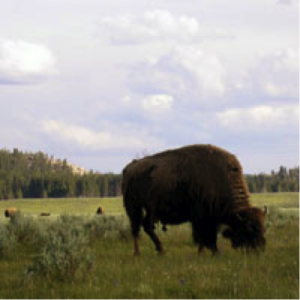
It all started with a little herd of thirteen orphaned runts that O’Brien bought from a neighboring ranch after helping with the annual roundup. You could say that it was an impulse buy, as O’Brien had been a cattle rancher for twenty years and hadn’t thought much about raising buffalo, although he had struggled to make ends meet as a cattle rancher and his intuition told him that cattle just weren’t suited to the grasslands of South Dakota. But in this little derelict herd, O’Brien saw salvation. “I was desperate to rediscover purpose in my life…and those thirteen imperiled packages of fur and sinew seemed kindred souls. I wanted us all to move on to a better life, I wanted my ranch to be as balanced and healthy as it could be,” O’Brien recalls in his memoir Buffalo for the Broken Heart: Restoring Life to a Black Hills Ranch. And so it began with those thirteen pint-sized buffalo, dubbed the “Gashouse Gang.”

That was twelve years ago, and now O’Brien’s herd has grown to more than 600 and his business, Wild Idea Buffalo Company, is thriving. As much a conservationist as he is rancher, O’Brien’s philosophy is to “take care of everything out there, not just the product, because it’s all connected. The reason we’re doing this is for the grass. When the grass is healthy, the whole ecosystem is healthy.” To O’Brien, the buffalo are more than a commodity; they are the key to bringing the grasslands he loves back to their native state.

Where the Wild Things Are

When I arrived on his South Dakota ranch in early summer, it was clear that O’Brien’s mission was not that of a venture capitalist, but one of a preservationist. Nestled between the Black Hills and Badlands National Park and bordered by Buffalo Gap National Grassland, O’Brien’s Cheyenne River Ranch is more than just a buffalo ranch; it has become a nature preserve. During my tour of the ranch, I saw the prairie through a wildlife biologist’s eyes. As we passed through the sea of rippling grass, O’Brien pointed out a flock of baby grouse; a red tail hawk; a pair of white pelicans (which, to my surprise, are native to the Plains); two golden eagles; and a prairie dog town where we saw four burrowing owls emerge from the tunnels, which O’Brien explained don’t eat the little burrowing rodents, but cohabitate with them. The prairie was teeming with life.

And then there were the buffalo. In a small open-air, all-terrain vehicle, O’Brien drove us into the midst of the herd, so close I could smell their sweet musky smell. There’s something quite majestic about these beasts; they are at once wild, aloof, and sublime. And unlike cattle–which settlers brought to the Plains in the late 1800s after most of the buffalo had been slaughtered–they are native to the Great Plains.

“Buffalo may look a little like cattle, but they act very differently,” O’Brien explains. Take grazing, for instance. “The grasses out here evolved to be grazed by buffalo; the way the buffalo graze for a bit and then move on, this movement is what allows the grass to thrive, and when the grass is thriving, the birds are thriving, the bugs are thriving, the mammals are thriving, the microbes in the soil are thriving,” O’Brien says. “It’s all connected. But now the grasses are being grazed by cattle and that’s putting stress on the plant life, and in turn, the entire ecosystem.”

In addition to their beneficial grazing patterns, O’Brien explains that buffalo easily endure what he calls the “animal-stress triumvirate” of the northern Great Plains–heat, cold, and wind. For example, a cow will start to lose weight at about zero degrees Fahrenheit, but a buffalo can stand temperatures up to minus 30 degrees, about as cold as it ever gets in South Dakota; the extreme temperatures just don’t affect them. “The cattle can hardly survive in the cold, and the calves certainly can’t,” he says. “When you raise cattle–and I’ve done it–you’re forcing a species into an environment that they just aren’t suited to.” But the buffalo, they belong on this land.

O’Brien describes some of the changes he noticed in the environment once buffalo replaced cattle on his pastures in Buffalo for the Broken Heart:

Unlike cattle, which dwell under trees for the shade in summer and wind protection in winter, we never found buffalo spending time in the wooded draws. As a result, the ground was not compacted and barren under the trees. The rare wooded plants of the prairie were not stressed the way they were when the pastures were grazed by cattle. In just one summer of buffalo grazing the bushes grew more lush than I’d ever seen and our grouse and songbird populations seemed to soar. The buffalo also refused to stand around water holes like cattle insist upon doing. The grass around the ponds was thick and unsullied. The water was not fouled by animal waste. The ponds became better places for other animals to live.

But restoration of the prairie takes some time. “Everything doesn’t get better overnight,” he explains, “this is a long-term deal.” And O’Brien is in it for the long haul.

Honoring the Spirit of the Plains

Just as O’Brien has a deep respect for the grasslands, so he does for the buffalo that live there. He strives to raise his buffalo like the Plains Indians traditionally did–“buffalo that were allowed to fatten on native grass, killed with honor on the range where they were born, and never exposed to the chemicals that become necessary once they entered a feedlot.” Following this model, O’Brien’s buffalo never taste grain, are never administered antibiotics, and never experience the terror of a slaughterhouse. They feast on native grasses their entire lives, which makes their meat richer in the beneficial omega-3 fats and conjugated linoleic acid. And when the time comes for slaughter, the buffalo are humanely “harvested” on the open pastures.

O’Brien explains that because they are wild animals, a trip to the slaughterhouse creates a load of stress on buffalo–“they are fighting it the entire time.” In fact, he says that buffalo can lose up to 15 percent of their body weight from the pasture to the slaughterhouse just from the stress. Additionally, some animals get so stressed out that there is an overload of adrenaline in their bodies, which can affect the quality of the meat.

O’Brien never wanted to put his animals through that, so he decided to harvest them in the place where they are the most comfortable, when they are “calm and happy”–in their own pastures. “We think it’s the right thing to do for the buffalo,” he says, “It’s more humane, and it results in a better product, a better quality meat.”

His method of field-harvesting buffalo was so popular that O’Brien created the Sustainable Harvest Alliance, a nonprofit business whose stated goal is to offer a way for small buffalo producers, especially on the reservations of western South Dakota, to bring their grass-fed buffalo to market in a humane, environmentally friendly, and culturally acceptable way.

“The idea of a mobile harvest unit came from the Native American guys from the Rosebud and Pine Ridge reservations,” O’Brien explains, “They wanted us to come and deal with their buffalo the same way we did ours.”

And so the mobile harvest unit was born. A modified big rig truck, the mobile harvest unit serves as the always-present USDA-certified meat inspector’s office and has a walk-in cooler to store the carcasses for the quick trip to the packaging facility. When the time is right, the truck quietly pulls into whichever pasture the buffalo happen to be in, and only those buffalo that are ready are quickly and humanely culled from the herd (sometimes this can be as few as four or five). Surprisingly, O’Brien says that the other buffalo hardly pay attention, almost as if they accept this as part of the cycle of life.

After being inspected by the government inspector, the carcasses are loaded onto the truck and taken to a local processing plant, where they are broken down into specific cuts, packaged, and shipped. O’Brien himself recently opened his own processing and packaging facility.

“I raise and process buffalo with honor and respect for the animals and the land. As a result, this ranch produces the condensed essence of the northern Great Plains in the form of pure buffalo meat, and I take pride in that.”

“I love it, I love the way it all fits together,” O’Brien enthuses. “I think we’re all, on one level or another, trying to figure out how we can help the planet. This is my part and it’s the way I’m going to spend the rest of my life.”

RECIPE

The following recipe is courtesy of O’Brien’s partner and culinary genius, Jill O’Brien.

Buffalo Vegetable Soup

Serves 4-6

2 tablespoons olive oil

1-1 pound package ground buffalo

5 carrots, peeled and sliced

5 celery stalks, sliced

1 medium onion, diced

1-14 oz can crushed tomatoes

1 tablespoon black pepper

2 teaspoons salt

1 teaspoon paprika

1 teaspoon turmeric

1 teaspoon cardamom

1 quart vegetable or chicken stock

2 cups chopped spinach

Heat 1 tablespoon of oil in a heavy soup pot over medium-high heat. Add ground buffalo and brown. Transfer to a bowl. In the same pot, add remaining tablespoon of oil, carrot, celery, and onion. Sauté for 4 to 5 minutes or until veggies are slightly soft. Return buffalo to the pot and add seasonings; stir and sauté for 5 minutes. Add stock and tomatoes; bring to full boil, reduce heat to low, cover and simmer for 30 minutes. Add spinach and cook until just wilted. Adjust seasoning to taste. To make this a complete meal, serve with a large side salad with your choice of toppings.


*Based on government guidelines, this meal (served with side salad) provides about 3 to 4 servings of vegetables per person, per serving.
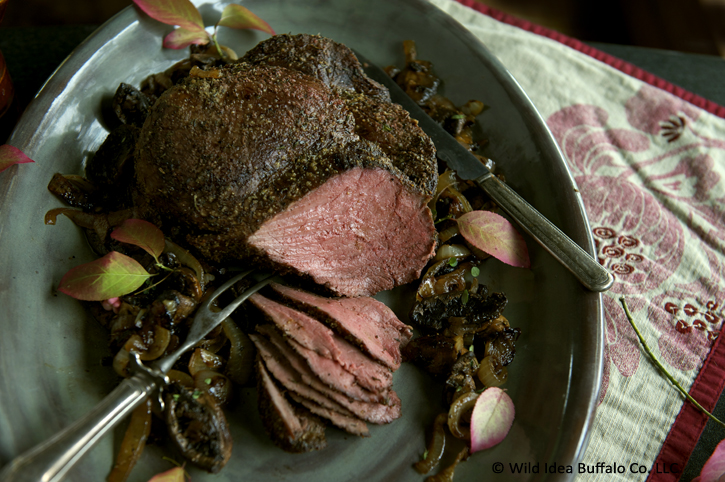
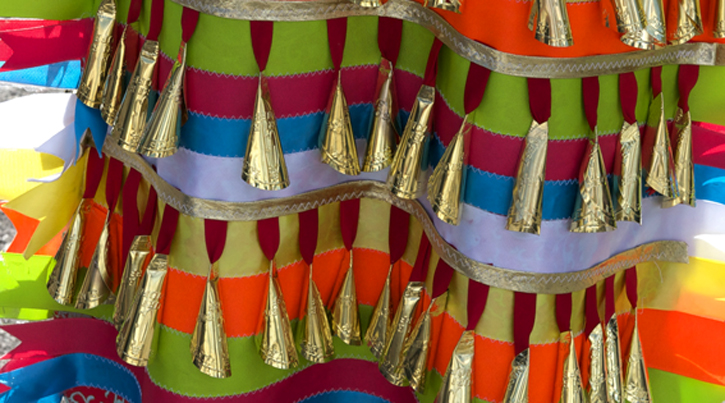
Reminiscing the Redwing's Cottonwood and a Grand Buffalo Ranch Wedding

dan Cheyenne River Writings, Dan's Writings 14 Comments

It has been a whole year since we began getting the ranch ready for our daughter’s wedding. The reason that this came to mind is that we heard our first redwing back bird this groomsmenmorning and I remembered that last year, when the tree trimmers came, a redwing sang proudly from the first cottonwood snag I pointed out for trimming. The redwing’s cottonwood was just one of many trees that needed a haircut before the big day – which was in June. I thought that there was plenty of time but Jill and Jilian had a complicated schedule in their minds – an artistic plan that I knew enough not to question.

The deal we made with the tree trimmer was that he would cut out all the dangerous and unsightly dead branches and I would load them up on a trailer and take them to the dump. He came in with two guys and a huge truck with a telescoping aerial bucket. At the end of the day the entire yard, driveway, and horse corral was filled with downed tree limbs. It took me most of week to pick up the limbs and rake up the debris.

The next job on my list was to get the greasy machine shop ready for 250 people to enjoy a sit-down reception dinner of roast buffalo with all the trimmings. I announced that such a feat would be impossible but I was ignored.

The last time that shop had been clean was the day after it was build. Stashed in the corners were at least twenty-five years of dust, oil, leaves, bird droppings, saw dust, old parts, plastic buckets, nails, balls of twine, jars of unknown liquids, deer antlers, and garden supplies. There was a lot of valuable stuff too: camping equipment, clay pigeons, plastic pipe, engine parts, coolant, starting fluid, bungee cords, log chains, rolls of barbed wire, fence posts, used lumber, and a couple raccoon traps. Suspended in the rafters were a dozen pieces of cedar siding and some roofing material left over from building the house in the 1980’s. Bats had been living up there since we moved in the early 2000’s but, luckily, they had not yet come back for the summer.  There was also important ranching equipment: a welder, an acetylene torch, an anvil, table saw, bench grinder, air compressor, drill press, two big tool chests, a band saw, and hundreds of scattered, but very important, hand tools. I tried pushing everything to the sidewalls but it wasn’t near enough room. In the end, it was all loaded into trailers and hauled to a livestock barn that would be off limits to the wedding guests. We rented a power washer and sprayed it down a couple times before we started any decorating.

I kept trying to tell Jill that our home was a buffalo ranch, not a country club, but I didn’t think I was getting through. She had a vision of just what she wanted but all she could tell me was that it would all come together. She saw a buffalo ranch wedding as a continuation of the circle of life and she repeated what a Lakota friend had told us years before, “The buffalo and people are the same. We emerged from the earth together. We depend on each other.” Dan and Jillian

Though I didn’t see how that connected to the wedding, but I knew what Jill was talking about. On our ranch we take care of the buffalo because they take care of us and, in that sense, it seemed reasonable to consider us as one entity. I also had an understanding of how people who live around buffalo could come to believe that buffalo, and maybe even people, come from under the earth. Hundreds of times I have watched buffalo herds disappear into the folds in the prairie.  I have ridden to where I can see the valley were I last saw them only to find that they are gone. Sometimes they reappear right before my eyes. Sometimes they are simply gone.

There is no question that when a daughter marries, it marks a generational rebirth, a changing of the guard, the handing off of a baton. But with bridal showers, wedding invitations, dresses, and menus to consider, a lot of that gets lost. There was also a ranch to run and, though I suddenly had Colton, my son-in-law to be to help out, it was a busy spring. We all pulled together to ready the place for the wedding but still I was not convinced that the style of the thing matched the landscape and the underlying philosophy of us all.

My spirits rose when I saw where they planned to have the ceremony. They chose the flat top of a finger of land above the Cheyenne River that pointed off toward the south. It was one of the prettiest spots on the ranch, with a view of miles of untrammeled rough country that extended to the Pine Ridge reservation on the south and to Badlands National Park on the east. From up there you could see the huge pasture where the buffalo spent the winter and a corner of the pasture where they would be on the day of the wedding. Two hundred and fifty chairs would be set up on that finger. They planned a buffalo robe for an altar and there would be both a Lakota Holy Man and hip-Christian Minister to officiate.

The day of the wedding was chaotic. We had rented trucks the day before and hauled the chairs and tables. We made another run to the rental store that morning for the table clothes, center pieces, flat ware, china, and chandeliers that would hang from the rafters where the bats had previously lived. The caterers were set up both in the house and in an outdoor kitchen under the deck. The bride’s maids and the groomsmen had been out the night before but they showed up and pitched in. The girls were put to making place cards and the boys joined me decorating the machine shop with green cottonwood boughs and strings of sparkling white lights. I was impressed with their energy and strength. They were in their mid-twenties, tall, capable, and clear-eyed – despite the lingering effects of the bachelor party. With Colton as their leader, they were the kind of young people that felt right to have on the ranch.

Jill and I were the last to get dressed. The head usher waited in the buffalo grass behind the guests who sat mesmerized by the view of the Cheyenne River. Jill took his arm and descended the grassy isle and the music began. I stood in the rear with the bride’s maids and Jilian. Her golden hair and brilliant white dress glittered in the sun and she clung to my arm in a way that melted me.

Jill had been strident that this part of the ceremony come off in a certain way. The groomsmen were somewhere off stage but I had seen them earlier. They were dressed in brown western-cut suits that made them look even taller and bolder than they were. The first song was coming to an end and I was afraid that the guests might turn away from the river valley to look at the bride’s maids before the groomsmen were in their places. But suddenly, in the far distance, buffalo appeared and all eyes went to them. They were moving at a slow lope toward the wedding as a guitar and violin started up like pair of meadow larks. The buffalo continued to come but suddenly dipped out of sight – back into the earth. The music went bravely on without the buffalo. In their place came those tall, elegant boys. They rose up from below and into the sunlight as if for the first time. The music shifted and the bride’s maids moved to join with those boys.

Finally, I escorted Jilian to Colton’s side. Tears filled my eyes as she stretched up to kiss my cheek and I had to look past her to maintain my composure. My eyes fixed on the near horizon, so no one but me saw the herd of buffalo reappear. They lined up solemnly on a rugged hillside. They were still shaggy with spring shedding and I could see their gentle black eyes and their shiny horns. They had come with a purpose. It was as a kind of a reception line.

Food On The Table

jill Jill's Journal 3 Comments

Jerk Tri Tip web

Growing up, the foods we ate were based on two things, what we had and what we could afford. This is still the case today. Like then and now, sometimes what we have and can afford is related, and sometimes it is a simple matter of distance, with the closest grocery being 45 miles away. The above reasons created some great cooks in my family and earned my mother, my sisters and myself the ability to turn nothing into something.

So a couple of weeks ago when I was reading through the comments on our Wild Idea face-book fan page of a Monday food photo, there was a comment that stuck with me. It said: “I would have thought you would be a company that supported Meatless Monday’s!” It stuck with me not because I don’t believe we shouldn’t have meatless meals, (we are proponents of eating meat – but less of it) but that we have to be told what day to have meatless meals? If we don’t follow the Meatless Monday movement, will we be removed from the “in” food group? What if all you have on Monday is meat? Why not meatless Tuesday’s, Wednesday’s, Thursday’s? I realize Meatless Mondays is catchy, but so is Meaty Mondays.

In 1900 Americans spent around 45% of their income on food. Today we spend under 10%. What that 10% consist of for each of us, is not only a personal choice based on our tastes, beliefs and income, but also a cultural one. There are perfectly healthy peoples that have been eating blood, blubber and meat for thousands of years, or others where horse meat is a staple and others where vegetables and grains are the main source of their diet. Working with a lot of our Native American brothers, I can tell you that vegetables are not highly consumed.  But for so many of us, we eat what we have and are grateful for it.

That said, we all know more about the foods we eat then we ever have before, and we all probably do the best that we can. Wild Idea’s responsibility and platform has always been: 1.) To raise a healthy product that is good for the land, good for the animals and good for you. 2.) To educate and provide information, assisting the consumer in making their personal food choices.

We hope that Wild Idea Buffalo meat is a choice for you and your families. We promise to hold true to our principles and to not mind what days of the week are meatless!

The below recipes is for one of our featured cuts in this months monthly special. Super easy, healthy and oh so delicious! Cheers. Jill

Jerk Tri-Tip with Orange Glaze and Bulgar Wheat Salad (serves 4)

Jerk Tri Tip 4We use a Wild Idea beautiful Buffalo Tri-Tip roast  for this recipe, and marinade in our house jerk seasonings. The meat is butter knife tender and packed with flavor. The bulgar wheat salads natural nuttiness compliment the jerk flavors nicely and required no additional seasonings. Season to taste, as you like.

Ingredients:

  • 1 – 1 lb. Marinated Buffalo Tri-Tip Roast
  • *optional jerk seasoning
  • reserve marinade
  • ¼ – cup orange marmalade
  • ½ – cup bulgar wheat
  • ½ – cup water
  • 1 – tablespoon olive oil
  • ½ – of two colored bell peppers, finely diced
  • 2 – green onions, finely slivered
  • 2 – tablespoons cilantro, finely diced

Preparation:

  1. Place bulgar wheat and water in bowl, cover and let rest for 1 hour.
  2. Preheat oven to 450*. Remove roast from marinade, shaking off excess. Rub with a teaspoon of Jerk seasoning if desired. (This will cause the roast to blacken a bit more.)
  3. Place heavy cast iron skillet over high heat to heat through. Place roast in hot pan and sear all sides of roast. About 4 minutes. Place hot pan with roast in preheated oven and roast for 8 minutes for medium rare.
  4. Remove roast from oven and pan and place on cutting board. Cover and allow to rest for 5 minutes.
  5. While roast is in oven, sauté vegetables in olive oil over medium high heat for 3 minutes. Add softened bulgar wheat and mix together. Set aside, until ready to serve. Can be made ahead and flash reheated or served at room temperature.
  6. Place reserved marinade in saucepan and bring to a full boil, and allow to reduce for a couple of minutes. Whisk in orange marmalade until well incorporated. Reduce heat to low until ready to serve.
  7. Slice roast on the bias into desired thickness.

To serve, arrange sliced meat on bulgar wheat salad and drizzle with *Orange Glaze.

*If you are uncomfortable using reserved marinade as a sauce base for the Orange Glaze, try this instead:Melt 1 Tb. butter in saucepan with 1 teaspoon jerk seasoning, add ½ cup pineapple juice and reduce as above, and continue with marmalade. Jerk seasoning available at most groceries.


[maxbutton id=”2″]

Wilderness Designation by Gervase Hittle

guestwriter Blogging 9 Comments

Earlier this morning I read a letter to the Editor in the Rapid City Journal commending SD Governor Dennis Daugaard for his appreciation and support of South Dakota’s heritage of outdoor activities. Terry Mayes, author of the above-mentioned letter, concludes by encouraging the governor: “your support for a wilderness designation would be appreciated.”

Dan & Gervase.jpg

The reference to “wilderness designation” applies specifically to U.S. Senator Tim Johnson’s proposal for a ‘wilderness designation” to be approved in part for a relatively small, specified area of the Buffalo Gap National Grasslands. That area, which includes the Indian Creek portion of the Big Corral Grazing Unit, governed by the US Forest Service is presently South Dakota’s only USFS grazing unit to permit summer grazing (May-September) for cattle, when the land is verdant and winter grazing (November-April) for buffalo when the land is dormant. The USFS determines annually the grazing capacity of the unit and establishes the number of “animal units per month” (AUMs) that the permit holders can use in any given year. This quota is established by surveying the grazing area in relation to the availability of grass and water, which varies each year relative to the weather conditions.

This grazing situation came about through an agreement with Dan O’Brien, owner of the Cheyenne River Ranch, and the USFS. The agreement could take place only if certain conditions were met. First, the old cattle fencing had to be replaced or beefed up and modified where applicable, to accommodate buffalo. Allof the new fence is a five strand fence, replacing the former three and four strand fences. Second, the buffalo that would be grazed on the unit had to be identifiable and, therefore, marked. Ear-tagging was accepted as the method for identification.

It took us about ten months with a crew of up to five people to complete the fencing project, which came to be about twenty six miles of fence. That November a few of us, men and women, on horseback gathered the herd and moved it toward the Ralph Draw gate. On a neighboring hillside there was gathered a group of invited viewers, a Native American drum group with singers who welcomed the herd into a small portion of the Buffalo Gap National Grasslands where they had not been for about one hundred and fifty years. The buffalo flowed through that gate with the energy and look about them as if their genetic memory had kicked in and told them they were going home–even after such a long absence. There were more than a few shouts and tears of joy among the riders, the welcoming drum group, and observers to see the last of the herd move over the hill and out of sight.

As the human observers filed through the gate in a procession toward the ranch and the last horseman latched the gate, we knew that we had accomplished something extraordinary, significant, and historical.DSC_1937

That Winter Dan and I travelled that country often to assure ourselves that the buffalo had accommodated themselves into the area and to insure that the fence remained intact. We built a good fence. In the spring, just before the buffalo began calving, Dan, Jill, and I rode out to gather the herd and bring them back to the private lands of the ranch. The herd had calved on these lands before; so it was not too difficult to return them to the brushy draws and springs along the bluffs on the north side of the Cheyenne River.

Since that first year a similar scenario has taken place. The buffalo live as free as we can possibly let them. They live their lives as closely to the lives of their ancestors as is possible in this age of parceled land and mandatory fences. And that my friends, is the foundation of the “Wild Idea Buffalo Meat”, that may grace your table and your health.

A “wilderness designation” for this 22,000 acre parcel of land would not seriously alter its use, but would tend to insure its ability to sustain grazing for both cattle and buffalo and to retain its ability to regenerate its wildness.

Jerk Tri-Tip with Orange Glaze and Bulgar Wheat Salad

jill Buffalo Recipes, Recipes, Roasts, Steaks 2 Comments

(serves 4)

Jerk Tri Tip 4

The Tri-Tip cut is a favorite of chefs. The meat is flavorful and the marinating makes this cut butter knife tender. The natural nuttiness of Bulgur Wheat salad makes for a nice accompaniment. *Other steak cuts would work for this dish too, such as Wild Idea Flank Steaks, Flat Irons or Sirloins.

Steak, Marinade & Glaze:

Ingredients:
1 – 1 lb. Wild Idea Buffalo Tri-Tip Roast
3/4  – cup pineapple juice
2  – tablespoons soy
2 – cloves garlic
2 – tablespoons brown sugar
2 – tablespoon jerk seasoning, see below OR store-bought spice can be used as substitute.
¼ – cup orange marmalade

Preparation:

  1. 1.     Prepare Jerk seasonings, and store in a container until needed. *Spice mix will

keep for months.

  1. Rinse Tri-Tip and pat dry. Place roast in a plastic bag or glass dish.
  2. In a blender, mix pineapple juice, soy sauce, garlic, brown sugar and jerk

seasoning together, and flash process. Pour half of the marinade over the steak, and massage into the steak. Cover and rest for 2 to 8 hours. Set aside or refrigerate remaining marinade for glaze until ready to use.

  1. Preheat oven to 450°.  In a cast iron or heavy ovenproof skillet, over medium high heat, heat the pan. Shake excess marinade off roast and place in hot pan. Rotate roast four times, searing each turn for one minute. Place seared roast in preheated oven and roast for 6 minutes.  Remove roast from oven and place on a cutting board, cover with foil and rest for 5 minutes before cutting.
  2. While roast is cooking, place remaining marinade in a saucepan and bring to a boil. Reduce heat medium low and allow sauce to thicken slightly. Whisk in orange marmalade and again bring to a boil, stirring occassionally. Reduce heat to low, until ready to serve.
  3. Slice steak, serve with bulgur wheat salad and drizzle with orange glaze.


Jerk Seasoning

Ingredients:
6 ½ tsp. Onion Powder
3 ½ tsp. Salt
2 tsp. Brown Sugar
¾ tsp. Nutmeg
¾ tsp. Crushed Red Pepper
¾ tsp. Ginger
¾ tsp. Cayenne Pepper
½ tsp. Black Pepper
½ tsp. anise
½ tsp. Cinnamon

Preparation: Mix all ingredients together and incorporate thoroughly. Store in a container or plastic bag.

Bulgur Wheat Salad

Ingredients:
½ – cup bulgur wheat

½ – cup water

1 – tablespoon olive oil

½ – of two colored bell peppers, finely diced

2 – green onions, finely slivered

2 – tablespoons cilantro, finely diced


Preparation:

  1. Place bulgur wheat and water in bowl, cover and let rest for 1 hour.
  2. In pan over medium high heat, heat oil and sauté vegetables for 3 minutes.
  3. Add softened bulgur wheat to vegetables and toss together to mix and heat.
  4. Set aside, until ready to serve. Can be made ahead and flash reheated or served at room temperature.


The Valentine’s Dinner

dan Cheyenne River Writings, Dan's Writings 8 Comments

Jill and I invited three other couples out to the ranch to test Jill’s Valentine’s Day Dinner. It wasn’t intended to be the kind of Valentine’s Day party with paper Mache hearts and cupids hanging from the ceiling. There were no bowls of sugary candy bearing innocent, semi-secret messages: Be Mine, Kiss Me, Miss You, Crazy 4 U. These were six people that we had known for decades – parents of grown children – grandparents. These were old friends that we seldom got a chance to spend time with because, like almost everyone, we are all too busy.

As we talked over minimal hors d’oeuvres, we compared the pace of our lives to the pace of our parent’s lives in the 1950’s and 60’s. They were busy people too. I actually knew the parents of several of these gathered friends and they were much like my parents who were owner/operators of a small construction company and a dress shop. When I think of my mom and dad, what comes clearest to mind is my mother cooking breakfast in the predawn darkness before she was out the door for work. I remember my father coming home day after day in the summer with his work shirt soaked through with sweat. But somehow there was time for silliness, to play bridge, watch football games together, and eat together almost every night. That was the main objective of our Valentine’s Day Dinner – reconnect, breath deep, slow down, and rediscover the magic that makes life so worthwhile.

On the Northern Great Plains the winter days get very short and very cold. Though the skies are nearly always clear, a solstice haze can lay so thick that joy seems to go into hibernation along with the prairie dogs. It sometimes takes priests and priestesses concerned with the natural magic of food and love to dig deep enough to resurrect it. We had a full cast of priests and priestesses that night: wizards of design, conjurers of visual art, food alchemist, disciples of Herodotus, and dabblers in the written word. As we sat two by two around the table the moon rose full and huge on the horizon beyond the window. It occurred to me that none of us worked solo as our blue collar parents did. For all the lack of connection in our modern lives, each couple had found themselves working together. One couple owned a powerful advertising firm, another had dedicated their lives to the same weekly newspaper, another teamed up to write corporate histories. It was not completely clear what Jill and I were doing, but we were doing it together and so we knew how difficult that kind of work can be.

It is understood that the richest vein of human happiness is the one that connects family and friends, and that vein is often revealed deep in a chaffing dish or at the bottom of a glass. Valentine’s Day was an excuse, but it was a good excuse because these were couples with a flair for the romantic, if slightly beyond the flush of young love. We were all too old to fake innocence. We knew the first wives, husbands, and kids that were still struggling. We recalled the rehabs, the failures, and the successes. But we pushed ahead, toasting the awards and achievements with Prosecco. These were four couples who, if slightly world weary, were warriors of life and filled with enough wisdom to sit close and freely tell stories that might embarrass more delicate egos.

Jill started us off with a hot cauliflower soup that put a temporary halt to the talk of our roll in the transition between the industrial age and the information age. There had been a small flourish of smart-phoning which yielded only the definition of potash, which we forgot as soon as we tasted the cauliflower soup. The spoons hung in thin air as the brains connected to the taste buds. Someone raised a finger and said, “Lemon?” There was a beat before heads began to nod. Everyone moved closer to their spouse.

Then came the muscles steamed in tomato fennel sauce with buffalo chorizo. There was a bottle of Russian River Pinot Noir and the conversation swung to politics. But not the generic national fair that can put a party to sleep. This was state and local stuff discussed by people who had run the campaigns and written the news stories. I saw candles reflect from eyes and some gentle, familiar touches. Glasses were raised but some were filled with non-alcoholic beer.

The couples continued to move closer to each other in a tightly choreographed Valentine’s Day dance that Jill had explained to me earlier in the day. All the dishes were shared between the couples and the main dish was a single one pound, bone-in, buffalo ribeye on fettuccine with green garlic butter and shaved asparagus. It was served to each couple on a wooden cutting board placed between them with a single knife and fork. Soon the couple’s arms and faces were intertwined and the dark, red meat was going into the two mouths as if they were suddenly one very happy, carnivorous beast.

Something about that scene was enough to elicit a story from one of the couples. An ancient birthday party and a buxom guest is dancing in front of the birthday-boy. The wife is telling the story and she does not bother to explain how that came to be. She only explains that the woman knelt in front of her husband and instructed him to ‘seek his gift between the twin peaks’.

“So,” the husband said with a shrug. “I just reached down in there.”

The wife exploded in laughter, clapped him on the back, and said, “he pulled out a baby chicken! A little, black, live chicken!”

The rest of us although dumbfounded, exploded in laughter, until someone asked how a baby chicken had gotten into the woman’s cleavage.

There was silence and I looked around the table at the wreckage of the Valentine’s Day Ribeye. It had worked its magic. In serious amazement, another husband said, “Well, it must have started as an egg.” More laughter.

The last course was a tip of the hat to cupid. People closed their eyes and giggled as they squabbled over the single chocolate drop, melted into the top of the moist, dark cupcake.

Mussels in Tomato Broth with Buffalo Chorizo

jill Buffalo Recipes, Recipes, Sausages Leave a Comment

This recipe is terrific for two or to prepare for you next dinner party. The flavors complement each other nicely and the chorizo adds a nice spice! The sauce can be made in advance, leaving the steaming of mussels for the last minute. 

Ingredients: per 2 people

  • 1 teaspoon olive oil +
  • 4oz. Wild Idea Buffalo Chorizo
  • ½ cup yellow onion, diced
  • 1 clove garlic, chopped
  • ½ teaspoon each salt & pepper
  • 1 teaspoon crushed fennel seeds
  • 1 teaspoon chili flake *optional
  • 1 15oz. can, diced tomatoes
  • 1 cup white wine
  • 12 to 16 mussels, washed and de-bearded

Preparation:

  1. In a heavy sauté pan over medium high heat, heat 1-teaspoon olive oil. Crumble sausage into pan and cook until lightly browned, about 4 minutes. Remove sausage from pan, place in bowl and cover with saran. Set aside.
  2. Return pan to heat and add additional oil if needed. Add onion and garlic, sautéing until tender, about 5 minutes.
  3. Add seasonings, tomatoes and wine. Stir to incorporate and bring to a boil.  *At this point you could remove from heat, cover and reheat when ready to serve.
  4. Add prepared mussels, cover and allow mussels to steam for 4 minutes. Most all of the shells should have popped open. Discard un-open shells.
  5. Add chorizo back to pan and stir to incorporate and heat.
  6. Serve direct from pan or spoon into serving bowls.

Garnish with green leek ringlets and lemon wedge. Serve with warm artisan bread.

Wine Pairing: You could stay with a dry Prosseco for this course or switch to a Dry Riesling or light red.

Affairs of the Heart

jill Jill's Journal 2 Comments

February – is the month that we celebrate the affairs of the heart. The boom, boom, boom that holds love, and keeps us going. When filled with love, it has the ability to “rock our world”. When not cared for or mistreated, it can leave us shattered.

After the completion of a college course that Jilian had taken, she was explaining to me the theory that a broken heart is a learned emotion. Although not convinced herself, Jilian was making a pretty good case, but I just couldn’t buy it.  How is it I asked, that when any form of love leaves you, you can feel your heart literally breaking in two? When this occurs, I find that food helps.

The words that describe love often mirror those that describe food. Sweet, warm, spicy, tangy, decadent, and hot, come to mind effortlessly. It makes sense that the main muscle that keeps us going needs to be fed emotionally and nutritiously, but ironic that the adjectives used to describe those feeds are similar.

This month with the purchase of any of our fabulous specials, we are including a five course Valentine Menu, complete with recipes that are sweet, warm, spicy, tangy, decadent, and hot. It will hopefully fall in the “rock your world” category, both emotionally and nutritiously!  Below is a sneak peak at one of the dishes. Hope you enjoy. Wishing you all a happy, healthy heart. Jill

Course II: Mussels in Tomato Broth with Buffalo Chorizo (serves 2)

Note: You might be thinking that this will be too heavy for a second course, but it is light dish (as long as you don’t dip too much bread into the delicious broth). The flavors complement each other nicely and the chorizo adds a nice spice! The sauce can be made in advance, leaving the steaming of claims for the last minute.

Ingredients:

  • 1 teaspoon olive oil +
  • 4oz. Wild Idea Buffalo Chorizo
  • ½ cup yellow onion, diced
  • 1 clove garlic, chopped
  • ½ teaspoon each salt & pepper
  • 1 teaspoon crushed fennel seeds
  • 1 teaspoon chili flake *optional
  • 1 15oz. can, diced tomatoes
  • 1 cup white wine
  • 12 to 16 mussels, washed and de-bearded

Preparation:

  1. In a heavy sauté pan over medium high heat, heat 1-teaspoon olive oil. Crumble sausage into pan and cook until lightly browned, about 4 minutes. Remove sausage from pan, place in bowl and cover with saran. Set aside.
  2. Return pan to heat and add additional oil if needed. Add onion and garlic, sautéing until tender, about 5 minutes.
  3. Add seasonings, tomatoes and wine. Stir to incorporate and bring to a boil.  *At this point you could remove from heat, cover and reheat when ready to serve.
  4. Add prepared mussels, cover and allow mussels to steam for 4 minutes. Most all of the shells should have popped open. Discard un-open shells.
  5. Add chorizo back to pan and stir to incorporate and heat.
  6. Serve direct from pan or spoon into serving bowls.

Garnish with green leek ringlets and lemon wedge. Serve with warm artisan bread.

Wine Pairing: You could stay with a dry Prosseco for this course or switch to a Dry Riesling or light red.

Advantages of Vitamin E: By, Dr. Kevin Weiland

guestwriter Blogging 2 Comments

Each month we will be featuring a guest writer to share their views and stories. This month it is a great honor to bring you nutritional information from Dr. Kevin Weiland.

As I was researching nutrition and health for my book The Dakota Diet, Basic Health Publication, 2007, I came across this impressive article on why the meat from a grass-fed animal stays fresher longer than from the traditional feed-lot beef.  We know that meat from grass-fed buffalo is higher in omega-3 fatty acids, although healthier; it is a highly unsaturated fat and can oxidize very quickly.  (Oxidation of cells is the reason why a banana will turn brown or an apple slice turns yellow after a period of time when exposed to the air.) People have long assumed that grass-fed meats have a shorter shelf life than grain-fed meats because of their fat profile.

In a 2001 study, researchers from the Institute of Grassland and Environmental Research in Canada selected steaks from a grain-fed (Concentrate) animal and a grass-fed (forage) animal. They packaged them in standard wrapping and kept them in a refrigerator for 14 days.  At the end of the two week period, they were impressed to see the bright red color of the grass-fed meat and noted the brown, unattractive meat from the other cut of meat.

The reason is this, grass-fed meats are high in vitamin E, and this potent antioxidant kept the meat from spoiling.  Vitamin E levels in grass fed animals are four times higher than their counter part from the feed lot.  Even when supplementing the feed with extra vitamin E, they were only able reach levels of vitamin E at 50% to what is contained in the foraged meats.

To sum this up, Wild Idea Buffalo is a nutrient dense, low calorie, low fat product that I recommend for good health to my patients.

Bison at the Inaugural Luncheon

jill Blogging, Jill's Journal 7 Comments

With the American Bison being considered as the official country mammal, it seems only right that bison be the center of the plate for the 2013 Inaugural Luncheon. We were delighted when we heard that Buffalo Tenderloin from South Dakota had been selected, but disappointed that the White House did not call us to procure some of our 100% grass-fed, 100% antibiotic free, and 100% humanely harvested, delicious buffalo meat.

Our local newspaper called and asked if I would be interested in re-creating the bison portion of the second course, which I agreed to.  Upon looking over the whole menu, my first response was; “Wow! That’s a lot of food”. In addition to the steak and the sauce, the second course has four side accompaniments! After reviewing, I thought it seemed busy, lacked texture, and had flavors that would overpower the subtle flavor of 100% grass-fed buffalo tenderloin. I am uncertain if they will be using grass-fed bison, but even with that, I didn’t think it was my place to question the Executive Chef of the White House! I decided to make all the dishes as the recipes indicated, and see if my hunches were right.

During the preparation, I started to wonder how I would plate all of the dishes into one lovely presentation. There was not a plating recommendation, so after a few plating set up’s, I landed on one that I liked and made sense to me.  Also, from a photography perspective I was concerned how to include the squash, as the orange color would distract from all other items. It was not until after I had plated, and photographed the course, that I found a link that showed a plate presentation. Darn it!

Below is my photograph, followed by each of the recipes in their original form, with my notes in italics. It was great fun and a wonderful learning experience. I hope you enjoy some of the recipes too and have the opportunity to create your own Inaugural Meal, presidential or otherwise. Cheers! Jill

Bison Steaks

(serves 4)

Due to a blizzard, outdoor grilling was not an option. I prepared steaks as listed below, but replaced minced garlic with garlic powder, because it will burn. I seared the tenderloin steaks in a 500*+ cast iron skillet for 3 minutes each top & bottom, and seared the sides until just brown, about a minute total. Remove steaks and cover, allowing to rest for 5 minutes before serving. I did not use hickory, as indoor cooking did not allow. Although I have not tried hickory smoked tenderloin, with the other flavors would not probably use.  
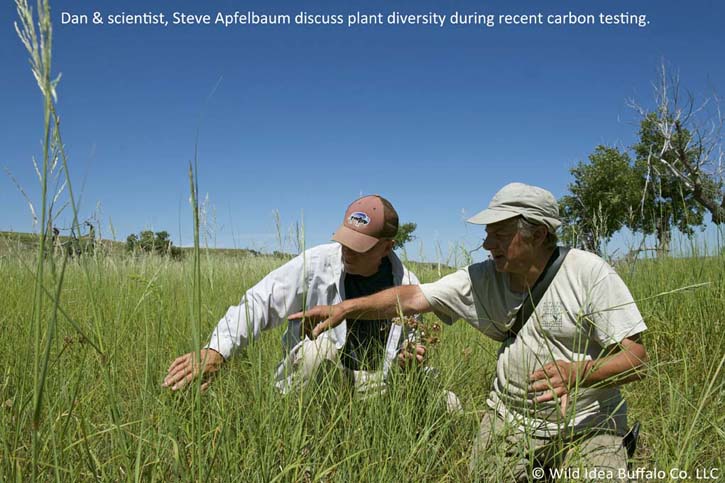
Ingredients

  • 4 each bison tenderloin, 5 oz
  • 1 tablespoon extra virgin olive oil
  • 1/4 tablespoon garlic, minced
  • 1 tablespoon rosemary, fresh, rough chopped
  • 1 tablespoon kosher salt
  • 1 teaspoon cracked black pepper
  • 1 quart hickory wood chips, for grilling

Preparation

  1. Marinate bison steaks overnight with oil, garlic, rosemary and black pepper.
  2. Remove the steaks from the refrigerator, remove the large pieces of rosemary and then season with salt and pepper on all sides of bison.  Allow the steaks to sit at room temperature for 20 minutes to allow the salt to dilute and penetrate the meat.
  3. For grilling of the steaks, you will need to soak the wood chips in warm water for 30 minutes prior to grilling.  The wood chips should be added to your charcoal 5 minutes prior to grilling to allow them to burn and produce the necessary smoke you will need for the flavor in the steaks.
  4. Grill steaks on each side for approximately 5-8 minutes for a medium rare steak, depending on thickness of the pieces.  Remove from grill and allow to rest for 5 minutes prior to serving.
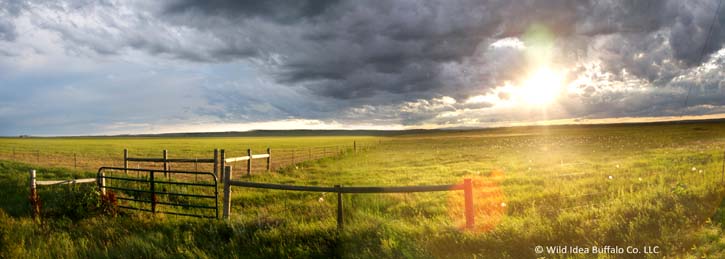
Wild Huckleberry Reduction

I made my own demi glace, used blueberries instead of huckleberries (very close to the same), but otherwise followed the recipe. The recipe states to use the blueberries when cooking and when finishing, I used them when cooking, but would add a few at the end for presentation. In making other like fruit sauces, I have found that tarter fruits such as chokecherries or plums, complement the grassiness of the meat a bit better, allowing the real meat flavor to shine through. I would also omit finishing the sauce with butter and chocolate. Although the sauce was very good, I might save it for a fuller bodied roast or cut.

Ingredients

  • 4 ounces veal demi glace, can be purchased at gourmet markets or online
  • 1 cup huckleberries, fresh (when in season) or frozen
  • 1 teaspoon bitter chocolate
  • 1/2 tablespoon butter
  • 2 cups port wine
  • 1 cup mirepoix, (medium dice of carrot, celery, onion and leek)
  • 1/2 tablespoon extra virgin olive oil

Preparation

  1. In a heavy sauce pot, sauté mirepoix for 8 minutes on med heat.
  2. Add the port wine, 1 cup of the huckleberries and demi glace allowing this to reduce by half.  Strain through a sieve and return to a clean sauce pot.
  3. Prior to serving bring sauce to simmer and add the chocolate, huckleberries and butter.  Serve

Pureed Butternut Squash

This dish turned out very nicely. I followed per instructions and seasoned with a little more salt and a squeeze of lemon juice to liven it up.

Ingredients

  • 1/2 piece butternut squash, approximately 2 pounds, roasted
  • 1 tablespoon butter
  • 1 pinch kosher salt
  • 1 pinch white pepper
  • 1/2 tablespoon maple syrup, medium amber

Preparation

  1. Pre heat oven to 400º F, place squash with cut half facing down on a sheet pan in oven and cook until tender, approximately 25 minutes.
  2. Remove from oven and allow to cool for 5 minutes.  Scoop flesh into a blender using a spoon.
  3. Place the butter, maple syrup, salt and pepper into blender.  Puree on high speed until smooth, adjusting the seasoning as needed.  Place puree in a small sauce pot and cover.

Baby Golden Beets and Green Beans

Unfortunately and fortunately I was unable to find golden beets or fresh green beans. With all of the other flavors going on, my palate was happy for the simplicity of blanched asparagus. I used a method of preparation from Mark Bittman. Peel asparagus stalks, reserve peelings, slice stalks on the bias, leaving tips whole. I did blanch the stalks and tips for 30 seconds in salted, boiling water. Toss asparagus, including pealing with a drizzle of olive oil. Delicious and easy!

Ingredients

  • 8 each baby golden beets, peeled, cut in half
  • 4 ounces green beans, ends snipped, cut 1 inch on bias
  • 1/2 tablespoon extra virgin olive oil
  • 1/2 tablespoon shallot, minced
  • 1/2 tablespoon kosher salt
  • 1 pinch white pepper
  • 2 quarts water

Preparation

  1. Bring 2 quarts of water to a boil and add ½ tablespoon kosher salt.
  2. Place beets into water gently and allow to cook for 5 minutes or until tender.  Remove beets using a strainer and set in a bowl.
  3. Allow water to return to a boil and gently add the green beans for 3-4 minutes until tender.  Remove the beans from the pot using a strainer and add to the bowl with the beets.
  4. Place olive oil in a sauté pan on medium heat, add the shallots to cook until tender. Add the beets and beans and season with salt and pepper to taste.

Red Potato Horseradish Cake

I prepared as recipe suggested, but thought the salt and cream might be a little much, so I added salt to taste, (about 1½ tsp.) during the mashing and used only 2 Tb. of the cream. I did press into a cake and broil as recommended. This was a good dish, but preferred it as a mash, as it left it a bit cleaner in taste .

Ingredients

  • 1 pound red potato, medium sized, cut 1 inch dice, skin on
  • 1 tablespoon prepared horseradish
  • 1/2 tablespoon Dijon mustard, whole grain
  • 3 tablespoons butter
  • 1/2 cup heavy cream
  • 2 tablespoons kosher salt
  • 1 teaspoon white pepper
  • 1/4 cup chives
  • 1/2 gallon water
  • 1 cup micro greens, available at specialty markets

Preparation

  1. Place potatoes, ¼ to ½ gal water (or just enough to cover potatoes) and 1 tablespoon salt in a heavy bottom pot and bring to a boil.
  2. Allow to simmer for approximately 10-15 minutes until tender.  Drain water and allow to sit in strainer for 5 minutes to allow all water to drain.
  3. Place potatoes, Dijon, horseradish, 2 tablespoons butter, heavy cream, remaining salt, pepper and chives back into the same pot you used to boil potatoes.
  4. With a large kitchen spoon, stir and smash potatoes until mixed but still chunky.  Adjust seasoning with salt and pepper.
  5. Using an ice cream scoop, portion a 3 oz. scoop onto a greased baking sheet.  Form potatoes into a cake shape and top with remaining 1 tablespoon of butter dividing equally among the 10 cakes.
  6. Place potatoes under the broiler for 4-5 minutes or until golden brown

Strawberry Preserve and Red Cabbage

This sounded so curious to me. The end result was very good, and complimented all of the other dishes nicely. After cooking for two hours, I became a bit impatient and turned the heat up to speed things along. My total time was 2.5 hours. A sweet and tangy flavor, that was good warm, but delicious room temp or chilled.

Ingredients

  • 1/4 each red cabbage, shaved thin
  • 1 pint apple cider vinegar
  • 1 cup sugar
  • 2 quarts water
  • 1/4 cup strawberry preserves
  • 1/2 tablespoon kosher salt

Preparation

  1. Place the cabbage, vinegar, sugar and water in large heavy bottom pot.
  2. Bring liquid to a boil then reduce heat and simmer for 2 to 3 hours or until liquid has reduced to a syrup like consistency, stirring occasionally.
  3. Add the strawberry preserves to the cabbage and stir until fully incorporated.  Adjust sweetness with salt if too sweet to your liking.


Bison Tenderloin Steaks at the White House

jill Buffalo Recipes, Recipes, Steaks Leave a Comment

Because South Dakota bison steaks were the center of the plate for the 2013 Inaugural Luncheon, I was asked by a local newspaper to re-create the Bison portion of the menu. After reviewing the menu and the recipes, I decided to give the whole menu a try. Below are each of the recipes in their original form, with my notes in italics. It was great fun and a wonderful learning experience. I hope you enjoy some of the recipes too and have the opportunity to create your own Inaugural Meal, presidential or otherwise. Cheers! Jill

Bison Steaks

(serves 4)

Due to a blizzard, outdoor grilling was not an option. I prepared steaks as listed below, but replaced minced garlic with garlic powder, because it will burn. I seared the tenderloin steaks in a 500*+ cast iron skillet for 3 minutes each top & bottom, and seared the sides until just brown, about a minute total. Remove steaks and cover, allowing to rest for 5 minutes before serving. I did not use hickory, as indoor cooking did not allow. Although I have not tried hickory smoked tenderloin, with the other flavors would not probably use.  
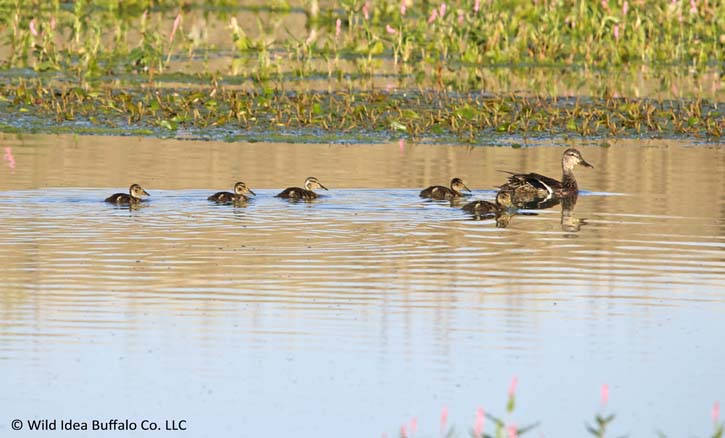
Ingredients

  • 4 each bison tenderloin, 5 oz
  • 1 tablespoon extra virgin olive oil
  • 1/4 tablespoon garlic, minced
  • 1 tablespoon rosemary, fresh, rough chopped
  • 1 tablespoon kosher salt
  • 1 teaspoon cracked black pepper
  • 1 quart hickory wood chips, for grilling

Preparation

  1. Marinate bison steaks overnight with oil, garlic, rosemary and black pepper.
  2. Remove the steaks from the refrigerator, remove the large pieces of rosemary and then season with salt and pepper on all sides of bison.  Allow the steaks to sit at room temperature for 20 minutes to allow the salt to dilute and penetrate the meat.
  3. For grilling of the steaks, you will need to soak the wood chips in warm water for 30 minutes prior to grilling.  The wood chips should be added to your charcoal 5 minutes prior to grilling to allow them to burn and produce the necessary smoke you will need for the flavor in the steaks.
  4. Grill steaks on each side for approximately 5-8 minutes for a medium rare steak, depending on thickness of the pieces.  Remove from grill and allow to rest for 5 minutes prior to serving.
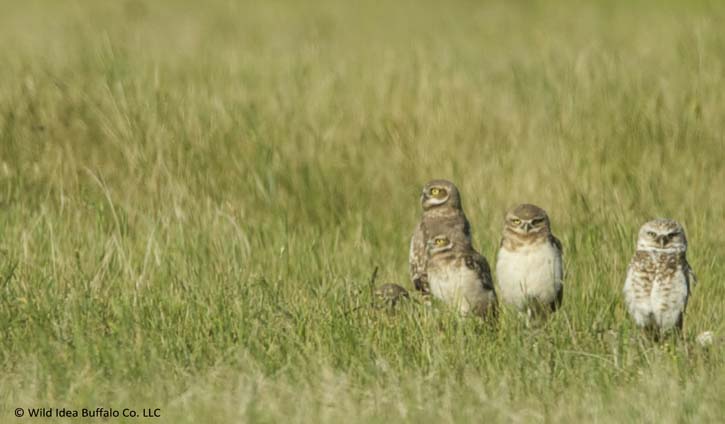
Wild Huckleberry Reduction

I made my own demi glace, used blueberries instead of huckleberries (very close to the same), but otherwise followed the recipe. The recipe states to use the blueberries when cooking and when finishing, I used them when cooking, but would add a few at the end for presentation. In making other like fruit sauces, I have found that tarter fruits such as chokecherries or plums, complement the grassiness of the meat a bit better, allowing the real meat flavor to shine through. I would also omit finishing the sauce with butter and chocolate. Although the sauce was very good, I might save it for a fuller bodied roast or cut.

Ingredients

  • 4 ounces veal demi glace, can be purchased at gourmet markets or online
  • 1 cup huckleberries, fresh (when in season) or frozen
  • 1 teaspoon bitter chocolate
  • 1/2 tablespoon butter
  • 2 cups port wine
  • 1 cup mirepoix, (medium dice of carrot, celery, onion and leek)
  • 1/2 tablespoon extra virgin olive oil

Preparation

  1. In a heavy sauce pot, sauté mirepoix for 8 minutes on med heat.
  2. Add the port wine, 1 cup of the huckleberries and demi glace allowing this to reduce by half.  Strain through a sieve and return to a clean sauce pot.
  3. Prior to serving bring sauce to simmer and add the chocolate, huckleberries and butter.  Serve

Pureed Butternut Squash

This dish turned out very nicely. I followed per instructions and seasoned with a little more salt and a squeeze of lemon juice to liven it up.

Ingredients

  • 1/2 piece butternut squash, approximately 2 pounds, roasted
  • 1 tablespoon butter
  • 1 pinch kosher salt
  • 1 pinch white pepper
  • 1/2 tablespoon maple syrup, medium amber

Preparation

  1. Pre heat oven to 400º F, place squash with cut half facing down on a sheet pan in oven and cook until tender, approximately 25 minutes.
  2. Remove from oven and allow to cool for 5 minutes.  Scoop flesh into a blender using a spoon.
  3. Place the butter, maple syrup, salt and pepper into blender.  Puree on high speed until smooth, adjusting the seasoning as needed.  Place puree in a small sauce pot and cover.

Baby Golden Beets and Green Beans

Unfortunately and fortunately I was unable to find golden beets or fresh green beans. With all of the other flavors going on, my palate was happy for the simplicity of blanched asparagus. I used a method of preparation from Mark Bittman. Peel asparagus stalks, reserve peelings, slice stalks on the bias, leaving tips whole. I did blanch the stalks and tips for 30 seconds in salted, boiling water. Toss asparagus, including pealing with a drizzle of olive oil. Delicious and easy!

Ingredients

  • 8 each baby golden beets, peeled, cut in half
  • 4 ounces green beans, ends snipped, cut 1 inch on bias
  • 1/2 tablespoon extra virgin olive oil
  • 1/2 tablespoon shallot, minced
  • 1/2 tablespoon kosher salt
  • 1 pinch white pepper
  • 2 quarts water

Preparation

  1. Bring 2 quarts of water to a boil and add ½ tablespoon kosher salt.
  2. Place beets into water gently and allow to cook for 5 minutes or until tender.  Remove beets using a strainer and set in a bowl.
  3. Allow water to return to a boil and gently add the green beans for 3-4 minutes until tender.  Remove the beans from the pot using a strainer and add to the bowl with the beets.
  4. Place olive oil in a sauté pan on medium heat, add the shallots to cook until tender. Add the beets and beans and season with salt and pepper to taste.

Red Potato Horseradish Cake

I prepared as recipe suggested, but thought the salt and cream might be a little much, so I added salt to taste, (about 1½ tsp.) during the mashing and used only 2 Tb. of the cream. I did press into a cake and broil as recommended. This was a good dish, but preferred it as a mash, as it left it a bit cleaner in taste .

Ingredients

  • 1 pound red potato, medium sized, cut 1 inch dice, skin on
  • 1 tablespoon prepared horseradish
  • 1/2 tablespoon Dijon mustard, whole grain
  • 3 tablespoons butter
  • 1/2 cup heavy cream
  • 2 tablespoons kosher salt
  • 1 teaspoon white pepper
  • 1/4 cup chives
  • 1/2 gallon water
  • 1 cup micro greens, available at specialty markets

Preparation

  1. Place potatoes, ¼ to ½ gal water (or just enough to cover potatoes) and 1 tablespoon salt in a heavy bottom pot and bring to a boil.
  2. Allow to simmer for approximately 10-15 minutes until tender.  Drain water and allow to sit in strainer for 5 minutes to allow all water to drain.
  3. Place potatoes, Dijon, horseradish, 2 tablespoons butter, heavy cream, remaining salt, pepper and chives back into the same pot you used to boil potatoes.
  4. With a large kitchen spoon, stir and smash potatoes until mixed but still chunky.  Adjust seasoning with salt and pepper.
  5. Using an ice cream scoop, portion a 3 oz. scoop onto a greased baking sheet.  Form potatoes into a cake shape and top with remaining 1 tablespoon of butter dividing equally among the 10 cakes.
  6. Place potatoes under the broiler for 4-5 minutes or until golden brown

Strawberry Preserve and Red Cabbage

This sounded so curious to me. The end result was very good, and complimented all of the other dishes nicely. After cooking for two hours, I became a bit impatient and turned the heat up to speed things along. My total time was 2.5 hours. A sweet and tangy flavor, that was good warm, but delicious room temp or chilled.

Ingredients

  • 1/4 each red cabbage, shaved thin
  • 1 pint apple cider vinegar
  • 1 cup sugar
  • 2 quarts water
  • 1/4 cup strawberry preserves
  • 1/2 tablespoon kosher salt

Preparation

  1. Place the cabbage, vinegar, sugar and water in large heavy bottom pot.
  2. Bring liquid to a boil then reduce heat and simmer for 2 to 3 hours or until liquid has reduced to a syrup like consistency, stirring occasionally.
  3. Add the strawberry preserves to the cabbage and stir until fully incorporated.  Adjust sweetness with salt if too sweet to your liking.


Bison for the Florida Plains?

dan Cheyenne River Writings, Dan's Writings 13 Comments

Seventy miles off the west coast of south Florida is a tiny cluster of islands called the Dry Tortugas – Dry because there is no fresh water on the islands and Tortugas because it was once a good place for mariners to gather sea turtles (tortugas) for food. Though I have never set foot on them, the islands have always fascinated me because they are renowned as a place to watch migrating birds, and because there is a huge brick fort on the main island that has a special connection to the Great Plains. The relationship between this confined, watery world and the arid expanses of the Great Plains are counter intuitive except that the ancient fort that was used as a prison during the time when United States’ most dangerous criminals were thought to be the Indians of the Great Plains.

It was a time when imprisonment was considered only a punishment and, I suppose the authorities of that era believed that imprisonment on the Dry Tortugas was the perfect punishment for people whose main crime was their dignity and their love of movement. Surrounding prisoners who had spent their entire lives moving between small sources of pure, fresh water with nearly infinite, undrinkable salt water was as cruel an irony as naming the fort after Thomas Jefferson.

Fort Jefferson is the largest masonry structure in the Western Hemisphere. The Dry Tortugas’ history in human habitation began in 1825 with a lighthouse intended to help guide US commerce in the Gulf of Mexico. The fort was begun in1846 and much of the construction was done by slave labor – another irony, since the fort remained in Union hands throughout the Civil War. It was decommissioned as a prison in 1874, became a National monument in 1935, and a National Park in 1992.

Since I learned of the tiny archipelago of ten uninhabited islands and one that is covered with a huge nineteenth century fort, I have wanted to go there. I thought that this Christmas, when Jill and I spent nearly two weeks in South Florida, that I would get my chance. I wanted to stand on the edge of the island, on the narrow beach outside Fort Jefferson and look out across the bright, blue, coral reef that fades to black, deep water and try to feel what those Great Plains Natives felt. I imagine whole families standing beside the ocean, scanning the sky for a Wanblee coming to carry their spirits back to the plains. But, if you are not an eagle, it is a difficult place to get to and I had to settle for reading about it as I sat in the mainland sun. I found it odd that, in all the official Park literature, that I found no reference to Native American prisoners. Such revisionist history is never justified, but in this case the excluded acts are so reprehensible that I understood the impulse to leave it out of literature intended for people fresh from visiting Disneyland.

But I wanted to see it and I was disappointed that I did not get my chance. In stead, I stayed on the mainland and read and slept for most of a week. It was supposed to be the first real vacation that Jill and I had ever taken – no meetings, no book readings, no calling on customers. We slept right through Christmas and New Year’s Eve. We ate enough seafood to satisfy a battalion of porpoises. I got through Team of Rivals and a biography of Ulysses Grant. But, toward the end of our stay, I got restless and called a friend in South Dakota to see what was happening on the Great Plains. I asked about the weather and how the buffalo were getting along. He assured me that both were fine and then he told me that, because of the drought, another of our friends had just sent several semi loads of buffalo, “Down there someplace.”

“No,” I said, “not down here. I’m in Florida.”

“Yea,” he said. I heard him typing into his computer. “Yea, right here.” He gave me the name of a town that I recognized. “Some guy starting a sustainable, grassfed, organic, local, high omega 3, low sodium buffalo business.”

“Oh, yea.” We had a laugh and went on to talk about the Fiscal Cliff negotiations and Notre Dam’s chances against Alabama.

He was the only person from home that I had talked to in over a week and it felt kind of good. I say, kind of good, because hearing that buffalo were actually being shipped out of South Dakota to Florida, gnawed on me. I got out a map and found the town he had mentioned. It was only an hour’s drive, but I didn’t have an address and I really wanted the vacation to continue and play itself out as we had planned. For a day I tried sitting at the pool and starting a new book. I bought Les Miserable’s on my Kindle. Bad choice. After an hour of reading I was in the car heading into the agricultural land of central Florida.

Miles and miles and miles of citrus. Large clearings in the trees with tall brown grass that looked like nothing I had ever seen. Thin, floppy-eared cattle by the hundreds. Intensive agriculture like I had only seen in the commodity land of Iowa, Illinois, and Ohio. There were wading birds and turkey vultures in the air at all times. I stopped at a roadside stand and bought some boiled peanuts from an old black man who looked at me and laughed when I asked if there were any buffalo around. “No, sir. No buffaloes.”

That was a bit of a relief and I cruised along the country road as I do in South Dakota – slowly, watching, trying to figure out how the land works. Had I been speeding down the road like everyone else, I would have missed them.

They appeared on the horizon a mile and half off the road and I tried to convince myself that they were just more cattle. But I knew they were buffalo and I turned the car around and pulled into a set of buildings to ask. By chance, I drove right into a fencing crew taking an afternoon break. One look at their pickup and trailer and I knew they were building buffalo fence.

They were just a bunch of southern talking cowboys and I fell right in with them when I said that I was in the buffalo business too. I told them that I thought they might have some buffalo from near my ranch in South Dakota.

“South Dakota?” It was an old guy in a stained cowboy hat. “Hell, yes. We got buffalo from all over.”

“’Bout sixteen hundred of ‘em,” a younger man said.

“No foolin’?” I said. “That’s a lot of buffalo. You guys are regular buffalo boys.”

“Hell, no,” another man said. “We don’t know shit about buffalo.”

“Don’t want to,” another man grumbled.

They all laughed and the oldest man held up his hand. “We’re leanin’. The boss is the buffalo man.” He pointed to small building. “He’s over there in the office.”

I sat with the cowboys for another few minutes and answered a few of their questions about handling buffalo. “Bulls meaner than the cows?” “When do they calve?” “What about using horses ‘round ‘em?”

Finally I wondered over to the office and found an earnest young man who seemed happy to see me. “Don’t get many other buffalo producers come by here.”

“I don’t ‘spose.”

He was from New England and this was his first venture into agriculture. He knew little about buffalo but had been to a series of grazing schools and was very excited about it all. We toured his ranch and we found the South Dakota buffalo in a big paddock where he had put them to acclimate to the ranch before he turned them out with the main herd. To my surprise, they looked good. Of course, they had only been there for a couple weeks so any negative affect from the imported South American grass or the unique parasites of the tropics probably hadn’t had time to show. There was one particularly magnificent cow buffalo that stared at me as if she remembered me from some wind-swept South Dakota prairie. I took an extra few seconds to look into her stoic, black eyes. As I watched, a pure white cattle-egret lumbered through the air to land on her back. Had one of my Lakota friends seen this they would wondered if the bird had come for her soul. But if the egret bothered her, she did not let on.

The South Florida buffalo ranch was a big and amazing piece of ground and we only had time to look at part of it. There did not seem to be a conservation piece to this operation – the native species were long gone. I tried to figure how many ten’s of millions of dollars had already been invested in this exotic buffalo ranch. I knew the cost of the buffalo and the cost of the tall woven wire fences, but I didn’t know anything about the land. Its value was a mystery to me but I knew that it could only be paid for if the spirit of the buffalo was traded for the liquidity of a commodity.

Buffalo Comfort Food

jill Jill's Journal 7 Comments

With Lucas and Jilian spending the holiday season with their other families, and with the Christmas and New Year holiday falling during the week, Dan and I decided to head to brother Mike’s condo in Florida for some R&R. In addition to resting and reading, we ate – a lot. We consumed one fresh fish dinner after the next. Baked grouper, deep fried whole snapper, and scampi style gulf shrimp, all so delicious, we couldn’t stop ourselves. With Florida having the number one “animal to acre” stocking rate, beef is found on all of the menus. A grass-fed option however was not available, so we decide to hold out for our buffalo.

Upon our return we learned that a handful of our buffalo had escaped from their winter pasture on the Buffalo Gap National Grasslands and onto the reservation. Dan would need help and called our new “buffalo ranch” neighbor’s foreman, Doug. Although a nice day for January with a 25 degree temperature and the promise for it to warm, Dan & Doug were layered up in insulated coveralls, jackets, scarves, gloves and hats pulled down to just above their eyes. They stiffly mounted their 4 wheelers and headed out into real rough country. Both had declined food, and said they wouldn’t be long.

The wind had picked up and I knew they must be cold out there. I tried to keep my thoughts from the danger that they could get into with the addition of a snowy landscape and busied myself with the preparation of lunch. Not having been to the grocery since our return, ingredients were limited. It would be our first buffalo meal in two weeks and I wanted it to be a good one. There was a package of ground buffalo in the fridge, a head of cabbage sat lonely in the vegetable crisper, and a few jars of canned tomatoes lined the almost bare cupboard shelf.  “Aha,” I said, “Cabbage Rolls”.

After 4 hours the sound of the 4 wheelers interrupted the ocean sounding wind gusts. I exhaled a sigh of relief and popped the cabbage rolls into the oven. The sweet and savory aroma had started to fill the kitchen by the time they found their way back to the house and had removed their winter layers. After a cup of fresh hot coffee to take the chill off, we sat around the kitchen island and enjoyed our first bites of buffalo comfort food. It was just right. Happy, healthy New Year everyone! Jill.

Cabbage Rolls in Tomato Sauce 

(Serves 4 to 8)

I remember my grandma Mosey making these like it was yesterday. She would always, brown the meat before stuffing the leaves, and have noted that option at the bottom. Additional ingredients, such as chopped olives and artichokes can be added too. Enjoy!

Cabbage Rolls

Ingredients:

  • 8 cabbage leaves
  • 4 quarts water
  • 1 tablespoon olive oil
  • 1 pound Wild Idea ground bison
  • ½ cup green or yellow onion, chopped
  • 1 tablespoon oregano
  • 1 teaspoon paprika
  • ½ teaspoon allspice (optional)
  • 2 teaspoon salt
  • 1 tablespoon black pepper
  • 1 cup rice, pre-cooked

Tomato Sauce

Ingredients:

  • 2 15 ounce cans crushed tomatoes
  • 2 tablespoon brown sugar
  • ¼ cup lemon juice
  • 2 teaspoon salt
  • 1 tablespoon black pepper
  • 1 tablespoon chopped garlic

Preparation:

  1. Mix all tomato sauce ingredients together over medium heat and let simmer for 10 minutes.
  2. Remove core from cabbage center.
  3. Bring water to a boil in stock pot, place cabbage in pot, turning cabbage occasionally. As able remove outside leaves from cabbage and place on a paper towel.  Remove any stiff white core from leaves, for ease in rolling.
  4. Cover remaining cabbage and simmer for ten minutes. Remove cabbage, drain on paper towel and slice into strips when cool. Set aside.
  5. In a large bowl, mix oil, ground buffalo, onion, spices, prepared rice, and 1 cup of the tomato sauce together.  Hands work best.
  6. Place a spoonful of meat mixture in the center of each cabbage leaf and roll.
  7. Place sliced cabbage in the bottom of a placing cabbage rolls on top, and cover with remaining tomato sauce.
  8. Bake in a 375* preheated oven for 30 minutes, covered.

Serve with wild& brown rice and crusty bread.

*Note: Meat mixture can also be browned first and then stuffed in cabbage leaves: In sauté pan over medium high heat, heat oil. Crumble in ground bison, onion and seasonings and brown.  Remove from heat and stir in 1 cup of the tomato sauce and rice. Continue with step 6. Reduce cooking time to 20 minutes. Mixture can also be used with grape leaves, for the making of “Dolmades”.

Wine Pairing: Try a full bodied, non-oaky chardonnay.

Cabbage Rolls in Tomato Sauce

jill Buffalo Recipes, Ground, Recipes 1 Comment

(Serves 4 to 8)

I remember my grandma Mosey making these like it was yesterday. She would always, brown the meat before stuffing the leaves, and have noted that option at the bottom. Additional ingredients, such as chopped olives and artichokes can be added too. Enjoy!

Cabbage Rolls

Ingredients:

  • 8 cabbage leaves
  • 4 quarts water
  • 1 tablespoon olive oil
  • 1 pound ground bison
  • ½ cup green or yellow onion, chopped
  • 1 tablespoon oregano
  • 1 teaspoon paprika
  • ½ teaspoon allspice (optional)
  • 2 teaspoon salt
  • 1 tablespoon black pepper
  • 1 cup rice, pre-cooked

Tomato Sauce

Ingredients:

  • 2 15 ounce cans crushed tomatoes
  • 2 tablespoon brown sugar
  • ¼ cup lemon juice
  • 2 teaspoon salt
  • 1 tablespoon black pepper
  • 1 tablespoon chopped garlic

Preparation:

  1. Mix all tomato sauce ingredients together over medium heat and let simmer for 10 minutes.
  2. Remove core from cabbage center.
  3. Bring water to a boil in stock pot, place cabbage in pot, turning cabbage occasionally. As able remove outside leaves from cabbage and place on a paper towel.  Remove any stiff white core from leaves, for ease in rolling.
  4. Cover remaining cabbage and simmer for ten minutes. Remove cabbage, drain on paper towel and slice into strips when cool. Set aside.
  5. In a large bowl, mix oil, ground buffalo, onion, spices, prepared rice, and 1 cup of the tomato sauce together.  Hands work best.
  6. Place a spoonful of meat mixture in the center of each cabbage leaf and roll.
  7. Place sliced cabbage in the bottom of a placing cabbage rolls on top, and cover with remaining tomato sauce.
  8. Bake in a 375* preheated oven for 30 minutes, covered.

Serve with wild& brown rice and crusty bread.

*Note: Meat mixture can also be browned first and then stuffed in cabbage leaves: In sauté pan over medium high heat, heat oil. Crumble in ground bison, onion and seasonings and brown.  Remove from heat and stir in 1 cup of the tomato sauce and rice. Continue with step 6. Reduce cooking time to 20 minutes. Mixture can also be used with grape leaves, for the making of “Dolmades”.

Wine Pairing: Try a full bodied, non-oaky chardonnay.

I am well known for my poor memory

dan Cheyenne River Writings, Dan's Writings 8 Comments

Times and places are fuzzy to me.  I have to think hard to remember when I graduated from high school and can only remember two words from Spanish class. I can’t remember street addresses where I lived for decades or the names and faces of old girlfriends. I recall very few details of Christmases past.

Try as I might, there is no recollection of a single Christmas present I received as a child. There is a vague memory of carrying a candle at a Christmas Eve service at the Presbyterian Church – driven more, I suspect, by latent pyromania than religious fervor. I can still feel a bit of the anticipation of Christmas mornings in those years between when my father served in WWII and our family began to fret about Viet Nam. There was a neighborhood cat that my mother let in for dish of milk that was chased up the Christmas tree by our cat. I remember the tree toppling over, but I can’t remember the cats’ names or the color of their fur. About the only thing that my mind has stored is the aura of the Christmas Eve meals at my father’s mother’s house.

Grandma Wesie lived alone in a huge Victoria home right beside our modest, brick house on the corner of Locust and Main. My father’s sister and her family lived a dozen blocks away in another modest house and so it made perfect sense to have the holiday gathering at Grandma’s house. In later years, the modest homes would be expanded, with two-car garages and patios build in landscaped back yards. And as my brothers, cousins, and I wandered off to lives of our own, the old Victorian that housed my grandmother would fall into disrepair. But in those most important years, between cognizance and college, that castle of a house would generate my only fully formed childhood memories of Christmas. And thankfully, those memories were not of simply material things – unless you consider food as merely material.

In fact, although we had much more than many people, ours was not a material Christmas. I recall very clearly the Christmas Eve when the food, the conversation – and, no doubt, the plentitude of drink – was so intense that the cousins were gathering up their hats and coats for the trek home when some forlorn youngster pointed out to the adults that we had forgotten to open our presents.  That was the Christmas Eve that I first tasted oyster stew.

For the Christmas of 2012, oyster stew will not be remarkable.  But for a mid-western Christmas in the late 1950’s it was about as exotic as it got. The stew was conjured up by my adventurous mother. She and my father had tasted them when they were stationed on the east coast during the war. Recently, she had been seditiously studying a great, heavy book that was so revolutionary that it was effectively banned in our mid-century Ohio hometown. The Gourmet Cookbook stood elegant on the shelf above her stove like a tomb on alchemy and I marveled at the fake, gold-leaf and the wear that was already showing on the embossed cover. I have no idea where she got the oysters. No doubt, in the middle of the country before there was anything like flown-in seafood, they were not at their peak of freshness. But the details of the oysters’ origins have faded to obscurity. What I remember is the stew itself – the way the butter floated on the rich, pungent broth, the nuggets of goodness dredged from the bottom of cup, the salt on my tongue from the nifty little crackers.

Though there were only eleven core members of the dinner party. I can remember two perfectly browned turkeys, a glazed ham, and steam rising from a dozen side dishes. There were candles, crystal, and gilt edged gravy boats with dark and light gravy in profusion. There was a giant bowl of mashed potatoes; mixed with loads of butter in the impossibly heavy, white mixer that mom would let us operate – if we were very careful. When they could, our cousins would procure, at the AME church, Ada Tate’s yam casserole. Pure decadence – cooked to a candied glaze and topped with the then-unheard-of garnish of chewy marshmallows. When it was all laid out in that thread bare, formal dining room with the built-in mahogany side boards and the massive chandelier, it was like a Bergman movie set.

In my earliest memories there are no fresh vegetables after winter killed the local gardens.  Everything was in a can and, to this day, I prefer the taste of canned corn and peas. I was nearly in high school when the idea of frozen vegetables was finally accepted at that Christmas dinner table. It must have been about that time that I tasted my first shrimp cocktail – horseradish, my God. I can especially remember the cheese soufflé that mother made just for me. I remember learning to love Brussels sprouts and asparagus. Beef Wellington and goose with plum sauce was easy to love. Over fifty years later I think of twice-baked potatoes, crème brulee as a side for pumpkin pie, and that virgin sip of Cabernets. I can still see a Christmas table set with multiple forks and spoons.

If your memory seems to be poor, perhaps it is simply discerning. In any case, it is a good way to prioritize your life – a surefire way to puts things into perspective.   Although I can’t remember my classmate’s faces, the name of my first grade teacher, the score of single football game, or the gifts under the Christmas tree, I do remember every loving morsel of food that was laid on that Christmas table. It is as real to me as if it were, just now, rolling over my tongue. Feliz Navidad!

Buffalo Wellington

jill Buffalo Recipes, Recipes, Steaks 4 Comments

(serves 6 to 8)

The traditional Wellington is typically made using the Tenderloin cut and Foie Grois Pate. I find this dish plenty rich without the Foie Gras and prepare a savory vegetable pate instead. You can prepare using whole Tenderloin, or my favorite is using individual pre-cut steaks (Tenderloin or Top Sirloin steaks work well), creating the perfect portion. Another option for hors d’oeuvres, is using our Tenderloin Tips, for a delicious pop in your mouth Petite Wellingtons.

Ingredients:

  •  6 or 8 – 5oz. to 8oz. Tenderloin or Top Sirloin Steaks, rinsed and patted dry
  • 1 Tb. olive oil
  • 1 tsp. salt
  • 1 tsp. black pepper
  • 2 to 4 sheets Puff Pastry, thawed (4 serving per sheet for 5oz steaks, 2 servings per sheet for 8oz. You may have some scraps left over.)

Ingredients for Pate: (Makes enough for 8 Steaks, or 1 whole Tenderloin. Left overs can be tossed with rice or used in a soup at a later time.)

  • 4 Tb. butter
  • 1 cup onion, diced
  • 4 medium cloves garlic, chopped
  • ½ cup carrot, shopped and flash processed
  • ½ cup celery, chopped and flash processed
  • 2 cups mushrooms, diced
  • 2 cups mushrooms, sliced
  • 1 tsp. fresh rosemary, minced
  • 2 tsp. dry thyme
  • 1 tsp. salt
  • 1 tsp. black pepper
  • 1½ cup’s dry sherry
  • ½ cup red wine

Preparation:

  1. Rub individual steaks with olive oil and season with salt and pepper.
  2. Heat heavy sauté pan over medium high heat and place prepped steaks in hot pan.
  3. Brown for 1 minute each side for 5 oz. cut or 2 minutes each side for 8oz. cut.
  4. Remove from pan, and set aside, loosely covered with saran.
  5. Return pan to heat and add butter, onion, garlic, carrots, celery and seasonings. Sauté for 6 minutes.
  6. Add chopped mushrooms and continue to sauté for an additional 4 minutes.
  7. Fold in remaining sliced mushrooms and sauté for 2 minutes.
  8. Deglaze pan with sherry and bring to full heat. Reduce heat to medium low and simmer until liquids are almost gone, about 10 minutes.
  9. Add red wine and simmer until all liquids are gone, but pate is still moist.
  10. Remove pate from pan and allow it to come to room temperature. Reserve pan, do not wash.
  11. Cut puff pastry into squares, roll out lightly or stretch gently with hands.
  12. To assemble pat juices away with paper towel from the bottom of prepared steaks and place in the center of the pastry.  Top steaks with desired amount of vegetable pate. Pull two opposite pastry corners up and over steak and pate, folding in sides. Pinch pastry together, right below pastry corner, leaving a leaf like tab. Repeat with the other two corners. Pinch all together at top, pulling on pastry corners to create a leaf like design. Place Wellingtons on lightly oiled baking sheet or non-stick baking sheet. Wellingtons can be loosely covered with saran wrap and placed in the refrigerator until ready to bake, for up to 2 hours.
  13. Pre-heat oven to 475*. Place Wellingtons in hot oven and bake until pastry is golden brown, 7 to 10 minutes.

Serve with wild rice and Wine Sauce.

Ingredients for Marsala or Madiera Sauce:

  • 2 Tb. butter
  • 1 cup sliced mushrooms
  • 2 cups Dry Marsala, Dry Madeira or lighter bodied red wine
  • 2 cups buffalo or organic beef stock
  • 1 Tb. arrowroot

Preparation:

Return sauté pan to medium high heat and add the butter. While butter is melting, scrape up the brown bits from the bottom. Add mushrooms and sauté for a few minutes. Add wine and stock, and bring to full heat. Reduce heat to medium low and simmer until liquids have reduced to half. Turn heat back to medium high. Mix arrowroot with ¼ cup cold water and whisk into hot sauce.  Reduce heat to low. Season to taste. Serve immediately or remove from heat and reheat for later use.

Wine Pairing: Charles Smith, 2009 K Cabernet Sauvignon, Stoneridge Vinyard, WA

Bring on the Joy & Buffalo Wellington

jill Jill's Journal 3 Comments

December is our busiest month at Wild Idea Buffalo Company, as we are privileged to assist many of you with your holiday gift giving. Of course we always appreciate the business, but it’s more than that, it’s hearing from you. Many of you we know by name and it’s a joy when your call’s or e-mail’s come in. They are often announced with enthusiasm:  “Tom J. just ordered, and says to say hello!”, “Pam B. is sending her whole family buffalo gifts and sends all her best!”,  “Angela A. is preparing a buffalo feast for her neighbors and friends, and hopes we are doing well!”, and so on.  The energy continues into the shipping department, with each of us rotating to assist. Clad in our down jackets and ridiculously fun winter hats, we plunge into the freezer retrieving the various buffalo cuts to fill each order. We carefully place and tuck the cuts into the box, enclosing recipes and gift cards. When the delicious box is complete, one of us usually says, “I wish someone would send me a box like this”.  Followed by, “Well if they don’t, I’ll sell you one”. This is followed by laughter.
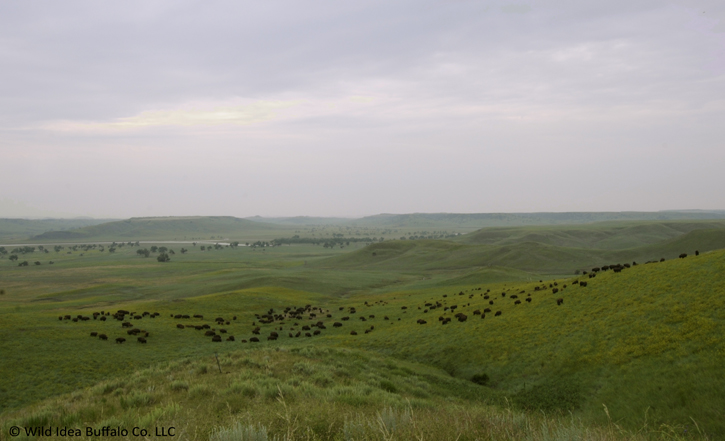
This continues daily until the final pre-holiday shipment goes out.  Before we depart, we have a toast of good cheer, then each employee takes one last trip into the freezer, fills a box with buffalo meat, buttons it up with love and delivers it to a family in need. Each box containing gifts that keep giving by nourishing the body and the soul. More joy!

This month’s recipe is my rendition of a classic favorite. A dish that is not only special in taste, but the presentation is a present in itself. A gift worthy of sharing, that will hopefully create a found memory to be savored for years to come.

Whether you are preparing a meal to share with family and friends, or sending holiday gifts of sustainable great taste, we hope you know how very much we appreciate each and everyone of you. Wishing you all a Delicious, Happy Holiday! Jill

Buffalo Wellington (serves 6 to 8)

The traditional Wellington is typically made using the Tenderloin cut and Foie Grois Pate. I find this dish plenty rich without the Foie Gras and prepare a savory vegetable pate instead. You can prepare using the whole Tenderloin, or my favorite is using individual pre-cut steaks, Tenderloin or Top Sirloin steaks work well, creating the perfect portion. Another option for hors d’oeuvres, is using our Tenderloin Tips, for delicious pop in your mouth Petite Wellingtons.

Ingredients:

  •  6 or 8 – 5oz. to 8oz. Tenderloin or Top Sirloin Steaks, rinsed and patted dry
  • 1 Tb. olive oil
  • 1 tsp. salt
  • 1 tsp. black pepper
  • 2 to 4 sheets Puff Pastry, thawed (4 serving per sheet for 5oz steaks, 2 servings per sheet for 8oz. You may have some scraps left over.)

Ingredients for Pate: (Makes enough for 8 Steaks, or 1 whole Tenderloin. Left overs can be tossed with rice or used in a soup at a later time.)

  • 4 Tb. butter
  • 1 cup onion, diced
  • 4 medium cloves garlic, chopped
  • ½ cup carrot, shopped and flash processed
  • ½ cup celery, chopped and flash processed
  • 2 cups mushrooms, diced
  • 2 cups mushrooms, sliced
  • 1 tsp. fresh rosemary, minced
  • 2 tsp. dry thyme
  • 1 tsp. salt
  • 1 tsp. black pepper
  • 1½ cup’s dry sherry
  • ½ cup red wine

Preparation:

  1. Rub individual steaks with olive oil and season with salt and pepper.
  2. Heat heavy sauté pan over medium high heat and place prepped steaks in hot pan.
  3. Brown for 1 minute each side for 5 oz. cut or 2 minutes each side for 8oz. cut.
  4. Remove from pan, and set aside, loosely covered with saran.
  5. Return pan to heat and add butter, onion, garlic, carrots, celery and seasonings. Sauté for 6 minutes.
  6. Add chopped mushrooms and continue to sauté for an additional 4 minutes.
  7. Fold in remaining sliced mushrooms and sauté for 2 minutes.
  8. Deglaze pan with sherry and bring to full heat. Reduce heat to medium low and simmer until liquids are almost gone, about 10 minutes.
  9. Add red wine and simmer until all liquids are gone, but pate is still moist.
  10. Remove pate from pan and allow it to come to room temperature. Reserve pan, do not wash.
  11. Cut puff pastry into squares, roll out lightly or stretch gently with hands.
  12. To assemble pat juices away with paper towel from the bottom of prepared steaks and place in the center of the pastry.  Top steaks with desired amount of vegetable pate. Pull two opposite pastry corners up and over steak and pate, folding in sides. Pinch pastry together, right below pastry corner, leaving a leaf like tab. Repeat with the other two corners. Pinch all together at top, pulling on pastry corners to create a leaf like design. Place Wellingtons on lightly oiled baking sheet or non-stick baking sheet. Wellingtons can be loosely covered with saran wrap and placed in the refrigerator until ready to bake, for up to 2 hours.
  13. Pre-heat oven to 475*. Place Wellingtons in hot oven and bake until pastry is golden brown, 7 to 10 minutes.

Serve with wild rice and Wine Sauce.

Ingredients for Marsala or Madiera Sauce:

  • 2 Tb. butter
  • 1 cup sliced mushrooms
  • 2 cups Dry Marsala, Dry Madeira or lighter bodied red wine
  • 2 cups buffalo or organic beef stock
  • 1 Tb. arrowroot

Preparation:

Return sauté pan to medium high heat and add the butter. While butter is melting, scrape up the brown bits from the bottom. Add mushrooms and sauté for a few minutes. Add wine and stock, and bring to full heat. Reduce heat to medium low and simmer until liquids have reduced to half. Turn heat back to medium high. Mix arrowroot with ¼ cup cold water and whisk into hot sauce.  Reduce heat to low. Season to taste. Serve immediately or remove from heat and reheat for later use.

Wine Pairing: Charles Smith, 2009 K Cabernet Sauvignon, Stoneridge Vinyard, WA

Sour Cream Dutch Apple Pie

jill Recipes, Various Recipes Leave a Comment

Sour Cream Dutch Apple Pie (Serves 10)

Apple Pierswm

Pie Crust                   

Ingredients:

  • 1 cup whole wheat pastry flour
  • 1/3 cup flour + for rolling
  • 4 teaspoons sugar
  • 6 ounces chilled salted butter, sliced
  • 1 egg yolk
  • 1 teaspoon lemon juice or cider vinegar
  • 1 tablespoon cold water
  1. Beat egg yolk with lemon and water. Add ice cube to mixture and place in refrigerator until ready to use.
  2. In pastry mixer add all dry ingredients and mix to incorporate.
  3. Add chilled butter slice at a time. Mix with dough hook  or paddle until dough is formed.
  4. Remove ice cube from egg mixture and add to dough with mixer going.
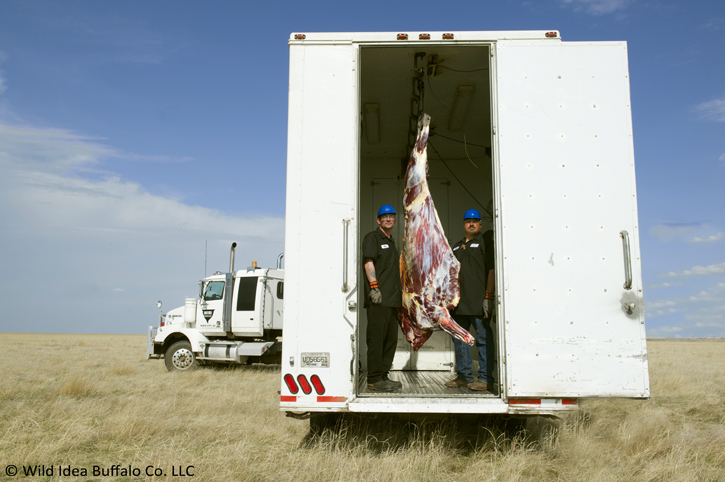
  5. With floured hands remove dough and place on flour dusted surface, and form into ball.
  6. Dust 2 sheets parchment paper, wax paper or saran. Place dough in center of the paper and press down with hand to form a circle. Place top sheet of dusted paper on top of dough. Roll dough out, starting at center and pushing outward.
  7. Remove top paper and then replace. Turn dough over and remove bottom paper. Place dough in 9” deep dish pie plate.
  8. Gently press dough into bottom edges of pan. With fingers form dough into a 1/2” high lip around top of pie plate. Place in refrigerator until ready to use.

Apple Filling

Ingredients:

  • 1 cup sour cream
  • 1 egg, beaten
  • 2 teaspoons vanilla
  • ¾ cup sugar
  • ¼ teaspoon salt
  • ¼ cup flour
  • ½ teaspoon cinnamon
  • 8 large or 16 small apples, peeled, cored and sliced

 Crumble Topping

Ingredients:

  • 1/3 cup flour
  • ¼ cup pure cane sugar
  • ¼ cup brown sugar
  • 1 tablespoon cinnamon
  • 1/3 cup walnut pieces
  • 1/3 cup pecan pieces
  • 4 ounces butter, sliced and lightly chilled
  1.  Mix all ingredients except apples together until well incorporated.
  2. Add apples and fold in gently.
  3. Place filling in prepared crust, pushing apples evenly into pie plate.
  4. Place on upper shelf in 400* preheated convection oven and bake for 15 minutes.
  5. Reduce heat to 350* and bake for an additional 30 minutes.
  6. While pie is baking mix flour, spices, and nuts together in mixing bowl. Slowly add butter until topping becomes crumbly. Refrigerate until needed.
  7. Sprinkle baked pie with crumble topping mixture and bake for an additional 15 to 20 minutes, or until bubbly.

Cool. Cut into 10 slices and serve with fresh whipped cream and Frangelico Carmel Sauce.

Frangelico Carmel Sauce

Ingredients:

  • ¼ cup water
  • 1 cup sugar
  • ¼ cup Frangelico liquor
  • ½ cup heavy whipping cream
  • 1 tablespoon vanilla
  • 4 ounces butter, cubed
  1. Over medium heat in a heavy saucepan bring water and sugar to a light boil. Scraping sides occasionally to incorporate crystals, but do not stir. Allow sugar to become amber in color.
  2. With long handled spoon carefully whisk in liquor, as sugar will bubble up.
  3. Add cream and vanilla and whisk to incorporate. Bring to a boil.
  4. Whisk in butter, 1 cube at a time. Bring to a boil.
  5. Remove from heat. Serve slightly warmed.

Wine Pairing:

Valley of the Moon, Sonoma CA

If you are not a heavy Chardonnay drinker, this is a good pick. Citrus and mineral aromas with a hint of vanilla and a touch of spice, make for a perfect pairing with apple pie or while making apple pie.

Gangnam Style Buffalo Flank Steak

jill Buffalo Recipes, Jill's Journal, Recipes, Steaks 7 Comments

This recipe was inspired by my new addiction to the “Gangnam Style” dance.

The Korean word gangnam, stands for the south side of Seoul, were there are many fancy restaurants and shops. My recipe is a rendition of Bulgogi (Korean B.B.Q.), which can be served a variety of ways. Here are two of my favorite renditions.

Note: Traditionally the Koreans use high end cuts, but I find that this is not necessary. The flank steak becomes very tender in the marinade. You are going to love this recipe. Get your gangnam on!

Ingredients:

  • 2 lbs. Buffalo Flank Steak
  • 1/2 cup Braggs Amino Liquids
  • 2 Tb. Sesame Oil
  • 6 cloves garlic
  • 1 Asian pear, or pear, peeled & cored
  • 4 green onions, chopped
  • 1 tsp. black pepper
  • 2 Tb. sugar
  • 1 Tb. red pepper flake

Gangnam Style Lettuce Wraps (serves 8)

Instructions:

  1. Rinse flank steaks, pat dry and remove any exterior fat.  Place flank steaks on cutting board, using sharp knife cut flank steak on the bias into ¼ “ slices. To cut steaks on the bias, tilt your knife to a 45* angle (the top of your knife blade should be at the 10:00 position). Place sliced flank steaks into a non-reactive bowl.
  2. Place remaining ingredients in blender and puree.
  3. Pour marinade over meat and massage into meat. Cover and refrigerate overnight.
  4. Heat a wok to high heat or place a large sauté pan over high heat. Brush pan with a little sesame oil, once hot add marinated meat to pan. Stir meat in a tossing manner while cooking, for 3 to 4 minutes.

To Serve:

Place meat on platter with leaf lettuce or iceberg lettuce, accompany with warm rice or rice noodles and julienned vegetables of your choice, along with sesame seeds, fresh garlic, grated ginger and red pepper flake.

Gangnam Style Buffalo Stew

Additional ingredients:

  • 1 quart buffalo broth, (or vegetable or beef broth)
  • 4 cups variety vegetables, chopped (I used, peppers, squash, mushrooms and green onion.)
  • 4 cups cooked rice

Instructions:

  1. Prepare as above through #4.  Pile meat in center of the wok or pan.
  2. Add vegetables to pan, circling around meat.
  3. Add broth and bring to a boil.  Push meat down into broth, cover and simmer for 5 minutes.

To Serve: Place ½ cup of rice into bowls and ladle with hot stew. Pass with sesame seeds, grated garlic, fresh ginger and red chili flake.

Buffalo Ox-Bone Soup

jill Buffalo Recipes, Delicacies, Recipes, Ribs & Shanks, Stews & Soups 2 Comments

(serves 8)

This soup takes time, but it is time well spent. It is the kind of food you eat and say “I could eat this every day”.  For preparing, you will want a larger pot as you simmer at a higher heat. This will help keep liquids in the pot. You will also want a heavy lid to keep the steam from escaping.
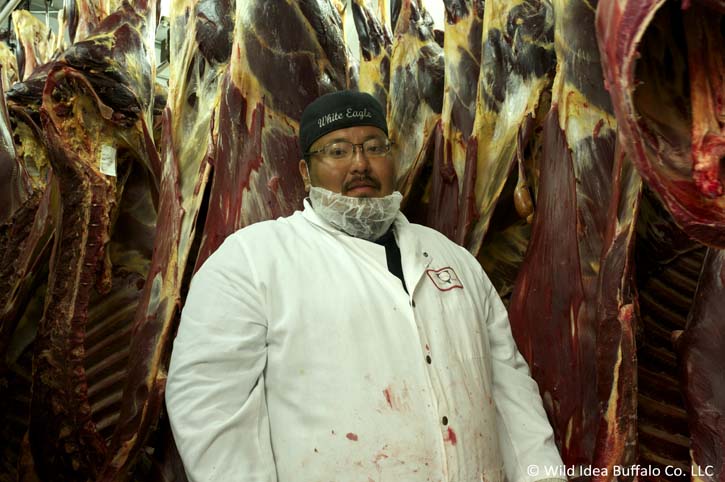
Ingredients:

  • 1 – 3.5 lb. pkg. Buffalo Shank Steaks
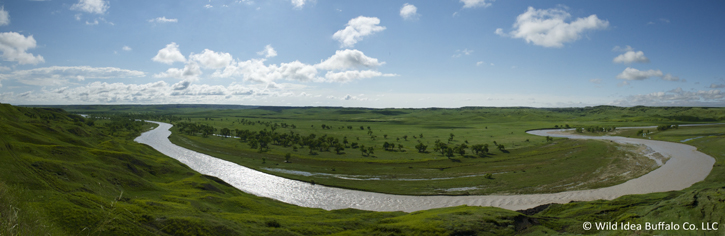
  • 1 – 2 lb. pkg. Buffalo Soup Bones
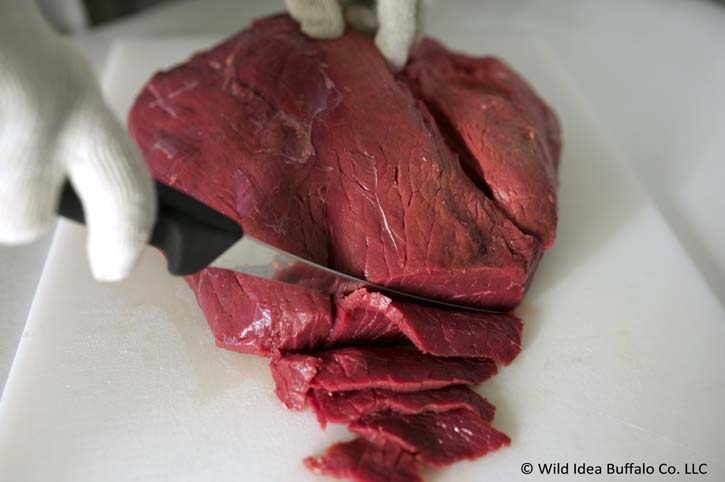
  • Water
  • 1 onion, quartered
  • 2 large Daikon radishes, peeled and quartered
  • 2 cloves garlic, halved + 2 cloves garlic, chopped
  • Salt (to taste)
  • 3 Tbl. Bragg Liquid Aminos (Natural Soy) or Soy Sauce
  • 3 Tbl. Sesame Oil
  • 2 Tbl. green onion, chopped + 1 bunch of green onions, sliced
  • ½ tsp. black pepper
  • 2 tsp. red pepper flake
  • 8 cups cooked rice
  • 1 bunch radishes, sliced
  • fresh grated ginger or pickled ginger

Instructions:

  1. Wash bones and shank meat under cold water.
  2. Soak bones and shank meat in cold water for 2 hours.
  3. Rinse bones again under cold water.
  4. Bring 4 quarts of water to a boil, add washed bones and shank meat, bring to full boil. Boil for 20 minutes.
  5. Strain bones and meat and rinse under cold water. Rinse pot thoroughly to remove any fat particles.
  6. Return bones to pot and add 4 more quarts water. Bring to a boil, and boil for 30 minutes.  Add, onion and radish. Cover, reduce heat to medium and simmer for 3 hours.
  7. Check meat for tenderness using two forks, If meat pulls apart, strain meat and bones, reserving liquids. Remove meat from bones and radish.  If meat is not tender continue cooking until it is. Cover reserved liquids and place in refrigerator.
  8. Return bones with onion to pot and add 3 quarts of water. Over high heat, bring to a full rolling boil. Reduce heat to medium, cover and simmer for 3 hours.
  9. While bones are simmering, mix Braggs Liquid Aminos, sesame oil, chopped green onion, black pepper and chili flake together. Pull apart cooked meat and toss with soy and sesame mixture, cover and refrigerate.
  10. Drain the bones, reserving the milky broth. Cover and place in refrigerator.
  11. Remove the first reserved liquids from refrigerator and skim fat off the top. Return Bones and first reserved liquids back to pot.  Add 2 cloves garlic and 3 quarts of water, and bring to a boil. Reduce heat to medium, cover and simmer for an additional 3½ hours.
  12. Strain bones, reserving liquids. Cover liquids and refrigerate overnight.  (Optional: You may want to save bones for serving.)
  13. Remove both containers of liquid from refrigerator and remove any fat from the top. Marry gelatinous liquid into one pot and bring to full heat.
  14. Season with salt to taste, starting with a little and adding until milky broth has full flavor.
  15. Place prepared meat in small stock pot and add a half cup of broth.  Reheat over medium heat until meat is hot.
  16. To serve, place a scoop of hot rice in center of the bowl, add desired meat portion and garnish with sliced radish and green onion. Accompany with chili flake, chopped garlic, grated ginger and salt for people to add as they like.

Soooooooo delicious!

Wine Pairing: Bonny Doon Pacific Rim Dry Riesling, Central Coast, CA

Thanksgiving Redux

dan Cheyenne River Writings, Dan's Writings 8 Comments

Sitting on the couch of our television room, watching CNN’s Election coverage, I was oddly reminded of the first Thanksgiving. There was no pumpkin pie, squash, roast venison, or Indian corn. But there were a couple of Indians.

Rocke Afraid of Hawk is friend of mine from the 1970s when we were very young men working for a South Dakota rancher for few bucks an hour. We knew almost nothing about the world and the world knew even less about us. Last Tuesday night we were a couple old men, sitting in the dark, watching Wolf Blitzer and John King operated brilliant touch-screen devices that were supposed to explain it all. My favorite dog of all time laid on the couch with me, his head on my lap, his world at total peace.

Rocke sat in a big chair to my left and only the color-show of John King’s magic illuminated his classic Lakota face. On the chair to my right sat Rocke’s twenty-something relative, Mathew, who had been helping sort buffalo at the Cheyenne River Ranch all day long. They had been the first to vote in their precinct in Cherry Creek, on the Cheyenne River Reservation that morning, before they piled into their very old pickup and came down to the buffalo roundup. Everyone was worn out. Jill was still at work, hustling to get out of the office in time to be one of the last to vote in Rapid City and make it back to join our TV vigil.

It was serendipity that they were there on that day, more a question of chaotic planning than anything intentional. Though the fact that Obama was getting re-elected added to the excitement, the main stimulus for Rocke Afraid of Hawk was that he was about to become a buffalo rancher. A Wild Idea crew had been working for a week to set up corrals and organize the transfer of 175 buffalo from our herd to Rocke and his family. We had been building up the herd for over eighteen months, which is how long it took for the BIA and Tribal authorities to figure out what was required for Rocke to actually own a herd of buffalo on the reservation. We were still working on finding him financing and because Rocke owned almost nothing, it was impossible in the normal markets. Despite the fact that the USDA Department of Economic Development takes credit for loan guarantees for just such projects, we had been turned away from several banks with the smug smiles and shaking heads of old fashioned racism. Luckily, we had found a benefactor who pounded a big fist on a banker’s desk and vowed that if he couldn’t find a bank that would meet its responsibility, that he would do it himself.

Sitting in that darkened room I wondered if Rocke knew how many people were crawling out on a limb for him. He is a fine man, but he is not a man of John King’s world, so I supposed that he might not understand. In fact, Rocke is a very quiet man – respected as an elder even before he reached the usual age for such honors. But he has always talked his heart with me and that night was no exception. There were a couple beers on the coffee table in front of us, and along with the excitement of the day they might have contributed to the comfort of the situation.

We began by simply trying to listen to CNN’s coverage of the election. Mathew had proved himself a good worker that day and, even though he had had a couple too many of the beers, I could see why Rocke saw him as something of a hope for the family.  Mathew grumbled a little about the inattention of all administrations toward the reservations, but he had little idea of what was really ahead of him. Rocke grinned and said proudly that he considered us all to be part of one nation. It took me only an instant to know that he was talking, not about Republicans and Democrats, but of humans and buffalo. “We are coming together,” he said, and made an elegant hand gesture that included the entire shadowy room. “The beings are here.”

I have heard Rocke say these things for years and was busy trying to understand what was happening in Florida. “Yea,” I held up my hand dismissively, as John King broke down the Latino Women’s vote with a flourish of finger touchings. “You’ve always believed in other beings.”

Rocke laughed. “No,” he said, “you believe in other beings. For me,” he held out both hands like it this was too elemental to be explained, “they ARE. They are here.” He pointed into the corners of the room as if he was pointing out individual birds. It suddenly dawned on me that what Wolf Blitzer was talking about – a two billion dollar political campaign that had never mentioned severe poverty, overpopulation, or commerce-driven climate change had missed Rocke Afraid of Hawk by a million miles.

He was still pointing into the corners of the room. “The beings are there. And there. And over there. And they can’t speak and they are counting on us to speak for them.”

I gave up on CNN and turned full on to Rocke. He was pleased to have my attention and his dark, wrinkled face smiled in an earnest attempt to make me understand. Though I knew some would label him as a crackpot, he was already making more sense than magic underwear or the power of markets to find the perfect path. “Dan, you know that the buffalo taught us to speak.” He nodded and smiled. “It is true. They gave us language. We need to use that gift to speak for them.”

I sat there for a moment like a fool. And that is when it came to me; there would be similarities between the Thanksgiving that was coming in a couple weeks and that very first Thanksgiving almost 400 years ago, when a goofy guy named Squanto gave us secrets that saved everyone with the brains to listen.

Buffalo Soup for the Seoul

jill Jill's Journal 2 Comments

Fifteen years ago Dan brought a box of buffalo meat to my restaurant and asked me to prepare each cut and come up with recipes. He needed “ how to” cooking instructions that would go inside the first boxes of Wild Idea Buffalo meat that he was shipping out to family and friends. I remember it so well, not only because I was excited to try the 100% grass-fed, field harvested buffalo meat, but also because the majority of my kitchen staff was out with the flu, which left only me holding the box of buffalo meat and limited time to experiment.

After about a week of testing, I had compiled a list of techniques and recipes that would assist in people’s success of cooking buffalo meat.  That was just the beginning; I continue to learn improved methods, or discover hidden cuts within a cut, but the biggest takeaway has been; “GRASSFED BUFFALO MEAT IS NOT LIKE OTHER MEAT, PROVEN TECHNIQUES SHOULD BE APPLIED”.

Customers also inspire me to come up with recipes. A couple of weeks ago I was visiting with a women on the phone who was explaining that she has a sick friend, and her friends doctor had recommended buffalo broth. He suggested boiling the bones for hours because what was inside those bones was what her friend needed. Although I had heard of this, I had never taken the time to research it. Out of concern and curiosity, I got busy.  The Koreans make an Ox-bone soup that they call “Seolleongtang”. The base of Seolleongtang is a milky broth produced by boiling bones for hours. Although I have roasted bones and used in stocks, I had never tried boiling bones for such a long period of time.

The results are absolutely delicious and it really is very good for you! Loaded with vitamins, minerals, antioxidants and amino acids, you will want to have a simmering pot of this soup on hand when the winter cold & flu are knocking on your door, or as a reprieve from heavy holiday meals. I hope you enjoy my version of Buffalo Ox-bone soup. Wishing you all a happy, healthy, holiday season. Cheers! Jill

Buffalo Ox-bone Soup (serves 8)

This soup takes time, but it is time well spent. It is the kind of food you eat and say “I could eat this every day”.  For preparing, you will want a larger pot as you simmer at a higher heat. This will help keep liquids in the pot. You will also want a heavy lid to keep the steam from escaping.

Ingredients:

  • 1 – 3.5 lb. pkg. Buffalo Shank Steaks
  • 1 – 2 lb. pkg. Buffalo Soup Bones
  • Water
  • 1 onion, quartered
  • 2 large Daikon radishes, peeled and quartered
  • 2 cloves garlic, halved + 2 cloves garlic, chopped
  • Salt (to taste)
  • 3 Tbl. Bragg Liquid Aminos (Natural Soy) or Soy Sauce
  • 3 Tbl. Sesame Oil
  • 2 Tbl. green onion, chopped + 1 bunch of green onions, sliced
  • ½ tsp. black pepper
  • 2 tsp. red pepper flake
  • 8 cups cooked rice
  • 1 bunch radishes, sliced
  • fresh grated ginger or pickled ginger

Instructions:

  1. Wash bones and shank meat under cold water.
  2. Soak bones and shank meat in cold water for 2 hours.
  3. Rinse bones again under cold water.
  4. Bring 4 quarts of water to a boil, add washed bones and shank meat, bring to full boil. Boil for 20 minutes.
  5. Strain bones and meat and rinse under cold water. Rinse pot thoroughly to remove any fat particles.
  6. Return bones to pot and add 4 more quarts water. Bring to a boil, and boil for 30 minutes.  Add, onion and radish. Cover, reduce heat to medium and simmer for 3 hours.
  7. Check meat for tenderness using two forks, If meat pulls apart, strain meat and bones, reserving liquids. Remove meat from bones and radish.  If meat is not tender continue cooking until it is. Cover reserved liquids and place in refrigerator.
  8. Return bones with onion to pot and add 3 quarts of water. Over high heat, bring to a full rolling boil. Reduce heat to medium, cover and simmer for 3 hours.
  9. While bones are simmering, mix Braggs Liquid Aminos, sesame oil, chopped green onion, black pepper and chili flake together. Pull apart cooked meat and toss with soy and sesame mixture, cover and refrigerate.
  10. Drain the bones, reserving the milky broth. Cover and place in refrigerator.
  11. Remove the first reserved liquids from refrigerator and skim fat off the top. Return Bones and first reserved liquids back to pot.  Add 2 cloves garlic and 3 quarts of water, and bring to a boil. Reduce heat to medium, cover and simmer for an additional 3½ hours.
  12. Strain bones, reserving liquids. Cover liquids and refrigerate overnight.  (Optional: You may want to save bones for serving.)
  13. Remove both containers of liquid from refrigerator and remove any fat from the top. Marry gelatinous liquid into one pot and bring to full heat.
  14. Season with salt to taste, starting with a little and adding until milky broth has full flavor.
  15. Place prepared meat in small stock pot and add a half cup of broth.  Reheat over medium heat until meat is hot.
  16. To serve, place a scoop of hot rice in center of the bowl, add desired meat portion and garnish with sliced radish and green onion. Accompany with chili flake, chopped garlic, grated ginger and salt for people to add as they like.

Soooooooo delicious!

Wine Pairing: Bonny Doon Pacific Rim Dry Riesling, Central Coast, CA

November: Elections and Holiday Gifting

wibadmin Blogging Leave a Comment

November: Elections and Holiday Gifting

When you say “November,” the first thing that comes to most people’s minds is Thanksgiving. But close behind as #2 and 3 would be “elections” and “beginning of the holiday season.” Every year, each of those seasons seems to extend longer and longer. As the Political ads saying “Vote for Me”, or “Don’t Vote for Him (Her)” come to an abrupt halt, (which we are all thankful for), we are sure to be inundated with ads saying “Buy Me” or “Shop Here” for the Holidays.

When I think of this time of year, I often think of Chae – a woman I used to work with at General Mills. Chae was a hard-working administrative assistant who supported about 15 people and would do whatever was asked efficiently and with a smile. She came from a very traditional Korean family and had extremely conservative views. Whoever was running for political office – she did not like them because they were not conservative enough.  Let’s just say, my political views were sharply different than hers. During election season, we both knew where the other one stood and we would keep relatively quiet about politics around elections – not wanting our vastly divergent views to damage our working relationship.

While the election would always seem to divide us, holiday gifts would bring us back together. There were two advertising agencies that would give people in marketing at General Mills gifts at the holiday season. One always gave a card saying that they had made a donation to a charity in my name. I really liked that one. The other agency every year gave an angel Christmas ornament. I hate to sound ungrateful, and my mom taught me that you should appreciate every gift. However, when I first got the angel ornament, I have to admit I was a little upset – not because I thought I deserved a gift or was wanting for something specific, but I hate when people spend money on me, and I feel it is totally going to waste. And frankly, this ornament was going to waste – I am Jewish so I do not collect ornaments and I did not find the “art” of it particularly attractive.

The day after I got my first angel and it was sitting on my desk (I did not have the heart to throw it out), Chae came into my office and complimented the angel saying how much she loved it. I asked her if she would like to have it. She said, “I couldn’t take it from you,” and I said “No, I would like you to have it.” And thus the ultimate re-gift was born. For the next four years when I would receive my annual Christmas angel ornament, I would go straight to Chae’s desk (even after I had moved divisions) and give her my angel, and her face always lit up. And while I am not claiming to be generous because of a re-gift, I was always happy that it found a wanted home.

Last week, Wild Idea Buffalo launched our corporate gift program for 2012. While I cannot promise that everyone loves buffalo, I am pretty confident that anyone who receives one of our three delicious holiday gift boxes will be pretty excited and not be looking to re-gift it. We have: 1) the Great Plains Gift Box with Top Sirloins and Ground, 2) the Prairie Gourmet Gift Box with Tenderloins, Ground, Salami, and Italian Sausage, and 3) my personal favorite – the Cowboy Gift Box – with 4 Bone-In Ribeye Steaks. You can save up to an incredible 25% on our list prices when you give Wild Idea Buffalo Corporate Gift Boxes See this link for more details (insert site link here). In addition to giving a gift they are sure to love, you can feel good about giving a gift that gives back as well – Wild Idea Buffalo has helped restore an acre of Great Plains native grasslands with every pound of meat sold this year.

Apple Cake

jill Recipes, Various Recipes Leave a Comment

Apple Cake A delicious fall dessert. Serves 18.
We have a few apple trees on the ranch, and this year we had a hearty crop. I use them in preparing sweet fall treats, including pie’s, sauce and apple cake. The apple cake is one of my favorites, it’s easy, and oh so good. Because they freeze well, I like to make up a few extra’s to have on hand. Delicious for  breakfast, or serve with caramel sauce and fresh whipped cream, for an elegant dessert.

Note: I often split the flour using half whole wheat baking flour and half all purpose flour.

Ingredients:

  • 3 cups flour
  • 1 Tb.. baking soda
  • 1 Tb. cinnamon
  • 1½  tsp. nutmeg or allspice
  • ½  tsp. salt
  • ¼  cup butter, softened
  • 3 cups sugar
  • 3 eggs
  • 3 cups applesauce
  • 3 cups apples, peeled and finely chopped or flash processed

Instructions:

  1. Preheat oven to 400*. Butter a 13”x9” cake pan or two, 9” round cake pans.
  2. Mix all ingredients together with electric mixer, until batter is well incorporated.
  3. Pour into prepared pan and bake for 35 minutes for round pans and 45 minutes for rectangular pan. Serve with a little caramel sauce and fresh whipped cream!

Happy fall. Cheers! Jill

On the Road – Hold the Google Map

dan Cheyenne River Writings, Dan's Writings 17 Comments

Last week I drove up to the northwestern corner of North Dakota for two reasons. I wanted to spend a few days hunting grouse with three good friends and I wanted to see the effects of America’s latest great oil boom. My only experience in that country between the Missouri River and the Canadian boarder was to zip through it in the dead of night on my way to Saskatchewan. In truth, I had avoided it for the last ten years because of the oil boom – like avoiding a visit to a hospitalized loved one.

I had been looking forward to the trip for most of a year. We were four busy guys who didn’t take enough time to spend together. We needed to unwind and we were headed for the perfect place to get that job done. It is the prairie pothole region of North America, famous for thousands of undrained ponds, ringed with native grass and laying placid under a sky made immense by the lack to trees. I am not a religious man but, when I thought of the trip to come, I could hear the poet in my ear, “…making me to lie down in green pastures, leading me beside the still water…”

Erney and I had been working the bird dogs in harnesses to get them into shape so they were ready to run hard for an hour or two at a crack, even in the warm weather of late September. But, as usual, I had left all other preparations to the last minute. On Sunday morning I found myself running around, looking for hunting clothes, cooler, water jugs, shotgun, shells, and a map of North Dakota. I can drive by memory to lots of places in North Dakota but, for me, the far northwestern corner is a terra incognita. My wild guess at driving time was six hours and it was already noon. I dug through the Rubbermaid trashcan in my office where all the maps are kept. I was sure that there were several maps of North Dakota in there somewhere, but I came up empty handed. Time was ticking away. Erney had already loaded the dogs, the dog food, the stake-out chain, and the combs for extracting burrs from the setters’ coats and was standing near the pickup tapping his foot.

When I yelled up stairs to ask Jill if she had seen a map of North Dakota, she yelled back that I was nuts. “Google it,” she said. She knew perfectly well that I had no idea how to produce one of those nifty little lists of routs, turns, and times that lead millions of people to their destinations everyday. She also knew that I had little faith in such sterile instructions. But there was a challenge in her voice that would not allow me to ask her to do it for me. I sat down at the computer and – tap, tap, tap – I had the directions to get to where I was supposed to meet my friends. I was incredibly proud of myself and waived the paper as I kissed Jill goodbye.

I drove to Bowman, North Dakota without consulting my Google map or list. Thirty-five years before I had worked in the northwest corner of South Dakota for the South Dakota Game and Fish Department and so all the country between our ranch and Bowman was as familiar as my backyard. In those days I was the state “raptor specialist” based in the most sparsely populated county in South Dakota. Back in the 1970s, being the “raptor specialist” only meant that I was one of the few people in the Game Department that could tell one chicken hawk from the others. My job was to keep an eye on the literally hundreds of raptor nests in that huge, bountiful, and lonely county. It used to be that you could drive all day and never see another vehicle. But last week I followed a line of heavily loaded, semi trailers moving north to the oil fields. By the time I got to Bowman and first referred to the Google printout I was in a traffic jam of diesel belching monsters.

I knew that the country that I was entering was laced with rivers with wonderful names like the Cannonball, the Little Missouri, the Heart, the Knife, and – of course – the Missouri herself. I wanted to see how my line of travel traversed those drainages. I wanted to linger over the Little Missouri where Teddy Roosevelt had his ranch. I wanted to see what twist in the big Missouri River could cause the bridge at New Town to run east and west instead of north and south. I was curious to know the size of the Fort Berthoud Reservation.

But none of that information appeared on the Google printout. It just said: Turn right onto US-12 E/US-85 N/Canam Hwy. But US 12 was closed for maintenance, no doubt made necessary by the pounding it was getting from the long line of semis in front of me. I didn’t know what else to do so I followed the trucks. We came to a river that I thought would be the Cannonball, but it was the Cedar. I looked at my Google printout for guidance. All it said was that my next turn should be onto N Dakota 200E. But because I had been rerouted, I didn’t see N Dakota 200 for nearly a hundred miles. Just off the asphalt, where the blue diesel haze thinned out, the country rolled and pitched in prairie and wheat fields. I missed the Cannonball and the Heart and Knife and still have no idea how that happened. There was no way for me to know where Theodore Roosevelt National Park was. All I knew was that if I ever came to N Dakota 200 I was supposed to turn right – then left on N Dakota 22 N.

The only time I knew where I was when the truck in front of me started across the bridge at New Town. The compass in my truck told me that I was indeed heading straight east, but without a map I had no idea what great contortions the earth and the Missouri River had executed to make that possible. I had never felt more lost. My expectations of a leisurely, informative drive through a part of the country that I was unfamiliar with, were exploded. It dawned on me that a Google printout is not intended to teach the user anything about the world. It isn’t meant to be used as an educational tool. It only refers to ephemeral, man-made phenomenon and ignores the world that interests me. Unlike a real map, a Google map is only useful to get people from one place to another place and only works when there are no surprises, no changes that might require a switch to plan-B. I stopped in a crowded and dirty convenience store for gas and a map. I waited in line behind burly oilmen speaking with Oklahoma accents. When I paid for the gas I asked the harried Indian girl behind the counter if they had any maps. She took my money and shrugged. “Had some,” she said, “but they bought them all.”

On the other side of New Town the road was again under construction and I fell in behind a ¾ ton pickup with a bumper sticker that read, DON’T RE-NIG IN 2012. It took a couple blocks for the meaning of the bumper sticker to sink in but, once it did, my frustration turned to a sort of road rage. I was stuck in stop-and-go traffic behind that damned truck for an hour. When the road split he pulled into the turning lane and I pulled to have a look at the kind of guy who would adorn his truck with something as offensive as his DON’T RE-NIG bumper sticker. He was a grizzled man about my age, in need of a shave and wearing a Halliburton hat. Our eyes locked for an instant as I passed.

The traffic plodded ahead until we came to a sign announcing North Dakota Route 8. I glanced down at my Google printout and there it was, Turn left onto N Dakota 8 E. I spun it hard to the left, out of most of the traffic and up highway 8 toward the town of Stanley where I had heard the pothole coteau began. This was the area that my friends had talked about. There were still big trucks entering and leaving the road, but they were thinning out. The dust was settling and the sun shone through it like evening on the Serengeti.

Suddenly I was within striking distance of my destination. I looked to the printout and saw that I was just three turns away from my destination. The sun angled across the road, the air was still, and finally I saw the grasslands I had come to see. They rolled around a hundred ponds that pocked the countryside for miles. Ducks purred in every one and I imagined that the grouse would soon be flying from their feeding ground to bluestem ridges.

I was in Stanley two hours behind schedule but, for the first time all day, I had some idea where I was. It was quiet compared to New Town and I pulled into a gas station and bought a map. I unfolded it on the hood of my pickup and traced my path from the South Dakota line to Stanley. There they were: the Cannonball, the Heart, the Knife, the Little Missouri. I tried to think back to where I had crossed them – tried to recall how the land undulated to accommodate their channels. I put my finger on White Butte, the highest spot in North Dakota, traced the outline of Teddy Roosevelt Park and the course of the Missouri up to Montana. With my index finger I memorized the last thirty-five miles to where my friends waited.

Seeing it all like that comforted me and I exhaled as I folded the map and turned to get back into my pickup. I was smiling and beginning to feel the calm that I longed to glean from that trip. But, as I slid into my pickup, another pickup pulled in beside me. It was the grizzly man with the offensive bumper sticker but I was not going to let him ruin my mood. I continued to smile and raised my hand in the single finger salute. His chin jutted out and he glared at me. I continued to smile and held his eyes as I put the pickup in gear. As I pulled away, I wadded up the Google printout and tossed it into the bed of his pickup.

Lasagna

jill Buffalo Recipes, Recipes, Sausages 2 Comments

Lasagna (serves 4 to 6)
This month’s recipe is for Italian Buffalo Sausage Lasagna. It’s a great dish to prepare in advance, to have for days that run too short, or when you are just too tired. There is something about a hot meal at the end of a long day that is so rewarding. A gift really, that says thank you.

Lasagna

Ingredients:

  • 1 – Batch Buffalo Meat Sauce
  • 1 – pkg. no boil lasagna sheets
  • 1 – lb. fresh mozzarella, sliced
  • 8oz. – parmesan, grated
  • * optional roasted zucchini

Buffalo Meat Sauce Ingredients:

  • 1 tablespoon olive oil
  • 1 – pound Wild Idea Buffalo Italian Sausage
  • 1 – onion, diced
  • 1 tablespoon fresh garlic, chopped
  • 1 tablespoon dried oregano
  • 1 tablespoon dried basil
  • 2 teaspoon dried crushed fennel
  • ½ teaspoon fresh rosemary, finely diced
  • 1 teaspoon salt
  • 1 teaspoon black pepper
  • 1/2 – cup red wine
  • 1 quart crushed tomatoes, (rinse jar with 1 cup water)
  • 1 tablespoon brown sugar
  • ½ tablespoon balsamic vinegar
  • 1 tablespoon lemon juice


Preparation of Sauce:

  1. Heat olive oil in heavy sauce pan over medium high heat.
  2. Coarsely crumble in Buffalo Italian Sausage and stir once.
  3. Add onion, garlic and dried spices. Stir to incorporate. Continue to cook until sausage is lightly browned, stirring occasionally.
  4. Add red wine and stir.
  5. Add remaining ingredients. Let ingredients come to full heat, stirring occasionally.
  6. Reduce heat to low and simmer uncovered for 30 minutes or until desired thickness is achieved.  Stir occasionally.
  7. Season to taste.

Assembly:

  1. Lightly oil lasagna pan or casserole dish.
  2. Cover bottom of pan with one cup meat sauce.
  3. Layer with lasagna sheets, meat sauce, and mozzarella. (Roasted zucchini may be added to layers if you choose.)
  4. Repeat layers 2 to 3 times based on pan size, ending with a thin layer of meat sauce on top.
  5. Cover with foil and bake at 375* for 45 minutes or until bubbly.
  6. Cover top with grated Parmesan and allow to melt or lightly brown.

Buffalo Lasagna for Autumn

jill Jill's Journal Leave a Comment

The first of the month I took some time to get out and be in the golden days of fall. I’m not sure what makes the leaves turn their magical colors, but this year’s lack of moisture and high temperatures somehow produced the most intense colors fall has to offer.  So, for a short period we’ve lived inside a kaleidoscope of a beautiful Great Plains autumn.

Although only a week has passed, once again everything has changed. The magic colors have drifted to the earth’s floor, allowing a little more light and warmth to filter through, stretching the sunsets to the latest hour.  We take advantage of this time and get out with the bird dogs in hopes of stumbling upon a grouse for our dinner.  In case we return empty handed I like to have an effortless oven ready dish on hand to heat and serve.

This month’s recipe is for lasagna, a great dish to prepare in advance and have for days that run too short or when you are just too tired. There is something about a hot meal at the end of a long day that is so rewarding. A gift really, that says thank you.

Cheers! Jill

Lasagna (serves 4 to 6)

Ingredients:

  • 1 – Batch Buffalo Meat Sauce
  • 1 – pkg. no boil lasagna sheets
  • 1 – lb. fresh mozzarella, sliced
  • 8oz. – parmesan, grated
  • * optional roasted zucchini


Buffalo Meat Sauce Ingredients:

  • 1 tablespoon olive oil
  • 1 – pound Wild Idea Buffalo Italian Sausage
  • 1 – onion, diced
  • 1 tablespoon fresh garlic, chopped
  • 1 tablespoon dried oregano
  • 1 tablespoon dried basil
  • 2 teaspoon dried crushed fennel
  • ½ teaspoon fresh rosemary, finely diced
  • 1 teaspoon salt
  • 1 teaspoon black pepper
  • 1/2 – cup red wine
  • 1 quart crushed tomatoes, (rinse jar with 1 cup water)
  • 1 tablespoon brown sugar
  • ½ tablespoon balsamic vinegar
  • 1 tablespoon lemon juice


Preparation of Sauce:

  1. Heat olive oil in heavy sauce pan over medium high heat.
  2. Coarsely crumble in Buffalo Italian Sausage and stir once.
  3. Add onion, garlic and dried spices. Stir to incorporate. Continue to cook until sausage is lightly browned, stirring occasionally.
  4. Add red wine and stir.
  5. Add remaining ingredients. Let ingredients come to full heat, stirring occasionally.
  6. Reduce heat to low and simmer uncovered for 30 minutes or until desired thickness is achieved.  Stir occasionally.
  7. Season to taste.

Assembly:

  1. Lightly oil lasagna pan or casserole dish.
  2. Cover bottom of pan with one cup meat sauce.
  3. Layer with lasagna sheets, meat sauce, and mozzarella. (Roasted zucchini may be added to layers if you choose.)
  4. Repeat layers 2 to 3 times based on pan size, ending with a thin layer of meat sauce on top.
  5. Cover with foil and bake at 375* for 45 minutes or until bubbly.
  6. Cover top with grated Parmesan and allow to melt or lightly brown.

Wild Idea – More to Love

wibadmin Blogging 3 Comments

The best part about being CEO of Wild Idea Buffalo is the adoring fans. To be clear, not fans of me, but of the company. I get such joy from reading consumer comments on our web site, in e-mails, and our Facebook page about how much they love the way we raise our buffalo and how great it tastes. Here are a couple favorites from the past week:

“I received my box of pure and delicious Buffalo. I cooked two ribeyes. All I can say is this is the best meat I have ever tasted. I will order every month.”

“Just had your Top Sirloin Buffalo Steak – 5 Stars! Tender with fantastic flavor.”

However, there are two things that consumers have made clear to me in my 21 months with the company that they do not love: the shipping prices and the order process on our web site. For those of you who have commented on either of those things (or at least thought those things), you are in luck!

About three weeks ago we launched a new web store that features among other things (drum roll, please)…..flat rate shipping! To be honest, on our old site, I personally never knew how much an order was going to cost to ship, and I run the company. With our new flat rate shipping, you pay the same rate whether you are buying 2 steaks or a quarter buffalo. If you live within a 2-state radius of South Dakota your shipping is $19 and if you live further away, your shipping price is $29 (see web site shipping information for exact shipping price list by states: http://buy.wildideabuffalo.com/pages/shipping-information). Then for an extra $20 you can request next day shipping for rush orders – otherwise, we will find the best method for shipping your meat to you that ensures quality delivery. It is that sample!

When we were kicking around our flat rate shipping idea and talking with some consumers about it, we were asked about free shipping. To make that work even with pretty substantial discounts we receive from FedEx and UPS, we would have to make significant increases in meat prices, cut significant corners in how we produce our meat (which we would never do), or we would go out of business very quickly. Just as there is no such thing as a free lunch, there is no such thing as true free shipping. As a team, we looked at a bunch of scenarios and felt the plan we devised did the best job of balancing our customers’ shipping needs and significantly simplifying things.

At the same time, we streamlined the shopping and ordering process on our web store. We heard our customers’ comments about needing an easier way to find favorite items, how they wished they could see pictures of the products they are buying, and they wanted to get through the check-out process easier and more quickly. I believe we accomplished an improved experience for consumers on all of those fronts. But don’t take my word for it, please go see for yourself. Visit our new on-line store, buy.wildideabuffalo.com/, and let us know what you think. If you have any questions/comments about our new shipping rates or the new web store, please do not hesitate to contact me at josh@wildideabuffalo, or through the web site. Happy shopping and happy shipping!

Falls Arrival

jill Jill's Journal Leave a Comment

Fall has arrived and this year it’s brought with it the beautiful autumn colors. Below are snapshots of scenes around the ranch. You would think that I could edit to a few, but they’re just too pretty.


Although our garden wasn’t much this year with the draught, our apple trees pulled through. The hearty crop of apples has me preparing some of my favorite fall dishes. This apple cake is one of my favorites; it’s easy, and oh so good. I like to make up a few and stick them in the freezer to have on hand. It makes for a great breakfast, or serve with caramel sauce, and fresh whipped cream for an elegant dessert.  I would have taken a photo, but we ate it before I could get the camera out!

Apple Cake

A delicious fall dessert. Serves 18.

Note: I often split the flour using half whole wheat baking flour and half all purpose flour.

Ingredients:

  • 3 cups flour
  • 1 Tb.. baking soda
  • 1 Tb. cinnamon
  • 1½  tsp. nutmeg or allspice
  • ½  tsp. salt
  • ¼  cup butter, softened
  • 3 cups sugar
  • 3 eggs
  • 3 cups applesauce
  • 3 cups apples, peeled and finely chopped or flash processed

Instructions:

  1. Preheat oven to 400*. Butter a 13”x9” cake pan or two, 9” round cake pans.
  2. Mix all ingredients together with electric mixer, until batter is well incorporated.
  3. Pour into prepared pan and bake for 35 minutes for round pans and 45 minutes for rectangular pan. Serve with a little caramel sauce and fresh whipped cream!

Happy fall. Cheers! Jill

Buffalo Cacciatore with Polenta

jill Buffalo Recipes, Recipes, Roasts, Stews & Soups Leave a Comment

Buffalo Cacciatore with Polenta (serves 6 to 10)
This recipe was inspired by my friend Maria’s grandmother, Gelsomina. I have stayed true to Gelsomina’s seasonings, and have substituted only those ingredients that I felt she would have approved of (wine instead of water and fresh tomatoes for tomato paste), and of course buffalo in place of chicken.

Ingredients:

  • 1 – 3 lb. Wild Idea buffalo roast cut into steaks or 3 lb. Stew Meat
  • 2 – Tbl. olive oil
  • 1 – Tbl. Italian seasoning
  • 1 – tsp. paprika
  • ¼ – tsp. allspice
  • ¼ – tsp. cinnamon
  • 1 – tsp. salt
  • 1 – tsp. black pepper
  • 1 – onion, diced
  • 3 – cloves garlic, chopped
  • 2 – cups white wine
  • 4 – ripe tomatoes, peeled and chopped, plus juice
  • 2 – Tbl. ketchup (or tomato paste)

Instructions:

  1. Pre-heat oven to 400 degrees
  2. Rinse meat and blot dry.
  3. Mix all dry spices together and rub into meat.
  4. Over medium high heat, heat oil in heavy sauté pan and brown meat. You may need to do this in two batches.
  5. Place browned meat in heavy casserole dish.
  6. Add onion and garlic to sauté pan and sauté for 4 minutes.
  7. Deglaze pan with wine, and add tomatoes and ketchup or paste. Bring to a boil.
  8. Pour tomato sauce over meat and cover casserole dish. Place in hot oven and braise for 1.5 hours. Check for tenderness and continue braising if needed.
  9. Prepare polenta as directed.
  10. Spoon polenta on serving platter and top with Buffalo Cacciatore.

Note: Gelsomina also had a couple of side notes: *You do not have to raise your own chickens (buffalo) to make the dish. *And, you can add black olives and mushrooms if you like. I sautéed the mushrooms and olives and added to platter, giving eager eaters the option.

Gelsomina and her husband Caesar immigrated to America in1899, where the settled in the upper peninsula of Michigan. Their story is beautifully written by Maria in her book “Gelsomina’s Story of Ceasar Lucchesi”, which can be purchased, at thelucchesistory.com.

Wine Pairing:  2007, Chianiti Rufina, Tuscany Italy

Cooking Light Names Wild Idea Buffalo Taste Test Award Winner in Third Annual List

wibadmin Blogging 5 Comments

RAPID CITY, SD, SEPTEMBER 12, 2012 – Wild Idea Buffalo’s bone-in ribeye steak was named a Taste Test Award Winner as part of Cooking Light’s third annual Taste Test Awards, also known as “The Tasties,” which name the best-tasting and healthiest grocery store products and stand-out artisanal treats from across the country in 19 categories. The feature appears in the October issue, on newsstands Friday, September 14 and available online at CookingLight.com/TasteTestAwards.

For the artisanal category, the Cooking Light editors, along with a team of regional food experts, sampled everything from wild chokecherry jelly to smokehouse brisket. In the three years since Cooking Light began giving these awards, the number of small-batch food producers has grown deliriously, and so has the quality of their product.  Twenty-seven winning products were chosen across six categories: Condiments, Sweets, Cheese, Booze, Meat, and Best of the Rest.

“It has is a huge honor to win this award. There are so many great artisan food products in America today, so we feel this is a great recognition of the quality of our buffalo meat,” said Josh Resnik, CEO of Wild Idea Buffalo. “We always say that our buffalo are raised better to taste better.”

“We raise our buffalo on only native grass, water, and sunshine,” said Jill O’Brien, owner of Wild Idea Buffalo. “The result is a sweeter, earthier taste. Also, since our buffalo are 100% grass-fed, they are much leaner and are low in calories, fat, and cholesterol, but high in Omega-3s.”

Cooking Light’s Taste Test Awards illustrate exactly what we’ve been telling consumers for the past 25 years—healthy is delicious,” says Cooking Light editor Scott Mowbray.  “From kitchen staples and lunch bag snacks in the grocery category to decadent cheeses and indulgent sweets in the artisanal category, this year’s winning products are stand-outs in the ever-growing world of food products.”

Check out Wild Idea’s Artisan Award Sampler!

About Cooking Light

At 25 years, Cooking Light is the nation’s leading epicurean magazine brand with the largest audience and most epicurean editorial.  Cooking Light is the only epicurean brand positioned at the intersection of great-tasting food and healthfulness, serving an important and growing consumer need.  The brand delivers innovative recipes, nutrition advice, and resources to live a healthful lifestyle via its magazine, Web site, and portfolio of cookbooks; across all tablets; through the highly-acclaimed Cooking Light Quick and Healthy Menu Maker app; and on social media platforms including, Facebook (Facebook.com/CookingLight), Twitter (@Cooking_Light), Pinterest (Pinterest.com/CookingLight) and Instagram.  Cooking Light is part of the Time Inc. Lifestyle Group, a division of Time Inc., the largest magazine media company in the U.S.

For the last two months it has been difficult to sleep…

dan Cheyenne River Writings, Dan's Writings 24 Comments

… and it’s not just the heat. In this catastrophic summer of 2012 a rancher’s mind races like an antelope trapped in a highway median. Sure, the unprecedented lack of rain and the record heat is an act of God, but that does not let you completely off the hook. You entered into a relationship with this land and you knew what you were getting into.

We have always taken pride in the management of this ranch and have gone to great efforts to show the land, the buffalo, and our management to anyone who is truly interested. But this summer the joy has gone out of those tours. By actual surveys, the population of ground nesting birds is a fraction of what it has been in the proceeding few years. This year, the fresh water springs that have run out of our hillsides for eons show only a hint of green. The lawn is wasted with brow grass and invasive weeds. The fruit trees droop and the garden just can’t grow with rationed well water. In the fields where we planted expensive native grasses, the tiny shoots lay dormant. And, the prairie dog towns blow dust when the hot wind blows.

By the end of August, Jill and I decided to stop the ranch tours for two reasons. First, the dryness creates a constant fire danger, and the second reason (and perhaps the bigger of the two), is that the condition of the ranch is depressing, an embarrassment for those of us who have invested so much in making it a laboratory for restoration.

Except for one, the summer pastures are used up. I was saving that one for the sharp-tailed grouse to use this winter for hunting with my falcon. But it looks like the grouse will have to winter in the the river bottoms and feed off the cottonwood buds. They will survive, and likely thrive as they always have.

The buffalo too will thrive. They look much better than the land and after they have used up that last pasture, they will move out onto the National Grasslands where the grass is still good. The cattle that summer on the Grasslands drifted out of the hills a couple of months ago to be near the river where they could get water during that string of days when the temperature rose far above a hundred degrees. The highlands are practically untouched and the buffalo will revel in the grass that nature has stored for any animal with the capacity to travel for their water. Life will go on naturally for the inhabitants of this land who have evolved to handle such hardships. The rest of us will have to learn.

Learning is the point of our little ranch tours and that is why, when a group of interested and influential people contacted us for a September tour we felt torn. These were the kind of people whose understanding of our land could be important. Helping them to see the beauty of the Plains, the ecological importance of the biome, the value of old and new human cultures, was something that we very much wanted to do. We wanted to shine a favorable light on the Northern Great Plains but there had never been a more difficult time to find the beauty. We delayed getting back to them. As we lamented the lost opportunity we talked about the drought and admitted that it was hardly unprecedented. Beginning with the very earliest historical records, the ravages of dryness are well documented. From tree ring studies, to Lakota winter counts, to the conclusions of John Wesley Powell, to the chronicles of the Dust Bowl, climatic swings have been recognized as part of this eco-system. We try to believe that the birds will again return to nest on our ranch, and we are determined that we will be here to greet them when they do.

Jill and I talked for two days about the unpredictability of this land. We recalled the soggy Mays and Junes when we took great pride in the grasses and the proliferation of wildlife. Many times we have taken people through lush pastures and joked about the Cheyenne River bottom looking like the Shannon River drainage in Ireland. When our discussion turned to those magic days, we looked at each other and realized that we were contributing to the myth – that the Northern Great Plains could be just like Europe. Suddenly we realized that despite our best intentions, to stop touring our ranch when the rains ceased, boarded on a lie. This is our land. This is what we live with. This year it is like an early morning spouse with the flu. Not at its best, but still your land. Love persists, on the good days and the bad.

So we decided to give that last tour. To move across our land and point out what is happening here. It will be honest. And part of that honesty is to understand this biome as a whole: to point out and celebrate the natural strategies for surviving the climatic vagaries that are an integral part of this land. To search for a way for humans to find their place in the complex, spatial mosaic of the Great Plains. Perhaps a tiny tour around this droughty little ranch will help us to better understand that our relationship to this land is a metaphor for our relationship to the greater eco-system of Earth herself.

Since last month…

jill Jill's Journal 4 Comments

…I have stepped back in at Wild Idea as the “fill in” GM and Plant Manager. The 4:30am alarm comes way too early, and sporting a hairnet and hardhat is less then glamorous. But mostly, I’m enjoying it.

There are of course the daily rewards of finding solutions to problems, streamlining our work to become more efficient, and the good feelings that come, after putting in an honest days. But the best part, is working with the plant crew, a hardworking, talented team of butchers and packagers, that not only know their jobs well, but are also most entertaining. Our sales and shipping team are most impressive, with unparalleled customer service, which many of you have experienced first hand.  But this month I would like to take a little of your time and introduce to you our cast of characters that make up our plant team.

Starting from the left, is Cliff, who we also call “Ice Man”. Cliff stands at 6’6”, and has hands as big your head. Five years ago he couldn’t stand retirement and went to work for Dan one day a week on the moveable harvester. A heart attack slowed him down a bit, but he has recovered fully and continues to work a couple days a week with us. His skill, strength, and good sense are very much appreciated. Next we have “the Man with Three Names” – Shane, Maynard, and one other that I can’t print. Shane’s fine cutting skills turn large primals into beautiful steaks. He is “mostly” cheerful, with his Lakota humor keeping everyone in stitches. Next in line we have “On Fire Chris”, who’s boning skills are second to none. Chris knows how to get work done and is the motivator of the plant, which is also why he is the coach for his son’s football team. Next in line we have Lonnie, who is the “Jack of All Trades”. Lonnie works in the plant wherever needed, and also works for SHA. He recently became the proud dad to son number two. Not pictured is Jerry, also known as “Jerryrigger”. Jerry’s ability to fix anything with minimal resources comes in handy with our limited repair budget.  He is also SHA’s sharp shooter & truck driver. And lastly, but certainly not least is Belinda. Belinda leads our packaging department and does a most excellent job. She also has a very colorful way with words and maintains a certain level of aggressiveness, earning her the enduring nicknames of “Tussle” & “Sassaphrass”.
As a show of our appreciation, and to keep all fueled during their laborious work, we have 3 staff meals a week. I occasionally will test out a recipe on them. This week I introduced them to Buffalo Cacciatore with Polenta. When I told them what we were having, Shane replied, “I don’t know what you just said, but you talking like that is giving me gooses bumps”, which got a round of laughs! It turned out just great, so good that I want to share it with you too.

Thanks for allowing me the opportunity to introduce our talented team to you. We all greatly appreciate your support that keeps our little plant and families going. Cheers! Jill

Buffalo Cacciatore with Polenta (serves 6 to 10)

This recipe was inspired by my friend Maria’s grandmother, Gelsomina. I have stayed true to Gelsomina’s seasonings, and have substituted only those ingredients that I felt she would have approved of (wine instead of water and fresh tomatoes for tomato paste), and of course buffalo in place of chicken.

Ingredients:

  • 1 – 3 lb. buffalo roast cut into steaks or 3 lb. Stew Meat
  • 2 – Tbl. olive oil
  • 1 – Tbl. Italian seasoning
  • 1 – tsp. paprika
  • ¼ – tsp. allspice
  • ¼ – tsp. cinnamon
  • 1 – tsp. salt
  • 1 – tsp. black pepper
  • 1 – onion, diced
  • 3 – cloves garlic, chopped
  • 2 – cups white wine
  • 4 – ripe tomatoes, peeled and chopped, plus juice
  • 2 – Tbl. ketchup (or tomato paste)

Instructions:

  1. Pre-heat oven to 400 degrees
  2. Rinse meat and blot dry.
  3. Mix all dry spices together and rub into meat.
  4. Over medium high heat, heat oil in heavy sauté pan and brown meat. You may need to do this in two batches.
  5. Place browned meat in heavy casserole dish.
  6. Add onion and garlic to sauté pan and sauté for 4 minutes.
  7. Deglaze pan with wine, and add tomatoes and ketchup or paste. Bring to a boil.
  8. Pour tomato sauce over meat and cover casserole dish. Place in hot oven and braise for 1.5 hours. Check for tenderness and continue braising if needed.
  9. Prepare polenta as directed.
  10. Spoon polenta on serving platter and top with Buffalo Cacciatore.

Note: Gelsomina also had a couple of side notes: *You do not have to raise your own chickens (buffalo) to make the dish. *And, you can add black olives and mushrooms if you like. I sautéed the mushrooms and olives and added to platter, giving eager eaters the option.

Gelsomina and her husband Caesar immigrated to America in1899, where the settled in the upper peninsula of Michigan. Their story is beautifully written by Maria in her book “Gelsomina’s Story of Ceasar Lucchesi”, which can be purchased, at thelucchesistory.com.

Wine Pairing:  2007, Chianiti Rufina, Tuscany Italy

Saying goodbye to summer…..

jill Jill's Journal 2 Comments

This August has found me at the Wild Idea office on more of a fulltime bases. I have really enjoyed working with the plant crew (more on that in September’s newsletter), but it has also made me really appreciate my weekends.

I try to get out in the buffalo at least once on the weekend. Sitting amongst them, centers me and also gives an occasional opportunity to capture “the photo”. I didn’t capture it this month, but here are a few that I thought were worthy of sharing. The growing calves are really playful and fun to watch, and seem so big compared to the new late calves.

Dan is enjoying his new falcon “Clarence”. He is flying free and has had some successful hunts.  We are looking forward to the shared duck, grouse & pheasant meals!

____________________

We currently have a smokin’ hot special on our Wild Idea Ground Buffalo sampler. So when I received a call from “ a soccer mom / football mom” who is on a tight budget, asking what I would recommend when feeding a bunch of hungry 11 year olds and teenagers, I gave her my recipe for “Buffalo Sloppy Joe’s”.  To confirm it would satisfy, I made a batch for the plant crew at Wild Idea. It was a hit and fed 12.

Wild Idea Buffalo Sloppy Joe’s (Serves 12)

Ingredients:
2 tsp. olive oil
1 onion, diced fine
2 lbs. Wild Idea Ground Buffalo
2 tsp. each: black pepper, cumin, mustard
1 tsp. each: salt, chili powder
2 Tb. brown sugar
1 Tb. garlic, chopped
¾ cup ketchup
¾ cup water
12 hamburger buns

Instructions:

In heavy skillet over medium high heat, heat oil. Add chopped onion and sauté for 4 minutes. Crumble ground buffalo into pan, stirring together and breaking into smaller pieces. Add spices while meat is browning and stir in. When meat is browned, add ketchup and water, stir to incorporate and let come to full heat. Season to taste with salt and pepper. Serve on hamburger buns or smaller slider size buns for smaller kids. Great for casual dinner, after the game or tailgate parties!

___________________________________________________

I’ve had a couple of requests for updates on the puppies, and since it is the dog days of summer it seems only appropriate. Below are brother’s (Henry Dog’s children), Shiner, and Huckleberry, taking a break from their fierce battle that I interrupted. And Fargo, who is in training for this year’s hunting season.


Dan O'Brien's hunting dogs


Then there are the birds, which are starting to gather and slowly vacate, leaving the ranch a little quieter with each passing day. I caught two songbirds at the bird feeder the other day sharing a meal; a baby Chickadee and Gold Finch. I remain obsessed with photographing Jilian and Colton’s chickens and guinea’s. They are such characters and their colors are so intense!


While driving around in the cottonwood pasture and along the river, I started noticing wooden animals everywhere. Here are a few of my favorites – named in what I feel is obviously appropriate. Do you see anything else? Would love to hear your thoughts.

As we start to say goodbye to summer, we are taking in as much of the outdoors as possible, and are really looking forward to the Labor Day weekend. We plan to take in a PowWow on the Cheyenne River Reservation. A couple of the Wild Idea artisan butchers have their children participating in dance competitions, and they are also going to be setting up a food stand, selling delicious Wild Idea Buffalo Burgers! Definitely not to be missed! Have a great weekend everyone! Jill


Buffalo Salami Antipasto Pasta Salad

jill Buffalo Recipes, Ready To Eat, Recipes Leave a Comment

Buffalo Antipasto Pasta Salad
A great summertime meal! Vegetables can be substituted according to what you have on hand or what you like.

Ingredients:

  • 1 12 ounce pkg. Wild Idea Buffalo Salami, cut into pieces
  • 1 cup, fresh mozzarella, shredded or cubed
  • 1 each red, yellow and orange bell peppers, diced
  • 1 bunch green onions, chopped
  • 1 can artichoke hearts, drained & chopped
  • 1 cup pepperoncini, sliced
  • ½ cup olives, sliced (prefer Kalamata)
  • ¾ cup sundried tomatoes, julienned
  • ½ lb. pasta, cooked el dente and drained
  • ¼ cup basil pesto
  • ¼ cup olive oil
  • ¼ cup rice or cider vinegar
  • 2 tsp. ground fennel
  • salt & pepper to taste.

Put all ingredients in large bowl and toss! Can be refrigerated for up to a week, however you may need to add a bit more olive oil or dressing before serving.
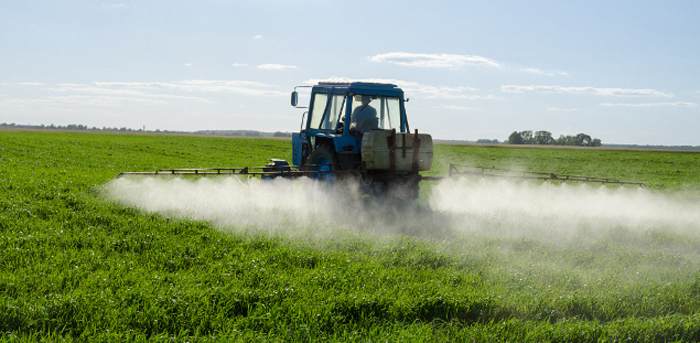
Basil Pesto
My recipe for Basil Pesto does not include pine-nuts, as I am not a fan. They could easily be added though, for a more traditional recipe.

Ingredients:

  • 2 cups fresh basil leaves, packed
  • 2 cups shredded parmesan cheese
  • 3 garlic cloves, chopped
  • 1 tsp. salt
  • 1 tsp. pepper (*I like a little more)
  • 1 Tb. lemon juice (*I like a little more)
  • 1 cup olive oil

Place all ingredients in blender and puree until smooth. Refrigerate.


Buffalo Pastrami & Zucchini Linguini (Seves 2)

jill Buffalo Recipes, Ready To Eat, Recipes Leave a Comment

Ingredients:

  • 1/4 lb. Wild Idea Buffalo Pastrami, julienned
  • 4 oz, linguini, cooked al dente
  • (reserve 1 cup pasta water)
  • 1 medium sized zucchini
  • 4 Tb. basil pesto
  • 1/2 cup cherry or pear tomatoes
  • grated parmesan

Cooking Directions:

  • Prepare Buffalo Pastrami and linguini as suggested. Using vegetable peeler, peel zucchini in flat ribbons and then slice ribbons in half, lengthways.
  • In heavy bottomed pot, bring 1/2 cup of pasta water to gentle boil.
  • Add zucchini and cook for two minutes. Remove zucchini from water and set aside.
  • Add prepared pasta to pot, adding more pasta water if necessary. Cover and let heat through, about 2 minutes.
  • Add basil pesto and toss lightly.
  • Add zucchini back to pot and julienned pastrami. Gently toss together. Cover and let heat for an addition minute or two.
  • Using large fork, twist pasta into desired serving and transfer to pasta dish. Garnish with tomatoes, and sprinkle with parmesan. Season with a pinch of salt and a twist of fresh cracked pepper.

Simply Delicious! You might also like my recipe for a Zucchini Salad, found in the “Various Recipe” section.

Zucchini Salad (serves 2)

jill Recipes, Various Recipes Leave a Comment

Ingredients:

  • 1 medium zucchini
  • 1/3 cup water
  • 1 Tb. basil pesto
  • grated parmesan
  • 1 cup cherry or pear tomatoes
  • fresh basil
  • salt & pepper

Cooking Directions:

  • Using a vegetable peeler, peel zucchini in ribbons.
  • Heat water in pan over medium high heat.
  • Add zucchini and cook until al dente, about 3 minutes.
  • Add basil pesto and toss.
  • Using fork twirl zucchini into desired portion and transfer to plate or pasta bowl.
  • Garnish with tomatoes, parmesan and fresh basil and season with a pinch of salt and a twist of fresh cracked pepper.

Fresh and very easy. You will love this!

Buffalo Chili Dogs

jill Buffalo Recipes, Ground, Recipes, Smoked Meats Leave a Comment

Buffalo Chili Dogs (Serves 6)
Delicious, messy and healthy! Our 100% grass-fed, nitrite free Hot Dogs, will bring you back to eating hot dogs again. Better yet, try them covered in Bison Chili!

tn_Buffalo Chili Dog

Ingredients:

  • 1 – pkg. Wild IdeaBuffaloHot Dogs
  • 2 – cups Wild Idea Buffalo Chili, heated (recipe below)
  • 1 ½ cups cheddar cheese, shredded
  • 6 hot dog buns (whole wheat or whole grain, best)
  • 1 Tb. Olive oil
  • *optional toppings: pickled jalapeno’s, raw onion or your favorite extra

Instructions:

  1. Preheat inside gas grill to 550*. (Half of grill set on high and other half set on low).
  2. Place hot dogs over hot side of grill and grill for 2 minutes each side, closing grill during cooking time.
  3. While hot dogs are grilling brush inside of buns with olive oil and place inside down over low heat side of the grill, and brown. About two minutes.
  4. Remove browned buns and place hot dogs on buns.
  5. Top each hot dog with 1/3 cup of heated chili and sprinkle each with ¼ cup of shredded cheddar cheese. (Cheese will melt on its own, or use small torch if you would like to lightly brown cheese). Serve with optional toppings and a lot of napkins!

4 Bean Bison Chili

Makes 10 to 12 entrée servings.

Chili freezes nicely. Portion out and freeze for a quick meal at a later date.

Ingredients:

  • 2    pounds ground bison
  • 2    tablespoons olive oil
  • 1    onion, chopped
  • 2    tablespoons fresh garlic, chopped
  • 2    tablespoons cumin
  • 2½ tablespoons chili powder
  • ½   tablespoon oregano
  • ½   tablespoon thyme
  • 2    teaspoons coriander
  • ½   teaspoon each smoked paprika and cayenne
  • 1    tablespoon black pepper
  • 2    teaspoons salt
  • 1    quart stewed tomatoes
  • 1    quart tomato sauce
  • 8     golden peperoncini, diced + juices
  • 1    15oz can each: butter beans, black beans, kidney beans, and pinto beans, (drained – but not rinsed)
  • 1     lemon, juiced
  • 2    cups water
  1.  Mix all dry spices together.
  2. In heavy stew pot, over medium high heat, heat olive oil.
  3. Add Wild Idea bison meat, crumbling into small pieces.  Lightly brown, stirring constantly for 4 minutes.
  4. Add onion, garlic and seasonings. Continue to brown, stirring occasionally for 10 minutes.
  5. Add remaining ingredients and bring to a full boil. Reduce heat and simmer uncovered for ½ to 1 hour, or until desired thickness is achieved.

Adjust seasoning to taste. Garnish with fresh lime or lemon wedges, fresh chopped cilantro, sour cream, or grated cheddar cheese. Serve with Cheesy Jalapeño Corn Bread, (recipe included upon request with purchase).

Wine Pairing: Skip the wine with this one and have a cold beer!

Global Warming Locally

dan Cheyenne River Writings, Dan's Writings 17 Comments

A few years ago a distant neighbor tried to antagonize me by mocking the concept of man-made climate change. He knew that I was worried about such things and he seemed to be drawing a distinction between himself and me for the benefit of friends who were moving livestock up a loading chute. It was a friendly mocking on a February day that should have been hovering in the single digits above zero. But instead of the normal mid-winter, polar conditions, the day was fifty degrees and all of us were working in our shirt sleeves.

“Oh yea,” my neighbor said. “This global warming is a real bad deal. I just hate days like this.” I didn’t rise to his bait but he kept going. “It’ll change our way of life on the Great Plains.” There was a little laughter and most of the heads nodded in tacit agreement. I did not engage him in debate because I knew it was hopeless. But I did look at him to try to determine if he was being serious or just parroting the attitudes of the corporate defenders in Congress and the safely arrogant talk show hosts.

My neighbor is a little chubby, tries hard to be jovial, and likes to be viewed as wise. But he is not as practiced as the people in Washington and his eyes didn’t engage mine. They flitted over the faces of our friends, searching for approval. When he found it, he became energized, and basked in the attention. “I might have to take my insulated coveralls to the Salvation Army.” This got him a few more laughs and the way he puffed up was hard to watch, because he is not a stupid man.

He knows what an increase of just few degrees could do to the midsection of America. He knows perfectly well that a glorious, fertile growing season depends on a tough winter, that the productive temperature range for almost all plants and animals is very narrow, that a fractional reduction in rainfall could upset balances that the whole world depends on. Of course, if he were ever pinned down on any of these points, he would take shelter in the standard sand pile of “It isn’t proven. It’s just a theory.” He may even know that by such reckoning the lethal nature of a bullet to the brain is just a theory until you pull the trigger.

For the years since that day when I was mocked for my worry over climate change I have often wondered if my neighbor, or the public officials that he mimicked, ever woke up in the middle of the night wondering – what if. What if we really are creating a deadly change in the climate that sustains us? Do those people secretly pace their kitchen floors at three in the morning, or do they simply shrug their shoulders, conclude that the short-term increase in wealth is worth it, and go back to sleep?

There have been several nights in this summer of 2012 when I know that my neighbor did not sleep because I saw him out on a volunteer fire truck fighting prairie fires. It is not even August and already hundreds of thousands of acres of the Northern Great Plains have burned. The summer of 2012 will go down in the record books as one of the hottest and driest. It may even end up as the hottest and driest in recorded history. It is a disconcerting record and even more disconcerting to think that 2012 record might not hold for long.

Of course climate change is terribly complicated and it is a difficult thing to measure. We might have a wet year next year. The grass might grow three feet high again. Food and commodity prices might level off or even dip a little. There might not be another fire-season like this one for the rest of my life. I might never again see my neighbor’s face illuminated by the frenetic, red-hot light of a grass fire as he holds only a puny shovel in his hands. I may never see his face sweating in the blast furnace heat and streaked with ash like a common man at the battle of Armageddon. I may never again see the awe and fear in his eyes as all the things that he cares about, everything that nourishes him and his family, goes up in smoke. But at least I have seen his humanness and the chinch in his armor of pugnacious ignorance. It will take longer for the pompous politicians and the out-of-control talk show hosts to get that close to reality.

Hot Dogs for the Dog Days of Summer

jill Jill's Journal 7 Comments

It really is the “Dog Days of Summer” at Wild Idea Buffalo Co. A few months ago we got a nifty new smoker so we could make smoked, and ready to eat products in house. We recently launched a few items, and one of them was the Hot Dog. Our Buffalo Hot Dogs are handmade, by our in-house butchers and seasoned with organic spices. Although they may not be perfect in shape (they are handmade), there are no hidden ingredients. But, the best part is the taste!

As I grow older, the foods I eat are often determined by what likes me, and not by what I like. What Dan and I have really noticed is that non grass-fed products, or other chemically enhanced foods truly change the way we feel. So when we sat down to put our hot dogs to the test, after years of not being able to eat them, we were delightfully surprised! Adults will love them, kids will love them, and yes, even your dog will love them.

This month’s recipe is for “Chili Dogs”, as August seems to be a month were we break the rules of etiquette and often eat food with our hands. Perhaps it’s influenced by the fairs, carnivals and ball games we attend, squeezing in all the summer possible with every hand held bite. Or, the delicious seasonal fruits and vegetables that we pick and stuff into our mouths!  Wishing you a deliciously HAPPY August! Cheers! Jill

Buffalo Chili Dogs (Serves 6)

Ingredients:

  • 1 – pkg. Wild IdeaBuffaloHot Dogs
  • 2 – cups Wild Idea Buffalo Chili, heated (recipe below)
  • 1 ½ cups cheddar cheese, shredded
  • 6 hot dog buns (whole wheat or whole grain, best)
  • 1 Tb. Olive oil
  • *optional toppings: pickled jalapeno’s, raw onion or your favorite extra

Instructions:

  1. Preheat inside gas grill to 550*. (Half of grill set on high and other half set on low).
  2. Place hot dogs over hot side of grill and grill for 2 minutes each side, closing grill during cooking time.
  3. While hot dogs are grilling brush inside of buns with olive oil and place inside down over low heat side of the grill, and brown. About two minutes.
  4. Remove browned buns and place hot dogs on buns.
  5. Top each hot dog with 1/3 cup of heated chili and sprinkle each with ¼ cup of shredded cheddar cheese. (Cheese will melt on its own, or use small torch if you would like to lightly brown cheese). Serve with optional toppings and a lot of napkins!

4 Bean Bison Chili

Makes 10 to 12 entrée servings.

Chili freezes nicely. Portion out and freeze for a quick meal at a later date.

Ingredients:

  • 2    pounds ground bison
  • 2    tablespoons olive oil
  • 1    onion, chopped
  • 2    tablespoons fresh garlic, chopped
  • 2    tablespoons cumin
  • 2½ tablespoons chili powder
  • ½   tablespoon oregano
  • ½   tablespoon thyme
  • 2    teaspoons coriander
  • ½   teaspoon each smoked paprika and cayenne
  • 1    tablespoon black pepper
  • 2    teaspoons salt
  • 1    quart stewed tomatoes
  • 1    quart tomato sauce
  • 8     golden peperoncini, diced + juices
  • 1    15oz can each: butter beans, black beans, kidney beans, and pinto beans, (drained – but not rinsed)
  • 1     lemon, juiced
  • 2    cups water
  1.  Mix all dry spices together.
  2. In heavy stew pot, over medium high heat, heat olive oil.
  3. Add Wild Idea bison meat, crumbling into small pieces.  Lightly brown, stirring constantly for 4 minutes.
  4. Add onion, garlic and seasonings. Continue to brown, stirring occasionally for 10 minutes.
  5. Add remaining ingredients and bring to a full boil. Reduce heat and simmer uncovered for ½ to 1 hour, or until desired thickness is achieved.

Adjust seasoning to taste. Garnish with fresh lime or lemon wedges, fresh chopped cilantro, sour cream, or grated cheddar cheese. Serve with Cheesy Jalapeño Corn Bread, (recipe included upon request with purchase).

Wine Pairing: Skip the wine with this one and have a cold beer!

South Dakota Seoul Food

wibadmin Blogging 2 Comments

What do you get when you cross South Dakota and South Korea? A delicious meal! Last night (and many nights this summer) I made grilled buffalo and topped it with Korean sauces – it has been my go-to meal of the summer of 2012. While not a dish you would find in a bar in Murdo or a restaurant in Seoul – it is wonderful “Seoul” food. It is a beautiful melding of cultures – taking the best meat of the South Dakota prairie and finishing it with flavors of South Korea.

The back story behind this dish has two levels. My initial inspiration came a couple years ago in New York City when I first tried the wildly popular restaurant, Momofuku Ssam Bar (http://www.momofuku.com/restaurants/ssam-bar/). In my mind, it is everything a restaurant should be: big bold flavors, reasonable prices, comfortable and casual vibe, and absolutely delicious food – no wonder it is so popular. Until Momofuku, Korean food was one of the few cuisines I was not a fan of, but the combination of vinegar, soy, and chilies has gotten me hooked. Chef David Chang crafts amazing Korean-inspired dishes from to-die-for pork belly buns to the best ever Brussels sprout with fish sauce and mint leaves to delicious pork sausage with rice cakes. But their signature dish is bo ssam (the Korean word for wraps) which includes an 8 hour slow cooked pork shoulder, oysters, dipping sauces, rice, etc. all wrapped in bibb lettuce. I was always curious, but the $200 price tag and the fact it was for parties of 6 or more meant I never tried it.

Fast forward to this spring when a group of friends I have done a cooking club with for almost a decade decided to re-create the ssam dinner – with the help of some recipes in the New York Times – http://www.nytimes.com/2012/01/15/magazine/recipe-momofuku-bo-ssam.html  (also included below). One of the ideas of the cooking club is to make a more involved and complex menus than anyone one of us would typically do on our own. With a big thanks to chef Chang’s recipe, I have to say the results were spectacular.

The only problem is that I was craving this again a couple days later. While I love to cook, it is not often I have 8-hours to slow roast a whole pork butt for a week night dinner. But I realized the flavors could translate very well with an easy grilled steak sliced thin. Voila! The sweet earthy taste of the buffalo is an amazing match with these sauces. I go outside to the grill, and grill up a buffalo ribeye or NY Strip or top sirloin or flank steak – all have worked great. I cook it to medium rare, bring inside and slice thin. I then use that as the basis for a Korean-style rice bowl. I like to use Japanese style short grain rice (also called sushi rice). I fill a bowl with that and then place the thinly sliced buffalo on the rice. For toppings, I always will use the ginger scallion sauce – which takes less than 5 minutes and uses standard ingredients in any kitchen. The quick pickles I do about 80% of the time with it – and they provide a nice crunch and flavor contrast. The ssam sauce requires 2 ingredients you would find at a good Asian grocery, but once you have those it take about 3 minutes to make and provides some nice heat to the dish.

I continue to be amazed at how well buffalo fills in with popular dishes from all over the globe. I have done recipes for everything from Korean (ssam) to Chinese (stir fries and grilled with ginger, soy, scallions) to South American (skirt steak with chimichurri) to French (tartare) – using buffalo in place of beef or pork. So there you go: our buffalo dress up nice and can go from the Great Plains and fit right in with flavors from anywhere around the world.

Ginger-Scallion Sauce

  • 2½ cups thinly sliced scallions, both green and white parts
  • ½ cup peeled, minced fresh ginger
  • ¼ cup neutral oil (like grapeseed)
  • 1½ teaspoons light soy sauce
  • 1 scant teaspoon sherry vinegar
  • ½ teaspoon kosher salt, or to taste

Ssam Sauce

  • 2 tablespoons fermented bean-and- chili paste (ssamjang, available in many Asian markets, and online)
  • 1 tablespoon chili paste (kochujang, available in many Asian markets, and online)
  • ½ cup sherry vinegar
  • ½ cup neutral oil (like grapeseed)

Organic Gardening on the Great Plains Comes With It's Challenges

jill Jill's Journal 10 Comments

In addition to the beating prairie wind, lack of moisture, and this year’s triple digit temperatures, the grasshoppers have found their way to Jilian & Colton’s country garden. Dressed in their colorful suits of armor, they can destroy your garden or yard in a couple of days. The chickens and young Guinea’s do their best to keep up, but we are looking for preventive ways to manage for next year.  Any suggestions (other then eating them) on how to organically rid or keep grasshopper populations down would be greatly appreciated.


Even with the grasshopper infestation, we are starting to reap the benefits of our gardens. We make batches of Basil Pesto, and keep a jar on hand to jazz up salads, pastas, and sandwiches. Below is my recipe for non-pine nut, but extra cheesy Basil Pesto.

Great to use on Buffalo Salami Anti Pasto Pasta Salad! See recipe.

Basil Pesto:

Ingredients:

  • 2 cups fresh basil leaves, packed
  • 2 cups shredded parmesan cheese
  • 3 garlic cloves, chopped
  • 1 tsp. salt
  • 1 tsp. pepper (I like a little more)
  • 1 Tb. lemon juice (I like a little more)
  • 1 cup olive oil

Place all ingredients in blender and puree until smooth. Refrigerate.

Buffalo Antipasto Pasta Salad

Substitute ingredients according to what you have on hand or what you like.

A great summertime meal!

Ingredients:

  • 1 lb. Buffalo Salami, cut into pieces
  • 1 cup, fresh mozzarella, shredded or cubed
  • 1 each red, yellow and orange bell peppers, diced
  • 1 bunch green onions, chopped
  • 1 can artichoke hearts, drained & chopped
  • 1 cup pepperoncini, sliced
  • ½ cup olives, sliced (prefer Kalamata)
  • ¾ cup sundried tomatoes, julienned
  • ½ lb. pasta, cooked el dente and drained
  • ¼ cup basil pesto
  • ¼ cup olive oil
  • ¼ cup rice or cider vinegar
  • 2 tsp. ground fennel
  • salt & pepper to taste.

Put all ingredients in large bowl and toss! Can be refrigerated for up to a week, however you may need to add a bit more olive oil or dressing before serving.
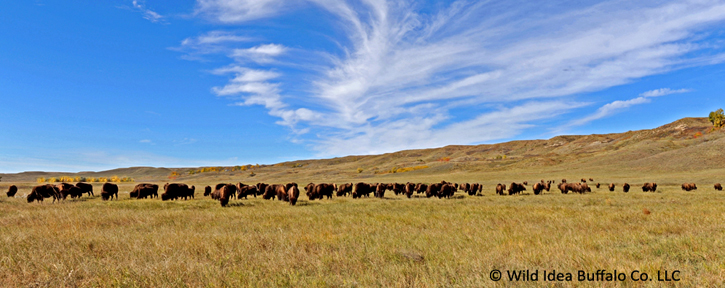

We continue with our weekly tours at the ranch, with some repeat guests/friends (Kathy, Bill and family, the Peach preserves were delicious!), and new guests/friends. Alsion & Mile brought their young family, including their cute little cowgirl, and friends to checkout “where their buffalo meat comes from”.  Even though it was hotter then a pistol, the buffalo stayed cool with a dip in the playa, and we took refuge under an old cottonwood for lunch. On the menu, “Pulled Buffalo B.B.Q.”! Click here for recipe.


The later part of July has kept the sky full of thunder and lightening. Which brought, beautiful magic light, many grassfires, and finally rain.


This morning, for the first time in over a month, the ceiling fans are quiet. We stepped outside and gratefully watched the early morning light color the newly dampened prairie grasses with hues of green, while steam from our hot coffee mugs drifted into the slightly chilly air. Cheers! Jill

Firecracker Coleslaw

jill Jill's Journal, Recipes, Various Recipes Leave a Comment


Ingredients:

  • 1 head Green Cabbage, halved and sliced thin
  • 1 Red Onion, halved and sliced thin
  • 2 Carrots, grated
  • 1 cup Pepperoncini, de-stemmed and flash processed

Dressing:

  • ¼  cup Mayonnaise
  • ¼ cup Rice Vinegar
  • 1 small tube Wasabi
  • 1 Tb. Black Pepper
  • 1 tsp. Salt

Mix in blender and pour over vegetables, toss to coat and season to taste.

Best if made the day before.

Bison Chuck Roast for Pulled Buffalo B.B.Q.

jill Buffalo Recipes, Recipes, Roasts 16 Comments

Ingredients:

  • 1 3 pound Wild Idea Bison Chuck Roast, twine removed, rinsed & patted dry
  • 1 tablespoon olive oil
  • 1 teaspoon salt
  • 2 teaspoons black pepper
  • 2 cup organic Apple Cider, warmed

1.) Pre-heat oven to 500*.
2.) Mix 1 tablespoon olive oil with salt and pepper, in dutch oven or heavy pan. Place roast in pan and roll around in seasoning, rubbing into meat.
3.) Place roast in hot oven uncovered and roast for 15 minutes.
4.) Add warmed Apple Cider, cover pot tightly and lower temperature to 350*.
5.) Braise Buffalo Roast for 2 ½ hours turning once during braising time.
6.) Roast is finished cooking when meat is tender. You should be able to pull the meat apart using 2 forks, (continue braising for another ½ hour if this is not achieved).
7.) Remove form heat and let roast rest at room temperature, covered for 1 hour, or until you are able to handle.
8.) Remove roast from pot and place on cutting board. Reserve pan juices. Using two forks or hands pull meat apart into manageable pieces and then pull apart into smaller pieces or shred.
9.) Return meat to 1 cup of pan juices.
10.) Add 1 cup B.B.Q. sauce, or desired amount, and stir to incorporate. Bring to full heat, adding in more pan juices or B.B.Q. sauce as desired. Reduce heat to simmer.

Serve as entrée or on buns for sandwiches. Accompany with Firecracker Coleslaw.

Jill’s B.B. Q. Sauce

Ingredients:

  • 1 Tb. Olive Oil
  • 1 cup onion, finely diced
  • 2 T. Garlic, chopped
  • 1 T. Black Pepper
  • 1 tsp. Cayenne
  • 1 tsp. Chili Powder
  • 1 tsp. Cumin
  • 1 tsp. Coriander
  • 1 tsp. Cinnamon
  • ½ cup Bourbon
  • 2.4 lbs. Ketchup
  • 1 T. Dijon Mustard
  • 1 T. Worcestershire
  • Dash of Liquid Smoke
  • ½ cup organic Apple cider or water

1.) In heavy saucepan, over medium high heat, heat oil.
2.) Add onion and seasonings and sauté for 7 minutes.
3.) Deglaze with: 1/2 cup Bourbon or Brandy
4.) Add remaining ingredients, and stir until well to incorporate.
5.) Add 1/2 cup juice or water to thin as needed. Bring to a boil.

Pour sauce in sealed container and refrigerate.

July is not my favorite month

dan Cheyenne River Writings, Dan's Writings 13 Comments

The days are too hot and dry and nature shuts down after its spring frenzy and before the kinetics of autumn. The ducks are flightless this time of year and so the skies are oddly vacant. At this latitude, the only window of natural activity occurs just after four o’clock in the morning and lasts for only an hour or so.

The bright spot in my July is that it is the time when young peregrine falcons learn to fly, the time that the birds destined to become hunting falcons form bonds with their primary hunting partner. It is the time that young falcons learn the ways of man and when men re-learn the rhythms of wildness. It is one of the few times that modern man is privileged to reconnect intimately with the greater world to which we all belong. This July I have again been fortunate enough to have a young peregrine falcon come into my life. We spend hours each day getting used to each other. I carry him on my fist, I feed him patiently, I ease the hood on and off a thousand times. He is the best part of my July. He is my swimming pool, my golf outing, my picnic in the park. He is my most immediate link to the 99.9% of this world that is non-human.

Rodger Tory Peterson was one of America’s finest naturalists. He was mostly famous for his series of Field Guides but he was also a teacher, artist, lecturer, winner of many honors and awards including nominations for the Nobel Prize. As Paul R. Ehrlich said, “In this century, no one has done more to promote an interest in living creatures than Rodger Troy Peterson.” I look up to Rodger Troy Peterson for many reasons, but mostly for penning this quote:

“Man has emerged from the shadows of antiquity with a Peregrine on his wrist. Its dispassionate brown eyes, more than any other bird, have been witness to the struggle for civilization, from the squalid tents on the steppes of Asia thousands of years ago, to the marble halls to European Kings in the seventeenth century.”

It is a quote from his 1948 book, Birds Over American, and I read and reread it every July that I am training a new peregrine falcon. I sit in the early morning shadows of our yard, coaxing the bird to take his meals on my fist and I wonder what those “dispassionate brown eyes” are making of this little buffalo ranch in the center of the Northern Great Plains of North America. I wonder if he sees this aging, bald man who offers him tidbits to win his trust as advanced beyond the Mongols of those squalid tents of Asia, or only a human with atavistic tendencies. What vision of the world do I share with this time traveler?

As modern humans go, I may understand more than most of what drives this pound and half thunderbolt with the laser eyesight and the ability to thrive in a savage world. We sit quietly in the front yard with the old English Setter, laying watchful not ten feet away. On the other side, two horses hang there heads over the coral fence. Their eyes are half shut and their tails are already beginning to switch back and forth, in anticipation of the buggy July day that is coming on hot. Here rests the great triumvirate of the first tier of the struggling civilization that Rodger Troy Peterson spoke about. Only slightly apart from the alliance of humans, dogs, and horses is the falcon – observant, wary, stubborn in its refusal to surrender its wildness. But beyond this quartet and indeed even inside of them, beginning with the microbes of their guts, seethes a caste of billions – grasses, forbs, insects, reptiles, amphibians, fish, birds, and mammals – every individual impacting every other individual. I believe that the falcon understands this better than I.

There is something other-worldly and judgmental about the stare of a peregrine falcon. He looks at me with the same deep penetration that he applies to the infinite sky. When he stares out to the near distance and finds buffalo moving across the valley below, is there recognition? Does he think something akin to, ‘Buffalo. Yes, of course. Finally’?

Rodger Tory Peterson speaks of peregrine’s witnessing the evolution of mankind only up to the eighteenth century, yet he lived in the twentieth century. Certainly peregrine falcons witnessed mankind’s struggle for civilization between, say, 1750 and 1950. The Japanese, Dutch, English, and Arabs all trained peregrines during that turbulent time in much the same way that I am training one this July. The ebony eyes of those birds were watching us too. Perhaps Peterson, the urban, American son of immigrants who somehow developed an obsessive love of nature even while his father worked in an early twentieth century furniture factory, was avoiding the thought of how a peregrine falcon might view the last two centuries of mankind’s struggle for civilization. But peregrines have been observing us forever. They have witnessed the loss of habitat for wild things due to human activity. They flew high above the great mechanical plow ups of grasslands, the clear cutting of forests, and the emptying of the seas. The wholesale use of DDT almost exterminated them.

This July there will come a judgment day. When I ease the hood off the new falcon for his first free flight over this ranch, where my influence is greatest, I will be choked with anxiety. If he rises to a thousand feet above the Cheyenne River he will be in position to see what this one human is trying to do. He will read in this land the evidence of my contribution to our struggling civilization. It is impossible to hide.

Cold Cuts for Hot Days

jill Jill's Journal 1 Comment

The temperatures at the ranch (and around the country) have been in the high 90’s with several days in triple digits — the hottest hitting 113 degrees. High temps, and no or little rain make for a nerve-racking summer. In the middle of the night, at the faintest whiff of smoke, we leap out of bed, run out the door, climb into the pick-up that’s loaded with a water tank, and drive to the top of the hill to see if fire is nearby. So far, so good.


But even with the heat, magic continues to happen on the ranch. Indigo buntings, chickadees and golden finches all had a successful hatch of chicks, and seem unaffected by the heat. They flutter around the bird feeders to and fro testing out their newly-feathered wings. I have tried to photograph the fledging little birds, but they are too fast, so I stalk flowers instead. Perhaps one of the greatest show flowers of the prairie is the Bush Morning Glory, and this year they are exceptional. Walking along the browning sage colored grass has the potential for making one a little depressed. But then you stumble upon a Bush Morning Glory, with its dark green foliage and its blast of fuchsia blooms, and you have to smile, shake your head, and say “unbelievable”.


The heat also makes it difficult to get excited about cooking, but a couple of weeks ago, I was given the assignment of photographing every cut of meat we sell. Not cooking was not an option. With no AC in the house, we use the grill for most everything: grilling, roasting, braising and even baking. This month’s recipe can be prepared on the grill as a hot sandwich, or is also delicious as a cold sandwich, perfect for those tripe digit days. Serve it up with a garden green salad, pour a crisp wine and call some friends. The perfect ingredients for a “cool, hot time in the summer”.

Cheers!
Jill

Buffalo Pastrami and Peach Sandwiches with Orange Aioli

Serves 4. This sandwich does not need to be grilled. Just slice, stack and serve!

  • 1 – 1 lb. package Buffalo Pastrami
  • 2 – Peaches, halved and pit removed
  • 1 – Red Onion, peeled and sliced, lightly oiled
  • 4oz. – White Cheddar, or mild cheese
  • 8 – slices Artisan Whole Grain Bread
  • 1 – Tb. Butter
  • 2 – Tb. Orange Marmalade
  • 8 – Tb. Orange Aioli *see recipe below
  1. Make Orange Aioli, and refrigerate until needed.
  2. Preheat gas grill to medium high heat. Ensure grill grid is clean.
  3. Divide Pastrami into 4 piles.
  4. Spray grill with non-stick spray (I don’t usually use grilling spray, but it works great for grilling fruit).
  5. Place the piled Buffalo Pastrami, Red Onion, and Peach halves on grill, and heat for 1½minutes on the first side. Close grill lid during cooking.
  6. Turn all items over. Divide cheese, and place on top of hot Buffalo Pastrami. Place a dollop of orange marmalade on top of each onion slice. Brush one side of bread with butter and place on grill, butter side down. Close lid and continue to grill for 1 minute.
  7. Remove items as they are ready, bread should be light grilled, cheese should be melted, and onions should be soft.
  8. Remove peaches, pull skin off and slice each half in two.
  9. Layer Buffalo Pastrami with cheese, grilled peaches and red onion on non- grilled side of bread. Spread on Orange Aioli and place remaining grilled bread on top.

Pass with additional Aioli, and serve with green salad.

Orange Aioli:

  • 2 egg yolks, blend until pale
  • 1 Tb. orange juice concentrate, at room temperature
  • ½ tsp. dry mustard
  • ½ tsp. each, salt & pepper
  • ¼ tsp. cayenne pepper
  • ¾ cup olive oil
  1. In blender mix egg yolks until pale.
  2. Add, orange juice concentrate, and spices. Puree until blended.
  3. With motor running slowly add olive oil.
  4. Adjust seasoning to your taste.

Pour Orange Aioli into glass container and refrigerate until needed.

Wine Pairing: Cupcake Sauvignon Blanc, 2011
Crisp, clean and citrusy! Summer in every sip.


Marinades are Magic

wibadmin Blogging 2 Comments

If you look at most classic French cookbooks, they will tell you that stocks are the lifeblood of good cooking. I would argue that the right marinade is the true lifeblood of good cooking. There are some cuts of meat (whether buffalo, beef, chicken, or pork) that just come to life with the right marinade. With a tenderloin or a ribeye – why bother? But if I am cooking flank steak, skirt steak, even top sirloin, the right marinade can make a good piece of meat, absolutely delicious. With a good marinade, not only can you enjoy the flavors of the marinade, but it also helps bring out the true flavors of the meat.

When I started experimenting with cooking in college (for most people “cooking” is not the word at that point in the sentence), I remember a breakthrough my senior year when I developed my first marinade. Basically I was in the kitchen and I started adding my favorite flavors to a blender – I thought “I like the taste of ginger, garlic, scallion, soy sauce, etc.” and each one went into the blender. Out came a chunky marinade that did a really nice job of tenderizing the meat and infusing a delicious flavor. That was the birth of a dish I called “Josh’s chicken” that has garnered compliments from spring 1992 at a cookout for a favorite Minnesota band to a family gathering earlier this year.

To this day, I still love playing around with marinades and testing them with different meats – this past weekend I did a twist on my original marinade with Wild Idea Buffalo flank steak. A little olive oil, soy sauce, rice wine vinegar, Mirin, brown sugar, and of course the ginger and scallion. Each time it is a little different.

While it is relatively easy to make marinades, there are some days where I do not have the right ingredients, do not want to dirty my kitchen, or just want to save 10-15 minutes (plus the couple hours of marinating time) in putting them together. That is why I am so excited about the new line of ready-to-grill marinated buffalo steaks that we introduced a couple weeks ago.

I have had the pleasure of eating a number of meals at the Cheyenne River Ranch, and enjoying Jill’s outstanding cooking. Eating her food is like eating at a four-star restaurant. Earlier this year, I asked Jill to create her best marinades and we would sell different cuts of the meat in her marinades. These marinade recipes are the result of years of experimenting by Jill to find the right flavors to pair with each cut of meat.  I love this new item, because it is like eating a dinner prepared by Jill at the ranch – right in your own home, or on your back deck. I was amazed the first time I made one of these how easy and delicious it was – I literally lit my grill, went outside with the thawed bag of meat (in marinade), cut it open with a scissors and placed it right on the grill; it could not have been any easier or more delicious.

We introduced this line with 4 delicious flavors (picking a favorite is the only difficult thing):

  • Rosemary Dijon Sirloin Steaks
  • Balsamic Flat Iron Steaks
  • Cilantro Lime Skirt Steaks
  • Pineapple Jerk Top Sirloin Kebabs

Order one (or all four) today, and please let us know what you think. We would love your feedback on these. Also, I think Jill has a few more recipes up her sleeve, so look for more great varieties coming soon! 

Here are several serving ideas from Jill for our marinated steaks. With each order, we will send you a recipe for a delicious simple summer meal:

Balsamic Marinated Flat Iron Steak – Perfect for grilled steak salad.

Pineapple Jerk Top Sirloin Kebab Meat – Layer with fruit and sweet onions and serve on confetti rice!

Rosemary Dijon Marinated Sirloin Steaks – Great on the grill. Serve with grilled potatoes and summer squash, for a quick, easy, delicious meal!

Cilantro Lime Skirt Steak – The essence of summer. Tacos, Salads or Fajita’s!

Buffalo Pastrami and Peach Sandwiches with Orange Aioli

jill Buffalo Recipes, Ready To Eat, Recipes Leave a Comment

Serves 4. This sandwich is terrific grilled, but also great as a cold sandwich. Just slice, stack and serve!

  • 2 – 8 oz. packages Wild Idea Buffalo Buffalo Pastrami
  • 2 – Peaches, halved and pit removed
  • 1 – Red Onion, peeled and sliced, lightly oiled
  • 4oz. – White Cheddar, or mild cheese
  • 8 – slices Artisan Whole Grain Bread
  • 1 – Tb. Butter
  • 2 – Tb. Orange Marmalade
  • 8 – Tb. Orange Aioli *see recipe below
  1. Make Orange Aioli, and refrigerate until needed.
  2. Preheat gas grill to medium high heat. Ensure grill grid is clean.
  3. Divide Pastrami into 4 piles.
  4. Spray grill with non-stick spray (I don’t usually use grilling spray, but it works great for grilling fruit).
  5. Place the piled Buffalo Pastrami, Red Onion, and Peach halves on grill, and heat for 1½minutes on the first side. Close grill lid during cooking.
  6. Turn all items over. Divide cheese, and place on top of hot Buffalo Pastrami. Place a dollop of orange marmalade on top of each onion slice. Brush one side of bread with butter and place on grill, butter side down. Close lid and continue to grill for 1 minute.
  7. Remove items as they are ready, bread should be light grilled, cheese should be melted, and onions should be soft.
  8. Remove peaches, pull skin off and slice each half in two.
  9. Layer Buffalo Pastrami with cheese, grilled peaches and red onion on non- grilled side of bread. Spread on Orange Aioli and place remaining grilled bread on top.

Pass with additional Aioli, and serve with green salad.

Orange Aioli:

  • 2 egg yolks, blend until pale
  • 1 Tb. orange juice concentrate, at room temperature
  • ½ tsp. dry mustard
  • ½ tsp. each, salt & pepper
  • ¼ tsp. cayenne pepper
  • ¾ cup olive oil
  1. In blender mix egg yolks until pale.
  2. Add, orange juice concentrate, and spices. Puree until blended.
  3. With motor running slowly add olive oil.
  4. Adjust seasoning to your taste.

Pour Orange Aioli into glass container and refrigerate until needed.

Wine Pairing: Cupcake Sauvignon Blanc, 2011

Crisp, clean and citrusy! Summer in every sip.

Wedding Pictures!

jill Blogging, Jill's Journal 7 Comments

Below are a series of photo’s from Jilian & Colton’s wedding that we wanted to share with you. It was a fabulous ceremony and reception, but certainly not without it’s glitches or unexpected events, (like the 70 mile an hour wind that came through). Luckily we had mostly everyone in the barn by then, and carried on into the early morning hours. The pictures capture a few of the highlights, including the ominous sky that brought the wind.

Photo Credits: Bonny Fleming – BonzEye Photography and Jessica Hanson

Back At It, After The Wedding

jill Blogging, Jill's Journal 4 Comments

The wedding is over and we are starting to get back on track, (wedding photos to come in July’s newsletter). To unwind from it all, I got out and stalked the wild things that live on the ranch with us. The below photos are of a Carolina Sphinx Moth and of a Screech Owl that fledged a week ago from the bird box just beyond the house. This same bird box has housed Wood Ducks, and Kestrel’s.

We also celebrated my almost 50th birthday, with a small dinner party, cooked by son Lucas. A good time was had by all! Some may have over birthday caked?

Back at it, means back to work. My favorite part of working at the office in town, is drive home. In the photos below I am 7 miles from the ranch. One is looking west and the other is looking south east to the ranch. It always takes my breath away.

Toward the end of the month we entertained a group of 16.  All had a wonderful time. Our evening included; a drive through the buffalo herd, a sundowner on the bluff overlooking the ranch, and a delicious Wild Idea Buffalo dinner to end the evening. A big thanks to the kids (Lucas, Jilian & Colton) for all their hard work in helping make it a success.

I am back to a little food photography, Dan is back to writing, training a new falcon and eating the food photography!

Wishing you all a wonderful weekend and a red, white and buffalo 4th of July!


Road Trip to Yellowstone…Finally

dan Cheyenne River Writings, Dan's Writings 10 Comments

For Ed Abbey a park, a forest, a stretch of private land that has been spared the ravages of unfettered capitalism is wilderness. It did not need a federal designation or an act of congress to qualify. Indeed for most of us, wilderness is like art – we may not know the definition, but we know it when we see it. In fact, we know it even when we don’t see it.

Ed said, “A man could be a lover and defender of the wilderness without ever in his lifetime leaving the boundaries of asphalt, power lines, and right-angle surfaces. We need wilderness whether or not we ever set foot in it. We need the possibility of escape as surely as we need hope; without it the life of the cities would drive all men into crime or drugs or psychoanalysis.”

I have two old friends that have never spent much time in cities. They are not criminals, drug addicts, or in need of psychoanalysis. They are just two old men in their middle seventies who have worked hard in agricultural communities since they were boys. They are retired now and once in a while the one who lives high in the Black Hills with a younger woman, comes down to the prairie to visit the one who, for thirty years, has lived in a cabin on our ranch. They are good friends even though to stand outside the prairie cabin and listen to them talk you might have your doubts. They are both bullheaded, set in their ways, and hard of hearing. As I listened at the door, I would have sworn that they were having a fight: the voices were loud and the points of view seemed entrenched. They were trying to decide whether or not they should drive over to see Yellowstone National Park. As I leaned against the door, listening, I was at first amazed to learn that neither of them had experienced more than a glancing encounter with our first National Park: Yellowstone. This did not preclude claims of expertise and knowledge about the park. Gervase had had a brother who once lived in Livingston, Montana and Erney, who was laid low by a stroke a decade ago and spends much of his time in a reclining chair watching television, assured Gervase that he had, “watched every nature show ever filmed in Yellowstone at least twenty times.” As I listened, I became excited to learn that they were on the verge of setting a date for their first real visit to the park.

In the late seventies and early eighties I spent a good portion of each summer in Yellowstone. I was lucky enough to work with State and Park Service biologists releasing peregrine falcons in and around the park. I spent many days hiking along the rivers and high cliffs of the area. I slept a hundred nights under the Yellowstone sky. We were some of the first people into the park when the snow receded enough to move around and I knew that the mid-March date they were talking about was very early.

When I stepped through the cabin door, I was greeted with smiles and hellos. I hated to bring a cautionary message. “If you guys are going to Yellowstone, I’d check to see if the roads are open.” Instinctually we all looked out the window at the Buffalo Gap National Grasslands where the little snow we had received in the winter was long gone. To defend myself, I said. “Those passes are a mile higher than here. I don’t want you two to freeze to death up there.”

But if Ed would have stepped through that door with me he might have said, “A venturesome minority will always be eager to set off on their own, and no obstacles should be placed in their path; let them take risks, for Godsake, let them get lost, sun burnt, stranded, drowned, eaten by bears, buried alive under avalanches – that is the right and privilege of any free American.”

In the end Gervase and Erney put their trip to Yellowstone off for a few weeks. They left at four o’clock in the morning (no big sacrifice at their age) and drove all day to the town of Cody, Wyoming – named for a man who enjoyed the real wilderness, then set the standard for ruining it. I am a decade younger that Erney or Gervase, so I was standing naked in my dark kitchen trying to remember how the coffee pot works when they crawled past the window in the high mileage, white, Ford Taurus that Erney inherited when his bachelor brother died. I stepped out onto the deck and raised a hand but they were staring straight ahead, toward the adventure they had dreamed about for over 60 years. I knew Gervase’s fertile imagination, and I had sat in Erney’s cabin as he watched the Yellowstone Nature Shows. I worried that the Yellowstone Park of 2012 would not meet their expectations but I sent them off with a tossed kiss and another waive.

Ed was always against touring parks in automobiles. “The automobile, which began as a transportation convenience, has become a bloody tyrant (50,000 lives a year), and it is the responsibility of the Park Service, as well as that of everyone else concerned with preserving both wilderness and civilization, to begin a campaign to resistance.” I lean toward agreeing with Ed, but these were my friends with a marvelous dream. Neither of them could walk far enough into real wilderness to satisfy Ed, so what the hell. I blew them another kiss and thought about all the times that I had accompanied them into our neighborhood wild lands to work or play. They might have been pilgrims to Yellowstone, but they were not pilgrims to an active, outdoor life.

The end of this story is anti-climatic but completely predictable. They have always been hunters and lay-naturalists so they knew that almost everything that happens in the great outdoors happens in the morning. They wanted to see elk, buffalo, mountain sheep, bears, wolves, and all the weird birds that are on the nature shows. They arrived in the dark – 4:45 in the morning – and the gate to Yellowstone was closed. By the time the gate opened at 8:00 there was a line of cars behind them that stretched down the mountain and out of sight around the first curve. They were only a hundred yards into the park when the first of that line of cars passed them. By the time the sun was up and the animals were thinking about going to bed, Erney and Gervase were behind a long line that stopped – in Ereny’s exact words – “Every time they saw a pile of buffalo shit.”

They followed cars around for a couple more days then headed home. But even though the dream did not quite materialize, within a week of their return they began to talk longingly about “the trip they took to Yellowstone”. Their belief in wilderness was still strong. They had seen a distant herd of elk, a bear track, what might have been a wolf. They saw the geysers, the cold trout water tumbling from all the high magical places where they would never go. They were pretty sure that just out of sight of the road there were all sorts of odd and wonderful sights. They came back from Yellowstone with a little spring in their step and I believe they are now both good for another 15 years. In their own way they experienced the wilderness. Their belief is stronger than ever. They know that wilderness is out there – somewhere. And even if, as in our case, you have real wilderness just across the river from where you live, it is an essential dream that something even wilder is out there. Ed would say that, “Wilderness is not a luxury but a necessity of the human spirit.”

Grilling with Dad

wibadmin Blogging Leave a Comment

I am not sure what it is with grills and dads, but there is something timeless and memorable about dad going outside and cooking meat. Perhaps it is ingrained in us from our ancestors going back to the caveman days cooking meat over open fires. Whenever I fire up the grill, it just makes me happy and I think: “Meat….Good!” said in a caveman voice.

In the household my dad grew up in in New Britain, Connecticut, it was your traditional 1950s home. His mother, Ruth, did all the cooking, cleaning, gardening, and tending to everything else in the home, and his dad, Ed, worked outside of the home and made the money. However, during the summer at special events Ed became the chef. I still have an image as a little kid of my grandfather leaning over a little hibachi grill about 8 inches off the ground and cooking steaks. They were a thing of beauty; I can still taste those thick, juicy, delicious steaks.  My dad, uncles, and I share a fair amount of cooking skills, but we all agree we cannot top the steaks that Ed used to make on that little hibachi grill.

My dad kept the tradition going on his classic Weber charcoal grill that he would ignite with a heating coil that looked ancient the day he bought it, and still scares the bejesus out of me every time I plug it in 30 years later. My dad’s magic was in the form of his burgers. I have never gotten his special recipe (it was never the same), but he would put in a little of this and a little of that, sear them over high heat and they came out perfectly every time.

I have to admit that few things make me happier than when I ask my older son, Max, what he wants for dinner and he asks me to fire up the grill and make some grilled buffalo steaks or burgers. I love it because I know he will eat (I mean devour) his meal. And I love it because I feel part of a chain of Resnik men passing grilling down from generation to generation.

Wild Idea’s June monthly special has a ton of grill-ready delights from T-bones to burgers, from ribeyes to flank steaks that would make the perfect gift for Dad on Father’s Day, or an aspiring young griller celebrating a graduation. With Wild Idea’s (very) good meat, a hot grill, and a summer night, they will be saying, “Meat Good” too.

In 5 days my little girl will become Mrs. Colton Jones

jill Jill's Journal 9 Comments

Months ago, Jilian came to us and asked if we would both give her away. Although we were both touched, I declined. “It would make me so happy and proud to watch you and Dan walk down the aisle”, I said.

Dan has been a part of Jilians’ life for the past 14 years. Since they first met, his world would stop for hers. I know few fathers that are as attentive, loving and giving. He has been a wonderful father figure in all aspects, and has earned the right of walking his little girl down the aisle.

The emotions are building, and in between final ranch beautification projects we take timeouts and have “tears of joy” sessions, in hopes to get it all out before the big day.  Wish us luck on that one.

The wedding dinner preparation has begun, and after preparing this month’s recipe this morning at 8:00am, I officially closed the kitchen. We have a delicious menu planed, leaving no time for “normal” cooking.


Jilian and Colton’s Wedding Dinner

June 9th, 2012

Hors d’oeuvres:

Pheasant & Mushroom Croustades

Vegetable Spring Rolls

Savory Short Bread with Maytag Blue & Apricot

Walleye Croquettes with Green Chili & Tomatillo

Dinner:

Creamy Watercress Soup

Strawberry, Asparagus & Chevre Terrine, with Mixed Greens & Sweet Basil Vinaigrette

Artisan Bread

Cider Braised Chuck Roast with Cabernet Sauvignon Sage Sauce

Red Skinned, Garlic Mashed Potatoes

Roasted Vegetables

Dessert:

Lemon Cake with Lemon Curd Filling & Butter Cream Frosting

Chocolate Cake with Chocolate Mousse Filling and Sour Cream Ganache

The next day, with the stresses removed, we will have a casual gathering and fire up the grill for BBQ Buffalo Burgers with Firecracker Coleslaw. A terrific recipe for graduation celebrations and fathers day! For recipe go to: http://wildideabuffalo.com/2012/b-b-q-buffalo-burgers-with-firecracker-coleslaw/

Best wishes to grads and thank you to dads! Cheers! Jill

B.B.Q Buffalo Burgers with Firecracker Coleslaw

jill Buffalo Recipes, Ground, Recipes 1 Comment

Serves 6 to 8

  • 2 lbs. Wild Idea Ground Buffalo
  • 2 Tb. olive oil
  • 2 tsp. salt
  • 2 tsp. black pepper

Mix above ingredients all together, and form into 6 to 8 burgers.

Set gas grill to high heat. 500+ degrees.

Place burgers on grill and cook for 2.5 minutes each side, closing grill during cooking.

Brush with B.B.Q. sauce and grill for an additional 30 seconds each side.

Place burger on grilled French bread and top with Firecracker coleslaw.

Jill’s BBQ Sauce

In heavy Sauce pan over medium high heat, mix the following:

  • 1 Tbl. Olive Oil
  • ¼  Cup finely chopped Onion
  • 2 tsp. chopped Garlic
  • 1 tsp. Black Pepper
  • ¼  tsp. Cayenne + to taste
  • ½  tsp. each: Chili Powder, Cumin & Coriander
  • dash Cinnamon

Deglaze with:

1/4 cup Bourbon (Buffalo Trace)

Add:

  • 1.5 lbs. Ketchup
  • 1 Tbl. Dijon Mustard
  • 1 Tbl. Worcestershire
  • Dash of Liquid Smoke

Stir until well incorporated. Bring to a boil.

Left over B.B.Q. Sauce can be refrigerated and used at a later time.

Firecracker Coleslaw

Toss together:

  • 1 head Green Cabbage, halved and sliced thin
  • 1 Red Onion, halved and sliced thin
  • 2 grated Carrots
  • 1 cup Pepperoncini de-stemmed and flash processed

Dressing:

  • ½ cup Mayonnaise
  • ¼ cup Rice Vinegar
  • 1 small tube Wasabi
  • 1 Tb. Black Pepper
  • 1 tsp. Salt

Mix in blender and pour over cabbage, toss to coat and season to taste.

Best if made the day before.

Fresh with a clean spicy kick, great alone or served on the BBQ sandwich!

Meet the New Members of Our Family & Buffalo Sausage Casserole

jill Jill's Journal 1 Comment

This last Sunday, we all took the day off and celebrated Mothers Day with the little things in our lives. It was complete with a delicious champagne brunch featuring,  Buffalo Sausage and Egg Casserole, made by Jilian.  The recipe for the Buffalo Casserole is  listed below the slideshow.

Here are some of the photographs from our day and include the newest members of our family. Featured are: Grandpuppies , Ivan (Jilian & Colton’s new puppy), Huck (son Lucas’s puppy), and Dan’s newest hunting dog, Shinner, who is the puppy with the patch on his eye. Shinner & Huck are son’s of Henry, Dan’s famous hunting dog.  Jilian and Colton have also added a dozen new baby chicks to their growing flock. And, you can’t have mother’s day on a buffalo ranch without baby buffalo’s. A great day, enjoyed by all!

Buffalo Sausage & Egg Casserole (Recipe created by our friend Val)

Serves 8

Ingredients:

  • 1 lb. Wild Idea Buffalo Sausage (Italian Buffalo or Breakfast Sausage)
  • ½ cup chopped shallots
  • 2 garlic cloves minced
  • ½ cup sundried tomatoes, chopped
  • 4 Tb. fresh parsley, chopped
  • 8eggs (best farm fresh or organic)
  • 1 cup half & half
  • 1 cup heavy cream
  • 2 cups mozzarella cheese, grated
  • ½ tp. Salt
  • 1 tp. Pepper

Preparation:

  1. Preheat oven to 375*. Butter a 13x9x2 casserole dish.
  2. Over medium high heat in heavy sauté pan, crumble sausage and cook until lightly browned.
  3. Add shallots, garlic, tomatoes and 2 Tb. parsley and sauté for 3 minutes.
  4. Spread Buffalo Sausage mixture in bottom of prepared casserole dish .
  5. Whisk eggs. Add half & half, cream, 1 cup of cheese, salt and pepper. Mix until well incorporated.
  6. Pour over Buffalo Sausage mixture, and cover with remaining cheese and sprinkle with remaining parsley.
  7. Bake for 30 minutes. Remove and let rest for 5 minutes before serving.
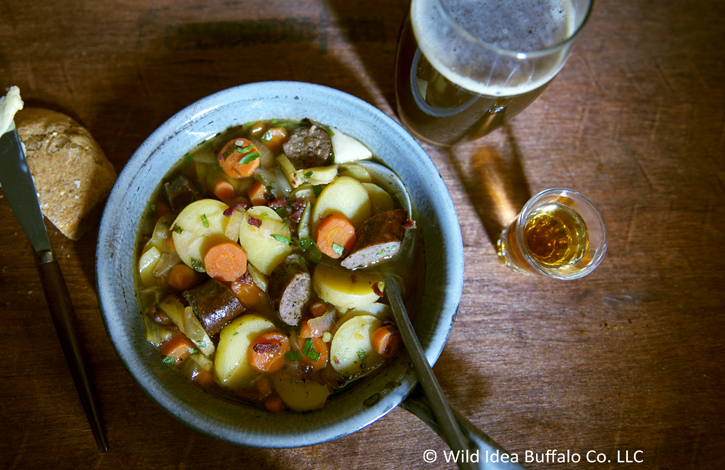
Smoked Buffalo Brisket

jill Buffalo Recipes, Recipes, Roasts Leave a Comment

Smoked Buffalo Brisket

Serves 6 – Active time 10 minutes

I have tried smoking buffalo briskets in a smoker, to achieve that smoky pit flavor.  My attempts were unsuccessful, as the lean, healthy, buffalo meat becomes dry. This faux smoked technique achieves the tenderness and the flavor of slow smoked meat. Leftovers make excellent cold sandwiches.

Ingredients:

  • 1 3 lb. Wild Idea Buffalo Brisket
  • 1 tablespoon liquid smoke
  • 2 tablespoons olive oil
  • 1 tablespoon paprika or smoked paprika
  • 2 teaspoon black pepper
  • 1 teaspoon salt
  • 1 teaspoon garlic powder
  • 1 teaspoon onion powder
  • 1 tablespoon cider vinegar
  1. Rinse brisket and pat dry, and place on sheet of foil, with the fattiest side up.
  2. Mix liquid smoke, olive oil and spices together.
  3. Rub the seasoning into the brisket.
  4. Fold the foil around the brisket, pour vinegar under brisket on foil and seal foil edges. Reinforce with an additional sheet of foil, sealing tightly. This can be done up to 24 hours ahead of grilling time. Let roast rest at room temperature 2 hours before grilling.

For Char Grill:

  1. Start a large amount of coals in half of the grill, coals are ready when half have become ashen colored.
  2. Place roast on grill rack opposite coals, and cover leaving vent open.
  3. Grill for 1 hour, and close vents. Continue to grill for 3 more hours.
  4. Add a few more coals half way through cooking to maintain heat temperature. Turn brisket at his time.
  5. Remove roast from grill and let rest for 10 minutes. Uncover and slice.

Serve with juices that have accumulated in foil.

For Gas Grill:

  1. Allow grill to come to 400*.
  2. Place foil wrapped brisket in center of grill, and turn off burners directly under brisket, leaving burners on each side on high.
  3. Grill for 1 hour. Turn burners down and maintain heat of 350*. Continue to grill for 3 hours. Turn brisket halfway through cooking time.
  4. Remove roast from grill and let rest for 10 minutes. Uncover, slice or pull apart.

Serve with juices that have accumulated in foil.

Buffalo Sausage & Egg Casserole

jill Buffalo Recipes, Recipes, Sausages Leave a Comment

Buffalo Sausage & Egg Casserole serves 8 (Recipe created by my friend Valerie)
A wonderful dish for brunch. Recipe can be made ahead for convenience.

Ingredients:

  • 1 lb. Wild Idea Buffalo Sausage (Italian Buffalo or Breakfast Sausage)
  • ½ cup chopped shallots
  • 2 garlic cloves minced
  • ½ cup sundried tomatoes, chopped
  • 4 Tb. fresh parsley, chopped
  • 8eggs (best farm fresh or organic)
  • 1 cup half & half
  • 1 cup heavy cream
  • 2 cups mozzarella cheese, grated
  • ½ tp. Salt
  • 1 tp. Pepper

Preparation:

  1. Preheat oven to 375*. Butter a 13x9x2 casserole dish.
  2. Over medium high heat in heavy sauté pan, crumble sausage and cook until lightly browned.
  3. Add shallots, garlic, tomatoes and 2 Tb. parsley and sauté for 3 minutes.
  4. Spread Buffalo Sausage mixture in bottom of prepared casserole dish .
  5. Whisk eggs. Add half & half, cream, 1 cup of cheese, salt and pepper. Mix until well incorporated.
  6. Pour over Buffalo Sausage mixture, and cover with remaining cheese and sprinkle with remaining parsley.
  7. Bake for 30 minutes. Remove and let rest for 5 minutes before serving.
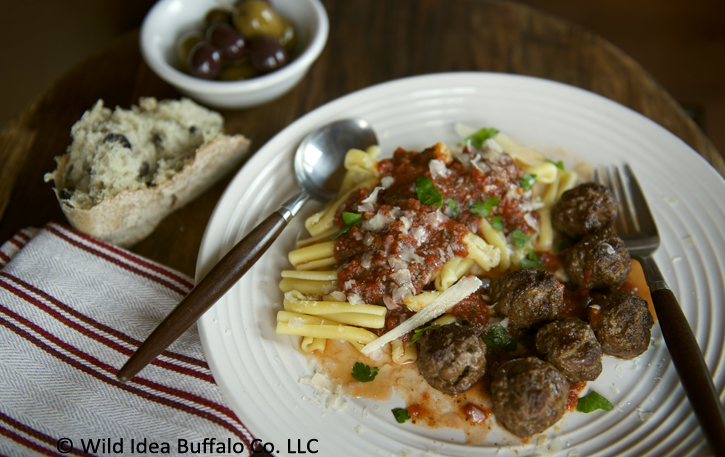
The Ethics of Eating Meat

dan Cheyenne River Writings, Dan's Writings 17 Comments

The Sunday New York Times recently held an essay contest asking whether eating meat can be ethical. As conscious carnivores,this an issue we often discuss. The contest inspired Dan to share his thinking on this topic and explain why eating meat that is raised in humanely and in a responsible manner is in fact ethical. Below is Dan’s article as well as a link to the New York Times contest winner:

http://www.nytimes.com/2012/05/06/magazine/the-ethicist-contest-winner-give-thanks-for-meat.html?ref=magazine


My perspective on the ethics of eating meat is anchored in 500,000 square miles known as the American Great Plains. I argue that raising free-range animals and eating their meat is a critical way to protect that vast midsection of our country from destruction.

The literature concerning our ethical relationship with animals contains little about eating animals per se. I find reasoned arguments on the ethical treatment of animals that render modern, factory-farming indefensible. Confinement feeding and production slaughterhouses are clearly ethically bankrupt. But eating animals and poor treatment are not necessarily linked. The Pine Ridge Indian Reservation is my neighbor and we both raise free-roaming buffalo. We have sacred codes concerning how animals are harvested and the importance of a bio-diverse landscape. We view buffalo and their eco-system as a single thing and we know that neither can survive without the other.

Photography Credit: Michael Forsberg

Cruelty to animals can never be ethical, but cruelty and death are not synonymous. The subtext of anti-meat eating rhetoric is that death is abhorrent and that killing is not ethical. But death is inevitable. The only real options concerning death are when, where, and how, an individual dies. Indeed, the humane harvest of individuals to preserve an entire ecosystem must be considered the ethical choice. A species can regenerate if the community is healthy but communities that perish, are lost forever.

The tens of thousands of plants, invertebrate, and vertebrate species that are indigenous to the Great Plains are, for the most part still intact. Their co-evolution make them co-dependent and so, from the smallest microbe to a two-thousand pound buffalo, one species’ survival depends on the next.

The perennial grasses that are native to the Great Plains are unique in their ability to sequester billions of tons of carbon. The native grazers keep this process functioning and almost any other land use would release that carbon and cause unimaginable problems for the entire world. This seething sea of grass can only survive if its suite of plants and animals remain whole. Aldo Leopold, one of our country’s premier philosophers, explains his famous land ethic in a simple sentence: “A thing is right when it tends toward the integrity, stability, and beauty of a biotic system.”

Do humans need to eat the herbivores that populate this ecosystem? No. But the ecosystem literality cannot survive without those free roaming herbivores. Because we have already altered the landscape by removing the large predators that kept it in balance – wolves, bears, lions, Indians – it is our ethical duty to restore the natural balance. Our response to this indisputable imperative has been to promote domestic herbivores on the Great Plains and harvest and utilize the protein that would have gone to the large predators. The ethics of this solution are problematic only because the factory-farming juggernaut tends to suck these domestic animals into its cruel, intensely stressful production chain of feedlots and slaughterhouses.

My neighbors and I believe that the most ethical option is to keep our buffalo on the prairie for their entire lives and harvest them with respect, where they are secure and where there is little or no stress. The folks on the Pine Ridge Reservation see it as a spiritual connection between themselves and the buffalo. I see it that way too, but also as a black-and-white ethical choice. It is not only ethical to eat the meat that these grasslands produce naturally but, moreover, such consumption is a powerful communion between humans and the ecosystem that we share with animals. Surely this puts us on the firmest moral ground.

The upcoming wedding plans are coming together

jill Jill's Journal 5 Comments

With many of the larger upcoming wedding plans in place, we are down to the details. As a caterer, I have been a part of many weddings, and have taken care of the “food” details. But, with the wedding at the ranch, the “other” details seem endless.

In the last few weeks, I have traveled with Dan to the Cheyenne River Reservation to harvest buffalo at Rocky & Pam Afraid of Hawks. I bring my camera, snap a few pictures or video, ask a few questions and try to be quiet. I watch Rocky bring subtle actions to his nephew’s attention. Dan and I leave the ranch at 5:00 a.m. and by the time we are headed home around 1:00 p.m., I feel at peace, my body is heavy, and I am in a deep sleep after 5 minutes of being in the car. When we arrive home the sedation lingers. I chalk it up to a day in the outdoors.

The next week we return to the Afraid of Hawks, and by the time we are ready to go home, the same sedation comes over me. This time I give it more consideration, and wonder if I’m under a buffalo spell, or if it’s the simplicity and slow pace of life on the reservation. I start assessing my current world of crazy details. Rocky approaches me and I am snapped out of my daydream.  “Dan said you had some questions?” I inform him that a TV food show has contacted us, that they would like to film a harvest at his place, and possibly have a traditional Lakota meal after. He nods his head up and down as I speak. I ask if he would be ok with that.  He stops nodding and seriously says; “Yeah, that should be ok. We could have a pizza party at the community center”. I pause for a second, thinking about what to say next. Rocky starts laughing, and puts his hand on my shoulder and says “I’m just kidding; I think Pam could cook something up.” I start laughing too.

We say our goodbyes, and head for home. Moments later I am fast asleep in the car, only this time I dream of pizza.

This month’s recipe is…you got it: pizza. I use Piadina, an Italian flatbread, as the crust.

The flatbread is delicious on its own, but topped with our artisan Buffalo Italian Sausage, and freshly grated cheese, it becomes a quintessential Italian masterpiece.

Salute! Jill

Click here for Jill’s Buffalo Piadina Recipe


Buffalo Piadina

( Serves 8 )

Piadina is Italian Flat bread that is delicious by itself or used in replace of bread to make a sandwich or as a crust for pizza.  The dough is wonderful to work with and the aroma will bring volunteer taste testers to your door. Great for easy entertaining, just prepare your crust, have toppings ready and have guests build their own!

Piadina Dough Ingredients:

  • 1 pkg. quick yeast
  • ½ cup warm water
  • ½ cup flour
  • 3 ½ cups flour
  • 1 teaspoon salt
  • 1 cup cold water
  • 2 tablespoons olive oil

Buffalo Piadina Toppings:

  • 8 oz. fresh mozzarella, sliced
  • 1 portabella mushroom, sliced
  • 1 lb. Wild Idea Buffalo Italian Sausage, coarse crumbled and sautéed
  • 4 Roma Tomatoes, sliced, sprinkle with salt & pepper
  • 1 cup fresh basil, julienned
  • 4 oz. parmesan, grated + more for passing
  1. Mix yeast, water and ½ cup flour together.
  2. Cover and let rest for 20 minutes. Mixture will be double in size and bubble.
  3. Add remaining flour, salt, water and olive oil, knead together for 5 minutes.
  4. Place in lightly oiled bowl, cover and allow dough to double in size. About 2 hours.
  5. Divide dough into 8 pieces and roll out on a lightly floured surface into 8 inch circles.
  6. Place grill tiles or bricks on grill grates and turn heat to 400*.
  7. Place rolled dough on tiles and grill for 1 minute each side, or until dough has puffed slightly and become lightly browned. Keep grill lid closed during cooking.
  8. Place crust on pizza stone or make individual pans of foiled parchment and top with favorite toppings. Keep toppings in balance so all flavors are equally represented.
  9. Return prepared pizza to 400* grill. Close lid and continue to cook for 5 minutes or until cheese is melted.

Remove from grill. Cut each pizza into 4. Serve with green salad for a complete meal.

Wine Pairing:

California, Estancia Merlot, Keyes Canyon Ranch 2009

Full fruit nose with hints of cherry and earth on the palate. Well rounded with a smooth, lingering finish.

Buffalo Italian Sausage Piadina

jill Buffalo Recipes, Recipes, Sausages 1 Comment

(Serves 8 )

Piadina is Italian Flat bread that is delicious by itself or used in replace of bread to make a sandwich or as a crust for pizza.  The dough is wonderful to work with and the aroma will bring volunteer taste testers to your door. Great for easy entertaining, just prepare your crust, have toppings ready and have guests build their own!

Piadina Dough Ingredients:

  • 1 pkg. quick yeast
  • ½ cup warm water
  • ½ cup flour
  • 3 ½ cups flour
  • 1 teaspoon salt
  • 1 cup cold water
  • 2 tablespoons olive oil

Buffalo Piadina Toppings:

  • 8 oz. fresh mozzarella, sliced
  • 1 portabella mushroom, sliced
  • 1 lb. Wild Idea Buffalo Italian Sausage, coarse crumbled and sautéed
  • 4 Roma Tomatoes, sliced, sprinkle with salt & pepper
  • 1 cup fresh basil, julienned
  • 4 oz. parmesan, grated + more for passing
  1. Mix yeast, water and ½ cup flour together.
  2. Cover and let rest for 20 minutes. Mixture will be double in size and bubble.
  3. Add remaining flour, salt, water and olive oil, knead together for 5 minutes.
  4. Place in lightly oiled bowl, cover and allow dough to double in size. About 2 hours.
  5. Divide dough into 8 pieces and roll out on a lightly floured surface into 8 inch circles.
  6. Place grill tiles or bricks on grill grates and turn heat to 400*.
  7. Place rolled dough on tiles and grill for 1 minute each side, or until dough has puffed slightly and become lightly browned. Keep grill lid closed during cooking.
  8. Place crust on pizza stone or make individual pans of foiled parchment and top with favorite toppings. Keep toppings in balance so all flavors are equally represented.
  9. Return prepared pizza to 400* grill. Close lid and continue to cook for 5 minutes or until cheese is melted.

Remove from grill. Cut each pizza into 4. Serve with green salad for a complete meal.

Wine Pairing:

California, Estancia Merlot, Keyes Canyon Ranch 2009

Full fruit nose with hints of cherry and earth on the palate. Well rounded with a smooth, lingering finish.

Spring is Farmers Market Season

wibadmin Blogging 1 Comment

Spring brings so many great things: flowers and the planting of new crops for the season, longer days and warmer weather, baseball season, and farmers markets. After months of buying spinach pre-washed, pre-trimmed, and pre-who knows what else in plastic bags, it was great to get out to the Minneapolis Lyndale Farmers Market last weekend and buy a basket of stem-on, dirt-on spinach direct from my farmer. I love farmers markets! There is a great buzz of activity with so many amazing sights, sounds, and smells.

But perhaps my favorite thing about shopping at farmers markets is getting to know the people who grow my food. When I bought that spinach, I knew exactly where it came from and could ask any questions I wanted and have a real person explain it to me, instead of sifting through fine print on the back of the package. On top of the traceability, I appreciate the personal connections – knowing not just where the food comes from, but who is growing it. It was great catching up yesterday with Jesse, the guy I have bought trout and eggs from for the past dozen years. We see each other practically every week from May to November and chat for 5-10 minutes each week, but then I go six months without seeing him. When I asked, “How was your winter?” I got more of a response than I expected. His partners’ brother died in a car crash the week before Christmas, a close friend has Lyme’s Disease, and he tried to stop someone from robbing his business and got dragged on the hood of the robber’s car before jumping off – a scene straight from an action movie. I really felt for him and all he had gone through over the winter. Hearing these stories, was a reminder of what you miss when you buy groceries at your Wal-Mart Super Center, or even Whole Foods for that matter.

When I decided to leave General Mills a year and a half ago and come to Wild Idea Buffalo one thing that really attracted me was that direct connection to the consumer. As someone who loves food, I really like knowing the story behind my food and the people who grow it. Buying food at the farmers market, I love that connection with the farmer or rancher – understanding not only how and where my food was grown, but also learning about life growing the food. Similarly, working for Wild Idea Buffalo it has given me greater connection to the consumers who are buying the food that I am selling. Our model of selling directly to the consumer is much like a farmers market on-line. It allows for us to have a close connection with our consumers, and learn best what is important to them.

I hope you feel that same connection buying from Wild Idea that I do when I buy trout or spinach at my farmers market. While unfortunately we do not get to talk to all of our consumers face-to-face every week, we do our best to create a similar personal connection. When you call the office, a real person (Jilian, Cyd, or Pete) who knows our products inside out is there to answer the call. They enthusiastically share tips on good cuts for different occasions and the share cooking tips and recipes so your buffalo will turn out perfectly. The pride in the product carries through to the butchering room where Roger, Shane, and the rest of the team carefully cut and trim each piece to perfection. With Dan and Jill’s blogs and stories, it gives you an insight of life on the ranch – and hopefully, they will not be writing about any dramatic burglary attempts foiled by rides on hoods of cars.

For those of you in Minneapolis, I look forward to seeing you again at the Mill City Farmers Market beginning on Saturday May 12 where we will be selling our buffalo again this year. For the rest of you, go enjoy your own local farmers’ markets and please continue to visit our virtual farmers market, and know that the people at Wild Idea Buffalo take a real interest in our consumers. We really appreciate the connections with all of you, stories and all!

Grilled Buffalo Steaks

jill Buffalo Recipes, Recipes, Steaks Leave a Comment

Our meals become pretty simple in the summer. In addition to what we eat, how we eat is minimized too. Frequently dinner consist of a grilled buffalo cut, and grilled vegetables on salad greens. The complete meal is served on the cutting board that the vegetables were prepped on.  Other than cutting the steak, silverware is optional. Somehow the food just tastes better, you’ll just have to try it.

Round Heel Steak web copy

Below is my simple way of “how to grill a steak”. Although this may be easy for many of you, it is a question that I get a lot. I hope it is helpful. Enjoy! Jill

  1. Rinse Wild Idea Bison steaks, and pat dry with a paper towel.
  2. Drizzle olive oil on steak and season generously with salt & pepper.
  3. Loosely cover and let steak rest at room temperature for 2 hours.
  4. For Gas Grill: Insure grill grids are clean. Turn all burners on high and close grill cover. Allow gas grill heat to come to 550*.
  5. Place steak on grill, close lid and cook for 3 minutes.
  6. Turn steak and cook for an additional 2.5 minutes, for medium rare.
  7. Remove steak from grill and place on serving plate and cover for 5 minutes.

Serve grilled steaks with grilled vegetables, salad greens and bread. Vegetables can be added to grill at the same time as the steak, turn as above. Simply delicious!

Wine Pairing: We have the great pleasure of meeting so many great people through WIB. One of our clients, just so happens to be a wine distributor, specializing in French wines from the Madiran & Gaillac Regions. These varietals are not too heavy, with just the right amount of fruitiness, balanced tannins and earthiness. They are also high in “resveratrol” properties! Here are two that compliment buffalo nicely:

Madiran, Vieilles Vignes, Chateau Laffitte – Teston 2005 & Domaine de Labarthe – Gaillac 2006

Ranch Beautification & Beauty

jill Blogging, Jill's Journal 1 Comment

Our annual spring clean up has been pushed into overdrive with the upcoming wedding. We’ve been busy moving dirt, tilling weeds, planting grass seed and trimming trees. Dan kids me and says; “It’s a good place for a country club!” Erney pitched in too, with Henry as his assistant.”]


——

Our grand 200+ year old Cottonwood Tree was more then our abilities and tools could handle. So we hired a crew to come out and give it a trimming. If pictures could talk, you would hear the earthshaking thud of logs hitting the ground and splitting.

——

Dan was called into Rapid City to rescue a Sharp Shinned Hawk. The Hawk was OK, and released back into the wild at the ranch. Yeah Dan!

——

The orphaned buffalo that I have been nurturing along, received their last pail of milk. I’m not sure if they will miss my regular visits, but I will certainly miss them.

——

The orphaned buffalo have adjusted to being with the big herd. Theodore, the one we were most worried about, used to follow me around, and now he watches me with a cautious eye. They are all doing well on the green spring grass.

——

Spring continues to show its beauty around the ranch. From Baby Buffalo’s to Yellow Headed Black Birds, to colorful blooms and beautiful, beautiful rain!

————***————
With the ranch beatification in full swing, I’ve taken little time to cook. This is when I rely on methods that take little effort and the results are delicious! Below is my Recipe for Faux Smoked Buffalo Brisket.

Smoked Buffalo Brisket

Serves 6 – Active time 10 minutes

I have tried smoking buffalo briskets in a smoker, to achieve that smoky pit flavor.  My attempts were unsuccessful, as the lean, healthy, buffalo meat becomes dry. This faux smoked technique achieves the tenderness and the flavor of slow smoked meat. Leftovers make excellent cold sandwiches.

Ingredients:

  • 1 3 lb. Buffalo Brisket
  • 1 tablespoon liquid smoke
  • 2 tablespoons olive oil
  • 1 tablespoon paprika or smoked paprika
  • 2 teaspoon black pepper
  • 1 teaspoon salt
  • 1 teaspoon garlic powder
  • 1 teaspoon onion powder
  • 1 tablespoon cider vinegar
  1. Rinse brisket and pat dry, and place on sheet of foil, with the fattiest side up.
  2. Mix liquid smoke, olive oil and spices together.
  3. Rub the seasoning into the brisket.
  4. Fold the foil around the brisket, pour vinegar under brisket on foil and seal foil edges. Reinforce with an additional sheet of foil, sealing tightly. This can be done up to 24 hours ahead of grilling time. Let roast rest at room temperature 2 hours before grilling.

For Char Grill:

  1. Start a large amount of coals in half of the grill, coals are ready when half have become ashen colored.
  2. Place roast on grill rack opposite coals, and cover leaving vent open.
  3. Grill for 1 hour, and close vents. Continue to grill for 3 more hours.
  4. Add a few more coals half way through cooking to maintain heat temperature. Turn brisket at his time.
  5. Remove roast from grill and let rest for 10 minutes. Uncover and slice.

Serve with juices that have accumulated in foil.

For Gas Grill:

  1. Allow grill to come to 400*.
  2. Place foil wrapped brisket in center of grill, and turn off burners directly under brisket, leaving burners on each side on high.
  3. Grill for 1 hour. Turn burners down and maintain heat of 350*. Continue to grill for 3 hours. Turn brisket halfway through cooking time.
  4. Remove roast from grill and let rest for 10 minutes. Uncover, slice or pull apart.

Serve with juices that have accumulated in foil.

April Showers to Earth Day

jill Blogging, Jill's Journal 1 Comment

The last week was a whirlwind of celebration, business and entertaining.

Our week started with a bridal shower for Jilian. The event was hosted by co-worker Cyd Evans (Not only is Cyd a wonderful WIB sales associate, she is also a gifted potter.) and Jilian’s future mother in-law, Kim. Jilian was showered with many lovely gifts and a lot of womanly advice.

The work week began with a business meeting at the ranch. All day business meetings can be exhausting and usually need the infusion of copious amounts of coffee, and sweets. We were guilty of the coffee and pastries, but broke for a nice lunch of Grilled Buffalo Steak and Potato Salad, which carried us through the afternoon.

Buffalo, Green Bean & Potato Salad

Serves 4 to 6
Ingredients:

  • 2 lbs. Wild Idea Buffalo Steak, marinated, grilled & sliced
  • 2 small or fingerling potatoes per person, boiled until tender, halved or quartered
  • 12oz. Green Beans, steamed till al dente
  • ½ cup Cherry Tomatoes, halved
Instructions:
Arrange red potatoes, green beans & sliced buffalo steak on plates and drizzle with Rosemary Dijon Lemon Dressing. Serve with crusty Bread. *Optional, to serve warm, add 1 tablespoon of olive oil to skillet over medium high heat. Add potatoes and pan fry until lightly browned. Lightly salt and pepper. *This salad is as pretty as it is delicious, can be served warm or cold and is perfect for anytime of year. Also, asparagus could be substituted for the green beans. Enjoy.

Rosemary, Dijon, and Lemon Marinade

A delicious marinade for Bison Steaks and Roasts
Ingredients:

  • 1 tablespoon Dijon mustard
  • 2 cloves garlic, chopped (1 Tb.)
  • 1½ tablespoon fresh rosemary, chopped fine
  • ½ teaspoon sea salt
  • 2 teaspoons black pepper
  • 1 teaspoon sugar
  • 1/3 cup lemon juice
  • 1/3 cup olive oil
Instructions:
Mix ingredients in blender in order of list, adding olive oil in a slow steady stream while motor is running. *This can be used as a salad dressing too.The warm temperatures and the lack of precipitation have us all a bit worried. But Mother Nature provided a nice little shower, just in time for the arrival of our first baby buffalo!

The warm temperatures and the lack of precipitation have us all a bit worried. But Mother Nature provided a nice little shower, just in time for the arrival of our first baby buffalo!

Our week wrapped up with two sets of guests. First group for burgers on the deck with good friends Tom & Jess Whillock (Tom’s band Groove Daddy will be the Band for the Wedding Dance), and friend Wally Van Sickle, who is the director of “Idea Wild”, a non-profit that supports conservation efforts all over the world. The sky provided us with some great lighting for photography.

Our second group of guests were friends Tom Lee and Cheryl Rudel, who brought along Cheryl’s father Rudy 90, and friend Polly Donaldson 91! They joined us for an Earth Day Brunch, which included many great stories! A tour through the buffalo wrapped up our day, and a baby buffalo put on a great show. A good time was had by all! Polly brought a jar of her homemade Peach Almond Conserve, vintage 2011. She hoped that it would still be good. Not only was it good, but decadent! I am hoping she will share the recipe, or better yet invite me to her kitchen to make along with her!

Grilled Buffalo Steak & Potato Salad

jill Buffalo Recipes, Recipes, Steaks Leave a Comment

Grilled Buffalo Steak, Green Bean & Potato Salad

Serves 4 to 6
Ingredients:

  • 2 lbs. Wild Idea Buffalo Steak, marinated, grilled & sliced
  • 2 small or fingerling potatoes per person, boiled until tender, halved or quartered
  • 12oz. Green Beans, steamed till al dente
  • ½ cup Cherry Tomatoes, halved
Instructions:
Arrange red potatoes, green beans & sliced buffalo steak on plates and drizzle with Rosemary Dijon Lemon Dressing. Serve with crusty Bread. *Optional, to serve warm, add 1 tablespoon of olive oil to skillet over medium high heat. Add potatoes and pan fry until lightly browned. Lightly salt and pepper. *This salad is as pretty as it is delicious, can be served warm or cold and is perfect for anytime of year. Also, asparagus could be substituted for the green beans. Enjoy.

Rosemary, Dijon, and Lemon Marinade

A delicious marinade for Bison Steaks and Roasts
Ingredients:

  • 1 tablespoon Dijon mustard
  • 2 cloves garlic, chopped (1 Tb.)
  • 1½ tablespoon fresh rosemary, chopped fine
  • ½ teaspoon sea salt
  • 2 teaspoons black pepper
  • 1 teaspoon sugar
  • 1/3 cup lemon juice
  • 1/3 cup olive oil
Instructions:
Mix ingredients in blender in order of list, adding olive oil in a slow steady stream while motor is running. *This can be used as a salad dressing too.The warm temperatures and the lack of precipitation have us all a bit worried. But Mother Nature provided a nice little shower, just in time for the arrival of our first baby buffalo!

There is something about the outside of a horse that is good for the inside of a man…

dan Cheyenne River Writings, Dan's Writings 15 Comments

Nobody knows who first made this statement, but it’s been repeated thousands of times by people who have felt truth in it. I can be unsentimental about such touchy-feely things but I know exactly what this old adage is getting at. Who among us has not stood captivated at a pasture gate and watched a horse move on the other side of the fence? It comes upon me strongly at this time of year, when the horses come in from their winter pasture and stand close to the house like visiting gods with winter hair beginning to shed, and wild, winter-deep eyes staring back into mine.

Today I laid hands on my young horse, Camo, for the first time since last November. He’s just four years old. If he were human he would be a teenager – the kind that stays up all night, drives cars too fast, and attracts us in spite of ourselves. He makes me corner him before he’ll let me slide a halter over his head. His eyes roll with uncertainty as I run my hands over his back, withers, rump, legs, and finally his neck and face. He’s put on a hundred pounds over the winter. He has scabs and is missing hair from where he battled his pasture mates. Over the winter he has fought his way to the top of the pecking order. After he had been tied to the corral fence for a half hour I picked up his feet and saddle him. The tension was draining out of him and soon he moved at the end of a lunge line just as he did last fall. I am at the center of his circles and feeling better than I have felt for weeks. That kind of proximity to a moving horse would make anyone feel good, and it makes me wonder why.

The quote about the outside of a horse being good for the inside of a man has been attributed to ancient Greece, the British Empire – in the personage of Winston Churchill, and to the United States by Ronald Reagan, but any common man who had ever been around horses would likely understand the sentiment. For most of modern times, horses were common enough that any person could take a quiet moment to study them. Other animals were rarer and few people were in situations to know them, but all animals have the potential to calm us.

For the last week we have been gathering buffalo from their huge winter pasture. This time of year we bring small bands of buffalo back to the west side of the Cheyenne River from miles away. Like the horses, they have been scattered all winter in very rough country where they have found good grazing in the hills and canyons along Big Corral Draw and Indian Creek. Some of them have not seen, or been seen, by a human for five months. This year, I have been helped by Colton Jones, my soon to be son-in-law. He’s a twenty-five-year-old college senior who works on the ranch whenever he has time. He is learning the lay of the land, how to get home from six miles out in the badlands, and how best to steer a group of twenty buffalo the entire distance.

Colton and I found two dozen buffalo in almost the same place I had found a group the day before. Jill’s son, Lucas, drove us the twenty-five miles around to unload our ATV on the edge of the Badlands National Park, from where we could make a sweep back to the ranch house. We located the buffalo on a rugged hillside miles from the nearest road or building, and pointed them toward the west. There was no racing around, hollering, or waiving of arms. We idled back and forth on the opposite side of the buffalo from where we wanted them to go. After a while they moved away and we followed. When the buffalo went into country too rough for the ATV, Colton got off and walked behind them while I swung around the rough spot to where I could pick him up behind the buffalo. For three miles we moved like that, through nearly impossible, crumbling cliffs, relieved by charming basins of grass where the buffalo stopped to graze. We turned the ATV off and let the calm of the ancient scene soak into our over-stressed, modern minds. The sun was warm and we could hear the buffalo chewing as they have done for many centuries. Most of the day, we experienced scenes and sensations that have seldom been witnessed since before White men came into that country.

The day before, it had taken me eight hours to bring a similar herd back to the ranch and this group followed a similar path. We saw antelope mix in and out of the herd; eagles flew overhead, prairie dogs barked at us from the lips of their mounds, burrowing owls bobbed their heads. Hour upon hour we watched the buffalo and, all the time, I watched Colton. Finals week was drawing near for him, the whole family is planning a blow-out wedding in June, he and Jilian were settling into a new home, he’d been doing double duty – landscaping and building a yard fence, all while helping me every spare moment. He would get off the ATV and push the buffalo through the tough spots, but mostly he road beside me. He looked tired, but the landscape and the moving buffalo drew his attention and his instincts seemed to sharpen.

I told him what I could about the buffalo and the land. I showed him how a herd of buffalo could be moved from a hundred yards away if you moved slowly. We plucked grasses as we idled along and held the seed heads up between us to identify them. We saw no men and no sign of men. Most of the day we were within a few yards of the grazing buffalo and we came to know each one by its shape or personality. Granny was usually in the lead. I had known her since she was a calf and she knew where she was going. Behind her came a string of younger cows that could have been her daughters. There were a few yellow-tagged yearling bulls and heifers that we had bought from the Pine Ridge Reservation. Last year’s calves ran around, playing with whoever was friendly and staying out of the way of those who were grumpy. The last buffalo in line we nicknamed mud-face. Her forehead was covered with white, crusted badlands mud that dried to a powder by the time we were three quarters of the way home.

Colton is a big, handsome kid with blue eyes that can be piecing. He can light things up when he smiles. But sometimes his forehead wrinkles, he looks older than his years, and the internal tension is so obvious that you want to do something to relieve it. The wrinkles eased as we followed the buffalo to the last hill before the ranch house came into view. It dawned on me that I had passed this way the day before and that on the slope a quarter mile ahead I had stumbled onto something that Colton needed to see. The buffalo seemed to read my mind and altered their path just enough to find the hillside where, on the day before, I had found grass that was grazed oddly short and the ground was strewn with bird dropping and feathers. It was a large mating ground for sharp-tailed grouse where the males gather from miles around, in the early morning and late afternoons, to try to attract a mate. Their little feet pound the prairie tens of thousands of times in a dance that is intense enough to flatten the vegetation. It was late in the day so I didn’t expect to find any grouse but I wanted to see if, as we passed over the dancing ground, Colton would notice that this hilltop was a special place.

The buffalo went right to the spot. They lowered their heads and began to graze on the short grass that was responding to the touch of feathered grouse feet. We moved very slowly into the buffalo and Colton’s eyes went to the ground below us. “Feathers,” he said. The world went silent when I stopped the ATV and turned to watch him. He could feel that something was different and I saw a transformation through the blue eyes. As if on cue, a male sharp-tail fluttered in from nowhere and settled at the edge of the dancing ground, between two buffalo. Colton did not look at me. He was looking out over the Cheyenne River. “This is a dancing ground,” he said.

There was no reason for me to respond. I glanced sideways at his smooth, young face, and then followed his gaze out through the buffalo. They were beginning to lie down and roll on the dancing ground. The single grouse was not disturbed. He stretched his wings out and practiced a little two-step, in preparation for when the females would show up.

Will Work For Food

jill Jill's Journal 3 Comments

Dan and I came in from a day of yard work the other day, which mostly was the job of raking cottonwood leaves left behind from last fall. Backs aching and stomachs growling I made the comment that I would do anything for a cold meatloaf sandwich. Dan agreed. Exhausted, we  settled for a bowl of cereal instead and went to bed. But, I knew if I was going to get any additional help from Dan or others, I would have to serve up more then cold cereal.

Growing up on a farm we would often come in exhausted as above. My mother would always have a hot meal waiting, and many of those meals were memorable. As I got older, it was my turn at kitchen chores, and one of my early, memorable culinary, bring them to the table dishes was, meatloaf. My younger brother and sister confirmed this by being present at the table, when they knew it was on the menu. It gave me such pleasure to know I was making them happy.  Many years later, I was having lunch at my friend Dan Miller’s new restaurant in Deadwood, SD.  Dan is a great artist and wonderful chef. When I asked him what to order, he said: “Have the meatloaf sandwich, it’s delicious”. Not only was it delicious, it was memorable.

With the promise of my famous meatloaf for dinner last Saturday, I was able to recruit help from Dan, my son Lucas, my daughter Jilian and her fiancé Colton.  We had a great day filled with work, moans, groans, laughter…and, as promised, meatloaf.

Below is my 30 + year old recipe for meatloaf, plus a few concoctions for meatloaf sandwiches.  I hope it brings them to the table for you too. Happy spring everyone! Jill

Check out Jill’s Recipe for Buffalo Meatloaf Here

Buffalo Meatloaf

jill Buffalo Recipes, Ground, Recipes 6 Comments

Serves 8 people or 5 yard workers.

Ingredients:

  • 2 – pounds Wild Idea Ground Buffalo
  • 2 – eggs
  • 1½ – teaspoons dry mustard
  • 1 – teaspoon chili powder
  • ½ – teaspoon thyme
  • ½ – teaspoon salt
  • ½ – teaspoon pepper
  • 1 – tablespoon dry parsley
  • 1 – teaspoon Worcestershire Sauce
  • ¾ – cup milk
  • 2 – slices dry bread, crumbled
  • 1 – small onion, diced
  • 1½ – cup stewed tomatoes, chopped
  • ¼ – cup ketchup

Preparation:

  1. Mix eggs and spices together.
  2. Wisk in milk.
  3. Mix in Ground Buffalo meat
  4. Add bread crumbs, stewed tomatoes and onion and mix thoroughly
  5. Shape in oval and place in loaf pan, rounding top slightly.
  6. Bake in 350 degree oven for 1 hour, brush with ketchup and continue baking for an additional 15 minutes. *

Serve with baked potatoes and minted spring peas.

*Optional: Organic Bacon can be added after 30 minutes of cooking. Brush with ketchup as above.

Meat Loaf Sandwich Options:

Jill:  Crusty bread, plum jam, mayonnaise, jalapenos, peperoncini.

Dan: Wheat bread, double mayonnaise, light mustard, Irish cheddar.

Lucas: French bread, B.B.Q. sauce, coleslaw or thinly sliced cabbage.

Jilian: Wheat Hamburger Bun, ketchup, mustard, lettuce, tomato, onion and pickles.

Colton: Sourdough bread, thin slices of red onion, Swiss cheese, mayonnaise.

Wine Pairing:

B&G, Bistro – Pinot Noir, France

Easy drinking picnic or casual dinner wine. It’s what we had on hand, and went great with the meal.

We Celebrate Earth Day 365 Days a Year

wibadmin Blogging 2 Comments

A couple months ago in this column, I called Valentine’s Day a “Hallmark holiday.” At the risk of sounding like the Grinch for all holidays, I wanted to rant for a minute about Earth Day. For the record, I love most holidays…really I do! I even like some elements of Valentine’s Day and Earth Day as well. My rant though is about how some corporations take actions 364 days a year that put tons of pollutants into the environment and make decisions to save a few pennies for them, but come with great environmental costs for society, but then tout their greenness because they throw an Earth Day party on April 22.

Over the last few days I have been reading about how companies from Kaiser Permanente to Delta Airlines to Radio Shack are doing one day or one week “green” initiatives in celebration of Earth Day. I am glad that green practices are becoming more a part of American business.  But I wonder about the motives of companies that have questionable environmental records during the year and decide to be Earth friendly for a day or a week. I envision corporate task forces and brainstorming sessions to discuss how they can appear more earth friendly. One particularly clever video took clips from Lockheed Martin, a leading weapons manufacturer, and showed the stark dichotomy between the “green” efforts of their employees and then promotional clips of Lockheed Martin’s products: http://www.youtube.com/watch?v=uRfGzFMypIk

One of the great things about coming to work for Wild Idea Buffalo is that we celebrate Earth Day every day of the year. Our mission is restoring the Great Plains by putting buffalo back on the land. Grassland conservation and the preservation of healthy bio-diverse ecosystems are at the core of all of our efforts. By partnering with like-minded ranchers on the reservations, Nature Conservancy land, and private property, we have helped had a positive impact of 150,000 acres and counting. When you ask Dan and Jill O’Brien how we are doing as a company, they measure the results in acres of land positively impacted, not dollars of profit or cases sold.

This is not something we talk about for one week a year. Dan and Jill do not call me and say – “what is our Earth Day promotion?” or “I think we need to write a corporate sustainability statement.” Environmental responsibility is part of everything we do; it is a subject in almost every meeting we have as a company. And while we feel very good about our overall practices and great about the fact we are actually carbon negative (better than carbon neutral), we are constantly asking, “how can we do better?”

So while it is nice that some companies decide to give $1 on every purchase on Earth Day to an environmental cause, I wonder whether they can be doing more. Please know that every dollar spent on Wild Idea Buffalo meat goes back to supporting the Earth 365 days a year. It is a beautiful model – more buffalo sold means more land that we are raising 100% grass-fed buffalo on which means more land that is turned back to native prairie grasses, which means more carbon sequestered and fewer fossil fuels in transporting grain to the farm, or animals from farms to feedlots. There are NO compromises. At Wild Idea Buffalo, every day is Earth Day. Wishing you 365 Happy Earth Days.  Josh

Buffalo return to the Cheyenne River Reservation

jill Blogging 2 Comments

Wild Idea Buffalo Company has been working with Pam and Rocky Afraid Of Hawk on bringing buffalo back to their ranch on the Cheyenne River Reservation for over a year. After a lot of groundwork, paper work and fence building, the buffalo have returned. We were able to do our first harvest there this week, a very special time for us all.

This is a very homemade video, complete with the constant interruption of the prairie wind. In the video you will hear from Dan & Rocky, and you will be able to watch the details that occur with an actual harvest. You will also see Rocky cleansing the riffle with ceremonial sage and he and his nephew offering a song of thanksgiving.  The short video ends with Rocky and Pam’s grandchildren, whose cultural future just became a little brighter.  It was an honor for us to participate.
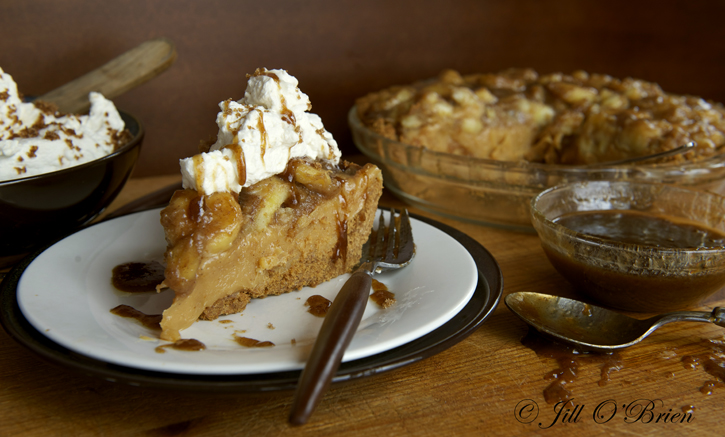
At this special time of renewal, we wanted to share a little of what gives us hope, what humbles us, and what gives us a clear vision of our work yet to be done.

However you are celebrating this holiday weekend – we wish you peace.

(We apologize for the shakiness of the video, a glitch transpired during transport, we are w-w-w-w-wo-o-o-o-o-or-r-r-r-rk-k-k-k-k-king on correcting it.)

Wild Idea Buffalo in the News: CNN Money

wildideaoffice In the News Leave a Comment

Hello Everyone,

We had an incredible year in 2011 thanks to all of the dedicated support we received from our loyal customers.  Our company grew and we made some big strides forward, all while continuing to be true to our commitment of restoring the grasslands and providing the best buffalo available.  CNN Money caught wind of the momentum that we have had and published the following article.

http://money.cnn.com/2012/03/13/smallbusiness/buffalo-million/index.htm?iid=HP_River

Thank you again to everyone for all of your support and we look forward to continuing to provide you with our fantastic buffalo.

Wild Idea Office

Navajo Bison and Corn Dumpling Stew

jill Buffalo Recipes, Recipes, Stews & Soups Leave a Comment

Navajo Buffalo and Corn Dumpling Stew (Serves 8) This light stew allows each ingredient to stand on its own. Although you immediately think hearty comfort food, this dish has more of an elegant taste and finish. A new favorite!

Ingredients: For Stew:

  • 2 lbs. Bison Stew Meat, rinsed and patted dry                                                              Microsoft Word - Document3
  • 1 teaspoon salt
  • 1 teaspoon pepper
  • 3 tablespoons olive oil
  • 1 large onion, chopped
  • 2 large garlic cloves, minced
  • 4 celery stalks with leaves, sliced, divide into 2 piles
  • 2 teaspoons chili powder
  • 1 teaspoon cumin
  • 1 teaspoon ground coriander
  • 1 ½ quarts vegetable stock or organic chicken stock
  • 3 tablespoons tomato paste
  • 4 red potatoes, cubed (can substitute yams)
  • 5 carrots, halved and sliced

For Dumplings:

  • ½ cup yellow cornmeal
  • ½ cup all-purpose flour
  • 1 teaspoon baking powder
  • ½ teaspoon salt
  • 1 teaspoon ground sage
  • 2 tablespoons cold butter
  • ½ cup frozen whole kernel corn
  • 1/2 cup 2% milk

Preparation:

  1. Season meat with salt and pepper, tossing to coat.
  2. In heavy stock pot, over med-high to high heat, heat 1 tablespoon of oil.
  3. Add half of stew meat and cook until brown, stirring occasionally. Transfer browned meat to a bowl, and repeat above step with remaining half.
  4. Return first batch of browned stew meat back to the pot and add the onion, garlic, half of celery and spices. Stir to incorporate and cook until vegetables are tender.
  5.  Stir in stock and tomato paste, and bring to a boil.
  6. Add potatoes and let come to a boil. Cover and reduce heat to low. Simmer for 45 minutes or until stew meat is tender.
  7. Add carrots and remaining celery and cook for an additional 10 minutes.
  8. During last stages of braising combine cornmeal, flour, baking powder and salt.
  9. Cut in butter until mixture is crumbly.  Add 1 cup frozen corn and stir to incorporate.
  10. Stir in milk to form dough.
  11. Drop round tablespoons of dough into simmering pot. Cover and simmer for 12 minutes.

To serve, spoon stew onto individual plates, placing dumplings on top.  Serve with my friend Sue’s, Kale Salad, (recipe included with purchase). Wine Pairing: Tempranillo, Bodegas Barco de Piedra, Ribera del Duero, Spain. A nicely rounded combination of fruit and earth, with lively acidity.

Carbon Sequestration for Dummies

dan Cheyenne River Writings, Dan's Writings 10 Comments

The benefits of adding truly grassfed buffalo meat to our diets fall into three distinct categories: the health of our bodies, the health of our minds, and the health of our environment. The quick explanations of benefit in the first category are well known: relatively lower fat and cholesterol – increased omega 3 acids. The benefits to our minds have to do with a necessary human connection to wildness. The third category, environmental health, is the most difficult to qualify and quantify. The most complicated reason for supporting truly grassfed buffalo meat production and consumption falls in this last category. Try not to let your eyes glaze over but Carbon Sequestration, it may be the most important reason of all.

I know that very few people care to understand organic chemistry. I don’t know much about it myself, except to realize that talking about carbon sequestration is a great way to ruin a first date or a cocktail party. The details of common chemical transformations of elements and compounds are more than most of us want to wrestle with, but the overarching concepts and processes are vital to our survival. That is why I’m going to try to put down on paper my understanding of why the production of truly grassfed buffalo meat could have a positive global effect. Let’s call it, Carbon Sequestration for Dummies. It is a very simplified version of the science – and probably not exactly accurate – but it might get you through that that first date or that cocktail party, as long as you don’t hang out with organic chemists.

Start with the fact that living organisms are about 20% carbon. Once those organisms die, the carbon is retained in organic compounds that accumulate in the atmosphere, oceans, and soil until the compounds breakdown and the carbon is released. Excess, loose carbon is not a good thing to have flying around the atmosphere because it is a greenhouse gas that traps the sun’s energy and heats up the earth – Global Warming.
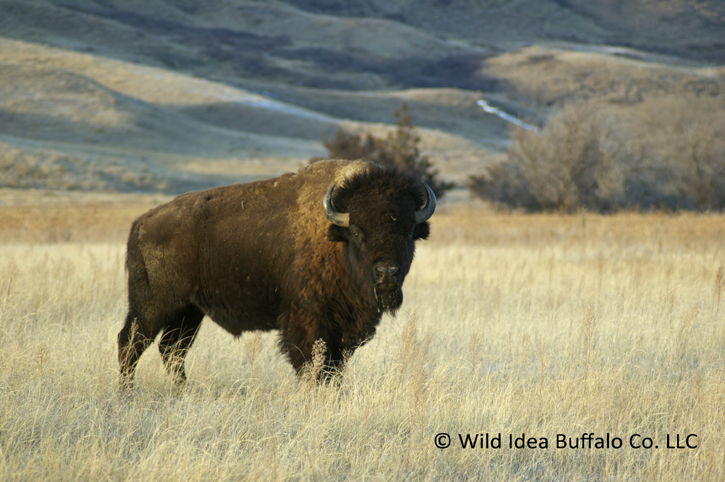
Billions of tons of carbon are tied up – sequestered – in and on the earth in the form of plants and animals, living and long dead. Coal and oil are little more than huge underground carbon banks, deposited over many millions of years, in the form of ancient plants and animals. For the most part they are held safely in the earth’s “carbon bank” until we extract them and put them through chemical changes that turn them loose to become greenhouse gases.

Read More

Navajo Buffalo and Corn Dumpling Stew

jill Jill's Journal 3 Comments

One of the great benefits of food is that it gives us a window into a world of other cultures and history. Recently I read a Facebook post about a delicious Lamb and Corn Dumpling Stew. I messaged back to request the recipe, but I never heard back. So I turned to the great God, Google. My search came up with many recipes titled, “Navajo Lamb and Corn Dumpling Stew”. Hmm, I thought – when did the Navajo start eating lamb? First, I went to my walking encyclopedia Dan, whose quick answer was, “when the Spaniards came” and “that I should research it”.

This caused me to have a grade school flashback, but back to the computer I went. Clicking through pages of interesting information, I uncovered that the Navajo are related to the Athabaskans of Canada, that they ventured to the Southwest after the 1300s, that the Pueblos introduced them to farming and that when the Spaniards came (1500s) they influenced them with their domesticated livestock. But I’m guessing that before they hung up their hunting and gathering ways, there was many a buffalo stew prepared.

Below is my rendition of Navajo Buffalo and Corn Dumpling Stew. It is a lighter take on a traditional hearty stew, and it’s oh so good. A new favorite at the O’Brien’s. Hope you enjoy it too. Cheers!

Read More

Modern Storytelling: Introducing Wild Idea’s New Web Site

wibadmin Blogging Leave a Comment

At its core, Wild Idea Buffalo is a company of stories.  How many meat companies are founded by an author who has written eight novels and has been called one of the most powerful literary voices of the Great Plains? When I first met Dan O’Brien 15 months ago, I was totally captivated by his story, or should I say stories. The story of how he first got into buffalo ranching, the story of how he humanely raised his animals, the story of how his red meat was actually healthy, and the story of the colorful characters involved with the ranch and company over the years.

In many ways web sites are a modern form of storytelling. For better or worse, web sites have become a window to our world – where we learn about a political candidate’s background and positions, where we learn about the opening of a hot new restaurant, where we learn how our coffee beans were hand-picked.
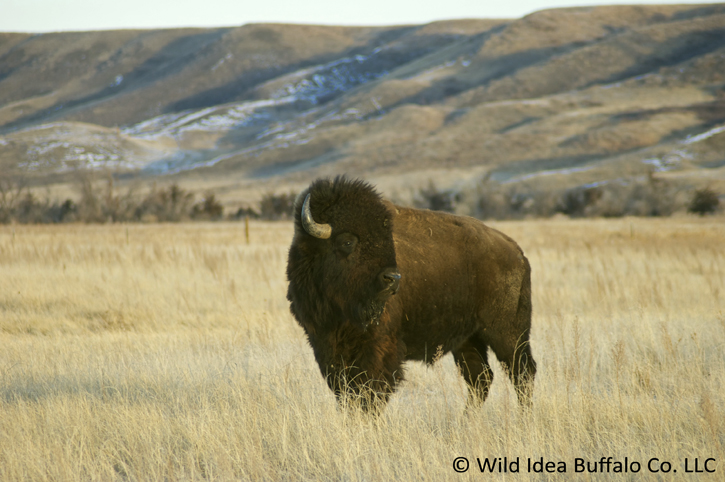
Being CEO of Wild Idea Buffalo is about a lot more than analyzing balance sheets and finding efficiencies in the plant. In many ways I serve as a curator and broadcaster of the great stories that Dan and Jill have created over the years. One of the most challenging tasks for me has been creating a new web site. While there was a lot we all admired about the old site we wanted to find a very visual and compelling way to weave together these incredible stories about the company in a manner that was unique, authentic, and informative both for people new to the company and for people who had been loyal customers and fans for over a decade. At the end of the day a web site is really about telling a story – the story of your company.

With good reason there was a lot of passionate debate along the way about what we included in the web site – we wanted to make sure we were doing the best job in capturing the rich stories of the company. After a several month journey of numerous re-writes and re-designs, we went live a few days ago with our new web site. I am excited to share it with all of you, and hopefully it reflects what you know and love about the company, but also teaches you some new things about us.

If we were a restaurant or a bricks and mortar store, we would have a grand opening party and invite all of you to share a toast. Since it is a web site, we would like to invite you to the virtual “grand opening party” of our new site. Please take a few minutes to visit the site, look around, and share your comments. We are always looking to improve and make it a better experience for you.

As a “party favor” at our grand opening party we are offering a special discount on any purchase made between today and March 15. With any order, type in “Newsite10,” and we will take 10% off of your purchase price as a thank you for stopping by.

Jill’s Favorite Buffalo Burgers

jill Buffalo Recipes, Ground, Recipes 3 Comments

Makes 3 to 4 Buffalo Burgers
A little extra seasoning makes these buffalo burgers oh so good.

Ingredients:

  • 1 tablespoons olive oil
  • 1/4  teaspoon mustard
  • 1 teaspoon ketchup
  • 1/4 teaspoon thyme
  • 1 teaspoon salt & pepper
  • 1 lb. Ground Buffalo

Preparation:

  1. Mix all ingredients, but Buffalo together
  2. Add Buffalo& mix thoroughly with hands. Pat into 3 or 4, 1/2″ patties.
  3. Place in refrigerator to firm up burgers
  4. Grill over high heat (500* gas grill) for 3 minutes each side, closing grill lid during cooking time for Medium Rare.
  5. Finish with a sprinkle of high quality finishing salt

Buffalo Pastrami "Reuben" Sandwich

jill Buffalo Recipes, Ready To Eat, Recipes 2 Comments

Buffalo Pastrami Sandwich

Serves 4
The O’Brien household’s version of this pub favorite. So good, it will become a weekly request!

Ingredients:

  • 1 package Buffalo Pastrami
  • 1 ½ cup “Bubbies” Sauerkraut (it’s really, really good)
  • 4 ounces Irish Cheddar Cheese
  • 6 slices Pumpernickel Bread
  • 1 tablespoon Butter
  • *Reuben Sauce
Preparation:
  1. On flat top griddle or in a large sauté pan over medium heat place Buffalo Pastrami in lightly oiled pan to heat through. Turn while heating.
  2. Arrange Buffalo Pastrami in 4 equal piles and top with cheese. Add sauerkraut to the pan too. Cover and heat until cheese is melted, and sauerkraut is warm.
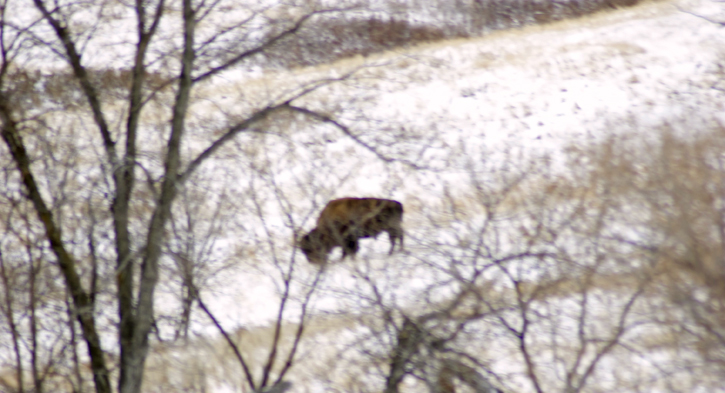
  3. Remove from pan and cover to keep warm.
  4. Spread butter on one side of the bread and grill bread until golden brown.
  5. Stack  meat, cheese and kraut on inside of grilled bread and spread the other slice with *Rueben sauce (recipe below), and sandwich together.

Serve with Potato, Leek Soup.

Ingredients:

*Rueben Sauce

  •  1/2 cup Mayonnaise
  • ¼ cup Salsa
  • ¼ cup Roasted and Peeled Red Peppers
  • Salt
  • Pepper
Preparation:
  1. Place all ingredients in food processor and puree.
  2. Season with slat & pepper to taste.


Italian Wedding Soup

jill Buffalo Recipes, Ground, Recipes, Sausages, Stews & Soups Leave a Comment

Italian Wedding Soup

Serves 6
My rendition of a classic favorite. Easy and elegant for a perfect light meal.

Ingredients:

  • 1 egg, beaten
  • ½ teaspoon fennel
  • 1 teaspoon basil
  • 1 teaspoon garlic, minced
  • 1 teaspoon onion powder
  • 1 teaspoon salt
  • 2 teaspoons black pepper
  • 2 tablespoon olive oil
  • 1 pound Wild Idea ground bison
  • 2 quarts chicken stock
  • ½ cup orzo pasta
  • 3 cups spinach, chopped and packed
  • grated parmesan to pass, optional

Preparation:

  1. Mix eggs, seasoning and olive oil together.
  2. Add ground bison and mix thoroughly.
  3. Form into small meatballs, making 40.
  4. Place on baking sheet and bake meatballs in a 425* preheated oven.
  5. In stock pot, over medium high heat bring chicken stock to a boil.
  6. Add orzo, meatballs and juices from meatball pan to the stock. Bring to a boil.
  7. Reduce heat and cook until pasta is tender, about 8 minutes.
  8. Add spinach and cook for 2 minutes
  9. Ladle soup into bowl and pass with grated parmesan.


Seared Buffalo Steaks on Polenta Cake with Spicy Cherry Mole

jill Buffalo Recipes, Recipes, Steaks 1 Comment

For a Valentines Day treat, try this modern adaptation of an old favorite of mine. This sweet and decadent recipe will be sure to make the evening a special one.

Serves 4  This recipe is super easy and most can be made ahead of time.

Mole Ingredients:

  • 1 – Tablespoon butter
  • 1 – cup red onion, chopped
  • 1 – clove garlic, chopped
  • ½ – teaspoon each: cinnamon, cumin and fennel
  • ¼ – teaspoon cloves, oregano and black pepper
  • 1 – 15.5 oz. can dark cherries in heavy syrup
  • 1 – 3oz. can roasted green chili’s
  • ½ – cup diced canned tomatoes
  • squeeze of fresh lime
  • 1 – chipotle pepper in adobo sauce
  • 1 oz. 70% dark chocolate

In saucepan over medium heat add butter and melt. Add onion and garlic, stir and cover to soften but not brown, about 4 minutes, stirring occasionally. Add remaining ingredients except chocolate and bring to a simmer. Place all ingredients in blender and pulse puree until smooth. Return to saucepan and bring to simmer. Break chocolate into pieces and stir into sauce.  (Sauce can be made in advance and reheated).

For the Polenta: * Note: You will have leftover polenta – but great as leftover by itself or crumbled to use in omelets.

Ingredients:

  • 2 cups 2% milk
  • 1 cup half and half
  • ¾  cup polenta
  • ½ teaspoon kosher salt
  • 2 oz. Chevre
  • ½ cup fresh cilantro leaves, chopped
  • 1 tablespoons extra virgin olive oil for pan frying

In heavy pan over medium high heat bring liquid to a boil. Using a whisk, whisk in polenta slowly. Once incorporated reduce heat to low and continue to whisk, adding remaining ingredients except cilantro. After about 3 minutes stir in cilantro. Salt to taste. Line a 6×9 pan with saran wrap and pour polenta in pan. Cover with an additional piece of saran wrap and allow polenta to set. (Polenta can be made ahead.)

Cut out polenta cakes with cookie cuter or knife to desired portion. Heat oil in sauté pan over medium heat. Pan fry cakes for 3 minutes on each side or until golden brown.

For Steaks:

Rinse steaks and pat dry. Rub steaks with oil, salt and pepper, and let rest for 1 hour at room temperature. In cast iron skillet over medium high heat, sear steaks for 2 and a half minutes on each side.  Remove steaks to platter and cover until ready to serve.

To Serve: Place a puddle of Mole sauce on plate. Place polenta cake on sauce and top cake with seared buffalo steak. Serve with pan fried red onions and garnish with cilantro.

Wine Pairing:

2008 Apothic Red, CA: A blend of three grape varietals, Syrah, Zinfandel and Merlot. The fruity semisweet wine was a nice compliment to the spicy mole.  After dinner we enjoyed a Tawny Pork!


Fragrant Stir Fried Buffalo

jill Buffalo Recipes, Recipes, Steaks 1 Comment

Wild Idea Buffalo - Buffalo Stir FryIf you are looking to try out a new take on stir fry, then check out this fresh, fragrant, and light recipe.  Not only is it good for you, but it tastes delicious!!

Serves 4. Approximately 243 calories per serving, (calories calculated with out rice or noodles).

Note: The recipe below is not diet food, but it’s good for you, simple and tasty. Adjust vegetables to your preference.  Serving with white rice makes for a prettier plate, but wild rice is healthier, (which Dan thinks taste like dirt), so we compromise and do a mix. Rice noodles are also a nice accompaniment.

  • 1 – 1 lb. Buffalo Steak Strips, rinse and pat dry
  • 2 – Tablespoons Sesame Oil
  • 1 ½ – cup White Wine
  • 1 – Tablespoon Lemon Juice
  • 1 – Tablespoon Asian Fish Sauce
  • 1 – Tablespoon Red Curry Paste + to taste
  • 2 – Teaspoons Brown Sugar
  • 1 – Red Bell Pepper, julienned
  • 1 – Red Onion, julienned
  • 1 – Head Broccoli Florets — about 2 cups
  • 1 – Cup fresh Cherry Tomatoes, halved (or) sub ½ cups chopped Sundried Tomatoes
  • 1 – Cup Basil, julienned
  1. Mix together white wine, lemon, fish sauce, curry paste, and brown sugar.
  2. Over high heat, heat 1 tablespoon sesame oil in heavy sauté pan or wok.
  3. Add Buffalo Steak Strips and flash sauté for 1 minute. Turning to brown.
  4. Remove Buffalo to platter and lower heat to medium.
  5. Heat remaining oil in same pan and add the pepper, onion, and broccoli. Sauté for 2 minutes.
  6. Add wine mixture and tomatoes. Bring to simmer.
  7. Add buffalo back to pan and basil. Quick stir to incorporate. Remove form heat and serve immediately.

Serve on rice or rice noodles and garnish with fresh basil leaf and lemon wedge.

Wine pairing: 2009 Chateau Les Rouilleres Bordeaux, France

A dry red with a light fruitiness, compliments the spice in the dish nicely.

Osso Bucco

jill Buffalo Recipes, Recipes, Ribs & Shanks 3 Comments

Serves 4
If you are looking for a great recipe with an alternative cut of meat look no further. Our Osso Bucco recipe will help you prepare a fantastic meal. Just like your Italian grandma made it — if she were a frontierswoman.

Ingredients:

  • Osso Bucco on Creamy Risotto

    1 pkg. buffalo shanks, rinsed, patted dry and tied with butcher string

  • ½ cup flour
  • 1 teaspoon kosher salt
  • 1 tablespoon black pepper
  • 1 tablespoon dried thyme
  • 2 tablespoons olive oil
  • 2 tablespoons butter
  • 1 onion, chopped
  • 1 cup mushrooms, sliced
  • 2 clove garlic, chopped (2 tablespoons)
  • 1 teaspoon salt
  • 1 tablespoon black pepper
  • 1 bottle white wine
  • ¼ cup parsley, finely chopped
  • 4 fresh thyme sprigs
  • zest of 1 lemon
  • 2 tablespoons arrow root or corn starch
  • ½ cup wine
  • 1 cup tomatoes, diced

Preparation:

  1. Mix flour with 1 teaspoon salt, 1 tablespoon pepper and thyme.
  2. Roll shanks in flour mixture.
  3. In heavy deep sauté pan over medium high heat, add half of the butter and oil.
  4. Place shanks in pan and brown on both sides. Remove shanks from pan.
  5. Heat remaining butter & oil and add onions, mushrooms and garlic and sauté for 10 minutes.
  6. Deglaze pan with white wine.
  7. Return shanks. Add parsley, thyme and lemon and bring to full heat.
  8. Cover shanks and place in 350* oven for 2 hours. Turn half way through.
  9. Remove shanks from pan and place on platter. Cover with foil to keep heat in.
  10. Return pan & juices to stove top over medium high heat. Add thickening agent to ½ cup white wine, and whisk into pan juices. Bring to a boil.
  11. Pour sauce over shanks. Garnish with chopped tomatoes and lemon wedges.

Serve over Creamy Chevre & Chive Risotto (recipe included upon request with purchase).


Grilled Steak Salad

jill Buffalo Recipes, Recipes, Steaks Leave a Comment

Serves 4

If you want to try something easy, light, and delicious try out this simple salad recipe. Choose vegetables with the season or to your personal preference. Looks as good as it tastes!

For Salad:
Ingredients:

  • 1 pound London Broil, Flank or Skirt Steak, rinsed and patted dry
  • 1 Orange or Yellow Bell Pepper, cut into 8 long triangles
  • 1 Zucchini or Yellow Squash – cut into 8 ovals
  • 1 Red or Vidalia Onion, cut into wedges or thick circles
  • 8 stems Asparagus
  • 4 Baby Bella Mushrooms
  • 16 cherry tomatoes
  • Garden Greens or Lettuce of your choice

For Balsamic Marinade & Dressing
Ingredients:

  • 1 tablespoon lemon juice
  • 3 tablespoons sugar
  • 2 teaspoons black pepper
  • ½ teaspoon salt
  • ¼ cup balsamic vinegar
  • ½ cup olive oil

Preparation:

  1. Pierce buffalo steak with fine tipped fork, penetrating at an angle. Place prepared steak in quart size bag.
  2. Prep vegetables as indicated above and place in gallon sized bag or on non-reactive baking sheet.
  3. Mix all marinade ingredients in blender, adding olive oil last, in a slow steady stream.
  4. Pour 1/3 of marinade over steak. Seal bag and massage marinade into steak. Refrigerate overnight, resting at room temperature for 2 hours before cooking.
  5. Pour 1/3 of marinade over vegetables tossing to coat. Cover with saran or seal. Keep at room temperature until ready to use.
  6. Reserve remaining marinade for dressing to toss with greens.
  7. Preheat gas grill to high heat. Grill grate should be positioned low to heat.
  8. Shake excess marinade from steak over sink and place steak on grill, over high heat. For London Broil; grill 3 minutes on each side for medium rare. Lessen grill time for flank and skirt steaks by 1 minute.
  9. Remove steak from grill and place on cutting board. Cover steak tightly with foil, until ready to slice.
  10. Reduce grill heat to medium heat. Place vegetables on grill and grill until lightly charred. Turn and repeat process on other side.
  11. Toss greens of choice with remaining dressing and pile on center of 4 plates.
  12. Slice steak thinly against the grain. Arrange steak slices and vegetables on salad greens.

Serve with crusty bread.

Buffalo Wellington Stew

jill Buffalo Recipes, Recipes, Stews & Soups 5 Comments

Buffalo Wellington Stew without Puff Pastry

Serves 8
A classic gourmet dish, in an easy-to-make stew. This is a great recipe for large dinner parties or family get-togethers.

Ingredients:

  • 2 pounds Buffalo Stew Meat, rinsed and patted dry
  • 2 tablespoons olive oil
  • 1 teaspoon salt
  • 1 tablespoon coarse black pepper
  • 2 tablespoon dried thyme leaves
  • 1 tablespoon fresh rosemary, finely diced
  • 2 tablespoons fresh garlic, diced
  • 1 onion, diced
  • 2 cups mushrooms, sliced
  • 4 stalks celery, sliced
  • 5 carrots, peeled, halved and sliced
  • 1 cup dry sherry
  • 3 cups red wine
  • 1 quart buffalo stock or organic beef stock
  • 5 potatoes, unpeeled, parboiled whole and cubed
  • 2 to 3 tablespoons arrow root or corn starch
  • ¼ cup fresh parsley, chopped
  • Refrigerated puff pastry

Preparation:

  1. Heat 1 tablespoon oil in heavy large pot over medium high heat.
  2. Add half of stew meat, and sauté until meat is browned.
  3. Remove browned stew meat from pan, set aside. Add remaining tablespoon of oil to pan and brown as above.
  4. Add first batch of browned stew meat back to pan, along with dried seasoning, garlic and onion. Sauté for an additional 5 minutes.
  5. Add mushrooms and stir to incorporate. Cook for 3 minutes.
  6. Add sherry, and 2 cups of the red wine. Stir to incorporate. Bring to a boil, cover, reduce heat to low and simmer for ½ hour.
  7. Uncover and bring heat up to medium high. Add stock, celery and carrots, stir in to incorporate and bring to full heat.
  8. Reduce heat back to low, cover and let simmer for an additional ½ hour.
  9. Uncover and add potatoes. Bring to a boil and cook for 10 minutes.
  10. Mix thickening agent with remaining 1 cup wine, and whisk into stew. Bring to a full boil.
  11. Reduce heat, add parsley, and season to taste.
  12. Ladle stew into individual serving bowls
  • Optional: Top with warm baked Puff Pastry. Cut pastry into dimensions of inner serving bowls. Bake pastry circles at 475°, until golden brown.
  • Garnish with sour cream and fresh thyme.

Buffalo Fajitas

jill Buffalo Recipes, Recipes, Steaks 1 Comment

Serves 4
A great version of this TexMex favorite. This fajitas recipe is fun, easy, and will be a sure hit with the family. Its super quick to prepare and it will be sure to please.

INGREDIENTS:
FOR FAJITAS:

  • 1 pound Buffalo Skirt or Flank Steak, rinsed and patted dry
  • 1 tablespoon olive oil
  • 1 large sweet onion, cut into strips
  • 1 red bell pepper, cut into strips
  • 1 green bell pepper, cut into strips
  • 8 flour tortillas, warmed (best warmed over grill fire)

FOR MARINADE:

  • 1 Anaheim chili, roasted and peeled
  • 1 tablespoon garlic, chopped
  • 2 tomatillos, quartered
  • ¼ cup fresh cilantro, packed
  • ½ teaspoon cumin
  • ½ teaspoon cardamom
  • 1 teaspoon salt
  • ½ cup fresh lime juice, (2 limes)
  • 2 teaspoons olive oil

*Optional: If you like more of a smoky tomato flavored fajita, add 2 chipotle peppers in adobo sauce to marinade ingredients. I like to do half with and half without. Nice contrast in taste and color!

PREPARATON:

  1.  Mix all ingredients in blender.
  2. Place Buffalo steak and marinade in large zip lock bag. Massage marinade into meat. Refrigerate overnight.
  3. Let meat rest on counter for 2 hours before cooking.
  4. Heat cast iron skillet to medium high heat.
  5. Remove steak from marinade and shake off excess over sink.
  6. Place steak in hot skillet and sear for 2 minutes on each side.
  7. Remove steak and place on cutting board, and cover tightly with foil. Let rest, while sautéing vegetables.
  8. Add olive oil to pan and then vegetables. Sauté vegetables until lightly browned, stirring occasionally.
  9. Remove pan from heat.
  10. Slice seared steak into thin slices, against the grain.

Serve with warmed tortillas and pass with desired condiments.

4 Bean Bison Chili

jill Buffalo Recipes, Ground, Recipes, Stews & Soups 4 Comments

Serves 10
If you are looking for a great chili to bring to your next chili cook-off or football game, then try this recipe and let the compliments roll in. Even better the second (or third) day – if there’s leftovers.

4 Bean Chili rswm

INGREDIENTS:

  • 2   pounds ground bison
  • 2   tablespoons olive oil
  • 1   onion, chopped
  • 2   tablespoons fresh garlic, chopped
  • 2   tablespoons cumin
  • 2½    tablespoons chili powder
  • ½ tablespoon oregano
  • ½ tablespoon thyme
  • 2   teaspoons coriander
  • ½  teaspoon each smoked paprika and cayenne
  • 1   tablespoon black pepper
  • 2   teaspoons salt
  • 1   Quart stewed tomatoes
  • 1   Quart tomato sauce
  • 8     golden pepperoncini, diced + juices
  • 1   15oz can each: butter beans, black beans, kidney beans, and pinto beans, (drained – but not rinsed)
  • 1    lemon, juiced
  • 2   cups water

PREPARATION:

1.)  Mix all dry spices together.
2.)  In heavy stew pot, over medium high heat, heat olive oil.
3.)  Add Wild Idea bison meat, crumbling into small pieces.  Lightly brown, stirring constantly for 4 minutes.
4.)  Add onion, garlic and seasonings. Continue to brown, stirring occasionally for 10 minutes.
5.)  Add remaining ingredients and bring to a full boil. Reduce heat and simmer uncovered for ½ to 1 hour, or until desired thickness is achieved.

Adjust seasoning to taste. Garnish with fresh lime or lemon wedges, fresh chopped cilantro, sour cream, or grated cheddar cheese. Serve with Cheesy Jalapeño Corn Bread, recipe included with purchase, upon request.


Buffalo Steaks on a Charcoal Grill

jill Buffalo Recipes, Jill's Journal, Recipes, Steaks Leave a Comment

Basic  how-to instructions for cooking steaks on a charcoal grill.

Ideal for: Tenderloin Filets, Ribeyes, New Yorks, Top Sirloin, Sirloin, Bone-in Ribeye, Porter House, T-Bones and Terres Major Filet

 Some swear there’s nothing like a charcoal grill. We say it’s even better with bison. Rub steaks with olive oil, salt, and pepper or the rub you love. Let them rest at room temperature for 2 hours before cooking.

  • Use a clean grill.
  • Pile coals high in center and allow them to get white-hot.
  • Spread coals evenly with tongs, then place oiled grill grate low and close to coals.
  • Apply prepared steaks and cover with lid, following cooking times below.

 Steak Cooking Times

These guidelines are to medium rare.
Adjust time according to steak’s thickness and personal preference.
We recommend cooking steaks no more than medium.

Thickness First side Second side
1 inch 3  minutes 2 minutes
1½ inch 4 minutes 4 minutes

Buffalo Steaks on a Gas Grill

jill Buffalo Recipes, Jill's Journal, Recipes, Steaks 1 Comment

Basic how-to instructions for grilling steaks on a gas grill.

Ideal for: Tenderloin Filets, Ribeyes, New Yorks, Top Sirloin, Sirloin, Bone-in Ribeye, Porter House, T-Bones and Terres Major Filet

The above cuts require minimal preparation. Rub steaks with olive oil, salt, and pepper, or the rub you love. Let them rest at room temperature for 2 hours before cooking.

 Use a clean grill.

  • Preheat grill to high heat and close lid.
  • Temperature should be 500°.
  • Brush grill grate with oil and apply steaks. Close grill lid during cooking.
  • Cover cooked steaks tightly with foil and let rest for 5 minutes before serving. 

Steak Cooking Times

These guidelines are to medium rare.
Adjust time according to steak’s thickness and personal preference.
We recommend cooking steaks no more than medium.

Thickness First side Second side
1 inch 3  minutes 2 minutes
1½ inch 4 minutes 4 minutes

Hot & High, Low & Slow Au Jus Roast for Sirloin Tip & Top Round Roast

jill Buffalo Recipes, Recipes, Roasts 17 Comments

This Hot & High, then Low & Slow method of roasting produces a delicious and amazingly tender medium rare roast.  Serve this classic style roast with au jus and horseradish cream sauce. This is great roast for entertaining a crowd or a make ahead staple for shaved roast buffalo sandwiches.

INGREDIENTS:

  • Sirloin Tip Roast

    Sirloin Tip or Top Round Roast

  •  3 T Olive Oil
  •  Salt & Pepper to Taste
  • 1 T butter
  •  1 cup wine, stock or water

PREPARATION:

  1. Rinse roast and pat dry.
  2. Rub roast with olive oil & season as desired. Let roast rest at room temperature for 2 hours before roasting.
  3. Pre-heat oven to 500°
  4. Place prepared roast in heavy roasting pan, and place in 500° oven. Close door quickly.
  5. Reduce oven temperature to 475° and roast uncovered for 13 minutes.­
  6. Turn oven off. Leave roast in oven for 2 ½ hours. DO NOT OPEN THE OVEN DOOR ANYTIME DURING ROASTING PROCESS. (And yes, that is important enough for all caps!)
  7. Remove roast from oven and place on cutting board. Slice roast, keeping slices close together.
  8. Place roasting pan on stove top, over medium high heat.
  9. Add 1 tablespoon butter and scrape brown bits from the bottom of the pan.
  10. Deglaze with 1 cup wine, stock or water and bring to a simmer, for au jus.
  11. Preheat oven to 500° and place sliced roast in oven for 5 minutes to warm. Pass roast with au jus and horseradish sauce.

Temperature GuideInternal Temperatures of Meat:

Rare – 130 degrees. Medium-rare – 140 degrees. Medium – 155 degrees.

Mousse au Chocolate

jill Jill's Journal, Recipes, Various Recipes 1 Comment

This is my own concoction. I use both a high quality bittersweet chocolate as well as a high quality milk chocolate. The addition of beaten egg whites gives it an extra lightness with out compromising its rich creaminess!

Ingredients:

  • 6 oz. Bittersweet Chocolate
  • 6 oz. Milk Chocolate
  • 1 pint Heavy Whipping Cream
  • 1 Tb Cointreau
  • 4 Eggs, separated
  1. In heavy saucepan over low heat, add 1 cup cream and chocolate. Melt together stirring occasionally. Mixture should never become hot.
  2. Meanwhile, in electric mixer, beat remaining cream until stiff, scrape into other bowl and place in refrigerator until needed.
  3. Place egg yolks into mixing bowl and beat until pale.
  4. While mixer is running slowly add in chocolate mixture. Mix thoroughly to incorporate and aerate.
  5. Transfer chocolate mixture to a large bowl, cover and refrigerate until mixture is slightly cool, but not set.
  6. Gently fold whipped cream into chocolate mixture in 3 small batches.
  7. In a well chilled mixing bowl, beat egg whites until stiff.
  8. Gently fold in beaten egg whites to chocolate mixture until well incorporated.
  9. Spoon mousse mixture into steamed glassware and refrigerate until set. (3 hours or up to 3 days in advance.)

Garnish mousse with additional whipped cream, dark chocolate shavings or fresh fruit.

Since Valentine’s Day is only a week or so away…

dan Cheyenne River Writings, Dan's Writings 12 Comments

…this essay was supposed to be about romance, love, and the unexplainable glue that sticks two people together. It didn’t end up being about Valentine’s Day but it has a lot to do with romance, love, and the unexplainable glue that sticks, not only two people to each other, but also the stuff that sticks some people to the land.

Jill and I just got back from a few days in the borderlands – not only the country that runs along the border of Arizona and New Mexico but also the land that divides the United States from Mexico. We were guests of The Nature Conservancy and a dynamic collection of ranches controlling about a million acres of rough grazing land, wide valleys, and a couple mountain rages. The organization is called the Malpai Borderlands Group and their land is centered on the geographic borders between those states and countries. But, in a lot of ways the Malpai Borderlands Group occupies a border that is much more difficult to describe and more important than any physical geography. The Malpai Borderlands Group floats in the geography of the mind – somewhere between the past and the present – but not in the clichéd way you might think. It is not that the Malpai Borderlands Group is moving from the historic, open range days of the past into modern times. These people have been in modern times for many years. They are moving into the uncharted territory of the future.

The big landscape country of the American West has been in turmoil since just after the Civil War. If God himself had put out a call for folks with poor qualifications for cooperation, a motlier crew would not have turned out. Armed and angry Civil War veterans from both sides, greedy industrialists, arrogant European aristocrats, land hungry peasants, disenfranchised Native Americans, the lunatic fringe of religion, misanthropes, and desperadoes of every sort poured into the unclaimed lands of the West. At first the only character trait that they shared was an abiding acquisitive nature: they all seemed to be out to get as much as they could. To make things even worse, many people coveted and seized concessions and property to which they had little or no solid claim. Of course local, state, and the federal governments had there own set of claims and they ended up in the mix as the entity that everyone could hate.

Read More

Meeting Dan O'Brien & Seared Buffalo Steaks on Polenta Cake with Spicy Cherry Mole

jill Jill's Journal 5 Comments

About 15 years ago a handsome, charming man walked into my restaurant and said; “My, my, my, what do we have here?” I blushed shades of red.  After a quick introduction, I learned that we had mutual friends, a few of whom worked at the newspaper. He was interesting, a food lover and always asking questions. I thought for sure he must work at the newspaper too. And, just in case he would want to write a story about the newest restaurant in town, I was sure to answer his questions thoroughly and carefully.

One evening while he was dining with a group of friends, I thought he had inquired if we had any pork? We just so happened to be featuring a pork dish that night that was most decadent. I went into a methodical description of preparation and ingredients. He listened intently, and after I finished, with that rye smile of his, he said “That’s nice, but do you have any PORT?” Again, I blushed shades of red. Our friend chimed in to offer some recovery and said “Maybe you have a Tawny Pork!”  We all broke out in laughter.

Weeks later while perusing my bookcase for something to read, I noticed a book that I had read years earlier called “Spirit of the Hills.” Opening the cover there was my supposed newspaper journalist and tawny pork drinker, Dan O’Brien. I broke out in laughter again.

We have retold this story a time or two, and occasionally it gets a laugh, but for some reason it cracks Dan and me up to tears. A memorable moment, complete with the unforgettable pork dish. This month’s recipe is an adaption of that delicious concoction. Wishing you all a memorable moment with unforgettable laughter. Happy Valentine’s! Jill

Read More

I have to admit

wibadmin Blogging 2 Comments

… around Valentine’s Day I have always been a bit of a curmudgeon. I have long claimed that it was a “Hallmark” holiday that was created by the gift card industry and flower industry as a marketing tool. I imagine long hours of therapy could answer where I developed my views. Perhaps it is due to growing up in a fairly unsentimental household. Perhaps it is due to being kind of cheap – “How much do the dozen roses cost?!? Are you kidding me?” In college, in lieu of buying my girlfriend flowers, I made her a “nature box,” where I went out into the woods and gathered pine cones and leaves and whatever one could muster in a Minnesota winter, and made a collage of it in a shoe box. It was actually the best received Valentine’s gift I ever gave.

So perhaps the message is that creativity and thoughtfulness are all that count. But just in case, I am not taking any chances this year. I am celebrating my first Valentine’s Day with my girlfriend who has made it clear she does not share my “Hallmark Holiday” view of Valentine’s Day. I would give her one of our Wild Idea February Sweetheart Deals, but she gets to eat a fair amount of buffalo by being in a relationship with me.  I would love to hear readers’ suggestions – so please post a comment with the best Valentine’s gift you have ever given or received. In fact, I will throw in a gift of a steak on the next order for the reader who has the best one.

One result of the growing popularity of Valentine’s Day, aside from increased sales for Hershey’s and other chocolate makers, was the beginning of “American Heart Month.” Congress started it in 1963 with the purpose of promoting awareness of heart and cardiovascular diseases to make people aware that it is the #1 source of death in the U.S. As someone with a family history of both Valentine’s Day curmudgeoness and heart disease, I certainly think about these things. I do like thinking about Valentine’s Day and Heart Health month together in the context of being healthy and being around for the ones you love. A couple years ago to kick off Heart History month, Obama made a speech that said that cardiovascular disease is one of the most widespread and costly problems in the U.S. and it is one of the most preventable. He acknowledged that obesity is a leading cause of the disease and that a combination of quitting smoking, exercise, and healthy eating is a great way to prevent it.

Read More

B.B.Q Buffalo Short Ribs or Un-Cut Short Plate

jill Buffalo Recipes, Recipes, Ribs & Shanks 16 Comments

B.B.Q. Un-Cut Buffalo Short Rib Plate

Serves 6 to 8
The spicy rub adds a little extra kick to these delicious ribs. Follow these simple cooking instructions below, for fall of the bone fabulous ribs.

Ingredients:
For Spice Rub:

  • 3 Tb. Chili Powder
  • 2 Tb. Cumin
  • 1 T. Brown Sugar
  • 2 tsp. Onion Powder
  • ¼ tsp.Cayenne
  • ¼ cup Olive Oil

Ingredients:
For Ribs:

Preparation:

  1. Rinse ribs and pat dry.
  2. Massage rub into ribs and let rest at room temperature for 2 hours or overnight in refrigerator, allowing to rest at room temperature before cooking.
  3. Preheat oven to 500°.
  4. Place ribs in heavy roasting pan fatty side up.  Brown ribs for 10 minutes, uncovered in hot oven.
  5. Add 2 c hot apple cider and 1 T liquid smoke to pan, cover ribs tightly and braise at high heat for 15 minutes. Reduce heat to 350° and braise for 2 ½ hrs. Ribs should easily pull apart with two forks when done. If not, continue braising until fall off the bone tenderness is achieved.
  6. Remove from oven and let rest covered until ready to grill or broil.
  7. Wrap grill grates with aluminum foil. Make slits with a knife in foil. Preheat grill to medium high heat (*375). Or preheat oven to broil.
  8. Place warm ribs on hot foil and brush with the BBQ sauce. Close grill lid during cooking, allowing ribs to become sticky, about 4 minutes. Or place on baking pan with a little of the liquids, brush with sauce of your choice and broil for 4 minutes.
Note: Spices, braising liquids, mops or sauces can vary to your liking, but this technique works very well for grass-fed buffalo ribs.


Jill’s B.B. Q. Sauce

Ingredients:

  • 1 T. Black Pepper
  • 1 tsp.Cayenne
  • 1 tsp. Chili Powder
  • 1 tsp. Cumin
  • 1 tsp. Coriander
  • 1 tsp. Cinnamon
  • ¼ cup Olive Oil
  • 1 cup finely chopped onion
  • 2 T. chopped Garlic
  • 1/2 cup Bourbon or Brandy
  • 2.4 lbs. Ketchup
  • 1 T.DijonMustard
  • 1 T. Worcestershire
  • Dash of Liquid Smoke

Preparation:

  1. Mix spices together.
  2. In heavy saucepan over medium high heat, heat olive oil. Add onion, garlic and spices. Saute for 5 minutes.
  3. Deglaze pan with bourbon.
  4. Add remaining ingredients, plus one cup of pan juices. Stir well to  incorporate. Bring to a simmer.

* Refrigerate leftover B.B.Q. sauce, for later use.


Malpia Borderlands

jill Blogging 3 Comments


We recently returned from our trip to the Malpia Borderlands in southeastern AZ and southwestern NM. The Malpia Borderlands, was formed by a group of ranchers that did not want to see their collective properties of over 1,000,000 acres subdivided. We spent 3 days bouncing around in a van touring big, beautiful open country and talking to ranchers who call it home. All of who were wonderful characters. Below is a photo journal of our trip.


Beatrice Peltre

jill Blogging, Jill's Journal 3 Comments

Having Beatrice Peltre, (a food blogger, cookbook author, food stylist and photographer), on the ranch, made for an interesting six days. In addition to intense photography, food styling, and set design lessons, she was curious about everything on the ranch.

I had heard of Bea a couple years back and started to follow her food blog, La Tartine Gourmand, and she was good – really good. Making delicious, beautiful food has kept me employed for most of my adult life, but I knew nothing of food photography. I would set my camera on automatic and hope for the best – if I was lucky – there might be a shot. I needed some help.

The connections were made and Beatrice arrived on the ranch a few weeks later. She was joyful, passionate about her work and honest. We hit it off right away.

We worked diligently, but allowed ourselves outdoor timeouts.  “Stop, I want to take a picture of that. Stop, stop I want to take a picture of that”, Bea would say, while on our adventure breaks. She quickly connected that we were not ranchers that raised meat, but we were ranchers that were environmental stewards of the land and that buffalo meat was a by-product of caring for the land.

I prepared real food for our food shots, which meant that we ate a lot of Buffalo.  Even Dan complained – no more Buffalo! We escaped to town that night for fish dinner at Tally’s Silver Spoon.

Beatrice’s posting on her blog last week was a re-cap of her time at the ranch, and includes beautiful photographs. It’s definitely worth a read. Her new cookbook is also available and is a must have!

It is still unknown if I am capable of taking successful pictures without Beas’s help. But the camera and magic lens are on order… Wish me luck, and thanks Bea.

Click here for Beatrice’s story.

The Caring of Buffalo

jill Blogging 7 Comments

On December 28th, 15 buffalo arrived at the ranch. There was one older cow, nine just turned yearlings, and five orphaned orange calves. The youngest was only a couple of weeks old. They had come from a farm that kept them as a novelty item to their operation. The prices were high for their mothers, so they sold them off, leaving the babies and yearlings motherless.

Our friend Duane Lammers had heard about them, and told Dan. And as if it were 15 years ago, Dan said “I’ll take em’.”  (Dan started his herd 15 years ago with 13 baby buffalo). Much like before the large trailer pulled up to the corrals and the buffalo, trickled out one by one. They looked real tough, a few emaciated. The yearling’s coats were scruffy, and their bones stood out from beneath their prematurely shedding fur coats. It would be a big job to keep them alive, and offering them a chance at life on the prairie.

Read More

Buffalo Liver Pate'

jill Buffalo Recipes, Delicacies, Recipes 3 Comments

Will serve 24 for hors d’oeuvres.

Buffalo Liver Pate

Ingredients:

  • 4 T. butter
  • 1 lb. Buffalo Liver – (soak in milk for 1 hr. at room temp. – remove & pat dry)
  • ½ lb. Buffalo Breakfast Sausage or organic Chicken Sausage
  • ½ onion chopped
  • 1 T. garlic
  • ½ tsp. thyme
  • ½ tsp. sage
  • ¼ tsp. nutmeg
  • pinch of allspice
  • ½ tsp. salt
  • 1 tsp. pepper
  • 1/3 cup cognac or brandy
  • 1 tsp. smoked paprika
  • salt & pepper to taste
  • ¼ cup finely chopped parsley

In heavy skillet over medium high heat melt butter. Add, Buffalo Liver, Chicken Sausage onion, garlic & spices, sauté. Continue cooking for 8 minutes. Deglaze pan with cognac, cook for 2 minutes, and remove from heat. Transfer to food processor & puree until smooth, season with smoked paprika & salt & pepper to taste.

Line the inside of the mold with saran wrap, fill with pate. Press pate down, cover and chill overnight. Remove from mold and let set at room temperature for 1 hr.

Dust pate with finely chopped parsley, serve with apples, and crackers or baguette slices.

Wild Idea Buffalo Featured on NPR

wibadmin Blogging Leave a Comment

After a long hiatus, we are bringing back the Food and Land blog on the Wild Idea Buffalo site. Please come back and visit this space regularly and we promise to entertain and enlighten you with news from the Great Plains, photos from the Cheyene River Ranch, relevant stories in the news on food politics, and some delicious recipes.

The first post we wanted to share in the re-launched blog was about a story that NPR did right before Christmas. South Dakota Public Radio did a story on the booming buffalo market, which featured Wild Idea Buffalo with interviews of Dan and Jill. The story ended up being picked up by NPR nationally, and we started getting calls from around the country from old customers congratulating us, and new people who wanted to learn more of the story about the little buffalo company on the prairie.  For those of you who did not hear the story, here is a link to it on the NPR web site. South Dakota Buffalo Farmers Relish Bison Meat Boom

At Wild Idea Buffalo Company we work a lot with Native Americans…

dan Cheyenne River Writings, Dan's Writings 18 Comments

We buy their fine buffalo, we hire them, we are friends with them, and we are related to them. Though it is impossible to put yourself into the shoes of a minority group, we understand how hard and complicated Native Americans lives are and we know about the difficulties of working with them. It is indisputable that, on reservations, time moves at a different pace, promises are not always kept, and alcohol can be a devastating obstacle to conscientious work. The reasons for these problems are well known and not something that I want to rehash in this monthly musing. I will not argue that it is racism to point these shortcomings out when they apply to Native Americans. I want to argue that it is racism when we fail to level the same criticism at ourselves.

Read More

The New Year & Fragrant Stir Fried Buffalo

jill Jill's Journal 8 Comments

I love food and by the looks of my one-year-old picture (on the right), it is obvious that since the beginning, food loved me too.  From very early on, I remember people saying that I had legs like Bronk Nagurski.  They remain solid to this day.

In my family, having meat on your bones was a safeguard. This was reinforced by my Lebanese Aunt Lizzy and Uncle Tom, a Polish butcher. When visiting, after the warm hugs were given, they would hold us at arms length and say; “Looookatch you – you are too thin – what if something happens? Come, sit down – you must eat”. Platters of cheeses and hot miniature sausages would follow. We would gobble them up and then be treated to one of Aunties delicious desserts. After all, you never know… one must be prepared.

Although farm chores helped keep us lean, some of us had trouble spots. In my early teens my siblings teased me with the nickname BB. Embarrassingly I confess that it stood for “big butt”, not the other that one might think.  Although not completely true, it added to my awareness that I would have to watch growing, not up, but out.

I have been notably thin only three times in my life. Mostly, I have maintained a healthy weight by good ol’ fashioned eating right and exercise. Occasionally, the numbers on the scale have shocked me into chasing the latest fad diet. I have had some success, (with my favorite being, the dark beer diet) and many failures. No sweets other than wedding cake – turned me into a “wedding crasher”! Cottage Cheese and Grapefruit – 1 day tops! Take away my carbohydrates – never!

Growing up in a “foodie” family has not been easy. But, every January, after the holiday binging is over and the Seasonal Affected Disorder has settled in – I renew my vow to take better care of myself. After all, you never know… one must be prepared.

Cheers to fresh starts, good health and success with your New Year resolutions! Jill

Read More

A New Year’s Resolution that is Healthy and Tasty

wibadmin Blogging 2 Comments

Minutes after the ball drops in Times Square, the ads on TV start. You have seen them – touting every diet and weight loss product under the sun. They are as much a part of the New Year’s ritual, as Dick Clark is a part of the New Year’s Eve one. The most common New Year’s resolutions are to lose weight and eat healthier, but only 12% of Americans keep their resolutions. And no wonder – different web sites tout everything from the cabbage soup diet to the tapeworm diet as miracle ways to lose weight.

I don’t know about you, but any diet where I have to eat a tape worm, or even a “delicious shake” twice a day does not sound appealing. I am much more a believer in moderation and eating simple healthy foods. And this can begin with some simple changes in our staples.

The average American eats about 65 pounds of beef per year (most of which is grain-finished). By switching from beef to 100% prairie grass-fed Wild Idea Buffalo, he or she would annually save:

  • 3,000 grams of fat
  • 25,000 calories
  • 4,000 grams of cholesterol

But grass-fed buffalo is not just about the absence of negatives – it is about the presence of positives. With grass-fed buffalo, you also get a lot more Omega-3s because the buffalo’s diet is rich in native prairie grasses. As a kid I learned that “you are what you eat,” as I get older I am learning that you also “are what you eat eats!” Grass-fed meat has 2-4x the Omega-3s of their grain-finished counterparts. I have often heard grass-fed buffalo called the “salmon of the prairie.”

There are tons of nutritionists and doctors out there with all kinds of theories about the secrets to healthier eating. Working in the food industry for 15 years, I have seen a lot that make a ton of sense and others that seemed like a bunch of garbage. But one of the best I have seen is Dr. Kevin Weiland, and his no nonsense, no gimmick approach. With our January Special we are offering a free copy of his popular book, “The Dakota Diet.”

I wish all of you a happy and healthy new year. And if you are looking to begin or maintain healthier eating habits in 2012, Wild Idea Buffalo would like to be there to help – and I promise it will be more delicious and sustainable than cabbage soup!

Best,
Josh

Oven Roasted Sirloin Tip & Top Round Roast

jill Buffalo Recipes, Recipes, Roasts 2 Comments

Serves 8
For quick oven roasting, it is best to marinade roasts first to achieve maximum tenderness. Great served with a Whiskey Plum sauce or Orange Glaze.

Instructions:

  1. Pierce the sirloin tip or top round roast with a fine-tipped fork.
  2. Place in marinade of your choice & let rest 1 hr. at room temperature.
  3. Refrigerate up to 48 hours.
  4. Remove from marinade, and pat excess marinade off with a paper towel.
  5. Let rest at room temperature 2 hours before grilling or roasting.
  6. Sear all sides of roast in heavy deep pan on medium high burner—about four turns at 5 minutes each.
  7. Place roast in 375° oven & continue to cook for 30 minutes, or until internal temperature reads 140°.
  8. Remove from oven and place on platter.
  9. Cover with foil and allow roast to rest for 5-10 minutes.
  10. Slice thinly against the grain.


Temperature GuideInternal Temperatures of Meat:

Rare – 130 degrees. Medium-rare – 140 degrees. Medium – 155 degrees.

Grilled Sirloin Tip or Top Round Roast

jill Buffalo Recipes, Recipes, Roasts Leave a Comment

Serves 8
This recipe has minimal preparation. Marinading roast prior to grilling will aid in tenderness, and is perfect for the great outdoors on a summer night.

INSTRUCTIONS:

  1. Pierce the sirloin tip or top round roast with a fine-tipped fork.
  2. Place in marinade of your choice & let rest 1 hr. at room temperature.
  3. Refrigerate up to 48 hours.
  4. Remove from marinade, and pat excess marinade off with a paper towel.
  5. Let rest at room temperature 2 hours before grilling or roasting.
  6. Sear all sides of roast over hot coals or medium high gas flame—about four turns at 5 minutes each.
  7. Move roast to medium heat and cover grill.
  8. Continue grilling, for 20+ minutes, turning once for medium rare. Internal temperature should read 135°.
  9. Remove from oven and place on platter.
  10. Cover with foil and allow roast to rest for 5 to 10 minutes.
  11. Slice thinly against the grain.

Temperature GuideInternal temperatures of meat:

Rare – 130 degrees. Medium-rare – 140 degrees. Medium – 155 degrees.

Buffalo Tongue Simmered in Wine

jill Buffalo Recipes, Delicacies, Recipes 2 Comments

Makes 24 appetizer servings.
This favorite delicacy in the late 1800’s, is making its way back on to fine restaurant menu’s. This easy, gourmet recipe will have your guests asking for more.

Ingredients:

  • 1 Wild Idea Buffalo Tongue
  • 1 stick organic butter
  • 1 onion, diced
  • 1 clove garlic, minced
  • 1 teaspoon salt
  • 1 tablespoon black pepper
  • 1 bottle white wine

Preparation:

  1. Remove the vein from the underside of the tongue with a pairing knife.
  2. In a saucepan over medium high heat, melt 1 tablespoon of the butt and add the onions and garlic. Sauté until tender.
  3. Add the white wine and the tongue and bring to a full boil.
  4. Reduce heat to low and simmer uncovered, turning occasionally for 2.5 hrs.
  5. Remove tongue form wine and allow to rest until you can handle it. Remove the skin by peeling it off. A pairing knife maybe needed in some areas.
  6. In deep sauté pan over medium high heat, add remaining  butter.
  7. Place peeled tongue in pan, rotating tongue to brown on all sides.
  8. Drain onions, reserving wine juices and add onions to the tongue. Caramelize to a golden brown.
  9. Return wine juices and reduce heat to simmer and cook until all wine juices have evaporated.
  10. Slice tongue thin & serve on toast points.
  11. Top with caramelized onions and garnish with a dollop of horseradish cream & parsley.

Delish!

Buffalo Bolognese Sauce

jill Ground, Recipes, Sausages 3 Comments

Buffalo Italian Sausage webOur clean, earthy and slightly  sweet Italian Buffalo Sausage gives this red sauce an extra richness without the heaviness. Sure to be a hit with the family or great for casual entertaining.

Serves 4

INGREDIENTS:

  • 1 tablespoon olive oil
  • 1 – Pound Italian Buffalo Sausage
  • 1 – onion, diced
  • 1 tablespoon fresh garlic, chopped
  • 1 tablespoon dried oregano
  • 1 tablespoon dried basil
  • 2 teaspoon dried, crushed fennel
  • ½ teaspoon fresh rosemary, finely diced
  • 1 teaspoon salt
  • 1 teaspoon black pepper
  • 1/2 – cup red wine
  • 1 quart crushed tomatoes, (rinse jar with 1 cup water)
  • 1 tablespoon brown sugar
  • ½ tablespoon balsamic vinegar
  • 1 tablespoon lemon juice
  • Spaghetti, prepared el dente

PREPARATION:

1.)  Heat olive oil in heavy sauce pan over medium high heat.
2.)  Coarsely crumble in Buffalo Italian Sausage and stir once.
3.)  Add onion, garlic and dried spices. Stir to incorporate. Continue to cook until sausage is lightly browned, stirring occasionally.
4.)  Add red wine and stir.
5.)  Add remaining ingredients. Let ingredients come to full heat, stirring occasionally.
6.)  Reduce heat to low and simmer uncovered for ½ hour or until desired thickness is achieved.  Stir occasionally.
7.)  Season to taste.

Serve over pasta, and sprinkle with freshly grated parmesan and garnish with fresh basil leaf. Accompany with warm Italian Bread and Caesar Salad for a complete meal.

­

Bison Carpetbag Steaks

jill Buffalo Recipes, Recipes, Steaks Leave a Comment

Carpetbag Steaks (serves 4)
Bison steaks stuffed with oysters, in a light Cajun cream Sauce, are sinfully delicious. Tenderloin or New York steaks work well for this dish.

For Steaks:

  • Buffalo Steaks, rinsed and patted dry
  • 1 tablespoon olive oil
  • ½ teaspoon salt
  • ½ teaspoon pepper
  • 3 tablespoons unsalted butter
  • 8 fresh oysters, shucked and coarsely chopped
  • 2 tablespoons fresh squeezed lemon
  • 2 tablespoons shallots, minced
  • ½ teaspoon Tabasco sauce
  • ½ cup parmesan, grated
  • ½ cup dry bread crumbs
  • 2 tablespoons fresh parsley, chopped

For Cajun Cream Sauce

  • 1 tablespoon butter
  • 2 teaspoons Cajun seasonings + to taste
  • 1 tablespoon fresh lemon juice
  • ½ cup cream

Cajun Seasoning:

  • 4 teaspoons paprika
  • 1 teaspoon each: cayenne, black pepper, salt, onion powder, garlic powder, and thyme
  • Mix together and set aside. Keep remaining in sealed container.
  1. Prep steaks as above. Make a slit in center of the steak creating a pocket. Rub steaks with olive oil, salt and pepper. Allow to rest at room temperature for 2 hours.
  2. Place oysters and lemon juice in bowl and let set for ½ hour.
  3. Melt 2 tablespoons of butter in sauté pan over medium high heat.
  4. Add shallots, drained prepped oysters and hot sauce. Sauté for 4 minutes.
  5. Add parmesan cheese and fold in to incorporate, allowing to slightly melt.
  6. Remove from heat, add bread crumbs and parsley. Stir to incorporate and season with salt and pepper to taste.
  7. Stuff pocket of steaks with warm oyster stuffing.
  8. In heavy skillet over medium high heat, melt 1 tablespoon unsalted butter. Sear each side of steaks 2 minutes for 5 oz. or 3 minutes for 8 to 10 oz. steaks.
  9. Remove and cover with foil.
  10. In same pan add 1 tablespoon butter, 1 tablespoon lemon juice and 1 tablespoon Cajun seasonings. Stir to incorporate.
  11. Quickly whisk in cream and bring to full heat.

Serve steaks atop dirty rice and drizzle all with Cajun cream sauce. Recipe for dirty rice included with purchase.

Wine Pairing: A Bordeaux or Pinot would complement nicely.

The Chickadees Came Back Today…

dan Cheyenne River Writings, Dan's Writings 13 Comments

The chickadees came back today. With a pair of binoculars I was watching the buffalo that had just appeared at the river and something kept fluttering through my line of sight. It was a band of chickadees and I wondered if it could be the same band that had vacated our island of cottonwoods in September.

Three weeks ago the white crowned sparrows showed up and a week before that I saw the first, winter goldfinch sitting at the bird feeder as if he’d never left. But the finches and the sparrows and the chickadees had left – at different times during the fall – and now they are back. It is good to see each species but the chickadee is special. For me, it is a Christmas bird that flits along the tree branches suddenly – just when you think that the windows are no longer portals to joy and surprise. They are tenacious little puffs of silver-grey that do not hesitate to grapple with those larger white crowns and goldfinches that have beat them back to the feeders overlooking the Cheyenne River.

Read More

Carpetbag Steaks

jill Jill's Journal 3 Comments

On our recent trip to the east coast Dan and I found ourselves on an oyster binge.

Meandering up the coast from New Haven to Boston we sampled them at every stop. We ate them in stew, Rockefeller style, but mostly we slurped them down raw.

They say that oysters are an aphrodisiac (which we did not experience), and that they are good for you. M.F.K. Fisher writes in “Consider the Oyster” that oysters are healthful and nourishing. That they keep you fit, have fuel value, aid to your intellect and will prevent a goiter. More oysters – please!

Our oyster fest got me talking about a dish I used to prepare occasionally, called the Carpetbag Steak, which is a steak stuffed with oysters. “You should try that with buffalo”, Dan said, as Mignonette juice ran from his mouth. I dabbed his face with a napkin and replied, “Good idea”.

It turned out better then I remembered which I attribute to the rich but clean taste of the buffalo meat. It was delicious and deserving of a celebration. Perhaps a dinner invitation for special friends – what a wonderful gift idea! Warmest holiday wishes to you all. Cheers! Jill

Read More

Holiday Traditions with a Twist

wibadmin Blogging Leave a Comment

Braised Buffalo Brisket

When we turn our calendars to December, we all have an image of the Holidays. The image of the Norman Rockwell Christmas with sleigh bells and chestnuts roasting over the open fire has been played over and over in the popular media. However, as a melting pot of a country, the truth is that we are a nation of an incredible diversity in our holiday traditions. In my first job out of college, I remember a fascinating conversation a week before Christmas where four of us — an African-American woman from Mississippi, a polo-playing preppy guy from New Canaan, Connecticut, a woman from a large, traditional Italian family, and me and my Jewish background —  shared our own stories about the foods we celebrated the holidays with.

For my family, Christmas typically meant Chinese food and a movie. But right around Christmas we would go to my Grandmother’s house to celebrate Hanukkah. It is hard to say which I looked forward to more, seeing a mountain of presents for the 8 grandchildren, or the smell and taste of my grandmother’s brisket.

While I still love my grandmother’s brisket, in creating my own Hanukah tradition I have taken the liberty of a couple twists on her traditional brisket recipe. First, I now use buffalo to make brisket. In fact it is one of my favorite cuts from Wild Idea Buffalo, not as fatty as beef brisket, but every bit as rich and delicious. Second, I have adapted a delicious recipe (see below) from Gourmet Magazine for braising to use with buffalo brisket. It comes out almost like a stew, and is great with mashed potatoes or even on gnocchi.

Whether you celebrate Hanukkah, Christmas, Kwanzaa, Festivus, or none of the above, I am pretty confident you will enjoy this brisket recipe. I have gotten rave reviews from friends, family, and even when I cooked it for 100 people at a fundraiser for Mill City Market this spring. Enjoy, and Happy Holidays!

Read More

Most people could not tell you what the Keystone Pipeline is…

dan Cheyenne River Writings, Dan's Writings 21 Comments

… except to perhaps say that environmentalist applied enough pressure on President Obama to send the project back to the drawing board. A few folks might be able to add that the scheme is to extract oil from Canadian tar sands and ship it via pipeline to refineries in America’s lower tier of states. The pipeline is the dream of a company called TransCanada and the plan remains to pump hydrocarbons down the length of the American Great Plains – including our state of South Dakota – and eventually into the atmosphere. In the end it will produce more climate change in a place already known for difficult weather.  Of course what got the project sent back for review was that mining tar sands and piping all that oil, all that way, is inherently dangerous for all of us. Still, everyone thought it was a done deal – lots of construction jobs and a chance to lower US dependence on “foreign oil”.  Of course Canada too is a foreign country, but it’s … well, not AS foreign as SOME.

Read More

Taking Time & Sour Cream Dutch Apple Pie

jill Jill's Journal 7 Comments

Since the fire, I have looked at my time differently. I am always in a hurry and forever behind schedule. I skip over the “take time to smell the rose’s moments” all too often. So a few weeks ago in the early morning, I stepped outside to tuck Dan’s lunch inside his saddlebag and to say my “be careful’s”, as he headed out on horseback to cowboy with the neighbors. Erney had just passed by and waved us off as he headed up the driveway on his daily walk with the 3rd string hunting dogs, Malcom and Fargo. It was such an endearing site. I had a list of preparation chores to attack, for the soon visiting hunters. But at that moment I thought; “what could be more important then going for a walk with Erney and the puppies?” “Nothing.” I ran in and grabbed my camera, then quickly caught up, and adjusted my pace to his. Erney suffered a stroke year’s back and his right side has never fully recovered. He walks with a limp, dragging his right leg behind, scraping the ground with each step. It felt good and right to walk slowly, with easy conversation following.

Read More

November 2011 River Ranch Diary

gervase Cheyenne River Writings, Gervase's River Ranch Diary 5 Comments

Last month I wrote about the basic structure and vision of what we call the Cheyenne River Ranch, which had its true origins within the confines of the Broken Heart Ranch. This month I would like you to know something about the expansion of the vision and practices of these ranches into the creation of the Sustainable Harvest Alliance: for harvesting buffalo in native pastures.

Read More

Stewed Bison Heart

jill Buffalo Recipes, Delicacies, Recipes Leave a Comment

Bison Heart Recipe (serves 6)

This recipe is courtesy of a Wild Idea Buffalo customer, supporter & friend, Angela Anderson. It is an adaptation from one of her favorite Bavarian cookbooks. We tried it and it received rave reviews from all.  Plus, its super easy! *Optional: I’ve also made doubling the tomatoes and garlic, but adding just a little of the sour cream while stewing. Pass with the remaining sour cream.

Heart  725wm

Ingredients:
About 2 lbs. of Wild Idea Buffalo Heart, cut into large cubes
6 oz. of bacon
2 oz. butter
2 onions, chopped
2 cloves of garlic, chopped
6 fresh tomatoes, peeled & chopped or 3 tbsp of tomato paste
1/4 bottle of white wine
8 oz of sour cream
Fresh or dried basil and parsley


1.)  Cut the bacon into small bits and fry in 2 oz of butter
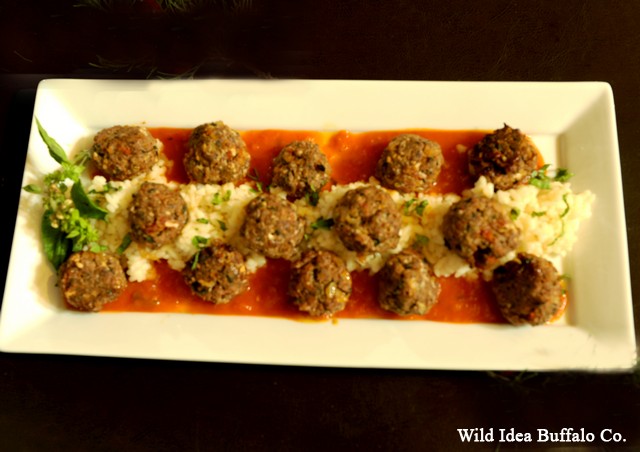
2.)  Add the chopped onions garlic and sauté.

3.)  Add buffalo heart to the bacon onions and garlic, and let it brown.

4.)  Add 1/2 cup of water, tomatoes or paste, and the wine..

5.)  Simmer for 30 minutes covered and then for 15 minutes without the lid. Stir the sour cream into the sauce.

6.)  Sprinkle with fresh herbs.

*Serve with rice or mashed potatoes.

Buffalo Stuffed Chile Rellenos with Black Bean Gravy & Tomatillo Sauce

jill Buffalo Recipes, Recipes, Roasts Leave a Comment

Buffalo Stuffed Chile Rellenos with Black Bean Gravy & Tomatillo Sauce

For this recipe I braise a chuck roast, and after cooking I divide the roast into 3 pieces, to create 3 separate meals. Keep each section in braising liquid until ready to use. Meat freezes well and reheats nicely for later use. Or invite some friends and triple the recipe! Also the recipe looks lengthy, but is very user friendly and do-able.

Stuffing Ingredients:                                                                                                                                                      

  • 1 – 3 lb. Buffalo Chuck Roast, rinsed and patted dry                                                                                     Microsoft Word - Document4
  • 2 – teaspoons olive oil
  • 1 – teaspoon salt
  • 2 – teaspoons pepper
  • 3 – cups apple cider
  • ¼ – cup fresh cilantro, packed and finely chopped
  • ½ – teaspoon cumin
  • ½ – teaspoon cardamom
  • 1 – teaspoon salt
  • ¼ – cup fresh lime juice, (1 lime)
  • 1 – cup queso blanco, crumbled
  1. Pre-heat oven to 500*.
  2. Prep buffalo roast and rub with olive oil, salt and pepper.
  3. Place roast in heavy roasting pan and add cider. Cover and place in hot oven, allowing ingredients to come to full heat. About 20 minutes.
  4. Reduce heat to 350* and continue to braise for 2.5 hours. Turn halfway through braising process.
  5. Roast should pull apart easily with two forks. Continue to braise if necessary.
  6. Remove roast from oven and let rest covered for 20 minutes.
  7. Place roast on cutting board and pull into 3 pieces. Place two of the pieces in separate bags with pan juices and refrigerate or freeze for later use.
  8. Pull remaining third apart using two forks or hands. Place pulled meat in bowl, with remaining pan juices.
  9. Add cilantro, seasonings and lime and stir to incorporate.

For Chilies:

*It’s best to wear food gloves when handling peppers.

  • 8 – Anaheim or Poblano Chilies washed and patted dry.
    *6 peppers for stuffing and two for tomatillo sauce.
  • 1 – egg
  • ¼ – cup milk
  • ½ – cup flour
  • 1 – teaspoon salt
  • 1 – cup corn meal
  • 1 – cup grapeseed, vegetable or peanut oil
  1. Roast chilies in broiler or over gas, charcoal or stove top fire, until blistered and black.
  2. Remove chilies, place in a paper bag and close. Allow chilies to rest for 20 minutes.
  3. Remove chilies and gently rub off charred skin.
  4. Keeping stem in tact, make a slit the length of the pepper, with a knife.
  5. Gently pull out seeds, rinsing under sink if needed.
  6. Allow to dry on paper towel.
  7. Divide meat and cheese between the 6 peppers and gently stuff in chilies, insuring that stuffing is completely encased.
  8. Mix egg, milk, flour and salt together.
  9. Carefully dip each pepper in the batter and then roll in the cornmeal. Place on a baking sheet.
  10. Heat oil in large frying pan to medium high heat. Fry in two batches for about 3 minutes a side, or until golden brown. Remove and place on paper and let rest for 3 minutes.
  11. While resting ladle black bean gravy and tomatillo sauce onto plates.
  12. Place pepper in center of the plate. *Optional – Garnish with fresh cilantro and sour cream.

Black Bean Gravy

*Leftover gravy and sauce are delicious on squash or served as dips!

Ingredients:

  • 1 – 15 oz. can black beans in liquid
  • 2 – Tomatillos, husk removed and washed
  • ½ – teaspoon salt
  • ½ – teaspoon black pepper
  • Juice of 1 lime (about ¼ cup)
  1. In blender puree all ingredients.
  2. Place in heavy saucepan and simmer until reduced to desired thickness. Season to taste.

Tomatillo Sauce

Ingredients:

  • 5 – Tomatillos, husk removed and washed
  • 1 – cup water
  • 2 – green chilies, roasted, peeled and seeded
  • ¼ – cup packed cilantro leaves
  • ½ – teaspoon each: cumin, coriander, and salt
  • Juice of 2 limes (1/2 cup)
  1. Place tomatillos and water in saucepan and bring to a boil. Boil for 5 minutes, until Tomatillos are tender.
  2. Place tomatillos and water in blender with all other ingredients.
  3. Blend until well incorporated.
  4. Return to saucepan and let simmer until desired thickness is achieved.

Wine Pairing: Chateau Ste. Michelle, Eroica Riesling, 2010

A favorite that we keep on hand for like meals. Crisp, with flavors of citrus and peach.

Nice acidity and mineral tones for spicy foods.


The Autumn of 2011

dan Cheyenne River Writings, Dan's Writings 23 Comments

It has been a tough autumn. We’ve had some tragically bad luck around here: the inexplicable death of a three-year-old, pure-white gyrfalcon and an electrical fire that burned Jilian and Colton’s little house to the ground. I lost a beautiful bird that was an absolute joy to watch fly and Jilian and Colton lost everything, including their dogs. No one slept for weeks.

It was all serendipitous and I feel petty for whining. But my plans of elegant outings in a Great Plains autumn were buried beneath communication with insurance companies, fire clean-up work, worries about getting a roof over the kid’s heads, and the general malaise of loss. All summer I’d been anticipating a North Dakota road trip with good friends and fine bird dogs in search of partridge and sharptailed grouse but those plans were dashed by the onslaught of life. Losing a Great Plains autumn is a great shame because one never knows how many Great Plains autumns are left, or what great adventures are missed. Consider that my friends flushed two moose and a mountain lion while following their dogs around North Dakota. They are energetic, fine fellows – capable of grand, urbane conversations over brown liquor, and lasting insights. I had been looking forward to that trip and now I have missed it.

Read More

The Power of Love, Support and A Good Meal

jill Jill's Journal 3 Comments

In Loving Memory:

Last Month Dan wrote about the ailments of aging dogs and men. Of how when we are happy, we rally and relish in the joy, briefly forgetting about the aches and pains. Of how the life of a dog is too short.

There was an old homestead on the ranch, which a few years back we fixed up and called the “guest house”. Some of you may have even stayed a night or two in it. This past June, Jilian and future son in-law Colton moved to the country, with nine chickens, known as “the girls”, and their best friends Gus & Ace, known as the “handsome boys”. Gus was an adorable rez rescue dog. Jilly rescued Gus and Gus subsequently rescued Jilian. Ace was a fancy white German Shepard. The little house on the prairie soon became their happy home. But a few weeks ago, on a drizzly afternoon, a faulty electric outlet started a tragic fire. Their two, young, beautiful dear friends, did not survive.

Read More

I have often been asked…

gervase Cheyenne River Writings, Gervase's River Ranch Diary 1 Comment

…why I consider that this Cheyenne River Ranch and formerly the Broken Heart Ranch are different from other ranches beyond the fact of being buffalo ranches. In the past and in attempting to answer that question with at least a modicum of intelligence, I mentioned the fences, the restoration or conversion of agricultural land to native grass prairie, the difficulties and joys of enhancing habitat for the benefit of native species, and the ways we try to leave a minimal footprint on the land. But that never quite got to the heart of the issue and remained somewhat general and non-specific. In an attempt to remedy that situation I am going to try to offer you a kind of rough blueprint of what I perceive to be the goals of the Wild Idea Buffalo dream, an interconnected and diverse group of elements that both construct and reveal the success of that construction.

Read More

Measuring Time

dan Cheyenne River Writings, Dan's Writings 25 Comments

By Dan O’Brien

It is my favorite time of year. I would put a Great Plains’ autumn up against any other season, anywhere on Earth. Spring in Paris, summer in Tahiti, winter in the Alps – no comparison.

Three nights ago the temperature made a surprising dip. The internet was predicting a cool evening but thirty-eight degrees is cool indeed for the first days of September. We have no air-conditioning at the ranch so Jill and I are used to sleeping with doors and windows wide open. There are only the screens between us and the summer nights, the pulsing of insects, the calling of moon birds, and the eerie awareness of night walkers. It is a grand way to sleep but on that first cold night we found ourselves groping in the dark for an extra blanket.

We woke to a different world that most people would not have noticed. It was warming again by eight o’clock so it would have been easy to write off the magic night as an anomaly, a small divot in an otherwise seamless summer. But there was a subtle difference. The flies were suddenly slow enough to catch easily. The horses loped up to the coral instead of trotting. The sky seemed higher and a deeper shade of blue. The buffalo in the distance played in smaller groups ready for the wheat grass to turn ocher.     But the obvious difference, the thing that made me absolutely sure that I had not dreamed the shifting of celestial gears, were the bird dogs. With them, it must have something to do with the smell of things. I imagine the wafting of scents as colors, made more intense by the coolness, a yellow cloud moving from the sage brush, the mauve of the river, puffs of orange in the hoof prints of deer, and the filmy blue traces of grouse coming from the upper benches. To a bird dog those lacy, indigo tentacles meandering on the breeze is a calling every bit as strong as John Donne’s tolling bell. I don’t believe he, or Ernest Hemmingway for that matter, would mind my tweaking of their words to fit the landscape. No bird dog needs to ask for whom the bell of misty grouse breath tolls. It tolls for them, of course. And when I approached the kennels, no sleepy, stretching hounds emerge from the boxes. There was electricity in every dog. The youngsters were ecstatic; the old dog’s ears were miraculously keen again.

Read More

4 Bean Bison Chili

jill Jill's Journal 2 Comments

By Jill O’Brien

The last couple of weeks, we have had many visitors; Wild Idea Buffalo customers, old friends, new friends and a handful of Dan’s students. For me that means a lot of time spent in the kitchen. In addition, I am refining recipes for that cookbook that I hope someday will come to fruition.

It has been suggested that I blog about the cookbook process. That people would be interested in recipes, what it’s like living with a writer (my Renaissance man) and the happenings on a conservation driven buffalo ranch. Someone else suggested that I check out the “Pioneer Women”, a city journalist that married a rancher (her Marlboro man) and writes about ranch style cooking. I had heard about the “Pioneer Women” first through a friend (a local grass-fed cattle rancher, well educated, traveled and an amazing cook). Most country girls have a like story in their cupboard and are kicking themselves for not capitalizing on it. I perused through the “Pioneer Women” site and found it entertaining. In the section I read, the ingredient second most used was butter. As a dairy farmer’s daughter, I am not afraid to use butter, and believe in whole, real ingredients, but a little butter can go a long way.

Over the last few weeks, as I worked my way through some of my recipes, I found myself saying “agh – another head of garlic”! Clearly, my second ingredient. To confirm this, while grocery shopping the other day, I ran into a friend, we greeted in a hug and he said, “You smell like garlic”. “Thanks”, I said, “I could smell like butter – oh, never mind”.

I am not certain about blogging or even if I have the patience or talent for it. But – for right now, I am happy to be filling a thermos of Bison Chili, wrapping warm cornbread in a dish towel, sticking a bottle of wine in the picnic basket and heading out the door with Dan and Tootsie, to find our spot on the big, beautiful prairie for opening Dove season. Cheers! Jill

Read More

River Ranch Diary

gervase Cheyenne River Writings, Gervase's River Ranch Diary 4 Comments

By Gervase Hittle

A few days ago I happened to be in Rapid City doing some errands and grocery shopping. My freezer no longer had any buffalo meat; so I went to the new office/cut and pack meat plant of Wild Idea Buffalo Company. I had been there before, both during its construction and after it had opened for business, and the crew was just beginning to work out the production kinks of the new operation.

Read More

Yummy Buffalo!

wibadmin Testimonials Leave a Comment

We’re very much looking forward to enjoying our Wild Idea Buffalo.  In fact, we purchased it in NY at Dean and Deluca and thought it was delicious.

Best,

Carol – CA

Very tasty and lean

wibadmin Testimonials Leave a Comment

We just received our first shipment of your bison meat and had a sirloin steak for dinner.  I followed your marinade suggestion and cooked the steak in a Foreman grill.  Not one drop of fat came off the steak as it cooked; the steak was very tasty, and nice and tender as you promised.  We are VERY happy with this!  We will undoubtedly eat more red meat thanks to you.

Betty – SD

Loved Buffalo for the Broken Heart

wibadmin Testimonials Leave a Comment

Just read Buffalo For The Broken Hearted. Although it had been ten years I thought I would check out the noted website in hopes that the company made it. I was excited to see you had and an excellent website if I may say. Glad you are back – you are all grown up. Your mom seems to be an excellent cook and I can’t wait to try out her recipes.

Congratulations to Dan. He is an inspiration for true perseverance. It is funny I feel like I know all of you. The very best of luck and I can’t wait to try some of this natural range buffalo.

Sincerely

Val – NJ

It was after two o’clock in the afternoon…

dan Cheyenne River Writings, Dan's Writings 21 Comments

It was after two o’clock in the afternoon when Colton, Lucas, and I finally got caught up enough to jump into the pickup and head for the center of the Pine Ridge Reservation. John and Judith Blackfeather had left a message on my cell phone asking if we would be interested in buying the last of three yearling buffalo bulls. I had picked up the other two the week before and brought them back to the Cheyenne River Ranch with an eye toward letting them grow up and replenishing their genes throughout our herd. The third one was supposed to go to another Lakota buffalo producer named Henry Red Cloud, but the deal went south and John was stuck with the last little bull, Still in a small holding pen in the middle of his ranch.

Read More

Recently a journalist…

dan Cheyenne River Writings, Dan's Writings 3 Comments

…from the Native Sun News came out and spent the day with the SHA crew while we were harvesting.  Attached is the link to the story that I would like to share with you. Hope you enjoy it.

RAPID CITY, SOUTH DAKOTA — Maynard Zane Brown’s job with Sustainable Harvest Alliance and Wild Idea Buffalo Company is more than just punching the clock for eight hours, it’s doing what his ancestors did for millennia, harvesting buffalo in sync with nature.

To his friends he’s known as Shane Brown. Working as a meat cutter for most of his life and spending time at the Rushmore Packing Plant in Rapid City he knows how stressful it is for buffalo to be treated like cattle.

“If they are raised like a cow, then they’re corned up and grained up for 180 days. Plus when they are grain fed they are run through a fixed packing plant. I worked there for a number of years and I see the stress on those animals, it’s in their eyes,” Brown said. They get crushed and they’re not handled humanely he said, “They put the hot shots to them. They run them up the chutes and into the kill box and those animals go plum crazy before they shoot them. You know that they’ve got adrenaline running through them, by the time they do kill them.”

Read More

July 2011 River Ranch Diary

gervase Cheyenne River Writings, Gervase's River Ranch Diary 5 Comments

At the beginning of the third week of June I met with a group and conducted a tour of the Cheyenne River Ranch. This tour was by no means the first of these with which I have been involved, but this one ranks right up there with the best.

If my memory serves me correctly, there were twenty-four rising high school seniors and six adult sponsors from Westminster Christian Academy in St. Louis, Missouri. The group was/is led by Warren Smith and five others: Ann Heyse, Kelsey Walton, Anne Westhoff, Chris Knerr, and Dan Burke. The reason for the tour was to be one of the events on the students’ Summer Seminar Program. They will be H.S. Seniors in the Fall of 2011. As members of the seminar, they have spent some time in South Dakota, read BUFFALO FOR THE BROKEN HEART, and other works. They did some backpacking in the Badlands National Park, some bicycling in the Black Hills, and hopefully got to do some kayaking in either the White or the Cheyenne River.

Read More

Mushroom & Onion Stuffed Buffalo Blue Burgers

jill Jill's Journal 2 Comments

Currently I am going through a Blue Cheese phase. Its rich creaminess with its full flavor calls my name on a daily bases. With this month’s recipe being our annual “Buffalo Burger” recipe, I thought it only appropriate to have it include Blue Cheese. There is nothing new about adding blue cheese to your burger, I needed more originality. So a few weeks ago I was discussing this with Cyd (By the way, Cyd’s back. Yeah!), and she started telling me how she loved onions & mushrooms on her burger but they were always falling off and so she started sautéing them first and stuffing the burger with them. Hmmm – I think she’s on to something. The last inspirational component came while eating a burger in NYC, where they served their burgers on a potato roll, a very nice compliment to the meat. Below are the results of my concoction. I served it to a group from Clemson last night and it was a huge hit!”  Cheers – Jill

We got our new processing plant up and running…

wibadmin Cheyenne River Writings, Dan's Writings 21 Comments

Plant crew, ready to go!

Plant crew, ready to go!

…two weeks ago. For the last six years we have been harvesting buffalo about once a week in the pastures with the Sustainable Harvest Alliance crew and taking the hanging carcasses to an established processing plant in Rapid City. We have worked well with that plant but the Sustainable Harvest crew has been employed only part-time, somehow finding a way to take time off their day jobs to do a job that they believe is important. Those guys took great pride in the new plant because it was the next step in our drive to give the buffalo industry an alternative to the feedlot/cattle model of meat production. It made a lot more sense to put the Sustainable Harvest guys to work full-time in our own plant where we could have better control of the product from the pastures to your plates.

Read More

Chili Spiced Un-Short Ribs or Back Ribs with Tangy Mop

jill Jill's Journal Leave a Comment

Dan & I just returned from a nephew’s wedding in Ohio. It was a wonderful celebration.

We stayed with Dan’s brother Mike and his wife Linda, (father and mother of the groom), along with Dan’s brother Scott and his wife Roxy. In the morning I would find the three brothers hunched over their coffee cups in deep discussion. I couldn’t help but imagine them at ages ten, nine and eight hunched over in a like manner making their next plan. They are loving Father’s, Uncle’s and Grandpa’s, and have all played an integral part in their children’s, nephews, nieces and grandchildren’s life. They will deservingly be celebrated this month. And if the old adage is true, that a way to a man’s heart is through his stomach, the below recipe should help do the trick. Enjoy!


Read More

Introducing my kids to Buffalo

wibadmin Blogging 5 Comments

A happy Max after Buffalo Burger.

A happy Max after Buffalo Burger.

Some parents wish for their 5-year olds to play the oboe or speak five languages at 5. As a foodie, I wish my 5-year old would eat pad Thai and be open to try new foods. My 5 and 3 year old sons love eating pasta, but only with butter and a dash of garlic salt. Olive oil – eeew; a homemade sauce-  fuhgedaboutit!

In the March Wild Idea newsletter Jill had a recipe for buffalo stew. It sounded delicious so I ordered some chuck roast and cooked it up for some friends. Everyone loved it…except my kids. The best negotiator in the world could not even get them to try it. In fact, my 5-year old, Max, declared it the second most disgusting sounding food – behind only pickled pigs’ feet.

Read More

Mushroom & Onion Stuffed Blue Cheese Buffalo Burgers

jill Buffalo Recipes, Ground, Recipes Leave a Comment

If you are looking to please a group with a delicious buffalo burger, these savory stuffed buffalo burgers with Maytag Blue Cheese should certainly satisfy!
Recipe approved by a group from Clemson University.


  • 2 lbs. Wild Idea Ground Buffalo
  • 2 Tbl. olive oil
  • 1 tsp. salt
  • 1 tsp. black pepper
  • 3 Tbl. butter
  • 1 onion, diced
  • 1 cup sliced mushrooms
  • ½ tsp. salt
  • 1 tsp. pepper
  • 6 to 12 oz. Maytag Blue Cheese
  • 6 Potato Rolls
  1. Mix buffalo, olive oil and 1 tsp. each of salt & pepper together and form into 12 burgers. Make burgers a bit bigger then the bun to allow for shrinkage. Cover and refrigerate.
  2. In heavy sauté pan, over medium high heat melt butter.
  3. Add onions, ½ tsp salt & 1 tsp pepper and sauté for 5 minutes. Edges should brown a bit.
  4. Add mushrooms and continue to sauté for an additional 5 minutes.
  5. Lower heat to medium and let cook until browned. About 5 minutes.
  6. Transfer to a bowl and let cool.
  7. Remove Buffalo Burgers from refrigerator and spoon desired amount in the center of 6 burgers. Place the other burger on top and secure edges.
  8. Turn gas grill to high heat or get coals very hot with cleaned & oiled grid low to heat.
  9. Place burgers on grill over hot heat and grill for 3 minutes.
  10. Turn and top with 1 to 2 oz Blue Cheese and grill for an additional 3 minutes.

Serve on Potato Rolls and serve with pickled crudites, lettuce and tomato garnie and Buffalo Chips (recipe for Buffalo Chips included with this months special).

Wine Pairing:

Alamos, Malbec, Argentina: Full and fruity with a hint of spice, carries the Blue Cheese and compliments the meat without overpowering.


Nobody believes it…

dan Cheyenne River Writings, Dan's Writings 11 Comments

…but I am going to Las Vegas. One of my youngest brother’s sons is getting married in June and, odd as it seems to me, he is having a bachelor party in America’s city of fun and debauchery. One of the reasons for this choice of venue is, no doubt, the popularity of the movie, The Hangover. If you are looking for intellectual stimulation, I would not recommend it. But it really is damned funny and it has apparently inspired a generation of late-twenties, men to spend excessive amounts of money and make even greater fools of themselves by mimicking the movie’s heroes. The plot walks a group of young men through a one night bachelor party in Las Vegas which involves copious consumption of alcohol and drugs, hallucinations of casual sex, car chases, high stakes gambling, the marriage of one of the group to an exotic dancer, the loss of the bridegroom, a self inflicted tooth extraction, and the theft of Mike Tyson’s pet tiger. My suspicion is that this movie has set a standard of expectation that hundreds, if not thousands of bachelor parties are striving to equal or perhaps top.

Read More

May 2011 River Ranch Diary

gervase Cheyenne River Writings, Gervase's River Ranch Diary 34 Comments

I don’t know exactly what to write today, because I am leaving my position at the ranch. It is not without some regret that I do so, but several things have converged so the timing is most appropriate. The convergence includes my age, an upcoming surgical procedure on May 3rd that will require a month to a month and a half for recovery, and I am now involved with a very wonderful woman who lives in Hill City.

Read More

Summer Finger Food & Grilled Buffalo Steak

jill Jill's Journal 3 Comments

Our meals become pretty simple this time of year. In addition to what we eat, how we eat is minimized too. Frequently dinner consist of a grilled buffalo cut, and grilled vegetables on salad greens. The complete meal is served on the cutting board that the vegetables were prepped on.  Other than cutting the steak, silverware is optional. Somehow the food just tastes better, you’ll just have to try it.

Below is my simple way of “how to grill a steak”. Although this may be easy for many of you, it is a question that I get a lot. I hope it is helpful. Enjoy! Jill

Read More

Stuffed Ravioli with Simple Tomato Sauce

jill Buffalo Recipes, Recipes, Sausages Leave a Comment

Buffalo Stuffed Ravioli with Simple Tomato Sauce (Serves 6)
Homemade ravioli stuffed with Buffalo Italian Sausage might be the perfect dish for the last jar of canned tomatoes in your cupboard from last year’s harvest. This recipe celebrates the flavor of canned garden tomatoes and is complimented by the grassy sweetness of our artisan Italian Sausage.  Although you might think homemade pasta is time consuming, once you establish your rolling and thickness of dough (I set my pasta roller setting on 6) , it’s easy and quick. I also thought it unnecessary to cook the meat before filling the ravioli’s. It cooks through just fine during boiling process. The end result will be a light dish with all the ingredients harmoniously balanced. The only difficulty, is stopping yourself from a second, or third helping….  
 
Canned tomato notes: I had placed a garlic clove and a couple of basil sprigs in my tomatoes when I canned them. Add to your sauce if you would like, or find a base that already has them.  
Simple Tomato Sauce:

  • 1 teaspoon olive oil
  • 1 large headed shallot, peeled and julienned
  • 1 quart jar canned tomatoes (or best canned tomatoes available)
  • 1 sprig fresh oregano, leaves only chopped
  • 1 sprig fresh basil, leaves only chopped
  • ½ teaspoon salt
  • ¼ teaspoon pepper
  • 1 cup water
  1. In saucepan, heat oil over medium high heat.
  2. Add shallots and sauté for 2 minutes. Reduce heat to medium and continue cooking until lightly browned.
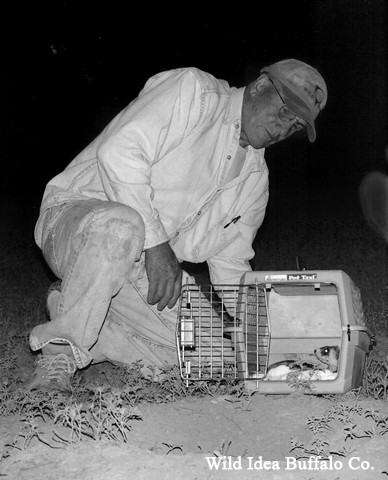
  3. Add tomatoes, seasoning and water and stir to incorporate.
  4. Bring to a simmer and remove from heat until ready to use.

Ravioli Filling:

Pasta Dough Ingredients: Makes 30 + Raviolis

  • 1 cup Semolina flour
  • 1 cup unbleached flour
  • ½ teaspoon salt
  • 3 eggs
  • 2 tablespoons water
  1. On clean work surface mix flours & salt. Create whole in center of flour mixture.
  2. Mix eggs and water in bowl, and pour into flour center.
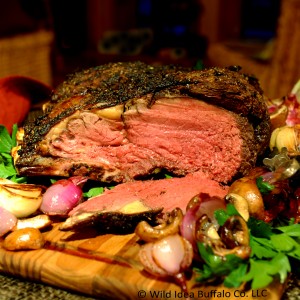
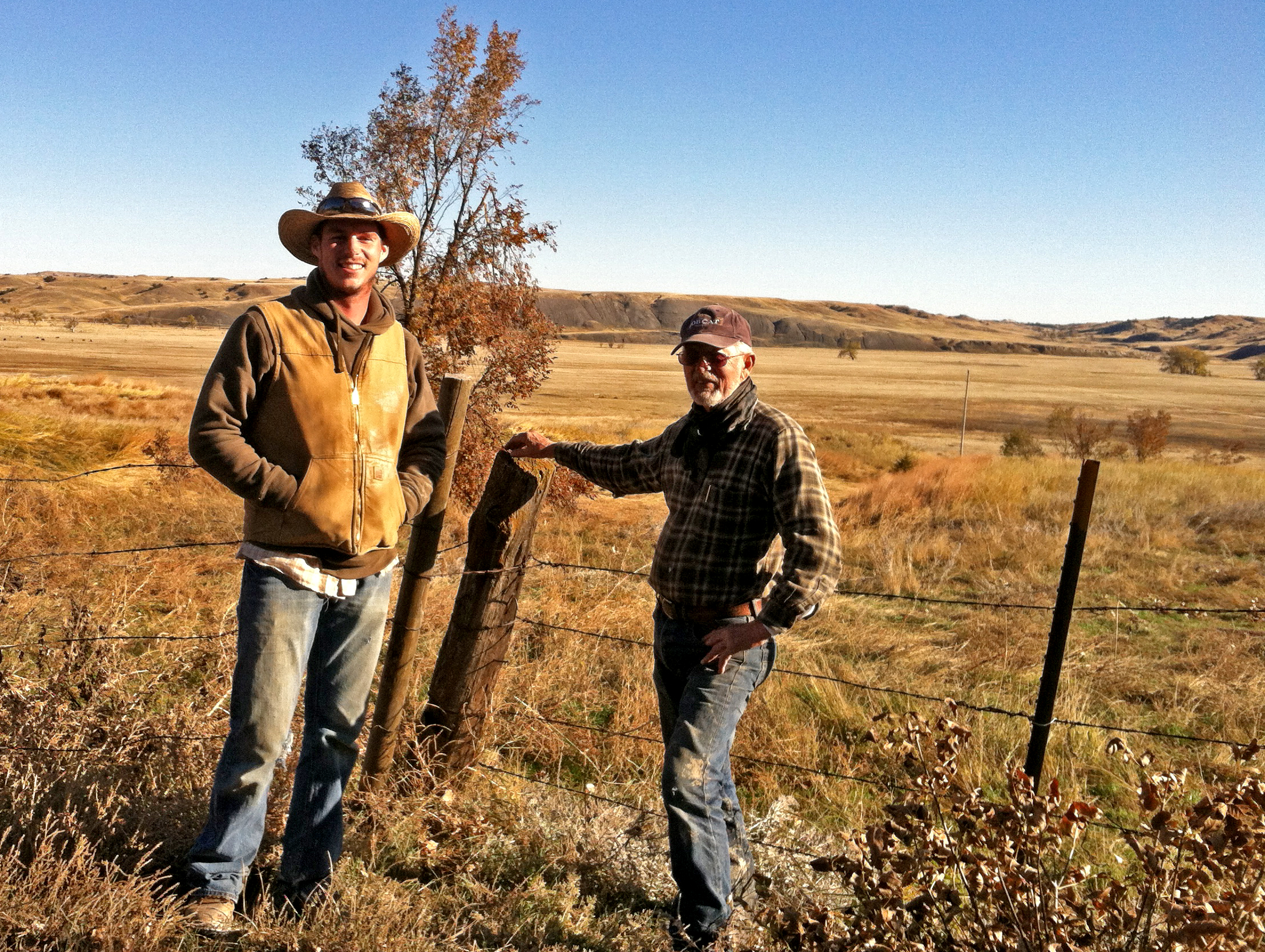
  3. Gradually whisk in flour until well incorporated. Add more water if needed.
  4. Kneed dough until smooth and elastic, about 7 minutes.
  5. Separate dough into 3 sections. Cover and let rest for 30 minutes.
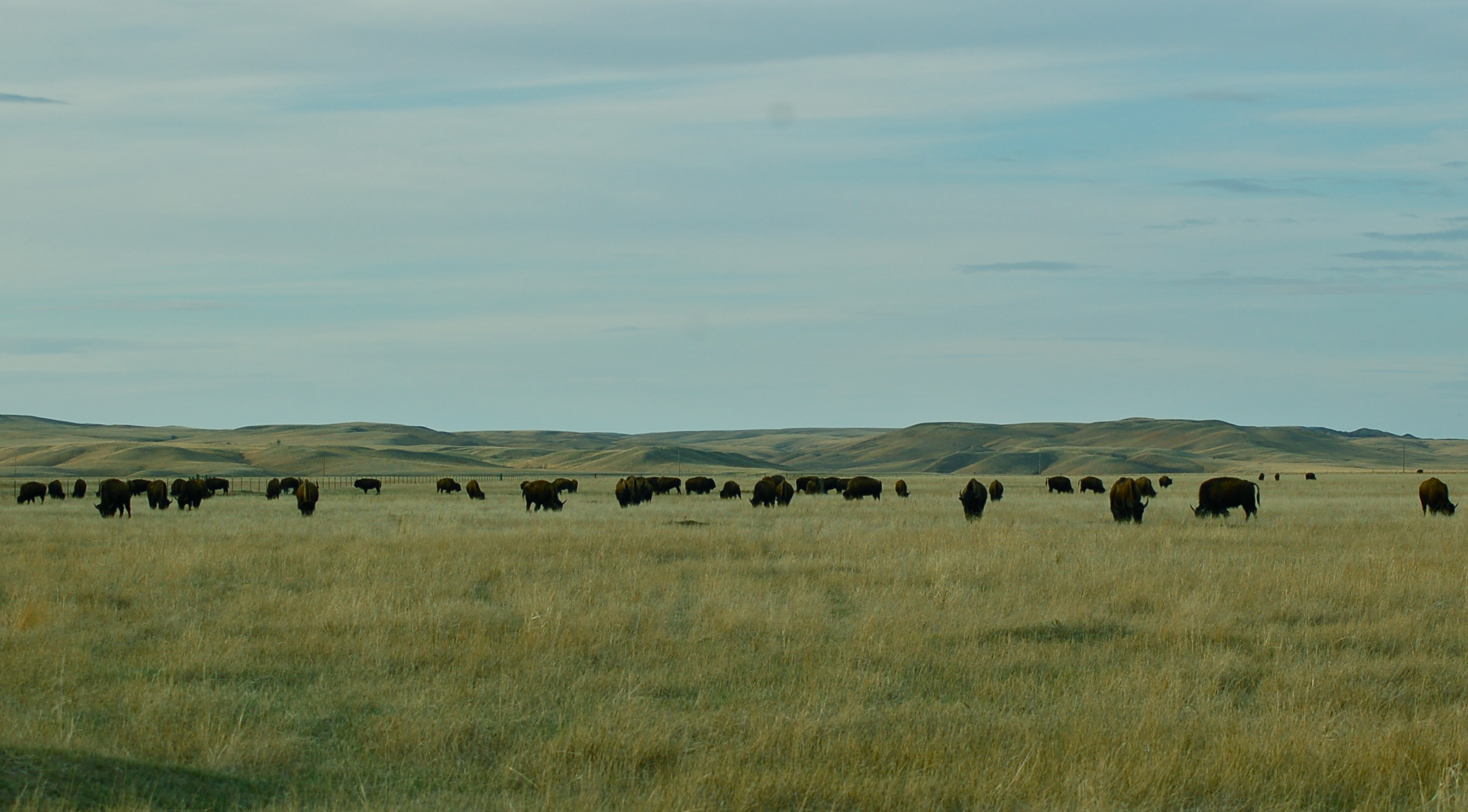
Ravioli Assembly:

  1. Roll one section of dough into a rectangle.
  2. Place your pasta machine roller dial on 1 and run dough through.
  3. Run dough through two more times, second on dial 3, and third on dial 6.
  4. Place strip of dough on lightly floured counter and cut into smaller rectangles, about 2.5 x 4.
  5. Place ½ oz. of Italian sausage in bottom center of rectangle.
  6. Place ¼ oz of buffalo mozzarella on top of sausage.
  7. Fold top half of pasta over bottom half.
  8. Seal sides together with damp fork. Place ravioli’s on a floured sheet pan continue above process with remaining dough.
  9. Bring a large pot of salted water to a boil. Place 10 raviolis in pot at one time. Boil for about 4 minutes. Raviolis will float to the top when they are done.
  10. Remove ravioli’s with slotted spoon and place in bowl cover to keep warm.

To Serve: Place 5 ravioli’s in pasta bowl and pour one cup of pasta sauce over the top.

Garnish with freshly grated Parmigianino Reggiano and serve immediately. Accompany with *Caesar Salad. *Recipe included in this months special.

Wine Pairing:

VILLA POZZI, 2009 NERO D’ AVOLA, SICILY, ITALY

I found this gem of a wine at our grocery store. Its full fruit and soft tannins paired nicely with the acidity of the tomatoes. It’s one to remember and you will love the beautiful deep purple color.

In November…

dan Cheyenne River Writings, Dan's Writings 29 Comments

Buffalo back on their home ground.

Buffalo back on their home ground.

… when we turn the buffalo out onto the National Grasslands, they disappear. When we push them across the Cheyenne River, the water is low and the buffalo are anxious to get across and spread out into the cedar lined canyons, the high grassy flats, and the maze of prairie dog towns that stretch for eight remote miles to the Badlands National Park. The older animals know exactly where they are going and the whole herd bucks and frolics with the buffalo-joy of moving. They splash across the foot-deep water and dissolve into the 22,000 acres of pasture like apparitions of two centuries past.

Read More

April 2011 River Ranch Diary

gervase Cheyenne River Writings, Gervase's River Ranch Diary 9 Comments

I am and have been a proponent of U.S. Senator Tim Johnson’s “Buffalo Gap National Grasslands Wilderness” proposal. That is not an astute political position to take in this neighborhood and political climate—-but it is the right one. Recently the Rapid City Journal ran a front page story on this issue and published two lists: a) of supporters and b) of opponents to this proposal.

Read More

This Years Garden & Buffalo Stuffed Ravioli with Simple Tomato Sauce

jill Jill's Journal 5 Comments

Dan & I have been talking about our “this years garden” since the first seed catalogs arrived a couple of months ago. The conversation turned from planting, to what our gardening efforts would produce, as I pulled the last jar of canned tomatoes from the pantry.  It deserved something special, but simple.

Homemade ravioli stuffed with Buffalo Italian Sausage might be the perfect dish for the celebratory jarred tomatoes, but, it had to be easy. I have made homemade pasta before, and although you might think it time consuming, once you establish your rolling and thickness of dough, it’s easy and quick. The end result was a light dish with all the ingredients harmoniously balanced. The only difficulty, is stopping yourself from a second, or third helping…. Cheers to spring! Jill

Read More

Dakota's Starving Bison

dan Cheyenne River Writings, Dan's Writings, In the News 16 Comments

For the last forty years I have lived in western South Dakota. I’ve been a biologist, a writer, a buffalo rancher and an outspoken voice against animal abuse. So it hurt and confused me to get an early morning phone call accusing me of starving my buffalo to death. The caller was enraged and slammed down the phone. From where I stood I could see out over the twenty-thousand acre pasture where our buffalo spend the winter. It took a few minutes and a good pair of binoculars, but I found the herd of 220 buffalo and confirmed that they were fine – roaming over the miles of grassland like their kind has done for tens of thousands of years. I had only time to shrug before the phone rang again. This time it was a friend, “Have you read the Bismarck Tribune?”

Read More

March 2011 River Ranch Diary

gervase Cheyenne River Writings, Gervase's River Ranch Diary 7 Comments

I may be wrong here, but real winter seems to have come late this year. Autumn ran late and mid-winter seemed extraordinarily warm. The first real cold period came in late January and mid-February, and the first major snow fell after the middle of February, and we have now had three consecutive, relatively substantial snowfalls. Typically March is our snowiest month. That is yet to be seen. I am not complaining, and I realize that much of this nation has been subjected to some other than ordinary winter occurrences.

Read More

Irish Stew & Food Experiences

jill Jill's Journal 7 Comments

This month’s recipe is my rendition of “Irish Stew”.  And, I must say, it’s super delicious. But first, I wanted to share with you our worst, and best food experiences while we were in Costa Rica. I hope they make you smile and bring back your own food travel memories.

First, the worst:  A charter rep at our hotel had advised us to do the “Sunset Cruise”.  A two and half hour romantic cruise complete with cocktails, hors d’ oeuvres and the chance to see wildlife. It was $50.00 per person, so – we signed up. A dingy boat picked us up in the cove were our hotel was located, and from there we were shuttled to our cruiser boat, a rusty worn out bucket of bolts. Upon arriving we glanced around looking for the bar. I had imagined flutes of champagne a top white linens blowing in the ocean breeze. No champagne, no linens, no bar. But, we were on the water and although it was very rough that afternoon, it was also very nice. A bit later our host came leaping around saying “rum coke, like vodka ginger-ale, rum coke, like vodka ginger-ale”.  One rum coke and one like vodka ginger-ale, we replied.  We weren’t sure what we were drinking, but we drank them happily anyway. Soon dolphins started jumping and birds floated effortlessly over the ocean surface, waiting for their dinner to present itself. By this time we had diminished any idea of hors d’oeuvre’s. But, as if on queue, our host appeared again, still leaping back and forth, but this time shouting, “Ohhh  – dophin, dophin, ohh look out, dophin jump in da boht”! All while holding a plastic tray with three Styrofoam bowls. A boy followed him close with two tubular bags of chips. One by one they stood over you waiting while you stuck your hand in the bag to retrieve what you could from its slim opening. The orange tray was lowered with options of bean dip, ranch dressing, and salsa. Again we participated happily. We roared with laughter, not so much at what we were experiencing, but of each others looks on our faces.  The trip back is a whole story in itself. In short, it involved a dingy boat, pitch blackness, rough water, and a bus. Not a good value, yet at the same time, priceless!

The Best:  Before going to Costa Rica I researched authentic places to eat, I found one just outside Liberia, Cantarranas Tacos. It said it was a local favorite and should not be missed.  Even with a GPS it took us a couple of laps to find it. It was so obscure, we questioned whether we had the right place. Dan went in to check it out, as he loves REAL, authentic local hangouts. On cleanliness, the place was questionable. If in the US, it would have been shut down by the health department in a second. But this was indeed the place. It was early, so we were one of two tables. We were greeted by the owner, who was the only employee. He was gracious and thankfully for us spoke English. We had a beer and ordered a couple of entrée’s. The restaurant was open, so we watched as he took bricks of meat from the freezer in the “tidy” prep area, walked through the restaurant, and placed them on the hoodless grill in the opposite corner of the restaurant. Occasionally he would lift the lids that covered the meat and chop it with a machete. Our deliciously tender grilled meat was served with tortillas, salsa, and fresh guacamole, which we watched him make too. The taste was amazing. Coast Rica is a lot more relaxed, so if you get to Liberia, don’t mind the cob-webs – this is a memorable must stop!

Read More

Irish Stew with Colcannon

jill Buffalo Recipes, Recipes, Roasts, Stews & Soups Leave a Comment


Irish Stew

This is my first crock pot recipe. The meat turned out perfectly, and the gravy just right. Although many Irish Stew’s use Guinness, I find stout’s to strong for grass-fed buffalo meat. Also, I roast the vegetables for a firmer texture but they could easily be added right to the pot.  The method listed below makes for a great presentation. Serves 6 to 8.

Colcannon Ingredients:

  • ½ lb. cabbage or kale, sliced
  • ¼ cup parsley sprigs
  • 4 green onions, chopped
  • ¼ cup hot milk
  • 2 lbs. butter potatoes
  • 3 tablespoons butter
  • ¼ cup hot milk
  • ½ teaspoon each salt and pepper

Vegetables Ingredients:

  • 6 carrots, peeled and sliced
  • 4 parsnips, peeled and sliced
  • 4 leeks, halved and sliced
  • 2 teaspoons olive oil
  • salt and pepper

Base ingredients for Stew:

  • 1 – 3 lb. Wild Idea Chuck Roast, remove netting, rinsed and pat dry.
  • 1 teaspoon olive oil
  • 1 teaspoon garlic powder
  • 1 teaspoon salt
  • 1 teaspoon pepper
  • 1 teaspoon thyme
  • 2 bay leaves
  • 2 celery stalks
  • ½ onion, chopped
  • 1 cup cherry tomatoes, halved
  • 2 bottles of Smithwick’s Beer
  • 2 cups buffalo Stock or organic beef stock
  • ½ cup red wine
  • 1 tablespoon arrowroot

Colcannon:

  1. Add cabbage to a pot of boiling water, reduce heat and simmer until tender. Add parsley and green onion and continue to simmer for two minutes.
  2. Drain water and place cabbage in blender with ¼ cup hot milk, salt and pepper. Puree.
  3. Place potatoes in pot of boiling water and simmer, covered for 15 minutes. Drain all but 2 inches of water from the pot and continue to cook uncovered until water is gone or potatoes are tender.
  4. Pull skins of cooked potatoes. Place in a mixing bowl with butter and hot milk.
  5. Smash potatoes first and then mix with electric mixer until fluffy.
  6. Add cabbage puree and mix until just incorporated.

Set aside or refrigerate until ready to serve. *I make this the night before and reheat in microwave before serving.

Vegetables:

  1. Place vegetables on baking sheet. Drizzle with olive oil and season with salt and pepper.
  2. Roast in 400* oven for 10 minutes. Vegetables should be firm, tender and slightly browned.

Prep vegetables ahead of time and roast right before serving.

Stew:

  1. Place olive oil, garlic powder, salt, pepper and thyme in crockpot and mix together.
  2. Roll prepped roast in herbs in crockpot.
  3. Turn crockpot to high. Add bay leaf, celery, onion, tomatoes, beer and stock.
  4. Cook covered for 1 hour. Reduce heat to low and let cook for up to 8 hours.
  5. Remove roast from pot and place on cutting board. Using two forks, pull Buffalo roast apart into serving size pieces.
  6. Turn crockpot back to high, letting juices come to a boil.
  7. Mix red wine and arrow root together and whisk into juices. Adjust to your desired thickness, and season to taste.
  8. Return buffalo roast pieces back to crockpot.

To Plate:

In shallow soup bowl or pasta bowl, place a scoop of hot colcannon to edge of bowl. Place buffalo roast into side of colcannon. Ladle gravy in bowl, and add vegetable to gravy. Serve with crusty bread.


Wine Pairing:

2007 Zolo Malbec, Mendoza Argentina Fruit and earth aromas that carry over to the palate. The well balanced tannins give it a lush finish. Complements the stew nicely without overpowering it.

It is four in the morning of January 30th…

dan Cheyenne River Writings, Dan's Writings 58 Comments

… By Five o’clock I intend to close this computer and not open it again until the 8th of February. Jill and I are going on the first real vacation we have had in twelve years.  We travel separately quite a bit: I’m off doing a reading or teaching or looking at parts of the Great Plains for a book, Jill is cooking somewhere. We travel together too, but it has always been in conjunction with some event, some sort of work. This time it is a real vacation, just the two of us. We are off to a place that both of us have always wanted to see – Costa Rica.Read More

February 2011 River Ranch Diary

gervase Cheyenne River Writings, Gervase's River Ranch Diary 13 Comments

Many of my closest friends consider me as “old school.” I consider myself “old school;” so I don’t take that designation to be negative. I use a computer and carry a cell phone and am fairly comfortable and capable with both, but they are tools, not portable entertainment centers for me. I use them when I need them, and they “sleep” at all other times. When I think about defining “old school,” I think about authorship as ownership, about accepting responsibility for my actions (both good and bad), about my rifles with their beautifully grained wooden stocks, their blue, steel finish, and their micrometer adjustable, iron sights (even though my eyes now demand scopes); I also think about the dwindling family farms and ranches, about the now obsolete, corner gas station with its full service care, about my old saddles, the unfenced places I have ridden, and about windmills, not the windmills at which Don Quixote tilts, but those any traveler today can see dotted across the rural parts of this country in which we live.

Read More

Chocolate Oblivion Mud Cake

jill Jill's Journal, Recipes, Various Recipes 7 Comments

February equals, chocolate, chocolate and more chocolate. At our house we try to eat healthfully, but we do not deny ourselves the occasional decadent dessert. Especially if they are homemade. The successful making of desserts requires careful construction, with each ingredient being accurately measured, and a little love too.

This months recipe is definitely decadent, but other than measuring correctly, it is super  easy to make. It refrigerates or freezes nicely for later uses. Happy Valentines!

Cheers – Jill

Read More

Wild Idea Buffalo Company is more than just another meat company. It’s a vision of what could be.

dan Cheyenne River Writings, Dan's Writings 12 Comments

On the surface, the vision is simple: The American Great Plains could recover from the abuses of industrial agriculture and again become a sustainable eco-system. It could happen by restoring buffalo to their rightful place as the dominate meg-fauna of huge tracts of land in America’s heartland. But in this time and place no single person, corporation, or government entity has the where-with-all to affect such a change. Only capitalism has that much power. It is ironic that the very force that caused the decline of the plains biome is the best bet for bringing it back to health. Strange that, if buffalo are to return, they will have to pay their own way as delicious, healthy, red meat.

Read More

January 2011 River Ranch Diary

gervase Cheyenne River Writings, Gervase's River Ranch Diary 8 Comments

January 3rd of 2011 was the ninth anniversary of coming to live and work on the Cheyenne River Ranch. Sometimes it’s hard for me to believe that I have been here that long. I remember my first day of work: after I had moved into what was then my living space the call went out that someone had left a gate open and naturally the buffalo herd had wandered through it and were perhaps two miles away. We tracked them in almost a foot of snow. I think there were six or eight of us in trucks and on ATV’s. We easily brought them back into our pastures because bison seem to like to go back to where they came from. Erney calls them “the going’st back animals in the world.” He might be right.

Read More

New Year Resolution 2013 & Citrus Steaks with Winter Squash

jill Jill's Journal 2 Comments

Here we go again. Another year, another start, same resolution; Take better care of myself, exercise, and eat right. Why is this easier said then done? If I could learn to say no, I would have time to exercise.

Now for the “eat right” part ….. It seems any more you need a PHD to eat right. What’s better, whole fat, low fat, or fat free? Is there food value in fat free? Do I consider organic? Is the organic, happy animal organic. or in a pen organic? Does it matter? It’s enough to make a person grab a candy bar and call it good. And, to top it all off, we’re to have this renewed enthusiasm in January. I could stand some sunshine. Thank goodness it’s grapefruit season, the saving grace of January! I swear there’s a little burst of sunshine in every bite, and it’s really good for you! This month’s recipe incorporates fresh, clean ingredients, for a delicious healthy meal. So good, you won’t even miss the butter (as a dairy farmer’s daughter this is hard to do).

Enjoy and cheers to your healthy you!

Citrus Steaks with Winter Squash

Read More

Citrus Steaks with Winter Squash

jill Buffalo Recipes, Recipes, Steaks Leave a Comment

I love this low calorie marinade. It is especially a welcome in the heart of winter, with a taste of citrus sunshine in every bite. Perfect on steaks and vegetables, with just the right amount of zing, for a simple, delicious, healthy dinner!

Grapefruit, Green Chili and Cilantro Marinade

Makes 3/4 cup.

Marinade Ingredients:

  • 1 Grapefruit, juiced
  • ½ Jalapeno, seeded
  • 2 Anaheim peppers, roasted, peeled & seeded
  • ½ cup Cilantro, packed
  • 4 fresh Basil leaves
  • ½ teaspoon Salt
  • 1 teaspoon Black Pepper
  • 2 tablespoons Olive Oil

Mix all ingredients in blender. Set aside.

Other Ingredients:

  • 2 Wild Idea Top Sirloin or Sirloin, Buffalo Steaks
  • ½ cup Marinade
  • 1 Acorn or small Butternut Squash
  • 1 teaspoon Basil Olive Oil
  • ½ teaspoon Salt
  • 1 teaspoon Black Pepper
  1. Prepare marinade and place half in a zip-lock bag, reserve remaining marinade for later use.
  2. Rinse steaks and pat dry. Place steaks in marinade, seal and massage marinade into steak. Marinate for 6 to 24 hours. Let rest at room temperature for 2 hours before grilling.
  3. Cut squash in half and seed. Place squash skin up, on baking dish. Bake at 325* for 40 minutes or until tender.
  4. Scoop squash out of skin and place in bowl. Drizzle with olive oil and season with salt, and pepper. Stir to incorporate. Cover to keep warm.
  5. Remove steaks from marinade and shake.  Preheat grill to high heat. Brush grill grates with oil.
  6. Place steaks over high heat and grill for 3 minutes each side (for medium rare) with grill cover closed. Remove steaks from grill and slice.
  7. To serve divide sliced steaks and warm squash onto plates. Heat remaining marinade  and drizzle over steaks & squash. Serve with green vegetable.


2007 Sean Minor “Four Bears” Napa Valley Cabernet Sauvignon

This cabernet has a slightly sweet, cherry and berry jam quality to it. With a hint of spice, soft tannins and light oak, makes this a new cab favorite on my list.

Today, we know that the bison is considered

jill Testimonials 1 Comment

A highly nutrient dense food (the proportion of protein, fat, minerals and fatty acids are high when compared to its caloric value.) When compared to other animals from a feed lot, the bison have a greater concentration of iron as well as other essential nutrients. The meat from grass-fed bison can contain up to four times as much vitamin E as feedlot cattle. This potent antioxidant has been shown to lower the risk of heart disease, cancer and Alzheimer’s disease.

The fat content in bison meat is usually a third of that found in cattle fattened in the feedlot. Because the meat is lower in fat also means that it is lower in calories. A 6 oz buffalo steak can have as much as 100 fewer calories than a steak from a grain fed steer. You could loose up to 10 pounds a year just by switching your main source of meat to grass fed buffalo.

Bison is also high in omega-3 fat. Up to sixty percent of the fatty acid content in the grasses on the plains contain omega-3 and are found in abundance in buffalo allowed to graze on the natural grasses. The benefits from a diet rich in omega-3 fatty acids can not be overstated. These benefits include cancer prevention to lowering cholesterol as well as reducing inflammation.

Dr. Kevin Weiland

We originally began to investigate artisanal…

jill Testimonials Leave a Comment

produced meat because of the health risks associated with the factory produced varieties of meats. Specifically we were worried about reported bacterial contamination (e-coli, et. al.) and unnatural fat profiles caused by confinement, injections of antibiotics and grain feeding. However, when we tried Wild Idea Buffalo meat we not only ended up with something that is culinary superior but we were reassured your meat comes from animals living in their natural environment and eating the food (prairie grass) that they are evolutionarily adapted to.

The fact that your buffalo eat only grass also gives the meat and attractive fat profile compared to ruminants fed grain. I get Omegas from eating lots of fish but I sure don’t mind finding them in my red meat.

Dr. Grant Price

Bone-In Prime Rib Roast

jill Buffalo Recipes, Recipes, Roasts Leave a Comment

Wild Idea’s Buffalo Prime Rib Roast is unbeatable (as proven in Gourmet magazine).  My recipe for Buffalo Export Prime Rib Roast is based on an 8 lb. roast, so adjust your cooking time to roasts pounds. Spices in the rub can be substituted or adjusted too, based on your personal preference.

Buffalo Prime Rib Roast

Ingredients:

  • 1 Wild Idea Buffalo Prime Rib Roast, rinsed and patted dry
  • 1 Tb. salt
  • 1 Tb. coarse black pepper
  • 2 Tb. sugar
  • 1 tsp. each: paprika, cumin, cardamom, chili powder, thyme,
  • garlic powder, and onion powder
  • 2 Tb. espresso, (reduce espresso to strengthen flavor)
  • 2 Tb. olive oil
  • 2 stalks celery, quartered
  • 1 onion, quartered
  • 2 cups buffalo or organic beef stock (broth)
  • ½ cup dry sherry
  1. Mix all dry spices together. Add espresso and oil, creating a paste.
  2. Rub seasoning paste into roast. Cover and leave at room temperature for 2 hours.
  3. Preheat oven to 475°. Insert meat thermometer in center of roast, avoiding the bone.
  4. Place celery & onion on bottom of heavy roasting pan. Place roast bone side up on top of vegetable bed.
  5. Roast for 15 minutes in pre-heated oven.
  6. Add ½ cup stock to the bottom of pan and reduce oven temperature to 350°.
  7. Continue roasting, calculating 10 minutes per pound, adding remaining stock to pan as needed throughout roasting, checking every 20 minutes or so. Roast approximately 1 hour and 20 minutes for an 8 lb. roast or until the internal meat thermometer reaches 110°. Because the shape of each roast is different, this too will affect cooking time, so rely on your internal meat thermometer.
  8. Shut oven off and leave roast in oven for 30 minutes or until internal meat thermometer reaches 125°.
  9. Transfer meat to a large platter and tent with foil to keep heat in. Meat thermometer should red 135° for medium rare.
  10. Place roasting pan on stove top over medium high heat, scraping the bottom to loosen vegetables. Add any remaining stock and sherry and bring to a simmer.
  11. Slice roast into desired thickness, and add juices from roast to au jus.
  12. Season au jus to taste with salt, pepper and red wine. Strain.
  13. Serve roast with au jus and pass with horseradish cream sauce.

Wine Pairing:

Dovetail Ashley Vineyard Cabernet Sauvignon 2004 Oak Knoll district, CA

This dark grape colored wine offers aromas and flavors of berries, minerals, and a hint of oak. Finishes with well rounded earthy tannins.

Wrecked

dan Cheyenne River Writings, Dan's Writings 37 Comments

All over the west there is resistance to almost anything that is new. That reality extends to new people and especially to new people who raise buffalo. Even though we have been on this ranch for 8 yrs and have been ranchers for 36 years, our “new” neighbors are still standoffish and a little skeptical. That is why when one of those ranchers went out of his way to be neighborly, I took notice.

Read More

December 2010 River Ranch Diary

gervase Cheyenne River Writings, Gervase's River Ranch Diary 9 Comments

I am constantly amazed at the value we assign to things, events, people, and possessions. We mostly view “value” in financial terms, amortization tables, and dollars and cents. This view keeps everything neat and sterile and allows us to dodge the real value of whatever it is we are evaluating. Perhaps the price that we pay for something, whether it be for a dozen eggs, a paved road, newly let stocks in GM, a work of art, or a vacation ski trip to Chamonix, establishes the value of that acquisition, but I don’t believe so.

Read More

Henry and the Buffalo Prime Rib Roast

jill Jill's Journal 7 Comments

Henry, Dan’s number one hunting dog, is the sweetest four legged creature on the ranch. The position of “sweetest” is highly sought after and generates some serious competition. But Henry continues to take the cake, or should I say, the Buffalo Roast.

Henry is from France, and has always had a liking for the finer things in life; plush dog beds, the shot gun seat on road trips, and good food. From early on he began honing his discerning palate and working on his sneaky moves.

His first feat was when he was still just a puppy, I had left the car door open while unloading groceries, upon returning to retrieve my second load, there was Henry, proudly running through the yard with a baguette in his mouth. The look on his adorable face said he was only trying to help, and with a little coaxing, he was willing to share.

Henry has become very good at sharing, and although his manners and patience have improved with age, sometimes he just can’t help himself.

Wild Idea’s Buffalo Prime Rib Roast is unbeatable, (as proven in Gourmet magazine). When preparing, it is necessary to let the roast rest at room temperature before cooking. So last Christmas, while our roast was resting on the low butcher block, we all went for a leisurely walk to the river, unaware that Henry was asleep on his luxurious dog bed. When we returned, there was Henry enjoying his Christmas roast. Luckily for us he prefers the bone area (I think he was trying to “French it”, a technique of removing the meat between the bones), leaving enough of the roast for our meal. Once again he was willing to share.

My recipe for Buffalo Prime Rib Roast is as follows. Remember to let your roast rest in a high out of reach place!  Cheers! Jill   P.S. Save 15% on your Holiday Prime Rib Roast!

Read More

Another Great Book Review for "Stolen Horses"

jill Blogging, In the News Leave a Comment

Minneapolis Star Tribune November 14, 2010

STOLEN HORSES

By Dan O’Brien (University of Nebraska Press, 328 pages, $20, trade paperback)

Author Dan O’Brien is well known for his 2001 memoir, “Buffalo for the Broken Heart,” about a life-changing conversion of his Black Hills cattle ranch to raising buffalo. His other books include two historical novels set in the West. Now, he is out with a contemporary novel, “Stolen Horses,” set in a small fictional Nebraska town.

This book establishes him as an important literary voice of the West, and deserves a place on the bookshelf next to the works of Annie Proulx, Thomas McGuane and Wallace Stegner. “Stolen Horses” is a tale of simmering conflict between the old and new West. The town of McDermot, Neb., has become a magnet for people escaping the big city, and some of the newcomers bring fresh greed and opportunism to a community with a nearly forgotten history of horse thievery and murder. When a small-town journalist tries to expose the new wrongs, the conflict erupts with deadly consequences.

DAVID SHAFFER, Business reporter/editor

Remembering MOM

jill Cheyenne River Writings, Dan's Writings 32 Comments

What has struck me hardest about the loss of my mother is how the future is suddenly frightening. It is not, as you might expect, a fear of death. It is a fear that there is no longer anyone to shelter me from the storms of life. It is a bit absurd for a 63 year old man to suddenly feel unprotected – it, after all, has been many, many years since my mother has taken an active roll in my affairs.

Read More

November 2010 River Ranch Diary

gervase Cheyenne River Writings, Gervase's River Ranch Diary 4 Comments

I am not necessarily convinced that “good fences make good neighbors” as suggested by the narrator’s neighbor in Robert Frost’s poem, “Mending Wall.” That all depends on the will of those who share the fence, and of those who built it, and for what purpose. Here in South Dakota the general rule in rural life holds that those who share a fence share its repair responsibilities and maintenance costs. The ordinary way to do this has the neighbors start in the middle of the shared fence from their own side and work to their right. Any major inequities, such as water crossings, that are only on one side of the fence’s middle, can and should also be shared, in such a manner as the neighbors deem fair.

Read More

Giving Thanks & Mincemeat Pie

jill Jill's Journal 3 Comments

Occasionally I get out and try to squeeze what we are surrounded by into the lens frame of my Nikon camera. Usually I am helping with a job that needs doing, and snap half hazard-less, or I am paying too much attention to taking pictures, and Dan teases me about missing the bigger picture. But the best pictures, are the pictures captured, when I don’t have my camera with me.

Read More

Buffalo Mincemeat Pie

jill Buffalo Recipes, Ground, Recipes, Stews & Soups Leave a Comment


Mincemeat Pie with Cilantro Yogurt Sauce

Serves 8 to 12 entrée or 46 Petite Pies (which are great for hors d’oeuvres)

Note: This recipe is a main dish pie. Do not let the length of this recipe detour you. Although there is a little work involved ahead of time, it is fairly easy and is a perfect make a head dish that will fill your house with delicious aromatic aromas.

Mincemeat Ingredients:

  • 2 tsp. cumin
  • 2 tsp. cardamom
  • 2 tsp. ginger
  • 2 tsp. black pepper
  • 1 tsp. salt
  • 1 tsp. cinnamon
  • ½ tsp. allspice
  • ½ tsp. cayenne
  • ½ tsp. turmeric
  • ½ tsp. cloves
  • 1 Tb. olive oil
  • 2 lb. pkg. Ready to use Wild Idea Buffalo Stew Meat, rinsed & patted dry, or 2 lbs. Ground Round
  • 1 onion, chopped
  • 1 Tb. garlic, chopped
  • 3 Tb. lemon juice
  • ½ cup raisins
  • 2 apples, peeled & chopped
  • ½ cup bourbon (Buffalo Trace)
  • 1 cup apple cider
  • 1 Tb. molasses
  1. Mix all dry spices together and set aside.
  2. Heat oil in heavy stock pot over medium high heat.
  3. Add stew meat and stir, cook for 3 minutes.
  4. Add onion and spices, stirring to incorporate. Cook for 5 minutes.
  5. Add garlic, lemon juice, raisins and apples and stir to incorporate.
  6. Add bourbon and then cider. Stir to incorporate and bring to a boil.
  7. Reduce heat to medium low, cover and simmer for 30 minutes.
  8. Remove cover and continue to cook until most (but not all) of the liquids are removed.
  9. Place ingredients into food processor and pulse puree until meat is finely minced.
  10. Cover & set aside.

Pie Crust

Makes, 1 double pie crust. This is a heartier crust that stands up nicely to the mincemeat.

Ingredients:

  • 2 cups unbleached flour
  • 1 cup whole wheat flour
  • 1 tsp. salt
  • 2 tsp. sugar
  • 1½ sticks butter, cut into small pieces
  • 3 eggs, beaten
  1. Place dry ingredients in a mixer and incorporate.
  2. Add butter pieces at a time.
  3. Add eggs slowly.
  4. Remove dough from mixer onto floured surface and lightly dust.
  5. Divide dough into 2 parts and roll out slightly between floured parchment papers.
  6. Line 8” deep pie pan with rolled pastry, dough should hangover the edge.
  7. Fill with mincemeat, spreading around evenly.
  8. Top with  remaining pastry round, pinching top & bottom pastry together, pulling any excess off. Create pie edge with fingers or fork.
  9. With remaining pastry roll out and cut into leave patterns and place on top of pie.
  10. Cut 3 slits into top of pie pastry.

Bake pie in a 375* oven for 1 hour, crust should be golden brown. Or refrigerate and bake at a later time.

Serve pie with Cilantro Yogurt Sauce. Super Delicious!

Cilantro Yogurt Sauce

Makes 1 ½ cups

Ingredients:

  • 1 cup whole milk or low-fat vanilla yogurt
  • 2 cups fresh cilantro, chopped
  • ¼ cup fresh mint leaves
  • 1 jalapeno, seeded
  • 2 tablespoons garlic, chopped
  • 1 teaspoon cumin
  • 1 tablespoon lemon juice
  • ½ teaspoon salt
  • ½ cup cucumber, finely chopped

Place all ingredients except cucumbers into blender and puree. Fold in cucumbers if desired. Keep refrigerated, but pull ½ hour before serving.

This sauce is great on many things and keeps for 1 week in refrigerator.

Wine Pairing:

V. Sattui Winery, St. Helena CA – 2005, Pilgrim Vineyard, Lodi Zinfandel

This wine was an offering from good friends. Light to the nose, but peels away its hidden flavors of anise, spice and earth on the palate. With a velvety finish that tastes like “one more glass”! They ship directly: www.vsattui.com

What is it about October that makes it so busy?

dan Cheyenne River Writings, Dan's Writings 9 Comments

What is it about October that makes it so busy? Maybe we’re rushing to do all those things that we had planned over the summer but never found the time to do. Maybe it’s the cool breath of winter breathing on our face in the mornings, or the way the coffee steams as we stand barefoot on the deck beside the fire pit, still glowing dull red from the night before. Or course there are the dying leaves, and the migrating birds, and the deer and turkeys finishing off the last of the garden. All those things nourish melancholy like the knowledge that you are growing old.

Read More

Buffalo Chuck Roast with Hard Cider Sauce and Harvest Hash

jill Jill's Journal 5 Comments

This year we had a good apple crop. The mild temperatures have extended our harvest time and given me the chance to prepare pie fillings, apple sauce, and cider.  The delicious aroma drifts through the slightly yet open windows and teases the hungry fencing crew. But, because apples alone cannot sustain the hunger of hard working men (or women), one must add pot roast. The recipe below is inspired from one of my favorite childhood dishes. Enjoy.

Read More

Cider Braised Bison Chuck Roast with Hard Cider Sauce & Harvest Hash

jill Buffalo Recipes, Recipes, Roasts Leave a Comment

Ingredients:

  • 1 3 lb.Wild Idea Chuck Roast, rinsed and patted dry
  • 1 Tb.  Olive oil
  • 1 tsp. Salt
  • 1 Tb. Pepper
  • 1/4 cup Apple Cider Syrup
  • 2 bottles Hard Cider
  • 1 Apple, diced
  • 1 tsp. Arrow Root (*optional)
  1. Preheat oven to 500*
  2. Pour oil and salt & pepper into heavy roasting pot., and stir to incorporate.
  3. Roll roast around in pan covering with oil salt & pepper.
  4. Place roast in preheated oven uncovered and roast for 10 minutes to brown, turning once during cooking time.
  5. Drizzle roast with Apple Cider Syrup and pour 1 bottle of Hard Cider into pot. Cover.
  6. Reduce heat to 350* and braise for 2.5 hours, turning once during cooking time.
  7. Remove from oven and remove roast from pan. Cover Roast and set aside.
  8. Place pot on stovetop and bring to a boil over medium high heat.
  9. Add remaining bottle of Hard Cider slowly, tasting as you add to your preference (the sauce not the cider).
  10. To thicken, dilute Arrow root with a little water and whisk into sauce. Season to taste.

To serve, pull roast apart into serving size pieces and drizzle with hot hard cider sauce. Serve with Vegetable Hash, recipe follows. Delicious!

Harvest Vegetable Hash

  • 2 Cobs Corn, husked (or frozen corn)
  • 1 Yam or small Acorn Squash, diced
  • 1 Zucchini, diced
  • 1 medium onion, diced
  • 1/2 Tb. Olive Oil
  • 1 Tb. Butter
  • 1/2 tsp. salt
  • 1 tsp. Black Pepper
  • 1 tsp. fresh Rosemary, finely minced
  1. In heavy sauté pan over medium high heat, add olive oil & butter
  2. Add vegetables and seasonings to pan.
  3. Sautee for 8 minutes, stirring occasionally, or until vegetables are cooked but firm.

Wine Pairing:

Ghost Pines, 2006 Cabernet Sauvignon, Louis M. Martini Winery, St. Helena, CA.

This earthy, autumn wine is complimented by sweet aromas and black pepper. It will provide a full flavored addition to your aromatic meal.

A Message from Dan O'Brien

jill About Wild Idea

As a falconer, wildlife biologist, and rancher I have always been passionate about wildness & nature. Preserving land for wild things has been a main focus of my life and bringing buffalo back to their native land has been the center piece of those preservation efforts. I would never have imagined that I would be a meat purveyor but, in 1997, in an effort to keep the ranch alive, I started a small meat company called Wild Idea Buffalo Co. The idea was simple: supply delicious, healthy, grass-fed, humanely harvested red meat to consumers interested in sustainability. That turned out to be a sort of a beginning. The business continues to grow and we have recently started a non-profit organization with our Native American friends called “Sustainable Harvest Alliance”. With our new movable harvest facility, buffalo ranchers on and off the reservation can harvest their free-roaming buffalo humanely in the field, under inspection. And in an effort to keep buffalo hides from being hauled to dump sites as a waste product, we are now shearing the capes to be spun into fine yarn and utilizing the hides by turning them into fine buffalo-leather articles. It has all been driven by Americans like you – demanding environmental, nutritional, and cultural accountability. I thank you.

Dan O’Brien

"I would rather be ashes than dust"

dan Cheyenne River Writings, Dan's Writings 9 Comments

Justin Fulton

Justin Fulton

By the date of this newsletter (I have a hard time keeping track myself), you can tell that writing is not something that I have had time for. My free moments are committed to running bird dogs, who along with me, anxiously await opening grouse season. So, this month I leave you with a quote from Jack London and an introduction to our new employee at Wild Idea.  Justin, we are glad to have you on board!

“I would rather be ashes than dust! I would rather that my spark should burn out in a brilliant blaze than it should be stifled by dry-rot. I would rather be a superb meteor, every atom of me in magnificent glow, than a sleepy and permanent planet. The function of man is to live, not to exist. I shall not waste my days trying to prolong them. I shall use my time.”       Jack London

Meet Justin Fulton:

Justin Fulton: Another family member has joined the Wild Idea team, nephew Justin.

Justin spent his early childhood years in South Dakota, before his family moved to the greater Pheonix AZ area. With his father being a golf pro and his mother a restaurateur, Justin was always being exposed to good food. Escapes from city life started early on with the introduction to fishing and hunting. It didn’t take long for him to realize that he was hooked on nature. Justin has spent the last 10 years in business management. But ever since he has been an adult he has been trying to find a way to back to SD.

With the new growth of Wild Idea, we started looking for someone who had a background in management, was passionate about the outdoors and had knowledge of meats. A tall order to fill, but then it hit us, we actually knew the perfect candidate.  Justin and his family (wife Kelly & sons Dylan & Daniel) made the move to join Wild Idea Buffalo Co.  Justin recently completed his HACCP (meat safety) certification. Although he will be working in all areas of the company, his focus will be in managing our new meat cutting plant and he will also be working closely with Sustainable Harvest Alliance. With his business management background, learned skills and greater environmental passions we are certain he will be an excellent asset to WIB.

Justin is an enrolled member of the Sisseton Wahpeton Sioux tribe, and states “I’m very happy to be back home”.

September 2010 River Ranch Diary

gervase Cheyenne River Writings, Gervase's River Ranch Diary 4 Comments

At the moment of this writing, I am in southwestern Oklahoma visiting my family and taking care of some minimal business here in the town where I grew up, graduated from High School, and departed for other, not necessarily greener, pastures. Coming back here is always a long road, mostly because I no longer consider this place as home.

Home is where I feel most comfortable, not in the sense of sitting in a beloved, overstuffed chair or sleeping in a cushy bed, but rather in the sense of being at ease in my environment. Environment refers not only to the immediate physical surroundings of where I live in the northern plains but also to the intellectual camaraderie of my friends, to their social and political ideals, and to the emotional sense I feel when I meet the new day that presents itself to me and which, like it or not, I must meet.

I attained my majority in the southern plains in the vast prairie west of the Mississippi River and east of the Rocky Mountains. I have lived the largest part of my life in the northern plains, and I have felt the tightening grip that the northern plains have exerted on my life. But it was in the southern plains that I first met the American Bison and elk, and where I learned to ride a horse.

Every time I return to this area, I make a point of visiting the Wichita Mountain Wildlife Refuge where I hiked and camped as I was growing up. Not very much has changed in the Refuge since then, except the regulations regarding camping and swimming. I understand those changes because the area gets so much use from visitors that without regulations it would likely be damaged beyond recovery.

The Wichita Mountain Range consists of about a sixty mile outcropping of red granite that pushed up through the surrounding layers of limestone, sandstone, slate and shale, much like the Black Hills of South Dakota, except the Wichitas are much, much older and are, therefore, more rounded and worn, more exfoliated, then the jagged peaks of the Black Hills.

The Kiowa, Comanche, and Apache fought here to retain their heritage just as did the Sioux, Cheyenne, and other tribes in the northern plains. The subsequent history concerning the establishment of reservations for the tribes is also similar north and south, as was the resistance by the tribes against those reservations and the loss of their heritage.

And just as Sitting Bull and Crazy Horse were the last to “come in” so, too, were Quanah Parker and Geronimo the last war chiefs to realize that the fight was lost and conceding was the only, however meager, road to survival. Geronimo is buried with many family and tribal members in the Apache Cemetery at Fort Sill, Oklahoma. Quanah Parker and members of his family are interred in the Old Post Cemetery at Fort Sill. Both grave sites are reverenced by tribal descendants who grace the surrounding trees with mementos and traditional prayer bundles. I visit the grave sites occasionally and try to imagine what it must have been like with the buffalo gone, the heritage overwhelmed, the home, as it had been known, no longer comfortable, no longer an environment in which to be at ease.

Bison Foie Gras Burgers

jill Jill's Journal 1 Comment

As the economic downturn continues, and as a way of living more sustainably, many people are returning to growing their own gardens, canning, and using interesting cuts of meat.

On the garden front, we live in a climate that grows buffalo a lot better then vegetables, but, we gave it a go anyway. My canning took me most of the day, created a big mess, and resulted in 8 jars of glorious tomatoes, 6 jars of pickles, and an aromatic batch of basil pesto. My line-up of jars seemed puny for the effort; but that night (nothing like waiting for winter), as I cracked open one of the jars of tomatoes to add to my Buffalo Italian Sausage, I knew my time had been well spent. Great ingredients make for great dishes with little added effort.

On the meat front, it is once again important to use the whole animal, for sustainability purposes and to help stretch the dollar by using more economical cuts.  Nuevo Cuisine restaurants have jumped on the whole animal band wagon too, and are now serving heart, tongue, and tripe. And, fancy chef cookbooks list organ meat recipes as “home-style favorites” that our grandparents ate.

Over the years I have incorporated heart, tongue and liver into dishes. I have served theses culinary delicacies at fancy receptions, or added them to make a dish go a little further. The below recipe is one of my favorites. The taste is delicious and is as impressive as the name! Hope you enjoy it too.

Ingredients

  • 2 Tb. Olive Oil
  • 2 tsp. Salt
  • 1 Tb. Black Pepper
  • ½ tsp. Smoked Paprika
  • 1 tsp. Onion Powder
  • 1 tsp. Garlic Powder
  • ¼ lb. Buffalo Liver (deveined, soaked in milk and blotted dry)
  • 1 lb. Wild Idea Ground Buffalo
  • ½ cup Panco Crumbs
  1. Remove any veins from liver, rinse under cold water and place in a milk bath for 4 hours. Remove from milk bath and pat dry.
  2. Place liver in food processor along with all of the seasonings. Flash process until smooth.
  3. Add ground buffalo in pieces and flash process – just to incorporate.
  4. Cover and refrigerate for 1 hour.
  5. Dust hands with panco crumbs and portion meat into 6 burgers, shaping into patties, about 3/4” thick.
  6. Dust both sides of patties with panco crumbs.
  7. On stovetop in heavy pan over medium heat, heat oil.
  8. Add burgers and cook for 2 minutes on each side.

Serve Bison Foie Gras Burgers open face on toasted whole grain or wheat bread. Top with caramelized onions, diced apples and tomato jam. * I also like to serve these at cocktail parties as petite sliders. Follow recipe above, make patties 1 to 2 oz. portions and serve on toasted baguettes.  Can also be made under the broiler in the oven.

Wine Pairing

Valley of the Moon, 2007 Cabernet Sauvignon, Glen Ellen, Sonoma County, CA

The sweet richness of the added liver to this burger requires a full robust wine. I couldn’t resist choosing a “Jack London” stomping ground cabernet as an accompaniment!

Bison Foie Gras Burgers

jill Buffalo Recipes, Delicacies, Ground, Recipes Leave a Comment

The sweet richness of the bison liver, create an intense, yet elegant flavor. Serve Bison Foie Gras Burgers open face on toasted french bread, and top with caramelized onions, diced apples and tomato jam. * I also like to serve these at cocktail parties as petite sliders. Follow recipe below, but make patties into 1 to 2 oz. portions, and serve on toasted baguettes.  Can also be made under the broiler in the oven.

Ingredients:

  • 2 Tb. Olive Oil
  • 2 tsp. Salt
  • 1 Tb. Black Pepper
  • ½ tsp. Smoked Paprika
  • 1 tsp. Onion Powder
  • 1 tsp. Garlic Powder
  • ¼ lb. Buffalo Liver (deveined, soaked in milk and blotted dry)
  • 1 lb. Wild Idea Ground Buffalo
  • ½ cup Panco Crumbs
  1. Remove any veins from liver, rinse under cold water and place in a milk bath for 4 hours. Remove from milk bath and pat dry.
  2. Place liver in food processor along with all of the seasonings. Flash process until smooth.
  3. Add ground buffalo in pieces and flash process – just to incorporate.
  4. Cover and refrigerate for 1 hour.
  5. Dust hands with panco crumbs and portion meat into 6 burgers, shaping into patties, about 3/4” thick.
  6. Dust both sides of patties with panco crumbs.
  7. On stovetop in heavy pan over medium heat, heat oil.
  8. Add burgers and cook for 2 minutes on each side.


Wine Pairing

Valley of the Moon, 2007 Cabernet Sauvignon, Glen Ellen, Sonoma County, CA

The sweet richness of the added liver to this burger requires a full robust wine. I couldn’t resist choosing a “Jack London” stomping ground cabernet as an accompaniment!

Working Among the Dakota

dan Cheyenne River Writings, Dan's Writings 12 Comments

In May I received a call from a land manager at the Bureau of Indian Affairs wanting to know if we would be interested in harvesting about one hundred free roaming buffalo. He’s stationed at Fort Thompson, SD, on the eastern bank of the Missouri River, where many of the Dakota people were settled after the famous Minnesota uprising of 1862. The name of the reservation is Crow Creek and, if you can look beyond the fact that the great Missouri River was drowned by the reservoir that was formed behind Big Bend Dam a hundred years after the Dakotas came to live there, you will find the landscape gorgeous. The bridge across the river actually runs along the top to the dam and Lake Sharp swells a mile wide and seventy miles above the dam to the north. Lake Francis Case stretches out below the dam for another seventy miles.

Read More

August 2010 River Ranch Diary

gervase Cheyenne River Writings, Gervase's River Ranch Diary 3 Comments

DSC_29-web One of the most fascinating things I have found while working on this buffalo ranch is serenity. It does not come around like a pet dog and more likely remains obscure if actively sought. Serenity comes in stillness between the grunt of a cow for her calf and the movement of that calf toward its mother. It comes when my horse steps into the Cheyenne River and picks his way across the submerged stones, his hooves splashing and his concentration to keep from stumbling.

Read More

Steak & Green Beans

jill Jill's Journal 5 Comments

A couple of weeks ago Dan & I drove across the state to the community where I grew up to attend my late fathers side of the family annual reunion. My sister Teresa and her husband Greg hosted the event on their farm. It was well attended with ages ranging from 3 to 93. It was a “pot luck” meal, which meant we would be enjoying a lot of old familiar dishes. The casseroles, salads, and desserts were strung out on long tables.  How do you choose when so much goodness is in front of you? There were the obvious homemade choices of, cousin Joan’s Lefsa, Aunt Evelyn’s Cake Doughnuts, Aunt Delores’s Meringue Pies, sister Teresa’s Rhubarb Crisp, and of course Jello Salad. The next day after our sugar binge, we gathered fresh vegetables from their abundant garden and made a favorite dish from our childhood, our mother’s “Steak & Greens Beans”.  It turned out better then ever. Maybe it was all the fresh ingredients, mixed in with a whole lot of laughter & love.

  • 4 – 6 oz. Buffalo Steaks (Stew Meat, or Steak Strips )
  • 1 – Tb. olive oil
  • 1 – tsp. salt
  • 1 – Tb. pepper
  • 1 – onion, chopped
  • 2 – cloves garlic, chopped
  • 3 – ripe tomatoes, chopped
  • 2 – Tb. fresh herbs ( basil, oregano & thyme)
  • 1 – cup vegetable stock
  • 4 – potatoes, quartered
  • 2 – handfuls of green beans
  1. Pre-heat oven to 350*
  2. Rinse steaks or other cuts and pat dry.
  3. Rub steaks with half the olive oil and season with salt & pepper.
  4. In heavy pot or casserole, over medium high heat, and sear steaks on both sides to brown. Remove & set aside.
  5. Add remaining olive oil, onion, & garlic to pan and sauté for 4 minutes.
  6. Add the chopped tomatoes, herbs and stock, and bring to full heat.
  7. Add potatoes and seared steaks, and push into the tomatoes. Cover and place in a 375* pre-heated oven.
  8. Braise for 30 minutes.
  9. Add green beans and cover and braise for an additional 15 minutes.

Remove from oven and season to taste. Serve with crusty French bread. Delicious!

Wine Pairing: We had this with a couple of different Shiraz’s, Penfolds & Wolf Blass, Australia. Both were very good. Full and round with hints of plum & spice, and at an excellent price!

Steak & Green Beans

jill Buffalo Recipes, Recipes, Steaks Leave a Comment

A favorite dish from my childhood, my mother’s “Steak & Greens Beans”.  Made with garden fresh ingredients, makes it better than ever. (serves 4)

  • 4 – 6 oz.Wild Idea Buffalo Steaks  or, 1 package Stew Meat, or Steak Strips
  • 1 – Tb. olive oil
  • 1 – tsp. salt
  • 1 – Tb. pepper
  • 1 – onion, chopped
  • 2 – cloves garlic, chopped
  • 3 – ripe tomatoes, chopped
  • 2 – Tb. fresh herbs ( basil, oregano & thyme)
  • 1 – cup vegetable stock
  • 4 – potatoes, quartered
  • 2 – handfuls of green beans
  1. Pre-heat oven to 350*
  2. Rinse steaks or other cuts and pat dry.
  3. Rub steaks with half the olive oil and season with salt & pepper.
  4. In heavy pot or casserole, over medium high heat, sear steaks on both sides to brown. Remove & set aside.
  5. Add remaining olive oil, onion, bell pepper, & garlic to pan, and sauté for 4 minutes.
  6. Add the chopped tomatoes, herbs, and stock, and bring to full heat.
  7. Add potatoes and steaks, and push into the tomatoes. Cover and place in a 375* pre-heated oven.
  8. Braise meat for 30 minutes.
  9. Add green beans, cover and braise for an additional 15 minutes.

Remove from oven and season to taste. Serve with crusty French bread. Delicious!

Wine Pairing: We had this with a couple of different Shiraz’s, Penfolds & Wolf Blass, Australia. Both were very good. Full and round with hints of plum & spice, and at an excellent price!

Now available at Wild Idea Buffalo Co. – Dan O'Briens latest novel "Stolen Horses"

wibadmin Blogging 2 Comments

Jacket description:

McDermont, Nebraska is a pleasant, scenic western cattle town situated in the Pawnee River valley-just the place for people seeking refuge from their hectic city lives. It is also just the place for those who have made their homes on this haunting prairie since the late 19th century. Ideal for both the native inhabitants and for those looking to escape the city life.

As the native residents wrestle with the arrival of outsiders, a local journalist uncovers a medical scandal epitomizing the problems facing the divided community. After the death of two men, it falls to the ancient but powerful district attorney to mediate a resolution between the clashing interests of the new and old West.And the Thurston family, descended from the town’s first citizen, sets out in their own way to fight the forces threatening to destroy it.

This is a story of new and old interests colliding, of small western plains towns confronting the forces of “progress.”


Buy the book now!

Dan's Indian Creek Wilderness Congressional Testimonial

dan Cheyenne River Writings, Dan's Writings 21 Comments

On the 16th of June, Jill and I were asked by Senator Johnson to travel to Washington DC to testify in front of a Senate hearing concerning the proposed Wilderness bill sponsored by Senator Johnson. The area in question is the view from our deck and while we are in favor of protecting that land by designation it as the first Grasslands Wilderness Area, there are many who are opposed: ranchers (who are distrustful of the federal government), ATV enthusiasts (who want the right to utilize the area), and proponents of a coal train expansion (because they know that raising the conversation value of that land will make it more difficult to run a coal train along side it). I believe the entire hearing is available on CSPAN.

Read More

July 2010 River Ranch Writing

gervase Cheyenne River Writings, Gervase's River Ranch Diary 4 Comments

While I was in France recently, in a village a few kilometers outside of and looking down a beautiful valley toward Lyon, I had the opportunity to talk about buffalo and the Great Plains to a classroom of about 30 nine year old children. They listened attentively and then began asking questions about the American West, what I did on the ranch, and about the buffalo. Fortunately I had a few pictures on a disk, which I was able to show on a large computer screen with the kids gathered around in a semi-circle, and seated on the floor. It was probably the highlight of my trip this time–watching the kids’ eyes light up as their hands shot up to be recognized for their questions:
“Is the buffalo a symbol in the U.S.”
“Yes! for many things both bad and good. It reminds us of the fact that we almost exterminated it, and it reminds us of its strength and stamina, and its value to the life of the native people of the land. It also has become a symbol for the restoration of the Great Plains,”
“How do you catch them?”
“We don’t catch them. They are a wild animal, but we try to keep our herd calm.”

Read More

Red, White & Blue

jill Jill's Journal 3 Comments

Attending the Senate hearing on the purposed Indian Creek Wilderness area, gave us a real look at how our government works. Although not quite as flashy as television makes it appear, it was still very interesting. We listened to 3 proposed bills, for 3 different states.  There were a handful of Senators that appeared and disappeared. Perhaps the Senate Energy and Natural Resources Subcommittee on Public Lands and Forests isn’t a priority for some senators? Most senators probably had more important things to do, like working out the proposed finance bill, or grilling the new Supreme Court justice nominee. Wouldn’t you rather grill a buffalo steak? In celebration of our great democracy, I am going to share with you my secret recipe for Red, White & Blue. Although it does not contain buffalo,  it makes a great side dish for grilled bison steaks. Enjoy!

Read More

Red, White & Blue

jill Recipes, Various Recipes Leave a Comment

A favorite of any who have tried. Serve as a main dish or as a delicious accompaniment to a Wild Idea Buffalo Burger or Steak!

Serves 4 as entrée, or 6 as side dish.

Ingredients:

  • 8 oz. Penne pasta, cooked to a firm el dente
  • 1 Tb. butter
  • 1 tsp. olive oil
  • ½ onion, diced
  • 2 cloves garlic, minced
  • 4 oz. Portabellini mushrooms, sliced
  • ½ cup sundried tomatoes, julienned
  • 2 cups white wine +
  • ¼ cup heavy cream
  • ¼ cup freshly grated parmesan
  • ½ cup fresh basil, julienned
  • 4 oz. crumbled blue cheese
  1. Prepare pasta, rinse under cold water and set aside.
  2. In heavy 4 qt. saucepan, over medium high heat, add butter and olive oil.
  3. Add onion and sauté until tender.
  4. Add garlic and mushrooms and sauté for an additional 3 minutes.
  5. Add sundried tomatoes and stir to incorporate.
  6. Add white wine and bring to a full boil.
  7. Reduce heat and let simmer. Reduce liquid to half.
  8. Add cream and parmesan, stirring to incorporate. Increasing heat to bring to full heat. *If sauce becomes to thick add a splash more of wine.
  9. Add basil and stir.
  10. Divide pasta between 4 plates. Top with 1 oz. each of crumbled blue cheese.

Garnish with fresh basil floweret. Makes a great main dish, but also excellent served as a side dish with sliced buffalo roast or grilled buffalo steak. Absolutely delicious!

Wine Pairing:

2007, Cupcake Merlot, Central Coast, CA

This dark and earthy merlot has subtle hints of cherry and chocolate. Thick on the palate, with a smooth full finish, makes this a wonderful compliment to the rich pasta dish.

A very satisfied client

jill Testimonials Leave a Comment

Dear Jilian,
I am  a returning client and a very satisfied one.  I just finished cooking the last of my (first) shipment from October, and I had to restock immediately.  I am very impressed with how well your products are prepared.  For example, I have never seen cleaner stew meat – there wasn’t a single piece of silverskin or fat to remove. I look forward to my next shipment.
Kirsten

Overjoyed with our Wild Idea Buffalo experience

jill Testimonials Leave a Comment

Jill – We received the ribs today, I was very impressed with the packaging, and presentation within the shipping box. Of course I immediately opened a bag, and proceeded to cook away! After eating three ribs with hardly a breath between, I am absolutely and completely overjoyed with our Wild Idea Buffalo experience.Thank you, we will be doing business with you for a long time to come.

Sincerely,

Steve (Country Catering Co. Santa Barbara)

Thank you and thank you again.

jilianj@hotmail.com Testimonials Leave a Comment

Oh my goodness!!!!  I am not a red meat eater – we had dinner guest and decided we would make the round roast from our order.  The directions were PERFECT!!!!!!  The meal was incredible – I am so grateful for the food, the quality and your generous recipe.  I loved it – I loved it so much – it was so tasty and tender and the spices were again….perfect.

Thank you and thank you again.  Looking forward to additional meals with your product once we finish this order.

Olga

Dan O'Brien asked to testify as a proponent for the proposed Indian Creek Wilderness area

wildideaoffice Blogging 1 Comment

Testimony of Dan O’Brien

South Dakota rancher

Hermosa, South Dakota

Before the

Senate Energy and Natural Resources Subcommittee on Public Lands and Forests

Regarding S. 3310

The Tony Dean Cheyenne River Valley Conservation Act of 2010

June 16, 2010 – Washington, DC

Mr. Chairman, it’s an honor to speak to the committee today in support of S. 3310. My name is Dan O’Brien and I live on and operate a ranch adjacent to the Indian Creek area. My wife and I run both cattle and buffalo and hold the largest grazing permit in the Indiana Creek area. My livelihood is dependent upon the grasslands that surround my home, so I have a huge stake in this legislation.

I bought my first cattle in 1974. I have long been a member of the South Dakota Stockgrowers Association and am an avid hunter. I have lived on the Great Plains all of my adult life. I have weathered the winters and the droughts. I have experienced the violent swings in cattle prices and the stresses of severe credit crunches. While I am a proud member of the community that will be most directly affected by wilderness, I have always had an interest in western South Dakota as it relates – historically, socially, economically, and environmentally – to the rest of the nation and, indeed, to the larger world.

In addition to ranching, I have worked as a biologist, a teacher, and a writer. My area of consuming interest is the northern Great Plains and I have researched and written a dozen books on the subject. In addition to my point of view of an in-the-trenches rancher, I bring a unique perspective to the question of Great Plains wilderness. It is my considered opinion that no American grassland better fits the spirit of the Wilderness Act than Indian Creek

Visitors to Indian Creek are uniformly awestruck by the beauty and the silence. From many of the high spots you can see Mount Rushmore. It is too far away to see the faces but  I can feel Teddy Roosevelt staring down at me. I know that good Republican president, war hero, and self proclaimed “Dakota Man” would approve of this bill. He was one of the first men of power to recognize that “increasing population, accompanied by expansion of settlement and growing mechanization” were grave threats to the silence and solitude that helps keep us all sane.

It is unfortunate that the debate over managing public lands has become so divisive that testifying is uncomfortable. Though the majority of South Dakotans are in favor of the Indian Creek Wilderness, some are adamant in their opposition. Acrimonious disagreements between neighbors are particularly unproductive. They can be intimidating in a close- knit community and they tend to tamp down valuable debate. The fact is that nearly all South Dakotas share the desire to keep our land wild, healthy, free, quiet, and grazed. The rub comes in management of our lands.

I am a believer in American and in the democratic government we are participating in today. The Forest Service is part of that government and I believe that, considering the present low profile of the Buffalo Gap National Grasslands, they do a good job. Is it perfect? Of course not. Would I like to see it done better? Absolutely. I appreciate the language that Senator Johnson has inserted into S. 3310 concerning the management of invasive species, fire, prairie dogs, as well as other issues important to ranchers.

I believe management problems do not stem from a lack of Forest Service expertise or from complacent staff, but from a low position on the Forest Service’s list of priorities. Community support and involvement would go much farther toward solving management problems than flat-out opposition. Elevating the visibility of Indian Creek is the best bet for improving its management.

I am a proponent of wilderness designation for four simple reasons: First, I find nothing in the Wilderness Act that would change my ranch’s operation. Grazing shall clearly continue under the Wilderness Act and the congressional grazing guidelines. Second, I believe that without this additional layer of protection the Indian Creek Area will eventually fall prey to the abuse and destruction of ever expanding off-road traffic. Third, a prairie wilderness experience is a rare privilege that all citizens should be able to access. Finally, as a rancher and a businessman, I believe that wilderness adds value to South Dakota’s economy through expanded opportunities for tourism, unique hunting experiences, and new forms of income generation for a way of life that has always needed to adapt to prosper.

Thanks for allowing me to testify. I’d be glad to answer any questions that I can.

Steak & Potato Salad

jill Buffalo Recipes, Recipes, Steaks Leave a Comment


A tasty, grilled, summer potato salad. Perfect for brunch or a light evening meal. (serves 4)

Tarragon Vinaigrette
Ingredients:

  • 1 – Tb. Butter
  • 1 – Tb. dried Tarragon Leaves, or 2 Tb. fresh
  • ¼ cup Rice or Wine Vinegar
  • ¼ cup White Wine
  • 1 – Green Onion, chopped
  • 1 – Clove Garlic
  • 1 – Tb. Black Pepper
  • ¼ – tsp. Salt
  • Squeeze of fresh Lemon (1 Tb.)
  • Pinch of Cayenne
  • ¼ cup Olive Oil
  1. Place butter & tarragon in covered dish and microwave for 30 seconds. Set aside.
  2. In blender combine, all ingredients except tarragon butter & olive oil. Mix well.
  3. Add tarragon butter, and slowly add olive oil while blender is running. Blend until well incorporated. Set aside.

Salad Ingredients:

  • 2 – 6 oz. Bison Eye of Chuck Filet or Sirloin Steaks, halved
  • ½ – Tb. Olive Oil
  • ¼ – tsp. Salt
  • ½ – tsp. Black Pepper
  • 4 – Red Potatoes, boiled and quartered
  • 24 – Green Beans, trimmed & steamed el dente
  • ½  head Butter Lettuce, chopped
  • 4 – Eggs
  1. Rinse steaks and pat dry. Cut steaks in half creating medallions. Rub with olive oil and season with salt and pepper. Cover and set aside.
  2. Boil potatoes, drain and quarter, and set aside.
  3. Steam green beans until el dente and set aside.
  4. Toss chopped lettuce with ¼ cup vinaigrette, and divide between 4 plates.
  5. Roll potato wedges and green beans in vinaigrette and arrange around lettuce on plate.
  6. Heat gas grill to high heat. Grill steaks for 2 minutes each side for medium rare.
  7. Poach eggs, just until light film covers yolk.
  8. Place steak on lettuce and top steak with poached egg.
  9. Garnish with grape tomatoes and drizzle with remaining vinaigrette.

Serve with crusty bread.

Wine Pairing:

Chateau Malbat, Bordeaux – France

A blend of Merlot, Cabernet Sauvignon and Cab Franc makes this an easy drinking summer wine.  Dry and fruity with a hint of mineral, compliment the tarragon in this dish nicely.

The Old Plume Trade in a Brand New Bonnet

dan Cheyenne River Writings, Dan's Writings 12 Comments

In the last half of the nineteenth century and the first part of the twentieth, it was all the rage for women to adorn their hats with the feathers of exotic birds. I’ve seen some of these lavishly decorated hats in museums and it is a little difficult to imagine that well-thought-of ladies of the time would have been caught dead in them. But fashion is a funny beast and the long, wispy egret, Ibis, heron, and spoonbill feathers really are one of nature’s wonders – though they look a lot better on the birds than they do on the dusty museum hats.

Read More

June 2010 River Ranch Diary

gervase Cheyenne River Writings, Gervase's River Ranch Diary 6 Comments

By the time you read this article, I will have been in France for about two weeks; so maybe I will change to the present tense and write as if I am already there when in fact I have not yet left the States. I do, however, know where I will be when I arrive. I have often visited Lyon (southeast central France) since I was first there in 1984 as a post doctoral student attending L’université de Lyon II.

Read More

Steak & Potato Salad

jill Jill's Journal Leave a Comment

The quality of meat is not always visible from the outside; often you just have to try it. If people are reluctant to improve the quality of what they consume, but are willing to spend $10.00, I encourage them to do the egg test. Buy the cheapest eggs you can and buy the best eggs you can. Crack one of each open and see the difference. One will be pale yellow, and the other should be orange and firm, an obvious difference. Now apply the unseen to your meat.

My great nephew & niece live 7 miles from us. And as a way to show them responsibility and to start their college fund, their parents bought them chickens. I have always tried to buy the best eggs I could find from our grocery or co-op. Many of the labels say cage free, organic, and vegetarian fed, and they have always been better then the alternative.

Our new source of eggs do not have a fancy label or proclaim any message, they are simply farm fresh and we know the farmer! And, they have proven to be even better yet. Unbelievably better! The yolk is a mountain of bright orange, and the taste is amazing.

This month’s recipe is a combination of delicious bison and the best eggs you can buy, for a beautifully delicious summer salad. Enjoy!

Read More

First Cheyenne River Ranch Guests

jill Blogging 1 Comment

Our first group of Eco-tourism guests were a group of 5 women with SD roots. These ladies have known each other for 40 to 60 years, and once a year  for the last 18 years they have taken a trip together. Our connection to these remarkable women was our dear friend Fee Jacobsen, who agreed to be our first Eco-tourism test customer. We had a wonderful time. Below are a couple of comments and a few photographs.

Dear Dan and Jill – I know I speak for everyone when I say – it was a wonderful adventure. I can’t thank you enough for your warm hospitality and care of us. Every detail, from the fresh flowers to the fantastic meals to the 4-wheeling on the range, met and exceeded our expectations. Hearing Dan’s writings was very special. And the bison….I feel choked with emotion!

Dear Dan & Jill – I don’t want to delay telling you what a fabulous time we had staying with you, learning from you, and enjoying your hospitality, including the gourmet food! Upon entering the Denver metro area, it all seemed surreal. I am glad, too, we have some good photos to prove we were there.–I also realized I am watching the birds and listening for their calls more alertly!

Driving through South Dakota

jill Blogging, Jill's Journal 7 Comments

I left the ranch early Sunday morning for my trip across the state to join Dan in Northfield MN, where he is teaching at Carleton College. Driving out I took in the latest of what spring had brought to the ranch, the scent of plum blossoms, 3, 2” tulips and a bunch of yellow daffodils waved goodbye. The buffalo were close to the road, and it gave me on more chance to glass them to check for the first baby buffalo. There were none in sight. The morning light was spectacular though on the Cheyenne River Breaks and through the Bad Lands. A stop at Wall Drug for the best donuts ever, (I am very serious about my donuts), and I was off on I-90 were the road flattens and the prairie stretches out for miles. The snow fall and the rains have been good to the prairie grasses, and the animals grazing in them looked quite content. Just as you become satiated with the prairie, you are treated to the intermezzo of the great Missouri River. My god, this is beautiful country, I thought. Dropping back down into the mixed grass prairie, the landscape becomes a patchwork quilt of farming and grass, still beautiful in the colors it offered. The grasslands lessened the closer I got to Minnesota. Farm ground had taken over, leaving only .1% of the native tall grass prairie intact.  But, Minnesota can really grow stuff.  Although the crops are not yet up, this is evident in the 3’ high tulips.

We have settled into the charming little town of Northfield and the peaceful Carleton Campus.We communicate daily with Wild Idea Buffalo and ranch happenings. Our latest update …….5 baby buffalos! Can’t wait to get home!

Buffalo are Back

dan Blogging, Dan's Writings 3 Comments

Fifteen years ago I spent most of my time with rattling, smelly farm machinery, either being severely jarred as I drove up and down the fields or lying under it trying to fix something. Our South Dakota ranch supported a couple hundred beef cattle and all summer long we rolled hay into huge, round bales in the blistering heat, and all through the freezing winter we rolled the bales back out on the ground so the cows wouldn’t starve. The smell of diesel fuel permeated my clothes and the skin beneath my fingernails was tattooed with axle grease.

One cold, snowy day, just after Christmas in 1996, as I lay under a tractor that wouldn’t start, it occurred to me that what this ranch really needed was an animal that could thrive without my help. I rolled out from under the tractor and rocked up onto my knees. Squinting against the brilliant snow, I tried to imagine our ranch before Europeans came to the Great Plains. I saw buffalo moving silently across the horizon, turning grass to healthy, red meat with no clattering of engines or fog of diesel fumes.

The Great Plains is the heart of our country. But like a human heart that has been stressed by abuse, it has been weakened and is in need of restoration. When Europeans first arrived here they found lean and healthy native people. They found seemingly endless pastures of indigenous grasses, huge skies darkened by migrating birds and about 60 million buffalo. American buffalo, also known as bison, were slaughtered in massive numbers in the late 1800s. By 1900 they were near extinction with only about 400 animals remaining. With conservation, their population has slowly rebounded and now there are about 350,000 on public and private lands.

Today the Plains are broken up by fences that hold cattle destined for feedlots. Most of the native prairie has been plowed under, leaving the land bare to the ravages of wind and water erosion. Native grasses have been replaced with government-subsidized commodity crops, such as corn, cotton and wheat. These crops grow with the aid of petroleum-based fertilizers, pesticides and herbicides that run off into the water. With less available habitat, native animals and birds are being squeezed out. To complete the circle, most of the subsidized corn is fed to the cattle that replaced the buffalo.

By happenstance, Jill and I got to spend about half of St. Patrick’s Day in Chicago…

dan Cheyenne River Writings, Dan's Writings 15 Comments

By happenstance, Jill and I got to spend about half of St. Patrick’s Day in Chicago. I was excited because, though my Irishness is mostly in name only, there was a time in college when I spent a few memorable St Patrick Days in the Windy City, with a friend by the name of Michael Maloney. Mike is a for-real, Chicago Irishman and on those trips I was exposed to the thoughtful, serious side of St. Patrick’s Day. Most memorable and foreign to me was the acappella singing of revolutionary songs, followed often by tears or just plain silence. On this trip, we were invited by the Chicago Zoological Society on the occasion of the opening of the Brookfield Zoo’s latest exhibit, The Great Bear Wilderness, and we took most of the daylight hours of the next day to walk the canyons of downtown Chicago and watch the revelers warming up.

Read More

April 2010 River Ranch Diary

gervase Cheyenne River Writings, Gervase's River Ranch Diary 9 Comments

Everyone on this ranch is a reader. The four of us who live here full time read lots of books. Most of us read more than one at a time. We read a very wide variety of things ranging from cookbooks and history to biographies and economics, from poetry, novels and coffee table books on lots of subjects, to classics, drama and mythology. We read fiction and non-fiction, newspapers and magazines, even the User’s Guides for the machinery and vehicles.

Read More

SONNET FOR THE PRONGHORN

dan Blogging 1 Comment

Hale the Prince of western sage

Hale the Princess too

Imagine them not inside a cage

Or prisoners inside a zoo

Imagine the world seen through their eyes

Their gaze, like a sailor’s stare

Of distance and birds and endless skies

Of cheetah and elk and bear

Think of a link between eagle and you

With feet on the ground but speed

Lodged between Earth and endless blue

Stuck between knowledge and need

Blend your colors of tawny and white

With background and foreground and fade out of sight

We love your buffalo and are converting our friends…

jill Testimonials Leave a Comment

Hi Jill & Jillian,

Thanks for the totals and your help in making our friend very happy.  I think I told you she is turning 77 on Wednesday and had never tried buffalo.  She is a bit nervous about some things but loves to eat.  The package arrived Friday afternoon as you said it would and she had a young friend grill two of the NY Strip steaks on Sunday.  She LOVED them and so did he.  So there are two converts to buffalo whenever we can send it.  And we enjoyed two tenderloins from our own package.

The brisket is going in the brine as I write so next week I can comment on that.  I have NEVER done anything like this before so am excited and trepidatious at the same time.  Even my friend here in Winner whose husband does some cattle ranching on the side did not know about soaking beef brisket to make it “corned”.  So lots of learning here.  The recipe is easy to follow and answered all my concerns as I went along.  My husband is impressed with the wine pairings.
Thanks again!

Thanks again.  We will see you sometime at the ranch to check it out.

Happy Day!

Pat

Thank you for suppling healthy buffalo meat…

jill Testimonials Leave a Comment

Hi, Jilian…thank you for providing my options for obtaining the buffalo
products.  A next Tuesday delivery, will be fine, this time.

Whenever I will be planning a trip to Rapid City, I will try to plan ahead,
and pick it up at your place!

My health is kind of up and down, and buffalo is the most important
main-stay, of my very basic, diet.  My local health food store, has trouble
with the supply side of their buffalo supplier, and I am trying to find a
supplier, upon whom I can rely, on a consistent basis, to have most of my
buffalo needs.  I will also try to do MY part, and stock the freezer well!

Thank you again…I am so far, impressed, by your company, website, and
customer service!  I hope to be a future long-time customer!  Jan.

jill Testimonials Leave a Comment

Hi Jill,

I wanted you to know that our shipment of meat arrived early this afternoon.  It was in perfect condition!  Thanks so much!

I really appreciate your wonderful recipes.  I am trying to convince my sister,  to try your buffalo.  She is really more of a health nut than we are!, so I know she will enjoy it.  The brisket recipe sounds very interesting, so maybe in my next shipment, I will request one.

best regards,

Dee

Tucson, AZ

Stronghold In Winter

dan Cheyenne River Writings, Dan's Writings 19 Comments

It’s been a long winter in South Dakota. Mini-glaciers have blown into every low spot and the ice has leveled the earth. We live a long way out of town, on the edge of the Pine Ridge Reservation, within sight of Stronghold Table where the Lakota went to mount their last stand after the massacre at Wounded Knee Creek. The landscape is starkly beautiful but, in the depth of winter, it can be gloomy, indeed. The landscape is starkly beautiful but, in the depth of winter, it can be gloomy, indeed. This February brought an epidemic of cabin fever that forced Jill and me to drive the forty-two miles into the town of Rapid City on a Sunday afternoon. We treated ourselves to Chinese food and went to the first movie we had seen in a very long time.

Read More

March 2010 River Ranch Diary

gervase Cheyenne River Writings, Gervase's River Ranch Diary 6 Comments

If you look up when crossing a small, intermittent stream in the Badlands that I know about, under the overhang of a forty foot sandstone cliff that forms the north bank in this section of the stream, you will see the residences of a colony of Cliff Swallows. Some of these small spherical dwellings have become damaged over the winter. The swallows went to warmer climates for the winter. I trust they will return to their traditional summer homes to hatch and raise their next generation of youngsters.

Read More

Corned Buffalo Brisket

jill Buffalo Recipes, Recipes, Roasts 1 Comment

It has been years since I have made “scratch” Corned Beef. I revisited an old recipe, made some modern adjustments, and ended up with delicious results. The American Irish have adopted “Corned Beef” as their official St. Paddy’s celebratory food. And after making this dish, complete with the parsley potatoes and wilted cabbage, one has to wonder why we eat it only once a year?  I hope you enjoy it as much as we did.

*The leftovers made an excellent Corned Buffalo Hash for breakfast!

Read More

The Evolution of Grandma's T.V. Dinners

jill Blogging, Jill's Journal 10 Comments

I think a lot about food. Recently I was reflecting about the transformation of food in my life. Growing up on a dairy farm and with a mother that was a fabulous cook, good fresh food was always available. In addition to our endless supply of raw milk, we had a huge vegetable garden and occasionally we would butcher a cow to fill our freezer. Everything was homemade.

As kids watching the ads on TV, we longed for Chef Boy R Dee Ravioli instead of Mom’s Goulash, French’s Au Gratin Potatoes instead of Mom’s Scalloped Potatoes and more then anything else, we wanted the famous Swanson TV dinners! We thought the nifty tray’s they were packaged in were super cool, and you could eat them  while watching TV, which was not allowed in our home.

Our Grandparents lived in a small town 30 miles away. We would visit at least once a week, where a candy dish awaited our arrival. After receiving our treat, we were immediately sent outside to play. Although they were strict,   they loved us and  often filled our wishes as a sign of their affection. One week-end,  we had a sleep-over at their home, a huge treat in itself. At dinner time we were instructed to wash-up, get  our pajamas on and then come down for dinner. This was not the usual protocol, but you never questioned. When we came down for dinner there were our TV trays with our TV dinners set atop!  All this, complete with the “Lawerence Welk Show”! We were elated!

The next time we visited our grandparents and many times thereafter, we were treated to TV Dinners! This  was not in keeping with our grandparents frugal beliefs. Gradually the shinny silver trays faded and their sturdiness lessened. It took awhile before we caught on to fact that – Grandma was washing the trays. She would then make one of her many delicious dishes, complete with all the trimmings and fill each individual compartment, cover with foil and freeze.  Pretty smart grandma.

Packaged foods have come along way since I was a kid. There actually was nutritional food value in some of the earlier packaged products. Today the food value is printed on the outside of the box with; “Daily supply of Vitamin C”, ” Extra Vitamin D”, leaving the food ingredients as an unpronounceable filler. This is evident in the price too, a chicken pot pie for $0.99 – really? In 1960 Americans  spent 18% of their income on food and 5% on health care. Today we spend 9% on food and 17% on health care. Hmmmm.

My mother and grandmother new better, and although they were frugal  they knew where to put their money.  I am so grateful for the importance they taught me on using fresh ingredients, the real taste of homemade, and the irreplaceable value of the family meal, individually compartmentalized or otherwise.

BEST JERKY EVER

jill Testimonials Leave a Comment

Hello Wild Idea –

Hope this winter is treating you all O.K. up there!  Been quite a snow-fest for us in Iowa! I received the nicest phone call just now from our friends – we had you send them a Christmas package of jerky, hot sticks and a roast.  They were especially surprised when it came- and called it ‘the most special gift they’d received this year” as I had given them one of Dan’s book “Buffalo for the Broken Heart”, which they dearly enjoyed.   Our friends called to tell me that the jerky is by far THE BEST JERKY he has ever had (being a WWII Navy Veteran, that’s saying a lot!) .  He likes the stix too, but can only eat a half at a time, just too spicy.  He’s really anxious to try the roast – waiting for a big family get together to share it. He loves that it came with cooking instructions (we did too, by the way!)  And finally, he REALLY loves the e-newsletters you send out.  He looks forward to those each month now. It seems he can hardly get enough of Dan’s writing!   –so when his next book comes out, it will be my next gift purchase for our dear friends.

Well, just wanted to share some good news with all of you. You’ve made a lot of folks very happy with all you do!

Take care!Julie

February 2010 Monthly Musing

dan Cheyenne River Writings, Dan's Writings 6 Comments

The dead of winter is a time to be saved by books. I got three beauties for Christmas and it was just in the nick of time. November and December were cold and stark and I experienced a bit of a literary breakdown. I read a raft of contemporary poetry books and a young adult novel about a white magician in Queen Elizabeth’s court. For some reason, I read the kid’s book in the afternoons, in what is usually my reading time for serious books. In winter I have to fight with the cats for the sunny spot on the couch and this year, as I read about magicians and spells and curses, I was occasionally kneaded into reading aloud the parts about black, castle, cats that yowl and fly over the parapets like ravens.

Read More

February 2010 River Ranch Diary

gervase Cheyenne River Writings, Gervase's River Ranch Diary 2 Comments

Once in a while I think that my age is catching up with me. I move a little slower than I once did. My running shuffles me along; and maybe I could still sprint if I really tried, though my youthful sprinting was hardly any faster than it is now. I pay more attention to potential hazards: ice on the river, city traffic, deer along the roads, and machinery than  once did; and I more fully appreciate some things than I did previously: a job well done, a long term friendship, a new friend, a quiet moment alone or not alone, things, moments, people recollected, including the not so good memories:

Read More

Bison Au La Bourguigonne

jill Buffalo Recipes, Jill's Journal, Recipes, Roasts, Stews & Soups 2 Comments

Years ago, I had the privilege of taking a class from Julia Child, as well as attending a chat session with Julia & Jaques Pepin. Julia was great! Month’s ago I read “Julie Julia” and loved it, and then recently Dan & I saw the movie. As always, the book was better then the movie. It did get me thinking though, what is all the fuss about Mastering the Art of French Cooking? I had to buy a copy and see for myself. Cookbooks fill my kitchen, but it is rare that I sit down and read one, or follow a recipe. For this month’s recipe, I first followed Julia’s Bouef A La Bourguigonne to the tee, (I now know why the book “Julie”Julia” had a lot of swearing and drinking in it) and then modified it. If you are looking for Julia Child’s recipe, there are many places where you can find it. Below is my rendition, with Julia’s masterful influence. Bon Appétit!
Read More

Jill’s Favorite Buffalo Burgers

jill Buffalo Recipes, Ground, Jill's Journal, Recipes 1 Comment

Wild Idea’s Ground Buffalo is 95% lean, delicious and very versatile. Use in any of your favorite dishes, such as Taco’s, Sloppy Joe’s and Meat Loaf. Below are a couple of my favorite  buffalo burger recipe.

Buffalo Burger Close w Red

Makes 6 to 8 Buffalo Burgers

Ingredients:
2 tablespoons olive oil
1/2 teaspoon mustard
1 teaspoon ketchup
1 teaspoon thyme
2 teaspoon salt & pepper
2 lbs. Ground Buffalo

  1. Mix all ingredients, but Buffalo together.
  2. Add Buffalo & mix thoroughly with hands. Pat into 6 patties.
  3. Place in refrigerator to firm up burgers.
  4. Grill over high heat for 3  minutes each side for Medium Rare. Dan & I like to drizzle a little more olive oil over and sear for another half minute per each side for medium. This give the burgers a bit of a crust on the outside.
  5. Remove form the grill, and sprinkle with a high quality finishing salt. Allow to rest for a couple of minutes before serving.

Serve on high quality buns, with your favorite toppings.

Wild Idea Ready Made Buffalo Burgers

jill Buffalo Recipes, Ground, Recipes Leave a Comment

For a super convenient, healthy, and delicious fast food, this is my number one go to Wild Idea Buffalo product.I find it easier to prepare these while the patties are still partially frozen. You are going to love them too!

Preparation:

1) Partially thaw burgers, pull apart and place on a baking sheet or platter.

2) Preheat gas grill to 500 degrees.

3) Rub Wild Idea Ready Made Burgers with olive oil, and season with salt and pepper.

4) For medium rare burgers, place burgers on a hot grill, and grill for 2.5 minutes each side with the grill lid closed.

5) Remove from grill and sprinkle with a little high quality finishing salt.

Dinner is on the table in under ten minutes!

Buffalo Steak Preparations

jill Buffalo Recipes, Recipes, Steaks 1 Comment

Wild Idea Buffalo Steak

Premium Steaks: Tenderloin Filets, Ribeyes, New Yorks, Top Sirloins, Terres Major Filet, Eye of Chuck Filet, Bone-In Ribeye, T-Bone, Porterhouse, Hanger Steak

The above listed cuts take minimal preparation. For basic grilling, rub steaks with olive oil, salt, and pepper and let them rest at room temperature for 2 hours before cooking.

Artisan Steaks:  Sirloin Steak, Round Heel Steak, Tri-Tip Steak-Roast

Pierce steaks with a fine tined fork and then continue with preparation listed above.

Marinading Steaks: Flank Steak, Skirt Steak, Flat-Iron Steak

For best results these steaks require marinading. Pierce steaks with a fine tined fork, and place in a marinade to achieve maximum tenderness for 8 to 24 hours. Allow steaks to rest at room temperature for 2 hours before grilling. Shake off excess marinade before cooking. Follow one of the cooking preparations below. Slice thin on the bias.

Gas Grilling:

Insure grill grate is clean. Preheat grill to high heat and close lid. Temperature should be 500*.
Brush grill grate with oil. Place prepared steaks on grill, close grill lid during grilling and follow cooking times below. Remove steak from grill and place on plate. Cover tightly with foil and let steak rest for 5 minutes before serving.

Char Grilling:

Insure grill grate is clean. Pile coals high in center. Allow coals to become slightly white, for hottest heat. Using tongs spread coals around evenly. Oil grill grate and place low and close to coals. Place prepared steaks on grill, close grill lid during grilling and follow cooking times below. Remove steak from grill and place on plate. Cover tightly with foil and let steak rest for 5 minutes before serving.

Pan Searing:

Heat seasoned (rubbed with oil) cast iron skillet over medium high heat and allow pan to become very hot. Place prepared steaks in hot pan and follow cooking times below. Remove steak from pan and place on plate. Cover tightly with foil and let steak rest for 5 minutes.

Grilling Time:

  • 1/2″ thick: 2 minutes each side for medium rare.
  • 1″ thick – 3 minutes on the first side, and two minutes on second side for medium rare.
  • 1 1/2″ thick – 4 minutes each side for medium rare.

Increase or decrease time according to steaks thickness and your personal preference.

Temperature Guide–Internal temperatures of meat:
Rare – 130 degrees. Medium-rare – 140 degrees. Medium – 150 degrees.

Buffalo Roast Preparations

jill Buffalo Recipes, Recipes, Roasts 1 Comment

Wild Idea Buffalo RoastWild Idea Hanging Tender

The Hanging Tenderloin is also known as the “Mock Tender”, as it is shaped similarly and is very tender and flavorful. It is located next to the liver, so the flavor is even richer and sweeter. The texture is somewhere in between steak and liver, which creates quicker, grilling time. I either grill the hanging tender whole, or cut into steaks. There is a piece of sinew that runs the length of the tenderloin, I usually leave that in, but it could be removed if you wish. By removing the sinew you will end up with pieces of meat, which works great for kabobs.

Wild Idea Sirloin Tip and Top Round Roasts:

I use two methods for cooking the Top Round & Sirloin Tip Roasts; one is marinating and cooking at higher temperature for a shorter period of time; and the other is low & slow. Both of these roasts work well for grilling or roasting.

Method 1 – Marinated Fast Cooking Roast

  1. Pierce the roast with a fine-tined fork.
  2. Place in marinade of your choice & let rest 1 hr. at room temperature before refrigerating
  3. Refrigerate up to 48 hours
  4. Remove from marinade, pat dry & rub with seasonings. Let rest at room temperature 2 hours before grilling or roasting.

For grilling: Sear all sides of roast over hot coals or medium high gas flame, (about four turns at 5 minutes each). Move roast to medium heat and cover grill. Continue grilling, for 20+ minutes, turning once for medium rare. Internal temperature should read 145*.

For roasting: Sear all sides of roast in heavy deep pan on medium high burner, turning as above. Place roast in 375* oven & continue to cook for 30 minutes, or till internal temperature reads 145*.

Let rest for 10 minutes before slicing. Cut on the bias into thin slices.

Method 2 – Slow Cooking Roast

  1. Rub roast with olive oil & season as desired.
  2. Let rest at room temperature for 1 hr.
  3. In heavy roasting pan on stove top sear roast on all sides over med. high heat.
  4. Remove roast add coarsely chopped onions & celery & sauté for 2 minutes. Deglaze pan with ½ cup water or wine
  5. Remove from burner & place roast back in pan on top of vegetables
  6. Place internal meat thermometer in the center of the roast
  7. Place in pre-heated oven @ 175* and roast until internal temperature reads 140* – about 3 hrs. This should produce a medium rare roast.

Wild Idea Chuck Roast

For best results I braise the Chuck Roast, this produces a tender, flavorful roast.

  1. Rub roast with olive oil, salt & pepper. Sear in a hot Dutch oven, in oven at 475* or on medium high heat on stove top (about 3 minutes each side turning 4 times).
  2. Remove roast and add coarsely chopped onions, sauté for 5 minutes.
  3. Place roast back in pan, add chopped garlic & braising liquid (beer or apple cider works great & makes a wonderful gravy), place in hot oven 475* for 10 min.
  4. Reduce oven temperature to 325*, cover and continue braising for 3 hrs. Turn once during braising time.
  5. Remove from heat let rest for 20 minutes. Remove roast and slice into thick slabs, or pull apart in pieces.

Wild Idea Brisket

Once tried, this will become a favorite. The meat is so tender, flavorful and juicy. This makes fabulous BBQ, or shredded for sandwiches & enchiladas.

  1. Place heavy deep roasting pan rubbed with olive oil in 475* hot oven till heated
  2. Rub Brisket with olive oil, salt & pepper, and place in hot roasting pan, sear for three minutes & turn, searing another 3 minutes.
  3. Add 1 quart natural apple cider. Bring liquid to a boil.
  4. Reduce heat to 325* and cover. Braise for 3 hours or until meat pulls apart easily with fork. Turn once during braising time.
  5. Let rest until you can handle. Pull into pieces or shred using two forks.

*Note: I leave the meat in the juice until ready to serve. If serving as BBQ, add some of the juices to your sauce. The apple cider complements the flavor of the buffalo without overpowering it or changing the taste.

Brat & Sausage Preparation

jill Buffalo Recipes, Recipes, Sausages Leave a Comment

Brats Hot Dogs and Sausages

100% Buffalo Brats

Plump &: Juicy! *Par-boil brats in beer for 3 to 5 minutes. Remove from beer &: drizzle with olive oil. Grill over medium high heat for 5 minutes. Increase grilling time to 8 minutes if not par-boiled.

Chorizo Sausage

100% Bison, plus organic spices to give it that chorizo flavor. Less fatty with great taste.

Italian Buffalo Sausage

100% Bison, plus other organic seasonings for a real Italian taste. Use in all your favorite Italian dishes. Available in casing or in bulk.

Buffalo Breakfast Sausage

100% Bison meat, plus other organic seasonings make this a sweet healthy breakfast meat alternative. Serve with real maple, or use in quiches or omelets.

Dear Wild Idea Buffalo Co.

jill Testimonials Leave a Comment

I am looking forward to receiving my copy of Buffalo for the Broken Heart..

My mother in law prepared one of your roasts for Christmas and it was wonderful. In fact, I just finished some for my lunch here at work. Both my mother & father in law speak highly of your products. Thanks again!

Melissa
Greenwood, Indiana

Jill…

jill Testimonials Leave a Comment

Wanted to let you know that I’m the person that my daughter-in-law, Melissa was talking about in her messages with you this past week!

I took the Sirloin Tip Roast with us when we visited them for Christmas and that’s what we had for our Christmas dinner. I used a ‘hybrid’ of a couple of the recipes that you sent me. Seared the roast in olive oil, seasoned it with Wyoming Steak Rub from Wild West Spices in Cody, WY , then added a beer & a cup or 2 of apple cider, carrots, potatoes & onions to the roasting pan, put the lid on and let it go in the oven for about 3 hours @ 300 degrees. We were a bit handicapped because we were using the oven in a rental condo that was a bit ‘iffy’ on temperature control, and we did not have a meat thermometer, so it was cooked through but even still it turned out very moist and tender.

YUM! So tender and moist and delicious!

Thanks for the inspiration! Kathy

Dear Dan, Jill, and Everyone at Wild Idea

jill Testimonials Leave a Comment

Just a quick note to thank you for our recent purchase. We became interested when a friend recommended Dan’s book, “Buffalo for the Broken Heart”. We both loved it and are telling everyone we see here in eastern Iowa about it. We were both so taken with the idea of bringing these animals back to where they belong and treating them in such a humane way that purchasing the meat seemed like the logical next step. We just finished the finest sirloin we have ever tasted! Can’t wait to try all your other products! We certainly appreciate what you are doing and the results are nothing short of outstanding. We are true converts now and hopefully customers for years to come. Don’t plan on ever eating beef again.

Keep up the great work! Bert and Ceci

By the way, the ground buffalo meat…

jill Testimonials Leave a Comment

that is occassionally sold at the local grocery store or Walmart here does not compare to your product. It is greasy rather than lean like your ground meat is. It is important that people eating buffalo meat for health reasons know the tremendous difference between free range buffalo and grain feed buffalo.

Thanks for your product and service!

Bob
Chadron, NE

Dear Jill — Wow!!

jill Testimonials Leave a Comment

Did we like the buffalo. We grilled the tenderloins following your suggestions and we don’t believe we have ever had such wonderfully delicious meat. Thank you. Obviously it arrived in very good shape — you care of my order was so appreciated. Joanne

Thank you for your prompt service…

jill Testimonials Leave a Comment

My friends introduced me to your wonderful buffalo (and your philosophy) last winter. I’m a vegetarian and it’s the only meat I will eat. My local grocery store does carry buffalo meat from Colorado. I checked their website and they brag about their wonderful slaughter house facility. That turned me off. I also can see the difference in the taste between yours and theirs. The fact that you humanely harvest the buffalo on the range makes a difference to me.

Jessica
Thomaston, ME

Hi Dan and Jill and Cyd

jill Testimonials Leave a Comment

Wanted to thank you for helping to make my 50th birthday a great one. My parents gifted me with an order of steaks, ground buffalo and breakfast sausage for my birthday and we made very good use of it. We started the day with buffalo sausage and wild blueberry pancakes (our own blueberries) with maple syrup from a friend’s farm. Dinner was grilled sirloin steaks, asparagus and mushrooms cooked in garlic, butter and red wine. Quite the feast! I burned a bit of sweetgrass and sage over the meat before grilling to give thanks to the buffalo. They were the best steaks we’ve ever eaten.

Thank you all for your wisdom, vision and dedication to the buffalo and the Great Plains.

Chuck
Akron, OH

Just a note to let you know…

jill Testimonials Leave a Comment

how grateful we are to have access to such high quality and environmentally friendly meat. Just placed our 5th order after having run out of ground steak. We purchased ground beef at the grocery store and my, have we become spoiled! It has no taste!!!! Some day I think I may be able to purchase Wild Idea Buffalo at my local Whole Foods Grocery Store. Until then, I will keep ordering!

Caroline

Dear Wild Idea

jill Testimonials Leave a Comment

We are looking forward to our order. I hope you know how wonderful your product is. We ran out of buffalo and bought some at our local high end butcher and it was lacking in the sweet flavor and delicate texture that WIB meat has. I am a chef, so I am always very picky, but my husband was the one that said, “I am sorry we bought this, no comparison to what you order from WIB!

Thanks
Christine
Valparaiso, IN

We cooked the first piece of bison…

jill Testimonials Leave a Comment

from our order. We chose to do the top round roast on the grill. We marinated it in a simple red wine, onion and herb sauce. It turned out fabulously. We were so pleased that we grabbed the first neighbor that walked by to have a taste. She loved it and walked away with your order brochure. We have both read the book and deeply appreciated having the story that goes with the meat. It impacts the experience of eating it.

We are so grateful for the dream you are all trying to live out in this experience with the prairie and the buffalo. We are working on a prairie restoration on some land that we own. We are inspired and gratified to know of others working to live in concert with the earth.

Linda
Minnesota

We had a Wild Idea Buffalo BBQ…

jill Testimonials Leave a Comment

for my daughter’s birthday. The kids are grown and all were skeptical at first. My boyfriend got my health conscious daughter to try it by telling her, “less cholesterol, less fat, less calories”. He got my son, who is half Apache on, “dude, what’s your problem; it’s what your people were taking down when they weren’t fighting with the Comanche”. Then the birthday girl was “hell, if everyone else is doing it”. They all LOVED it! So we have new converts. They had all eaten the brisket before and loved that so they weren’t entirely virgins, but somehow the idea of making a choice for buffalo over beef on a burger bun was a big deal.

Allison
California

This is to let you know…

jill Testimonials Leave a Comment

that my order arrived this morning in perfect shape and that my wonderful meat is safely stored in our freezer. Thanks as always for your excellent service. And, of course, thank you for the excellent product you all make available. We love it.

Barbara
Iowa

One of the reasons…

jill Testimonials Leave a Comment

in addition to the quality of the meat – I order from you folks is because your buffalo are minimally confined, eating the prairie grasses they evolved with and living (nearly) as they always have. I’m convinced that combination produces superior buffalo meat. Also, your commitment to prairie restoration strikes deep in me.

Markus
Washington

I am always thrilled…

jill Testimonials Leave a Comment

when I come upon a product or service that is of real quality, and so promoting it is a privilege.

We tried the Ribeye which was as tender and flavorful as I could have hoped for. I must say you are setting the bar pretty high. Thanks again for a great dinner. It was, once again, a real treat. Keep up your good work.

Dennis
Newport Beach, CA

Ok – where do I start??

jill Testimonials Leave a Comment

Dan’s book ‘Buffalo for the Broken Heart’ was recommended to me. Well, I loved it so much I read it three times and really caught the vision!!!

Every Christmas Eve our family tries to do something unique for dinner. Needless to say this year I decided it was going to be Wild Idea’s Buffalo roast!!! It came exactly when I was told it would and the antisipation began!!

Christmas Eve. came and I prepared the roast just as Jill recommended. My beer of choice was Michelobe Amberbock. I found myself being a bit nervous because I did not have a meat thermometer so I kept it in at Jill’s recomended time.

As we all sat at the table in anticipation of the meal I took my chance and had to tell about Dan’s book and how this all came about!

Needless to say it was the best ‘Buffalo’ experience we had!!!

My youngest son who has children of his own and still thinks that ketcup is a food group found himself not even wanting to add it to his portion. My oldest son who was certain it was going to taste like grass started ranting about how good it was and my daughters husband who is Mr. Beef rancher himself said it was the best meat he had ever eaten!!! And I, who have not touched red meat in 20 years, took my first bite cautiously and almost felt guilty at the palatable experience!!!

So – thank you Wild Idea Buffalo Co. for giving us the best unique Christmas Eve dinner we’ve ever had!! No question – more orders will follow!!!

Lucy
Mandan, ND

To one and all at Wild Idea Buffalo…

jill Testimonials Leave a Comment

Today I received a message that my steak order had been filled, and was asked how we enjoyed the roast we had for Christmas, so here goes.

To begin I was struck by how tender the meat was as I applied oil, salt and pepper prior to placing it in the oven. Next was the cooking which was faster than expected, (good thing I had a thermometer inserted during the process). Lastly the most important test of all – taste.

Between the four of us, two of whom eat buffalo regularly, one who finds it “gamey”, and a fourth that is a very finicky eater the vote was unanimous – a 10 on all fronts. This was one of the best holiday meals we have prepared, as so we offer our thanks.

The roast left us sated, yet without that full feeling. It cut, both from the roast and then the plate, as good as any piece of quality beef that we have had and is now providing eagerly sought “day after” meals.

Again our thanks, and we wish you continued success with Wild Idea Buffalo.

Dennis
Newport Beach, CA

Just wanted to let you know…

jill Testimonials Leave a Comment

we had the best Christmas dinner ever. I’ve never seen my husband so happy – will definitely order again. Thank you for your personal touch with the order – you made things very easy to plan.

E.A.
Northern California

Had to share with the Wild Idea crew…

jill Testimonials Leave a Comment

how pleased we all were with the buffalo filets – and the tongue, as well! The recipe you sent along was a hit with everyone, and we were all pleasantly surprised how tasty the tongue was! The kids enjoyed the burgers, and the adults raved about the incredible quality of the filets. With the tenderloin filets, we made Grilled Buffalo Filet Mignon with Almond Potato Croquette and Black Pepper Coriander Sauce.

Thanks for making our dinner club gathering a special holiday event (as we kick off year 16 of our quarterly gatherings)!

Enjoy the holidays!
Kathy
Duluth, MN

The leap into the world of buffalo meat…

jill Testimonials Leave a Comment

has been a huge success! We loved our filets that just arrived last Friday and we will be ordering much more from your wonderful company.

As I mentioned in an earlier e-mail my co-worker referred us to your company and I just let him know how wise he was for doing so.

Kudos to all of you for your great work!!!!
Troy
Minnestoa

Wanted to let you know…

jill Testimonials Leave a Comment

the shipment arrived today in good order. A dear friend gave me a copy of Buffalo for the Broken Heart; a book which spoke to me at both spiritual and practical levels so I am delighted to find there is a way I can be a part of what you are doing. I like to consider myself a creative consumer and seek out organizations such as yours that are working to make a difference. I also want to thank you for the recipes. After spending 27 years as a vegetarian my meat cooking skills are rusty. My sweet husband will be delighted with any improvement I can muster. I have signed-up for the e-newsletter and am looking forward to further information regarding leather products and whatever other bits of news or information you include.

Gwen Nevada, IA

Today I made Osso Bucco…

jill Testimonials Leave a Comment

with the Buffalo Shanks you sent last week..OH, SO, BEAUTIFUL!

I had wondered if I’d lost my skill at cooking as I am a widow and no longer cook meals as before. Well, The Osso Bucco was SO good. I have 3 large containers to freeze and another to give to a daughter and the grandchildren. Really glad I moved to SD and found you folks. Thanks, again.

Barbara Vermillion, SD

I am very excited about Wild Idea…

jill Testimonials Leave a Comment

The Ranch shares some common interests with myself and my wife – a rancher’s daughter from SW ND and graduate student of conservation biology. We are trying to find ways to holistically address the problems in our world mixed with our passion for the prairie. I felt very warm after reading the Broken Heart book and am thrilled to have found away to support you. I purchased the meat for a friend of mine who gave me the book.

Joshua
Minnesota

We just placed another order…

jill Testimonials Leave a Comment

for some of those great Wild Idea Buffalo Tenderloin Filets. These are going to family in Virginia as a Christmas gift. We told them how much we’ve been enjoying the buffalo meat and wanted to introduce them to it. We had some buffalo brats last week and filets last night. I snack on the jerky through the week and we use it as a trail snack when we are hiking. We also want to tell you how much we enjoy the Cheyenne River Writings. Thanks for taking the time to post them.

Rick & Janine
Missouri

After the first time…

jill Testimonials 1 Comment

we gave my sister and my brother Wild Idea buffalo for Christmas, it seemed that it was expected that they would always receive this for Christmas. They love the buffalo products as much as we do. I have never been a big red meat fan, but I eat your buffalo all the time – for burgers, stew, chili, steak, etc. And that is what we serve – whether at home or for “potlucks”.

Elaine E.
South Dakota

Today, we know that the bison…

jill Testimonials Leave a Comment

is considered a highly nutrient dense food (the proportion of protein, fat, minerals and fatty acids are high when compared to its caloric value.) When compared to other animals from a feed lot, the bison have a greater concentration of iron as well as other essential nutrients. The meat from grass-fed bison can contain up to four times as much vitamin E as feedlot cattle. This potent antioxidant has been shown to lower the risk of heart disease, cancer and Alzheimer’s disease.

The fat content in bison meat is usually a third of that found in cattle fattened in the feedlot. Because the meat is lower in fat also means that it is lower in calories. A 6 oz buffalo steak can have as much as 100 fewer calories than a steak from a grain fed steer. You could loose up to 10 pounds a year just by switching your main source of meat to grass fed buffalo.

Bison is also high in omega-3 fat. Up to sixty percent of the fatty acid content in the grasses on the plains contain omega-3 and are found in abundance in buffalo allowed to graze on the natural grasses. The benefits from a diet rich in omega-3 fatty acids can not be overstated. These benefits include cancer prevention to lowering cholesterol as well as reducing inflammation.

Dr. Kevin Weiland

We originally began to investigate…

jill Customer Testimonials, Testimonials Leave a Comment

artisanally produced meat because of the health risks associated with the factory produced varieties of meats. Specifically we were worried aobut reported bacterial contamination (e-coli, et. al.) and unnatural fat profiles caused by confinement, injections of antibiotics and grain feeding. However, when we tried Wild Idea Buffalo meat we not only ended up with something that is culinarily superior but we were reassured your meat comes from animals living in their natural environment and eating the food (prairie grass) that they are evolutionarily adapted to.

The fact that your buffalo eat only grass also gives the meat and attractive fat profile compared to ruminants fed grain. I get Omegas from eating lots offish but I sure don’t mind finding them in my red meat.

Dr. Grant Price

Hi…

jill Customer Testimonials, Testimonials Leave a Comment

I am a 5th grade school teacher in the Los Angeles area. I read your book, “Buffalo for the Broken Heart”, about a year ago and shared some of your story with my students. At that time I also thought about ordering your Buffalo meat but just let it go.

Now on the heels of the Mad Cow Scare, but mostly for me, the media’s in depth information on the cruelty and abuses of feed lots, slaughter houses and the conditions of factory animals, I have decided that I cannot eat meat processed under those conditions.

I have eaten buffalo meat before and I know that it is delicious. I’m not ready to become a vegetarian yet, so I’m glad that I remembered your company!

My family and I anxiously await our first order.

Thank you.

We stoked a wood fire and grilled them…

jill Customer Testimonials Leave a Comment

seared on the outside, raw in the center. Wow! We are hooked! The meat is everything you guys claim it is and it also coincided with finishing Dan’s book about the ranch. A truly exceptional culinary experience(and a great and inspiring book). We are busy trying to decide what our next order will be so you will hear from us soon.

Thanks again and good luck with the biz.

We will spread the word in our little corner of the back of beyond.

Walter R.
Charlotteville, NY

We absolutely love the buffalo meat…

jill Customer Testimonials Leave a Comment

and we’ll be serving it to friends and making converts for you. Thanks for remembering our strawberry farm. They are beginning to come along! I can’t wait until tomorrow evening because Nancy took a package of ground bison from the freezer today!

Best,
Bill and Nancy
Champlain, MN

We are so looking forward…

jill Customer Testimonials Leave a Comment

to receiving our (1st) “Butcher’s Choice Pkg” of buffalo meat. We are totally hooked on buffalo meat as our choice in “red meat”. When we (me and Fred) went hunting on the internet for companies that specialize in buffalo meat, we looked at a lot of websites, read all of the information presented by each company and decided that your product had the most to offer.

We are confident that our choice in buying your products, will prove to be a good one.

Shirley H.
Wasilla, AK

Read “Buffalo for the Broken Heart”…

jill Customer Testimonials Leave a Comment

…while surfing the net on Buffalo and other wild range animals.It seems like such a good alternative to Beef, which I rarely eat given all the horrible stuff I’ve read on Meat Packing plants, antibiotics, feedlots, etc. If we could only get more people to make the decision to eat natural food, then we would see less demand for industrial food and get actively involved in small scale food production. Anyway, I am looking forward to trying some recipes next weekend. Thanks for your help,

Zack K.
NY, NY

The roast was delicious!…

jill Customer Testimonials Leave a Comment

…I grilled it just as naturally as it could have been grilled one hundred years ago out on the great plains over a open fire, with nothing added to disguise the wild, natural flavor. …Now I’m looking forward to having one of the steaks to see how it compares to the roast.

Wever W.
Seattle, WA

Why Grass Fed

jill Why Grass Fed?

Wild Idea Grass-fed Buffalo vs Feed Lot Buffalo

There are a hundred ways that Americans can support the restoration of the Great Plains and the revival of the buffalo herds, but the most simple and honest way is to
do it one bite at a time.

It’s also the healthy way.

Today we know that grass-fed bison meat is a highly nutrient dense food (the proportion of protein, fat, minerals and fatty acids are high when compared to its caloric value.) When compared to other animals from a feed lot, the bison have a greater concentration of iron as well as other essential nutrients. The meat from grass-fed bison can contain up to four times as much vitamin E as feedlot cattle. This potent antioxidant has been shown to lower the risk of heart disease, cancer and Alzheimer’s disease. Not only is grass-fed buffalo a naturally leaner meat which means lower in calories, it has also been found to be lower in “bad” saturated fat and higher in “good fat” or omega-3 fatty acids; Up to sixty percent of the fatty acid content in the grasses on the plains contain omega-3 and are found in abundance in buffalo allowed to graze on the natural grasses, Which is 3.5 times more omega-3s then grain fed bison. The benefits from a diet rich in omega-3 fatty acids can not be overstated. These benefits include cancer prevention, to lowering cholesterol, as well as reducing inflammation.
Buffalo on the Wild Idea Buffalo Ranch

Instead of trucking “feeder bulls” to a feedlot, and then again trucking the bison to a slaughter house for processing, Wild Idea Buffalo Company ranchers let their bison mature on native grass pastures. Then respectfully and causing zero stress to the bison, they are humanely harvested in the field under the supervision of a state inspector. The initial processing is done in the pasture with a Moveable Harvest Facility, operated by Sustainable Harvest Alliance. The carcass’s are then taken to a local packing house, fine cut and packaged. Wild Idea Buffalo animals are never confined, never trucked, and never see the back door of a slaughter plant.

You can count on your hands the number of ranchers who are raising prime age, two year old buffalo that meet our criteria; raised 100% on native grass pastures, with no time in a feedlot, no antibiotics or growth hormones administered, and 100% humanely harvested.

Meat Source fat g. calories chol.
* WIB Ground Steak 4.60 128 54.8
Other Grass-Fed Ground Bison 7.21 146 55
Grain-Fed Ground Bison 15.93 223 70
Grass-Fed Ground Beef 12.73 192 62
Grain-Fed Ground Beef 15.00 215 68
Ground Pork 21.19 263 72
Ground Chicken 8.10 143 86
Ground Lamb 23.41 282 73

source: SDSU Analytical Labs & www.nal.usda.gov/fnic/foodcomp

Curry Marsala Stuffed Peppers

jill Buffalo Recipes, Ground, Recipes Leave a Comment

Stuffed Peppers just got better with Wild Idea’s 100% Grass-Fed Buffalo meat! Aromatic spices, blended with a touch of sweetness, are a wonderful compliment the buffalo meat. If the spice list is overwhelming, look for a Curry Marsala spice blend at you grocery.  (serves 4 to 6)

Ingredients:

  • 1 teaspoon cardamom
  • 1 teaspoon cumin
  • 1 teaspoon cinnamon
  • 1 teaspoon black pepper
  • 1 teaspoon salt
  • ½ teaspoon coriander
  • ½ teaspoon cayenne pepper
  • ¼ teaspoon nutmeg
  • ¼ teaspoon cloves
  • 1/4 teaspoon turmeric
  • 1 tablespoon olive oil
  • ½ sweet yellow onion, finely diced
  • 1 organic apple: peeled, cored and diced
  • 2 tablespoons lemon juice
  • 1/3 cup raisins (optional)
  • 1 tablespoon molasses
  • 4 to 6 small bell peppers: tops cut off, but reserved and seeded
  • 1 pound Wild Idea ground bison or ground round bison

Measure all spices in a bowl together and set aside.

  1. In sauté pan on stove top over medium high heat, heat 1 tablespoon olive oil.
  2. Add onion and sauté for 2 minutes.
  3. Add apple and continue to sauté for another minute
  4. Add spices and stir to incorporate.
  5. Add raisins and molasses, stirring to release all spices from the bottom of the pan.
  6. Remove from heat, and let come to room temperature.
  7. Crumble bison meat in a bowl, and add the onion mixture, and mix until incorporated.
  8. Divide meat mixture evenly between the bell peppers.
  9. Place peppers on baking sheet and place in 375* preheated oven.
  10. Bake stuffed peppers for 25 minutes.
  11. Remove from oven and serve stuffed peppers on a bed of aromatic rice.

Wine Pairing: Estancia Estate Pinot Noir, Monterey, CA

This is a medium bodied Pinot has a juicy fruit bouquet and flavor. It is well balanced, with a smooth finish, pairing nicely with flavorful dishes.

January 2009 Monthly Musing

dan Cheyenne River Writings, Dan's Writings 4 Comments

Like a lot of other people, I have believed for my whole life that human beings can not expand their numbers and their rate of consumption indefinitely. While innovation might well change the dynamic slightly, I have always felt that some sort of catastrophe was likely. I am not one who thought it would come in a flash of Armageddon because, in the natural world, things usually move too slowly for an individual to actually bear witness to the change. Change is something that we usually have to take on faith or deduce from facts. I always figured that the catastrophe in the world’s future would come too slowly to get the attention of most people; that species and landscapes would disappear over generations or morph into ecosystems that we were genetically unprepared to thrive within. I thought the destruction of the habitat that humans need to thrive would occur so slowly that we would hardly notice until we had consumed our way far beyond the tipping point. I thought we might well act just like most of the other species that have gone extinct before us: take a few other species with us but pass into oblivion without leaving much more than a ripple in the ocean of geologic time. I really didn’t believe that humans would be in a position to even contemplate another destiny. But perhaps I was wrong.

Read More

January 2010 River Ranch Diary

gervase Cheyenne River Writings, Gervase's River Ranch Diary 1 Comment

This final crushing exit of the old year has bashed past with wind and fog and snow for the past three days and slowed the majority of normal, every day activity to the proverbial snail’s pace. The snow and wind continue putting sizable drifts in the driveway, preventing egress or ingress until the weather system breaks and we have an opportunity to plow ourselves out. Once the wind calms from about a 50-70 mph blizzard to an acceptable 10-15 mph breeze, we can actually see progress in our work. The sun will appear and the temps might climb above 0°F.

Read More

Curry Masala Bison Stuffed Peppers

jill Jill's Journal 7 Comments

After a delicious holiday filled with O’Brien Nog, Christmas cookies and homemade candies, it is time to once again go “on the wagon”.  I have put myself on every wagon possible in an attempt to shed those extra holiday pounds, before they become permanent.  Creating tasty, healthy meals is the best way to feel like you’re not sacrificing. The below recipe uses a lot of herbs, and is one way to turn ordinary into special.  Enjoy! Jill

Read More

Great Plains Christmas

dan Cheyenne River Writings, Dan's Writings 10 Comments

If you live on the Great Plains and you believed as the pantheists believe; that the spirit that we call God is embodied in everything that we see and touch, you would celebrate Christmas differently. Out here the snow does not lay thick and fluffy on pine bows. The trees are mostly gnarled cottonwoods with only bare, black branches twisting up against an empty sky.  The snow is hard and icy and moves horizontally until it finds a calm spot behind a rock or in a draw where there is enough calm for it to settle and hunker down for the rest of the winter. It is rare to find enough snow, or children, in one place to make up a decent sledding party. I have never heard sleigh bells or dreamed the sound of reindeer hooves on our roof. The closest I can come to any of that is the stomping of horse hooves. They stand wooly and serious at the fence as they watch the peregrinations of snow-blanketed buffalo, moving above it all on the distant horizon.

Read More

December 2009 River Ranch Diary

gervase Cheyenne River Writings, Gervase's River Ranch Diary 5 Comments

There are several natural things in the Great Plains that even the most casual visitor will unfailingly notice: space, sky, and wind.

Once having entered the Great Plains, the vastness of the space surrounds the visitor/traveler/guest, and its immensity occasionally stuns and sometimes even frightens the passer through. The space extends, seemingly unbroken, forever; and the traveler welcomes the sighting of a mountain range, the riparian vegetation along an ephemeral waterway, a river intersecting the traveler’s path. These things provide a sense of comfort, of orientation, a point of reference on a map. Fences, too, interrupt the visual flow of the land, as does the look of agricultural land as it has altered and interrupted the flow of the land far beyond that of natural geographic variances in the land itself, and it is almost impossible to imagine or visualize accurately what once was.

Read More

Buffalo Roulade Florentine

jill Buffalo Recipes, Jill's Journal, Recipes, Roasts Leave a Comment

The recipe below takes a little more effort in preparing, but it can all be done ahead.

The results are not only delicious, but the colorful pinwheel design makes for a beautiful plate individually or on a buffet table. Wishing you a delicious holiday!
Jill

Read More

Goblin Migration

dan Cheyenne River Writings, Dan's Writings 2 Comments

Buffalo crossing the river on to their winter pasture

The Halloween images of excited, bright, and cheerful children walking colorful, autumn neighborhoods have always fascinated me. The kids are dressed as pirates, skeletons, ballerinas, political figures, and celebrities. I see doting parents standing behind their happy, rosy cheeked off-spring, as kind and loving neighbors dole out candy at the doors of their warm and inviting homes. Of course I realize that those are images created by advertisers and intended to boost the sale of candy and plastic costumes made by child labor in Asia. But still, they paint a picture of a holiday I could learn to love.

Read More

November 2009 River Ranch Diary

gervase Cheyenne River Writings, Gervase's River Ranch Diary 3 Comments

During the first weekend of this month, I attended the Deadwood Book Festival, a semi- annual affair in Deadwood, SD that features primarily writers from all over but many from South Dakota and other western states. By the time I came away from there, I had acquired three new books: Linda M. Hasselstrom, No Place Like Home; Michael Frosberg, Dan O’Brien, David Wishart, Ted Kooser, America’s Lingering Wild Great Plains; and Rick Bass, The Wild Marsh. I have read the first two titles above cover to cover and am very pleasurably 3/4 through the third. I have also copy-proofed a novel for an old friend and am trying to keep up with the ranch in spite of what the weather throws at us.

Read More

Buffalo Chorizo Sausage Stuffing

jill Jill's Journal 2 Comments

I just finished reading the book “Mayflower”. I must admit that I had to take a break from it, as I became aggravated in the Pilgrims dying, as they did not know how to hunt for their food, and the food was plentiful. This of course improved with time and with the help of the Native peoples.  Their first Thanksgiving was sometime in late September or October, and consisted of foods form their successful harvest, migrating ducks and geese, the Natives provided the deer, and in addition there was fish and wild turkey. It said nothing about stuffing! Our Thanksgiving table will be a variety of buffalo, wild turkey and I’m betting on pheasant. But none of it would be complete without the stuffing! Below is my mother’s recipe, modified with Buffalo Chorizo Sausage. Cheers!

Read More

Savory Buffalo Sausage Stuffing

jill Buffalo Recipes, Recipes, Sausages Leave a Comment

My mother’s recipe for our traditional, holiday stuffing, but improved with Wild idea’s Buffalo Chorizo Sausage. If  a little splice is not for you, try it with Wild Idea’s Breakfast Sausage. Cheers!

  • 2 – Tablespoons Butter
  • 2 – Tablespoons Olive Oil
  • 1 – 1 lb. Buffalo Chorizo Sausage
  • 1 – Onion, diced
  • 3 – Stalks Celery, sliced
  • 2 – Teaspoons Dried Sage
  • 2 – Teaspoons Dried Thyme
  • 1 – Teaspoon Ground Fennel
  • 1 – Teaspoon Salt
  • 1 – Tablespoon Pepper
  • 1 – 16oz. bag Herb Seasoned Stuffing
  • 2 – Cups Organic Chicken Stock

1.)    In heavy skillet over medium high heat, heat butter and olive oil.
2.)    Crumble in Chorizo Sausage; add onion, celery and all of the dried seasonings. Sauté for 8 minutes.
3.)    Add herbed stuffing and stir to incorporate.
4.)    Slowly add you stock. Mixture should be moist and hold together.
5.)    Transfer stuffing to a buttered casserole dish and bake in pre-heated oven for 45 minutes.

Delicious with turkey, buffalo or just by itself!

Wine Pairing:

Beaujolais Nouveau 2009 – Burgundy Region, France.

Made from the Gamay grapes, and produced to celebrate the end of the harvest. This new wine was made to drink right away.  Look for its arrival the 3rd week of November.

LION

dan Dan's Writings 7 Comments

After 3 years in the field and almost a year of editing, the book that I have been working on with Michael Forsberg is done. The finished product is something I am very proud to have been a part of. To introduce it to you, I am using one of the essays from the book as my musing, along with field notes from Michael Forsberg and one of his beautiful photographs. We have autographed copies available for any of you interested. Some of you may remember this Musing from last year. Now here it is in its final edit.

Read More

October 2009 River Ranch Diary

gervase Gervase's River Ranch Diary 3 Comments

I love the balance of the equinox, both the vernal and the autumnal. Without someone else’s calculations I may never have realized the perfectly equal lengths of night and day; so I am not quite certain why they mean something special to me. It may well be that I try to imagine what determining an equinox would entail and require. Someone, somewhere in the dim and distant past must have realized something about the lengthening and shortening of days and nights and been sufficiently astute to figure out a way to measure and verify those passings.

Read More

Fall Bird Hunting & Prairie Harvest Green Chili Stew

jill Jill's Journal 1 Comment

I always look forward to this time of year. Our temperatures have dipped below 20*, and there is something about cold mornings that make me hungry for breakfast sausage and a stack of pancakes, with REAL Maple Syrup. Breakfasts like these are consumed at our house on mornings before Dan goes bird hunting, for Grouse or Pheasant. One of our favorite dishes from  falls hunting, is my rendition of Green Chili Stew. Although I use grouse, pheasant or partridge – chicken can be substituted. Enjoy!

Read More

September 2009 Monthly Musing

dan Dan's Writings 16 Comments

Dan and Camo
Dan and Camo

I don’t know much about horses. Though there have always been a few here on the ranch, there was never anyone around who was a first rate horseman – so I’ve had to figure horses out on my own. When I was younger I just hopped on and away we went. I never took the time to learn much. Most of what I know, I picked up by watching cowboys and that is barely enough to be safe. Like everyone else we don’t really need horses anymore so I have been trying to figure out why I like to have them around. Why I haven’t made it a point to know more about them?

Read More

September 2009 River Ranch Diary

gervase Gervase's River Ranch Diary 1 Comment

Throughout the 19th century, a phenomenon called “progress” moved nation after nation to equate technical and mechanical invention with moral and ethical improvement. During this period most of Africa was colonized by various countries from Western Europe. The western concept of “Progress” drove the colonization of Africa, India, both the Near and Middle East. The colonization effort was spurred along by the quest for or exploitation of riches: gold, diamonds, exotic hardwoods, minerals, petroleum, and natural resources of every description, including slaves. Here, in the Western half of the United States, that unquenched thirst for gold, natural resources and land generated and fueled that exploitation referred to as the “western expansion” and assisted in creating the reservation system for Native Americans.

Read More

Hearty Zucchini Bread

jill Jill's Journal 3 Comments

This year Dan & I put in a bigger garden. We built 4 raised beds and planted a variety of vegetables and herbs. We were very excited about reaping our rewards at harvest time, but unfortunately our garden – well, it was a dud. At first it looked promising, lively & healthy. We had spring lettuce and were hopeful for sugar snap peas, green & fava beans, but something black came over them and they just never took. We were still hopeful for the rest of the crop, and then the grasshoppers invaded. They ate everything, everything that is but the zucchini & tomatoes. I’m not quite sure why they left the zucchini & tomatoes – but we are very glad they did. We pride-fully pick them as the precious gifts that they are, and have yet to tire from either. When the zucchini occasionally gets ahead of us, it’s Zucchini Bread making time. My recipe for it is as follows, (although I must admit not as good as the one I lost many years ago from a Fireman’s cookbook), but still pretty darn good. Enjoy!

1½ cup wheat flour
1 ¼ cup unbleached all purpose flour
¼ cup flax or cracked wheat
1 cup walnuts/pecans, ground
1 tsp. baking soda
1 tsp. baking powder
1 tsp. cinnamon
2 tsp. salt
½ cup pure cane sugar
½ cup pure cane brown sugar
1 cup light olive oil
3 eggs
Zest & juice of 1 lemon
4 cups packed grated Zucchini

1.)    Mix ingredients adding one at a time in order as listed, mixing well.
2.)    Pour mixture into 2 lightly oiled loaf pans.
3.)    Bake at 350* for 1 hour or until firm.
4.)    Let rest at room temperature until completely cooled.

Zucchini bread is best after it rest for awhile. It can also be stored in the refrigerator and freezes nicely. Slice and serve with butter or cheese. It is also a great accompaniment for stews and roasts.

Wine Pairing:
Campo Viejo Tempranillo Reserva 2004: From the Rioja region of Spain, this is a medium bodied red, layered with a nice balance of fruit, a bit of ash and mineral, and a full soft finish. Goes nicely with hearty breads and cheese, but would also stand up well to stews and roasts.

Zucchini Bread

jill Recipes, Various Recipes Leave a Comment

A plentiful crop of Zucchini this year, produced some seriously delicious, healthy Zucchini Bread.

1½ cup wheat flour
1 ¼ cup unbleached all purpose flour
¼ cup flax or cracked wheat
1 cup walnuts/pecans, ground
1 tsp. baking soda
1 tsp. baking powder
1 tsp. cinnamon
2 tsp. salt
½ cup pure cane sugar
½ cup pure cane brown sugar
1 cup light olive oil
3 eggs
Zest & juice of 1 lemon
4 cups packed grated Zucchini

1.)    Mix ingredients adding one at a time in order as listed, mixing well.
2.)    Pour mixture into 2 lightly oiled loaf pans.
3.)    Bake at 350* for 1 hour or until firm.
4.)    Let rest at room temperature until completely cooled.

Zucchini bread is best after it rest for awhile. It can also be stored in the refrigerator and freezes nicely. Slice and serve with butter or cheese. It is also a great accompaniment for stews and roasts.

Wine Pairing:
Campo Viejo Tempranillo Reserva 2004: From the Rioja region of Spain, this is a medium bodied red, layered with a nice balance of fruit, a bit of ash and mineral, and a full soft finish. Goes nicely with hearty breads and cheese, but would also stand up well to stews and roasts.

African Sadness

dan Cheyenne River Writings, Dan's Writings 16 Comments

In September of 1988 a blast of cold rain sent a friend and me scurrying back to a shallow cave we had noticed in an African canyon wall. We had not seen anyone for days but now three young men with a kudu hung over a pole were scurrying from the other direction and we came suddenly face to face at the cave entrance. Their dogs raised their hackles and growled and we all stood frozen in the rain. I had not thought of the insurrections, murders, and mayhem that were going on throughout southern Africa for days, but now it was in all of our minds. Thankfully, it was cold and finally we all, white men, black men, dogs, and kudu pushed into the rock and out of the wet. No one spoke but after a few minutes I took a partial box of saltine crackers from my backpack and held a few out to the young men. We sat in the thick humidity with our backs against the rock and ate saltine crackers. It made me terribly sad for Africa.

Read More

Bacon & Buffalo Cheeseburgers

jill Buffalo Recipes, Ground, Recipes Leave a Comment

This Recipe was made for our dear friend Jim Harrison, who shares our love for a good bacon cheeseburger. (makes 6 to 8 burgers)

Ingredients:
2 lbs. Ground buffalo Steak
2 tablespoons olive oil
½ teaspoon mustard
1 teaspoon ketchup
1 teaspoon thyme
1 teaspoon Worcestershire sauce
2 teaspoon salt & pepper
6 to 8 ounces Irish cheddar or good quality American cheddar
6 to 8 ounces happy bacon or Pancetta, pan fried
1 onion, sliced and sautéed lightly
6 to 8 hamburger buns or sour dough bread, lightly toasted

1.)    Mix all spice ingredients, but Buffalo into paste.
2.)    Add ground Buffalo and mix thoroughly together with hands.
3.)    Pat into 6 or 8 patties, 1 inch thick.
4.)    Grill buffalo burgers over high hot gas heat. Grill with lid closed for 2 minutes each side. Sprinkle cooked burgers with a finishing salt.
5.)    Add cheese to cooked side, immediately after turning.
6.)    Top with pan fried bacon or pancetta, and lightly sautéed onions.

*It may be trendy to use different cheeses and exotic toppings on a burger, but there is nothing that replaces the classic. I have tried many cheeses for toppings and hands down cheddar is simply the best. Add your favorite condiments, but warm first.

Wine Pairing:

In honor of my memorable evening in Livingston MT. I choose a Chateau de Pez Saint Estephe 2002, Medoc Region France A Bordeaux blend of Cabernet Sauvignon, Cab Fran, Merlot & Verdot. Fruity and earthy to the nose with a hint of spice and tobacco, that carries through to the palate. Medium bodied with a rich fullness and a lingering finish.

Another “Simple Fix”

dan Cheyenne River Writings, Dan's Writings 6 Comments

For many of us, Michael Pollan was the first to articulate the concept that, when given a choice, buying your food from local producers is a healthier and more environmentally friendly way to shop. In The Omnivore’s Dilemma Pollan explored the pros and cons of buying and eating locally grown food. He discussed the overall costs, the transportation costs, quality issues, social value, and the enhanced healthfulness of locally purchased food. But what he talked mostly about was the restoration of trust between the consumers of food and the purchasers of food. My reading of Pollan’s book, and other like authors was that buying and eating locally is first and foremost a way to counter the lack of trust created by the faceless agribusiness and shady advertisers who have led us to our current food crisis.

Before we abdicated the procurement of our food to corporations, everyone knew where their food was coming from, who raised the food, and the way the food was being produced. The system was structured so that these things could not be kept secret.  Personal relationships between consumer and producer created a quality of trust that can not be approached by modern-day agribusiness.

Of course, like the concepts of organic, free range, and cage free, it has taken only a few years for the idea of eating locally to be dumbed down, cooped, and elevated to an unrealistic messiah status. If only the answer to our food problem, with its associated environmental, health, and social problems were as easy as simply eating locally! Sadly, it is not. For instance, one of the great claims of the eating local disciples is that transportation costs in terms of greenhouse gasses will be phenomenally reduced. It could be so, but the carbon foot print of food is a very complicated calculation and the ecological damage that can be done is equally complicated. Driving an imported car to the farmer’s market for a couple heads of lettuce can easily negate the potential gains. And, if that lettuce is grown with irrigation water channeled from distant mountains, or deep wells drilled into mysterious aquifers, the entire equation explodes; not to mention the environmental consequences of eco-systems and species that suffer due to creating this unsustainable Garden of Eden. Cutting down the number of miles that food travels is a good idea of course, but very few people in America live in a place where enough healthy, diverse food is available all year long. No large population centers could survive on what is grown just in the surrounding countryside. For most of America, growing seasons are far too short to keep us healthy without a major population correction or an unacceptable life style alteration. The Midwest would have to get used to eating mostly meat. We would have to forget about coffee, tea, almost all fish, and anything green in winter. Even California, with its immense population and borrowed water supply, would be hard-pressed to feed its people locally. Forget about the economic, social, psychological, and environmental value of some foods that exist only beyond the imaginary line that demarcates “local”.

All of us who have trouble breaking through the surface tension of this complicated question should go back to Michael Pollan’s book. He dives deep and understands that there is nothing simple about any of this. In the chapter on grass-fed he says clearly that the eat-local movement was never meant to exclude trade in foods that cannot be produced locally. In many ways “eat locally” has become just another marketing slogan, a balm for the troubled psyches of all of us who understand our role in the unsustainable life style we have found ourselves party to. We want to believe that there is an easy way back from the ecological and health crisis that looms ahead – that has, indeed, already begun. Eating locally is a good idea when it is possible but, with the exception of the trust that can be established between producer and consumer, it is naive to believe that shopping at the local farmer’s market is much more than a gesture to solving the gigantic problems that face us. The danger is that the gesture of eating locally could pass as a real solution and stifle greater ingenuity. It is already showing signs of becoming a sophomoric shortcut to salve the consciousnesses of very well-meaning Americans. It helps to play us all back into the hands the same clever marketers who have been so instrumental in creating the perilous lack of dependability in our current food system.

July 2009 River Ranch Diary

gervase Cheyenne River Writings, Gervase's River Ranch Diary 3 Comments

Over the years I have had the occasion to know and talk with artists of all kinds, primarily writers, sculptors and painters. In discussions with them about art in general or their work in particular, I will try to lead the discussion around to a single question: “How do you know when the work is finished?” From that question I have received a variety of answers. One poet became a little upset. “What kind of a question is that? I don’t know. That’s for you critics to figure out.”

Read More

Buffalo Shank Potjiekos "African Bush Stew"

jill Jill's Journal Leave a Comment

Recently we had the opportunity and pleasure of visiting Namibia, Africa. One of our favorite meals was offered at a place called Damaraland. We were led on a short walk to a windbreak shelter lit by lanterns and an open fire. Approaching we were greeted by the service staff (all were native’s), who were singing greeting songs & dancing. The open fire was doted with 3 legged pots – (potjies), which contained our bush stew.  The greeting brought us to tears – but we were soon seated and served piping bowls of Potjiekos (bush stew), Pinotage filled our glasses, and the toasting of thanks began. There are many versions of Potjiekos, so feel free to substitute any ingredient with what is available to you. Enjoy!

Read More

Buffalo Shank Potjiekos "African Bush Stew"

jill Buffalo Recipes, Recipes, Ribs & Shanks, Stews & Soups Leave a Comment

This recipe is an adaptation of an African favorite. It is made in a 3 legged cast iron pot (Potjie), that sits in a bed of coals, but you could also make on a stove top or oven. The aromas from the herbs and simmering meat will make your mouth water long before it is ready. I use bison shanks for this recipe, and the simmering will make the meat fall off the bone. For serving,  place pieces of meat in center of the bowl and spoon vegetables and broth over the top. The marrow adds a great flavor to this any remaining marrow left in shank bone can be spooned out and smeared on griddle bread. A great campfire dinner – even if you’re not camping!

Ingredients:
1 package Buffalo Shanks, rinsed & patted dry
2 tablespoons butter
2 tablespoons olive oil
¼ cup flour
1 teaspoon salt
1 tablespoon pepper
2 cloves garlic, chopped
2 teaspoons curry
1 teaspoon ginger
1 teaspoon turmeric
1 teaspoon cloves
½ teaspoon cinnamon
2 teaspoons salt
2 tablespoons black pepper
½ cup brandy
2 quarts buffalo stock or organic beef stock
4 red potatoes, chopped
4 carrots, chopped
2 leeks, chopped
4 celery stalks, chopped
½ cup parsley, chopped
1 lemon, juiced

1.)    Mix flour, salt and pepper together and roll shanks in flour mixture and set aside.
2.)    Place potjie or cast iron pot over medium hot coals (can also be done over burner), and add butter & oil and heat.
3.)    Place floured shanks in oil and brown on both sides. Remove & set aside.
4.)    Add onion, garlic, all the remaining spices and sauté for 4 minutes.
5.)    Deglaze pan with brandy.
6.)    Return shanks to pot and add stock. Cover and move pot to medium coals.
7.)    Simmer for 2 hours, or until meat is tender.
8.)    Add potatoes and continue cooking for an additional half hour.
9.)    Add remaining vegetables and cook for another half hour or until vegetables are tender.
10.)Finish with parsley, lemon and season to taste if needed with salt & pepper.

Wine Pairing:
South African Pinotage – We tasted many Pinotages, and although they varied, it didn’t take long for it to become our preferred request. Most were plum colored, light fruit to the nose and medium bodied, making them very enjoyable with the variety of game dishes we consumed.

June 2009 Monthly Musing

dan Cheyenne River Writings, Dan's Writings 11 Comments

Somehow, the hours in our week are increasingly filled with answering emails and listening in on conference calls with government bureaucrats, hardnosed business types, media people, scientists, and other folks who have become pretty cynical about the world and how it works. I’ve been thinking that all those seemingly pointless emails and conversations might well be a sign of my own cynicism. Where did I get the idea that the attention of those world-weary warriors are the avenue to effecting critical change in attitudes toward the environment, agriculture, food, and human and animal welfare? After all, the people who suck up my time and keep me away from my writing desk are, for the most part, the same cast of characters who have failed, for years, to correct those same faulty and fatal attitudes.

Read More

June 2009 River Ranch Diary

gervase Cheyenne River Writings, Gervase's River Ranch Diary 11 Comments

The primary tenet of our national economy is growth. It does not matter what field that growth takes place in: automobile production, new home construction, mortgage banking, agri-business, farming and ranching, franchise business operations, hi-tech fields of all kinds and on and on endlessly. Growth requires expanded production, expanded markets, ever expanding use of raw materials, expanded development of tapping into ever thinning supply lines of resources.

Read More

Chili Spiced Uncut Short Ribs with Tangy Mop

jill Jill's Journal Leave a Comment

We had a pre-fathers day celebration at the ranch last weekend; it was loaded with children’s laughter, proud parents, beaming grandparents and great food. Our guests brought sides and dessert, (a great way to throw a party) and I was on the Buffalo Ribs. Not just any ribs – but uncut buffalo short ribs, measuring at about 1 foot square, these make for a very impressive presentation.  The kids thought they were cool and experience has taught me that if you can please a child – you’ve nailed it. My preparation is as follows.

Read More

Chili Spiced Un-Cut Short Ribs with Tangy Mop

jill Buffalo Recipes, Recipes, Ribs & Shanks Leave a Comment

Chili Spiced Un-Short Ribs or Back Ribs with Tangy Mop
We had a pre-fathers day celebration at the ranch last weekend; it was loaded with children’s laughter, proud parents, beaming grandparents and great food. Our guests brought sides and dessert, (a great way to throw a party) and I was on the Buffalo Ribs. Not just any ribs – but uncut buffalo short ribs, measuring at about 1 foot square, these make for a very impressive presentation.  The kids thought they were cool and experience has taught me that if you can please a child – you’ve nailed it. My preparation is as follows. I use a foil steaming method for this recipe, which is great for hot summer months, when you want a hot meal, but a cool house.

Un-Cut Short Plate Single Bonerswm

  • 1 pkg. Uncut Buffalo Short Rib Plate, 6 lbs. (adjust amount of rub based on # of ribs)
  • 5 tablespoons chili powder
  • 2 tablespoons coriander
  • 2 tablespoons cumin
  • 2 tablespoons garlic powder
  • 2 tablespoons   onion powder
  • 2 tablespoons liquid smoke
  • 2 tablespoons olive oil
  • ¼ cup apple cider vinegar

Tangy Mop

  • 1 tablespoon reserved rub
  • ½ jar Hoisin sauce
  • ½ cup orange juice
  • ¼ cup Asian chili garlic sauce
  • ¼ cup ketchup
  1. Rinse ribs and pat dry. Place on 2 sheets of large heavy foil.
  2. Mix spices, liquid smoke and olive oil and make a paste.
  3. Rub all but 1 tablespoon of paste into the ribs, covering both sides.
  4. Pour vinegar on bottom of foil.
  5. Seal the each piece of foil tightly.
  6. Place on high rack over low heat on a gas grill. Close grill hood and let cook undisturbed for 3 hours, or until desired tenderness is reached.
  7. Remove from grill and let rest for 20 minutes.
  8. While ribs are resting, mix ingredients for tangy mop.
  9. Turn grill to medium high heat, about 400*.
  10. Brush tangy mop over ribs and return to grill, turn and brush with more of the mop as desired. Grill for an additional 5 minutes.

The short rib plate is really meaty, tender and tasty. A meal fit for a king (or a Dad).

Wine Pairing: Ravens Wood, 2007 Petite Syrah, CA

Fruit forward with hints of chocolate and spice. And, a nice round smooth finish. Syrah’s or Shiraz’s go very well with barbequed meats.


Far from the Saddening Crowd

dan Cheyenne River Writings, Dan's Writings 6 Comments

As I listened to all the commentary concerning the Mexican Swine Flu, one thing continued to jump out at me. In the reports describing hundreds of thousands of people in Mexico City wearing face masks, the huge Smithfield Farms swine confinement facility where the flu was likely incubated, or Joe Biden expressing concern about his family traveling in a commercial airplane, there was a hidden but common thread. The new stain of flu was, of course, painted as an imminent danger. But no one seemed to identify the overcrowding of people or pigs as the overarching problem behind the headlines.

Read More

Are Wild Idea Company Buffalo Ranchers and Meat Producers Sustainable?

jill Understanding Buzz Words

YES.

If you consider the condensed explanation of sustainability related to ranching and agricultural practices, your definition would be; From Wikipedia: Sustainability is the ability of an ecosystem to maintain ecological processes, functions, biodiversity and productivity into the future. From the Commission on Environment & Development: In short, sustainability is “to meet the needs of the present without compromising the ability of future generations to meet their own needs”. We participate in sustainability by; putting abused lands back to native grass, returning the native buffalo back to its homeland, which in turn rejuvenates the ecosystem, as well as other native species, and we use limited fossil fuels in our ranch operation. It is our attempt at leaving our small piece of this world a little better then what we found it.

May 2009 River Ranch Writing

gervase Cheyenne River Writings, Gervase's River Ranch Diary 7 Comments

Fences dictate labor to those who have them built or who build them. Every time I work on a fence I am reminded of the ironic discussion between the narrator and the neighbor in Robert Frost’s poem, “Mending Wall.” In the final twenty lines of the poem the neighbor quotes his father’s saying: “Good fences make good neighbors.” The narrator follows the statement with an introspective consideration.

Read More

Spring Asparagus Soup

jill Jill's Journal 2 Comments

Dan and I are often asked about what we eat. Our answer is; we eat a lot of buffalo (3 to 4 times a week), with an occasional other sustainable fish or meat, but also – a lot of fruits and vegetables. The idea of eating meat in 2 or 3 of your meals daily seems a bit over the top. We are advocates for improving the quality of your protein sources and eliminating the quantity of unsustainable, unhealthy meats. We both can remember when the Sunday Pot Roast was a big deal. But, do to unhealthy cheap meat, many have moved away from the specialness and the celebration of meat on the table.
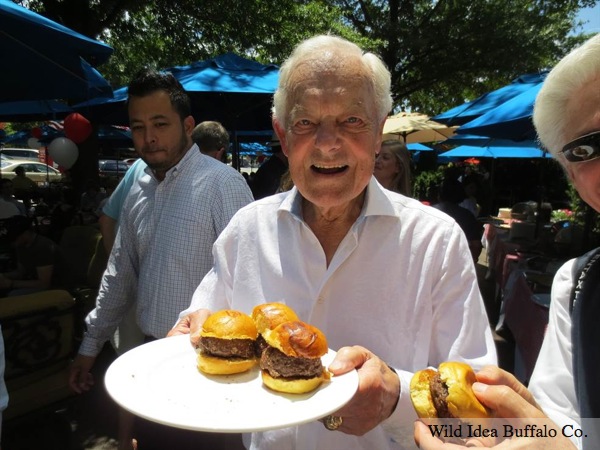
Read More

Are Wild Idea Buffalo grass-fed?

jill Understanding Buzz Words

YES.

100% grass-fed, in a free roaming non-confined environment.
From grass-fed 101: There is currently no USDA-standardized definition of grass fed. This makes the term grass-fed misleading, as many producers use the term grass-fed but forget to tell you that their animals have been “finished”. Finishing is a process of fattening the animal for the last 90 to 160 days on an un-natural diet of corn, grains and “other”.

What is “other” you ask?

My father’s last job was for a small feed-lot operator in North Dakota. During a visit, he gave and me and Dan a tour. It was my first time on a feed-lot, and even though it was small by factory feed-lots, it was still awful. I could see that my father felt similarly by the look in his eyes. Our last stop on the property was the feed storage area. At our feet were piles of silage. Not a silage of chopped up corn and hay, but an other type of silage consisting of French fries, potato ole’s, hamburger buns, chewing gum still in the foil wrapper, (I guess no one was willing to peel the wrappers off for the cows), and other discarded fast food items. Our disgusted silence was soon interrupted by a tractor. The driver lowered the bucket on his front end loader, scooped up a big shovel full and then moved off to feed the cows. So even if you are trying to avoid fast food, you could very well be eating it anyway. Excerpt from Michael Pollans’, The Omnivore’s Dilemma: Grain finishing became the industry standard, because it enabled animals to fatten and mature earlier, thus making it much cheaper to “finish” them to a desired weight, and because of the changes that grain feeding causes in the tissues, the meat from almost any animal can be made tender through grain finishing. That, combined with the powerful corn industry in this country, and its overproduction, created the industrialized feedlot model that feeds most Americans today. Fact; according to the NBA in 2008, 92% of all bison raised are finished in the cattle fed-lot model.

Are Wild Idea Buffalo free range/free roaming?

jill Understanding Buzz Words

YES.

We really are the home where the buffalo roam. Often the practice of free range is far from what most of us would understand free range to be. Defined: Free range meat production involves providing open air access to animals instead of confining them to barns. They should be free to roam in open fields along with other animals and should receive natural light. Open pasture access (for at least 120 days in a year) is an important criterion for organic meat production. However, you should note that free range meat is not organic meat. Other than the producer’s word, the term free range does not have any reassurances.  Also, it does not clarify where the animals spend their remaining 245 days.

Are Wild Idea Buffalo Company Organic Buffalo Ranchers?

jill Understanding Buzz Words Leave a Comment

YES.

Based on our practices we would be considered organic.  Is our meat certified Organic? No, (but, more on that in just a minute). The information on Organic is overwhelming, and with the modifications made over time it becomes somewhat contradictory. Here are a few clips to help explain:

From the USDA web-site:

  1. USDA National Organic Standards Board (NOSB) definition, April 1995
    • “Organic agriculture is an ecological production management system that promotes and enhances biodiversity, biological cycles and soil biological activity. It is based on minimal use of off-farm inputs and on management practices that restore, maintain and enhance ecological harmony.
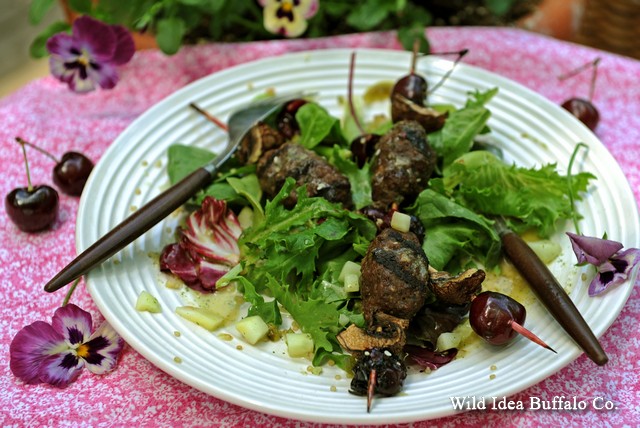
    • “‘Organic’ is a labeling term that denotes products produced under the authority of the Organic Foods Production Act. The principal guidelines for organic production are to use materials and practices that enhance the ecological balance of natural systems and that integrate the parts of the farming system into an ecological whole.
    • “Organic agriculture practices cannot ensure that products are completely free of residues; however, methods are used to minimize pollution from air, soil and water.
    • “Organic food handlers, processors and retailers adhere to standards that maintain the integrity of organic agricultural products. The primary goal of organic agriculture is to optimize the health and productivity of interdependent communities of soil life, plants, animals and people.”
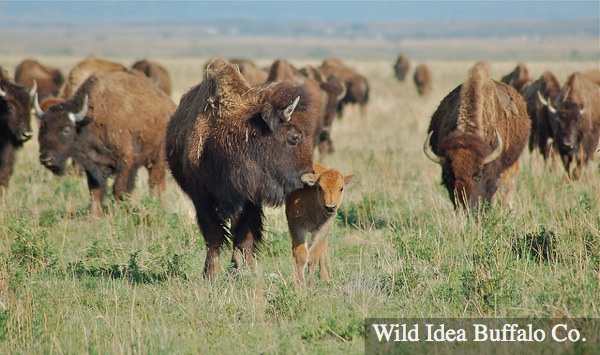
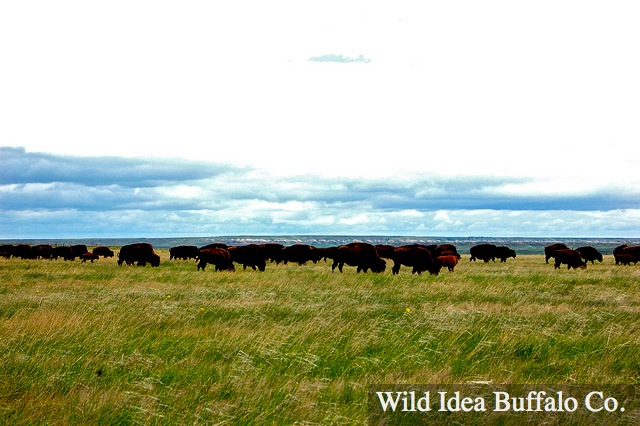
WASHINGTON, Oct. 22, 2008 – The U.S. Department of Agriculture will publish a proposed rule in the Federal Register on Oct. 24 that proposes to amend the National Organic Program (NOP) livestock standards to clarify the role pasture plays in the production of organic ruminants. Highlights of the proposed rule include:

*A definition of “growing season,” and the requirement that all animals over the age of six months must be on pasture throughout the growing season.

*Animals must receive 30 percent of their dry matter intake (DMI) from pasture.

*A definition of “temporary confinement,” and clarification of periods of temporary confinement.

*A pasture practice standard that addresses the management of pasture as a crop.

From Wikipedia: Since the organic food movement has been increasingly industrialized and often forced to undergo processes similar to those of conventional agriculture (such as monoculture plantings on massive scales)due to market pressures, many members of the what was originally the organic food movement are demanding that new standards be established for sustainable organic foods. Many ardent supporters of organic foods are frustrated that the integrity of what constitutes “organic” foods and farming methods have been compromised by FDA legislation that allows for synthetics to be introduced into organic processed foods and other unsustainable industrial attributes associated with “organic” foods.[

From grass-fed 101:

While some grass fed is organic, not all organic or natural meat is grass fed or finished. Many of the organic and natural products are grain fed, in confined feedlots; it’s just that the grain that is fed is certified organic or natural.

The demand for organic foods has produced many industrialized organic farms, most of which do not practice the original sustainability practices of organic. Although organic is not the silver bullet, it’s a good start. Our local grocery store just put in an organic section; it is filled with organic pop-tarts, cookies and TV dinners. As stated earlier, we are not certified organic; however we follow all of the sustainable organic guidelines and then some.

Is Wild Idea Buffalo Meat Natural?

jill Understanding Buzz Words Leave a Comment

YES.

The term “natural” is loosely used. By definition natural is; Food that does not contain any additives, such as preservatives or artificial coloring. There is no formal Food and Drug Administration definition of natural for food-labeling purposes.

So, unless you were to purchase processed foods, most all unprocessed foods could be labeled “natural“, including those with antibiotic, hormones and pesticides.

Are Wild Idea Buffalo Humanely Treated?

jill Understanding Buzz Words 1 Comment

YES

and Wild Idea Buffalo Company is American Humane Certified. You would think humane treatment of animals would go without saying. As it turns out many people seem to have a say and a view on what humane treatment is. The debate is largely between factory farms and animal activists. The factory farms position is underlined by mass production at any cost and the activist position is about eliminating animals completely from our food supply. It is my belief that many family farmers naturally practice humane treatment and good animal husbandry. Our own humane treatment to all of our animals is common sense based; we provide them with a healthy environment, ensure that they have access to food and water, treat them with respect, and this might sound corny, but – we love them. When we harvest our buffalo they are in the pasture grazing, this eliminates the stresses of corralling, of trucking and of them waiting at the back door of a slaughter house. Our animals live a good life and are given dignity in death. Again, this is not a silver bullet, but it’s a good start. There is a lot more detailed information on the humane treatment and slaughter of animals; here are a couple of sites if you would like to read and learn more on the current policies.

http://www.nationalaglawcenter.org/assets/crs/RS21978.pdf

http://www.americanhumane.org/protecting-animals/programs/farm-animals/

www.animallaw.info

Spring Asparagus Soup

jill Recipes, Various Recipes Leave a Comment

Spring Asparagus Soup (serves: 4 entrée servings or 6 first course servings)
This elegant soup is made often in our house, when Asparagus is at its best.

Ingredients:
2 teaspoons basil olive oil
2 teaspoons organic butter
½ onion, chopped
1 bunch asparagus, chopped (broccoli may be substituted)
6 oz. spinach
½ cup cilantro, chopped
3 cups organic chicken stock or vegetable stock
2 tablespoons lemon juice
1 teaspoon salt
1 tablespoon black pepper
1 pinch cayenne

1.)  Over medium high heat, heat oil & butter in 3 qt. soup pot.

2.)  Add onion and sauté until tender, but not brown.

3.)  Add asparagus and sauté for 3 minutes.

4.)  Add spinach, cilantro, 1 cup of stock, lemon juice and seasonings, cover, reduce heat to low and simmer for 4 minutes.

5.)  Place all ingredients in blender, add remaining stock and puree until smooth.

6.)  Return to soup pot and bring to full heat.

Season to taste, and garnish with fresh cilantro sprig. A drizzle of cream is optional.

Wine Pairing: Groth Vineyards, Napa Valley, 2008 Sauvignon Blanc

Essence of citrus and hints of melon make this wine nicely balanced. Crisp yet full and well rounded.

The Red River Flows North

dan Cheyenne River Writings, Dan's Writings 25 Comments


Early Sunday morning I talked on the telephone to a friend whose family owns a house along the Red River. The house is on the Minnesota side but now the river is all around them. Forty two feet above flood stage is a lot of water. After I talked to him I got the topography maps out and sat by the window that overlooks the Cheyenne River a half mile to the east. I figured that if the Cheyenne ever got forty-two feet above its banks it would be lapping at the horse pasture gate. Our house would still be high and dry but the sight would be frightening – lots of drowned trees and ruined fences. The corral would be gone and some prairie dogs would likely be dead. But there would be no great losses like there is when a river floods a populated area like Fargo-Morehead. Noting like New Orleans.

Read More

Cowboy Steaks with Chimichurri Sauce

jill Jill's Journal 4 Comments

This month’s recipe has cowboys in mind, specifically my cowboys. But first a story: Usually this time of year, we are looking for and gathering buffalo out on the national grasslands. It is an event that we look forward to and also fear. It is stressful, exhilarating and always beautiful. Stressful, because you find yourself doing things that if you were not “so in the moment”, you would never do. Things like riding a horse too fast down a steep embankment or, in Dan’s case, getting off his horse as the buffalo are running toward him, in an attempt to turn them (which they usually always do).Read More

Bison Steaks with Chimichurri Sauce

jill Buffalo Recipes, Recipes, Steaks Leave a Comment

Serves 4 –

Chimichurri Ingredients:
1 cup fresh parsley, coarsely chopped
½ tablespoon oregano
½ tablespoon black pepper
½ tablespoon chili flake
½ teaspoon salt
2 tablespoons garlic
1 teaspoon lemon juice
1/3 cup white wine vinegar
1/3 cup olive oil

1.)    Place all ingredients in blender and puree.
2.)    Divide Chimichurri sauce, place half in a zip lock bag
and reserve the other half to pass with steaks.
Serve sauce at room temperature.

Bison Steaks:
4- 10oz. bison steaks
1 teaspoon olive oil
½ teaspoon salt
1 teaspoon pepper

1.)    Place bison steaks in half of the above Chimichurri sauce, and marinate for 4 to 24 hours. Rest at room temperature 2 hours before cooking.
2.)    Remove steaks from marinade and pat dry, discarding marinade.
3.)    Rub steaks with olive oil, salt and pepper.
4.)    Preheat grill to high heat, and grill steaks for 3 minutes each side for medium rare.
Increase cooking time for desired doneness.
5.)    Remove steaks from grill.
Serve with boiled new potatoes and pass with remaining Chimichurri sauce.

Wine Pairing: WA State, Columbian Valley – Chateau St. Michelle, Orphelin – 2005
This is a Rhone style blend, made from 10 varietals, producing a smooth luscious wine.
Heavy enough to stand up to a juicy flavorful steak, but without overwhelming the food.

Lullaby for the Beast

dan Cheyenne River Writings, Dan's Writings 16 Comments

Wild Idea Buffalo Sunset

Sunrise over the Cheyenne River

The news of the world is so bad that Jill and I have pretty much stopped listening to NPR in the mornings. Sometime in the last several years we got into the habit of turning on the radio every morning around 4 am and waking up slowly to descriptions of whatever happened to the world in the previous twenty-four hours. Waking up like that was often the highlight of the day. We came to life considering interesting thoughts and hearing vivid word portraits of astounding events. We drifted in and out of consciousness while the coffee perked in the kitchen and the bird songs outside the window built to a six-thirty crescendo. You could feel the rest of world warming in the new light.

Read More

River Ranch Diary

gervase Cheyenne River Writings, Gervase's River Ranch Diary 4 Comments

Dawn did not break today. It came and went leaving a silver/gray morning light behind. A fine haze obscures the hills beyond the river.

A light covering of new snow smoothes out uneven ground. Snow falls lightly in small flakes. A long line of buffalo appears walking along a fence line, east to West, from my left to my right. They are about a half mile away and walking in a single file: cow, calf, cow, calf. The bulls are scattered throughout the file. They are not grazing, just making slow, steady progress. They are going to water, moving toward a spring that runs year ’round. Their weight will break through the thin ice that has formed overnight. They will drink and move on, forming a denser, more compact group once again to graze the pastures.

dsc_0031-sm1

Each buffalo has a layer of snow on its back, and all together they look a little like a brown and tan, black and white, intricately designed, patchwork quilt. From a distance they become almost indistinguishable from their background, except their movement is perceptible if watched closely for a few minutes. Up close the buffalo is a large dark animal with snow on its back. It has rather small, dark, protected eyes in a massive densely furred head. The cows grunt; their last year’s calves stay near them. These calves will accompany their mothers when they go off to have this year’s calf. The youngsters from the previous year will probably go along also, as will two or three other from these small family groups, to form a kind of birthing nursery.

After these new calves are on the ground the mothers and their juvenile offspring will rejoin the main herd. It seems to me like an introductory process in which the newest baby is presented and introduced to its extended family. At this time the mother remains anxious and extremely protective of her newborn; and if she feels threatened, particularly by the presence of people, she will likely depart the herd with her calf and do her best to disappear into the hills and ravines. The newborn calf can and will follow her at her pace for miles if need be. Later on she and the calf will return to the herd.

Read More

Understanding Buzz Words

jill Blogging, Jill's Journal Leave a Comment

As a healthy red meat company, we answer a lot of questions regarding how our buffalo are raised, what they are fed, and how they are harvested. Our customers are looking for more then what’s on a label, they want real answers. Many producers, including ourselves, use words to explain there products such as; sustainable, grass-fed, free-range, organic, natural, and humanely treated. Many of these labels have guidelines behind them. But to a consumer, what do they all really mean? Are these labels just marketing tools or do they have truthful value? To help shed some light on these labels, and to help answer questions you might have on Wild Idea Buffalo Co. products, as well as to satisfy our own curiosities, I sat down and did some investigating.

As a producer we do our best to be completely transparent with our customers. It can not however be summed up into a word or two, it requires an explanation. The explanation goes something like this: Wild Idea Buffalo meat is; 100% antibiotic & hormone free, 100% pastured/free roaming, 100% grass-fed only, 100% non-confined, 100% humanely treated, and 100% humanely harvested. (And we are 100% telling the truth.) This explanation is followed by many detailed footnotes.


Does that make us sustainable buffalo ranchers and meat producers? Yes.

If you consider the condensed explanation of sustainability related to ranching and agricultural practices, your definition would be; From Wikipedia: Sustainability is the ability of an ecosystem to maintain ecological processes, functions, biodiversity and productivity into the future. From the Commission on Environment & Development: In short, sustainability is “to meet the needs of the present without compromising the ability of future generations to meet their own needs”. We participate in sustainability by; putting abused lands back to native grass, returning the native buffalo back to its homeland, which in turn rejuvenates the ecosystem, as well as other native species, and we use limited fossil fuels in our ranch operation. It is our attempt at leaving our small piece of this world a little better then what we found it.


Are we grass-fed? Yes, 100% grass-fed, in a free roaming non-confined environment.

From grass-fed 101: There is currently no USDA-standardized definition of grass fed. This makes the term grass-fed misleading, as many producers use the term grass-fed but forget to tell you that their animals have been “finished”. Finishing is a process of fattening the animal for the last 90 to 160 days on an un-natural diet of corn, grains and other. What is other you ask? My father’s last job was for a small feed-lot operator in North Dakota. During a visit, he gave Dan and me a tour. It was my first time on a feed-lot, and even though it was small by factory feed-lots, it was still awful. I could see that my father felt similarly by the look in his eyes. Our last stop on the property was the feed storage area. At our feet were piles of silage. Not a silage of chopped up corn and hay, but an other type of silage consisting of French fries, potato ole’s, hamburger buns, chewing gum still in the foil wrapper, (I guess no one was willing to peel the wrappers off for the cows), and other discarded fast food items.  Our disgusted silence was soon interrupted by a tractor. The driver lowered the bucket on his front end loader, scooped up a big shovel full and then moved off to feed the cows. So even if you are trying to avoid fast food, you could very well be eating it anyway.  Excerpt from Michael Pollans’, The Omnivore’s Dilemma: Grain finishing became the industry standard, because it enabled animals to fatten and mature earlier, thus making it much cheaper to “finish” them to a desired weight, and because of the changes that grain feeding causes in the tissues, the meat from almost any animal can be made tender through grain finishing. That, combined with the powerful corn industry in this country, and its overproduction, created the industrialized feedlot model that feeds most Americans today. Fact; according to the NBA in 2008, 92% of all bison raised are finished in the cattle fed-lot model.


Are we free range/ free roaming? Yes, we really are the home where the buffalo roam. Often the practice of free range is far from what most of us would understand free range to be. Defined: Free range meat production involves providing open air access to animals instead of confining them to barns. They should be free to roam in open fields along with other animals and should receive natural light. Open pasture access (for at least 120 days in a year) is an important criterion for organic meat production. However, you should note that free range meat is not organic meat. Other than the producer’s word, the term free range does not have any reassurances.  Also, it does not clarify where the animals spend their remaining 245 days.


Are we Organic buffalo ranchers? Yes, based on our practices we would be considered organic.  Is our meat certified Organic? No, (but, more on that in just a minute). The information on Organic is overwhelming, and with the modifications made over time it becomes somewhat contradictory. Here are a few clips to help explain:


From the USDA web-site:

  1. USDA National Organic Standards Board (NOSB) definition, April 1995
    • “Organic agriculture is an ecological production management system that promotes and enhances biodiversity, biological cycles and soil biological activity. It is based on minimal use of off-farm inputs and on management practices that restore, maintain and enhance ecological harmony.
    • “‘Organic’ is a labeling term that denotes products produced under the authority of the Organic Foods Production Act. The principal guidelines for organic production are to use materials and practices that enhance the ecological balance of natural systems and that integrate the parts of the farming system into an ecological whole.
    • “Organic agriculture practices cannot ensure that products are completely free of residues; however, methods are used to minimize pollution from air, soil and water.
    • “Organic food handlers, processors and retailers adhere to standards that maintain the integrity of organic agricultural products. The primary goal of organic agriculture is to optimize the health and productivity of interdependent communities of soil life, plants, animals and people.”

WASHINGTON, Oct. 22, 2008 – The U.S. Department of Agriculture will publish a proposed rule in the Federal Register on Oct. 24 that proposes to amend the National Organic Program (NOP) livestock standards to clarify the role pasture plays in the production of organic ruminants. Highlights of the proposed rule include:

*A definition of “growing season,” and the requirement that all animals over the age of six months must be on pasture throughout the growing season.

*Animals must receive 30 percent of their dry matter intake (DMI) from pasture.

*A definition of “temporary confinement,” and clarification of periods of temporary confinement.

*A pasture practice standard that addresses the management of pasture as a crop.


From Wikipedia: Since the organic food movement has been increasingly industrialized and often forced to undergo processes similar to those of conventional agriculture (such as monoculture plantings on massive scales)due to market pressures, many members of the what was originally the organic food movement are demanding that new standards be established for sustainable organic foods. Many ardent supporters of organic foods are frustrated that the integrity of what constitutes “organic” foods and farming methods have been compromised by FDA legislation that allows for synthetics to be introduced into organic processed foods and other unsustainable industrial attributes associated with “organic” foods.[


From grass-fed 101:

While some grass fed is organic, not all organic or natural meat is grass fed or finished. Many of the organic and natural products are grain fed, in confined feedlots; it’s just that the grain that is fed is certified organic or natural.


The demand for organic foods has produced many industrialized organic farms, most of which do not practice the original sustainability practices of organic. Although organic is not the silver bullet, it’s a good start. Our local grocery store just put in an organic section; it is filled with organic pop-tarts, cookies and TV dinners. As stated earlier, we are not certified organic; however we follow all of the sustainable organic guidelines and then some.


Does that make our buffalo meat natural? Yes.

The term “natural” is loosely used. By definition natural is; Food that does not contain any additives, such as preservatives or artificial coloring. There is no formal Food and Drug Administration definition of natural for food-labeling purposes.

So, unless you were to purchase processed foods, most all unprocessed foods could be labeled “natural“, including those with antibiotic, hormones and pesticides.

You would think humane treatment of animals would go without saying. As it turns out many people seem to have a say and a view on what humane treatment is. The debate is largely between factory farms and animal activists. The factory farms position is underlined by mass production at any cost and the activist position is about eliminating animals completely from our food supply. It is my belief that many family farmers naturally practice humane treatment and good animal husbandry. Our own humane treatment to all of our animals is common sense based; we provide them with a healthy environment, ensure that they have access to food and water, treat them with respect, and this might sound corny, but – we love them. When we harvest our buffalo they are in the pasture grazing, this eliminates the stresses of corralling, of trucking and of them waiting at the back door of a slaughter house. Our animals live a good life and are given dignity in death. Also, we have just started the process of becoming American Humane Certified. Again, this is not a silver bullet, but it’s a good start. There is a lot more detailed information on the humane treatment and slaughter of animals; here are a couple of sites if you would like to read and learn more on the current policies.

http://www.nationalaglawcenter.org/assets/crs/RS21978.pdf

http://www.americanhumane.org/protecting-animals/programs/farm-animals/

www.animallaw.info

As a producer, it is extremely frustrating to be up against other producers or vendors that continually misuse labels. They ride on those of us who are truly trying to make a difference and make it even more difficult for all of us to make smart sustainable choices. There is a lot of information out there and it takes time to understand it. This research has cleared up some of my own misconceptions and I hope it has helped you too.

Other sites you might be interested in:

http://www.eatwellguide.org/i.php?pd=Home Resource guide for where to get products.

http://www.themeatrix.com/ A must see series of 3 minute videos that are entertaining & informative.

http://www.montereybayaquarium.org/cr/seafoodwatch.aspx They offer a guide on purchasing healthy non- endangered fish & seafood.

GrassFedParty.org's Interview with Dan O'Brien

jill In the News Leave a Comment

Posted by Franny www.GrassFedParty.org

We all know that the buffalo were the original grazers of the Great Plains. Cattle ranchers who practice rotational grazing try to mimic the movement of buffalo on grasslands. Buffalo were nearly killed to extinction by the turn of the last century, but in the last couple decades there has been a movement among ranchers and conservationists to bring the buffalo back. [read the full interview]

America’s Back Lot

dan Cheyenne River Writings, Dan's Writings 23 Comments

img_2556
Dan working with the dogs at the Weaver Ranch, this is how the grasslands should look.

When I was a kid in the fifties and sixties I lived in what was just beginning to be called The Rust Belt. I was born and raised in northwestern Ohio among dirty and failing manufacturing plants; heavy industry, piece-work factories, tire and appliance builders. I was just a child and not until later did I realize that the stench of the rubber plants was not natural and probably damaging our health. I felt – but didn’t understand – that the land had been severely abused. The fact that the beaches of Lake Erie were posted with skull and crossed bone signs raised a few of our parent’s eyebrows but was mostly met with shrugs of resignation. My dad was disheartened when he showed me a slough along a Lake Erie estuary where he had hunted ducks and geese as young man. The slough was eerie indeed: silent, still, polluted, and dead. I remember him shaking his head at the news that the world renown peach and walleye fishery was closed because the fish were found to be poisonous. When, in 1969, the Cuyahoga River actually caught on fire and burned, most of us laughed that sad laugh people resort to when they are sick and afraid inside. But my father was angry. “What in the hell,” he asked, “are we doing?” Read More

River Ranch Diary – January 30, 2009

gervase Cheyenne River Writings, Gervase's River Ranch Diary 8 Comments

A thin, white smoke rises from the twist of sage and sweetgrass. The holy man presents a prayer, carried by the smoke to the four directions, then to the earth and to the sky. A soft, regular drumbeat accompanies his prayer as he regards the small circle of men and women and begins an honor song to the herd of buffalo standing quietly about a quarter of a mile away. The holy man, then, proceeds to each person standing in the circle and offers the sacred smoke for them to waft over themselves. It is dawn, and it is on the Cheyenne River Ranch immediately before we move out to make meat for Wild Idea.Read More

Restaurant Dinning & Buffalo Gumbo

jill Jill's Journal 1 Comment

During a recent trip to Arizona, my mother and I ate at many restaurants. She loves the chance to dine out, and I enjoy the opportunity of being served, savoring tasty dishes, and coming away with an educational experience. Needless to say, I will go anywhere and try anything. However, with the continued awareness of our food supply, going anywhere and trying anything, has become increasingly difficult. Between having waiters proudly announce that the fish was “farm raised’, to encountering restaurant menus that advertise dishes with creative word spin, which often fail to make it from page to plate, was all a bit disappointing. Good, honest food is hard to beat and these days even harder to come by.
Read More

Buffalo Gumbo Prairie Style

jill Buffalo Recipes, Recipes, Sausages, Stews & Soups Leave a Comment

Buffalo Gumbo (serves 12)
My prairie-ized, healthier version of this southern favorite dish, without missing the flavor! Enjoy!

Ingredients:
1 2 pound package Buffalo Stew Meat
½ cup olive oil
1 tablespoon black pepper
1 tablespoon salt
1 tablespoon garlic powder
1 tablespoon onion powder
1 tablespoon paprika
1 teaspoon cayenne
1 teaspoon oregano
1 teaspoon thyme
1 onion, diced
1 14 ounce package Buffalo Andouille Sausage, sliced
1 red pepper, diced
4 celery stalks, diced
1 clove garlic, chopped
½ cup flour
2 quarts chicken stock
24 Shrimp, peeled and de-viened
¾ lb. frozen okra, or fresh if available

1.) Remove stew meat from package, place in colander, rinse and drain completely. Pat dry with a paper towel.
2.) In heavy stock pot over medium high flame, heat 2 tablespoons oil.
3.) Add stew meat and dry seasonings, and sauté until lightly browned.
4.) Remove stew meat from stock pot and set aside.
5.) Add 1 tablespoon of olive oil, and sliced Wild Idea Buffalo Andouille Sausage.
6.) Add onion, red pepper, celery and garlic and sauté until tender.
7.) Remove Andouille and vegetables from stock pot and set aside.
8.) Add the remaining ¼ cup olive oil to the stock pot and heat.
9.) Whisk flour into the oil and continue to whisk for 20 minutes or until roux is dark brown.
10.) Add stew meat, vegetables and their juices back to the pan, stirring to
incorporate.
11.) Add 2 quarts chicken stock and bring to boil.
12.) Cover stock pot, reduce heat to low, and simmer for 1 hour.
13.) Remove from heat, cool and refrigerate.
14.) Before reheating, remove the oil that has formed on the top.
15.) Over medium high heat, reheat gumbo, stirring occasionally.
16.) Let gumbo simmer on medium heat for 1/2 hour.
17.) Increase heat to medium high. Add shrimp and frozen okra and cook for 10
minutes.
18.) Serve gumbo around a scoop of rice in a shallow bowl., and accompany with
warm crusty bread.

Wine Pairing: O Seduction – 2005, Red Wine, from O’Brien Estate Winery – Napa Valley
It’s not just the name that makes it a favorite at our house! This is a cabernet based Bordeaux style wine that offers the deep richness for true cab lovers, but a smooth silky roundness for the softer palate. It has been described as a luscious French kiss – that will leave you wanting more.

Buffalo Nightmare

jill Blogging Leave a Comment

I dreamed there was a website
Where a citizen poet posted
Two origninal poems every hour.

They appeared like clockwork on the 8’s and
He’d been posting for forty days and fourty nights.

I got on the internet and
Tried to stop him.
But I didn’t know how.

A Million Acres

dan Cheyenne River Writings, Dan's Writings 15 Comments


Ecosystems are morphing beasts with fuzzy edges. It’s hard to say where one leaves off and the next one begins – hard to say exactly what influence a mangrove swamp has on, say, the sand dunes behind them. But to make a meaningful stab at conserving that swamp we have to draw a line somewhere and the more delicate the ecosystem is, and the more attractive in terms of potential human use, the more important it is to get that line drawn quickly. Given the state of environmental degradation in the world, when it comes to drawing lines, speed might be more important than accuracy.

Read More

River Ranch Diary

gervase Cheyenne River Writings, Gervase's River Ranch Diary 6 Comments

In late November the buffalo went out to pasture on grasslands managed by the US Forest Service. That was shortly after a relatively early, tough and somewhat destructive blizzard that we dug ourselves out of when the skies cleared. The one or two good things about the blizzard were that it was not very cold and it provided some welcomed moisture.Read More

Bison and Bulgur Wheat Cakes with Citrus Butter-Nut Squash and Black Bean Gravy

jill Jill's Journal 1 Comment

Resolution 2009! Each year at this time I renew my commitment to take care of myself.

My vow renewal includes, eating right, exercise religiously, and drinking more water. How dreadfully boring is that? I clearly needed more motivation …soooo, to spice things up a bit, I’ve taken up snow skiing and my Pilates machine should be here in about a week. (I hope I get it out of the box before June.) In addition to spicing up my exercise regime, I’m spicing up my recipes too, by infusing them with ethnic flavors from around the world. This months recipe is inspired by my Sierran heritage, a modification of my families Kibbeh recipe and is also included in our “January Resolution 2009 Special”. Cheers to a Healthy, Happy New Year! Enjoy – JillRead More

Bison and Bulgur Wheat Cakes

jill Buffalo Recipes, Ground, Recipes Leave a Comment

Serves 8 or 16 starter courses


Ingredients:

½ cup bulgur wheat

½ cup warm water

1 small onion, chopped

1 teaspoon salt

2 teaspoon black pepper

1 teaspoon cumin

1 teaspoon allspice

½ teaspoon cinnamon

1 pound ground bison

4 tablespoons olive oil

2 tablespoon fresh parsley, chopped + additional sprigs for garnish

1.) Place bulgur wheat and warm water in bowl, cover and let soften. About 1 hour.

2.) In food processor add onion and seasonings and mix.

3.) Add bison and process, adding 2 tablespoons of oil as it is processing.

4.) Add bulgur and mix in thoroughly.

5.) Add parsley and pulse process.

6.) Remove mixture and form into cakes.

7.) In sauté pan over medium heat, heat 1 tablespoon of oil and place half of the cakes in the pan. Cook for 2 minutes each side. Remove, and place on paper towel. Add the remaining tablespoon of oil and cook the second batch.

8.) Serve the bison cakes on citrus butternut squash, drizzle with black bean gravy and garnish with parsley sprig.


Citrus Butter-Nut Squash
Serves 6

Ingredients:

1 Butter Nut Squash, halved and seeded

½ cup water

3 tablespoons basil olive oil

¼ cup orange juice concentrate

2 teaspoons salt

1 tablespoon black pepper

½ teaspoon cayenne

1.) In 375* preheated oven, pour water in baking pan and place squash skin side down in pan.

2.) Bake for 1 hour.

3.) Remove squash from skin and place in mixing bowl.

4.) Add remaining ingredients and mix well.

5.) Reheat in microwave.


Black Bean Gravy

Ingredients:

1 15 ounce can black beans

1 5 ounce can crushed tomatillos

1 teaspoon salt

1 teaspoon black pepper

1 tablespoon lime juice

1.) In food processor mix all gravy ingredients and puree. This can be made ahead.

2.) When ready to use, heat gravy in a saucepan over low heat on stove. Gravy will darken as it heats.

Wine Pairing: Seghesio – Sonoma County 2007, Zinfandel

Fruit and berry aroma’s with a hint of spice. A nice balance of juicy fruits and integrated tannins give this wine a silky smooth finish.

WHERE DO THEY COME FROM?

dan Dan's Writings 4 Comments

So it got cold as hell up here. Minus 24 a few nights ago and at least 10 below every night since – never above zero for three days. But that’s not all bad because it definitely drove me inside where several writing projects waited for me like a visiting mother-in-law. (One of those projects is my pledge to do just what I’m doing now – figuring out how to “get with the blogging thing”.)

But I wasn’t going to let a little inclement weather keep me inside all day. Instead of a brisk walk I’ve been taking a early am drive around the countryside. There is nothing like sub-zero nights to bring the hungry critters out into the first rays of sunshine. I’ve been seeing literally hundreds of deer, sharp tailed grouse, crows, and here’s the thing that relates to what some have been commenting on: scores of eagles!

Deer hunting season ended a few weeks ago and the gut piles left scattered over the countryside have been impossible to see until a few days ago. Now, everyone has at least two eagles – balds and goldens – camped out on them. We see eagles all year long out here but when it gets really cold, they are suddenly everywhere.

Several years ago we slaughtered a buffalo on a cold, foggy morning. I had not seen an eagle for months, but as we drove away from slaughter site I looked in the rearview mirror and saw an incongruous slice of black gliding through the fog and decending, as if on a cable, to the remains of the buffalo we had just slaughtered. How could it have known? What brought it to that exact spot?

So I’m thinking about birds of prey and thinking that Bill Gee’s sharpshine hawk is not that different from my eagles. I’m also thinking that I might forget about those projects that need doing, sit down in the sun from the front window, as several of you have suggested,  and read a little poetry. I’m thinking I might dig out the Robbinson Jeffers.

Turkey bones simmer in the old steel soup pot…

dan Cheyenne River Writings, Dan's Writings 6 Comments

Turkey bones simmer in the old steel soup pot. The cat curls in his basket. Early-winter sunshine warms my chair as I read the poems of old friends Harrison and Koosher. My eyes drift between the bird feeder and the page. The summer birds are gone but I saw two juncos and a pine siskin only an hour ago. The gold finches have faded to a kaki green. Soon the chickadees and nuthatches will appear from nowhere.Read More

Mist lay along the river like smoke…

gervase Cheyenne River Writings, Gervase's River Ranch Diary 2 Comments

Mist lay along the river like smoke. The sun climbed slightly above the hills overlooking the river. Buffalo began to move out of the mist and into the sunlight. The chill would soon go out of the air; the mist would burn off the river. I saw Erney leave his cabin and turn left along the front of the building on his way to feed and water the partridge we raise for release. The horses came into the corral anticipating a portion of oats; so I complied and walked out to give some to them.Read More

It is early in the morning…

dan Cheyenne River Writings, Dan's Writings 23 Comments

It is early in the morning of November 5, 2008. Yesterday at this time I was driving to my polling place to vote in what the entire world has called an historic election. The trip took me about an hour each way and cost me about fifteen bucks. Most of the road is gravel and I had to be careful not to hit a deer because the nights have begun to freeze, the pastures have turned brown, and the only green grass is in the road ditches where moisture has collected over the summer. The deer pile into those ditches this time of year, trying their best to lay on an extra layer of fat before the really cold days begin.Read More

I have always liked…

gervase Cheyenne River Writings, Gervase's River Ranch Diary 2 Comments

I have always liked the Fall of the year. When I was a child, I liked the Fall because it meant Halloween and Thanksgiving. It was door to door Trick or Treats, when the only trick on the kids was somebody jumping out of the bushes. That was before the beginning of screening candy apples for razor blades. Then it was Thanksgiving with all the hoopla of the Horn of Plenty. It was Pilgrims and Indians sitting down at the feast table together—well, at least in the grade school programs.Read More

Make that next burger from flavor-packed, healthy bison

jill In the News Leave a Comment

By Lisa Donovan
Chicago Sun Times

As we march toward the end of the summer grilling season, perhaps bored with the same-old chicken, steak, pork or vegetable skewers, my thoughts turn to the American buffalo.

No need to roam 1,000 miles to South Dakota for a taste of bison — the official name of the animal — when it can be enjoyed right here in Chicago.

The low-fat, low-cholesterol red meat can be found at specialty stores, including Trader Joe’s and Whole Foods locations in the city and suburbs, as well as Paulina Market, 3501 N. Lincoln, where bison steaks, sausages and ground beef are offered. Read More

SEA OF GRASS

dan Cheyenne River Writings, Dan's Writings 1 Comment

Watching the recent events on Wall Street and in Washington DC has me thinking about the relationship between profit, sustainability, and greed. Iíll leave my thoughts about greed until later and Iíll resist my knee-jerk reaction to the relationship between profit and sustainability. Maybe profit and sustainability are not mutually exclusive. Let me try a metaphor: Profit and sustainability are like water and land, they are more similar that different. Read More

Lately it seems…

gervase Gervase's River Ranch Diary Leave a Comment

Lately it seems that I have become very interested in, or at least I am paying more attention to, tradition. Tradition works on us in many ways. It is as blatant as the fireworks on the fourth of July and as subtle as voting the way our parents do without the slightest fanfare or thought. Tradition is nationwide like Thanksgiving dinner, or recording the height of a child on his birthday by marking it on the kitchen wall. Sometimes tradition instructs us to control our emotions, behavior and even our considerations about right and wrong. Read More

Dan and Jill are off …

dan Dan's Writings Leave a Comment

Dan and Jill are off on a restful vacation, so in lieu of this month’s musing we are running one of our favorites on our most asked about ranch character “Curly Bill”.

Current update on Curly is he remains the King of the Heard and is healthy and gynormous.

July 2005

One of the first buffalo that came to this ranch was a scrawny orphan with a crooked horn. He couldn’t have weighed over forty pounds and no one was betting that he would even survive, let alone thrive. The twisted horn is what gave him his name, Curly Bill, and it wasn’t long into that first tough winter that the little urchin began to win our heats. He was a bit of an ugly duckling and several buffalo managers more knowledgeable than I took one look at him and advised me not to make him herd bull. They said this with a chuckle and meant that Curly Bill should not be allowed to breed. They judged his genes detrimental to my buffalo herd and urged me buy some “quality bulls” to improve my herd. Read More

Autumn entering may well be…

gervase Gervase's River Ranch Diary Leave a Comment

Autumn entering may well be my favorite time of year. It breaks the sweltering days of summer and presents the prelude to winter. More than that it provides the harvest, assuming there is one, and assures or indicates to the harvester a future. If a drought is broken, even if only temporarily, it brings hope, relief and a little comfort to those who have weathered it. Read More

LION

dan Dan's Writings Leave a Comment

Mike Forsberg has really nifty equipment for taking pictures of things that sneak around at night. The camera is a Nikon and it’s encased in a weather proof box that is connected to a laser trigger by little cables. He has a bunch of lights and an array of mounts and tripods that can be used to anchor all this equipment to trees, or rocks, or the earth herself. He has camouflaged duct tape that he uses to make it all invisible. Read More

I have been back at the ranch…

gervase Gervase's River Ranch Diary Leave a Comment

I have been back at the ranch for about three weeks. Not without some regret did I leave France and all my friends there. While I was there I re-connected with old friends and connected with many new ones. I re-visited some of my old hangouts and discovered new ones, adding lots of new experiences to my recent history. Never having participated in a roundup in France before, I leaped at the opportunity to do so–and survived, and surprisingly enough, none of the French cowboys laughed at me. Never having hiked up a river before, I waded into the water for a six or seven kilometer trek up a small river into some mountains. That is a sport I had never seen before. Wading, yes, but hiking up the rapids, through the potholes with a lunch in a backpack and literally dozens of other people (dogs and children included) doing the same thing, is an amazing experience. Read More

Last week Jill and I …

dan Dan's Writings 1 Comment

Last week Jill and I went to Afton, Minnesota to participate in a buffalo release. Afton is on the St. Croix River a half hour’s drive from downtown St. Paul and I have to admit that I felt slightly disingenuous to accept a stipend for speaking at the repatriation of twenty-five yearling buffalo to what amounted to a clearing in the suburbs of the twin cities. Read More

By the time you read this entry…

gervase Gervase's River Ranch Diary Leave a Comment

By the time you read this entry, I will have been in France for about three weeks. So this piece will be a little different from what you have perhaps come to expect. I will, nevertheless, try to write something current. Before I left the states, we were working very hard to build new fences on a piece of property that serves to expand the deeded portion of the ranch. Four new pastures for the buffalo translates into about six miles of work: building new fence (I mostly help), putting in a new water system (I just watched them do it) and removing old fence (my specialty),.Read More

We South Dakotans…

dan Dan's Writings Leave a Comment

We South Dakotans are used to exposure. A couple weeks ago parts of the state received forty-eight inches of snow with sustained winds of over thirty miles per hour. Gusts went as high as sixty. This week it was sunburn and more wind. I once wrote in a novel that you know you’ve come to the Great Plains of South Dakota when you get the feeling that the whole world could see you, but no one is watching. Yes, we out here in the hard mid-section of the country know a lot about natural exposure. But we don’t know much about national exposure. Read More

About a week ago…

gervase Gervase's River Ranch Diary Leave a Comment

About a week ago I was returning to the ranch and stopped at a popular restaurant near Chamberlain, SD for lunch. There AI happened to run into an old friend that I had not seen for about ten years. After we finished the basic getting caught up with our lives and what we had been up to during the intervening years, he invited me out to the farm he had bought North of the Missouri River breaks near Chamberlain. Read More

It finally rained.

dan Dan's Writings Leave a Comment

For the past few years the wind would freshen in that magic way and our spirits would boil and swell like the thunderheads over the Black Hills. But time and again what had promised to be a reprieve from the oppressive, stomach-churning drought would evaporate into the heavens and leave nothing but clear sky and hot dry wind. Read More

It may be a little late…

gervase Gervase's River Ranch Diary Leave a Comment

It may be a little late in the season to write about the signs of Spring, as we see them out here on the Cheyenne River Ranch. There are a few things here on the prairie that many people seldom, if ever, have the opportunity to witness. That does not mean to suggest that we have something particularly unique–quite the opposite, but the prairie offers an abundance of interesting, even fascinating signs of spring.Read More

A great many things…

dan Dan's Writings Leave a Comment

A great many things to write about have come up in the last year and, as a result, the children’s story, THE HOMESTEAD BENEATH STRONGHOLD TABLE, was put on hold. There has been a quiet clambering for more installments so, after a hiatus of nearly a year, the Monthly Musing for April is 1 NEW INSTALLMENT of the story. To refresh your memory check out these archive links.

Installment 1
Installment 2
Installment 3
Installment 4

HOMESTEAD IN THE SHADOW OF STRONGHOLD TABLE

Installment Five

Molly knew that Grandmother Iron Cloud would not want her to cry, but she couldn’t help it. She felt so alone. Her father was leaving them for the winter and now, Grandmother Iron Cloud was dead. For most of the morning she lay on her bed and sobbed. Momma went about her morning chores but finally sat on the bed and stroked Molly’s hair. Molly rolled to face her mother. “But momma,” she said. “I am so sad.”

“I know” Momma said.

“What will we do?”
Read More

Sometimes…

gervase Gervase's River Ranch Diary Leave a Comment

Sometimes I just don’t believe it. I mean the things we seem to accomplish and mostly within the time we have, which is never enough, to accomplish them in. During the last two to three months the landscape here has literally changed. Read More

A great many things… Installment 1,2,3 & 4

dan Dan's Writings Leave a Comment

A great many things to write about have come up in the last year and, as a result, the children’s story, THE HOMESTEAD BENEATH STRONGHOLD TABLE, was put on hold. There has been a quiet clambering for more installments so, after a hiatus of nearly a year, the Monthly Musing for March is 1 NEW INSTALLMENT of the story. To refresh your memory check out these archive links.

Installment 1
Installment 2
Installment 3

HOMESTEAD IN THE SHADOW OF STRONGHOLD TABLE

Installment Four

It was decided that Papa Robert would go to Deadwood after he and Jack had cut enough wood for the winter. It was already September and the nights were cooling. Mama, Molly, and Grandmother Iron Cloud dug a third of the potatoes and left the other two thirds in the ground where Mama said they would keep. In the cotton woods along the river Papa Robert and Jack cut wood into lengths just long enough to fit into the stove and stacked it on the rickety wagon. They kept a shotgun leaned against a stump and three times shot migrating mallard ducks for Mama to cook and seal into jars for the winter. Read More

I have been looking…

gervase Gervase's River Ranch Diary Leave a Comment

I have been looking this evening, past my television, out the window toward the Cheyenne River and Little Corral Draw. The buffalo are over there on the winter pasture, and I was looking for them to come across Zebell Table or along the draw toward the river. I had seen them earlier in the day, up on the Table, and was hoping to see them amble down to the River, but now darkness is setting in and that takes care of my leisurely vigil. Their appearance on Zebell Table reminds me of my next, fast approaching ranch job–checking and repairing the fence on all of the summer pastures. Read More

The Ocean Below the Grass

dan Dan's Writings Leave a Comment

One of the great ironies of the natural world is the fact that just below one of Earth’s driest agricultural regions lays a 174,000 square-mile ocean. That huge expanse of pure, sweet water has been one of the selling points for the parade of flimflammers who sold and re-sold the Great Plains to gullible immigrants, and dreamers of every sort. The underground ocean is the Ogallala Aquifer. If those hucksters missed the irony of the aquifer’s juxtaposition to the arid land above, then they likely also missed the crueler irony of naming it for the dispossessed people of Red Cloud and Crazy Horse. Read More

Real winter has finally come…

gervase Gervase's River Ranch Diary Leave a Comment

Real winter has finally come to us this month. It snowed, maybe a little more than we have seen for the past couple of years, and the temperature fell at night to what I call “hard cold” lows of -19 to -24°F. Sometimes these cold mornings had little or no wind, but a few times the wind was up to about 30 mph. At these times it is best to do outside chores quickly and go inside to catch up on e-mail or read a book or pay bills or watch the Australian Open tennis matches on TV. I did all of the above until I could no longer stand it; so I would go outside for a little while and find something else to do before bolting for the door again. I don’t bolt so very well anymore, but I sure give it a good try. Read More

Endangered

dan Dan's Writings Leave a Comment

It is not simply rareness that attracts us to endangered wildlife. Though a Fairburn agate or a Folsom spear point might be fascinating, their numbers can not increase or decrease. There is nothing dynamic about populations of inanimate objects. They can not vanish from Earth. They are not forever struggling for existence. They do not fight for their existence as an endangered fish, or a bird, or mammal can. Read More

Almost thirteen years ago…

gervase Gervase's River Ranch Diary Leave a Comment

Almost thirteen years ago I retired from the University of South Dakota where I had served as a professor in the English Department since 1968 and where also, during my last four years, as Chair of the Department of Modern Languages. On my office door in the English Department I tacked a little aphorism I had written: I don’t know what reality is, but nobody escapes it. That statement occasioned quite a few written responses from passersby’s who defined reality for me. These were also taped or tacked to my door. One person even tore the paper from the door, by stabbing it with a pencil, and left it on the floor. Naturally I just returned it to its original place, and it elicited more commentary over the years. I still don’t know what reality is; but I know that nobody escapes it; and I believe it’s showed itself a few times over those years. Read More

I am sore…

dan Dan's Writings Leave a Comment

I am sore from head to toe. My fingers hurt from gripping knives and buffalo hide. My back is stiff from a hundred ascents of a step-ladder. Ancient injuries are screaming from every quarter of the old body. But I slept like the dead last night and, today, I am content. Read More

Well folks, the first real chill…

gervase Gervase's River Ranch Diary Leave a Comment

Well folks, the first real chill of winter has come upon us, catching us not completely unaware; but the first night that the temperature dropped to about 4°F, the previous day had been in the low 70’s. Yes, around here it happens like that. We really try to stay ahead of the onset of winter by readying everything for freezing temperatures. What that means in practical terms for this ranch is fairly simple. Erney puts in his winter supply of firewood. His stove helps to heat my apartment, which is above his; so he gets all the help from me that he needs. Read More

At the invitation of…

dan Dan's Writings Leave a Comment

At the invitation of the World Wildlife Fund and the Grasslands Foundation, a group of perhaps thirty people gathered at Chico Hot Springs to talk about ways to stimulate Great Plains economies as a way of protecting communities and ecosystems. Chico Hot Springs is located at the base of Immigrant Peak, in the Paradise Valley of the Yellowstone River. It is just north of Yellowstone National Park in an area emblematic of the Northern Rocky Mountains ecosystem. It is a landscape very different from the landscape we had gathered to discuss.
Read More

Lately I've been watching…

gervase Gervase's River Ranch Diary Leave a Comment

Lately I’ve been watching the annual, southerly migration of birds. The Meadowlarks have now all gone. A month or so ago the last of the Long-billed Curlews vacated these premises. The Burrowing Owls have been gone for about a month. The finches and warblers and Brown Thrashers have departed, as have the Mourning Doves, Robins, and Red-winged Blackbirds. The Starlings are gathering for their mass exodus, and the Sandhill Cranes’ haunting vocalizations are passing overhead moving toward warmer places. Read More

Gutzom Borglum began…

dan Dan's Writings Leave a Comment

Gutzom Borglum began carving the four faces on Mount Rushmore in August of 1927. When he died in 1941, his son, Lincoln, took up the metaphoric chisel and finished the work. Lincoln’s son, Jim, is a friend of mine. Jim and I share several interests: bird dogs, good food, and the prairie, to name a few. We also both enjoy a good party and Jim throws good parties. Read More

After Ben Cunningham…

gervase Gervase's River Ranch Diary Leave a Comment

After Ben Cunningham returned home to Switzerland in mid August I went to Oklahoma, for about three weeks. My travel had a three point purpose: 1) to relax and take a break, 2) to replace an old fence around my property there, and 3) to bring my oldest brother, Les, back to the ranch with me for a couple of months. Read More

THE OLD ROAD OF DISCOVERY

dan Cheyenne River Writings, Dan's Writings Leave a Comment

I picked up a semi-truck in Louisville, Kentucky on a Tuesday night and had it back in the center of South Dakota before sunset the next day. I wasn’t thinking much about the Great Plains as I waited for the truck salesman to pick me up at the Louisville airport, as we rechecked the paper work, or as he gave me the five minute check-out ride before sending me down the road. The Great Plains never entered my mind until I crossed over into Indiana and my front wheels touched the bridge over the Ohio River. The Ohio River conjures up lots of images in lots of other people’s minds but, in my mind it’s mostly about a group of forty-three strong, free, young men paddling two canoes and pulling a heavily loaded keel boat. Every time I see the Ohio River I think of Lewis, Clark, and the Corps of Discovery. Read More

For about five or six weeks…

gervase Cheyenne River Writings, Gervase's River Ranch Diary Leave a Comment

For about five or six weeks this summer we had a young Austrian/American man helping out on the ranch. He is now back in Switzerland for a short visit with his parents before returning to school. Ben Cunningham, the eighteen year old son of friends of the ranch, has now learned, perhaps more than he ever wanted to know about taking out old and building new barbed wire fence, about compensating for pastures with little pasturage, and about moving buffalo through a working corral system–something that for us is probably a less than once a year activity. What he probably really learned most is that the legendary romance of the west is, in reality, not very romantic. Read More

Last week I sat-in on a discussion…

dan Cheyenne River Writings, Dan's Writings 1 Comment

Last week I sat-in on a discussion about carbon sequestration. You’ve heard about carbon sequestration. It’s a hot topic now that the world has finally agreed that humans are contributing, big time, to climate change. The term is often found in concert with the concept of striving for carbon neutrality. You know, like Al Gore buys carbon off-sets from an exchange in Chicago so he can still fly around in a jet and remain Carbon Neutral – in other words – doing his part to keep the planet from warming up. If you don’t know what I’m talking about, you are not alone. Read More

At the ranch…

gervase Cheyenne River Writings, Gervase's River Ranch Diary Leave a Comment

At the ranch I live in a small, but rather comfortable, second floor apartment. It has a nice view overlooking the Cheyenne River Valley and into both Little and Big Corral Draws, which empty into the river. It is real summer now and my cooling system consists mainly of trapping the cool evening and early morning air and breezes in my rooms. This convection system mostly works unless, like today, I forget to close up the well-insulated structure and my window fan pumps hot air into the apartment. Read More

The organizers of a book signing…

dan Cheyenne River Writings, Dan's Writings Leave a Comment

The organizers of a book signing in Aix en-Provence invited Jill and me to a party in a lovely apartment in the center of town. There were mounds of pasta, wonderful greens, and lots of wine. Many of the other guests were food people and there were a few farmers in the mix. By then, we had been in France for nearly a month and that afternoon, at the book signing, I had talked a little bit about the excellence of the food we had found – especially in the countryside. I spoke with admiration about the cheeses and sausages we found in the country kitchens of our friends. The cuts of meat purchased from a one-man butcher shop in Normandy. What we had found was that there was an enormous sense of pride in the producers and that this “hand-made” dimension was easy to recognize in the taste of the food. As I glanced around the party at the hale, hardy, and lean Frenchmen engaged in strenuous debate, the health benefits of such a food system seemed obvious too. Read More

Having just read…

gervase Cheyenne River Writings, Gervase's River Ranch Diary Leave a Comment

Having just read a few of my archived River Ranch Diary entries, I realized that something was missing because we are not just about buffalo and grass and water and fences. We are also about food (principally Jill’s venue–and who better?), health (each of us has his or her own very close encounters with that–broken bones, illnesses, events, and surgeries). environment (a major concern in all our lives), and wildlife. In this entry I want talk about wildlife. Primarily, I will address birds. Read More

Not all ranches…

gervase Cheyenne River Writings, Gervase's River Ranch Diary Leave a Comment

Not all ranches operate in country where the “buffalo roam, where deer and antelope play;” but this one does. In the winter the antelope gather into large groups and flow about the land like schools of fish. At this time of year (Spring/Summer) the does are off having their babies and are just now bringing them out of hiding. (I saw a pair of Twins with their mother last Sunday–the first I’ve seen all season.) the bucks are scattered out, presumably establishing territory for the coming rut. Read More

We have all heard the saying…

dan Cheyenne River Writings, Dan's Writings Leave a Comment

(Part of a key-note speech given at Lane Community College in the first week of May. Lane is experiencing drastic budget cuts. Programs are going away and people are losing their jobs.)

We have all heard the saying that the only two things you can count on are death and taxes. To that short list I think we can safely add the maxims, boys and girls will get together and change is inevitable. The ancient philosopher Heraclitus is credited with saying it first: There is nothing permanent except change. Let me say it again, Change is inevitable. Living creatures are certainly no strangers to change – in fact, we are products of change. We have come a long way from that one celled microbe that crawled from the primordial ooze. We are what we are because of our reaction to change. Change is synonymous to life. But SLOW change. Nothing in our genetic make-up has prepared us for the speed of change that we are now forced to accommodate. In many ways it is our struggle to deal with the speed of our changing life roles that is stealing our livelihoods, our communities, our sanity. It can be devastating. But it can also be a new beginning. Read More

Sustainable Harvest Alliance, Inc

dan Cheyenne River Writings, Dan's Writings 1 Comment

Three years ago a group of Lakota people came to Wild Idea and asked if we could come out to the reservation and harvest their buffalo the same way we harvest our own. These were our neighbors. They had looked at our website and many had heard me raving about Great Plains restoration, respect for buffalo, and the production of America’s finest red meat. They said Wild Idea’s attitude toward such things was very much like their attitudes. Even though those attitudes might have originated in slightly different cultural values, I was honored. Read More

THE HOMESTEAD IN THE SHADOW OF STRONGHOLD

dan Cheyenne River Writings, Dan's Writings Leave a Comment

Here is chapter four of the ongoing children’s story. Check achieves for the first three chapters. Keep letting me know what you think about the story.

THE HOMESTEAD IN THE SHADOW OF STRONGHOLD

CHAPTER FOUR

It was decided that Pappa Robert would go to Deadwood after he and Jack had cut enough wood for the winter. It was already September and the nights were cooling. Mama, Molly, and Grandmother Iron Cloud dug a third of the potatoes and left the other two thirds in the ground where Mama said they would keep. In the cotton woods along the river Pappa Robert and Jack cut wood into lengths just long enough to fit into the stove and stacked it on the rickety wagon. They kept a shotgun leaned against a stump and three times shot migrating mallard ducks for Mama to cook and steam into jars for the winter. Read More

I think I was about twelve…

gervase Cheyenne River Writings, Gervase's River Ranch Diary Leave a Comment

I think I was about twelve years old when I saw my first buffalo. My mother had decided to take her Girl Scout Troop, of which my two older sisters were members, on a weekend camping trip to the Wichita Mountains National Wildlife Refuge, not too far from where we lived in Lawton, OK. There were not nearly as many buffalo in the refuge as there are now; but I remember my mother pointing them out as we drove passed on the then gravel road. And that was that. Camping out was much more exciting; buffalo was interesting enough for being just another large animal to glance at and maybe watch out for as we rolled by on the way to Camp Boulder. Read More

HOMESTEAD IN THE SHADOW OF STRONGHOLD TABLE. Installment Three

dan Cheyenne River Writings, Dan's Writings Leave a Comment

Note: Here is chapter three of a rough draft of my first children’s story. Check the achieves for the first two chapters. It looks like Homestead In The Shadow of Stronghold is going to be about seven chapters. So we’re almost half way through. Sorry about the inconsistencies and the spelling errors. I’ll get that on the next pass. I’ve had lots of comments and sage advice. Keep them coming.
For a look at Installments One and Two, go to archives, January and February 2007.

HOMESTEAD IN THE SHADOW OF STRONGHOLD TABLE

Installment Three

Molly and Jack sat across the fire from Grandmother Iron Cloud. They crossed their legs and looked into the embers as the old woman stirred them gently and laid the stick on top. The dry cottonwood burst into a tiny flame that lit the live trees that surrounded them. “The animals know your heart,” she said without looking up. “They are better at such things than men.” Read More

We are rapidly emerging…

gervase Cheyenne River Writings, Gervase's River Ranch Diary Leave a Comment

We are rapidly emerging from our slow season. The work is beginning to pick up its pace a little, which means that the horses hooves must be trimmed in preparation of our Spring roundup. That the corral be checked to make certain that everything is in proper working order and repaired if necessary. That the water system is readied for use ( the tanks need to be cleaned and filled). That fences be checked and repaired as needed. So everything is about normal except the amount of moisture in the ground that the pastures need to grow. We want snow or rain and plenty of it, but we have seen little, at least not on that broad scale that benefits the ranch – the broad scale of the grass. Read More

In many respects…

gervase Cheyenne River Writings, Gervase's River Ranch Diary Leave a Comment

In many respects this month has been rather slow at the ranch–and at times a little bleak. The buffalo are out on the US Forest Service ground; so we see them infrequently. And we have had almost no snow when everywhere else on the Great Plains has had more snow than they want or need. We have had hardly enough to measure. We have, however, had our share of cold weather, at least a couple of weeks of well below 0°F at night. Lately it has been warmer than usual, still no moisture; but the wind, a Great Plains given, continues to blow. Read More

THE HOMESTEAD IN THE SHADOW OF STRONGHOLD. Installment Two

dan Cheyenne River Writings, Dan's Writings Leave a Comment

Thanks to all who tossed in their advice on the first chapter of the first draft of my first “kid’s story”. Keep the advice coming!
For a look at Installment One, go to archives, January 2007.

THE HOMESTEAD IN THE SHADOW OF STRONGHOLD

Installment Two

There was no rain that spring. The wheat had been planted in the fall and had begun to grow. But by May, when it should have been six inches high and as green as the way Pappa Robert remembered Ireland, it was short and yellow. Unless it rained there would be no crop to sell and so no money to buy the things they could not grow, hunt or make for themselves. There would be no new shoes, no cloth for trousers and dresses and shirts, no salt, no sugar.

But, if Jack had anything to say about it, there would be enough meat to keep them healthy. The hunting was difficult, even the rabbits were hard to find, and Jack was forced to range out further and further. Sometimes, if Shamrock, their only horse, was not needed by Pappa Robert, Jack would ride out in search of antelope. They lived on the great flats above the river bottom and they were very wary. Jack learned early on that they could see a rider or a hunter on foot a mile away. Time and time again he would creep for an hour on hands and knees. He would keep the smallest knoll between himself and the antelope but always, as he rose up to take his shot he would find that the antelope were gone. When he told Molly about how the antelope seemed to know he was there, even when he was sure they could not see or smell him Grandmother Iron Cloud moved closer to listen. Her eyes narrowed as he told about the herd he had spotted two miles away. How he had ridden down-wind of them and tied Shamrock to a sagebrush. There was a small, rocky butte in the middle of the prairie and he had used it conceal his movement. He was sure that the antelope had not seen him but, as always, when he slowly raised one eye above the rocks of the little butte the antelope had moved. They were well out of range of his rifle. Molly was fascinated by the story but Grandmother Iron Cloud only shook her head.

The Andersons left the valley in June. They had relatives in Oregon where it rained all the time and Mr. Anderson spit in the dust when they stopped by with the wagon piled high to say good by. “I can leave you with that much moisture,” he said. All the adults laughed but the laughs were not because what was said was funny. The two families looked at each other; Mr. Anderson on the ground looked level into the eyes of Pappa Robert and his wife and little girl, Jennifer, on the wagon seat looking across to Jack and Molly. Before Mr. Anderson again spoke he looked around the homestead. He saw the withering wheat filed and the failing garden, the small house built with a few timbers and sod. He looked to Grandmother Iron Cloud’s dugout and found her standing silently by the door. “You should get out too,” Mr. Anderson said to Pappa Robert. Pappa Robert smiled without showing his teeth but he said nothing.

Then Mamma stepped up to the wagon and put her hand out to Mrs. Anderson. “We wish you luck,” she said. “We hope Oregon is good for you.”

Mrs. Anderson nodded and looked to her husband. “Could we give some of the meat?” she asked.

Mr. Anderson looked embarrassed. “I guess we probably shot the last deer in the valley. We made it all into jerky for the trip but we’d be happy to share it with you. The two men looked at each other for only an instant.

“No,” Pappa Robert said. “You’re going to need it. It is a long way to Oregon.” Then the adults began to nod silently and Mr. Anderson climbed backup onto the wagon seat and looked off to the west where they were heading. They pretended to look all the way to Oregon but everyone knew they were looking for rain clouds.

“You Ryans take care,” Mr. Anderson said without taking his eyes of the horizon. Only little Jennifer looked down at them as the wagon began to roll. She clutched her doll in one arm but she raised her other hand in a tiny wave.

Two weeks later they knew it was time to kill the cow. She had long since stopped giving milk and, since the grass had not gotten green, she was as fat as she would get. All that morning they sharpened the knives so the butchering would go easily. Pappa Robert had a small grinding wheel that he had brought all the way from Ohio. It stood in a cradle and was made to turn with a pedal that Pappa Robert worked with one foot as he pressed the knife blades carefully on the spinning wheel. Grandmother Iron Cloud watched him work the machine and shook her head. One of the only things she had brought with her was a knife and, when she saw that they would be butchering the cow the next day, she took the knife from the beaded leather it was wrapped in and, on an ordinary stone she found near the corral, began to draw the blade slowly over the flat, rough surface. Jack saw what she was doing but was more interested in the grinding wheel that his father operated. Molly moved closer to Grandmother Iron Cloud and watched to see exactly how it was done.

Jack was asked to shoot the cow. He had shot many rabbits and a few deer but he had never shot anything as large as a cow. He had also never shot anything that he loved. The cow’s name was Edith and they all remembered when she was a calf back in Ohio. She had had her own calf the spring before they came to the Cheyenne River and the sale of that calf had helped to supply the money to buy the wagon that had brought them. Jack and Molly had milked her twice a day for the last year. They had grown strong by drinking her milk and now Jack was being asked to shoot her.

The night before the butchering Jack could not sleep. Earlier that evening, he had heard his mother and father talking about him. They were sitting on the bench at the side of the cabin enjoying the last rays of sunlight before the family went to bed. Jack and Molly had been at Grandmother Iron Cloud’s dugout and they did not know that Jack had wondered by to the house and stood just around the corner from where they sat. In a hushed voice, Mamma said that she didn’t think he should be made to shoot Edith, but his father had stood firm. “No one is making him,” Pappa Robert said. “It is part of his job. Things are tough here and they might get tougher. I’ve got to be able to count on Jack.” There was something in his father’s tone that Jack had never heard before. “A lot might depend on Jack,” he said. They were silent then and Jack knew they were thinking about something that they had never mentioned to him or Molly. He heard a sound like very gentle applause and, because he had seen it many times before, he knew it was his mother reassuring his father by patting his knee.

“It could still rain. That wheat could come out of it and make a wonderful crop. There might be plenty of cash for what we need to buy.”

“Could be,” his father said. “But if it doesn’t, we will all be depending on Jack. It will be up to him if I have to leave here to find work.” Jack had to reach out and steady himself on the wall of the house. Leave to find work? His father couldn’t leave? How could they get along without Pappa Robert?

That was what he had been thinking about all night. Those were the thoughts that kept him from sleeping. He rolled in his bunk and looked out the wavy glass of one of the two windows in the house. Molly slept in the bunk beside him and his mother and father in the bed across the room. His mind was filled with the thoughts of his father leaving and of the task that he would face in the morning. He felt all alone but when he slid his legs silently from under the blankets and reached for his trousers, he looked up and saw Molly staring from under the blankets of her own bed. They communicated without making a sound and in a minute they were both out side the house, standing quietly in the moonlight that dusted the river bottom in silvery white.

They moved away from the house far enough so that they could talk without waking their parents. “Couldn’t sleep, huh?” Molly whispered as they walked.

“No.”

“‘Cause you have to shoot Edith?”

That was only part of it. He wanted to tell Molly about what he’d heard their parents talking about, but he decided not to. “Yea,” he said and they fell silent again as they moved passed Grandmother Iron Cloud’s dugout and down toward the river.

But Grandmother Iron Cloud was not in her dug out. She was sitting, very still, on the ground beneath the first cottonwood that grew beside the river. He voice come from nowhere. “It will be all right,” she said. Jack and Molly jumped and Molly grabbed at Jack’s arm as it come up, ready to fight. The old lady was bathed in moonlight and they could see the embers of a tiny fire that had been burning in front of her. “Sit,” she said. And when they did, she looked directly at Jack and said, “I have watched you trying to hunt antelope, rabbits, and deer. ” Then she looked at both of them. “Let me tell you about animals and people.”

THE HOMESTEAD IN THE SHADOW OF STRONGHOLD. Installment One

dan Cheyenne River Writings, Dan's Writings Leave a Comment

I have been challenged by a Wild Idea customer to “write a children’s story with buffalo, why don’t you?” Well, I’ve never done that but I’ve always wanted to try. It might take me a few months but here is the first part of a first draft of a first children’s story.” I am looking for advice.

THE HOMESTEAD IN THE SHADOW OF STRONGHOLD

Installment One

The winter after Grandmother Iron Cloud died was the worst that anyone could remember. The homesteaders of the Cheyenne River Bottom had only been around for a few years but the Lakota people agreed that there had never been so much snow, that the winds had never blown so hard, and that it had never been so cold. But Grandmother Iron loud died in the autumn, when the leaves of the cottonwood trees along the Cheyenne River fluttered the brightest yellow that Jack and Molly Ryan had ever seen.
Read More

This morning I am waiting…

gervase Cheyenne River Writings, Gervase's River Ranch Diary Leave a Comment

This morning I am waiting to learn what is supposed to happen with the weather. The Weather Channel is on the on behind me, distracting me with its constant run of sound bytes. My windows overlooking the Cheyenne River valley are also behind me, calling softly to me to look out and see what the weather is and what it has already brought. This “waiting to learn” is not comfortable; it is not ordinary for me. Typically I take the weather in the present tense, as I meet it in the now, at this time. In that respect I sometimes fancy myself a little like the other animals that inhabit these great plains, yet knowing full well that I am not them.
Read More

It doesn't look much like Christmas…

dan Cheyenne River Writings, Dan's Writings Leave a Comment

It doesn’t look much like Christmas here on the Cheyenne River but you can feel it gathering beyond the northern horizon. The landscape is brown and cold. Below zero this morning, but sunny. It is a good morning to sit at the word processor and stare out the French doors at the river a mile down-country. The buffalo are across the river in the roadless area. I know right where they are: at the head of Little Corral Draw, where the drainage makes a wide swing to the North. In that country the land breaks up into huge pedestals with eroded edges. Cattle have a lot of trouble climbing those fortresses and as a result there are places where the grass has not been touched since the buffalo were extirpated, a hundred and forty years ago. The buffalo are up in that rough country, grazing the tops, lounging under the lips of ridges – in the bright sunlight and out of the wind. They have been up there for a week, still putting on autumn fat, observing their version of Thanksgiving and waiting for Christmas. Read More

On Sunday, November 26, …

gervase Cheyenne River Writings, Gervase's River Ranch Diary Leave a Comment

On Sunday, November 26, the buffalo went back out on the Big Corral Draw unit of the Buffalo Gap National Grasslands. Erney and I took them to what we call the main gate,” which I had already opened. We watched them go through, proceed to the river, cross it, and head almost at a lope up the slope to the top of Zebell Table. We watched them disappearing into the hills and draws of the government ground. I was glad to see them go. Not because I was tired of them, but rather to have them off the hard-pressed pastures on the “private ground” of this ranch. These pastures need a rest; even during the winter’s dormant period, they generate and replenish themselves. Like people, the pastures, too, can stand a vacation.Read More

I began writing…

dan Cheyenne River Writings, Dan's Writings Leave a Comment

I began writing this monthly musing about Sir Nicholas Stern’s report on the economic impact of global warming but I couldn’t do it. The subject, and the report, is just too hard. I couldn’t read the entire report because it is 700 pages long and because what I did read was as cold and inhuman as, well, an economic report. I ended up Googling (or should I say that I got on The Google and found) “Sir Nicolas Stern on global warming”. After reading this Cliff notes version, the Earth shaking economic report on the cost of global warming came a lot more clear to this none-economic -type. Stern is not a crack-pot, sentimental environmentalist. He is a past chief economist for the World Bank. That is why a lot off cornucopians are taking what he said seriously and probably why his report was un-readable for me. The Google search did a much better job of making Stern’s report real to me than almost anything I could have tried.
Read More

Two years ago…

gervase Cheyenne River Writings, Gervase's River Ranch Diary Leave a Comment

Two years ago Nancy Anderson, Director of the Leslie Powell Art Gallery in Lawton, OK invited me to speak at their Lunch Bag Lecture series. We finally were able to schedule a date; so on October 19 of this year I was there to talk about “Great Plains, Buffalo, Restoration, and Other Stuff.” The audience was at least nominally familiar with the American Bison because of Lawton’s proximity to the Wichita Mountain Wildlife Refuge, which has held a herd of buffalo since 1907 and today has a herd of about 550 animals, which also is one of the major attractions for anyone who has family visitors or house guests. The refuge is Lawton’s answer to Mt. Rushmore, the Liberty Bell, Niagara Falls, the Royal Gorge, or Old Faithful.

Much of my talk dealt with the practical concerns of how a private ranch can implement practices that can contribute to the restoration of both the Great Plains and the buffalo, and to do so I often used examples from this ranch and the things we have done here to expedite some of our restoration efforts. These examples included details: of fence removal and construction, of conversion of a ranch from cattle to buffalo, of grazing on public lands, of harvesting and marketing–which is a lot to cover in a short lunch hour.

The real glitch to restoration is probably three-fold. A) What was once open range has become a crazy quilt of closed ranges, a hodge podge of deeded and public lands where everything is fenced off, thus preventing natural migration. B) Bison survival, when extermination was imminent, depended almost exclusively on ownership by private individuals or government agencies. Ownership hold the animal to be, if not an asset, a liability. Unmanaged buffalo on closed ranges can devastate a range and reach a point of die off, which in an ownership configuration is not acceptable. To prevent such an occurrence the Wichita Mountain Wildlife Refuge, like Custer State Park, has an annual roundup and auction. C) Climate goes a very long way in controlling water availability and grass production. Animals on a closed range that has insufficient water must rely on artificial water production, ie., wells, stock dams, dugouts, or hauled water. With insufficient grass the rancher must feed hay or transport the herd to less or unaffected areas.

The trick in all of this is a balancing act. Times of plenty are easy, tending to lull the owner into a sense of security, which he or she has no right to have. Times of dearth are anything but easy, tending to create a sense of panic, which, again the rancher has no right to have. In times of the old, open range the roller coaster of plenty and dearth must have been an excruciatingly slow and horrific movement between heaven and hell; climate managed everything good or bad. In these times of closed ranges, human beings try to alance on the tight wire of management stretched between the high points of the roller coaster ride, staying alert in times of plenty, being creative in times of dearth.

The management of this ranch has a three-fold responsibility also: to our range, to our animals and to our customers, a responsibility to balance on the scale of producing high quality meat–no matter what the climate may bring to us and to maintain our herd in balance with our necessarily closed range.

Perhaps my best argument

dan Cheyenne River Writings, Dan's Writings Leave a Comment

Perhaps my best argument against the theory of Intelligent Design is the indisputable fact that the vast majority of the good things to do in life happen in the same month. I’m talking about October and more specifically, October on the Great Plains. Winter out here can be inhuman, the last few summers have been unbearable. Spring can be good, but unpredictable. The time of year we wait for is fall. And the fall month of choice is October. Read More

A couple of weeks ago…

gervase Cheyenne River Writings, Gervase's River Ranch Diary Leave a Comment

A couple of weeks ago we had a nice Fall rain–finally. The buffalo were in a pasture on the other side of the river, which is not always a good situation. The river rises, taking the fences that span the river with it on its tumultuous way downstream. This untoward event leaves the buffalo herd unhindered from drifting up to higher ground and into the U.S. Forest Service land where the cattlemen leasees still have their herds on the summer pastures. It would not be good for us to encroach on their grazing, even as a result of this high river, act of nature event.Read More

I've been feeling…

dan Cheyenne River Writings, Dan's Writings Leave a Comment

I’ve been feeling mortal. I suppose it started when I came down with pneumonia and the doctor looked at my chart and said, “In light of your age, we’d better order some additional tests.” He was about thirty and had that wrinkle and flake-free tan that doctors get from being able to choose the sort of sun they stand in. I don’t begrudge those tans. I’m just jealous and feeling mortal.
Read More

Today I'm writing…

gervase Cheyenne River Writings, Gervase's River Ranch Diary Leave a Comment

Today I’m writing from Lawton, Oklahoma, the place where I grew up and from which I left more than a few years ago. Some of you may be familiar with the Lawton/Ft. Sill area. If so, you will also be familiar with the Wichita Mountain Wildlife Refuge; if not, perhaps by the end of this article, your interest will be a little piqued, because this refuge is the home of one of (if not) the earliest national American Bison herds. If I remember correctly, this herd was established with about fifteen buffalo shipped by train to Cache, OK in 1905. The small group was then herded about five miles or so from the railway to the refuge area.Read More

In the mid-ninetieth century…

dan Cheyenne River Writings, Dan's Writings Leave a Comment

In the mid-ninetieth century the word spread around the world that the United States of American was about to begin a project that would alter the future of that new country, North America, and the world beyond. It would be an unparalleled engineering feat that would bring transfiguring prosperity to the Great Plains and to the country as a whole. The plan was to build a transcontinental railroad and the railroad’s promoters heralded it as the agent that could bring settlement to the West, much needed raw products to the Coasts, and wealth to all Americans. Read More

Prairie Son

jill In the News Leave a Comment

The Snail

These native grazers are more than just meat.

Bison have traveled a long trail in the last century: from national icon to endangered species to between the buns in ski lodges al over the West, finally landing in the Ark of Taste this year. Bison – also known as buffalo – is finally getting acknowledged for its sweet flavor and nutritious attributes. It is also a sustainably produced protein that improves grassland ecosyste3ms because, well, it really isn’t produced at all. Buffalo are wild, and over the millennia they have developed a relationship with the American prairie that could benefit, and to a small degree has benefited, both humans and the environment – as long as we leave the bison alone.Read More

The first thing I saw…

dan Cheyenne River Writings, Dan's Writings Leave a Comment

The first thing I saw when I pulled into Tuttle, North Dakota was a corner gas station that looked like it could have been the model for a Norman Rockwell painting. Everything was the way it might have been in 1958: the red and white frame building, the single mechanic’s bay, the “bubble gum machine” gas pump, the public bench out front. The elements missing from that idyllic version of American’s past were the things that made Rockwell, and perhaps America herself, famous throughout the world. When I drove slowly past Tuttle, North Dakota’s only gas station I found no sense of pride, no impression of enterprise, and no hope of prosperity.Read More

As one travels…

dan Cheyenne River Writings, Dan's Writings Leave a Comment

As one travels the center of our country the effort to conserve and restore the diversity and natural systems of the American Great Plains is evident. Conservation groups, government agencies, and individuals are hard at work on a thousand projects; from habitat restoration, to reintroduction of endangered species, to water shed protection, to base-line science that will help us understand what needs to be done. I see these efforts everywhere I go and I marvel at the array of fronts on which lovers of the “Big Open” are working.Read More

As noted in last month's…

gervase Cheyenne River Writings, Gervase's River Ranch Diary Leave a Comment

As noted in last month’s RRD, we were bringing the buffalo in during early April. The time I wrote about concerned a group of about forty animals. We had maybe forty in already so that left maybe a hundred animals to gather, which made the middle of April a very busy few weeks. We spent a lot of time just looking for the animals, sometimes by air. One of our neighbors is a pilot, and he helped us, but he has his own work, too. Twice we got calls from Pine Ridge Reservation saying that a few bison had apparently gotten through the fence. We went there to bring them back but by the time we got there, there were no buffalo. That racks up a lot of miles for the truck and the horses, not to mention the wear and tear on what I sometimes call the “geriatric division of Wild Idea Buffalo,” namely me, Dan, and Erney.
Read More

Is it our twentieth century lives…

dan Cheyenne River Writings, Dan's Writings Leave a Comment

Is it our twentieth century lives or is it human nature that makes us pile too much on our plates? Or maybe it is me?

All my life I have felt like I’m running about a week behind. Sometimes, like this spring, I fall many weeks behind and the weight of it slows me to the point that the eternal funk that has been chasing me since childhood threatens to catches up. I fantasize that it has something to do with being a Midwesterner, with my desire to please, and with my inability to say no. Maybe it is the plight of the free-lancer, i.e. knowing that next month might bring no offers of gainful employment we cannot afford to say no to any job proposal. Then, occasionally, all the proposals come through and there you are – plate again filled to overflowing.
Read More

I was asked to speak…

dan Cheyenne River Writings, Dan's Writings Leave a Comment

I was asked to speak to a local church on Easter Sunday concerning the joys of living on the Great Plains. There are a couple problems with this request: first, I have never been a big celebrator of Easter and second, putting one’s finger on the joys of living on the Great Plains is a difficult job. I can deal with the first problem by looking back about fifty years to the time when I did celebrate Easter, forgetting some of what I have learned about other religions and ideas over those years, and recalling that one interpretation of Easter is a day of renewal, optimism, and belief in a fresh start. Who among us does not want to believe we have a chance at getting life right?Read More

On March 15th…

gervase Cheyenne River Writings, Gervase's River Ranch Diary Leave a Comment

On March 15th, after a nearly two week absence from the ranch, I returned to the Cheyenne River, where the Badlands meets the Black Hills. I had been in Oklahoma, mostly with family and in somewhat atypical, dry, warm times. By the time the Ides of March had arrived, South Dakota had been blanketed by about a foot of snow, but on that day the roads were dry and clear. For obvious reasons no rural person that I talked with was complaining about the snow. Well, they (that ambiguous and amorphous they) call this “next year’s country,” meaning next year will be better. Next year the crops won’t be hailed out; next year it will rain at all the right times and water will once more fill the stock dams; next year we’ll make some money; grain and cattle prices will soar; nest year all manner of thing will improve. So, if the present snow is any indication, this is the beginning of next year, the year for which the eternal optimist has long been waiting.
Read More

A few weeks ago…

dan Cheyenne River Writings, Dan's Writings Leave a Comment

A few weeks ago, on a warm winter evening along the North Platte River, I meet a small, gentle man by the name of Gilford Rauch. His day job is a mid-level executive for one of the big insurance companies in Omaha. I don’t know exactly what that means but by the looks of Gilford I figured he might be an actuary or, at least, someone who spends most of his days in a windowless room with long columns of numbers as his main stimulation. He is a bandy-legged man of perhaps sixty years but with a nearly perpetual contented grin under his substantial bifocals. As we shook hands I felt a delicate but wiry hand take hold with a strength and solidness that surprised me.
Read More

Recently I have read…

gervase Cheyenne River Writings, Gervase's River Ranch Diary Leave a Comment

Recently I have read an interesting book, 1491, New Revelations of the Americas Before Columbus, which considers in a fair amount of depth and breadth, the impact and effects that some very populous cultures had on the environments in which they lived. These cultures existed throughout the American continent, extending from the ancient Siberian land bridge through North America, Mexico, and Central America to South America. The book presents the work of scholars and researchers in a way that is very readable, very interesting, and extremely challenging. The stylistic presentation reminds me somewhat of Robert Ardrey’s, African Genesis, which I read sometime in the mid-seventies. Ardrey’s book primarily considered the emergence of the human specie based on the scholarship and research of many anthropologists, archeologists, and geologists. Of course, if you do not happen to accept the idea of an evolutionary emergence of humankind from prior species, you will likely not appreciate this book. Likewise if you hold to the notion that pre-Columbus inhabitants of the American continent existed by hardly making an ecological footprint on their environments, you will likely have a very difficult time with this book. But if you have a mind that is open to possibility and probability, you will likely end up admiring the work and re-considering some of the views you may hold regarding these ideas. I know I have, and I recommend the book to you.
Read More

A few weeks ago…

dan Cheyenne River Writings, Dan's Writings Leave a Comment

A few weeks ago, on a warm winter evening along the North Platte River, I meet a small, gentle man by the name of Gilford Rauch. His day job is a mid-level executive for one of the big insurance companies in Omaha. I don’t know exactly what that means but by the looks of Gilford I figured he might be an actuary or, at least, someone who spends most of his days in a windowless room with long columns of numbers as his main stimulation. He is a bandy-legged man of perhaps sixty years but with a nearly perpetual contented grin under his substantial bifocals. As we shook hands I felt a delicate but wiry hand take hold with a strength and solidness that surprised me.
Read More

After spending a quiet…

gervase Cheyenne River Writings, Gervase's River Ranch Diary Leave a Comment

After spending a quiet New Year’s Eve dinner with Dan and Jill, an early to bed and not so early to rise, and after taking care of my morning chores, I am welcoming this new year by watching a light, misty rain turn slowly and gently into a thin layer of ice covered by a snowfall that actually looks like it could amount to something worthwhile. By that I mean the precipitation might put some much-needed moisture in the ground.
Read More

Not long ago…

dan Cheyenne River Writings, Dan's Writings Leave a Comment

Not long ago I had the pleasure of driving down the length of the Great Plains from my home in the Dakotas to South Texas. I passed through nearly all of five large states and as I drove I watched the land change. To the careful observer there is a world of difference in topography, flora, and fauna between the Missouri River breaks of South Dakota and the Cap Rock of Texas. Even the people change: from the stern northern European Lutherans of the Northern Plains to the slow talking Baptists and Hispanics of the Llano Estacada. But the similarities are overwhelming. Blue stem, grama, wheat-grass is everywhere. The pickup is seldom out of the gaze of pronghorn antelope and mule deer. Migrating hawks and waterfowl shadow your progress north in the spring and south in the autumn.
Read More

A couple of weeks ago

gervase Cheyenne River Writings, Gervase's River Ranch Diary Leave a Comment

A couple of weeks ago I attended a “Wilderness Symposium” held in Rapid City. The four presenters represented a wide variety of concerns and beliefs, about proper uses of public land. But it was not only a question about public land use that attracted me, it was specifically a question about the Indian Creek Draw area and a proposal to designate that area as the first wilderness area within a national grassland, the Buffalo Gap National Grasslands. This issue interests me particularly because this Wild Idea Buffalo company ranch holds a winter grazing allotment that includes that area. We fenced that area, and more, for buffalo, and that fence benefits every ranch that borders it and every rancher that has a summer cattle grazing allotment. Here’s the catch. From that symposium I learned that no two people can or will define wilderness in the same way; and, as I have not yet read the Indian Creek Wilderness Proposal, I cannot now comment on its definition of and concerns for wilderness. I do, however understand that neither theories nor the reality of wilderness are simple issues.
Read More

We live in a land…

dan Cheyenne River Writings, Dan's Writings Leave a Comment

We live in a land of accidental monuments. Mostly they were erected in the beginning of the last century and were not intended to mark the passage of great events. They were intended to be the beginnings of something. They dot the landscape in the form of leaning or tumbled down buildings surrounded by tree groves dying of thirst. Sometimes there are moldering corrals of rotten boards brought in by trains that no longer run. Sometimes the county road that once led to them is still passable. Sometimes those roads have been over taken by what was pushed aside to construct them. Often there is only a depression that marks the root cellar where precious vegetables were stored for the few years that the dream survived.
Read More

The Wild Taste of the Wild West

jill In the News Leave a Comment

Slow Foods

Diary of a journey through a landscape whose unchanging originality depends, to a large extent, on injections of chemical fertilizer and herbicides. What to do?

October 5 2005. Outside on the porch Dan O’Brien flips the burgers over on the gas barbeque with practiced ease and just a couple of minutes later the bald rancher and writer drops one of them onto my plate next to the potatoes with a look of deep satisfaction behind his round metal rimmed glasses. Though it seems to be a rerun of a great American cliché, something’s very different this time. The reason I came to O’Brien’s Cheyenne River Ranch a good hour’s drive Southeast of Rapid City, South Dakota, is that he’s the buffalo guru of the West. Nobody is more closely identified with the revival of the buffalo, or American bison, than he is. I take a bite of the buffalo burger and suddenly my nervous system’s overloaded by all the signals pouring in. I can’t put names to the countless nuances of flavour, bur I know I’m tasting the land of the Lakota Sioux, of Crazy Horse, Red Cloud and Sitting Bull. What does it mean for our very different world today though.Read More

It's five o'clock in the morning

dan Cheyenne River Writings, Dan's Writings Leave a Comment

It’s five o’clock in the morning of the most important day of the year. Upstairs the coffee is perking and already I’ve stepped outside three times – just to bear witness, to feel what is taking place, to be touched in the same way as every other object and organism on this ranch. Last night the temperature slid below the magic bearer of freezing. The first frost. There is no adept metaphor. When I first stepped outside this morning the world was irredeemably different than it was when I went to bed.
Read More

August and September are…

gervase Cheyenne River Writings, Gervase's River Ranch Diary Leave a Comment

August and September are months in which we make preparations for the months to come. The operation here at the ranch ordinarily moves at a fairly regular and steady pace. Of course we take care of all the usual maintenance of fences and machinery, of the household repairs and remodeling, of the injuries to horses and dogs as they come along. But this ranch is not exactly the same as those of our neighbors. We are building a new corral for “working” the buffalo. Our “working” the animals consists mostly of ear tagging those that will go into the U.S. Forest Service grasslands in November. Each animal that goes on to the grasslands must be identifiable, and as we don’t brand the calves, the ear tags are the acceptable identification. This “working” also allows us to sort out the ones we will keep here on the private ground. So the new corral will have to be completed in time for us to prepare the herd for moving into the grasslands for the winter.
Read More

An excerpt form the first full draft of his new novel, "Stolen Horses"…

dan Cheyenne River Writings, Dan's Writings Leave a Comment

An excerpt form the first full draft of his new novel, “Stolen Horses”.

The sun was touching the horizon as Leo and Carl topped the ridge on the way back to the house. Purples and reds shot over their heads and fanned out toward the east. The air was dead calm and the world was as quiet as it can be. Carl was thinking back on the afternoon, engrossed in the detail of memory, when a trio of grouse winged overhead. He wouldn’t have known the grouse were anywhere near if Leo wouldn’t have heard them and looked up. When Carl followed his dog’s stare he saw the birds flying high above just as the intermittent chuckles and the whir of their wings reached his ears. They cut the watercolor sky like tiny turbo-powered footballs and it was clear that they had a destination in mind. Leo perked his ear and twisted his head, first at them, then at Carl. He wanted Carl to shoot but Carl had no intention of shooting. Their day was done and instead of focusing his attention for a shot Carl let his mind wonder at where the grouse might be going. Read More

One of the first buffalo…

dan Cheyenne River Writings, Dan's Writings Leave a Comment

One of the first buffalo that came to this ranch was a scrawny orphan with a crooked horn. He couldn’t have weighed over forty pounds and no one was betting that he would even survive, let alone thrive. The twisted horn is what gave him his name, Curly Bill, and it wasn’t long into that first tough winter that the little urchin began to win our heats. He was a bit of an ugly duckling and several buffalo managers more knowledgeable than I took one look at him and advised me not to make him herd bull. They said this with a chuckle and meant that Curly Bill should not be allowed to breed. They judged his genes detrimental to my buffalo herd and urged me buy some “quality bulls” to improve my herd.
Read More

D-Day plus sixty-one years…

gervase Cheyenne River Writings, Gervase's River Ranch Diary Leave a Comment

D-Day plus sixty-one years makes me think about my father on the Normandy Invasion. I was eight years old. Today I am working on horseback with Dan and Jill. We have located a group of our buffalo that took advantage of a washed out river crossing and went back into the U.S. forest Service grasslands. Now all of those cows have calves, and we have devised and are executing a plan to bring them in again. The concentration on the job at hand neatly supersedes reminiscence about D-Day.
Read More

I have never been…

dan Cheyenne River Writings, Dan's Writings Leave a Comment

I have never been to the Mission San Juan Capistrano but my mother told me about the swallows. What I remember from her stories is what many of us remember from the legend of The Swallows of Capistrano: There is an old Catholic mission somewhere in far off California where swallows return each year to mark the coming of spring. They leave in the autumn and the evens of the mission buildings are silent and bare all winter. We lived in Ohio where the winters can be silent and bare and my mother would mold that story of the swallow’s returning into a lesson of faith. Not necessarily faith in God (though she was not above slipping in such sectarian messages) but more faith in the rhythm and balance of life – faith in the dependability of the natural world. She assured my brothers and me that faith in the coming of spring was powerful enough to make it happen and even in the grip of a cold, icy Ohio winter belief in The Swallows of Capistrano was sometimes the best tool for getting through until summer.
Read More

The day Jill was due…

dan Cheyenne River Writings, Dan's Writings Leave a Comment

The day Jill was due to arrive home from France I got a call that an old friend had just died. Tim Hjort and his family had become my friends through Jill. She and Jilian had lived beside them years ago and something had clicked the way it sometimes does. When I met the Hjort’s it clicked for me too. Tim was just my age, a progressive man who had been raised on a Montana ranch and had ranched in South Dakota for decades. He could be as cynical and cantankerous as I can be. We enjoyed each other’s company and our families enjoyed each other, so greeting Jill with the news of Tim’s impending funeral was tough duty.
Read More

The Wild Idea Buffalo herd…

gervase Cheyenne River Writings, Gervase's River Ranch Diary Leave a Comment

The Wild Idea Buffalo herd, having wintered within the seemingly interminable fence we built last year around the Corral Draw and Indian Creek units of the U.S. Forest Service managed grasslands, is now back on the private summering lands of the ranch. Admittedly there was not just a little trepidation among us regarding the retrieval of the herd from the huge, rugged, buffalo-perfect habitat. Adding to the anxiety about possible difficulties with our task was the imminent approach of calving, which could make the bringing of the herd out and in immeasurably difficult.
Read More

dan Cheyenne River Writings, Dan's Writings Leave a Comment

Last month I thought our winter had finally arrived. I thought so because we had both snow and cold. Well, I was wrong. Neither the snow nor the cold lasted, and now the robins have returned to the ranch. I mention the robins because they seem to be early, and I haven’t yet seen a white-crowned sparrow (which doesn’t mean they are not here), a more dependable harbinger of an early spring arrival.
Read More

On this quiet, chilly, but snowless afternoon…

dan Cheyenne River Writings, Dan's Writings Leave a Comment

On this quiet, chilly, but snowless afternoon I started thinking about a part of this ranch’s life that I don’t often write about. Houseguests. We have frequently had houseguests here, and they have done a little bit of almost everything there is to do at the ranch. Our houseguests generally have been: family, friends, business acquaintances (including writers, musicians, photographers, environmentalists, botanists, customer/clients, occasional vacationers, and a hunter or two). Some visitors have just come by, out of interest and curiosity, to see the buffalo, the ranch, and what we do. We try, as much as we can, to show them as much of the ranch workings as they have wanted to see. And we can almost always provide a beer or a glass of wine, a cup of coffee or a bottle of water to accompany a tour.
Read More

As you well know…

gervase Cheyenne River Writings, Gervase's River Ranch Diary Leave a Comment

As you well know, buffalo are our business. I don’t just mean in a strictly commercial sense. I mean that it behooves us to know something about them for entirely other reasons: there is always a safety concern; there is a concern about the dynamics of the herd in motion, their powerful herd bonding instinct. I mention these two things because I understand that a lot of people, whether or not they are our clients or customers of Wild Idea, vacation in places where they may encounter a buffalo herd: in Yellowstone and Glacier National Parks or at the Great Salt Lake’s Antelope Island State Park or South Dakota’s Custer State Park or the Wichita Mountain National Wildlife Refuge (where I hail from) in southwest Oklahoma. Or, for that matter, here at the ranch; so I want to try to give you a better idea of what you are looking at when you see it. And when you snap that perfect buffalo picture and want you to remain safe.

Upon entering any of the parks and refuges that have a buffalo herd, you will see a roadside sign informing you that the American Bison is a wild animal and , therefore, can be extremely dangerous, and you will be cautioned to remain in your vehicle. This advice is good, unless you happen to be riding a bicycle or hiking and come upon buffalo crossing your path. Discretion will tell you to wait quietly at a safe distance until they have passed. Should they decide to camp out for an extended period on the trail, impatient discretion dictates that you move to one side and around the animals. The trick is to maintain that “safe” distance. The buffalo’s personal space varies, but the idea is to be sure that your presence has almost no effect on the herd or its individual members. They may notice you and choose to ignore you; they may notice you and move away from you; they may notice you and turn toward you. That first response is what you are looking for. Anything other than that – well, you are on your own hook.

If you can remain benign, you will be able to watch them in natural motion, grazing or going to water, or bouncing like they sometimes do, just to change location. It’s really quite a sight. It’s thrilling in a calming sort of way. Generally a cow leads the herd. How she is chosen or how she exerts her status or influence over the others, I have no idea; but when she decides to go somewhere, the herd goes with her. When moving the herd, one simply expedites the move by recognizing the lead cow and gently keeping her pointed in the right direction without confusing her.

When the herd moves, whether on its own or having been encouraged to move, the herd merges into a group. Each cow brings her calf and usually her yearling with her into the phalanx and joins the movement. This movement of a three animal unit into a herd often appears symmetrical; so when the herd moves, the individual two or three animal units are readily discernible. The two year old and older bulls are less predictable. One can recognize them easily, but cannot usually see them as part of a two or three animal unit symmetry.

For the most part, the buffalo herd in motion seems to be relatively disciplined. That sounds more than a little anthropomorphic, but I don’t know of a better word.

As I said before, buffalo are our business, we have to know what is going on when we see them. That knowing helps us manage the herds; it keeps the animals stress free; it keeps us safe. I want to pass a little of this on to you so that you will have a greater appreciation of a large, herbivorous animal that looks placid and a bit clumsy but in fact is dangerous and can outmaneuver and outrun most horses. Taking your time and being observant can do for you what it does for us here on the ranch — provide untold hours of pleasure beyond the business concern of producing and supplying the best red meat available anywhere.

Last evening the 5th Annual…

gervase Cheyenne River Writings, Gervase's River Ranch Diary Leave a Comment

October 2004 2nd entry

Last evening the Fifth Annual Spring Creek School Soup and Pie Supper was held. Two weeks ago the Folsom community Club hosted its annual Supper, Bazaar, and Auction, which also took place at the Spring Creek elementary School. Both events are designed as fundraisers for the school, the Folsom Volunteer Fire Department, and the Folsom Community Club itself. I attend these functions; even though I have no kids in school, and even though I am a member of the Fire Department, I attend these events because of the camaraderie and community spirit that happens in this politically, racially, economically, and religiously diverse rural, western prairie community.

Everybody tells stories about the winter of 1985 or of the strange, unpredictable things they have witnessed: a beaver that couldn?t get back through his hole in the ice because it had already frozen over, or a rattlesnake that had eaten another rattlesnake almost as large as itself; everybody talks about the weather, the current jobs and related problems, the prospects for next year, ?Of what is past, Passing, or to come.? (W.B. Yeats, ?Sailing to Byzantium?) Most of these people are cattle ranchers who raise horses and put up a little hay. Some, besides us, the wildideabuffalo bunch, have buffalo and on occasion the conversation comes around to buffalo; and we are called on to answer questions pertinent to the ranching community at large.

These questions cover everything from the dimensions of our fences to our meat production processes, our animal and range management program, and our marketing practices. There are several reasons for this. First, they are just plain interested, curious and probably have never worked with buffalo. Second, if they share a fence with us, they are genuinely pleased because they benefit and/or have benefited by that sharing: they have the use of it and did not have to build it. Third, our production processes and marketing practices (about which our client/customers are familiar) differ from their own, which raises a natural curiosity about how and why we do what we do. Fourth, our animal and range management program: no making steers out of bulls, no assistance in calving, minimal sorting of animals, re. gender or age. What all of these do for us is: a) minimize stress to the animal, which is of paramount importance, and b) reduce the high labor intensity of those activities, which savings we pass along to our client/customer.

If we think of wildideabuffalo as an extended family or a community, we participate in and partake of the very best part of the ancient traditions of which the American Bison was and is the central figure.

Five days ago we finished…

gervase Cheyenne River Writings, Gervase's River Ranch Diary Leave a Comment

Five days ago we finished the 23 miles of fence–well, essentially. And five days ago we ate a sandwich with one hand while we tamped posts with the other. We were watching a monster cloud build up in the northwest, and we had a lot of equipment way back on the other side of the Cheyenne River–not the best of situations. So as soon as we finished with a piece of equipment, we loaded it up and got ready to move it out. People and hand tools were the last out. The fence was done, but the river was rising from rain somewhere upstream. It had not quite gotten to us yet, except for a few really promising sprinkles, something less than a shower. But we don’t fool around with the water in the river; it runs mercilessly downhill and takes stuff like equipment and people with it, or tries.

About the time I got up one morning a little while ago, the phone rang. It was Chad Hammerstrom. He was calling on his cell phone from the middle of the river and was wondering if I could bring the tractor and all the chain I could find to pull his truck with him and his brother, Tel, out. And that is the problem with having an abundance of water.

Water in the river, however, is one thing. It does not equate with water in the stock tanks and dugouts or on the pastures and hay ground. This summer the lack of water, other than in the river, is our major problem. Right now wells and a few springs are our primary source of water for keeping the buffalo alive and inside our fences. W.lllle have put in some pipelines and watering tanks, trying to have sufficient quantity for the buffalo in whatever pasture they happen to be at any given time.

With no water (read rain) there is minimal grass, which makes for a multitude of problems and possible solutions. Grass is the foundation of meat; water is the foundation of grass.

Water in a confined space and under pressure (a cylinder, perhaps, with no outlet) acts like a solid. That same water in that same space under that same pressure with an outlet acts like water gun or a fire hose and is used for thousands of purposes, often as an eroding agent. Water within an open confinement (a lake or a bathtub) acts for the most part like a toy, soft, pliable, splashy and playful. Water as a solid (ice) or a semi-solid (snow) or even liquid water beneath the surface is sometimes a little less than friendly, but ice and snow melt to replenish the dry stock dams, and to re-hydrate the prairie to produce grass; and we all know where that leads. So, when you someday step into a doorway out of the rain, or sleet, or hail, or snow, just remember that as a result of your momentary discomfort grass will be there to provide the grazing for our buffalo and that meat is the next stage in the cycle.

I love to look across the Cheyenne River valley, into Indian Creek Draw and into both Little and Big Corral draws, and see a beautiful mist hanging low and cool on a sunlit morning after a good rain or a snowfall. Then I know I can relax and feel relatively secure in the knowledge that a high quality of life will come to us with an appropriate abundance of water.

The cottonwood trees are shedding their leaves…

gervase Cheyenne River Writings, Gervase's River Ranch Diary Leave a Comment

The cottonwood trees at the ranch headquarters are shedding their leaves in a tumble of green tinted gold. The breeze carries a new scent, a harbinger of winter’s chilling winds. I’ve seen a lot of coyotes lately. Their coats are becoming plush and full with those silver-gray and yellowish to brown casts. They bark and sing quite a bit these nights and even sometimes these days. A couple of prairie falcons have begun once again to hang out along the driveway where they have been the last two winters. Winter is coming. I hope it brings snow to fill the stock dams with water, rain doesn’t seem to do the job-so we want snow.

It was about this time a couple of years ago when Dan called me and asked me about coming back to South Dakota to do what I’m doing. Obviously I came, and a short two years later all of our job descriptions have changed. We have become a somewhat smoother running outfit than we were. The effects of that on the buffalo are obvious to me. The buffalo know us better and, therefore, are easier for us to be around. We have circulated them from pasture to pasture enough that they know what is happening about the time that we open one set of gates and close another. They almost anticipate us, which makes our job easier; but more importantly, it puts less stress on them. Without human intervention and without any other predator the buffalo have no reason to be stressed. We open the pastures as much as possible, largely to reduce and/or relieve the stress that confinement puts on them.

Yesterday I put one of the herds into a new pasture. The animals hesitated briefly at the new gate, and then a couple of cows and calves ventured across that line and headed at a trot for the Cheyenne River. The rest of the herd in their burnt-gold, tan and brown to black casts of color charged through that gate, rumbling, thundering toward the river, which perhaps none of them had ever seen. It was as if an explosion of genetic memory had burst into reality.

All of the animals, from the oldest, slowest cow, the biggest bull and the smallest calf started bucking and running about, butting heads and kicking just for the fun of it. They plowed into the water, took a long, cold drink of fresh running water, went to the crossing, up an old trail cut into the riverbank and streamed into a new pasture. They are now one stage closer to their newest, biggest ever winter pasture–the one we have spent ten months preparing. Five weeks from now will see them on the U.S. Forest Service managed grasslands. For this ranch Thanksgiving will have a new significance–buffalo on about twenty-two thousand acres (without internal or cross-fencing) of where they belong.

Yesterday I was on the…

gervase Cheyenne River Writings, Gervase's River Ranch Diary Leave a Comment

Yesterday I was on the high bluff overlooking the Cheyenne River where it transects this ranch. The valley winds down toward the little town of Wasta, twenty miles away. The river meanders and flows over rocks and sand, carrying fine clay silt, depositing it in the broader, flatter bends and curves of its water course. All in all, the entire river is a beautiful sight. From where I was I could see the water coming out of Big Corral Draw Creek at its confluence with the river. There is green grass along the riverbanks: so the cattle that are presently on the U.S. Forest Service grasslands frequently hang out along and on the riparian vegetation beside the riverbanks and the contiguous floodplain. There are cottonwood trees in a broad expanse of the river bottom. That area provides habitat for antelope, deer, coyotes, skunks, porcupines, and raccoons, several kinds of birds of prey including kestrels, red – tailed hawks, Cooper’s hawks, and golden eagles. There are also crows, meadowlarks, three kinds of woodpeckers, several varieties of snake: including garter, green racer, bull, and prairie rattler, not to mention prairie dogs and burrowing owl as well as a few kinds of mice, more than a few species of insect, lots of grasses, forbs, and sedges. Well, you get the picture. It’s almost idyllic – except for the drought.

The Cheyenne River is the carotid artery or the jugular vein of life in this area. Often taken for granted, like the picture on the postcard; often perceived as an obstacle to be dealt with, a barrier, an inconvenience; sometimes understood as a threat, that old irresistible force that overwhelms even the immovable object. But the river is just water, doing what water does, seeking its own level first, and everything else be damned. It is water, sustenance, life. Even in this drought the river flows. It slips around corners and slides downstream sometimes at its leisure, sometimes in its haste. Rain from upstream and in the Black Hills sends water down, raises and broadens the river temporarily. It’s truly a wonderful phenomenon, a spectacle even in its placid times.

The Cheyenne River and this ranch share about three miles of riverbank. We enjoy easy and immediate access to the river, which is fenced into the holdings of the Buffalo Gap National Grasslands.

It is the river and its watershed that provides the majority of the drinking water for the cattle herds that are permitted into the grasslands that the Forest Service’s National Grasslands provide. During the summer we do not have use of that water but over the winter we will, as that is the area we have been fencing for almost a year. The problem we faced this summer was to make the best use possible of the grass and water within the deeded portions of the ranch until such time as we are permitted to put a substantial part of our herds into the leased, U.S. Forest Service managed, grasslands.

In order to alleviate the problem of drinking water for the herds, we have installed some pipelines from a couple of wells and some water tanks in several of the pastures as the stock dams all are dry.

One particularly hot day I happened to be near one of these round, galvanized tanks filled with cold, clear water. The buffalo were perhaps a couple hundred yards away, lying quietly, chewing their cuds and particularly uninterested in this farmer-tanned, stripped-down, two-legged who (bare parts shinning in the sun) rolled over the edge or the tank and into that chill, refreshing water.

Over the past months I have…

gervase Cheyenne River Writings, Gervase's River Ranch Diary Leave a Comment

Over the past months I have written more about taking out old and putting in new fence than anybody ever thought to read. But, now the end of this Cheyenne River Ranch fencing project is drawing near. And, well, I hope one more article on the subject would not be amiss. We can actually see the end where the final post will go, where the last wire is to be stretched and the last staple hammered into place. And with the end in sight comes the reality that there will always be loose ends to tie up and that the job of fencing is never really over.

A few days ago came the welcome reprieve of the Granary Girls: the folk duo Patty Kakac and Jodi Ritter who had made plans to visit for part of a day. I met them in the driveway. We talked for a few minutes then piled into the pickup to tour part of the ranch and make a visit to the buffalo herd. Both of these women are country girls, so riding the ranch truck and working the gate latches were nothing new to them. The way we build our fence was, in part, new to them. But, what was really new was the proximity from which they were able to see/watch/observe the buffalo. And that is what we did until we began to run out of daylight.

With the sun setting behind us, we headed back to the ranch house to enjoy a beer. Dan and his brother Scott had arrived just in time for introductions, and to join the Granary Girls and me on the deck for an open air folk session. Jodi and Patty brought their guitars, harmonica, and penny whistle, and we brought beer. I had recently listened to one of their CDs, The Wild Roses, and knew what to expect. They played and sang to the slightly scruffy, most attentive and appreciative audience of three. And in the open air, Scott and Dan’s enthusiastic response equaled my own.

Perhaps this little celebration was a somewhat pre-mature ending for this major project. The gathering lacked the company of Chad Hammerstrom and his brother Tell, who have proven to be the best fence builders I’ve seen. And with them absent that evening, a certain sadness lingers at the ending. This project brought together a diverse group of people with a single purpose and managed to forge them into a team-spirited workforce. Almost a year later now, it will send them once again back to their own.

For us, The Granary Girls’ visit marked a point in the history of this ranch. So, if someday you see them on a billing somewhere–maybe Northfield, Minnesota, or Gayville Music Hall in South Dakota, or some other venue on the great northern plains-go see them. Order a beer, listen to some original, old time, folk music and think about the sun setting on the Cheyenne River Ranch.

“Let the wild grass grow on the prairie/Let the buffalo roam again/Wheat grass, sweet grass, side-oats gramma/The Little and the Big Blue Stem/Of long ago/Let the wild grass grow.” Let the Wild Grass Grow by Patty Kakac, 2004

I spent yesterday morning taking out…

gervase Cheyenne River Writings, Gervase's River Ranch Diary Leave a Comment

I spent yesterday morning taking out an old barbed wire stack yard–a storage area for hay within a pasture. The stack of hay is fenced in to prevent animals from using it before the winter season. For our purposes with the buffalo, we don’t need stack yards and do not wish to have the animals wander into them; so we remove the old wire and fence posts. Working alone, I have the relative quiet of the location among some cottonwood trees along the old river bottom, and the solitude (and/or isolation) to experience a little silence away from the demands of working with machinery and people. Even so, I was still working with a few hand tools and of course the uncontrollable barbed wire. Not my favorite, but the day was pleasant and I was perfectly at ease with the job, the end result of which is about a half pick-up load of hand rolled wire and a bunch of steel posts.

I finished about noon and came back up to the house where I met Emily Schwing, an intern from Carleton College in Northfield, Minnesota who is working here for the summer. She has been working as a ranch hand and doing some research of people long ago gone from both the deeded and leased areas of this ranch, the homesteaders and other landholders who have since sold out and moved away.

The real purpose for being where I was had little to do with the stack yard. That was just an excuse, I suppose, a reason to get a closer look at the natural habitat of the wildlife. The work gives me several hours of being in a single place, moving around the place several times in a not too hurried manner: unclipping and unstapling wires, rolling the wire, pulling and stacking posts and finally loading everything into the truck to haul it off.

While working, I listen to and watch birds: flickers, redheaded and hairy woodpeckers, sharp tailed grouse, and meadowlarks (I dislocated a half-grown one from its nest). I can observe antelope, deer and rabbits. There are reptiles: garter, green racers, rattlesnakes (although none on this trip) and bull snakes. There are cavities in the cottonwoods from which kestrels fledge their young and a pair of Cooper’s hawks whose nest I have not yet located. Then there is the flora within the confines of this roughly 30×25 yard area that has been essentially untouched since the stack yard was emptied no less than five years ago. So, the prairie sand weed, blue gramma, buffalo grass and snowberry has had a chance to dislocate the Japanese boume and cheat grass. Then it strikes me. The homesteaders too have been dislocated, perhaps not altogether accidentally, by the western prairie habitat for the most part better suited to a thoughtful stewardship of ranching rather than traditional, old-style European farming techniques.

Ranching carries a kind of romanticized mystique…

gervase Cheyenne River Writings, Gervase's River Ranch Diary Leave a Comment

Ranching carries a kind of romanticized mystique about it, some of which is true. This mystique is what we love to love about ranching, which also carries an oftentimes harsher reality to it. This reality is what we love to hate about ranching.

On the grounds of the homesite here on the ranch, stands a wonderful Flowering Crab. Having now blossomed and today being somewhat past its prime, looking a little wounded, as the aftermath of that blooming, the tree is leafing out beautifully. The day the tree had completely blossomed, I went out to stand beneath its limbs. The tree hummed, droning to the wingbeat of thousands of honey bees; the sound reminding me of the massive pulsing drone of W.W.II bomber formations of which T.S. Eliot wrote:

In the uncertain hour before morning
Near the ending of interminable night
At the recurrent end of the unending
After the dark dove with the flickering tongue
Had passed below the horizon of his homing….
(“Little Gidding,” ll. 78-82)

As I looked closer, I began seeing the bees as they flew across the interstices between branches, limbs, and twigs, then as they crawled on the flowers. What a pleasant and sensory surprise in the rough-out West.

We also have a new foal, born in the early morning hours of May the first. Like most foals, she’s a beauty: all legs with a white, left, hind hoof and a tornado looking white blaze on her face (it twists to the left by the time it reaches the end of her nose), a silvery-gray baby coat. We’re guessing what her adult color will be. The odds right now favor blue roan. We’ll just have to wait and see. Her mom, Ginger, is doing well and takes very protective care of her little girl.

There is not a lot of romantique mystic in the above: no riding and roping, no sunsets to ride into, no stars to sleep under, but those things fall under the category of what we love to love about ranching.

Here, then, are some of what we love to hate about ranching. First, it’s been way too dry for way too long; but I’ll bet that after it finally rains for a week (making a very optimistic assumption here) and everybody is grinning big because we have water in the ground, there will be way too much mud. We certainly don’t like to deal with cold-natured machinery on super cold days or with knothead horses on any day. (Knothead is a technical term for: Sale or Trade.) We hate not having the right supplies for a job because we’re so far from town, even though we really like the distance from town; so we don’t like inefficiency and wastefulness or making mistakes, particularly when someone is watching; and we do not tolerate dangerous carelessness. There is no percentage in being a statistic on the negative side of the scale.

We really love to hate being snagged, dragged, or slapped in the face by a strand of springy, unruly, barbed wire, being kicked, bit, or struck by that knothead horse; we hate fixing flats. This is all on a scale relative to the weather; hard-winter, subzero cold and mud at night being on one side of the scale, warm days in the garage with shop stools and no cool beer being on the opposite extreme and both being what we love to hate.

We have the beginnings now of a new crop of buffalo calves. If you have never seen one, try to make plans to go somewhere to see them. Everybody loves the calves, a golden brown color, tiny compared to its mother, but able after only a few hours of life to keep up with the herd. However there is a flip side to this new-baby watching. The mother of a very young calf will take her baby away when the viewer is no closer than 1/4 mile away. It’s a great survival strategy but can be a little tough for viewing.

All these really nice things have a not so nice side to them; so when we talk about what we love to love about ranching, don’t ever forget that we are very ready to kind of swell up with pride when we talk about those few little things we love to hate about ranching.

I've been waiting for spring…

gervase Cheyenne River Writings, Gervase's River Ranch Diary Leave a Comment

I’ve been waiting for Spring. I suppose we all have, particularly those who have born the brunt of a hard winter, but I have been waiting for spring rains to ease the burden of a relatively mild and very dry winter. I see the birds returning from the South: the White-crowned sparrows, the Harriers coursing the prairie, performing their mating ritual display flights, the great swirling flocks of Sandhill cranes migrating back to us and beyond, the huge flights of geese: Canadas, Blues, Whites, the Pintail ducks and Widgeons, Scaups and Mallards. I see the horses shedding their ruffed winter coats on the way to becoming sleek and shiny again; I see the trees and shrubs budding, the crocus blooming, the peonies in the yard starting to break through the surface of the earth; but most of all I look for that gentle cast and shading of distant green from the grasses in the pastures. We need moisture in the ground that winter did not supply, but we got grass in spite of the dryness.
Read More

I write this morning…

gervase Cheyenne River Writings, Gervase's River Ranch Diary Leave a Comment

I’m writing this midmorning as I wait for Dan and Jill to arrive to help with moving the buffalo herd from the River Pasture to one of the other pastures, either Sam’s Barn Pasture or the South Pasture, sometimes called the Bale Pasture. Today looks to be a kind of special day for us in this process, not from the standpoint of moving the herd. That is pretty much old hat. Any of us can accomplish that with a good deal of ease. Today we will add horses into the mix. This addition will be a first for us with these horses; so a new learning curve and process will be underway.

Here’s the way it is anticipated to work. Jill and Dan will saddle two of our horses. My doctor has temporarily grounded me from riding; so I and my brother will drive ahead of the herd to open gates and attempt to lead the buffalo, while Jill and Dan ride up behind the herd and encourage them to follow the pickup. At present the buffalo are within 200 yards of the appropriate gate and are strung out about a half mile down the draw that leads up to the gate. The pickup and the horses will have to approach the herd from opposite directions; so the estimated time of arrivals are critical. We don’t want the truck to start the lead animals moving in the wrong direction.

From my vantage point in the pickup on the bluff, I could see the riders coming across the valley and starting up the draw. When I opened the gate, the herd began moving toward the opening, and I noticed more animals coming up through the draw; so we just drove slowly away from the gate and into the targeted pasture, Sam’s Barn Pasture. About two minutes after the last buffalo came through the gate the riders came through also. I closed the gate behind them. The entire process worked more smoothly than any of us had anticipated.

It is now Saturday, February, 28th and I have since moved the herd into the North Pasture. That was yesterday. Today my brother and I checked the North Pasture fence, a mandatory activity I have assigned myself when the herd goes into a pasture. I do that as a matter of course because of what weather always seems to do to a fence, and as I have said elsewhere, I would rather check and repair the fence than go in search of a renegade herd either on someone else’s property or somewhere in the open expanse of the Buffalo Gap National Grasslands, Badlands National Park, or Pine Ridge Reservation. Read More

About three weeks ago, not too long after…

gervase Cheyenne River Writings, Gervase's River Ranch Diary Leave a Comment

About three weeks ago, not too long after the buffalo herd had been moved into the newly fenced River Pasture, I was up on a bluff overlooking the Cheyenne River Valley. I was near what we call the old homestead, where an old, abandoned house, a collapsing horse barn, the remains of a corral, and a chicken coop are slowly returning to the ground on which they stand. I was removing a short section of old cross-fencing and an old stackyard fence. From there I would move to the homestead itself and take out the tumbledown, broken fence separating the homestead’s yard from the surrounding prairie pasture. I was unclipping the wires from the steel posts, unstapling them from the wooden posts, and laying them out on the ground in preparation of rolling the wires (this time by hand) and loading them into the pickup.
Read More

This evening I watched…

gervase Cheyenne River Writings, Gervase's River Ranch Diary Leave a Comment

This evening I watched the buffalo herd come off the bluff northwest of the house. They ambled down the draw that leads to what we call the homestead site and began crossing east through the newly fenced pasture I have dubbed the River Pasture. They paused at various spring-fed water holes and moved slowly eastward, down river. They really like this new pasture. Watching them put me on mind of several things: the magnificence of the animal itself, the solidarity of the herd as a group, (ie., grazing habits, patterns of movement, social structure), and the quality of meat that this animal produces.Read More

Only a few of the Folsom Community Families are…

gervase Cheyenne River Writings, Gervase's River Ranch Diary Leave a Comment

Only a few of the Folsom Community families are long time residents of the area. The rest of us have moved in from elsewhere, buying a ranch when one became available. So most of us are newcomers of varying lengths of time. The owners and members of what I will call the Cheyenne River Ranch group, having been on this ranch for less than three years now, and me for being the only permanent resident of this ranch for about one year, makes us the new kids on the block. In many respects that is a good thing. It is a good thing because the land mass of the ranch can be held intact. Neighboring provides a generally hassle-free crossing for trail drives to and from the Forest Service grazing allotments for those who hold the allotments and need the thoroughfare and, occasionally, the corral facilities for sorting and shipping. Neighboring provides the opportunity to join trail drives, gatherings, brandings, and riding with the owners of the cattle that go on and off the Forest Service grazing allotments.
Read More

Today was that beautiful day….

gervase Cheyenne River Writings, Gervase's River Ranch Diary Leave a Comment

Today was that beautiful day that comes after two or three days of overcast, cloudy, snow-filled skies that reveal little or no sun, that features wind and low visibility all the while creating hazardous conditions for vehicle travel and anyone not prepared for that annual, rude introduction to a South Dakota winter. At times like this I marvel at the hardiness and resilience of the native wildlife.
Read More

Thanksgiving 2003

gervase Cheyenne River Writings, Gervase's River Ranch Diary Leave a Comment

This morning I was up and about at my usual time, about 5:30. After taking care of a few little chores and getting a quick jump start with my morning cup of coffee and killing a little time, waiting for a reasonable hour, I called my old friend, Erney Hersman, who lives on the Broken Heart Ranch and takes care of that ranch, among other things, as he has done for years. We both more or less work for Dan. Dan met Erney, perhaps as much as a year, probably less, before I met them. That was over thirty years ago. Read More

Everyone who visits the ranch…

gervase Cheyenne River Writings, Gervase's River Ranch Diary Leave a Comment

Everyone who visits the ranch here asks about the flock of turkeys they encounter. “Are these wild turkeys? Do you raise them? Have you picked one out for Thanksgiving? Christmas?” And I respond, “yes, no, no, no.” “But how can they be wild? You just walk through them, almost close enough to grab.” “That’s true,” I say, “maybe ‘wild’ is a relative term. I don’t feed them. They roost every night in the cottonwood trees. I try not to let dogs chase them. They apparently feel safe here, but I know the coyotes picked off a few poults early in the summer and not every hen raised a brood.” “But aren’t they kind of a pest and messy?” “Well, I’ve never run the risk of stepping on one; although I have stepped on a few of their leavings, but this is a ranch, and who on a ranch has not stepped into something unpleasant on a daily basis? I like their company, obviously not for conversation, but they serve as a kind of conversation piece, like the rabbits that raise their young in the shrubbery around the house. They let me read something about the spring-fed woody draw behind the house, the habitat that feeds and harbors them, protects them from natural hazards and reveals their ability to adapt. For that matter deer and coyotes also inhabit that wooded draw along with an array of song and passerine birds, and raptors, none of which I bother. Predators and prey. How can one top that?”
Read More

There are several places on this ranch that provoke…

gervase Cheyenne River Writings, Gervase's River Ranch Diary Leave a Comment

There are several places on this ranch that provoke thought to the observer. In many respects the observer doesn’t even have to be careful. Casual observation will serve quite nicely provided that the observer lets that which is observed register in his or her consciousness as a thought provoking entity. For example you (the observer) might be riding along and notice a corner in a fence that is built with two corner posts that are not connected, and at right angles to one another the two additional posts supporting H structures, so that an aerial view of the corner looks like !._ rather than !_ and one may wonder why use the extra post when for years the common wisdom used the three post configuration rather than the four post. The answer is simple. The four post configuration pulls only in a straight line against itself. The three post configuration pulls or strives to pull the corner post inward, collapsing the corner and loosening the wires, which of course, creates a fence fixing project. For the most part, as one rides by, such an observation may never be let to enter the consciousness, or the rider may simply take the fence for granted and move on. But our goal is to keep the buffalo in their pastures. We don’t need the extra work or the need to redo the same thing continuously. As selfish and naive as it may seem and sound, we would love to have one project finished, and let me tell you one thing, “fencing ain’t it,” but we would like to reduce to a minimum the need to fix something that could/should have been done right from the jump.
Read More

We are only two days away from our first…

gervase Cheyenne River Writings, Gervase's River Ranch Diary Leave a Comment

We are only two days away from our first buffalo kill of the year, and things are gearing up fairly rapidly. We’re helping some neighbors gatherr their cattle and bringing them in from the “government ground,” U.S. Forsest Service grazing allottments. The calves will go to the sale barn; the cows and bulls will go home with the owners. It’s not onlyfun work; it’s good neighboring.
Read More

On this day in 1954 I enlisted…

gervase Cheyenne River Writings, Gervase's River Ranch Diary Leave a Comment

On this day in 1954 I enlisted in the U.S.M.C. My mother, my father, and if I remember correctly, my younger brother, Carl, saw me off at the Trailways Bus Station in Lawton, Oklahoma. I was sworn in at Oklahoma City and welcomed some hours later, after my first commercial flight, to the US Marine Corps Recruit Depot, San Diego, California. Nobody is prepared for that!
Read More

Artisans of the Food Revolution

jill In the News Leave a Comment

By Ed Levine
Bon Appetit

THEY ARE THE DREAMERS, the restless wanderers, the visionaries among us. One grows peaches so sweet and juicy they should be used as currency. Another battles a life-threatening illness yet still makes chocolate every bit as good as the chocolate the French or the Belgians make. They have defied conventional wisdom, and in so doing have provided food lovers with something to talk about. How have they done it? With sheer willpower, a fair amount of science, an abiding curiosity, and a little luck. Here are their stories.Read More

For Stuffing More Than Just a Stocking-Holiday Gift Giving Guide

jill In the News 1 Comment

By Marian Burros
NY Times

The meat of the majestic American buffalo may not be quite as tender as aged prime beef, with all its marbling fat, but it is just as juicy and it has a deep, rich flavor. And there is nothing overly chewy about it. Anyone who loves prime beef but eats it only on rare occasions will find the grass-fed bison meat from the WILD IDEA BUFFALO COMPANY an excellent alternative, with less fat and fewer calories. Read More

Buffalo for the Broken Heart

jill In the News Leave a Comment

By Lynne Rossetto Kasper
The Splendid Table (Audio Transcript)
This week it’s a saga of money, ecology and a struggle to survive on the South Dakota prairie. Dan O’Brien, author of the autobiographical Buffalo for the Broken Heart, is a cattle rancher who asked some difficult questions and found some unexpected answers. One led to the restoration of life to his Black Hills ranch. Read More

Buffalo Basics

jill Buffalo Basics Leave a Comment

Wild Idea Buffalo meat is as good as food gets. Grass-fed buffalo not only leads the way on the nutritional frontier, but its rich, earthy and slightly sweet taste will be sure to please your palate. I hope you find these basic instructions helpful in making your buffalo experience a pleasant one. When in doubt, remember, Wild Idea Buffalo meat is naturally lean and so it is easy to over cook. We recommend cooking it no more then medium. If you have additional questions on preparation, feel free to contact me, at 866-658-6137 or by email at jill@wildideabuffalo.com or info@wildidieabuffalo.com

Cheers! Jill

Where the Buffalo Roam, A Controversy Over Meat

jill In the News Leave a Comment

By Stephanie Simon
LA Times

While many ranchers pen bison in feedlots before slaughter, free-range advocates hope to create market for steaks with sass.

WHITEWOOD, S.D.-The buffalo bunch up on the ranch out here, big and very dark against the flat forever of the sky. They rip at the prairie grass. They call to one another in a dusky purr.

Dan O’Brien watches, content.Read More