Earlier this morning I read a letter to the Editor in the Rapid City Journal commending SD Governor Dennis Daugaard for his appreciation and support of South Dakota’s heritage of outdoor activities. Terry Mayes, author of the above-mentioned letter, concludes by encouraging the governor: “your support for a wilderness designation would be appreciated.”
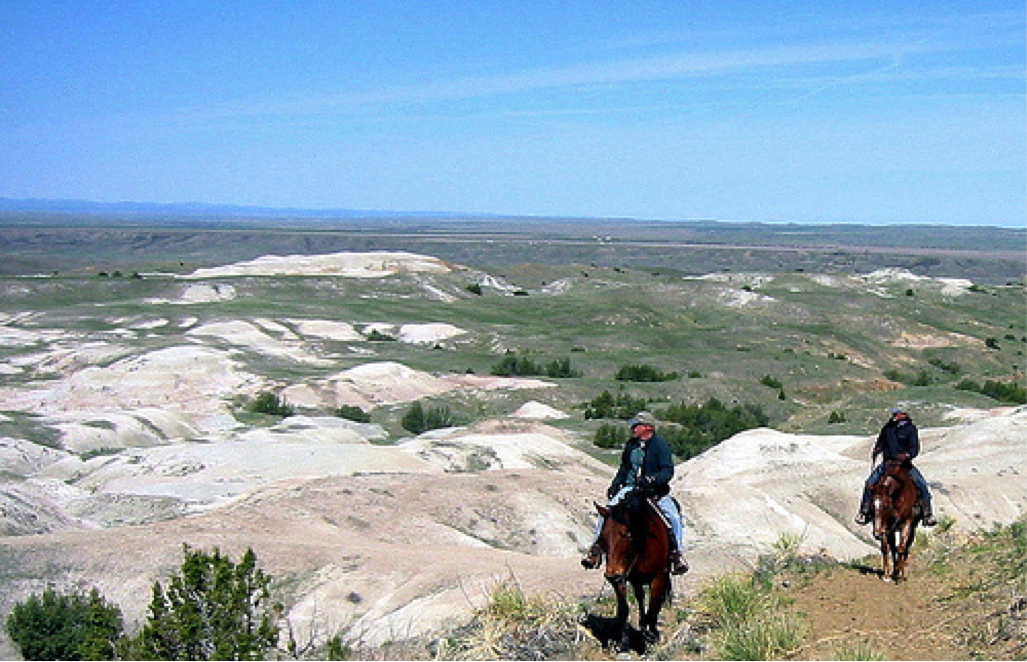
The reference to “wilderness designation” applies specifically to U.S. Senator Tim Johnson’s proposal for a ‘wilderness designation” to be approved in part for a relatively small, specified area of the Buffalo Gap National Grasslands. That area, which includes the Indian Creek portion of the Big Corral Grazing Unit, governed by the US Forest Service is presently South Dakota’s only USFS grazing unit to permit summer grazing (May-September) for cattle, when the land is verdant and winter grazing (November-April) for buffalo when the land is dormant. The USFS determines annually the grazing capacity of the unit and establishes the number of “animal units per month” (AUMs) that the permit holders can use in any given year. This quota is established by surveying the grazing area in relation to the availability of grass and water, which varies each year relative to the weather conditions.
This grazing situation came about through an agreement with Dan O’Brien, owner of the Cheyenne River Ranch, and the USFS. The agreement could take place only if certain conditions were met. First, the old cattle fencing had to be replaced or beefed up and modified where applicable, to accommodate buffalo. Allof the new fence is a five strand fence, replacing the former three and four strand fences. Second, the buffalo that would be grazed on the unit had to be identifiable and, therefore, marked. Ear-tagging was accepted as the method for identification.
It took us about ten months with a crew of up to five people to complete the fencing project, which came to be about twenty six miles of fence. That November a few of us, men and women, on horseback gathered the herd and moved it toward the Ralph Draw gate. On a neighboring hillside there was gathered a group of invited viewers, a Native American drum group with singers who welcomed the herd into a small portion of the Buffalo Gap National Grasslands where they had not been for about one hundred and fifty years. The buffalo flowed through that gate with the energy and look about them as if their genetic memory had kicked in and told them they were going home–even after such a long absence. There were more than a few shouts and tears of joy among the riders, the welcoming drum group, and observers to see the last of the herd move over the hill and out of sight.
As the human observers filed through the gate in a procession toward the ranch and the last horseman latched the gate, we knew that we had accomplished something extraordinary, significant, and historical.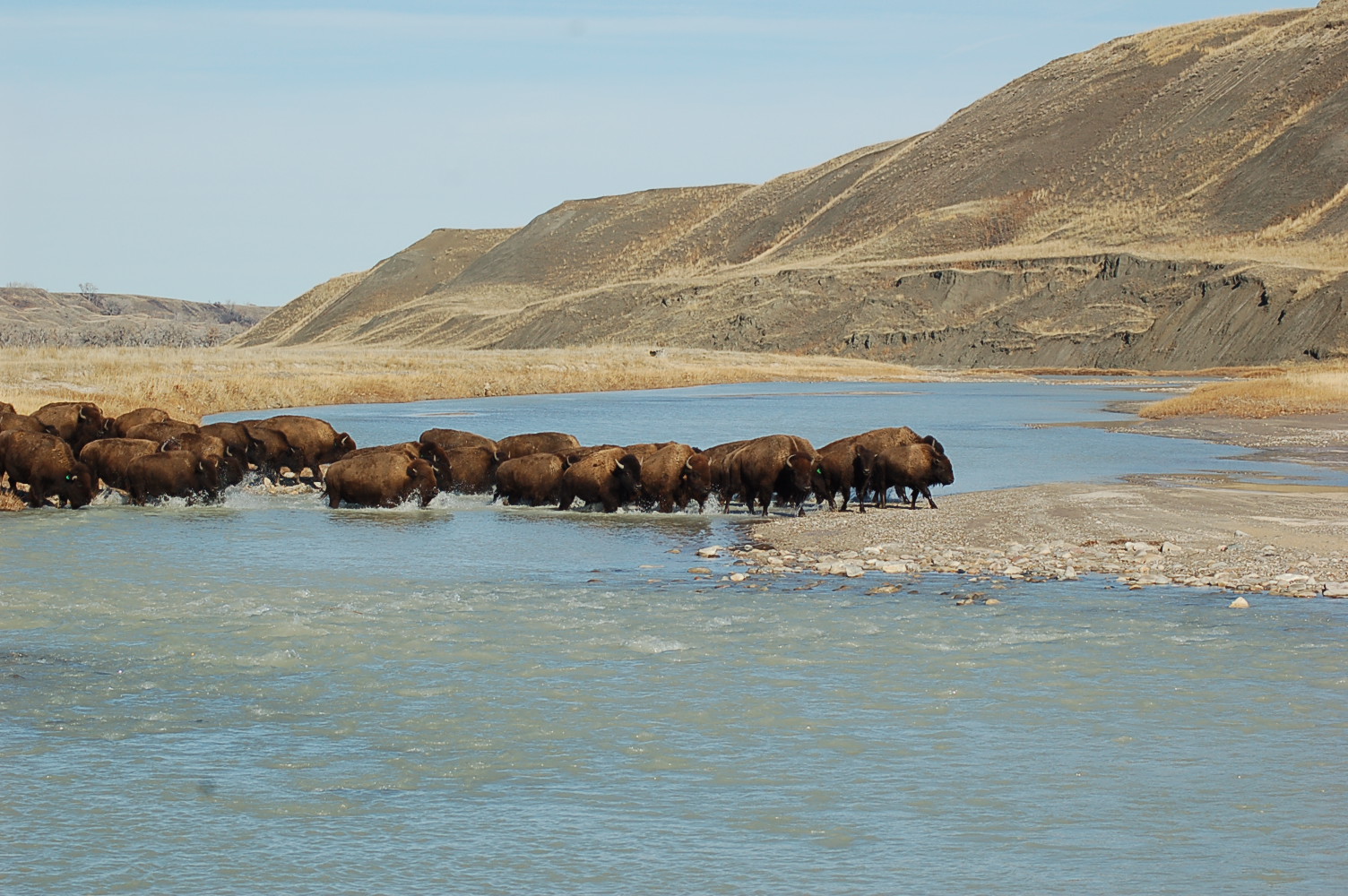
That Winter Dan and I travelled that country often to assure ourselves that the buffalo had accommodated themselves into the area and to insure that the fence remained intact. We built a good fence. In the spring, just before the buffalo began calving, Dan, Jill, and I rode out to gather the herd and bring them back to the private lands of the ranch. The herd had calved on these lands before; so it was not too difficult to return them to the brushy draws and springs along the bluffs on the north side of the Cheyenne River.
Since that first year a similar scenario has taken place. The buffalo live as free as we can possibly let them. They live their lives as closely to the lives of their ancestors as is possible in this age of parceled land and mandatory fences. And that my friends, is the foundation of the “Wild Idea Buffalo Meat”, that may grace your table and your health.
A “wilderness designation” for this 22,000 acre parcel of land would not seriously alter its use, but would tend to insure its ability to sustain grazing for both cattle and buffalo and to retain its ability to regenerate its wildness.
Comments 9
Hi Gervase,
Good read as usual. Let’s hope the buffalo can continue to graze “freely” on that parcel of Buffalo Gap National Grassland for years to come…
Wish i could have been there when they flowed through that gate and moved towards the hills for the first time in one and a half century.
Regards,
Cyril
All this is necessary but not sufficient! Read Jeffrey Ostler, TheLakotas and the Black Hills, 2010. I will be coming to the Dakotas this summer to explore this further in some depth and may check in with you folks then. Cheers! Jim Herrick
Read any propopsed legislation carefully. Here in Michigan we have a U S congressman proposing a “wilderness ” designation for an area which would include allowing access for motorized recreational vehicles.
Jeanette Hayes
I am reading Dan’s book, Buffalo for the Broken Heart, which lead me to the website. I am still a buffalo novice and my heart is captive to the romance of it all but my mind holds to the practical.I love it when mind and heart can be in tune and buffalo on the prairie makes such hearthealing good sense. I saw Dan on the NET special on the Great Plains – great segment.
Hi Gervase,
Wonderful to see you back in print, after a too-long absence. Your article is a good read and provides an update to the “wilderness designation saga” (so to speak). It would really be great if all South Dakotans could get on board, with this, and view it for what it is: heritage preservation and mutually beneficient, in the long run, for everyone.
Best regards,
Georgene
Wonderful article, Gervase. The process of determining the grazing capacity made me think of the TED talk that I saw recently: http://www.ted.com/talks/allan_savory_how_to_green_the_world_s_deserts_and_reverse_climate_change.html
In a perfect world we would be able to have vast herds of grazing animals moving across the grasslands of the world, interacting with their natural predators. I know it’s making a difference in your corner of the world.
Best regards,
Chuck
Gervase, I was happy to see your informative and factual article and hope that many others have the opportunity to benefit from your knowledge and experience. I cannot stress enough how important it is to spread the truth about wilderness designation and its benefits for portions of the Buffalo Gap National Grassland and would like to urge anyone who feels the same to contact the SD congressional delegation and the governor and let them know that you support it.
Keep up the great work-
Sean Kittrell
South Dakota Wild Grassland Outreach Coordinator
I will always appreciate when we humans do something that favors enrichment and renewal of something we messed up historically (which includes most elements of our world) I too, wish I could have been there for the release of the herd into their original home land.
have you eaten at a chuckwagon supper every jamboree is on.
every at a different a chckwagons