Michael Pollen coined the phrase, “You are what you eat and you are what you eat eats too”. I don’t think this is something that many of us think about everyday, or maybe we choose not to think about it because it makes shopping and eating harder. Or maybe if we do, we think about how it used to be when we were young. At least that’s what I thought, up until a visit to a feed yard 15 years ago.
Growing up on a dairy farm, our cows grazed over a few hundred acres. We also put up some crops of, wheat, corn and hay. We would spread the cows manure on the crops for fertilizer, and we would supplement the cows feed in the winter with a mixture of the above crops. We called that mixture “silage”. It had a smoldering earthy kind of aroma that would permeate the cold air as we filled the feed troughs. It is a fond memory that comes to me still, complete with all the smells. It wasn’t until much later that I learned that cows weren’t meant to eat grain or corn, and it wasn’t until that trip to the feed yard that I learned what animals are really eating, that are being raised for our current food supply.
My Dad loved cows and in his later years, with our farm long in the review mirror, he worked for a small dairy – feedlot operator in North Dakota, by the name of Enoch. On a visit to see my Dad, he gave us a tour of the operation. We started off at the office headquarters, which 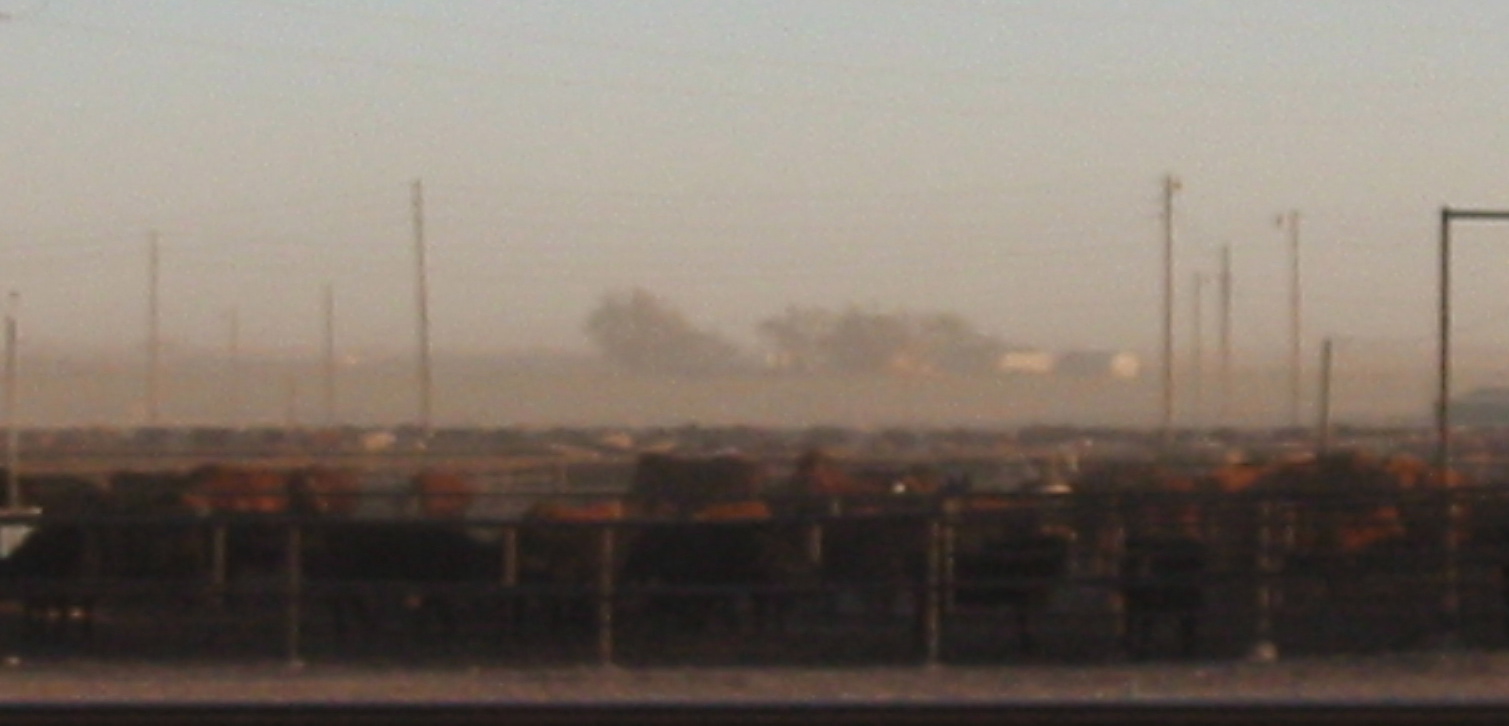 was oddly decorated in topless girly calendars. We met Enoch, who got a few bible quotes and insults in before our short visit ended. His insincerity and disrespectfulness, offended both Dan and me, so we got out quick. We jumped in my Dads truck and drove through the muck and the large uddered cows, finally winding our way to the “silage” mound for feeding time. We hopped out of the truck and stood at the base of the feed pile. Instantly a rancid odor penetrated my nose. This was not the smell I remembered. I bent down to get a closer look at the silage before the large frontend loader lowered its big scoop. My mouth fell open as I asked, “What is this Dad”? Quickly followed by, “Why are there French fries, hot dog buns, potato-ole’s, wriggle’s gum – yes, still in the wrapper, doing in the “silage”? My dad explained that the feed yards have contracts with the feed companies, such as Simplot, who have contracts with fast food joints and other food companies to pick up all of their in-edibles at a cheap price. I saw sadness in his eyes at my obvious disapproval. I offered, “A big difference in the silage that we fed, huh dad”. He gave his head a nod, and a half smile broke in the corner of his mouth.
Every time I go grocery shopping I think of the food that I’m going to put on our table. Where did it come from, how was it raised, what did it eat, is it endangered, does it have pesticides, and so on, and try to make the best choices that are available, or the best of the bad choices available. We also shop directly with other sustainable companies. It takes more effort, but it’s always worth it. During these shopping moments I think of all of you, and all of your efforts in picking up the phone or making your way through our website to place an order. We are so grateful to not be in this alone and are so thankful for each and every one of you for your support. The fast food system has come a long way baby, but we are on their 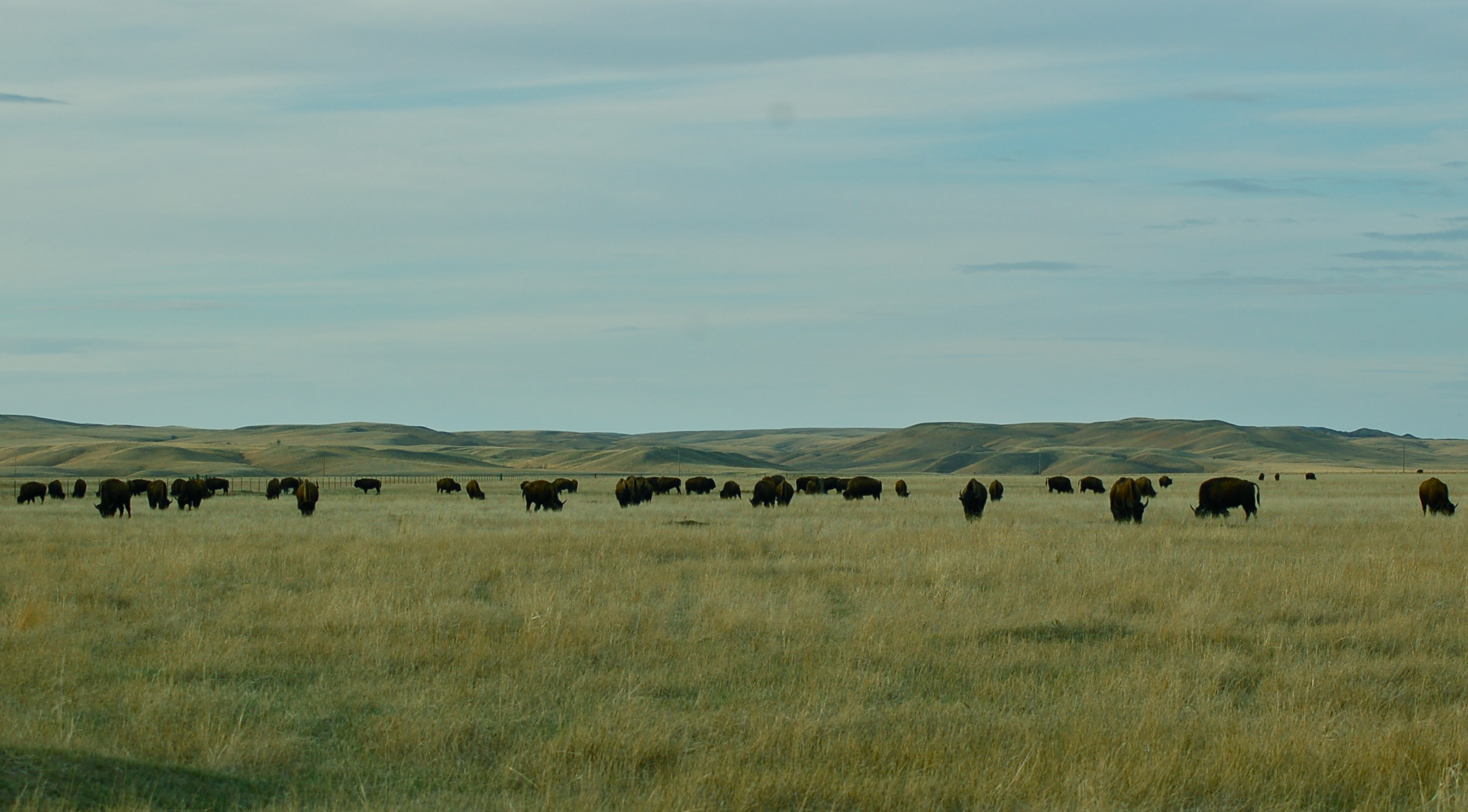 heels. Who knows we just might catch up!
This month’s recipe is for Wild Idea Buffalo Export Prime Rib Roast. A real treat in our house, and it too is oh so appreciated. And remember if, “you are what you eat and you are what you eat eats too”, you can always say you are made of buffalo, water, grass and sunshine! Wishing you all a delicious Thanksgiving! Cheers! Jill
Wild Idea Buffalo Export Prime Rib Roast with Au jus Gravy
I prepared a 10 pound export roast, and it fed 10 hungry people, with left overs for fabulous prime rib sandwiches. I also prepared all of the traditional thanksgiving fixings of memories past. There are many new fangled recipes, but nothing beats baked yams with marshmallows, sausage stuffing, and mashed potatoes. Recipes included with any roast order!
Ingredients:
1 – Export Prime Rib Roast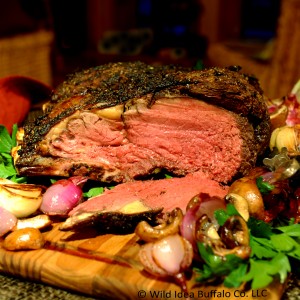 1 – lemon juiced
2 – tablespoons Worcestershire sauce
1 – tablespoon olive oil1 – tablespoon onion powder
1 – tablespoon garlic powder
½ – tablespoon rosemary½ – tablespoon thyme
½ – tablespoon savory
½ – tablespoon black pepper
1 – teaspoon rubbed sage
2 – onions quartered
4 – stalks celery cut
1½ – cup diced tomatoes
1 – cup water
2 – cups buffalo or beef stock
1 – cup red wine
1 – tablespoon arrow root or corn starch
½ – cup wine or broth
Instructions:
1) Rinse prime rib and pat dry. Place on large tray.
2) In bowl mix lemon juice, Worcestershire, olive oil and spices together. Rub into prim rib roast. Lightly cover and allow to rest at room temperature for 2 hours.
3) Position oven rack to middle and preheat oven to 500*.
4) Arrange onions and celery on large roasting pan. Place rubbed buffalo rib roast on top of vegetables, insert a meat thermometer in thickest part of roast and place in 500* oven for 15 minutes.
5) Add diced tomatoes and water to pan. Reduce heat to 350* and continue roasting for 10 minutes per pound, for medium rare. Check meat thermometer occasionally. Shapes of roasts will vary and will effect cooking time. When thermometer reaches 135* remove from oven, place on cutting board and cover with foil. Allow to rest.
6) Place roasting pan on stovetop over medium high heat, scraping up bits from bottom of the pan. Add stock and wine and bring to a full boil. Reduce and let simmer for 10 minutes.
7) Strain au jus into saucepan. Bring au jus to boil and whisk in arrow root mixture slowly, stopping when desired thickness is reach. You may want to add more or less. *I made it fairly thin, which was great on the roast and the side dishes.
8) Carve prime rib roast into desired thicknesses. Serve with buttered onions and mushrooms and pass with Au jus gravy.
Buttered Onions & Mushrooms: Slice 2 onions into wedges and cut 10 ounces of crimini mushrooms in half. Melt one stick of organic butter in large sauté pan over medium heat. Add onions; increase heat to medium high, and sauté for about 4 minutes. Add mushrooms and sauté until just heated through. Do Not cook to long, as you want moisture stays in vegetables. Remove from heat and season lightly with salt & pepper. Arrange around carved roast. Simply delicious!
Comments 6
Jill,
Do you thaw the prime rib first or just cook it frozen? It really does sound delicious.
So sorry about your Dad working on that awful farm. It’s hard to believe anyone in their right mind would feed any animal that awful junk, which makes them sick, much less feed the animals to people!! After reading Michael Pollin’s book with its descriptions of CAFOs, I never eat beef anymore unless it’s organic grass fed – or we eat Wild Idea Buffalo.
Hi Star – Great to hear form you and great question. Yes, thaw roast first in the refrigerator 2 days prior to cooking. Continue with preparation as stated. Such a great meal. Hope you enjoy it too. Very Best – Jill
Hi Jill,
I hear you loud and clear! I eat organic vegetables, and Wild Idea Buffalo Stew meat for protein. I quit eating fish because it is full of 100 different horrible organic poisons we have dumped into the oceans. I also use a fair amount of organic bulk items, like rice of different kinds and other things. I don’t eat anything at all that is in a can or packaging, since it is all full of poisons of various sorts. I use a few organic products in glass jars, but never any in plastic of any kind.
You have the only pure protein left on the planet!
May the blessings be.
Love, Don
catch up we must! I want to believe there is critical mass now to make a difference.
cheers
So Jill, I have to ask how YOU felt if you heard this today on NPR. Makes me sick that it’s ok to totally deplete the soil and then only revive it with non-organic methods — for 9 months! Ever feel like the whole world is spinning out of control with govt regs?
http://www.npr.org/blogs/thesalt/2013/11/21/246386290/organic-farmers-bash-fda-restrictions-on-manure-use
Lynn in Texas
Author
Hi Lynn – Interesting report. I guess I would have to side on allowing the organic matter to compost before spreading. Hopefully the organic farmers will figure out a way to allow manure to compost naturally and more affordably. This last spring, I tilled buffalo chips into my vegetable gardens and gave them the year off, allowing the manure the opportunity to breakdown. It is ironic however that pesticides and chemical fertilizers can be spread all over crops legally, effecting our food supply and our water, as well as harming other living things that we share this planet with.