 Each month we will be featuring a guest writer to share their views and stories. This month it is a great honor to bring you nutritional information from Dr. Kevin Weiland.
As I was researching nutrition and health for my book The Dakota Diet, Basic Health Publication, 2007, I came across this impressive article on why the meat from a grass-fed animal stays fresher longer than from the traditional feed-lot beef. We know that meat from grass-fed buffalo is higher in omega-3 fatty acids, although healthier; it is a highly unsaturated fat and can oxidize very quickly. (Oxidation of cells is the reason why a banana will turn brown or an apple slice turns yellow after a period of time when exposed to the air.) People have long assumed that grass-fed meats have a shorter shelf life than grain-fed meats because of their fat profile.
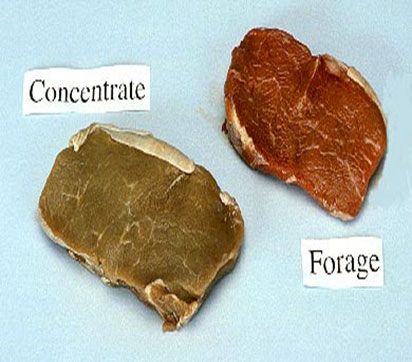
In a 2001 study, researchers from the Institute of Grassland and Environmental Research in Canada selected steaks from a grain-fed (Concentrate) animal and a grass-fed (forage) animal. They packaged them in standard wrapping and kept them in a refrigerator for 14 days. At the end of the two week period, they were impressed to see the bright red color of the grass-fed meat and noted the brown, unattractive meat from the other cut of meat.
The reason is this, grass-fed meats are high in vitamin E, and this potent antioxidant kept the meat from spoiling. Vitamin E levels in grass fed animals are four times higher than their counter part from the feed lot. Even when supplementing the feed with extra vitamin E, they were only able reach levels of vitamin E at 50% to what is contained in the foraged meats.
To sum this up, Wild Idea Buffalo is a nutrient dense, low calorie, low fat product that I recommend for good health to my patients.
Comments 2
I am a personal trainer and learned years ago the benefit of eating grass-fed bison. It is both very healthy and quite delicious!
Two words for ‘ya Doc. “Dakota Soda.”